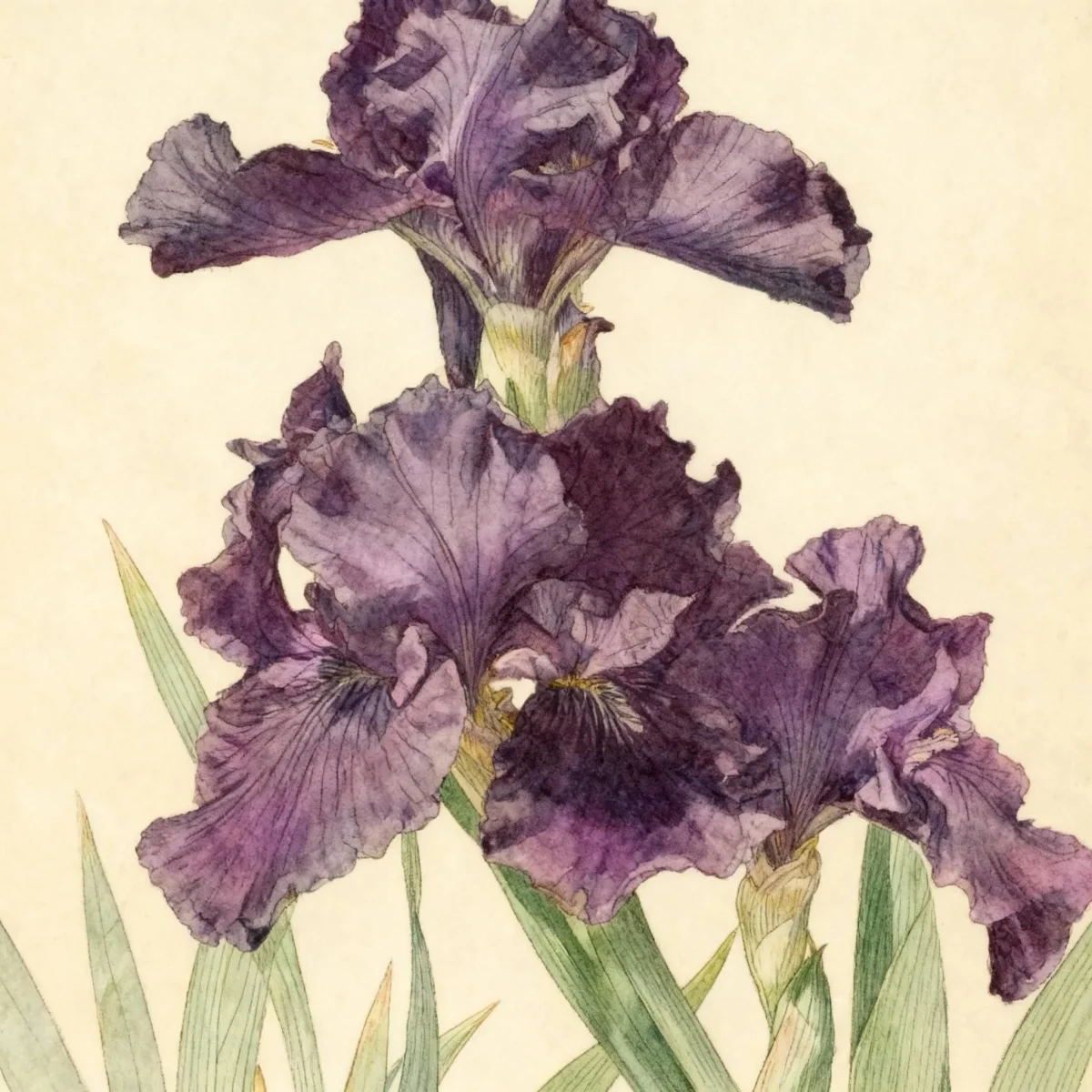
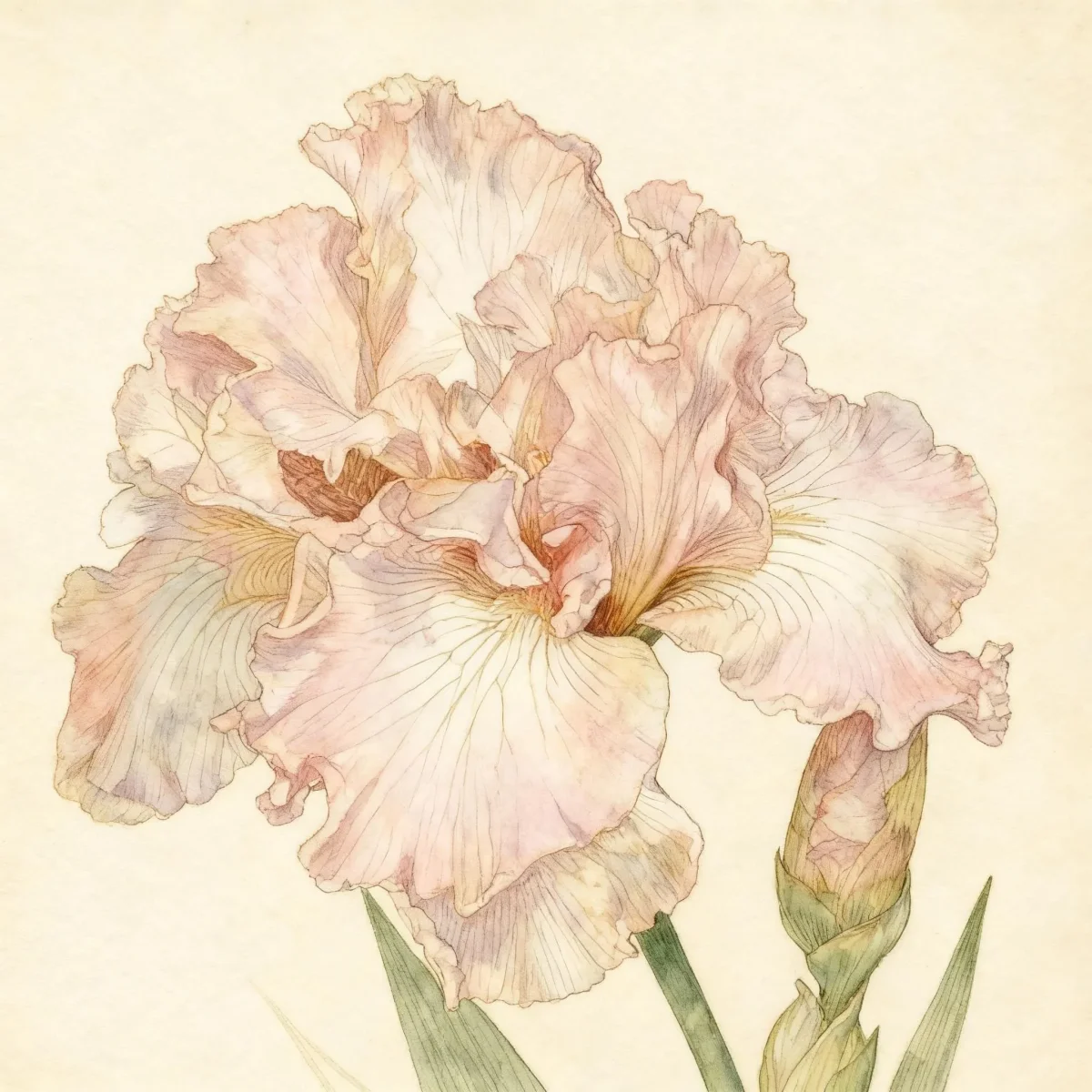
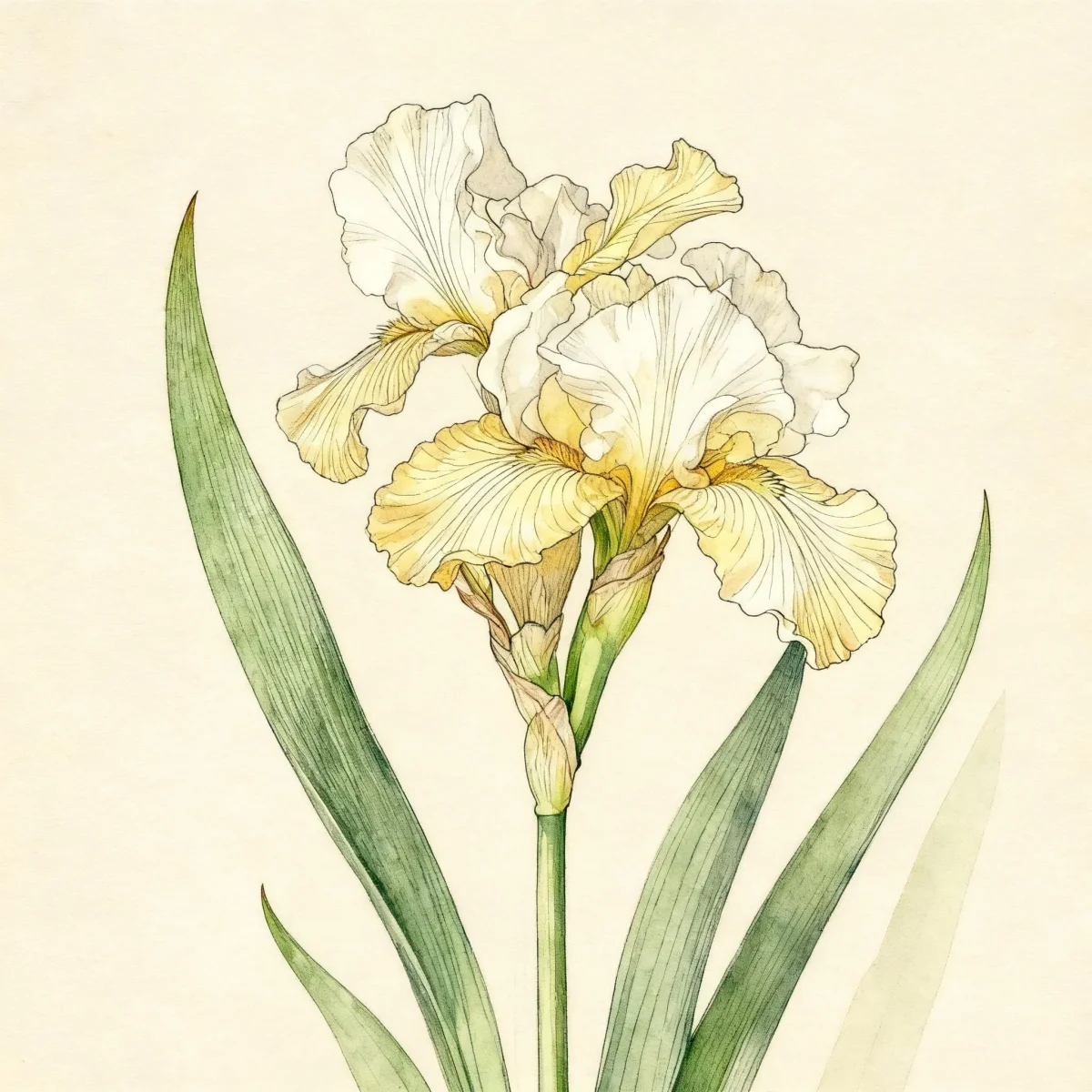
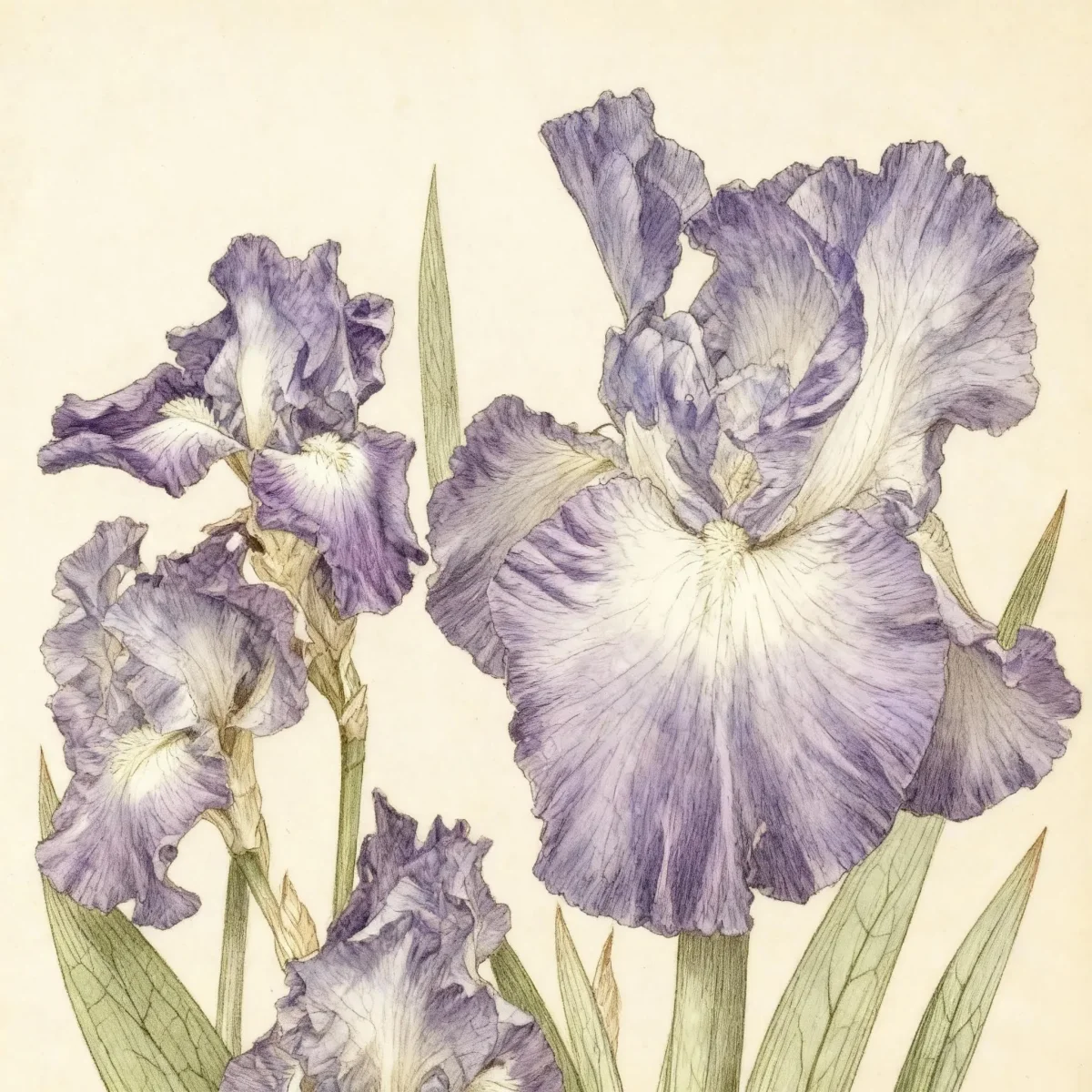
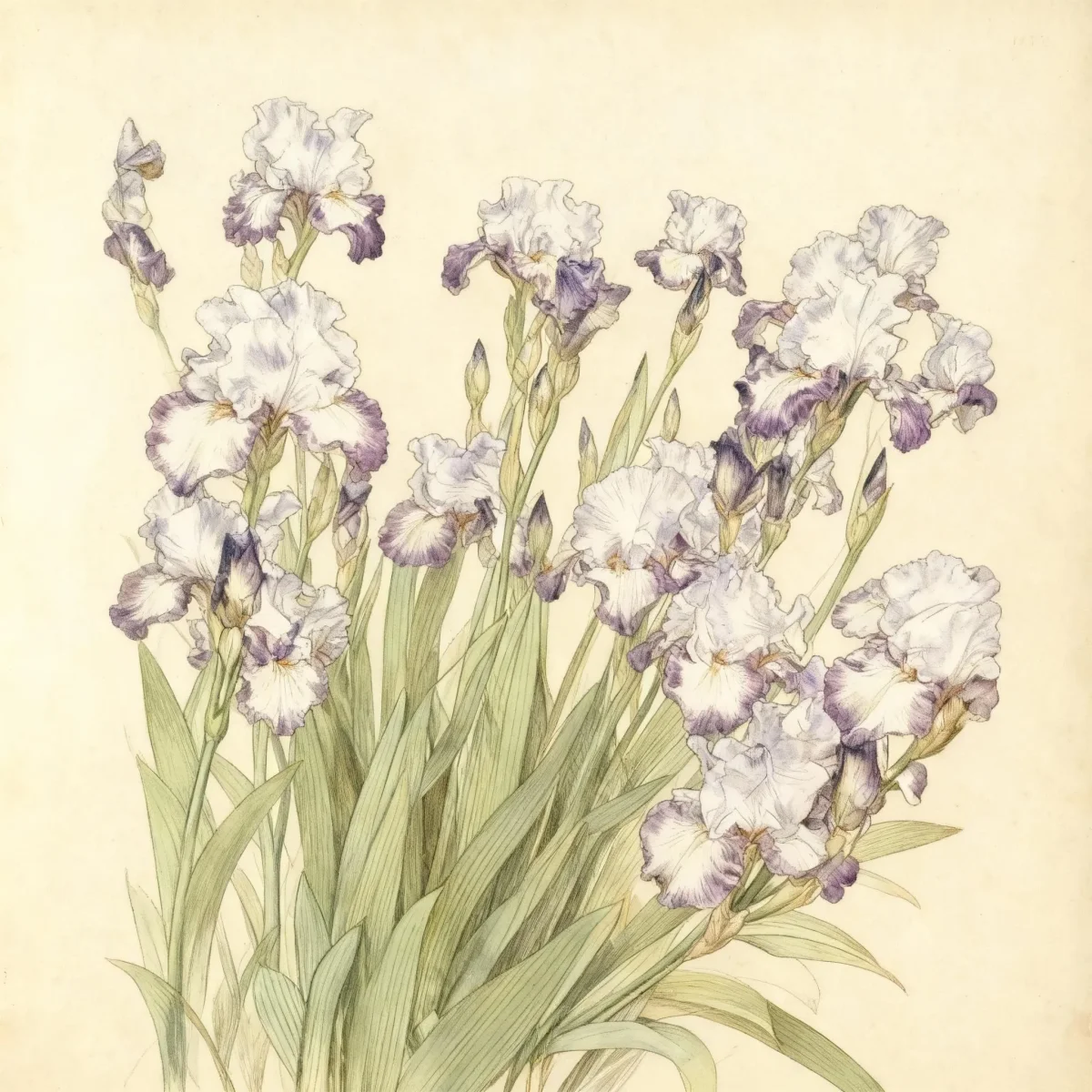
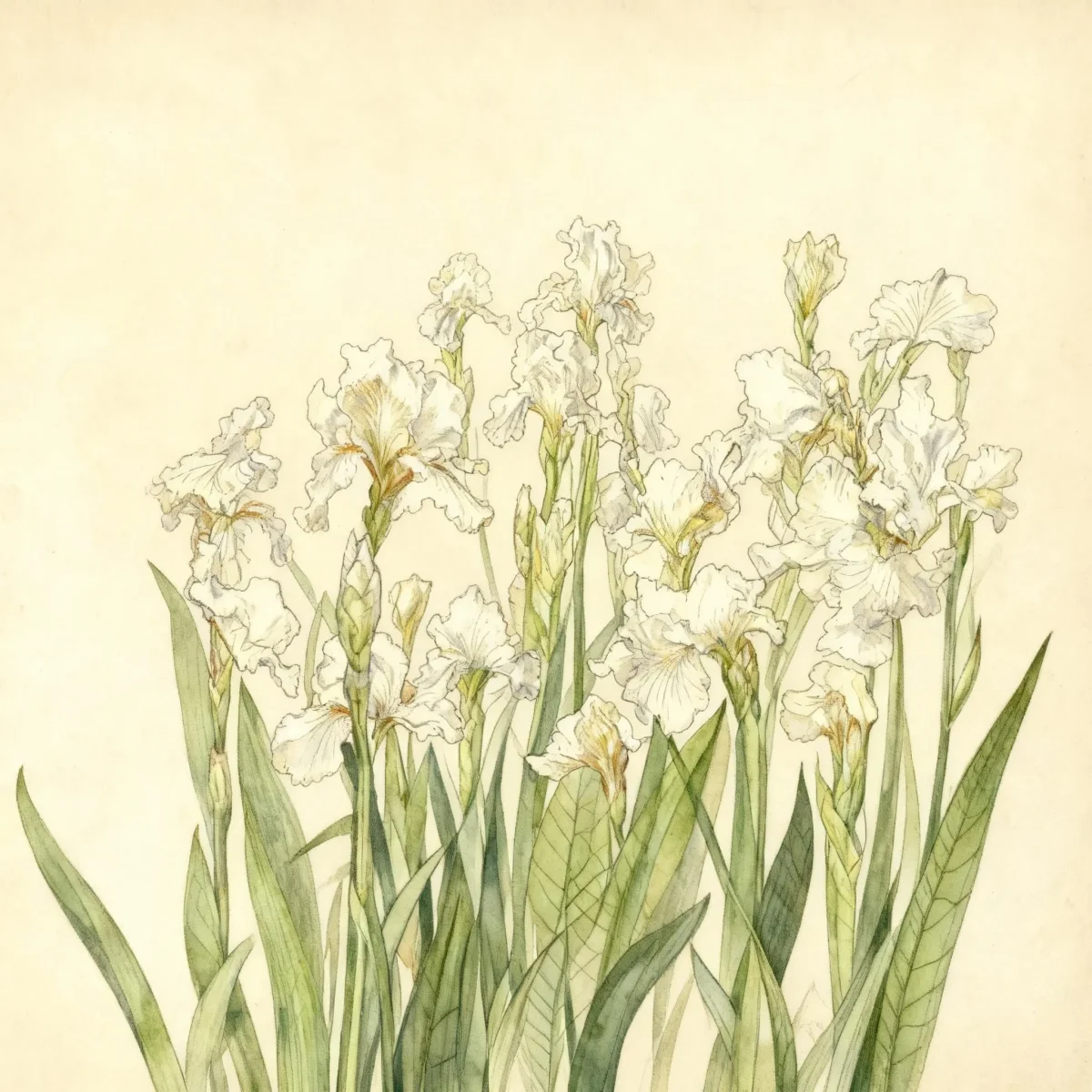
Tall bearded iris (Iris 'Whispering Spirits')
Iris 'Whispering Spirits' is a stunning Tall bearded iris offering ruffled white blooms edged with violet. Hardy zones 3-10.

Bloom Boldly, No Matter the Season - Sweatshirt
Cozy organic cotton sweatshirt featuring our exclusive Purple Coneflower design. Perfect for gardeners who bloom year-round.
Inspired by the beautiful Tall bearded iris
Limited first batch (50) — join the waitlist for early access
Waitlist closes Feb 15, 2026.
Complete Plant Information
Field Guide Continues
Ready for care notes, companion picks, and planting tips?
The map is just the start. The full guide below covers growth habits, seasonal performance, and landscape uses.
Overview
Iris ‘Whispering Spirits’ is a highly valuable addition to the perennial border, celebrated among gardeners as a classic Tall bearded iris. This cultivar stands out with its uniquely ruffled flowers, where pristine white standards feature a delicate gilt edge, contrasting beautifully with falls sanded and marked heavily with violet and magenta. As a rhizomatous perennial, it forms dependable clumps, offering reliable vertical interest and vibrant color throughout the late spring and early summer garden display.
This Tall bearded iris thrives best when given full sun exposure, which encourages robust blooming and firm, healthy rhizomes. While requiring medium water, established clumps exhibit welcome drought tolerance once settled, making them manageable perennials for mixed sunny borders. Successful cultivation centers on excellent drainage, a key requirement for all bearded irises to prevent common rhizome diseases.
Gardeners adore Iris ‘Whispering Spirits’ for its impressive height (often reaching 35 inches) and its stately presentation of complex flower color, living up to the genus name derived from the Greek goddess of the rainbow. Incorporating this variety ensures a sophisticated, upright presence in the landscape framework year after year.
Fast Facts
- Plant Family: Iridaceae
- Plant Type: Herbaceous perennial
- Hardiness Zones: USDA Zones 3-10
- Size at Maturity:
- Height: 2-3 ft
- Spread: 1-2 ft
- Bloom Time: May to June
- Bloom Description: White marked with violet and magenta
- Sun Exposure: Full sun
- Water Needs: Medium
- Maintenance Level: Medium
How to Grow
Planting Iris ‘Whispering Spirits’ rhizomes requires attention to drainage timing, which varies by climate; plant between late July and October. Select locations providing full sun, although afternoon shade is acceptable in very hot regions. The ideal soil is average, medium-moisture, and exceptionally well-drained. If you have heavy clay or high rainfall, elevate drainage by planting on slopes or in raised beds, ensuring the rhizomes are not saturated.
Plant rhizomes shallowly, spacing them 12 to 20 inches apart. Create a small mound of soil and set the rhizome astride it so that one-third of the rhizome remains exposed above the soil line, with the roots spread horizontally beneath it to anchor the plant. The leafy growing end must point in the direction of growth. Consistent moisture is vital from spring until about six weeks after flowering concludes, though established Iris ‘Whispering Spirits’ show good drought tolerance thereafter.
Maintenance for this Tall bearded iris involves keeping the bed diligently weeded, as weeds compete for resources and harbor pests. If the clump becomes overcrowded over time, lift and divide the rhizomes in late summer (around August) using a garden fork. Promptly remove and discard any damaged or diseased foliage to reduce pest and disease pressure throughout the growing season.
Landscape Uses
Iris ‘Whispering Spirits’ excels when used where its height can be appreciated without dwarfing surrounding plants. It is perfectly suited for grouping or mass planting in sunny borders, providing mid-to-back-of-the-border structure. The upright, sword-like foliage offers good texture even when the plant is not in bloom.
These handsome specimens create striking focal points when massed near foundations or along walkways where their blooms can be easily viewed up close. Consider pairing Iris ‘Whispering Spirits’ with lower-growing perennials that bloom earlier or later, such as Salvia or Catmint, to ensure continuous color display in the perennial bed. Their architectural form makes them excellent linear accents throughout the landscape design.
Standout Features
Flower Qualities
- Showy
Noteworthy Characteristics
Tall Bearded Iris is a rhizomatous iris class whose numerous hybrid cultivars grow to heights above 27.5” tall featuring two or more branches and 7 or more blossoms per stem with flowers spreading to more than 5” wide. Each flower has upright standards and pendant falls. The bearded name comes from the bushy beard easily visible in the middle of each fall. Iris ‘Whispering Spirits’ is a Tall Bearded Iris that typically grows to 35” tall, featuring ruffled white standards with a gilt edge over white falls heavily marked with violet and magenta, complemented by a golden yellow beard.
Tolerances
- Deer
- Drought
Potential Problems
Common issues for Iris ‘Whispering Spirits’ include fungal leaf spot, bacterial soft rot, crown rot, and mosaic viruses. Key insect pests to monitor include slugs, snails, aphids, thrips, and particularly the iris borer, which can cause significant damage. Prevention revolves around excellent gardening sanitation practices.
Control starts with promptly removing and destroying all infected foliage and rhizomes at the first sign of trouble. After the first hard frost in the fall, complete a thorough cleanup of all debris from the iris beds to eliminate overwintering pests and fungal spores. If rhizomes are planted too deeply, shaded excessively, over-fertilized, or left overcrowded, flowering performance will suffer significantly.
Frequently Asked Questions
What hardiness zones is Tall bearded iris suitable for?
The Tall bearded iris, including the ‘Whispering Spirits’ cultivar, is suitable for gardeners in USDA Zones 3 through 10.
How large does Iris ‘Whispering Spirits’ grow?
Iris ‘Whispering Spirits’ typically reaches a mature height between 2 to 3 feet tall, spreading about 1 to 2 feet wide.
What sun exposure does Iris ‘Whispering Spirits’ need?
This variety requires full sun exposure for the best performance and bloom production.
When does Tall bearded iris bloom?
Iris ‘Whispering Spirits’ blooms reliably from May to June, presenting flowers that are white marked with violet and magenta.
Conclusion
Iris ‘Whispering Spirits’ brings sophisticated structure and complex color patterning to any sunlit garden space, representing the best qualities of the Tall bearded iris class. Its deer and drought tolerance adds practical value for gardeners managing varied conditions. Ensure excellent drainage and proper rhizome planting depth to maximize your enjoyment of this beautiful cultivar this season.
Companion Planting for Bearded Iris
Bearded irises like Iris ‘Whispering Spirits’ prefer drier conditions once established and demand full sun, which helps dictate ideal companions. Good partners are those that won’t cast too much shade over the rhizomes. Consider planting low-growing herbs like Lavender or Thyme around the base; they enjoy similar conditions and release aromatic oils that can sometimes deter pests.
For structural contrast and earlier color, pair Iris ‘Whispering Spirits’ with plants like Peonies or early-blooming Daffodils. Once the iris blooms fade, reliable summer bloomers such as Russian Sage (Perovskia atriplicifolia) or ornamental grasses provide vertical interest without competing heavily for moisture at the soil level.
Seasonal Care Calendar
Spring preparation for your Iris ‘Whispering Spirits’ should start early; as new growth emerges following the last frost, remove accumulated winter debris from the beds. It is crucial to avoid high-nitrogen fertilizers, which promote soft, disease-prone foliage over blooms; instead, use a low-nitrogen fertilizer sparingly after blooming begins if necessary.
Mid-summer care centers on monitoring for pests like iris borers while ensuring consistent moisture during their requirement period (early summer). If division is planned, late summer (August) is the opportune time after flowering ceases but before the fall planting window closes.
As autumn arrives after the first hard frost, perform a thorough annual cleanup. Cut back approximately one-third of the foliage, removing all fallen debris from the beds. This essential fall sanitation prevents the survival of fungal spores and overwintering borers that could plague next year’s growth.