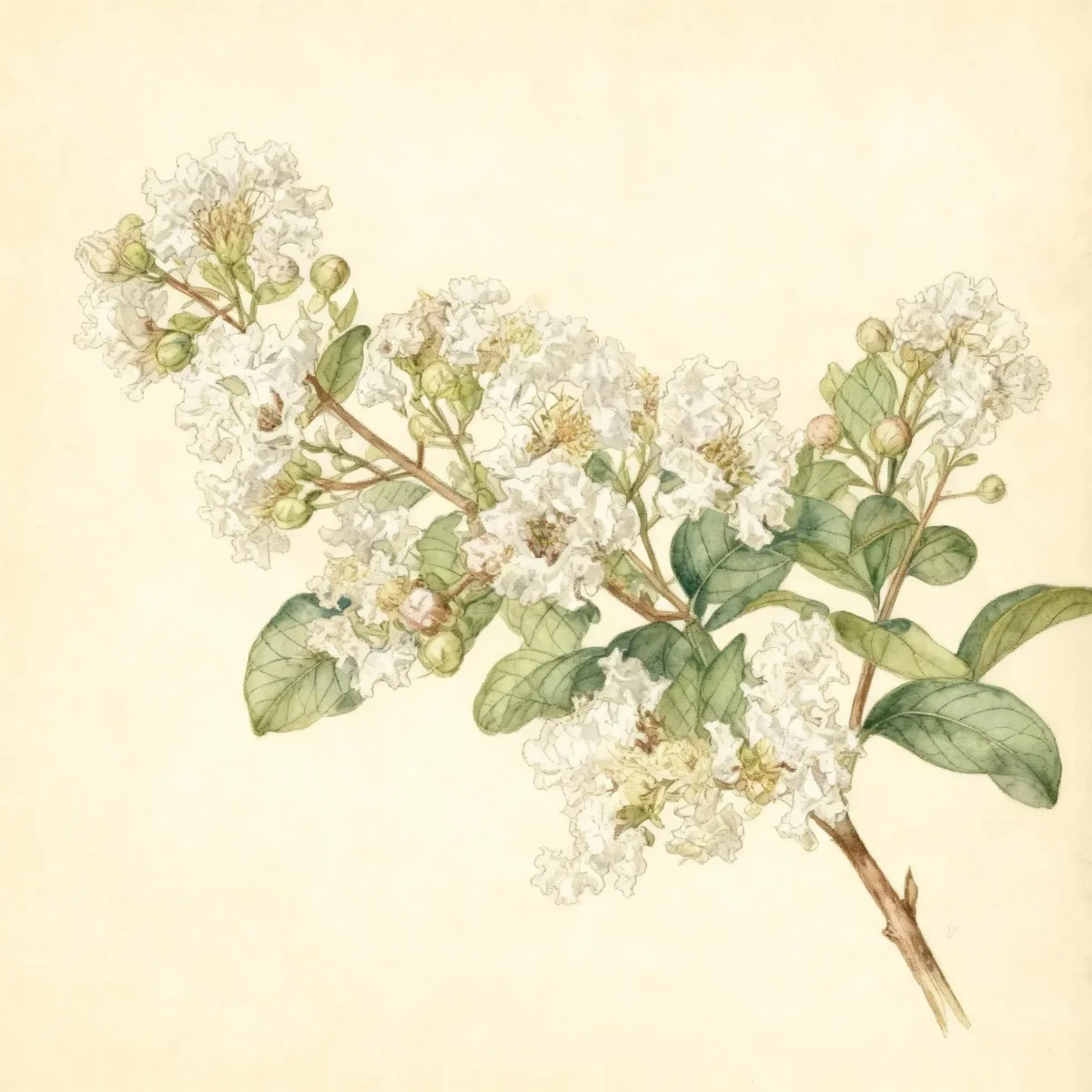
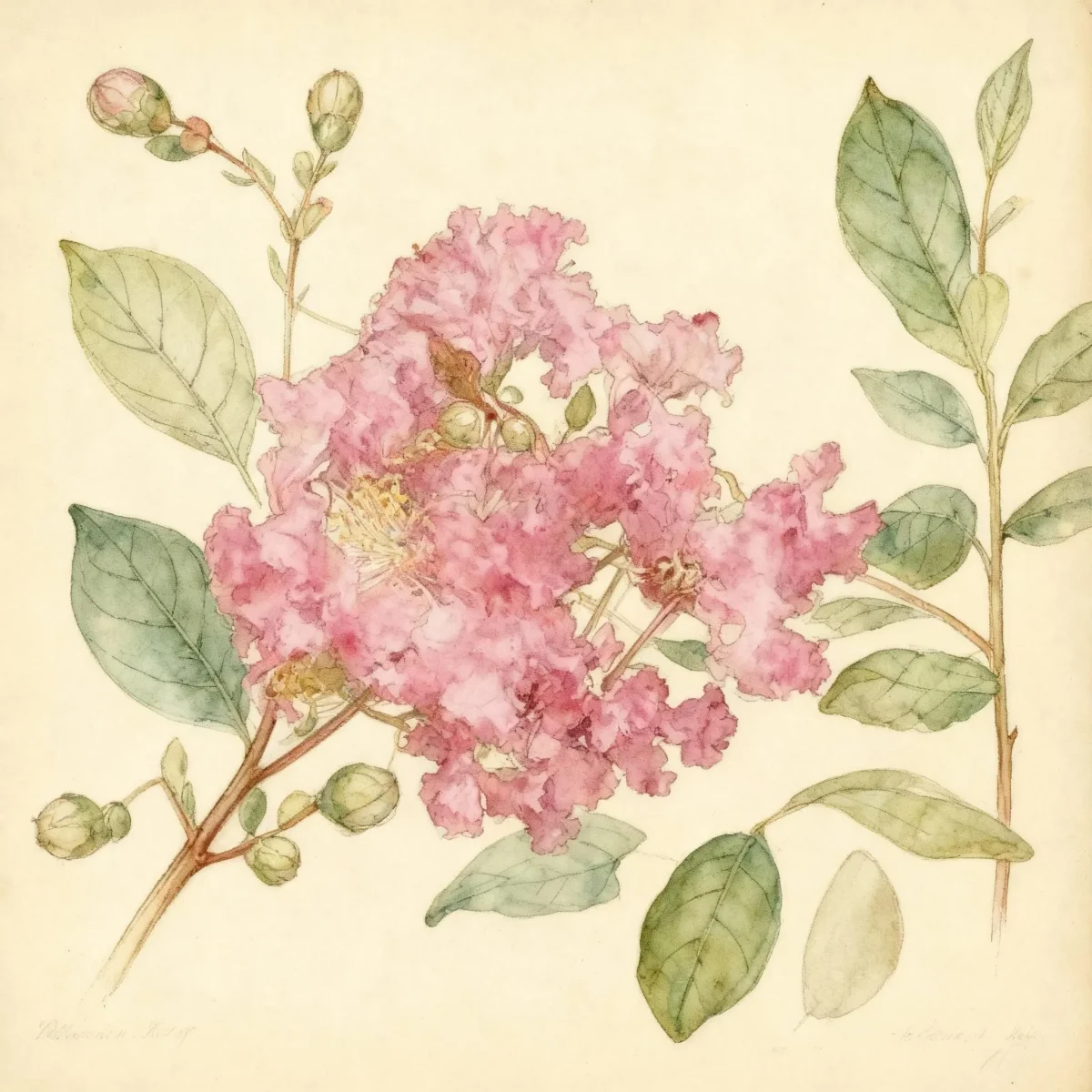
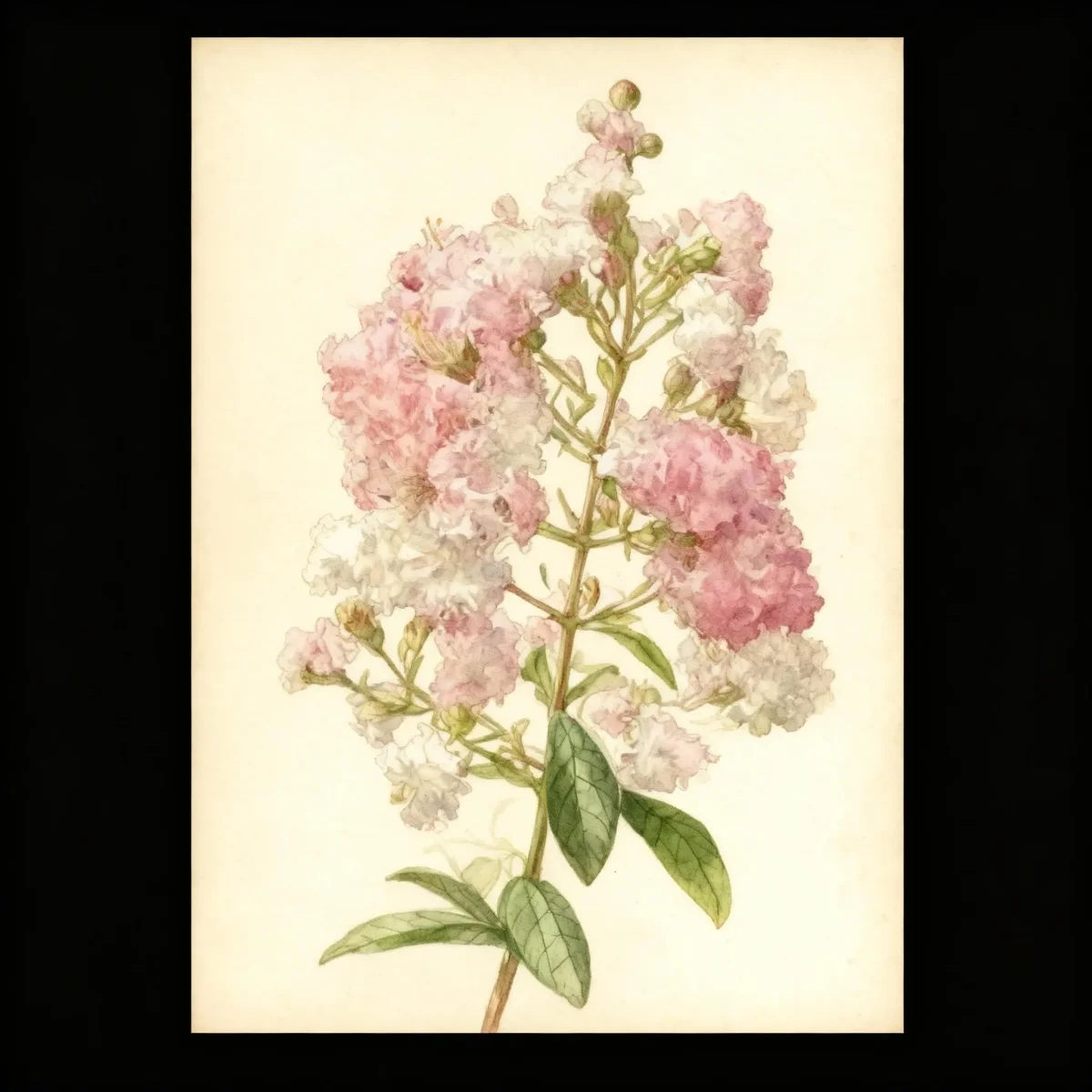
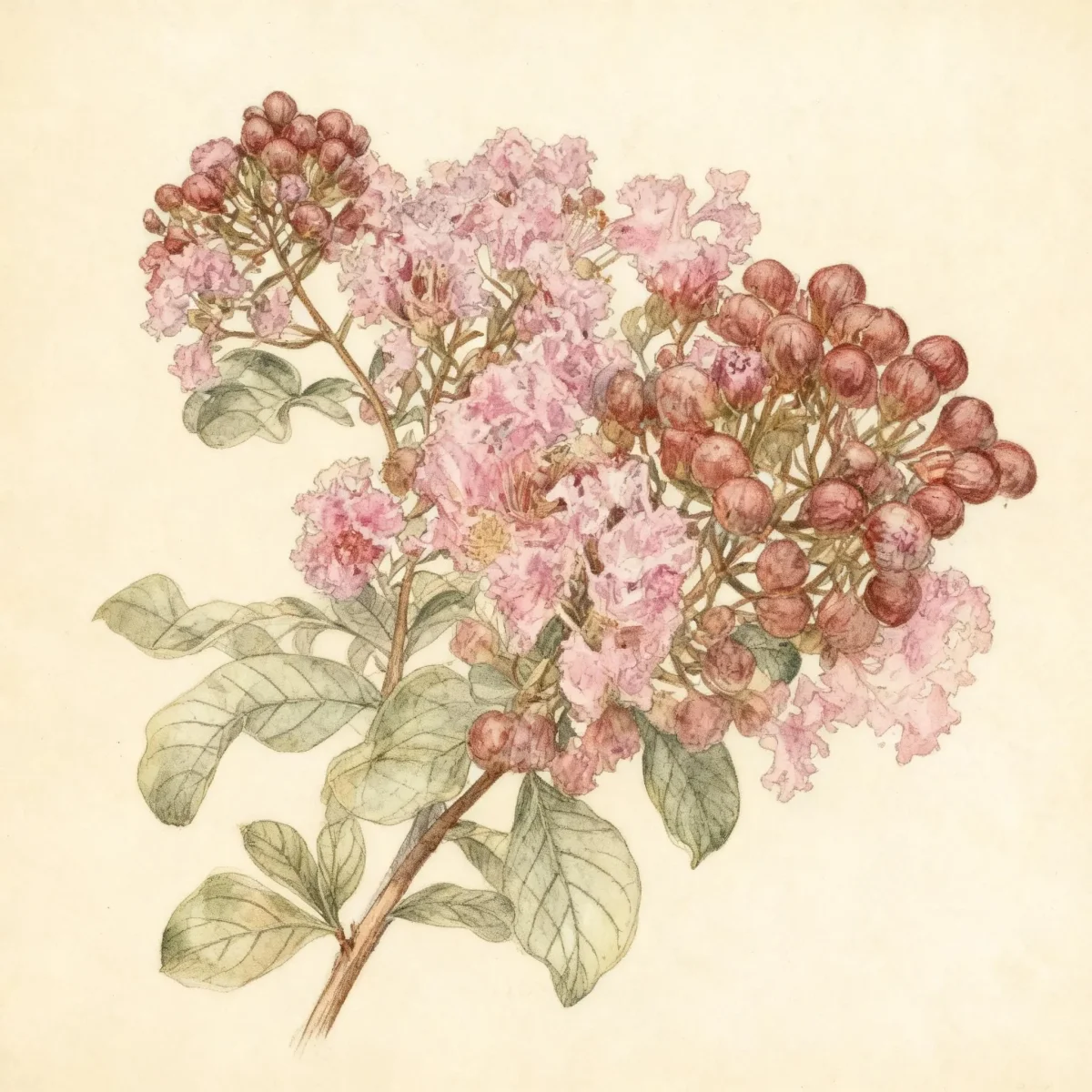
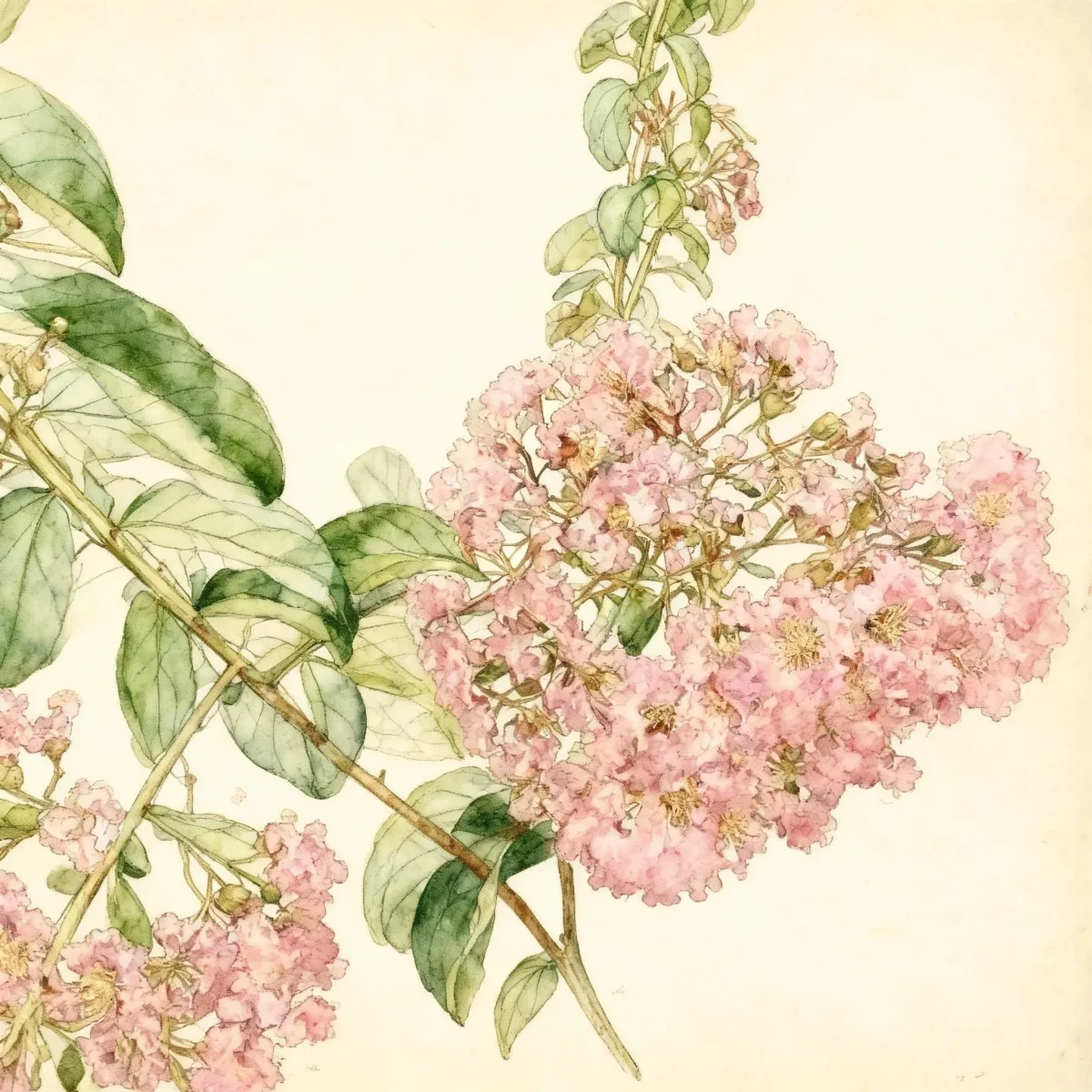
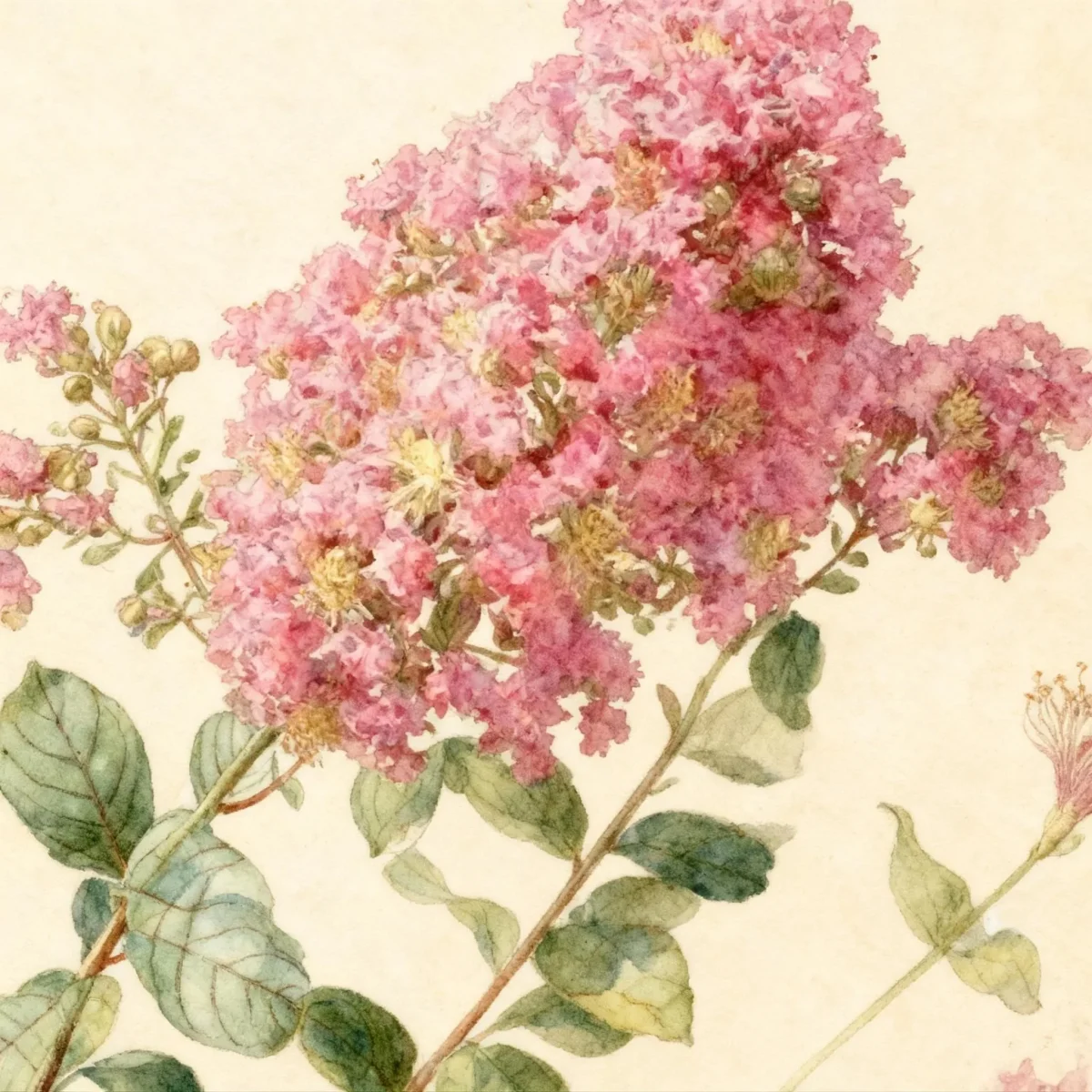
Crape myrtle (Lagerstroemia indica 'Muskogee')
Discover Lagerstroemia indica 'Muskogee' Crape myrtle, prized for lavender-pink summer blooms, mildew resistance, and graceful form.
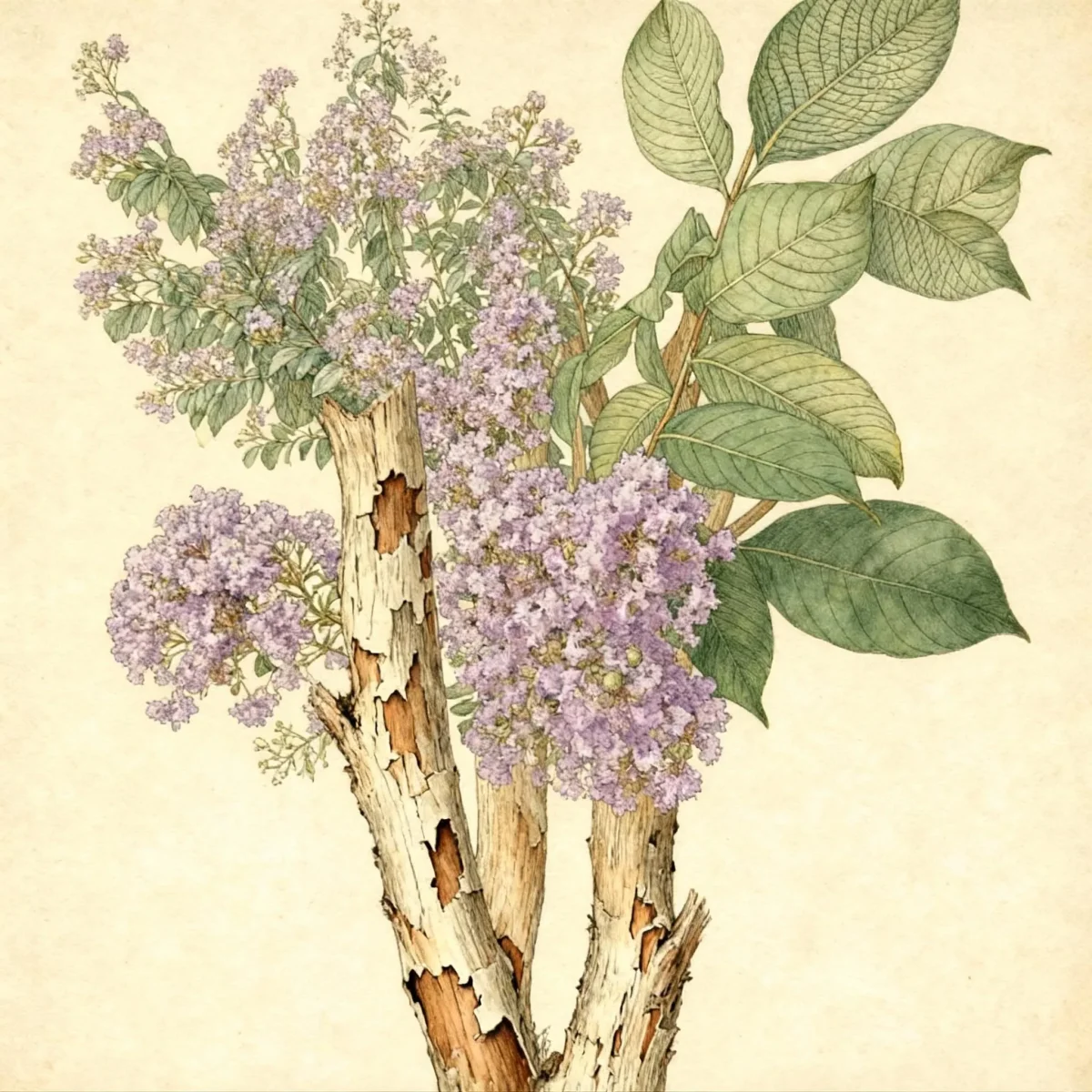

Bloom Boldly, No Matter the Season - Sweatshirt
Cozy organic cotton sweatshirt featuring our exclusive Purple Coneflower design. Perfect for gardeners who bloom year-round.
Inspired by the beautiful Crape myrtle
Limited first batch (50) — join the waitlist for early access
Waitlist closes Feb 15, 2026.
Complete Plant Information
Field Guide Continues
Ready for care notes, companion picks, and planting tips?
The map is just the start. The full guide below covers growth habits, seasonal performance, and landscape uses.
Overview
Lagerstroemia indica ‘Muskogee’ is a highly valued cultivar of Crape myrtle, recognized for its reliable performance and striking summer color. This large, upright-spreading plant features exfoliating bark, particularly handsome on mature specimens, adding year-round structural interest to the garden. The primary draw is its long blooming period, offering continuous clusters of light lavender-pink, crepe-papery flowers from mid-summer well into autumn.
Developed by the National Arboretum, the Lagerstroemia indica ‘Muskogee’ hybrid boasts improved resistance to common fungal diseases like powdery mildew, making maintenance easier than with some heirloom varieties. It functions well either as a multi-stemmed specimen shrub or pruned lightly into a small, vase-shaped tree, providing vertical accents in the landscape.
For gardeners in the upper range of its hardiness, this Crape myrtle offers an exceptional combination of extended color, improved resistance, and graceful structure, making it a dependable favorite where other varieties might struggle or succumb quickly to mildew.
Fast Facts
- Plant Family: Lythraceae
- Plant Type: Deciduous shrub
- Hardiness Zones: USDA Zones 6-9
- Size at Maturity:
- Height: 4-12 ft
- Spread: 4-12 ft
- Bloom Time: July to September
- Bloom Description: Lavender-pink
- Sun Exposure: Full sun
- Water Needs: Medium
- Maintenance Level: Medium
How to Grow
The best environment for Lagerstroemia indica ‘Muskogee’ involves planting in early spring or fall in a location receiving full sun exposure throughout the day. It thrives in average, medium moisture, well-drained soils, performing admirably even in loamy or clay-based substrates provided drainage is adequate. Planting in protected locations is recommended, especially in marginal zones, and applying a winter mulch will help insulate the roots.
Care involves watering the roots deeply during dry spells, ensuring the foliage remains dry to prevent fungal issues, although the ‘Muskogee’ cultivar is highly mildew-resistant. Feeding every spring with a slow-release fertilizer promotes good health, but gardeners should avoid overly fertile soils, which encourage excessive leafy growth at the expense of flower production and may increase susceptibility to winter injury.
Pruning management is zone-dependent. In the Deep South (Zones 8-9), focus should be on shaping and removing spent flowers. Where winter dieback is a concern (Zones 5-7), be prepared to cut back frost-damaged, non-productive stems to about 8 inches in early spring, as flowers appear reliably on the resulting new wood.
Landscape Uses
The versatile nature of the Crape myrtle allows Lagerstroemia indica ‘Muskogee’ to anchor diverse landscape designs. Its moderate height of 4 to 12 feet makes it ideal for use in mixed shrub borders or as a formal or informal hedge where a touch of summer glamour is desired. In warmer regions (Zones 8-9), it excels as a substantial tall screen, providing both visual privacy and season-long floral display.
As a specimen plant, the vase shape provided by Lagerstroemia indica ‘Muskogee’ creates an excellent focal point, beautifully highlighting the exfoliating bark structure when underplanted with lower-growing evergreens or groundcovers. Because it is large enough to be considered a small tree in the South, it can also be positioned near patios or walkways where its summer blooms and textured trunk can be fully appreciated up close.
Standout Features
Flower Qualities
- Showy
- Good Cut
Noteworthy Characteristics
The Lagerstroemia indica species, frequently called Crape myrtle, is valued for its long bloom period, superb fall color, and attractive exfoliating bark. Specifically, ‘Muskogee’ is a mildew-resistant hybrid featuring glossy dark green leaves contrasted by terminal inflorescences of light lavender-pink, crepe-papery flowers blooming from early summer until fall. The smooth, shedding bark transitions to gray or tan with age, providing significant winter appeal.
Tolerances
- Drought
- Clay Soil
- Air Pollution
Potential Problems
The primary challenges for managing Crape myrtles involve fungal issues and winter hardiness. Fungal leaf spot and powdery mildew are common concerns, although ‘Muskogee’ is noted for its excellent mildew resistance. Foliage may show yellowing (chlorosis) if planted in highly alkaline soils, and occasional infestations of aphids or scale insects may occur, manageable with horticultural oils or insecticidal soaps applied when foliage is young.
Winter injury represents the biggest threat in northern zones (5-6), where top growth can die back entirely when temperatures drop below -5°F. To mitigate this, ensure planting in the most sheltered microclimates possible and be prepared to heavily prune dead wood when new growth emerges in the spring, knowing that flowers will develop on that new wood.
Frequently Asked Questions
What hardiness zones is Crape myrtle suitable for?
This specific cultivar, Lagerstroemia indica ‘Muskogee’, is reliably hardy in USDA Zones 6 through 9. Growers in Zone 5 may experience severe top-kill annually but can still enjoy repeat blooming from root sprouts.
How large does Lagerstroemia indica ‘Muskogee’ grow?
This plant typically matures to a height and spread of 4 to 12 feet, though in the warmest regions it can achieve greater height if left unpruned.
What sun exposure does Crape myrtle need?
For the best flowering display and robust health, the Crape myrtle requires full sun exposure. Insufficient light will drastically reduce the number and duration of its lavender-pink blooms.
When does Lagerstroemia indica ‘Muskogee’ bloom?
You can expect abundant blooms from July through September, showcasing its distinctive lavender-pink flower color throughout the peak of summer.
Conclusion
Lagerstroemia indica ‘Muskogee’ remains an indispensable selection for gardeners seeking reliable summer color, thanks to its manageable size and improved resistance to powdery mildew. Its exfoliating bark ensures this Crape myrtle provides aesthetic value long after the lavender-pink flowers fade. Assess your specific microclimate and hardiness zone before planting to ensure the best possible, long-lived performance.
Companion Planting
Selecting appropriate companions for your Crape myrtle enhances the overall garden design while respecting similar cultural needs. Since Lagerstroemia indica ‘Muskogee’ demands full sun and dislikes wet feet, pair it with drought-tolerant perennials and shrubs that also thrive in bright light. Consider planting species like Coneflower (Echinacea), Yarrow (Achillea), or ornamental grasses such as Little Bluestem, which provide textural contrast during the summer months. Avoid overly vigorous spreading groundcovers directly beneath the plant that might compete heavily for nutrients or impede air circulation around the base.
Design Ideas
The moderate size and vase shape of Lagerstroemia indica ‘Muskogee’ lend themselves well to foundation plantings or breaking up large expanses of lawn. Use groups of three or five to create a layered border against a fence or wall, allowing space between them for the bark to mature visibly. In smaller gardens, careful annual pruning can maintain its stature as a large shrub, perfect for framing entryways where its clean form and summer flowers offer a welcoming display.