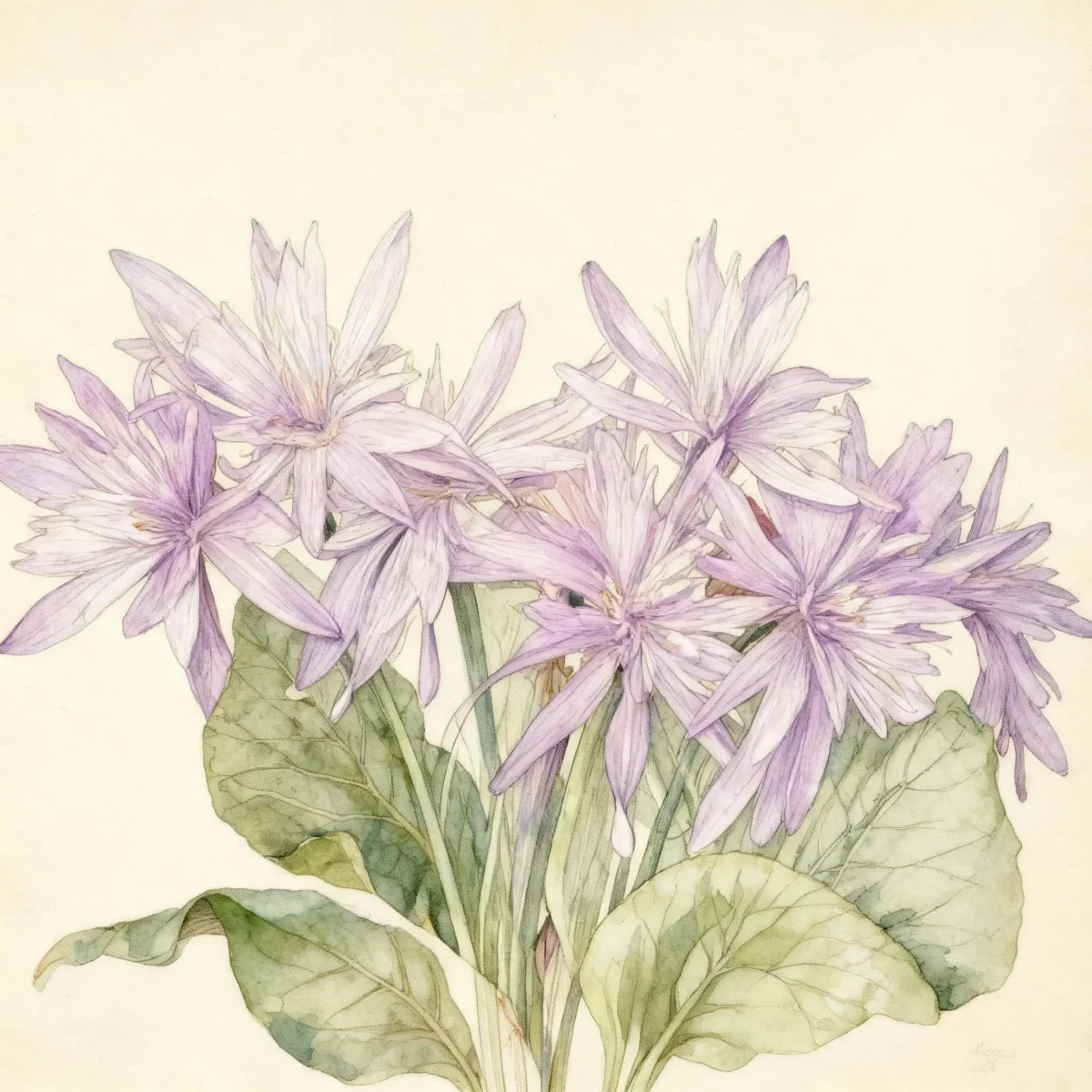
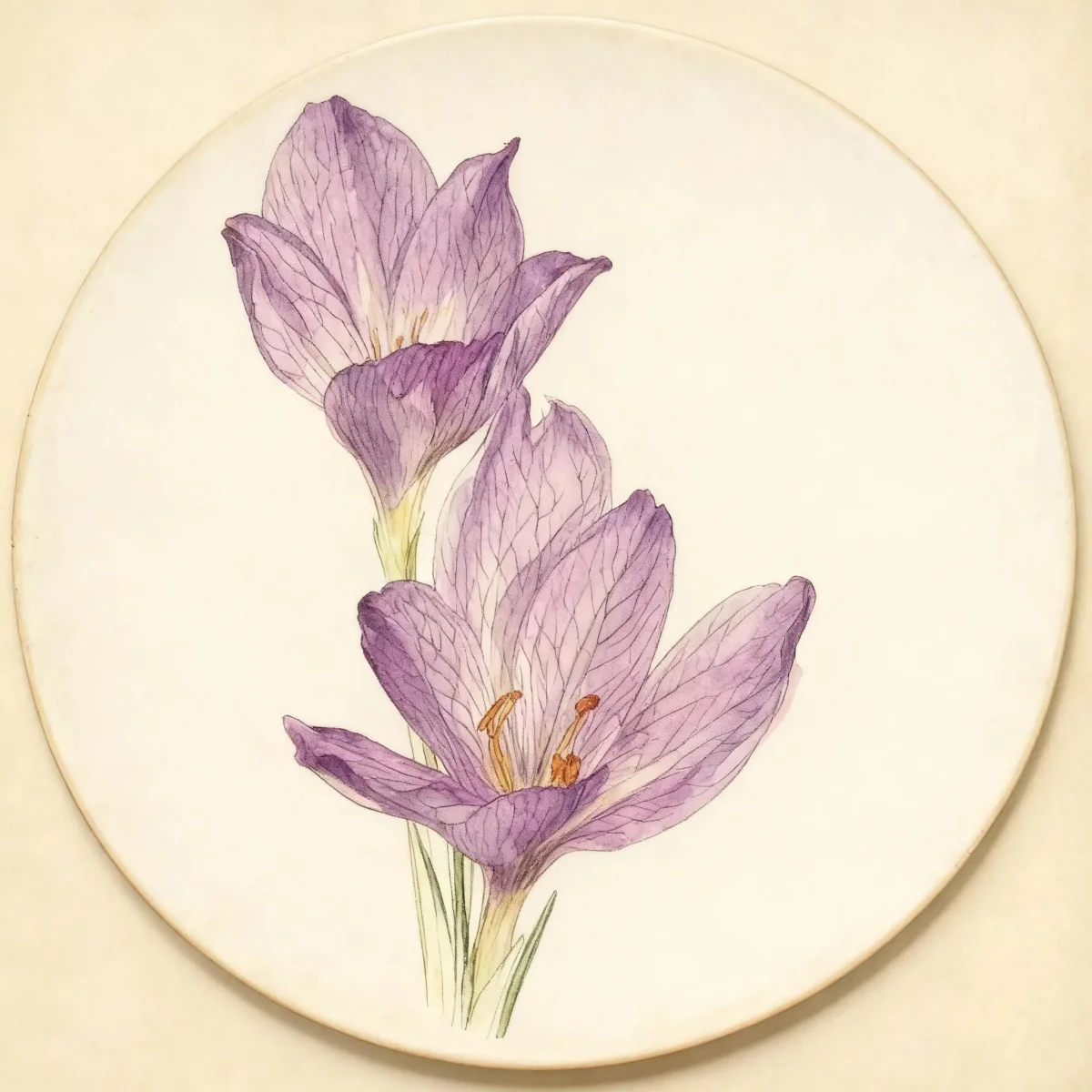
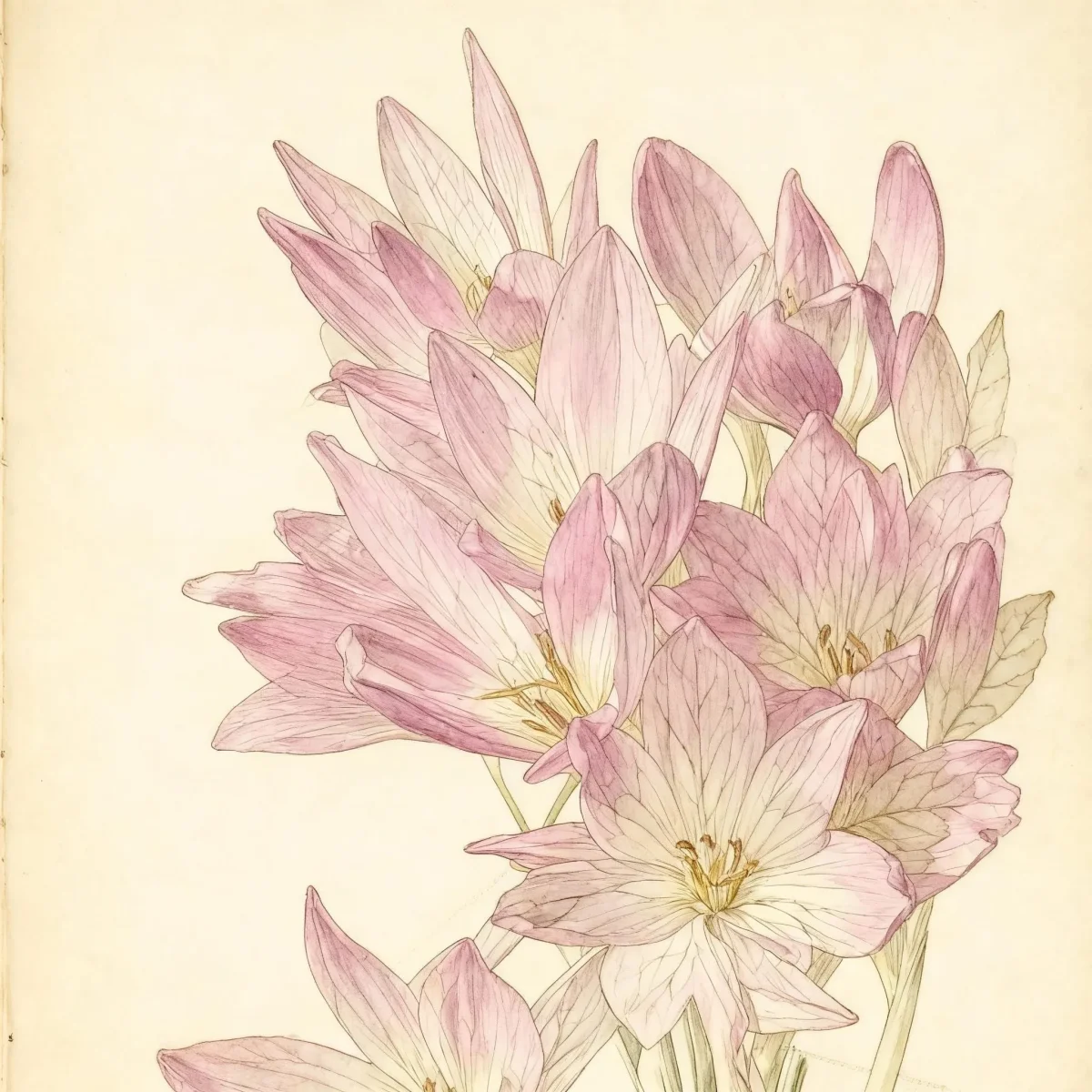
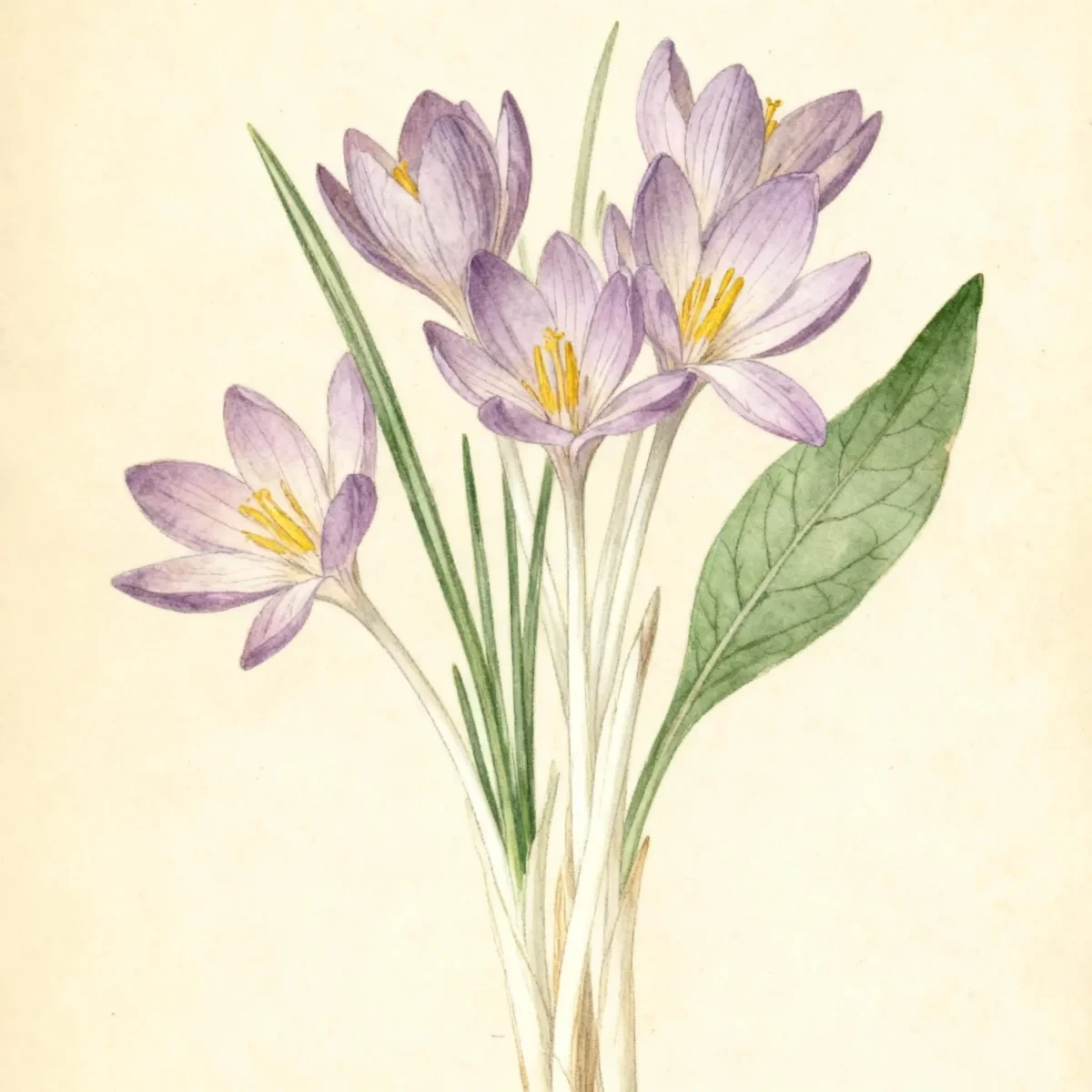
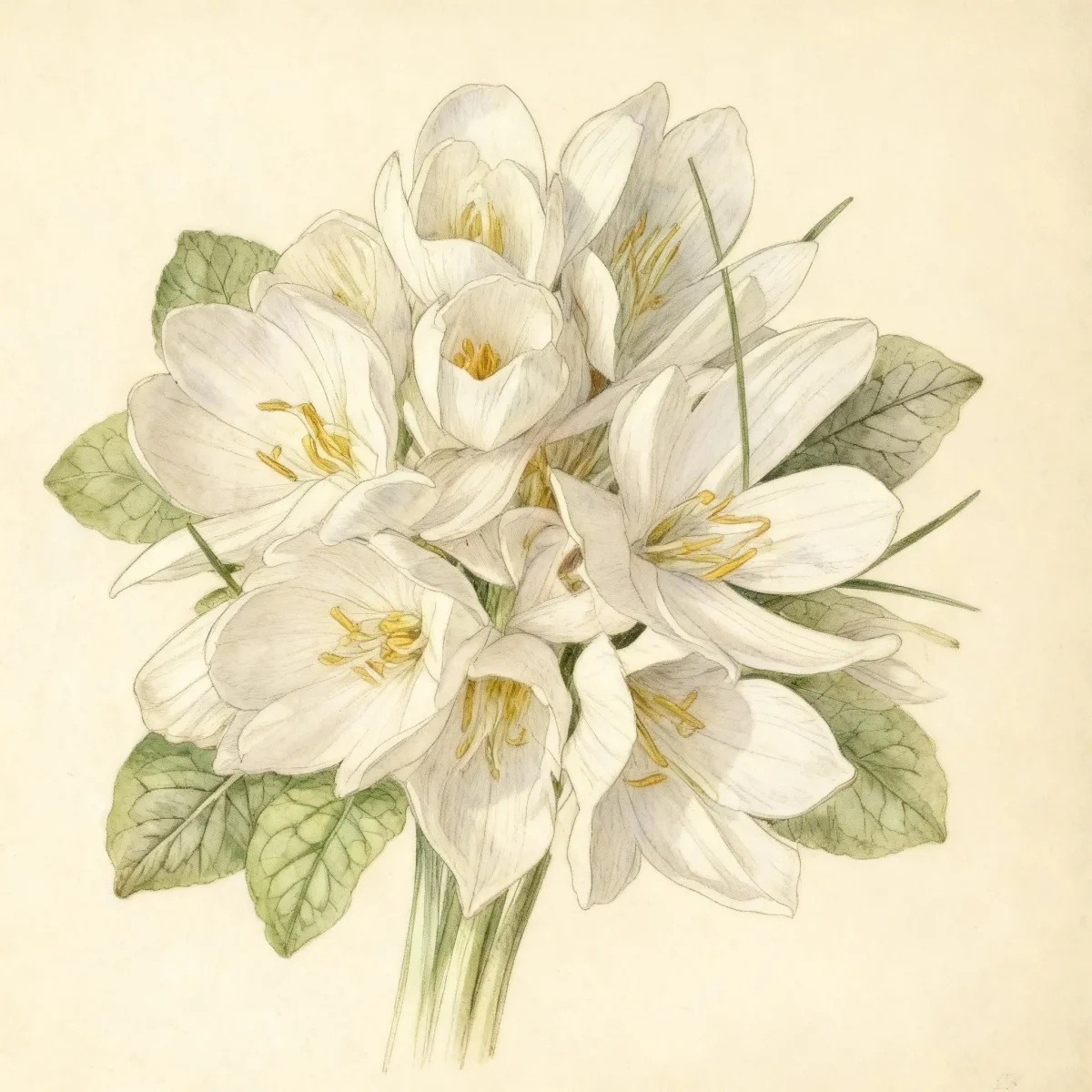
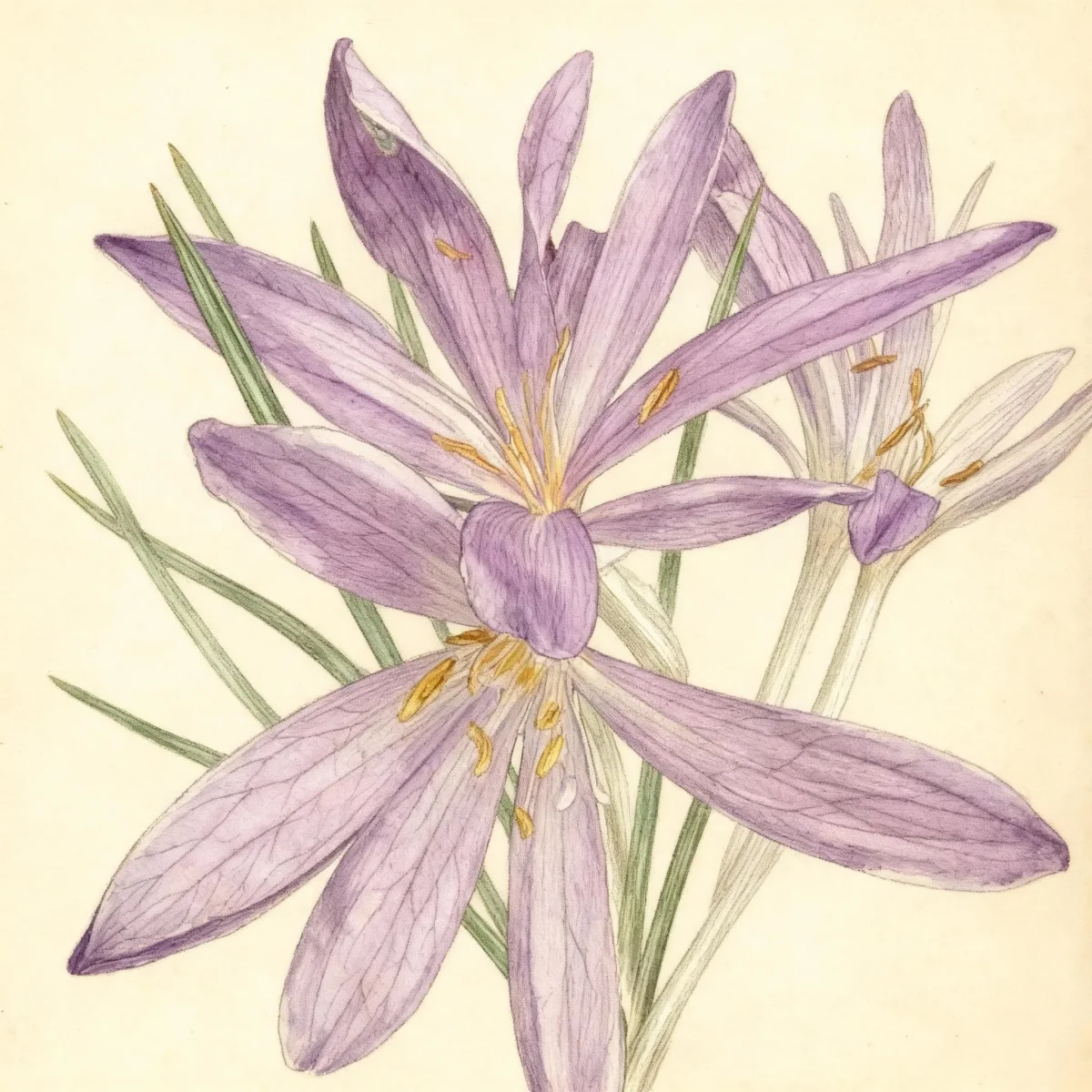
Autumn crocus (Colchicum (group))
Discover Colchicum (group), the Autumn crocus, blooming pink to white in fall. Low maintenance bulb for zones 4-7.
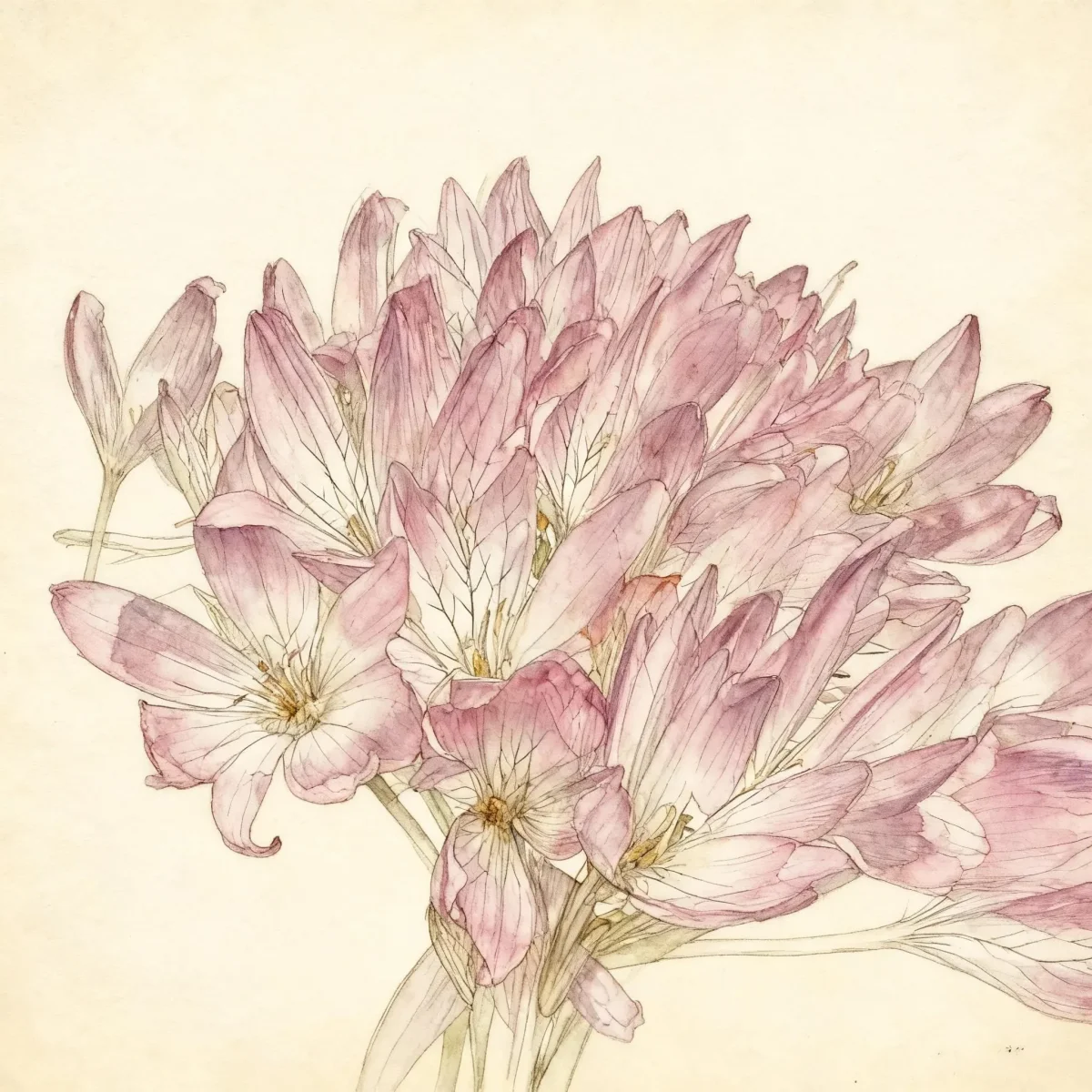

Bloom Boldly, No Matter the Season - Sweatshirt
Cozy organic cotton sweatshirt featuring our exclusive Purple Coneflower design. Perfect for gardeners who bloom year-round.
Inspired by the beautiful Autumn crocus
Limited first batch (50) — join the waitlist for early access
Waitlist closes Feb 15, 2026.
Complete Plant Information
Field Guide Continues
Ready for care notes, companion picks, and planting tips?
The map is just the start. The full guide below covers growth habits, seasonal performance, and landscape uses.
Overview
The Autumn crocus, belonging to the genus Colchicum (group), offers a beautiful surprise as many garden favorites fade. These resilient bulbs produce vibrant, goblet-shaped flowers directly from the ground in the late summer or autumn months, providing essential color when the garden needs it most. Once established, the Colchicum (group) naturalizes well, slowly spreading to create drifts of fall-blooming color.
These plants are highly valued for their unique flowering habit: the flowers appear nakedly in autumn, followed by lush foliage in the spring that later dies back as the plant goes dormant for summer. They are remarkably low-maintenance once planted in the correct spot, requiring minimal intervention throughout the year.
Planting Autumn crocus offers fantastic utility for late-season interest, filling gaps where spring and summer perennials have finished blooming. Their ease of care and reliable fall show make the Colchicum (group) an excellent bulb choice for both beginner and experienced gardeners seeking seasonal punctuation.
Fast Facts
- Plant Family: Colchicaceae
- Plant Type: Bulb
- Hardiness Zones: USDA Zones 4-7
- Size at Maturity:
- Height: 0.5-0.75 ft
- Spread: 0.5-0.75 ft
- Bloom Time: September to October
- Bloom Description: Pink to white to lavender
- Sun Exposure: Full sun to part shade
- Water Needs: Medium
- Maintenance Level: Low
How to Grow
To ensure the best autumn display, plant your Colchicum (group) corms in August. They thrive in average, well-drained soils with medium moisture, performing optimally in light shade or full sun, though deep, humusy soils are preferred. Plant the corms approximately 3 inches deep and space them about 6 inches apart to allow room for future naturalization.
Maintenance for this reliable bulb is generally low. Provide medium water, ensuring the soil remains consistently moist but never saturated, as poorly-drained wet soils can lead to corm rot. No routine fertilizing is usually necessary if the soil structure is adequate.
If division becomes necessary, the best time to handle established clumps is during their mid-summer dormant period when the foliage has completely yellowed. Be sure to locate the planting site carefully, as you may forget where they are buried by the time the flowers surface again in the fall.
Landscape Uses
The Autumn crocus excels in understated locations or as natural drifts within the landscape. They are ideal for meadows, woodlands, or along shaded paths where their early bloom can surprise passersby. They are also excellent for filling pockets in borders where summer perennials are beginning to wane, providing a welcome burst of late-season energy.
Because the spring foliage of the Colchicum (group) can become unsightly as it yellows before summer dormancy, it is wise to plant supportive, low-growing ground covers nearby. These companions help mask the foliage decline while benefiting from the same growing conditions. Consider placing them near patios or along walks for immediate visual impact when they flower.
While the unexpected color is marvelous, avoid planting Autumn crocus in the most prominent spots in formal beds where the dying spring foliage will detract from cleaner lines. Their naturalizing tendency makes them perfect for rock gardens or informal groupings instead.
Standout Features
Flower Qualities
- Showy
Noteworthy Characteristics
Colchicum is a genus of about 45 species found across various alpine and subalpine regions of Europe, Asia, and North Africa. Many of these species, including the Autumn crocus, are recognized for flowering in the fall, though some bloom in winter or spring with purple, pink, lilac, yellow, or white blossoms. In the spring, the corm produces 4-6 lance-shaped, dark green leaves up to 14 inches long, which die back by summer, followed by the naked flower stems rising 4-6 inches in late summer to bear goblet-shaped flowers.
Tolerances
- Deer
Potential Problems
This genus generally avoids serious insect or disease issues; however, gardeners should remain vigilant for slug and snail damage, especially near tender emerging flowers. Botrytis can occasionally cause problems, while corm rot is a significant risk if the soil drainage is poor and remains waterlogged. A common cultural issue is weak flower stems that tend to flop over prematurely. Critically, all parts of plants in the genus Colchicum are toxic to humans if ingested, particularly the seeds and corms; always wear gloves when handling the bulbs to prevent potential skin irritation.
Frequently Asked Questions
What hardiness zones is Autumn crocus suitable for?
The Autumn crocus is suitable for planting in USDA Hardiness Zones 4 through 7.
How large does Autumn crocus grow?
This plant typically reaches a height between 0.5 and 0.75 feet, with a spread ranging from 0.5 to 0.75 feet at maturity.
When does Autumn crocus bloom?
The lovely blooms of the Autumn crocus appear from September to October, showcasing colors ranging from pink to white to lavender.
What sun exposure does Autumn crocus need?
This genus performs best in locations receiving full sun to part shade.
Conclusion
The Colchicum (group), commonly known as Autumn crocus, brings unparalleled color late in the season, revitalizing garden borders just as other plants fade. Their requirement for low maintenance combined with their unique spring foliage/autumn flower cycle makes them a compelling addition to the landscape. Before planting, check your local hardiness zone compatibility and make sure you select a planting site with reliable drainage for successful flowering of the Autumn crocus this fall.
Companion Planting
Choosing appropriate companions is key to managing the Colchicum (group)‘s dual personality—showy fall flowers followed by declining spring foliage. Select low-growing perennials that emerge later in the season to help hide the yellowing leaves of the autumn crocus during late spring. Good partners include low spreading Sedums, creeping thyme, or late-blooming ornamental grasses whose structure remains attractive throughout the summer.
These companions should share the need for medium moisture and partial to full sun exposure. By planting low, dense ground covers around the base of the Colchicum (group), you gain visual continuity without disturbing the dormant corms beneath the soil surface during the summer months.
Seasonal Care Calendar
Early autumn, typically August, is the crucial window for planting Colchicum corms to ensure same-year bloom. Focus on providing consistent, medium moisture during the growing periods of both fall (for flowers) and early spring (for foliage).
As late spring arrives and the leaves begin to yellow, resist the urge to cut them back immediately. Allow the foliage to fully decline and die back naturally so the corm can store sufficient energy for the following autumn. Once yellowing is complete, the area can be tidied up for summer.
Winter care is minimal, as the corms naturally develop hardiness within zones 4-7. Avoid disturbing or cultivating the soil deeply in the summer dormant period unless you intend to divide the naturalizing clumps.