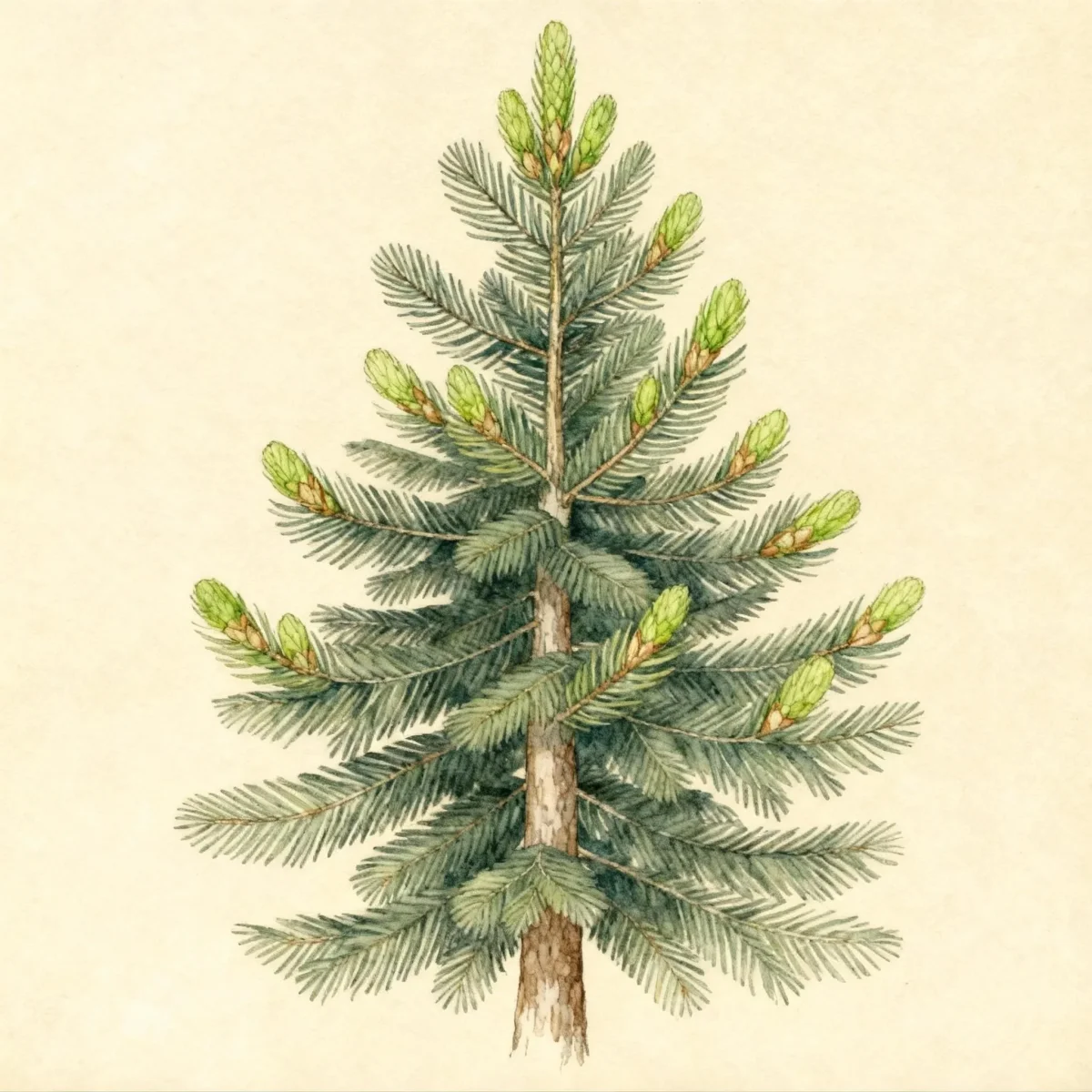
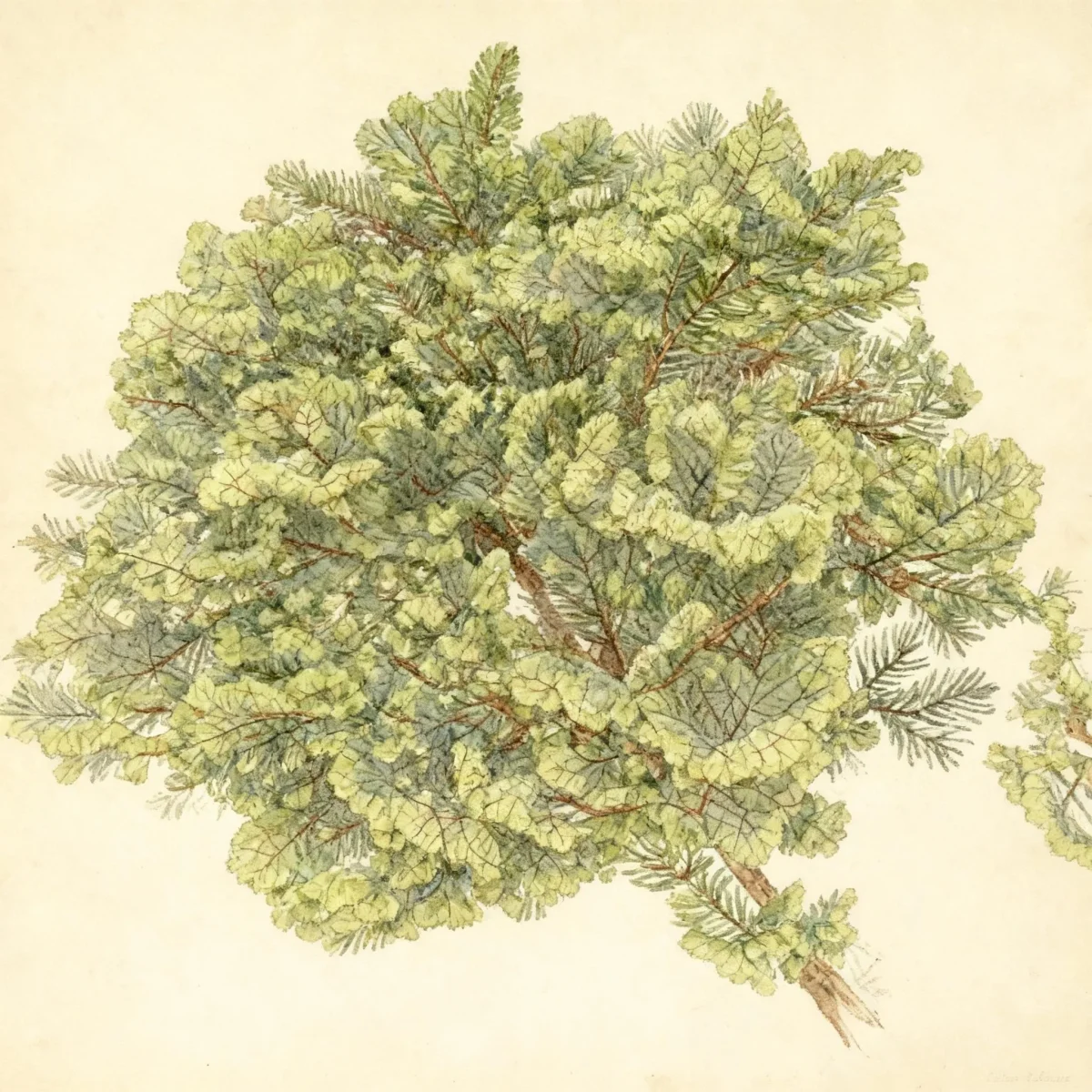
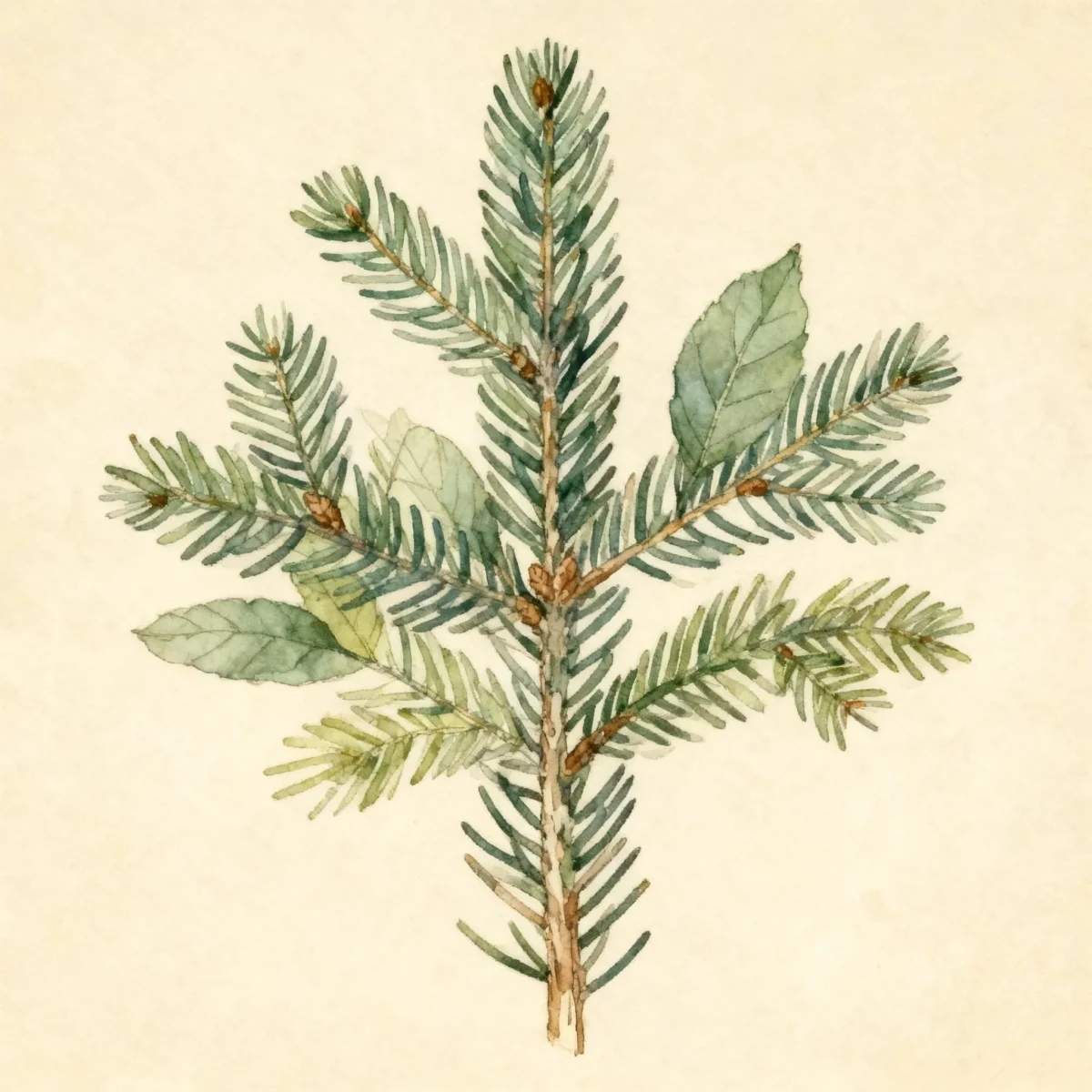
Caucasian fir (Abies nordmanniana 'Brandt')
Discover Abies nordmanniana 'Brandt', the dwarf Caucasian fir. Pyramidal, dense evergreen perfect for specimen use in Zones 4-6.

Bloom Boldly, No Matter the Season - Sweatshirt
Cozy organic cotton sweatshirt featuring our exclusive Purple Coneflower design. Perfect for gardeners who bloom year-round.
Inspired by the beautiful Caucasian fir
Limited first batch (50) — join the waitlist for early access
Waitlist closes Feb 15, 2026.
Complete Plant Information
Field Guide Continues
Ready for care notes, companion picks, and planting tips?
The map is just the start. The full guide below covers growth habits, seasonal performance, and landscape uses.
Overview
The Abies nordmanniana ‘Brandt’, known commercially as the Caucasian fir, is a highly valued, dense, dwarf cultivar perfect for smaller garden spaces where the full-sized species would overwhelm. This coniferous evergreen maintains a striking pyramidal shape with densely packed, glossy dark green needles that feature distinctive white bands underneath, adding textural contrast to the landscape. As a slow-growing specimen, the Abies nordmanniana ‘Brandt’ provides year-round structure and reliable color, making it an excellent focal point for foundation plantings or rock gardens. Gardeners seeking robust, low-maintenance evergreens suitable for cooler climates will find this cultivar highly rewarding.
Fast Facts
- Plant Family: Pinaceae
- Plant Type: Needled evergreen
- Hardiness Zones: USDA Zones 4-6
- Size at Maturity:
- Height: 4-5 ft
- Spread: 3-4 ft
- Bloom Time: Non-flowering
- Bloom Description: Non-flowering
- Sun Exposure: Full sun to part shade
- Water Needs: Medium
- Maintenance Level: Medium
How to Grow
Planting the Caucasian fir should ideally occur in early spring or fall when soil temperatures are moderate, allowing the roots to establish before summer heat or winter frost. This species thrives best when situated in rich, consistently moist, acidic, and well-drained soils. While it tolerates partial shade, Abies nordmanniana ‘Brandt’ performs optimally in full sun, but care must be taken as trees grow poorly in heavy clay. Avoid locations prone to standing water, which can predispose the tree to root rot.
Consistent moisture is key for this fir, especially during its establishment period; plan for medium watering, ensuring the soil stays damp but never soggy. Fertilization is generally unnecessary if the soil is rich, but a balanced, slow-release fertilizer applied in early spring can support health. Pruning is usually minimal for the ‘Brandt’ selection, as its desirable dwarf, upright spreading form develops naturally. Focus pruning efforts only on removing dead or damaged wood.
Gardeners must respect the inherent climatic needs of the Caucasian fir. It is natively adapted to cool mountain climates and is generally not recommended for planting in regions experiencing consistently hot and humid summer conditions, particularly south of USDA Zone 6 survival areas. Protecting the root zone with a layer of organic mulch will help maintain consistent soil temperature and moisture levels throughout the growing season.
Landscape Uses
The dwarf stature of Abies nordmanniana ‘Brandt’ makes it an exceptionally versatile specimen fir for the landscape. Its compact size allows it to serve as an ornamental yard tree without demanding excessive space, perfect for defining the edge of a border or anchoring a corner planting. Unlike the towering species, this cultivar works beautifully as a foreground element in mixed conifer beds, providing necessary year-round structure that complements deciduous shrubs and perennials.
Because of its formal, pyramidal habit, the Abies nordmanniana ‘Brandt’ contrasts well with mounding or spreading groundcovers or finer textured, brighter green companion plants. Consider pairing it with silver Artemisia or low-growing Junipers to highlight the deep green foliage of the fir. While the larger species is a popular commercial Christmas tree, this dwarf form offers a permanent, low-profile evergreen focal point for residential or commercial plantings desiring year-round architectural interest.
Standout Features
Noteworthy Characteristics
The needles of the Caucasian fir are flattened and glossy dark green, rarely exceeding 1 1/4 inches in length, accented underneath by two conspicuous white bands. Cones appear upright on the branches, which is characteristic of true firs, and disintegrate upon ripening. The cultivar ‘Brandt’ specifically retains an upright spreading habit, reaching just 5 feet tall and 4 feet wide over a decade, ensuring it provides year-round structure without massive growth.
Tolerances
- Generally intolerant of urban pollution
Potential Problems
While generally robust, the Abies nordmanniana ‘Brandt’ can be susceptible to several pest and disease issues, primarily when environmental stress is present, such as excessive heat or humidity. Common insect threats include scale, bagworms, aphids, spruce budworms, and the potentially serious balsam woolly adelgids. Cultural stress, such as poor drainage, can invite fungal problems like cankers, heart rot, and root rot.
Management relies heavily on prevention through proper siting—ensuring excellent drainage and avoiding the harsh heat south of Zone 6 is crucial. Regular inspection, especially in spring and fall, allows gardeners to spot infestations early. Treating pests like spider mites, which can occur in hot conditions, often requires horticultural oil or insecticidal soap applied according to label directions.
Frequently Asked Questions
What hardiness zones is Caucasian fir suitable for?
The Abies nordmanniana ‘Brandt’ is hardy and recommended for USDA Zones 4 through 6.
How large does Abies nordmanniana ‘Brandt’ grow?
This dwarf cultivar typically matures to a height between 4 and 5 feet, with a spread ranging from 3 to 4 feet over ten years.
What sun exposure does Caucasian fir need?
This needled evergreen performs best when situated where it receives full sun, though it can tolerate partial shade conditions.
When does Abies nordmanniana ‘Brandt’ bloom?
This plant is non-flowering, as is typical for conifers, and does not produce noticeable bloom structures.
Conclusion
The Abies nordmanniana ‘Brandt’ offers gardeners a dense, manageable, and attractive evergreen solution, maintaining the classic appeal of the Caucasian fir in a dwarf package ideal for smaller settings. Its rich green color and strong vertical shape provide necessary year-round structure. Before planting this excellent specimen fir, confirm that your garden resides within USDA Zones 4-6 and plan for acidic, moist, well-drained soil.
Companion Planting Considerations
The cultural requirements of Abies nordmanniana ‘Brandt’—acidic soil, consistent moisture, and preference for cooler conditions—dictate suitable companions. Plants that naturally inhabit woodland edges or slightly acidic borders will thrive nearby. Consider low-growing, acid-loving groundcovers such as spreading forms of Vaccinium (Blueberry relatives) or Gaultheria procumbens (Wintergreen) to carpet the area around the base.
For vertical contrast in sheltered areas, pairing the dark green of the Caucasian fir with plants featuring variegated or lighter foliage works well. Hosta varieties with chartreuse or blue leaves can add brightness without competing for the same root space, provided the soil isn’t too compacted. Ensure that any companion shrubs selected also prefer the medium water regime necessary to keep the fir healthy.
Design Ideas for Dwarf Conifers
Utilizing the Abies nordmanniana ‘Brandt’ as a specimen brings immediate focal interest to the landscape, especially near entrances or patios where its texture can be closely appreciated. Because it exhibits an upright spreading form, it works excellently flanking a walkway or gateway, framing an entry point without completely blocking views, unlike taller varieties. Its slow growth rate means it requires minimal shaping to maintain its intended visual role long-term.
In contemporary or Japanese-inspired garden designs, the Caucasian fir cultivar fits seamlessly due to its defined shape and formal appearance. Place it near elements like simple gravel beds, large boulders, or dark mulch to maximize the visual impact of its dense, dark foliage. Remember that the cones, when present, sit upright, reinforcing the vertical lines already established by the branch structure.