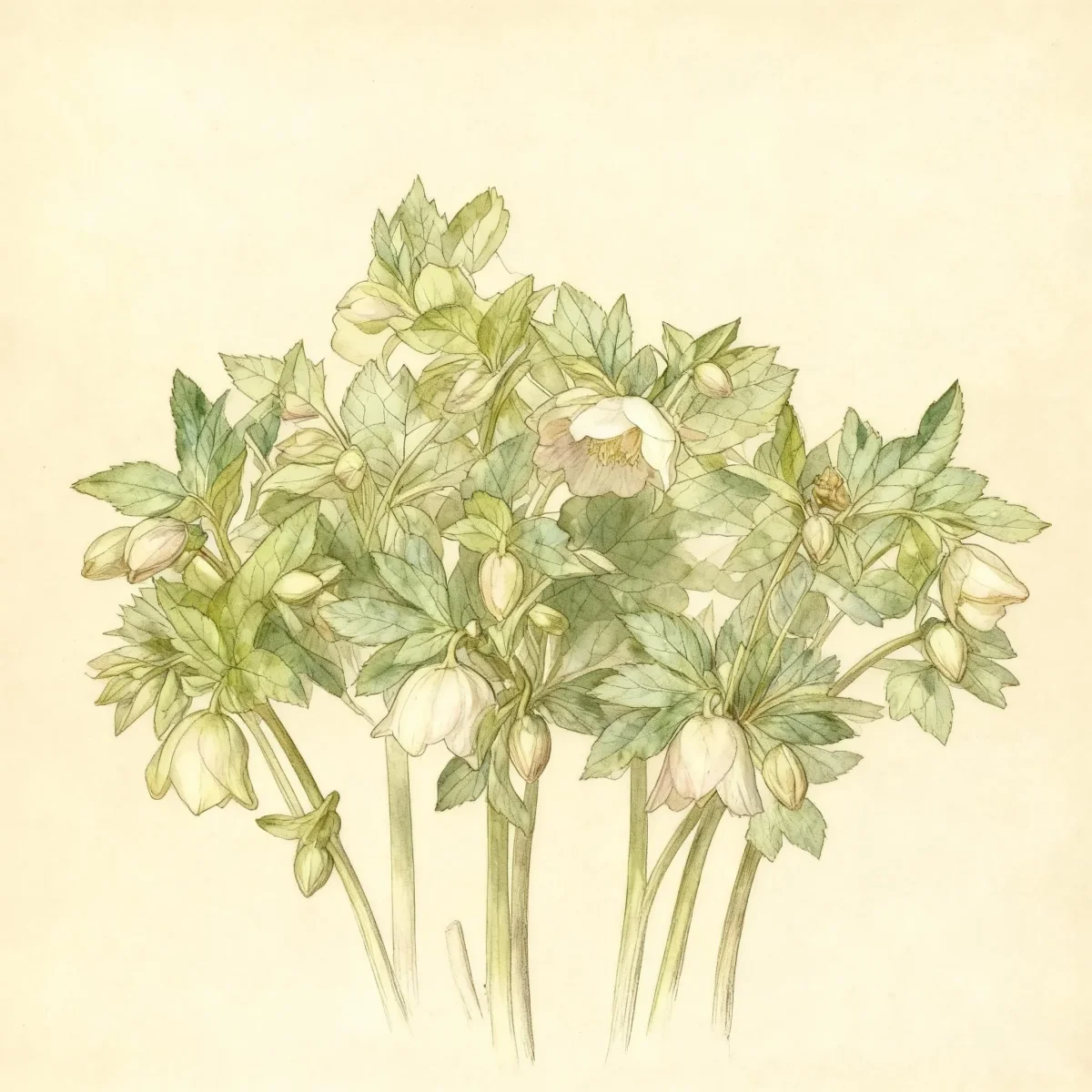
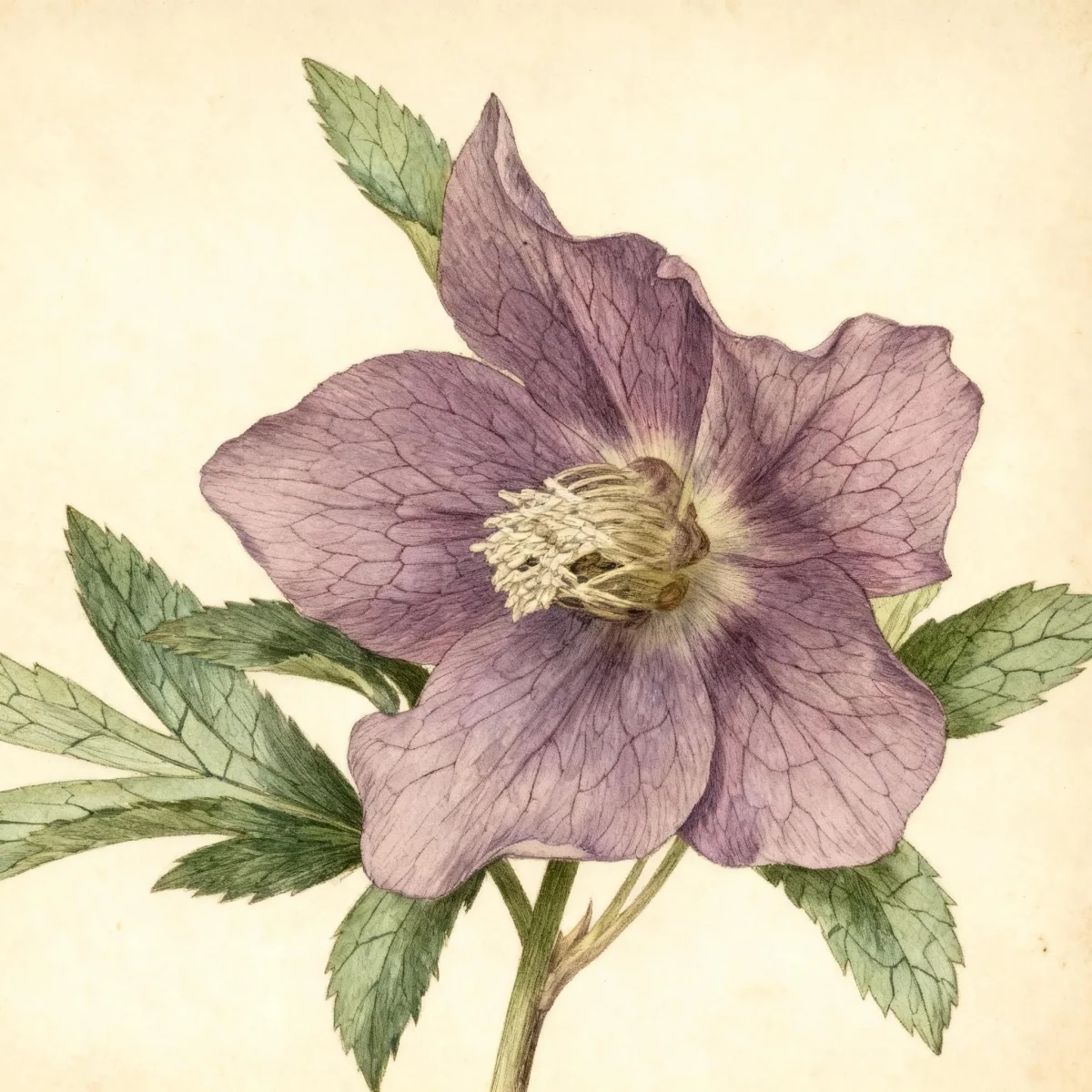
Hellebore (Helleborus × hybridus 'Pine Knot Best Darks')
Helleborus × hybridus 'Pine Knot Best Darks' offers stunning dark blooms from Feb-Apr. This low-maintenance Hellebore thrives in shade.
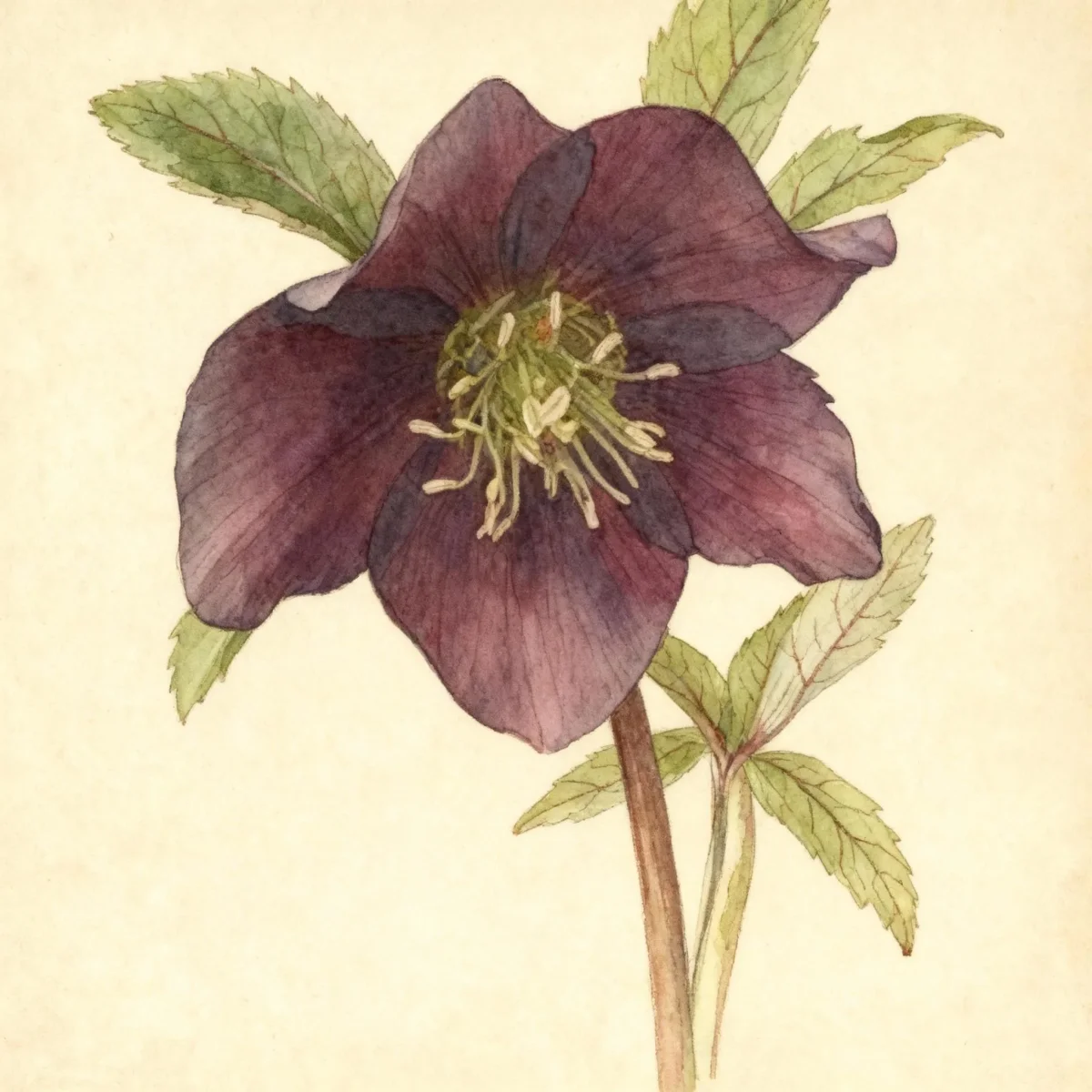

Bloom Boldly, No Matter the Season - Sweatshirt
Cozy organic cotton sweatshirt featuring our exclusive Purple Coneflower design. Perfect for gardeners who bloom year-round.
Inspired by the beautiful Hellebore
Limited first batch (50) — join the waitlist for early access
Waitlist closes Feb 15, 2026.
Complete Plant Information
Field Guide Continues
Ready for care notes, companion picks, and planting tips?
The map is just the start. The full guide below covers growth habits, seasonal performance, and landscape uses.
Overview
The Helleborus × hybridus ‘Pine Knot Best Darks’ is highly valued for its extraordinarily early bloom time, often signaling the end of winter. This specific selection of Hellebore features deeply colored, dark red to purple-black flowers, providing vital color when little else is showing life in the garden. As an evergreen perennial, this Hellebore offers year-round structural interest.
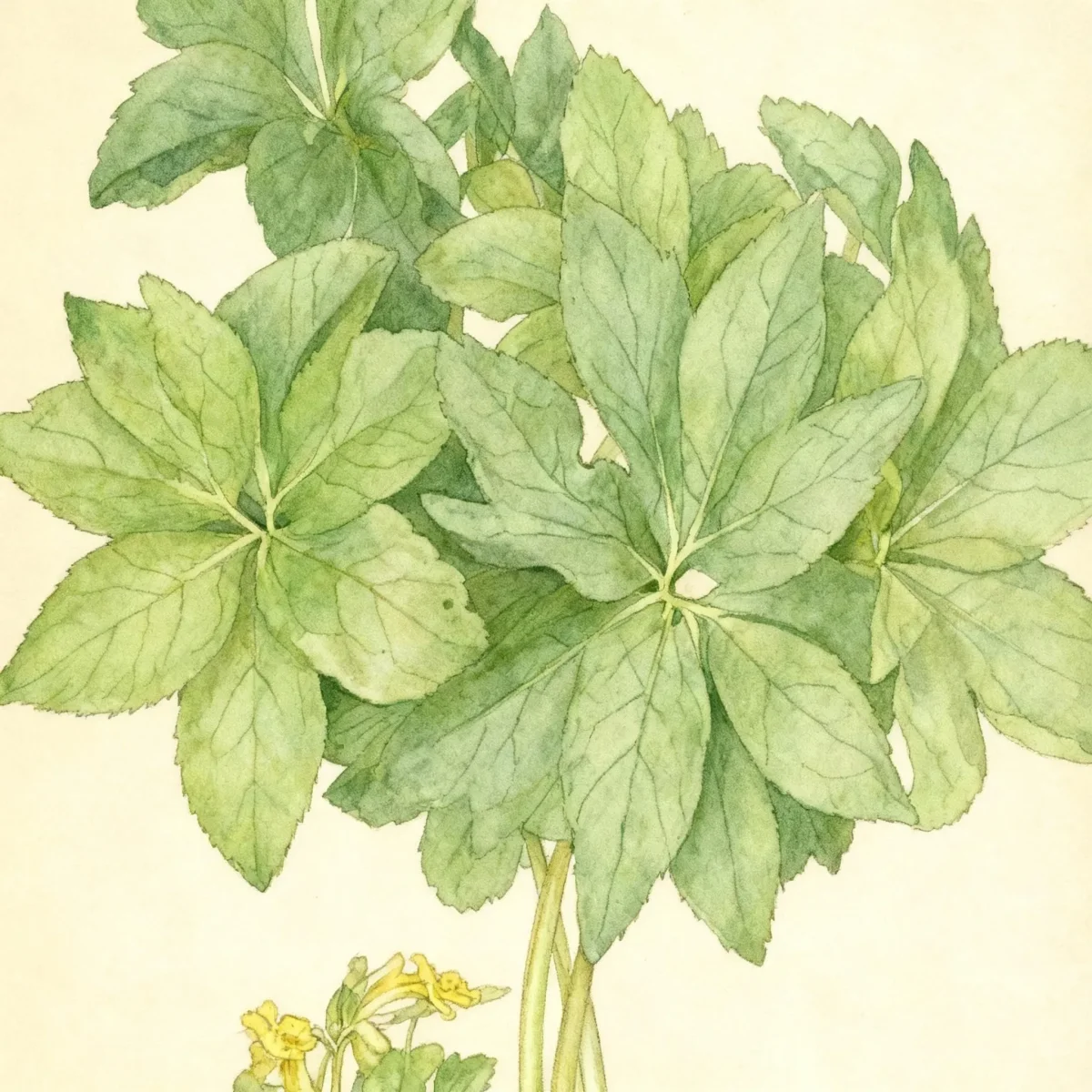
Growing into bushy, clump-forming mounds, Helleborus × hybridus ‘Pine Knot Best Darks’ is surprisingly low maintenance once established. Its glossy, divided foliage provides an appealing dark green backdrop for the cup-shaped blooms that emerge on branched stems. Gardeners prize this variety for its resilience and ability to flourish in conditions where many other flowering plants struggle.
These hybrid Lenten roses are excellent for providing structure in shady borders or woodland settings. The exceptional hardiness and tolerance for deep shade make the Helleborus × hybridus ‘Pine Knot Best Darks’ a foundational plant for perennial shade gardens. Enjoying these early flowers near a walkway ensures maximum seasonal enjoyment.
Fast Facts
- Plant Family: Ranunculaceae
- Plant Type: Herbaceous perennial
- Hardiness Zones: USDA Zones 4-9
- Size at Maturity:
- Height: 1-1.5 ft
- Spread: 1-1.5 ft
- Bloom Time: February to April
- Bloom Description: Dark red to purple black
- Sun Exposure: Part shade to full shade
- Water Needs: Medium
- Maintenance Level: Low
How to Grow
Planting Helleborus × hybridus ‘Pine Knot Best Darks’ should occur in the late summer or early fall to allow root establishment before winter stress. These plants thrive best in organically rich, fertile, and humusy soils that are well-drained. Ensure the planting location provides at least part shade, preferring light to moderate shade overall, as intense afternoon sun can scorch the evergreen foliage.
Water needs for this Hellebore are medium; maintain consistent, medium moisture, particularly during dry periods. Although established plants are somewhat drought-tolerant, consistent moisture aids in robust growth and flower production. Fertilization is generally not required if the soil is rich, but an annual top-dressing of compost will support the plant’s needs.
After the flowers fade, cut back the spent flowering stems to encourage the production of fresh, attractive new foliage. Established clumps of Hellebore may become congested and benefit from division in late summer or early fall. Be aware that new plants grown from seed can take up to two years before they produce their first set of blooms.
If dealing with extremely harsh winters, situate your Helleborus × hybridus ‘Pine Knot Best Darks’ where it is protected from severe cold winds or where it may receive natural insulation from snow cover. This simple siting adjustment helps prevent the evergreen leaves from becoming ragged or scorched.
Landscape Uses
The ability of the Hellebore to bloom early makes it a star in foundational landscape plantings. Planting these in large groups near patios, entrances, or kitchen windows ensures that their mid-to-late winter flowers can be fully appreciated. They serve as excellent transitional plants, bridging the gap between winter dormancy and spring explosion.
For design impact, group Helleborus × hybridus ‘Pine Knot Best Darks’ under the canopy of larger trees or large shrubs, fitting perfectly into woodland garden schemes. The evergreen foliage provides year-round ground cover, effectively masking any bare spots that might appear elsewhere in the shady garden during winter months. They spread slowly via self-seeding, which can lead to attractive naturalized drifts over time.
Consider pairing these dark-flowering beauties with other shade-loving, late-winter bloomers like snowdrops (Galanthus) or early spring bulbs like daffodils. The contrast between the delicate early bulbs and the sturdy structure of the Hellebore makes for a sophisticated early-season display.
Standout Features
Flower Qualities
- Showy
Noteworthy Characteristics
Hybrid hellebores, sometimes commonly called hybrid Lenten roses or hybrid winter roses, are bushy, clump-forming perennials which typically grow to 12-15” tall. They are noted for producing single, cup-shaped flowers (typically 2-3” diameter) with five showy, usually overlapping petals (technically sepals), but sometimes come in a double flowered form. The cultivar ‘Pine Knot Best Darks’ is specifically selected for its dark flower colors ranging from dark red to purple black, hybridized by Judith and Dick Tyler of Pine Knot Farms. The foliage consists of evergreen, leathery, deeply-lobed leaves that maintain good texture throughout the year.
Tolerances
- Deer
- Heavy Shade
Potential Problems
This Hellebore is generally reliable, presenting no serious insect or disease problems under ideal conditions. Occasionally, gardeners may encounter issues with crown rot, especially if drainage is poor, or localized leaf spot diseases. Prevention involves ensuring excellent soil drainage and avoiding overhead watering late in the day. As a critical warning, remember that the entire plant—leaves, stems, and roots—is poisonous if ingested by humans or pets.
Frequently Asked Questions
What hardiness zones is Hellebore suitable for?
Helleborus × hybridus ‘Pine Knot Best Darks’ is reliably hardy across USDA Zones 4 through 9.
How large does Hellebore grow?
This herbaceous perennial typically reaches a mature height between 1 and 1.5 feet, with an equal spread of 1 to 1.5 feet.
What sun exposure does Helleborus × hybridus ‘Pine Knot Best Darks’ need?
This plant prefers conditions ranging from part shade to full shade, thriving best where it receives protection from the hottest afternoon light.
When does Hellebore bloom?
The showy flowers of the Hellebore usually appear quite early, blooming consistently from February into April, showcasing deep, dark red to purple-black hues.
Conclusion
The Helleborus × hybridus ‘Pine Knot Best Darks’ is an invaluable addition to any shade garden, providing unparalleled, dark floral tones at the very start of the growing season. Its low maintenance demands and evergreen structure contribute significantly to year-round garden appeal. Before planting, confirm your site offers the well-drained soil and protection from harsh winds that this beautiful Hellebore requires for best performance.
Companion Planting
Selecting appropriate companions enhances the early-season show of the Hellebore. Focus on plants that share the same cultural requirements for shade and rich, moist soil. Good partners include early woodland spring ephemerals like Bloodroot (Sanguinaria canadensis) or spring-flowering bulbs such as Scilla (Siberian Squill).
As summer deepens, hostas and ferns offer excellent foliage contrast to the Helleborus × hybridus ‘Pine Knot Best Darks’. Position plants that fill in visually after the Hellebore finishes blooming, ensuring continuous interest in that shady niche throughout the warm months.
Propagation Tips
While established Hellebores can be divided in late summer or fall, growing this specific selection from seed can be unpredictable, as seedlings may not breed true to the parent’s dark coloration. If you opt to divide established clumps, do so carefully, ensuring each section has adequate root mass.
Division is best reserved for older, congested plants exceeding 18 inches across. Wait until the foliage has been cut back after flowering to expose the clump structure, making the division process cleaner and less damaging to the evergreen leaves.