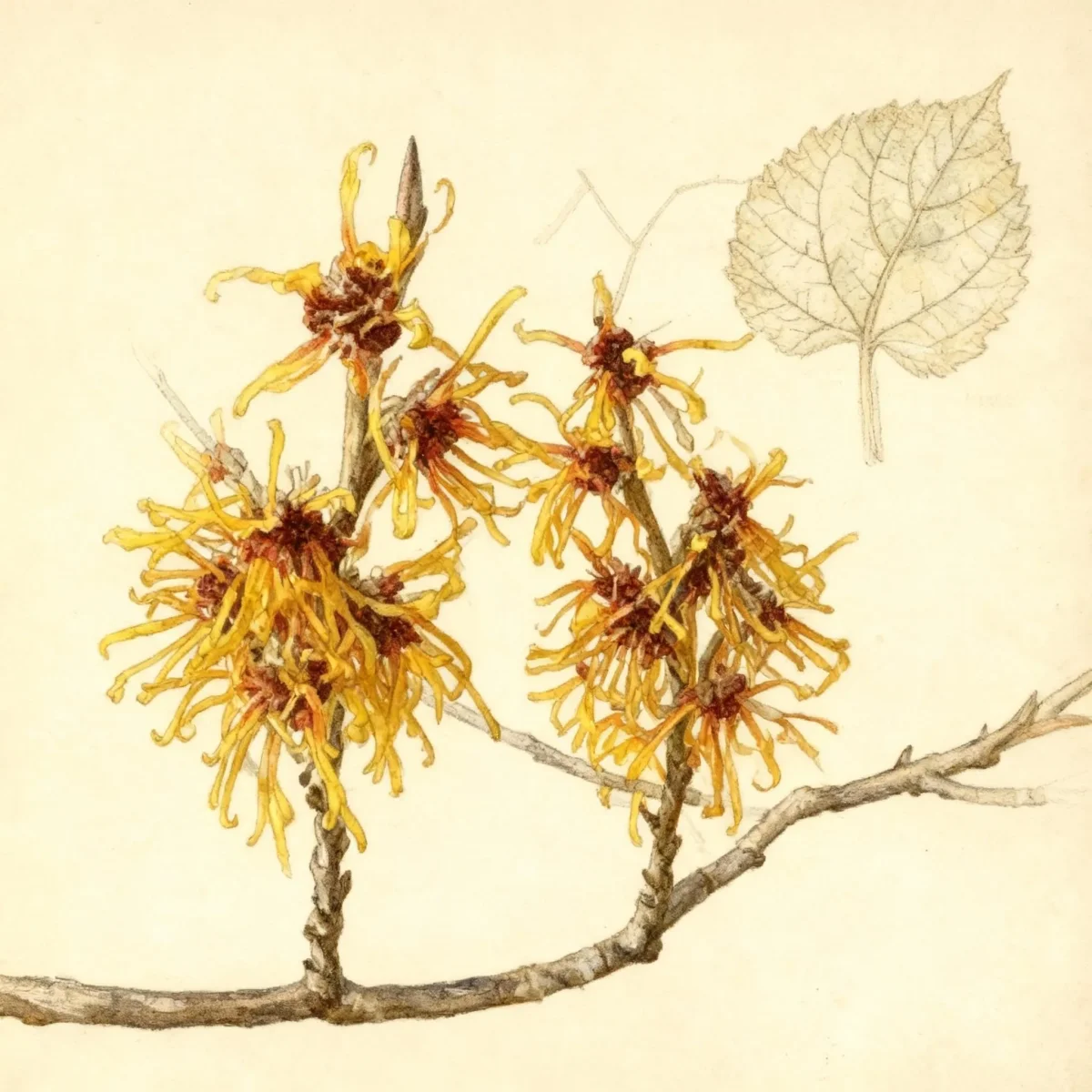
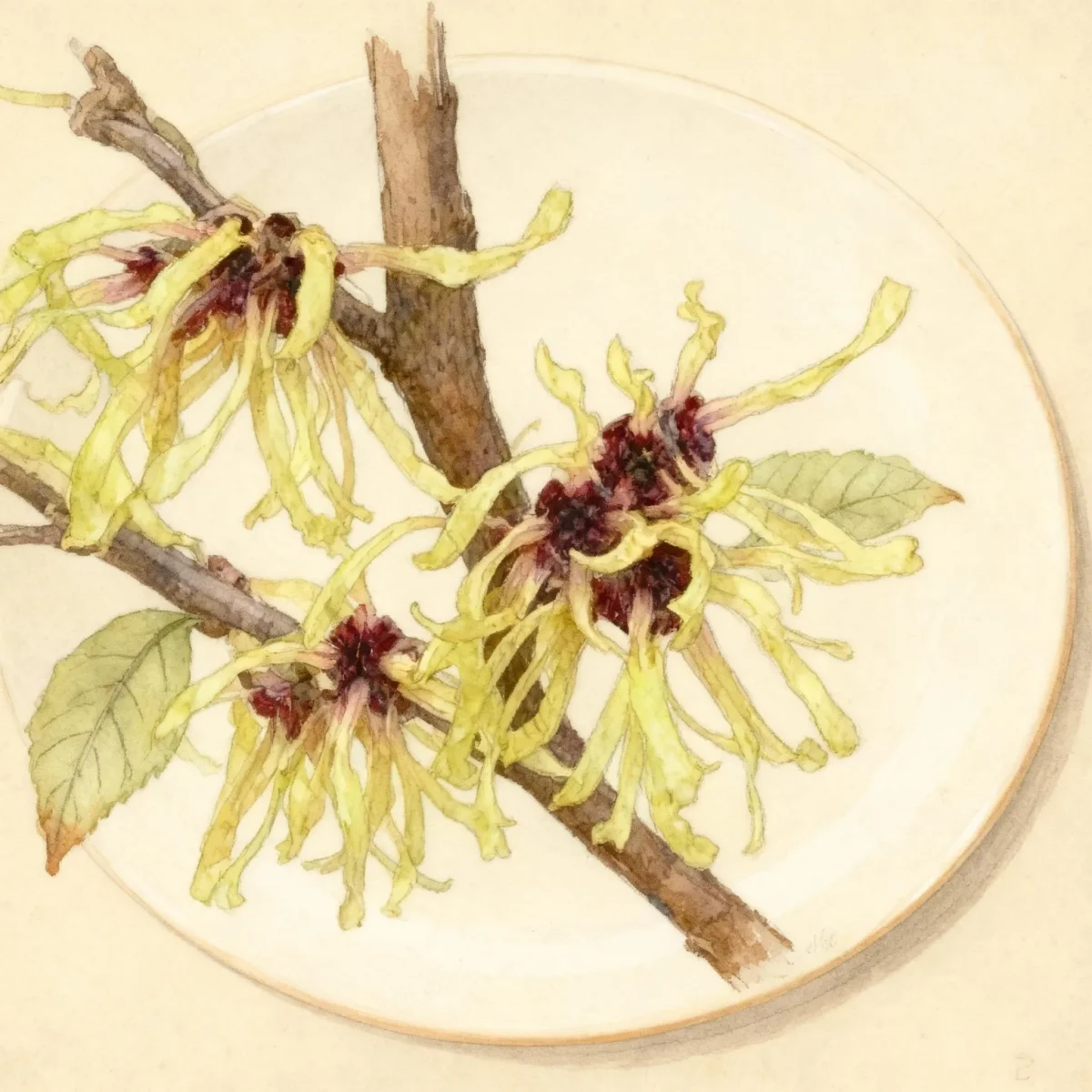
Witch hazel (Hamamelis × intermedia 'Bernstein')
Hamamelis × intermedia 'Bernstein' Witch hazel delivers exceptional winter interest with pale yellow, ribbon-like flowers. A low-maintenance, deciduous shrub for zones 5-8.

Bloom Boldly, No Matter the Season - Sweatshirt
Cozy organic cotton sweatshirt featuring our exclusive Purple Coneflower design. Perfect for gardeners who bloom year-round.
Inspired by the beautiful Witch hazel
Limited first batch (50) — join the waitlist for early access
Waitlist closes Feb 15, 2026.
Complete Plant Information
Field Guide Continues
Ready for care notes, companion picks, and planting tips?
The map is just the start. The full guide below covers growth habits, seasonal performance, and landscape uses.
Overview
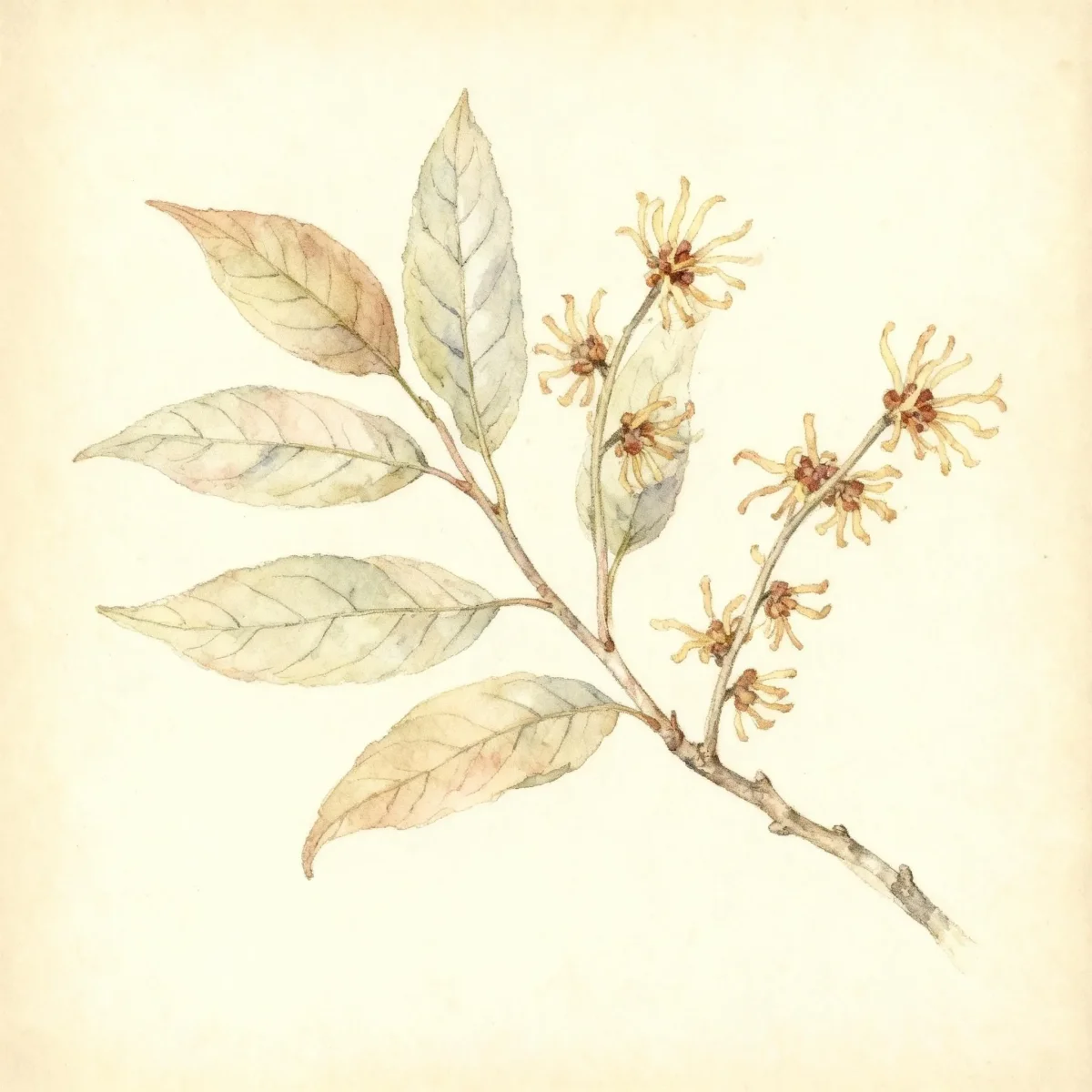
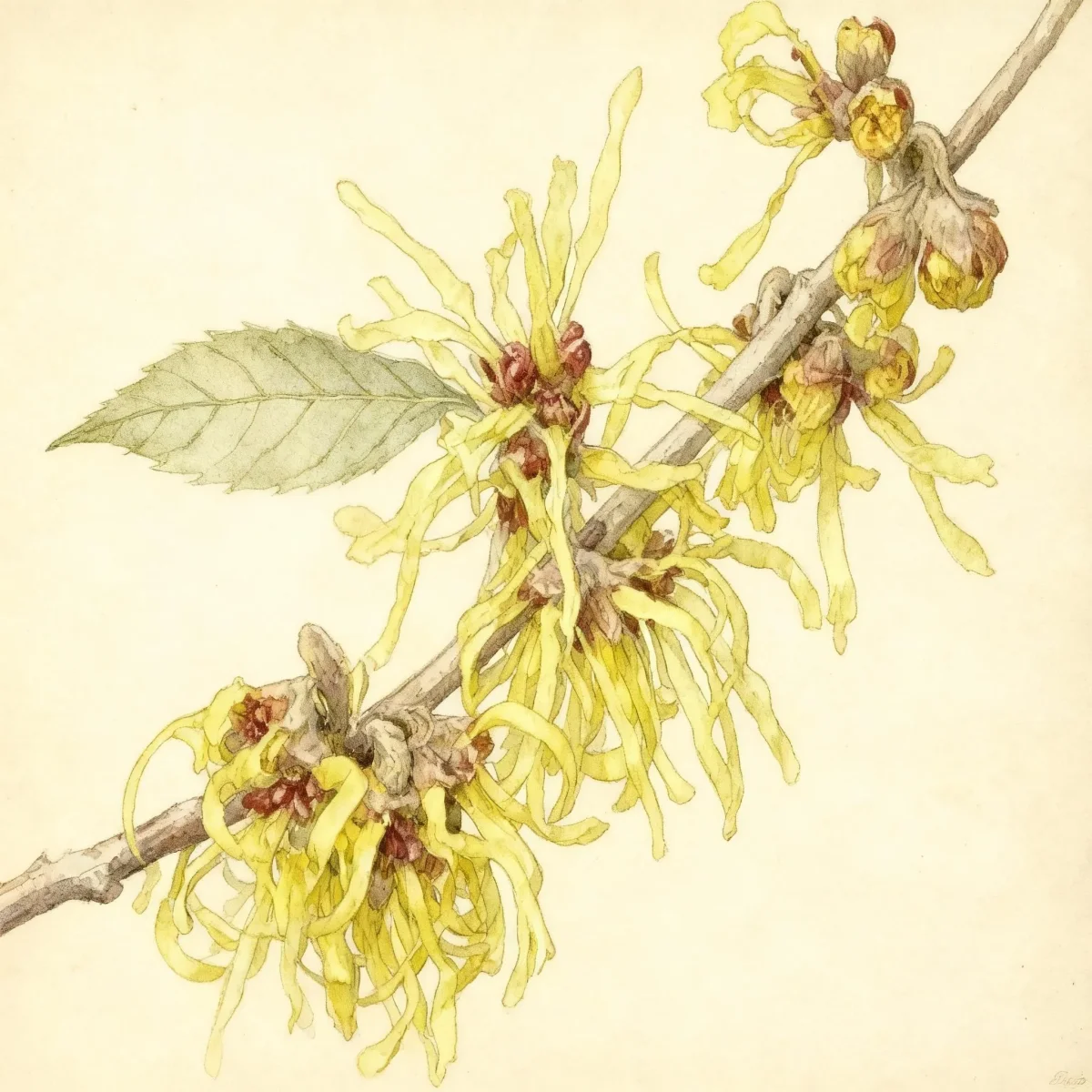
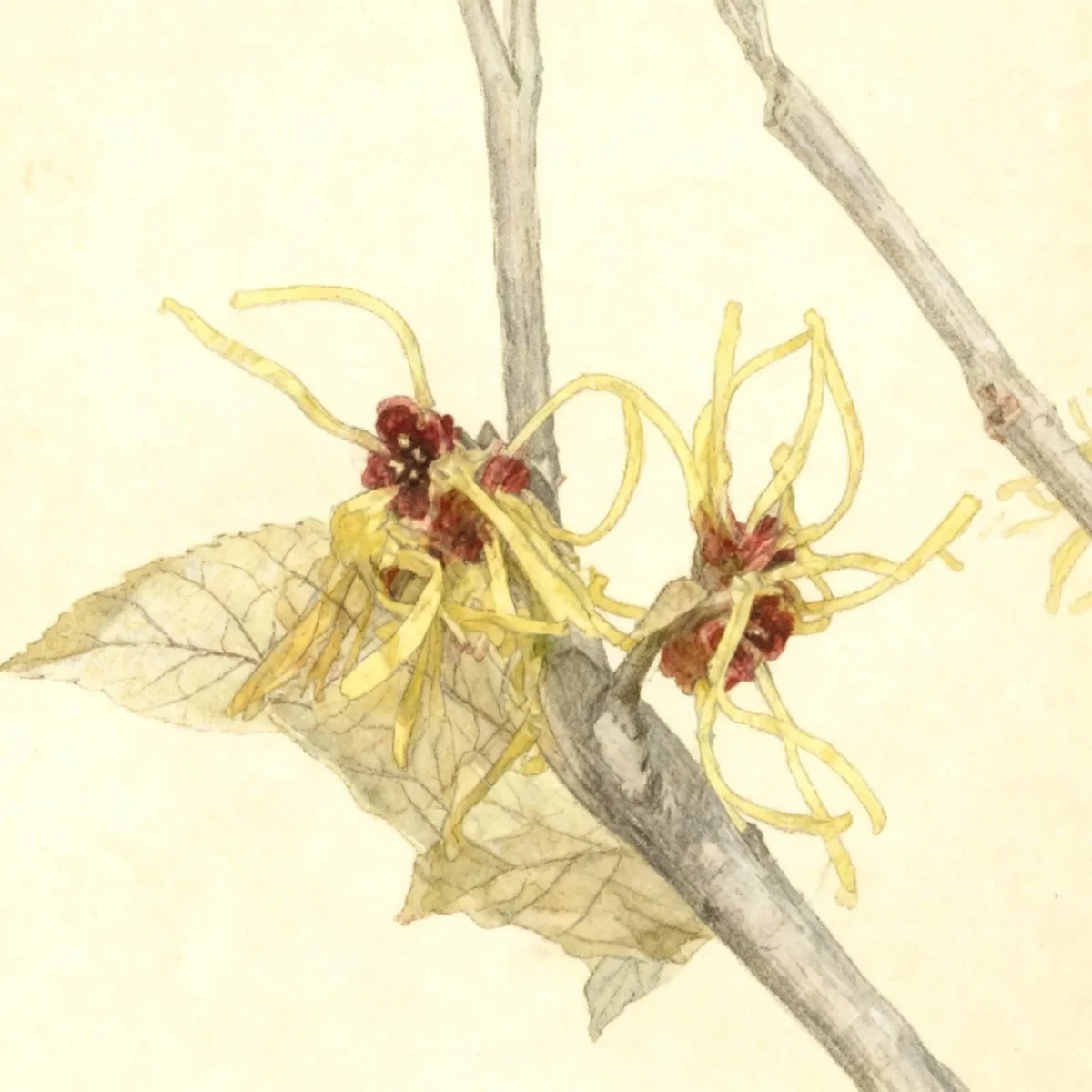
Hamamelis × intermedia ‘Bernstein’ is a prized deciduous shrub, belonging to the Witch hazel family, celebrated specifically for its vigorous presence and brilliant mid-winter flowering display. It offers bright, pale yellow flowers with striking red bases just when the winter landscape needs color most, emerging before the leaves. The resulting effect of Hamamelis × intermedia ‘Bernstein’ on a bare branch structure provides vital visual interest during dormant seasons.
As a hybrid, this Witch hazel combines the best traits of its parent species, resulting in a robust, upright-spreading shrub. It is relatively unfussy regarding soil, though consistency is key to preventing summer stress, making it a low-maintenance star for colder climate gardens. Its ability to thrive where many other shrubs are dormant secures its place as a superior specimen plant.
Gardeners value this variety not just for its flowers, but also for its seasonal structure and decent fall foliage color. Growing Hamamelis × intermedia ‘Bernstein’ rewards the patient gardener with reliable structure and seasonal color, requiring minimal intervention once established.
Fast Facts
- Plant Family: Hamamelidaceae
- Plant Type: Deciduous shrub
- Hardiness Zones: USDA Zones 5-8
- Size at Maturity:
- Height: 8-10 ft
- Spread: 7-9 ft
- Bloom Time: January to March
- Bloom Description: Pale yellow with red at base
- Sun Exposure: Full sun to part shade
- Water Needs: Medium
- Maintenance Level: Low
How to Grow
Planting Hamamelis × intermedia ‘Bernstein’ is best done during the dormant seasons—fall or early spring—in a location that receives full sun for the most prolific flowering. While it tolerates part shade, maximize the stunning bloom time by ensuring maximum light exposure. This Witch hazel thrives in average, medium moisture, well-drained soils. It prefers soil that is organically rich and slightly acidic; integrating compost can greatly benefit establishment.
Consistent moisture is crucial, particularly after planting and during summer heat waves, as drought can lead to leaf scorch. While the shrub shows some tolerance for clay soils, proper drainage is mandatory to prevent root issues. Fertilization rarely becomes necessary if the soil is rich, but if growth is lagging, consider soil amendments rather than synthetic fertilizers.
Maintenance for this type of Witch hazel is generally low, aligning perfectly with its formal designation. The most important maintenance task is pruning, which should occur promptly in the spring immediately after flowering concludes. Use pruning to control shape, size, or remove any crossing branches.
A key element of care involves monitoring for root suckers. Promptly remove any root suckers that arise, especially those originating below the graft union, to maintain the integrity and intended growth habit of the Hamamelis × intermedia ‘Bernstein’.
Landscape Uses
The superior winter flowering provided by Hamamelis × intermedia ‘Bernstein’ makes it an indispensable component of winter landscape design. It shines as a focal point specimen when its leafless branches burst into yellow bloom. For structure, this Witch hazel works excellently in shrub borders where its height (8-10 ft) can anchor the mid-layer.
If space allows, the Hamamelis × intermedia ‘Bernstein’ can form a significant screen or tall hedge, offering density and seasonal drama. In more naturalistic settings, incorporate it into woodland gardens where the dappled light of late winter still allows its flowers to stand out against darker backgrounds. Its texture lends itself well to pairing with deep green evergreens, providing contrast during the coldest months.
Standout Features
Flower Qualities
- Showy
Noteworthy Characteristics
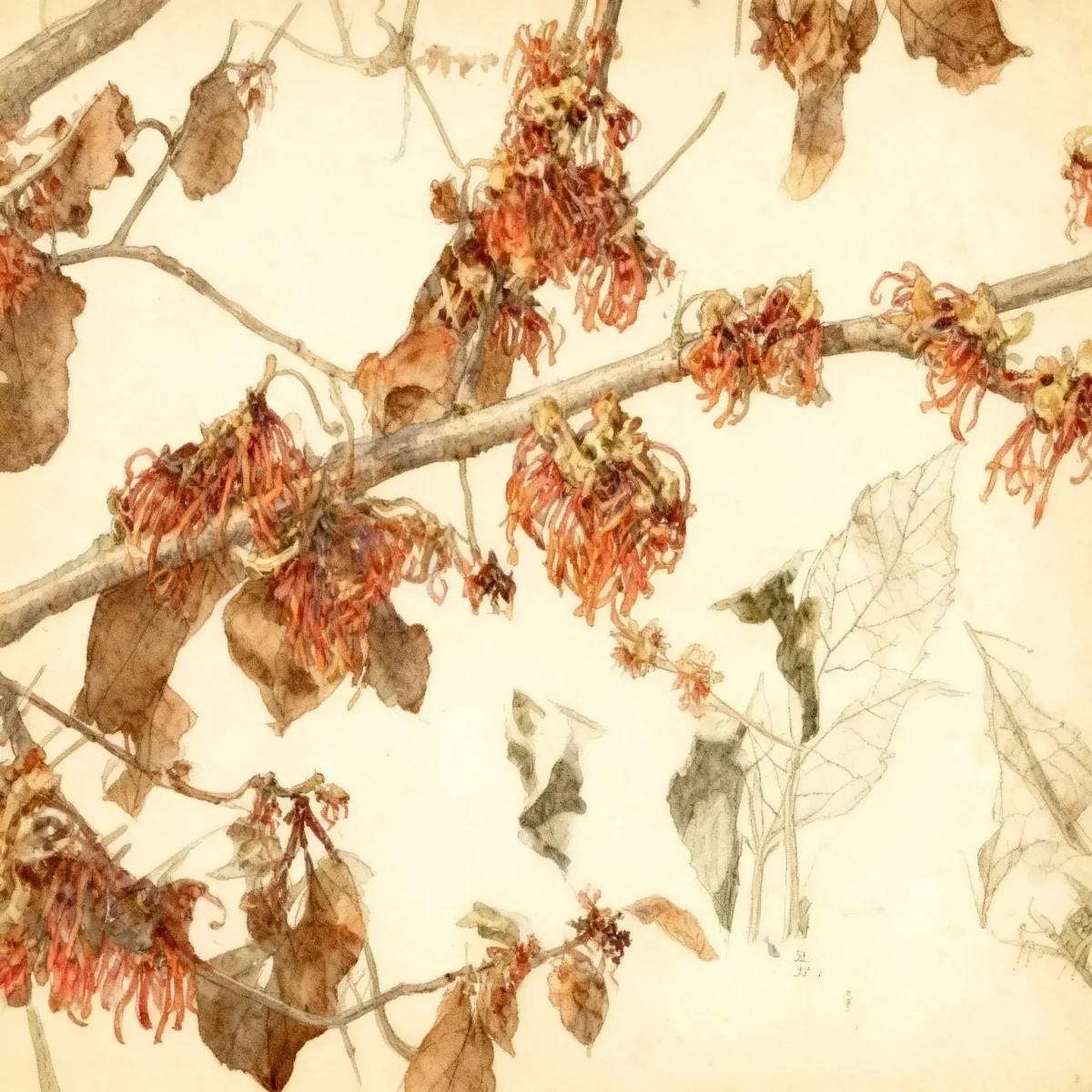
Hamamelis × intermedia hybrids are crosses between Japanese witch hazel (H. Japonica) and Chinese witch hazel (H. Mollis). They are somewhat coarse, loosely-branched, medium to large, deciduous shrubs that typically grow 12-20’ tall. They are particularly noted for their spidery, mid- to late winter flowers which appear before the spring foliage emerges. ‘Bernstein’ typically grows as an upright-spreading shrub to 8-10’ tall and features narrow, ribbon-like, pale yellow petals tinged with red at their base. Ovate-rounded dark green leaves turn appealing shades of orange with red tints in the fall, adding further seasonal value.
Tolerances
- Deer
- Erosion
- Clay Soil
Potential Problems
While Hamamelis × intermedia ‘Bernstein’ enjoys low overall maintenance, attention should be paid throughout the growing season to common foliage pests and diseases. Caterpillars and Japanese beetles may occasionally chew on the leaves, typically during peak summer activity. Gardeners should also monitor for sap-feeding pests like scale or gall aphids, as well as leafrollers or leafminers, which affect appearance.
Potential fungal issues include powdery mildew, or scattered leaf spots, especially if air circulation is poor or humidity is persistently high. Fortunately, these insect and disease issues are usually non-lethal and rarely necessitate chemical intervention; often, simple removal of affected foliage is sufficient management.
Frequently Asked Questions
What hardiness zones is Witch hazel suitable for?
This particular variety, Hamamelis × intermedia ‘Bernstein’, is hardy in USDA Zones 5 through 8. Always confirm local conditions before planting outside this range.
How large does Hamamelis × intermedia ‘Bernstein’ grow?
When mature, this Witch hazel typically achieves a height between 8 and 10 feet, with a comparable spread ranging from 7 to 9 feet, forming an upright-spreading habit.
When does Witch hazel bloom?
Hamamelis × intermedia ‘Bernstein’ provides its spectacular bloom display in the deep winter, generally from January through March, with flowers appearing on bare stems.
What sun exposure does Hamamelis × intermedia ‘Bernstein’ need?
For the best flowering performance, full sun is recommended, although this Witch hazel will adapt to partial shade conditions, accepting periods of lower light exposure.
Conclusion
The Hamamelis × intermedia ‘Bernstein’ remains a standout choice for gardeners seeking reliable structure and breathtaking winter color. Its specialty—the spidery, pale yellow flowers appearing on dormant wood—ensures that the garden remains interesting even in the coldest months. Before planting your Witch hazel, ensure your site offers medium moisture and adequate space for its mature 10-foot stature, and plan your pruning for immediately after bloom concludes next spring.
Companion Planting
When selecting plants to situate near your Hamamelis × intermedia ‘Bernstein’, consider species that either bloom at different times or offer strong evergreen contrast. Plants that provide deep green texture in winter, such as certain hollies (Ilex species) or evergreen rhododendrons, make the yellow flowers of the Witch hazel pop visually. Because this shrub prefers moist, organically rich soil, spring-blooming bulbs like snowdrops (Galanthus) or early daffodils are excellent companions that emerge just as the witch hazel finishes flowering.
Ensure companion plants do not aggressively compete for subsurface moisture, as consistent water availability is vital for Witch hazel health during drought periods. Avoid placing it directly adjacent to species requiring very dry, lean soil conditions, as cultural requirements will conflict.
Seasonal Care Calendar
Late Winter/Early Spring (Post-bloom): This is the critical window for structural pruning. Prune Hamamelis × intermedia ‘Bernstein’ immediately after the flowers drop but before new spring foliage emerges. Focus on removing crossing branches and suckers to maintain an open center and good air circulation.
Summer: Monitor water needs closely. If you experience extended dry spells, provide deep, slow watering to maintain soil moisture, especially for younger plants. Avoid heavy summer fertilization, which can encourage soft, late-season growth susceptible to winter injury.
Fall: While the foliage provides attractive orange and red tints, no specific fall cleanup is usually necessary. Leave the fallen leaves unless they are extremely dense, as they contribute organic matter back to the soil surrounding the Witch hazel.
Spring: Observe new growth. If powdery mildew appears, ensure the shrub has adequate air movement through its branches. If root suckers emerge from below the graft, remove them immediately to maintain cultivar purity.