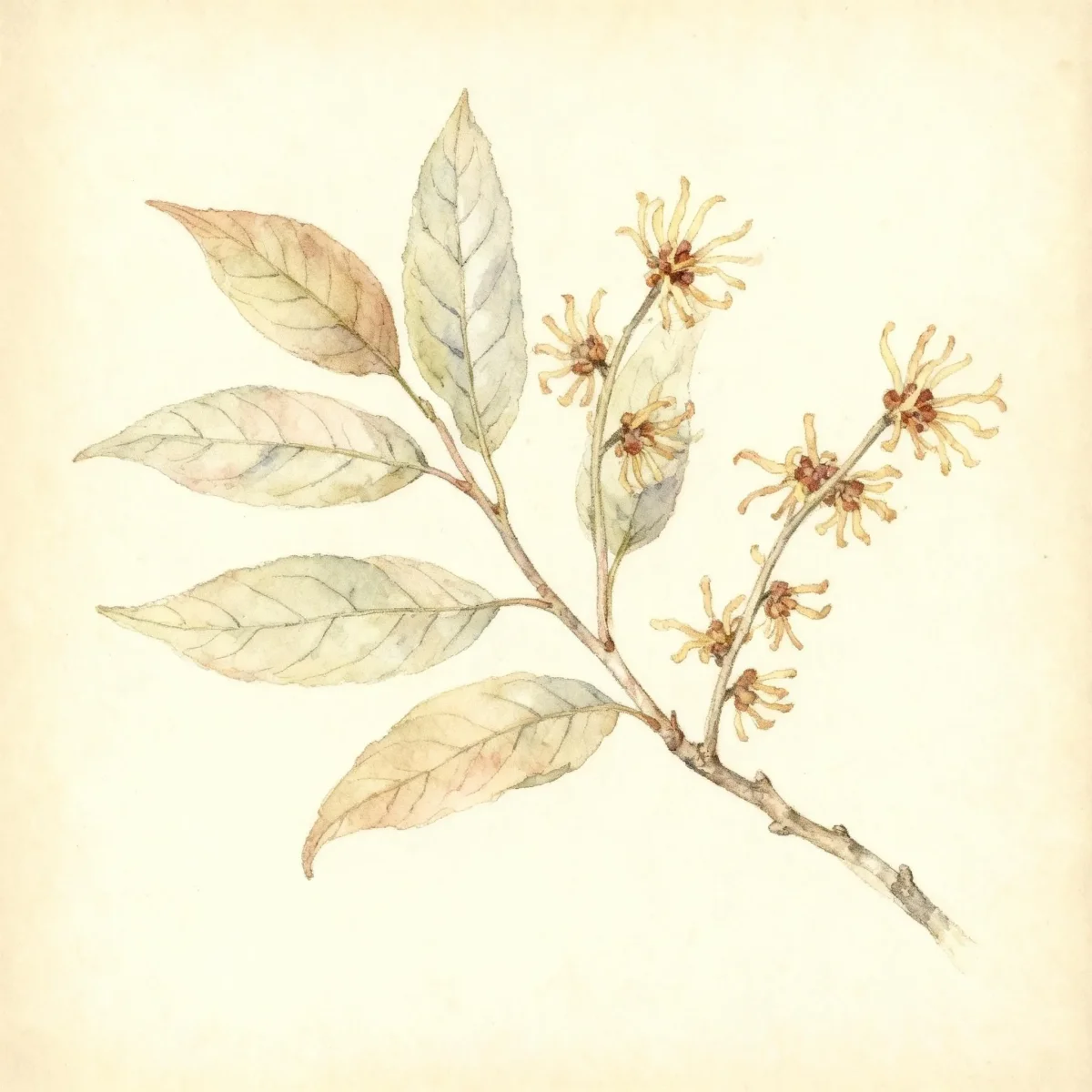
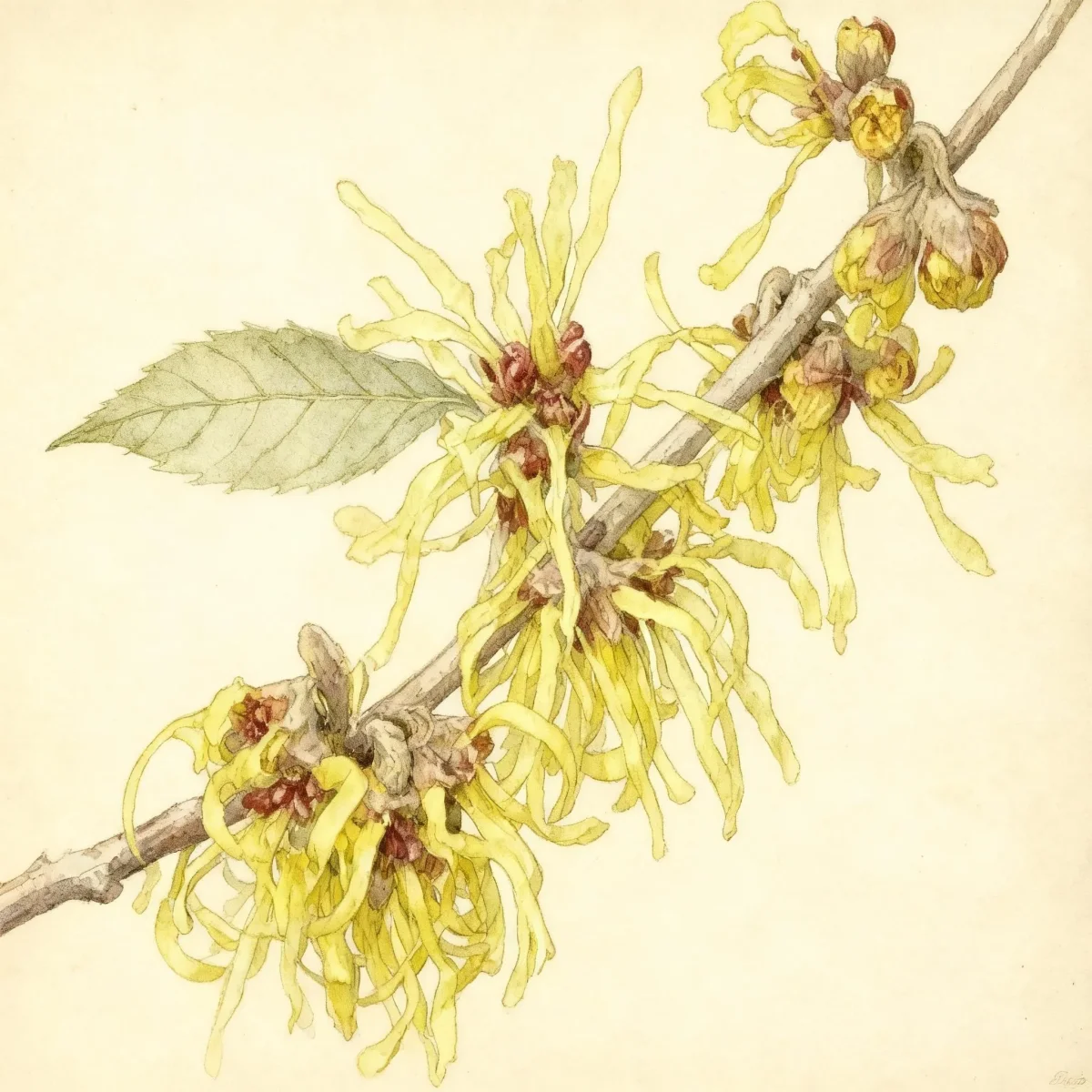
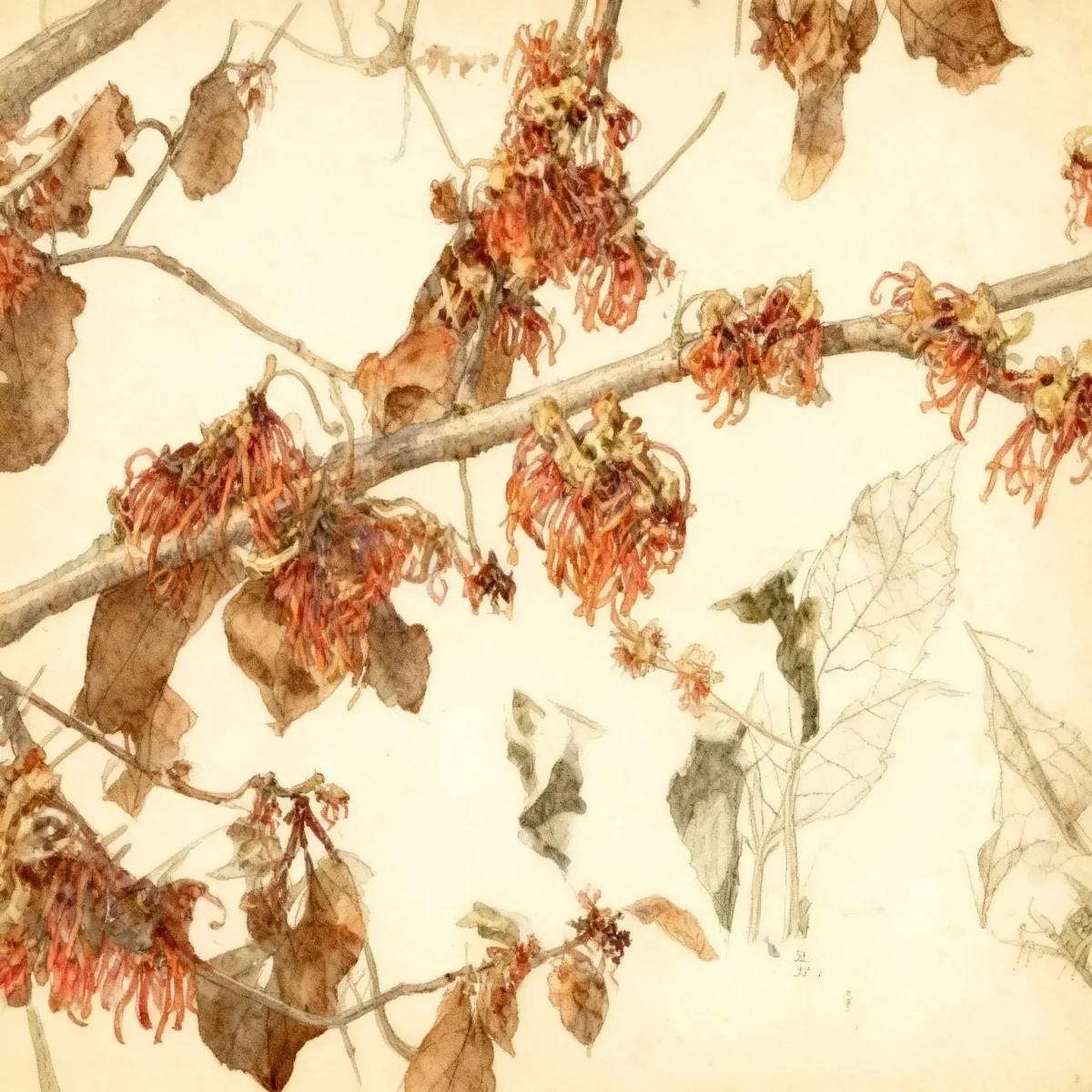
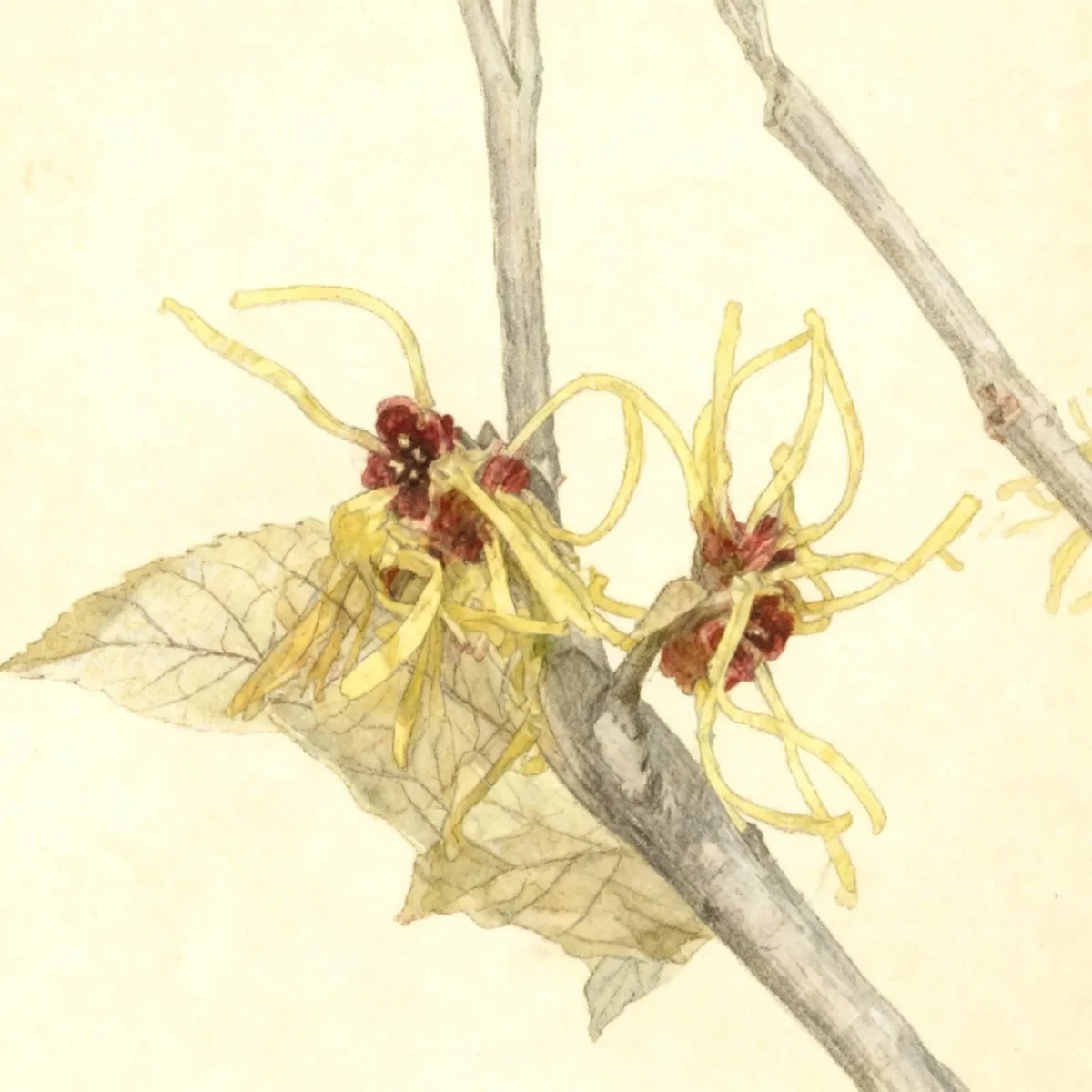
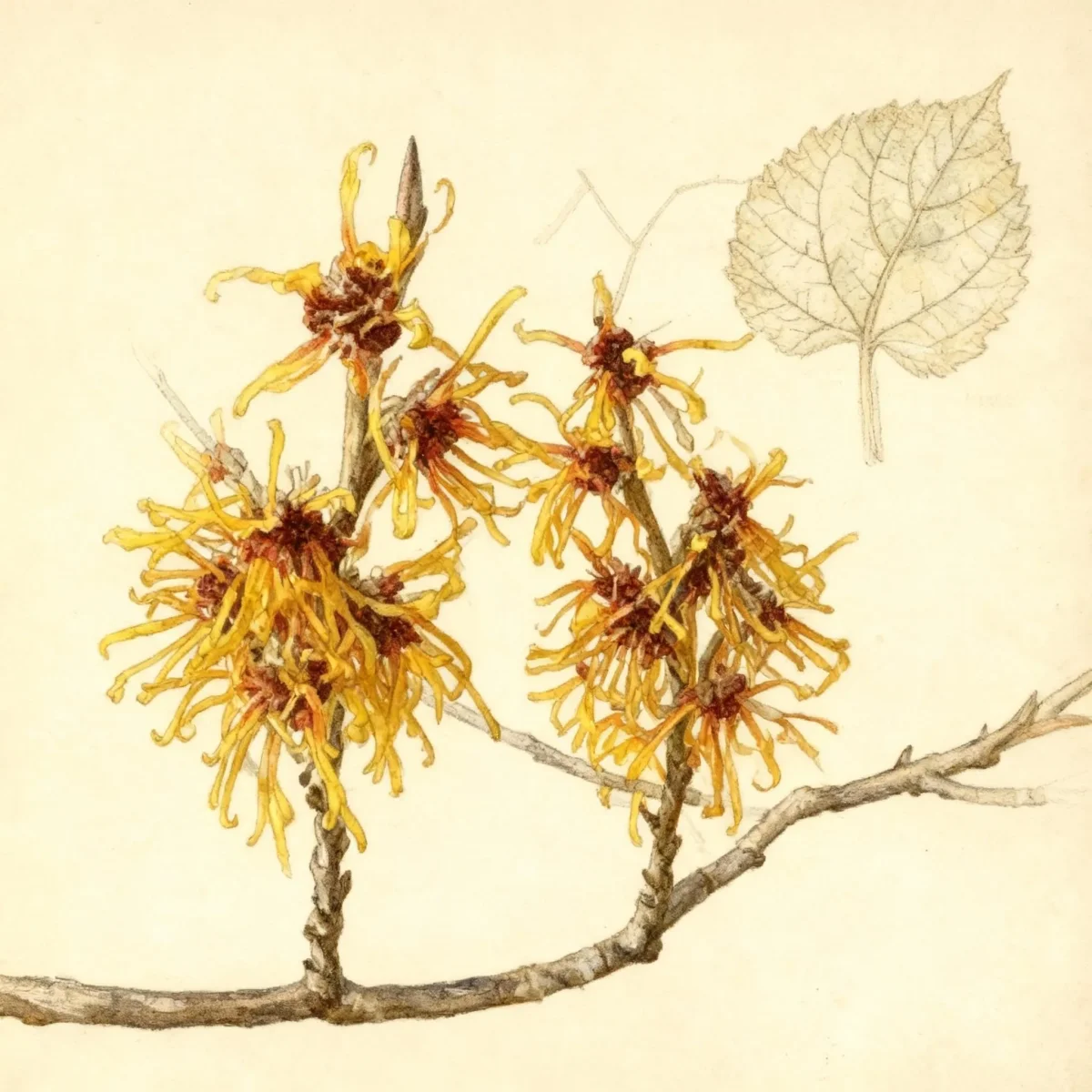
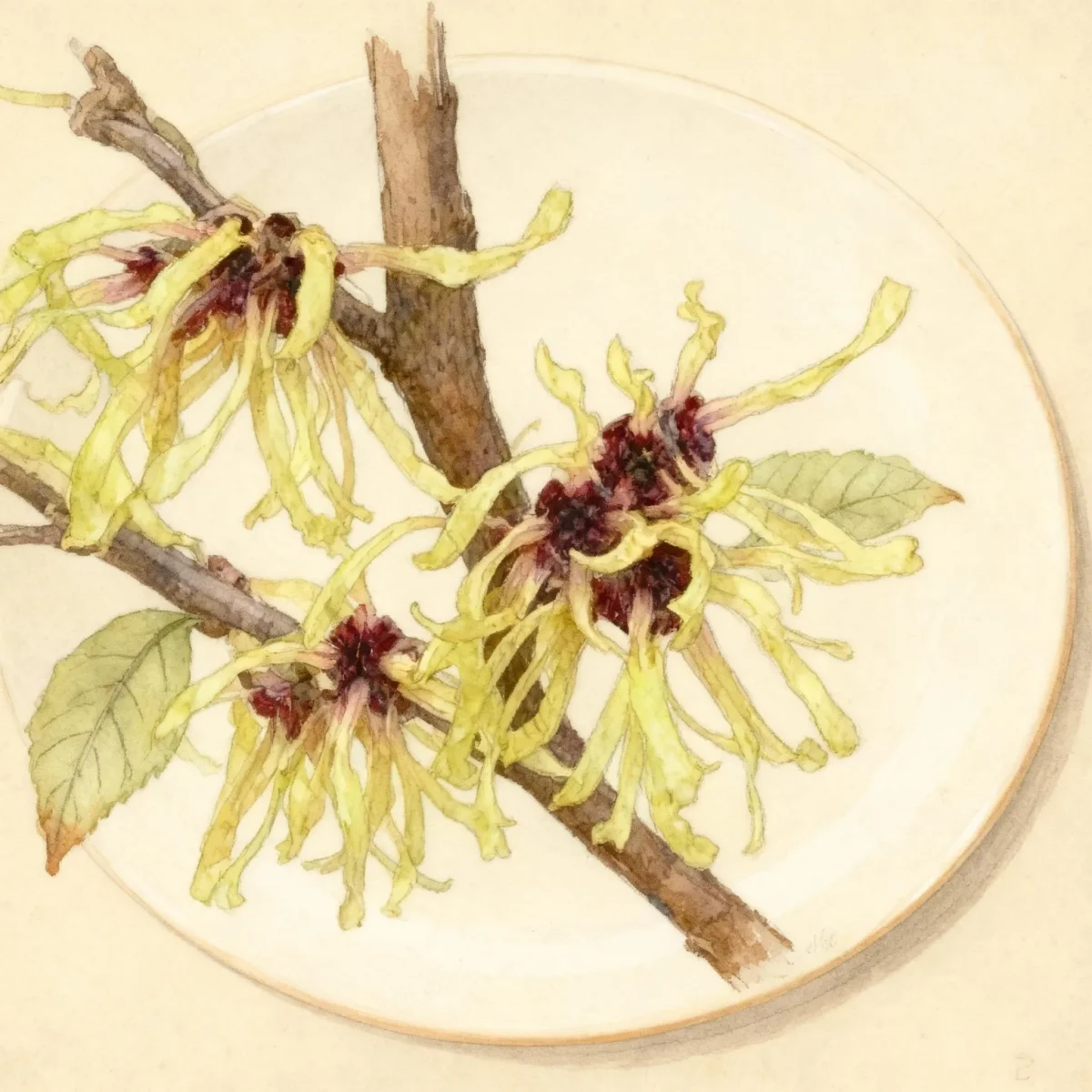
Witch hazel (Hamamelis × intermedia 'Robert')
Discover Hamamelis × intermedia 'Robert' Witch hazel, noted for its mid-winter bloom of fragrant, light red flowers. Low maintenance and deer resistant.

Bloom Boldly, No Matter the Season - Sweatshirt
Cozy organic cotton sweatshirt featuring our exclusive Purple Coneflower design. Perfect for gardeners who bloom year-round.
Inspired by the beautiful Witch hazel
Limited first batch (50) — join the waitlist for early access
Waitlist closes Feb 15, 2026.
Complete Plant Information
Field Guide Continues
Ready for care notes, companion picks, and planting tips?
The map is just the start. The full guide below covers growth habits, seasonal performance, and landscape uses.
Overview
Hamamelis × intermedia ‘Robert’, commonly known as Witch hazel, provides essential winter interest when the garden is otherwise dormant. This deciduous shrub is highly valued for its spidery, fragrant flowers that illuminate the late winter landscape before new leaves emerge. It offers reliable color and structure throughout the colder months.
The Hamamelis × intermedia ‘Robert’ hybrid is known for maturing into a vase-shaped specimen, typically reaching heights and spreads between 8 and 11 feet. Its ability to thrive in various conditions, including some clay soil tolerance, makes it adaptable for many gardeners seeking low-maintenance, high-impact plantings.
Beyond its breathtaking winter display, this cultivar offers decent fall color, turning foliage shades of yellow-orange to bright red. Planting Hamamelis × intermedia ‘Robert’ ensures that your garden holds visual appeal even during the leanest seasons.
Fast Facts
- Plant Family: Hamamelidaceae
- Plant Type: Deciduous shrub
- Hardiness Zones: USDA Zones 5-8
- Size at Maturity:
- Height: 8-11 ft
- Spread: 8-11 ft
- Bloom Time: January to March
- Bloom Description: Light red petals with orange tips
- Sun Exposure: Full sun to part shade
- Water Needs: Medium
- Maintenance Level: Low
How to Grow
Planting Hamamelis × intermedia ‘Robert’ is best done in the spring or fall when temperatures are moderate. Locate your Witch hazel where it can receive full sun for the absolute best flowering display, though it tolerates part shade. The preference is for moist, acidic, organically rich soils, but these shrubs show tolerance for clay soils, provided excellent drainage is maintained throughout the planting area.
For established plants, maintain consistent moisture, especially during summer periods, as drought stress can lead to leaf scorch. Fertilization is generally not required if the soil is organically rich. Low maintenance is a key benefit of this shrub.
Pruning should be performed promptly in the spring immediately following the flowering period to shape the plant or control size. A critical maintenance task for Witch hazel is the prompt removal of any root suckers, particularly those arising from below the graft union, to prevent unwanted colonial spread from vigorous rootstock.
Landscape Uses
The striking winter bloom makes Hamamelis × intermedia ‘Robert’ a superior choice as a specimen plant where its architecture and color can be fully appreciated against snow or bare ground. It functions exceptionally well as a tall hedge or privacy screen due to its vase shape and medium height range.
These shrubs integrate successfully into shrub borders, providing structure even in winter. They also integrate beautifully into woodland garden settings, mixing well with early-blooming spring ephemerals that emerge after the Witch hazel finishes flowering. Consider planting several nearby to maximize the visual impact of their fragrant winter flowers.
Standout Features
Flower Qualities
- Showy
- Fragrant
Noteworthy Characteristics
Hamamelis × intermedia hybrids are crosses between Japanese witch hazel (H. Japonica) and Chinese witch hazel (H. Mollis), resulting in coarse, loosely-branched shrubs noted for their mid- to late-winter flowers appearing before the foliage. The ‘Robert’ cultivar features distinct reddish-orange flowers, displaying light red, ribbon-like petals that fade to orange at the tips along the bare stems. These highly fragrant flowers provide crucial winter color before the medium green leaves emerge, which later offer yellow-orange to bright red fall coloration.
Tolerances
- Deer
- Erosion
- Clay Soil
Potential Problems
Insect and disease issues with Witch hazel are generally minor and rarely necessitate chemical intervention. Caterpillars and Japanese beetles may occasionally chew on the leaves, particularly during the growing season. Gardeners should also keep an eye out for scale insects, gall aphids, leafrollers, and leafminers. Potential fungal concerns include powdery mildew and occasional leaf spots or rots, which are often exacerbated by poor air circulation or overly wet conditions.
Frequently Asked Questions
What hardiness zones is Witch hazel suitable for?
Hamamelis × intermedia ‘Robert’ is reliably hardy for gardeners located in USDA Zones 5 through 8.
How large does Hamamelis × intermedia ‘Robert’ grow?
This shrub typically matures to a height and spread of between 8 and 11 feet tall and wide, developing a vase shape.
When does Witch hazel bloom?
This wonderful specimen offers its distinct flower display spanning from January through March, long before most other plants begin their spring show.
What sun exposure does Hamamelis × intermedia ‘Robert’ need?
For the most prolific flowering, aim for full sun exposure, although the plant is tolerant of partial shade conditions.
Conclusion
Hamamelis × intermedia ‘Robert’ stands out as an indispensable landscape component, delivering fragrant, colorful structure during the deepest part of winter. The low maintenance requirements and deer resistance of this Witch hazel make it a practical choice for almost any garden setting. Ensure you select a site with good drainage and check that your location falls within USDA Zones 5-8 before finalizing your planting plans this fall or spring.
Companion Planting
When designing a late-winter or early-spring garden, companions for Hamamelis × intermedia ‘Robert’ should focus on providing color when the Witch hazel’s flowers are active, or complementing its emerging structure. Consider pairing this shrub with early bulb displays like snowdrops (Galanthus) or early spring hellebores (Helleborus), which thrive in similar partial shade and rich soil conditions. Since the Witch hazel requires moist soil, moisture-loving evergreens like Japanese Andromeda (Pieris japonica) can create an excellent evergreen backdrop that highlights the delicate winter blooms.
Seasonal Care Calendar
Mid-to-Late Winter (January - March) is the peak time; protect the plant from harsh, drying winds if possible, but otherwise, simply enjoy the blooms of Hamamelis × intermedia ‘Robert’. Early Spring (April) is the ideal time for any necessary structural pruning right after flowering ceases, as pruning late can remove next year’s flower buds. Late Spring/Early Summer involves checking soil moisture levels, especially during dry spells, to prevent drought stress that causes leaf scorch. Fall is the best time for clean-up, ensuring leaves are removed if the plant is suffering from mildew, and focusing on gently amending soil pH if necessary to maintain slightly acidic conditions for optimal Witch hazel health.