

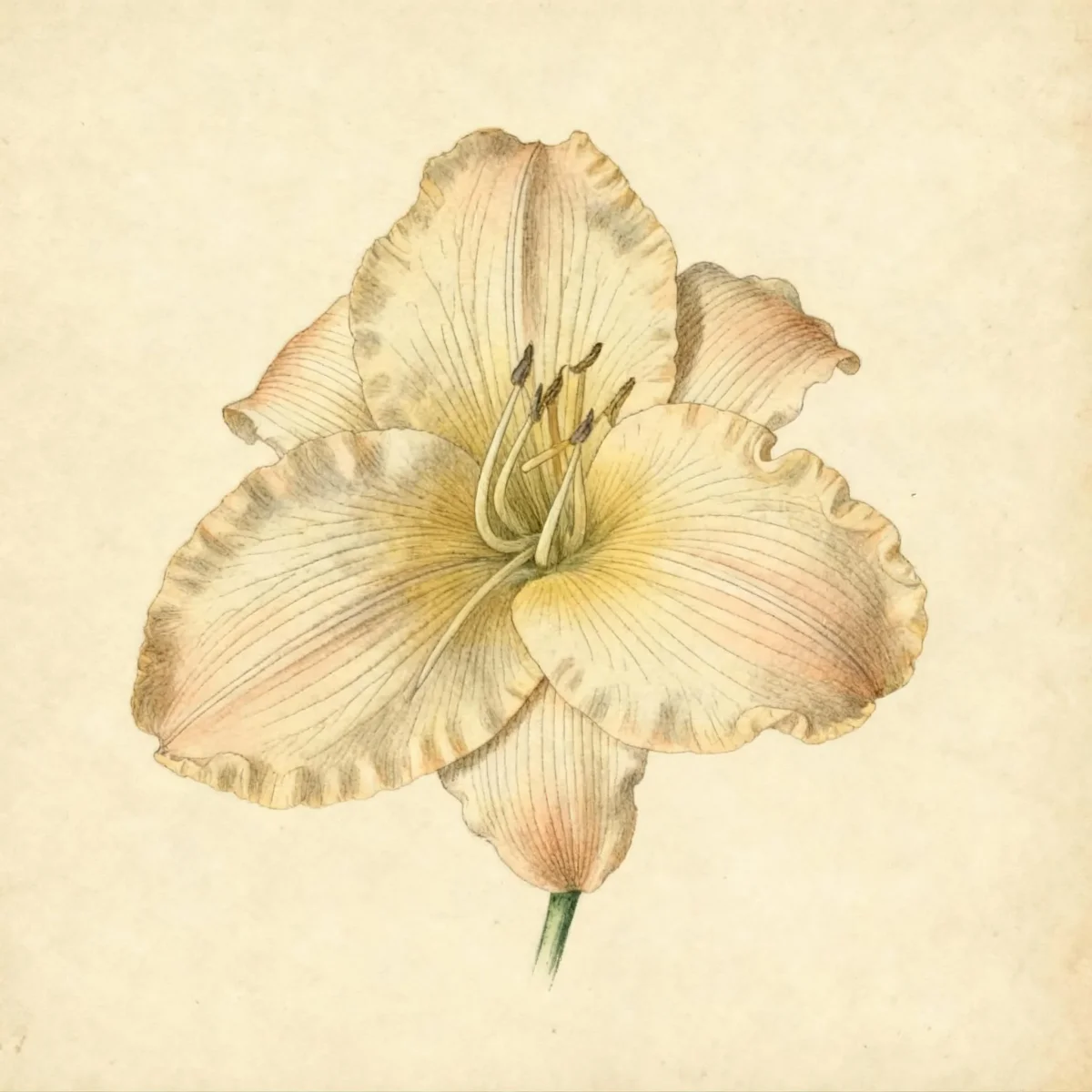
Tetraploid daylily (Hemerocallis 'Cinnamon Pleasure')
The fragrant, showy Hemerocallis 'Cinnamon Pleasure' is a low-maintenance Tetraploid daylily ideal for zones 3-9.

Bloom Boldly, No Matter the Season - Sweatshirt
Cozy organic cotton sweatshirt featuring our exclusive Purple Coneflower design. Perfect for gardeners who bloom year-round.
Inspired by the beautiful Tetraploid daylily
Limited first batch (50) — join the waitlist for early access
Waitlist closes Feb 15, 2026.
Complete Plant Information
Field Guide Continues
Ready for care notes, companion picks, and planting tips?
The map is just the start. The full guide below covers growth habits, seasonal performance, and landscape uses.
Overview
Hemerocallis ‘Cinnamon Pleasure’ is a highly valued Tetraploid daylily, bringing delightful color and fragrance to the summer garden. This cultivar features showy, apricot-cinnamon blooms that attract attention while remaining remarkably easy to manage, fitting perfectly into low-maintenance landscape designs. As an herbaceous perennial, it establishes strong fibrous roots, making it an excellent backbone plant for borders and mass plantings throughout its extensive hardiness range.
The appeal of this specific variety lies in its color profile—apricot hues lightening toward ruffled edges, accented by cinnamon tones. Growing 2 to 3 feet tall, the foliage provides a neat, grass-like buffer until the blooms appear reliably from June through July. Gardeners appreciate the low maintenance requirements of this plant, provided it receives adequate moisture during dry spells.
Successfully growing Hemerocallis ‘Cinnamon Pleasure’ offers seasonal structure and beautiful, short-lived flowers opening daily through peak summer. Because most daylilies sold commercially are hybrids like this one, they represent years of breeding for superior garden performance and unique characteristics. Ensure you are planting in the correct zone range for optimal cold dormancy and summer display.
Fast Facts
- Plant Family: Asphodelaceae
- Plant Type: Herbaceous perennial
- Hardiness Zones: USDA Zones 3-9
- Size at Maturity:
- Height: 2-3 ft
- Spread: 1.5-2 ft
- Bloom Time: June to July
- Bloom Description: Apricot/cinnamon
- Sun Exposure: Full sun to part shade
- Water Needs: Medium
- Maintenance Level: Low
How to Grow
Planting this Tetraploid daylily works best in spring or fall, ensuring the roots establish before temperature extremes hit. Although easily grown in average soils, Hemerocallis ‘Cinnamon Pleasure’ performs optimally in deep, fertile loams with medium moisture levels and excellent drainage. While tolerant of various conditions, avoid boggy or poorly draining sites, as this can invite rot.
Once established, watering should be medium; the plants tolerate summer heat well but benefit significantly from deep watering during extended dry periods to maintain attractive foliage. Maintenance is generally low, but deadheading spent flowers daily keeps the clump tidy, and removing the entire scapes once blooming ceases promotes better season-long appearance. Fertilizer is rarely critical unless soils are extremely poor, but applying a balanced fertilizer lightly in early spring can boost vigor.
Because this is classified as a winter dormant daylily, it requires a distinct cold period to set buds effectively for the following year, making it less suitable for the warmest edges of Zone 9 unless diligent supplemental chilling is managed. For optimal health and to prevent clumping issues, plan to divide the crowns every 3 to 4 years, preferably in spring if you are in a colder climate region. Remember that hybrid daylilies like ‘Cinnamon Pleasure’ will not reliably come true from seed.
Landscape Uses
This versatile herbaceous perennial excels in traditional garden borders and as an edging plant, providing clear, defined structure near walkways. The clump-forming habits of the Tetraploid daylily make it perfect for mass plantings, creating broad sweeps of summer color that require minimal upkeep once mature. Taller cultivars like Hemerocallis ‘Cinnamon Pleasure’ can also be utilized in the middle to back sections of perennial beds where they can frame lower-growing annuals or groundcovers.
These plants blend seamlessly with many other sun-loving perennials. Consider pairing them with flowering companions that offer contrasting textures or bloom times, such as Salvia, Coneflowers (Echinacea), or ornamental grasses. The linear foliage provides a sharp contrast next to plants with mounding or lobed leaf shapes.
For a more naturalized look, allow the Hemerocallis ‘Cinnamon Pleasure’ to grow in large drifts along slopes; its root system aids in soil stabilization. Although this cultivar is not listed as dwarf, the robust clump structure helps manage modest erosion while delivering its signature apricot-cinnamon display, making it a functional and beautiful choice for roadside or tiered plantings.
Standout Features
Flower Qualities
- Showy
- Fragrant
Noteworthy Characteristics
Hemerocallis is a genus of herbaceous perennials known as daylilies, native primarily to Asia. Hybridizers have developed over 60,000 cultivars, vastly expanding the color palette beyond what is found in wild species. The ‘Cinnamon Pleasure’ cultivar specifically offers fragrant, cinnamon-toned flowers to about 6 inches across, featuring apricot centers and ruffled edges on scapes reaching up to 38 inches tall during early to mid-season.
Tolerances
- Rabbit
- Erosion
- Air Pollution
Potential Problems
Daylilies are celebrated for being extremely adaptable and generally pest-free, earning their “easy-to-grow” reputation. Occasionally, minor issues like mites, aphids, or thrips may appear, usually manageable with horticultural oils or insecticidal soaps if populations explode. Daylily rust is a fungal issue that can become problematic in humid regions, requiring preventative fungicide applications or selecting rust-resistant varieties if problems persist. Rabbits typically leave the foliage alone due to its fibrous root structure.
Frequently Asked Questions
What hardiness zones is Tetraploid daylily suitable for?
Hemerocallis ‘Cinnamon Pleasure’ thrives in USDA Zones 3 through 9, provided the environment allows for a necessary cold winter dormancy period.
How large does Hemerocallis ‘Cinnamon Pleasure’ grow?
This cultivar typically reaches a height between 2 and 3 feet, with a spread of 1.5 to 2 feet at maturity.
When does Tetraploid daylily bloom?
The primary bloom time for this variety is early to mid-season, spanning from June into July, offering beautiful apricot/cinnamon flowers.
What sun exposure does Hemerocallis ‘Cinnamon Pleasure’ need?
For the best flowering performance, plant this Tetraploid daylily where it receives full sun, though it will tolerate partial shade conditions.
Conclusion
The Tetraploid daylily, Hemerocallis ‘Cinnamon Pleasure’, stands out as a reliable choice for adding fragrant, vibrant summer color without demanding extensive attention. Its robustness against pests and tolerance for various conditions make it a staple for both novice and experienced gardeners. Before installing, confirm your site’s USDA Zone falls within the 3-9 range to ensure this beautiful cultivar provides years of spectacular performance.
Companion Planting
Selecting partners that share cultural needs is key to a cohesive perennial display around your Hemerocallis ‘Cinnamon Pleasure’. Since daylilies prefer full sun and moisture retention, companions that thrive in similar conditions work best. Consider pairing them with Lamb’s Ear (Stachys byzantina) for textural contrast in foliage, or use Iris varieties that finish blooming just as this Tetraploid daylily begins, ensuring seasonal flower coverage.
When designing borders, place shorter, spreading plants in the front so that when the daylily foliage dies back partially or fully in the fall, there are still groundcovers beneath to maintain visual interest. Lavender and Russian Sage are excellent choices as they thrive in sun and well-drained soil, balancing the moisture needs of the ever-hungry daylily clump.
Seasonal Care Calendar
Spring is the critical revitalization period; as new growth emerges, lightly apply fertilizer if desired, and immediately begin deadheading any remaining old, brown foliage from the previous year. Summer focuses purely on maintenance: deadhead the fragrant ‘Cinnamon Pleasure’ blooms daily to encourage continuous flowering and water deeply during hot, dry spells to keep the strap-like leaves looking fresh.
Post-bloom cleanup in late summer involves removing the finished scapes entirely. In autumn, the foliage of dormant types will naturally senesce; cut the dead foliage back to about 4-6 inches from the crown once frost has browned it, tidying the area before winter settling in. This step is especially important in areas with heavy winter moisture to prevent crown rot.


