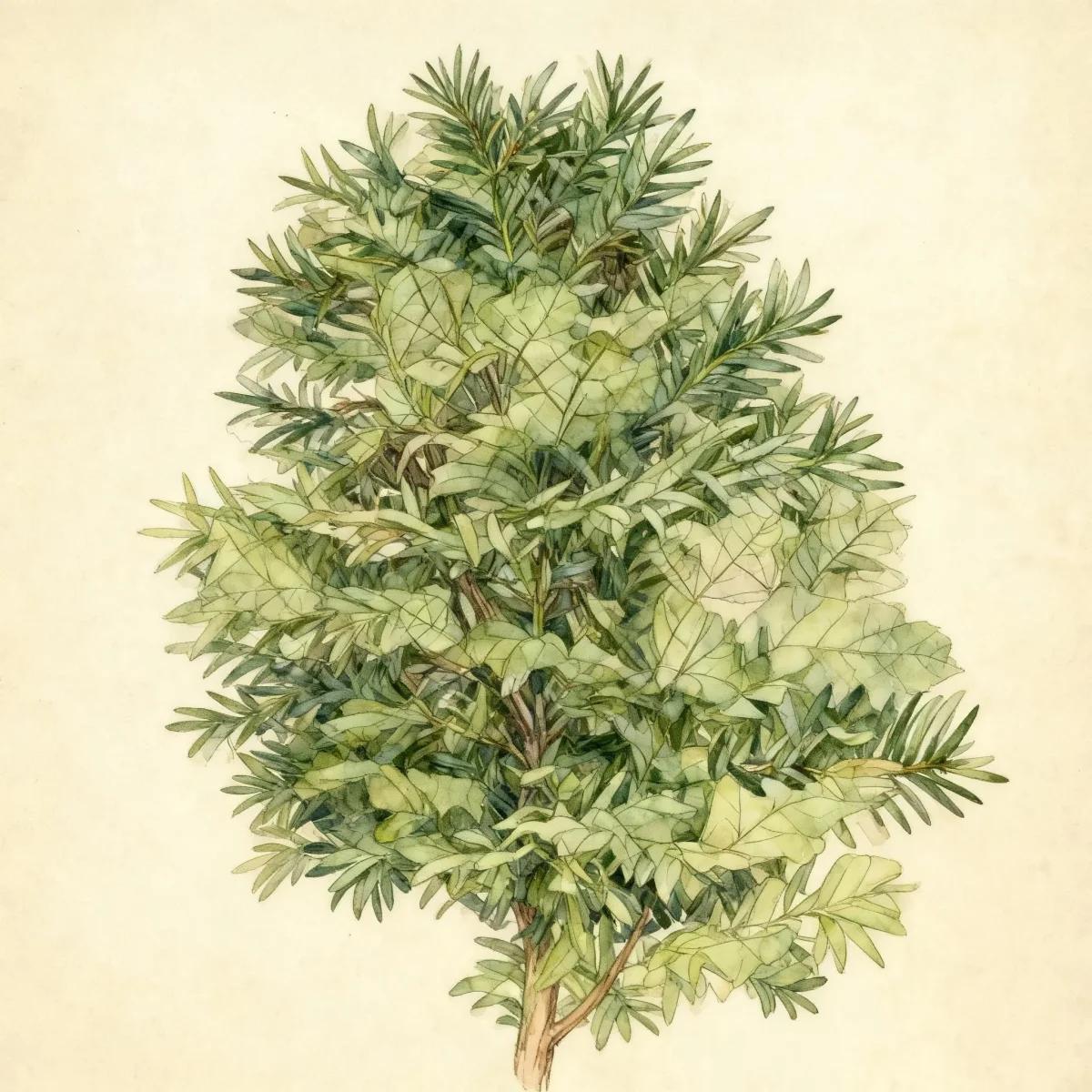
English yew (Taxus baccata 'Standishii')
Taxus baccata 'Standishii' is a narrow, columnar English yew cultivar prized for its year-round golden-yellow needles. A low-maintenance evergreen for small spaces.

Bloom Boldly, No Matter the Season - Sweatshirt
Cozy organic cotton sweatshirt featuring our exclusive Purple Coneflower design. Perfect for gardeners who bloom year-round.
Inspired by the beautiful English yew
Limited first batch (50) — join the waitlist for early access
Waitlist closes Feb 15, 2026.
Complete Plant Information
Field Guide Continues
Ready for care notes, companion picks, and planting tips?
The map is just the start. The full guide below covers growth habits, seasonal performance, and landscape uses.
Overview
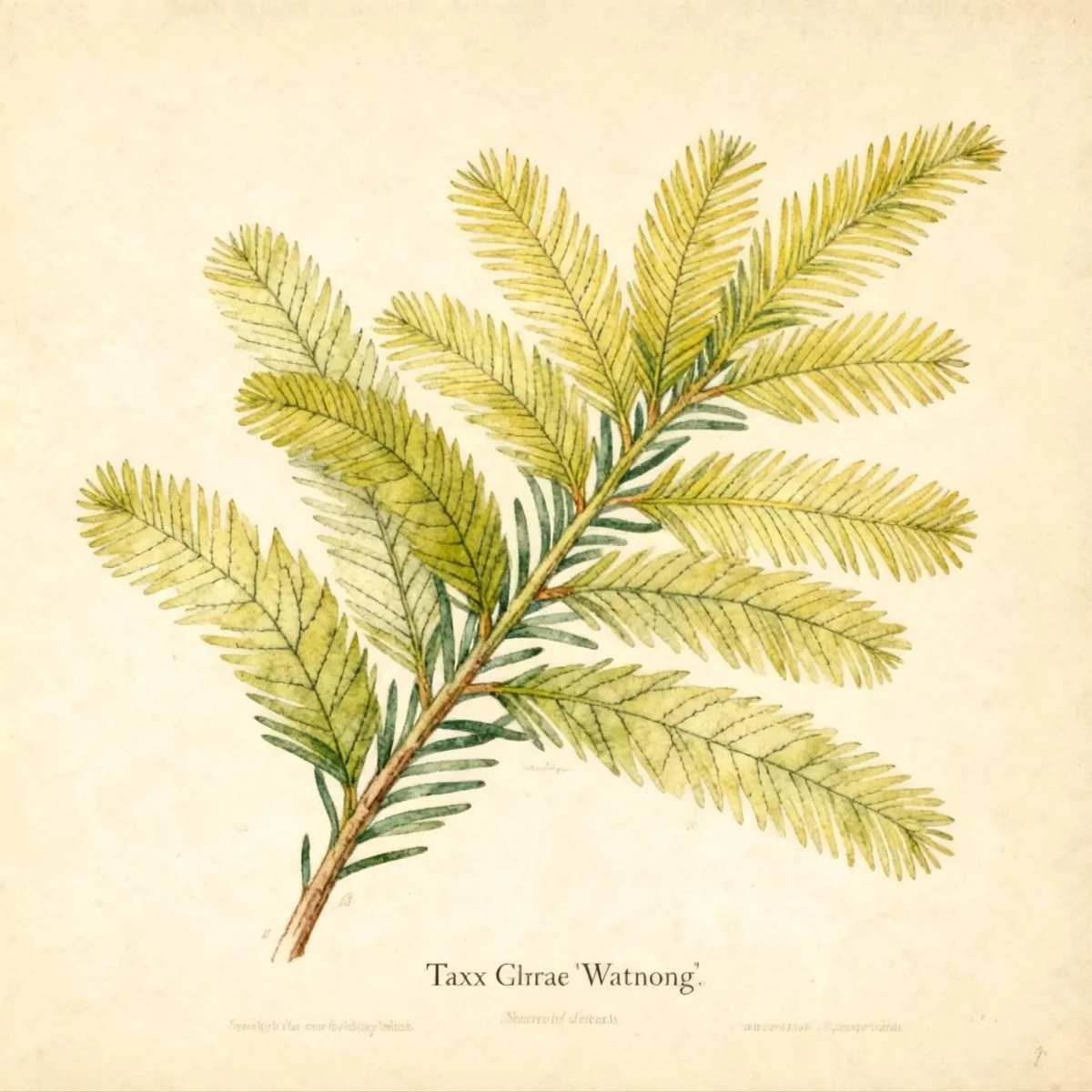
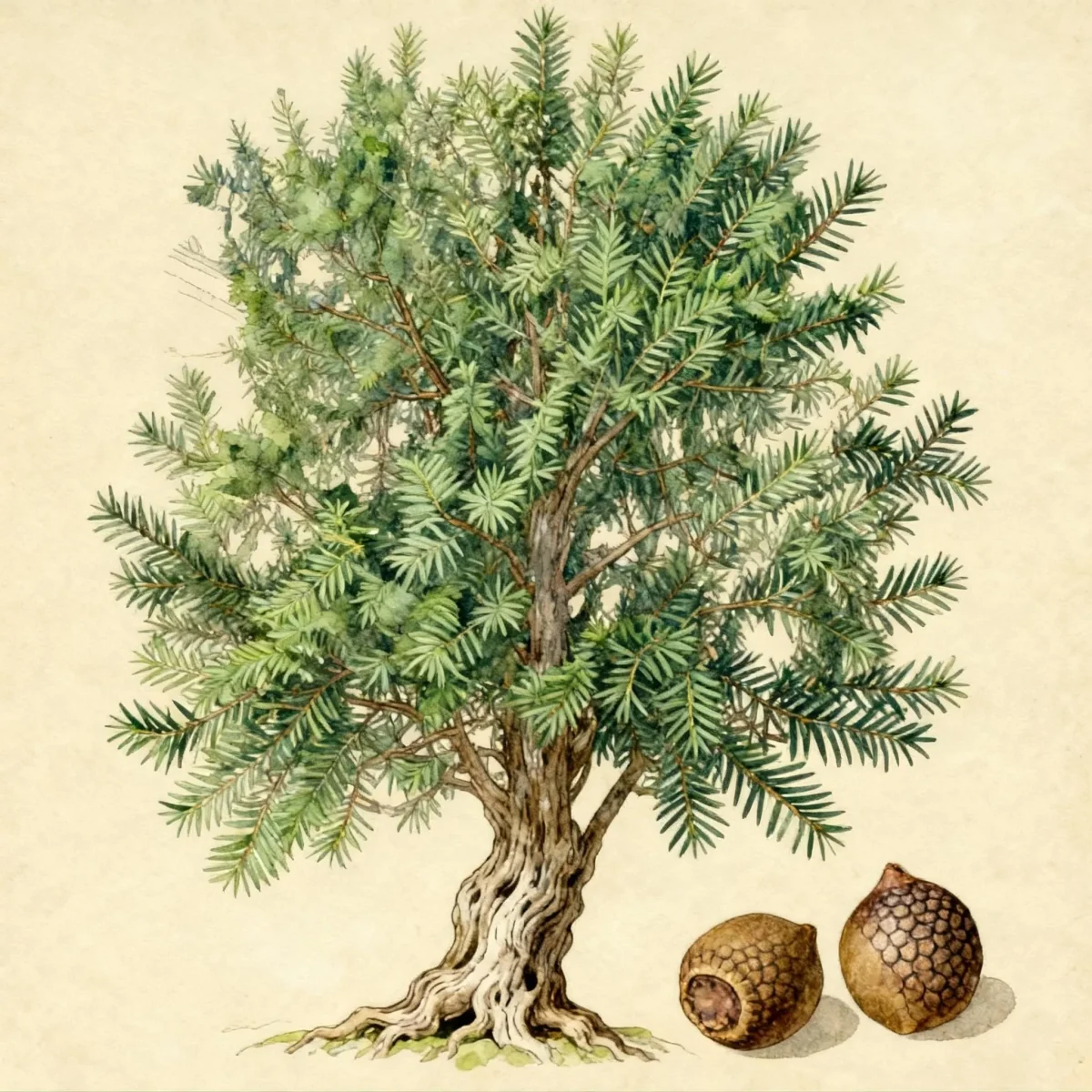
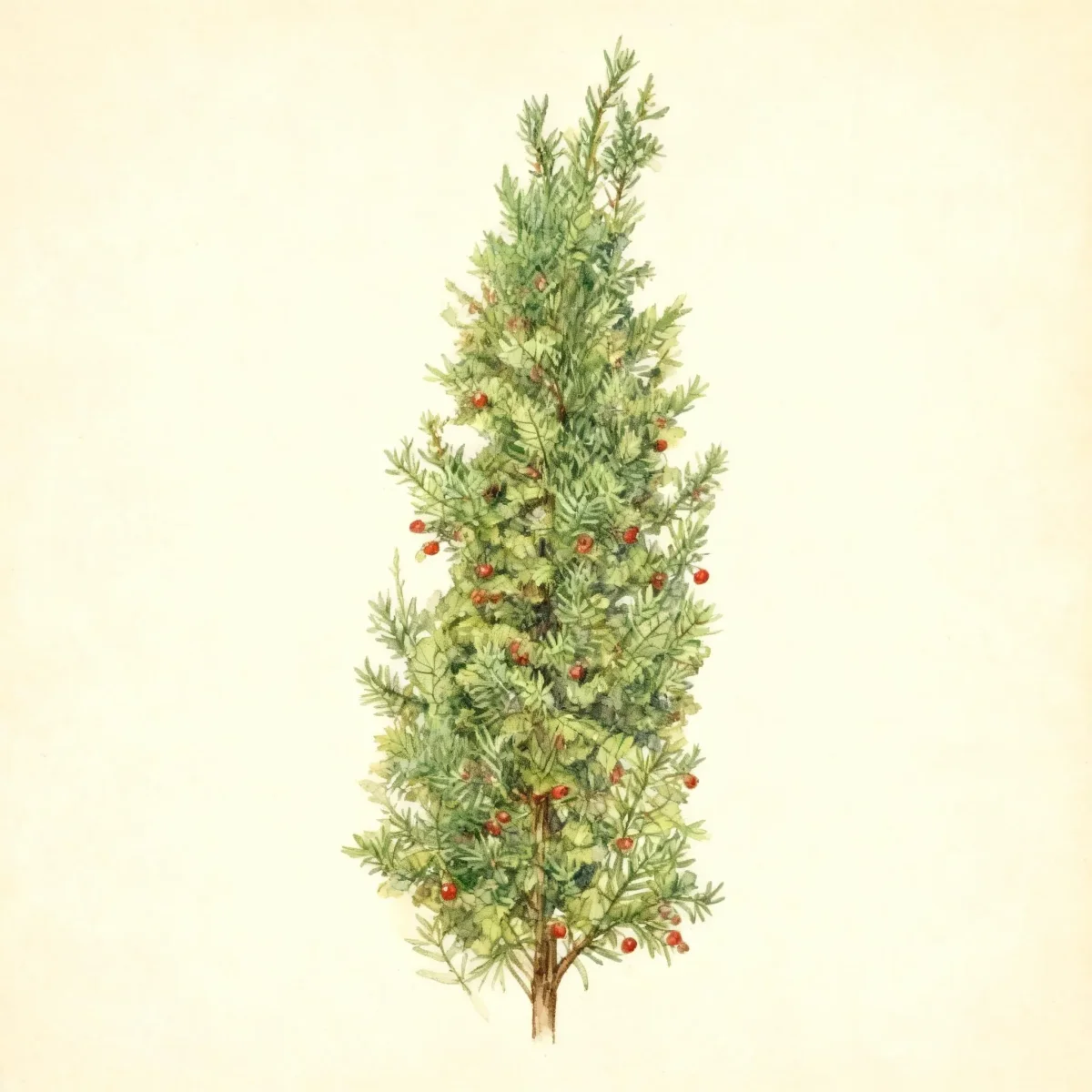
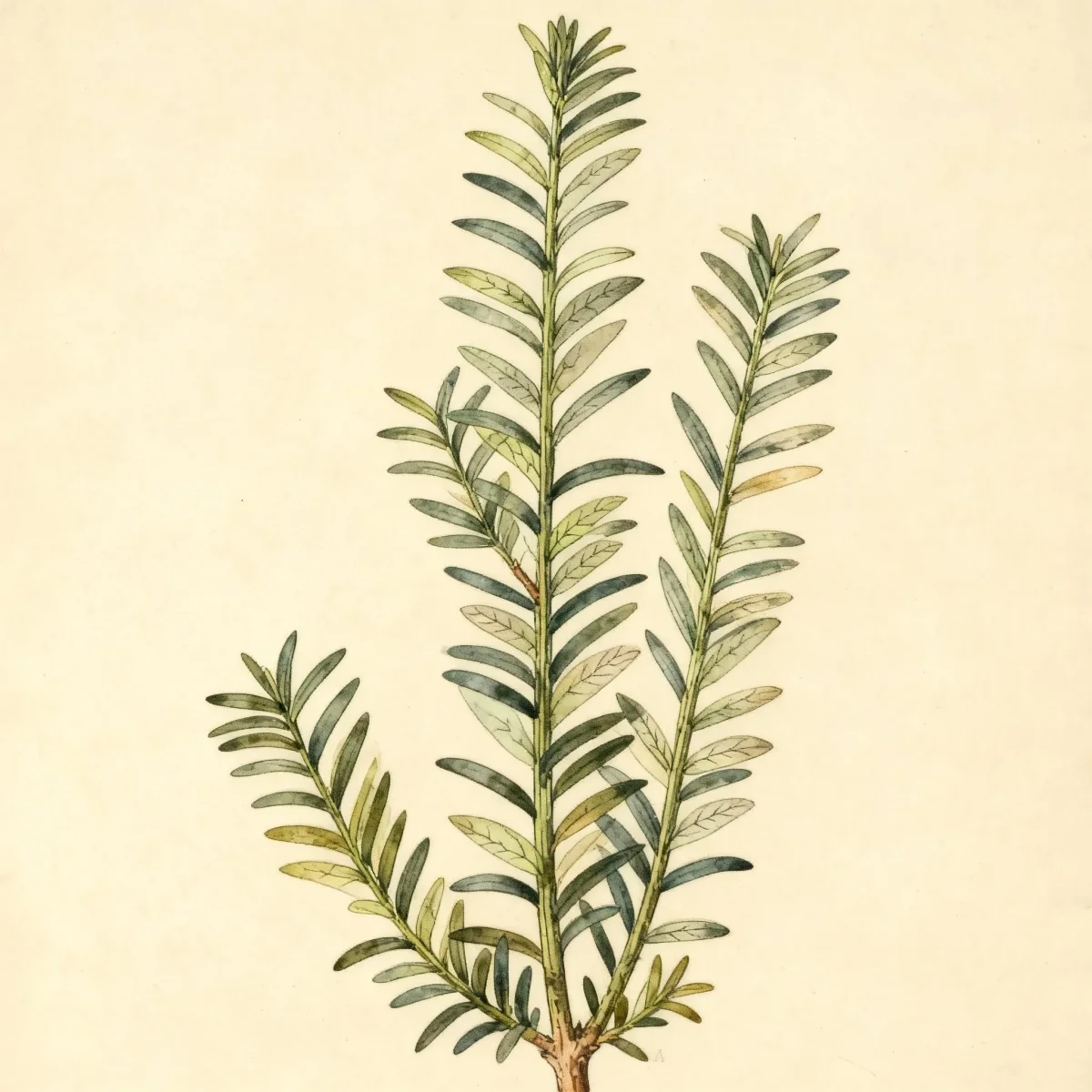
The Taxus baccata ‘Standishii’, commonly known as the English yew, is a highly valued dwarf cultivar perfect for adding year-round structure and bright color to confined garden areas. This cultivar offers a distinct, narrow, columnar habit, making it an excellent vertical accent where space is limited. Unlike the species, Taxus baccata ‘Standishii’ maintains striking yellow needles throughout the entire growing season.
As a slow-growing needled evergreen, the English yew provides consistent visual interest, contrasting beautifully against darker green plantings. It is fundamentally low-maintenance once established, requiring only medium water and responding exceptionally well to shaping. Gardeners appreciate this variety for its flexibility, tolerating a wide range of conditions, though protection from severe winter elements is sometimes necessary.
This female form of English yew also produces the species’ characteristic red, berry-like arils, which offer a vibrant visual complement to the foliage. Whether used as a specimen or foundation planting, Taxus baccata ‘Standishii’ delivers dependable texture and color, fulfilling the need for year-round evergreen appeal without demanding excessive upkeep.
Fast Facts
- Plant Family: Taxaceae
- Plant Type: Needled evergreen
- Hardiness Zones: USDA Zones 6-7
- Size at Maturity:
- Height: 4-5 ft
- Spread: 1-2 ft
- Bloom Time: Non-flowering
- Bloom Description: Non-flowering
- Sun Exposure: Full sun to part shade
- Water Needs: Medium
- Maintenance Level: Low
How to Grow
The best results for Taxus baccata ‘Standishii’ are achieved by planting in the spring or fall during periods of mild weather. Select a location that provides a minimum of filtered light; while it tolerates full shade, the best yellow foliage color occurs in sunny locations. This yew thrives in evenly moist, fertile, sandy loams that offer excellent drainage, a crucial factor for preventing root issues.
Once planted, maintain medium moisture levels, especially while the plant is young or establishing its root system. While generally low maintenance, this cultivar permits considerable pruning and responds very well to shaping, allowing gardeners to maintain its columnar form precisely. Avoid letting the soil become perpetually waterlogged, as yews are intolerant of poorly-drained conditions.
Gardeners in challenging northern areas should exercise caution. The specific epithet ‘Standishii’ is noted as not being reliably winter hardy throughout regions subject to extreme cold or prolonged exposure to dry winter winds. Site specimens in sheltered locations to prevent winter burn, particularly when temperatures drop or after periods of thaw/freeze cycles common in early spring.
Landscape Uses
The compact, narrow profile of Taxus baccata ‘Standishii’ makes it an outstanding choice for small gardens where vertical interest is desired without significant footprint dedication. Its consistent yellow hue ensures it serves effectively as a specimen or accent plant, drawing the eye even in winter months. This cultivar also functions perfectly as structured, low foundation planting where traditional hedges might overwhelm the architecture.
Consider planting this English yew near darker foliage plants to maximize the contrast of its golden needles. It works beautifully integrated into rock gardens due to its moderate water needs and slow growth pace, which requires less frequent trimming than some fast-growing shrubs. Its formal, upright habit naturally lends itself to being paired with softer, mounding perennials or grasses for textural diversity.
Standout Features
Fruit Qualities
- Showy
Noteworthy Characteristics
The genus name Taxus refers to the ancient Latin designation for yews, while the specific epithet suggests fruit-bearing due to the attractive red arils seen on female plants. The ‘Standishii’ cultivar is specifically noted as a narrow, columnar variety whose foliage retains its desired yellow coloration throughout the year. These bright red arils often appear abundantly, providing a superb visual contrast against the persistent gold foliage of this Taxus baccata ‘Standishii’.
Tolerances
- Susceptible to winter burn from exposure to extreme cold and/or dry winter winds, particularly in exposed sites.
- Tolerant of full shade, a wide variety of soils (except poorly-drained ones) and considerable pruning.
Potential Problems
Taxus baccata ‘Standishii’ is susceptible to aesthetic damage from environmental stress. Winter burn, caused by exposure to severe cold or desiccating winter winds, frequently affects plants situated in exposed areas. The foliage may also suffer from twig blights and needle blights intermittently.
Prevention focuses heavily on site selection and soil management. Ensure excellent drainage to mitigate the primary risk of root rot. Furthermore, gardeners should protect specimens from abrasive winter winds, especially in borderline Hardiness Zones, to maintain the optimal appearance of the English yew.
Insect pests such as mealybugs, scale insects, and vine weevils can occasionally infest the plant, requiring targeted monitoring and control measures as necessary.
Frequently Asked Questions
What hardiness zones is English yew suitable for?
The Taxus baccata ‘Standishii’ is hardy within USDA Zones 6 through 7.
How large does Taxus baccata ‘Standishii’ grow?
This columnar cultivar typically reaches a mature height between 4 and 5 feet tall, with a narrow spread of only 1 to 2 feet.
What sun exposure does English yew need?
This variety performs best when situated in full sun to part shade; note that sunnier spots promote the brightest yellow foliage coloration.
When does Taxus baccata ‘Standishii’ bloom?
This plant is non-flowering.
Conclusion
The Taxus baccata ‘Standishii’ is an invaluable, low-maintenance evergreen for modern landscapes, prized for its narrow form and reliable year-round yellow needles. If you seek consistent color and strong vertical structure in a small space, the English yew is an excellent selection. Confirm your local climate falls within USDA Hardiness Zones 6 to 7 before planning your planting location this coming season.
Companion Planting
Selecting appropriate companions for Taxus baccata ‘Standishii’ should focus on creating textural and tonal contrast around its upright, golden form. Since this yew prefers well-drained soil and tolerates shade, consider pairing it with plants that share similar cultural needs but offer different growth habits, such as low-growing Sedums or creeping Phlox for softening the base. For shade gardens, Hostas with dark blue or green foliage provide a grounding backdrop that makes the yellow needles truly pop during the growing season.
When planting near foundation walls, remember the warning regarding intolerance to temperature extremes. Use deciduous shrubs with finer texture, like certain Japanese Maples planted slightly away, to filter intense summer sun while allowing the Taxus baccata ‘Standishii’ to retain its best color without scorching. Avoid heavy feeders or plants that require consistently saturated soil, as the yew demands good aeration.
Seasonal Care Calendar
For optimal health, apply a mindful approach to seasonal maintenance. In early spring, inspect the Taxus baccata ‘Standishii’ for any signs of winter burn damage and prune those unsightly twigs back cleanly to healthy wood. This is also the best window for light fertilization, though yews are not generally heavy feeders.
Summer care centers primarily on water management. Due to the medium water needs and dislike for both drought and overwatering, ensure consistent moisture during dry spells, especially for newly planted specimens. Avoid high heat exposure if possible, as the species shows intolerance to prolonged high summer temperatures.
As autumn approaches, ensure the plant is adequately hydrated before the ground freezes; this practice helps minimize the risk of devastating winter burn when dry, cold winds strike fully hydrated foliage. Taxus baccata ‘Standishii’ requires little specialized cleanup due to its evergreen nature.