

Tetraploid daylily (Hemerocallis 'Doug's Red Mercedes')
The striking Hemerocallis 'Doug's Red Mercedes' is a low-maintenance Tetraploid daylily, offering vibrant red blooms from June to July.
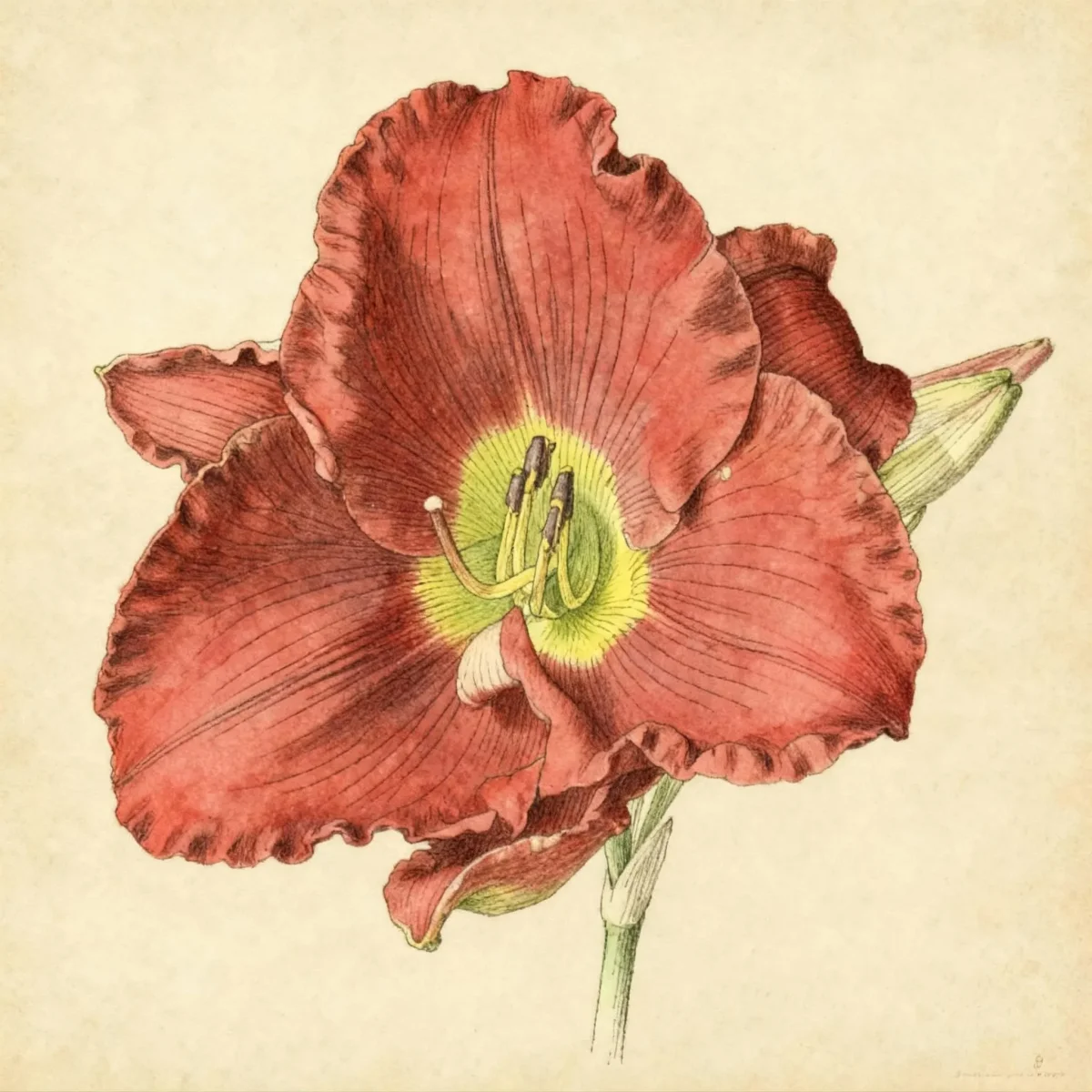

Bloom Boldly, No Matter the Season - Sweatshirt
Cozy organic cotton sweatshirt featuring our exclusive Purple Coneflower design. Perfect for gardeners who bloom year-round.
Inspired by the beautiful Tetraploid daylily
Limited first batch (50) — join the waitlist for early access
Waitlist closes Feb 15, 2026.
Complete Plant Information
Field Guide Continues
Ready for care notes, companion picks, and planting tips?
The map is just the start. The full guide below covers growth habits, seasonal performance, and landscape uses.
Overview
The Hemerocallis ‘Doug’s Red Mercedes’ stands out as a highly desirable herbaceous perennial, known particularly for its intensely colored flowers. This specific cultivar, a robust Tetraploid daylily, introduces dramatic red hues, often accented by a contrasting green throat, into the summer garden. Gardeners value this plant for its reliability and surprisingly low maintenance requirements, allowing for maximum visual impact with minimal effort.
As a daylily, Hemerocallis ‘Doug’s Red Mercedes’ produces flowers that last only a single day, but the plant compensates by generating a succession of blooms throughout its primary season. It offers attractive, grassy foliage that forms neat clumps, making it an excellent structural plant even when not in flower. This specific Tetraploid daylily brings vibrant color and resilience to beds and borders across most temperate climates.
Despite its bold appearance, achieving successful growth is straightforward. Hemerocallis ‘Doug’s Red Mercedes’ thrives in conditions ranging from full sun to partial shade and adapts well to various soil types, provided drainage is adequate. Its combination of ease of care and spectacular mid-season blooms secures its place as a backbone perennial in contemporary landscapes.
Fast Facts
- Plant Family: Asphodelaceae
- Plant Type: Herbaceous perennial
- Hardiness Zones: USDA Zones 3-9
- Size at Maturity:
- Height: 2-2.5 ft
- Spread: 1.5-2 ft
- Bloom Time: June to July
- Bloom Description: Red with green throat
- Sun Exposure: Full sun to part shade
- Water Needs: Medium
- Maintenance Level: Low
How to Grow
Planting should ideally occur in spring or fall, putting the Hemerocallis ‘Doug’s Red Mercedes’ into the ground when temperatures are moderate. This daylily performs best in deep, fertile loams, but it is highly adaptable to average soils as long as they are well-drained. Ensure plants receive sufficient moisture, especially during dry spells in the summer, to keep the attractive linear foliage looking its best.
Maintenance for this Tetraploid daylily is generally simple. Deadheading spent flowers daily is recommended purely for aesthetic neatness, and you should remove the entire flowering scape once blooming concludes. Although tolerant of heat and humidity, consistent medium watering helps sustain robust growth. Since this is a winter dormant type, it requires a cold period, making it less suitable for Zone 9 gardens where dormancy may not be fully achieved.
To ensure the best performance and vigor from your clump of Hemerocallis ‘Doug’s Red Mercedes’, plan on dividing the plants every three to four years. Division is best done in the spring in colder regions or in the fall if winters are mild. Remember that hybrid daylilies, like this one, will not breed true from seed, so division is key for propagation.
Landscape Uses
The dependable clump-forming habit and vivid color of Hemerocallis ‘Doug’s Red Mercedes’ make it incredibly versatile in the garden design palette. Use these sturdy perennials to define borders, provide structure along walkways, or create impactful sweeps of color when massed over large areas. Their moderate height (2 to 2.5 feet) means they rarely obscure shorter foreground plantings.
This specific daylily works wonderfully when juxtaposed with foliage plants that offer textural contrast, such as ornamental grasses or hostas grown in the partial shade areas. In traditional cottage gardens, mass plantings of this stunning Tetraploid daylily create a bold, uniform block of color against softer perennial neighbors. Avoid planting them where the foliage of other plants will overwhelmingly creep into the crowns.
Standout Features
Flower Qualities
- Showy
Noteworthy Characteristics
Genus name comes from the Greek words hemera meaning day and kallos meaning beauty as each flower lasts but one day. This specific cultivar, Hemerocallis ‘Doug’s Red Mercedes’, is a dormant, tetraploid daylily featuring bright red flowers up to 5.75 inches wide, accented by green throats. Flowers emerge from early to mid-season atop scapes rising 26-30 inches above the arching, blade-like foliage.
Tolerances
- Rabbit
- Erosion
- Air Pollution
Potential Problems
Daylilies are remarkably resilient and generally resist most pests and diseases, contributing to the low maintenance rating for Hemerocallis ‘Doug’s Red Mercedes’. Occasionally, you might encounter minor issues like mites, thrips, or aphids, which can usually be managed with targeted insecticidal soap if necessary. Daylily rust fungus can pose a problem depending on your local climate and humidity levels; ensure good air circulation around the plants to mitigate this. Rabbits typically find the foliage unappealing.
Frequently Asked Questions
What hardiness zones is Hemerocallis ‘Doug’s Red Mercedes’ suitable for?
Hemerocallis ‘Doug’s Red Mercedes’ is resilient, thriving in USDA Hardiness Zones 3 through 9.
How large does Tetraploid daylily grow?
This variety typically reaches a height between 2 and 2.5 feet, with a spread of 1.5 to 2 feet at maturity.
When does Hemerocallis ‘Doug’s Red Mercedes’ bloom?
Expect the vivid red blooms of this daylily to appear during the main bloom time, which runs from June to July.
What sun exposure does Tetraploid daylily need?
This plant performs optimally in full sun but is adaptable enough to tolerate part shade locations.
Conclusion
Hemerocallis ‘Doug’s Red Mercedes’ is an invaluable addition to any summer garden, delivering large, richly colored flowers with dependable, low-effort seasonal performance. This specific Tetraploid daylily provides reliable structure and vibrant saturation, making color management simple for the gardener. Before planting, confirm USDA Zone compatibility and ensure you provide adequate moisture during establishment for the best display.
Companion Planting
Selecting appropriate neighbors enhances the presentation of your Hemerocallis ‘Doug’s Red Mercedes’. Because daylilies have grassy, upright foliage, pairing them with plants that introduce broader leaves or different textures creates dynamic visual interest. Consider planting lower-growing, fine-textured annuals around the base to cover any bare soil that occasionally shows between dormant clumps.
Plants that bloom slightly earlier or later than the June-to-July window of this daylily are excellent choices to maximize continuous garden color. Mammoths hostas, catmint (Nepeta), or salvias that enjoy similar sun and water needs serve as excellent companions that won’t compete aggressively for resources.
Seasonal Care Calendar
Spring is time for cleanup; cut back any old, dead foliage from the previous season before new growth emerges. As vigorous growth starts, apply a balanced, slow-release fertilizer if your soil is poor, though this is often unnecessary. During the active summer growing season (June-July), monitor moisture, providing deep watering during dry periods to keep foliage healthy.
In the late summer and fall, focus on deadheading spent scapes promptly to maintain tidiness. If you are planning to divide your clumps, fall is an option in milder areas, though spring division is generally safer for the long-term health of the plant structure. The winter dormancy period requires little intervention; just allow the foliage to die back naturally.


