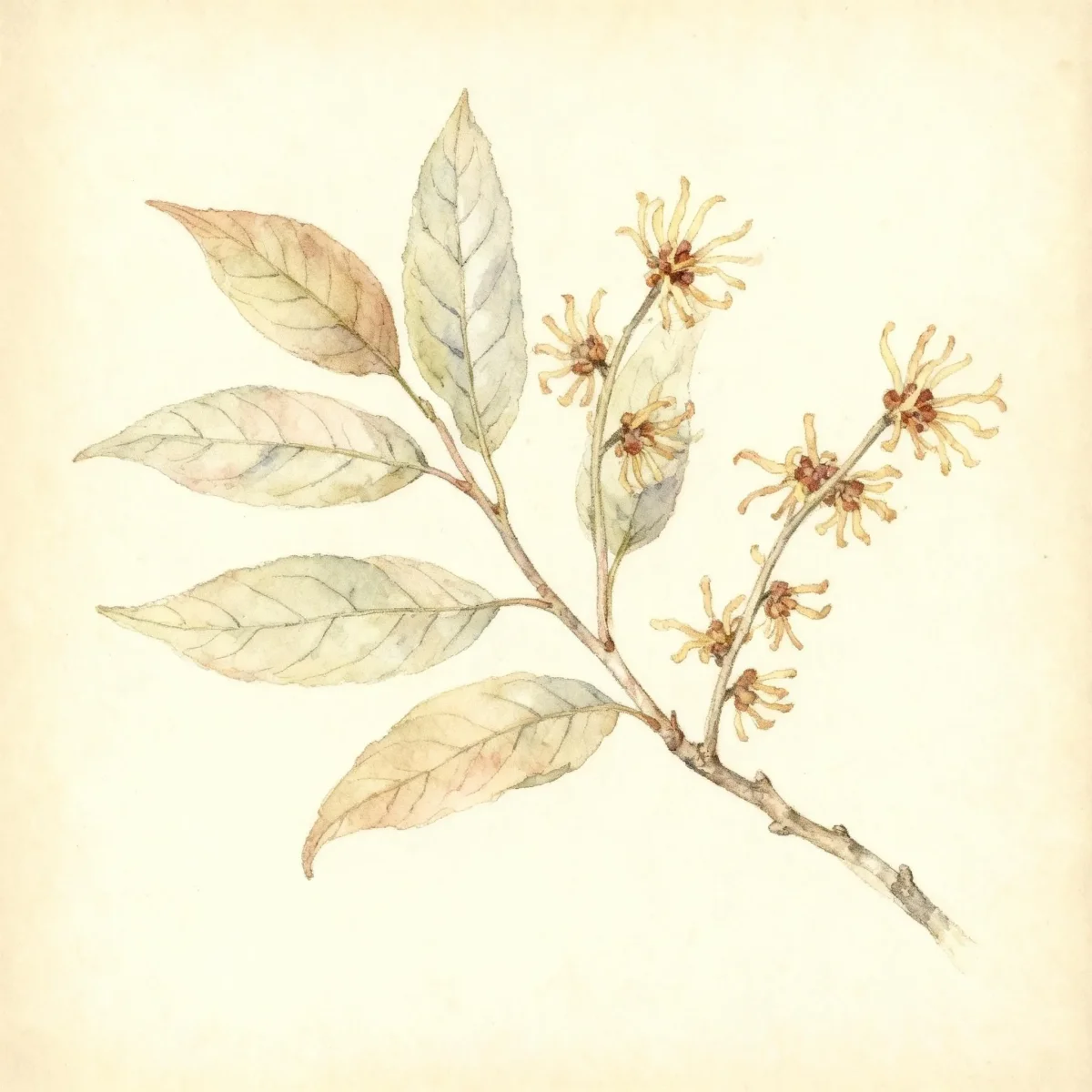
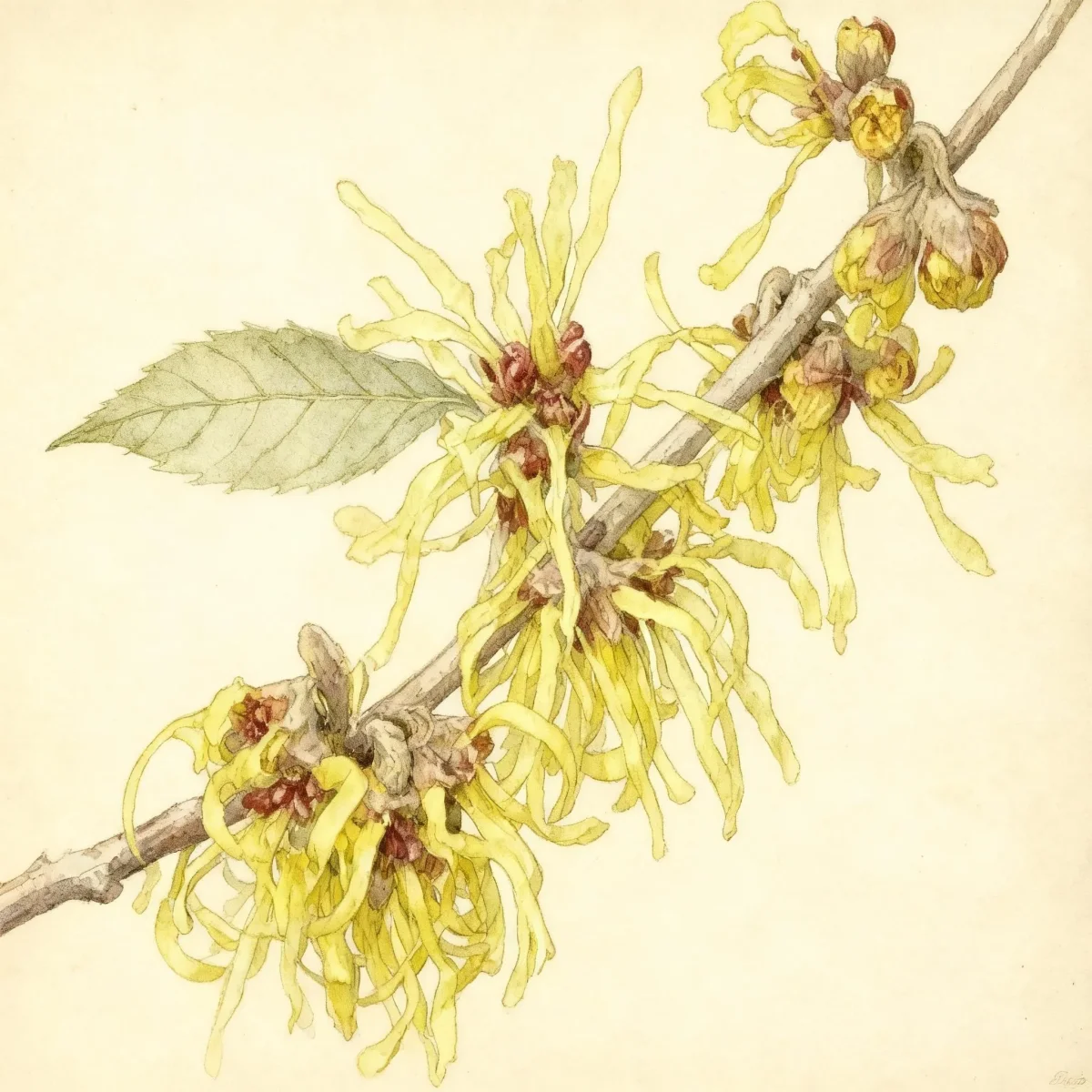
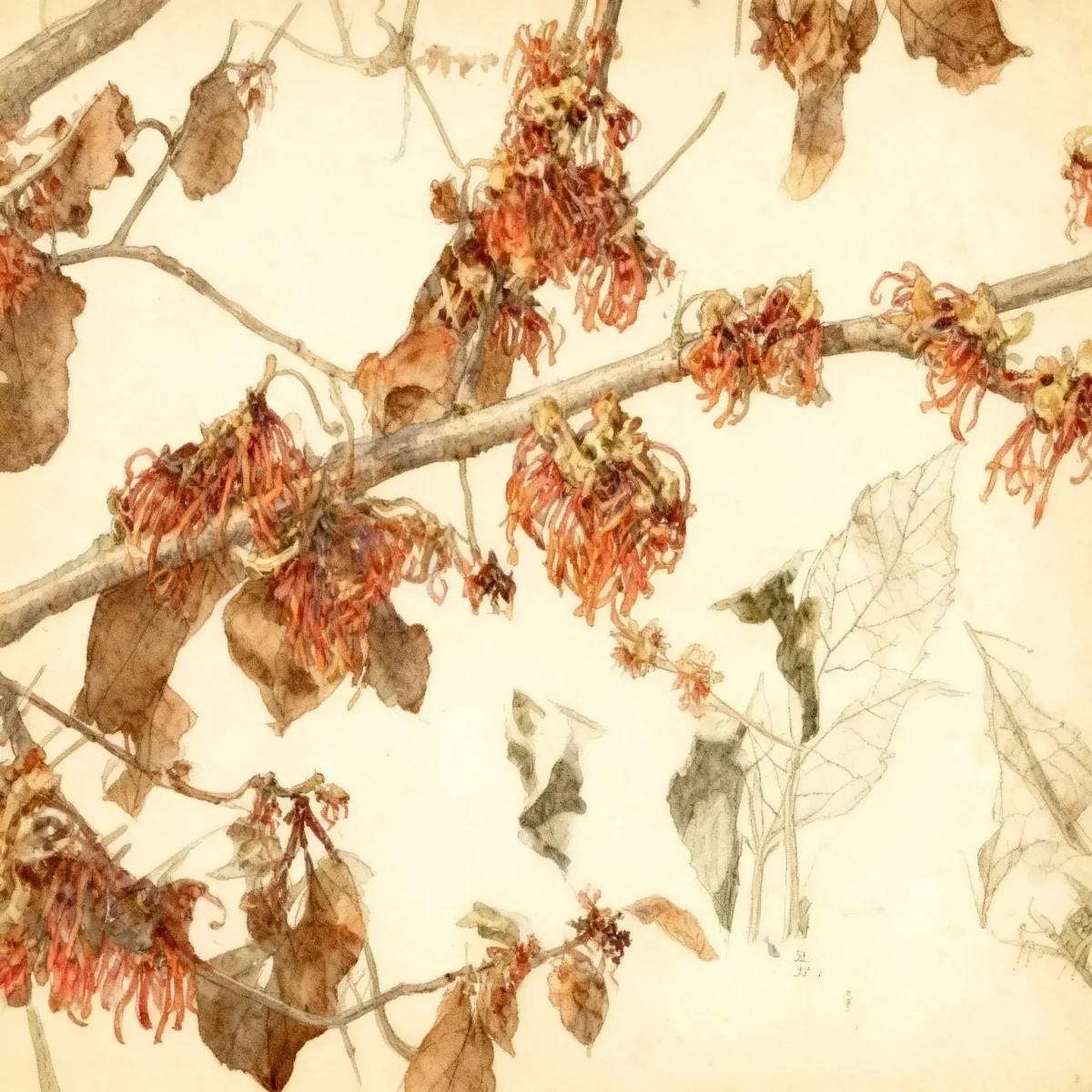
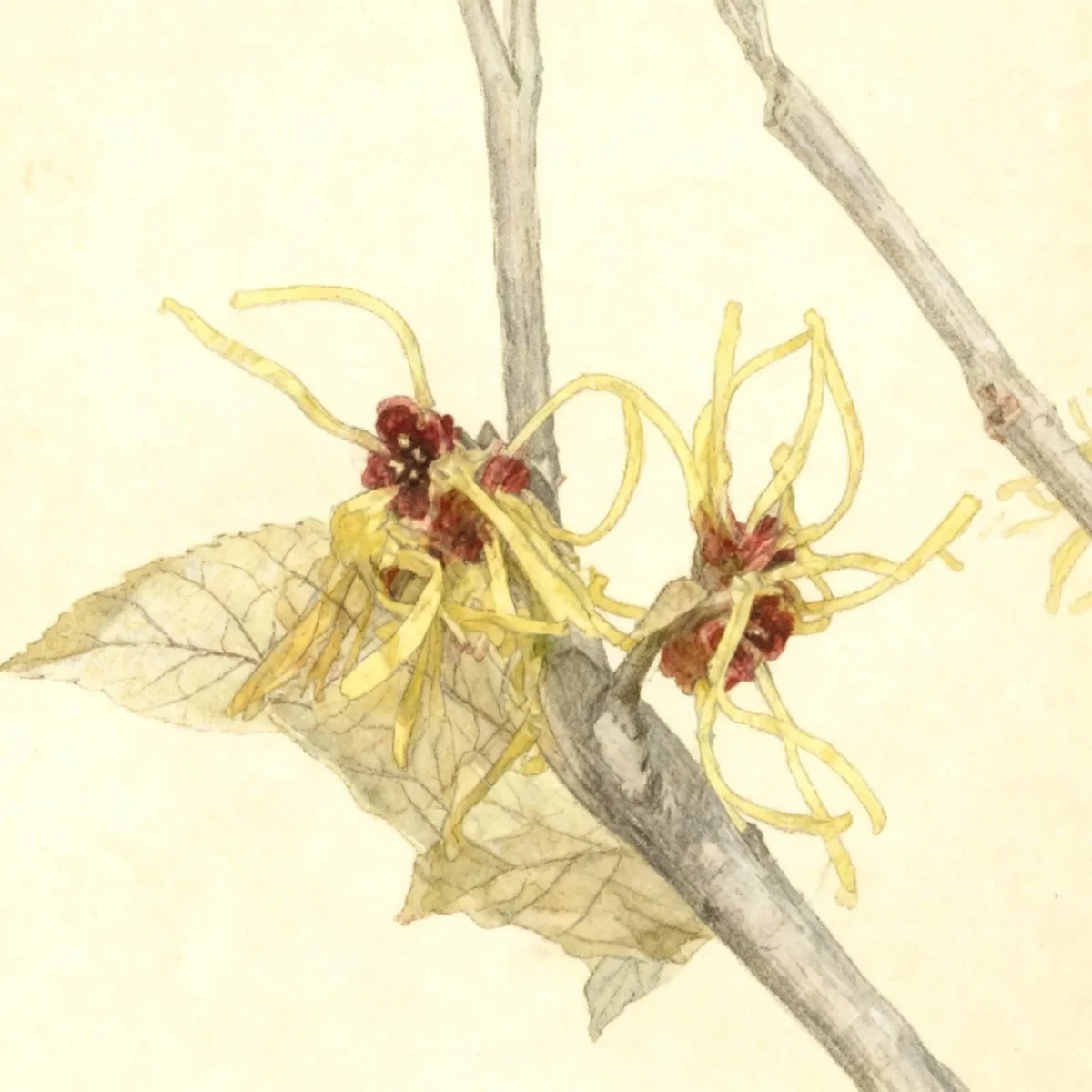
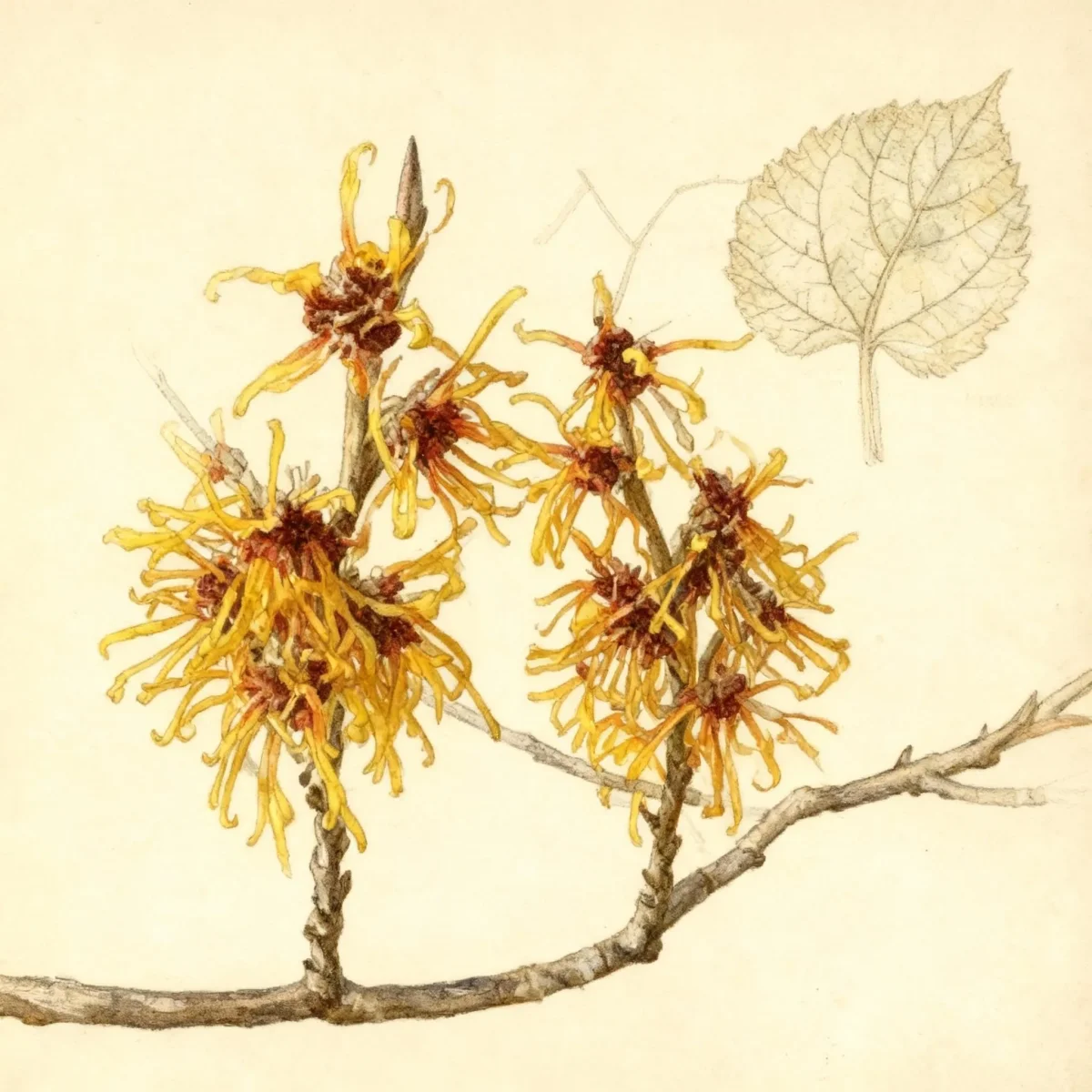
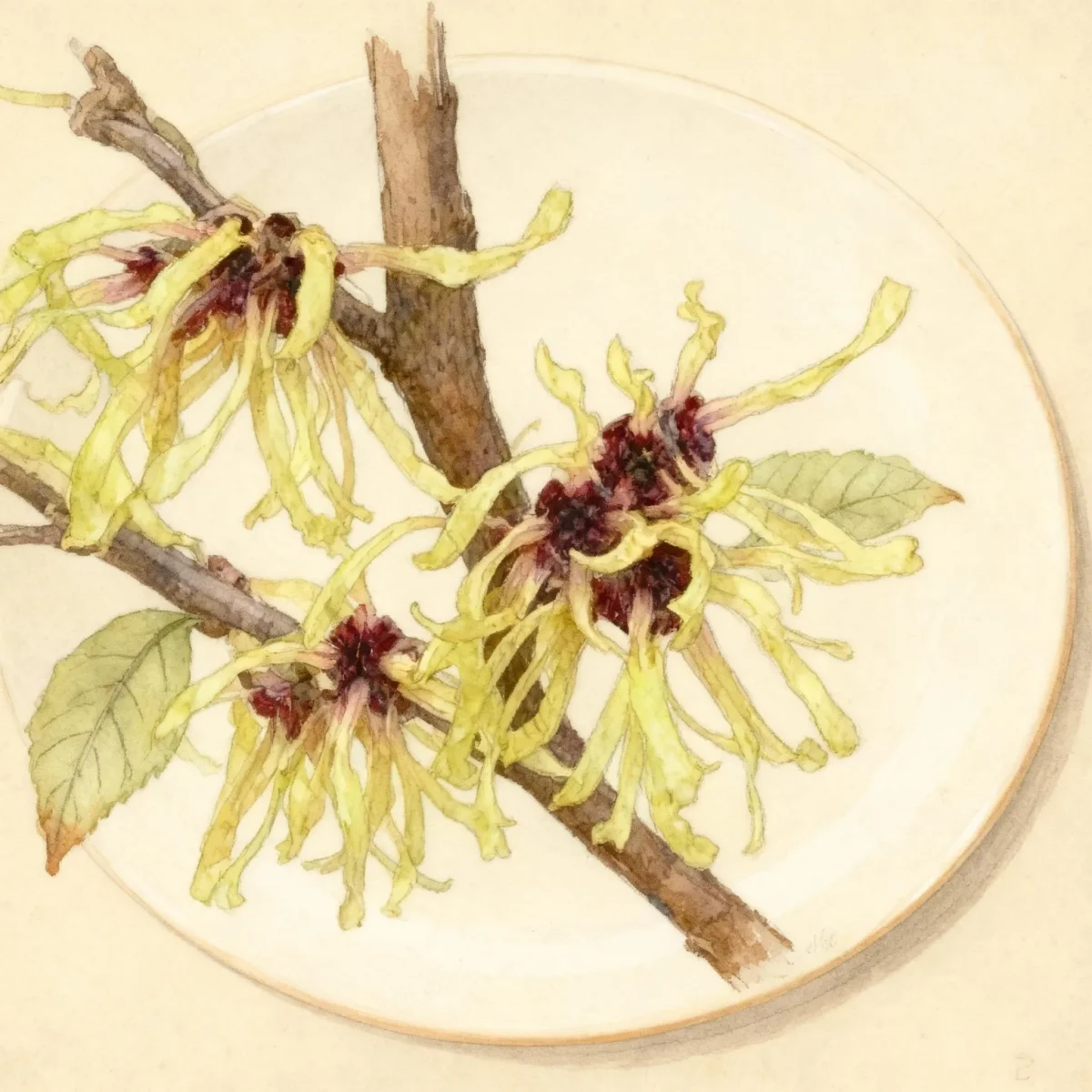
Witch hazel (Hamamelis × intermedia 'Agnes')
Hamamelis × intermedia 'Agnes' is a low-maintenance Witch hazel celebrated for its vibrant red-maroon winter flowers. Hardy in Zones 5-8, it offers superb structural interest.
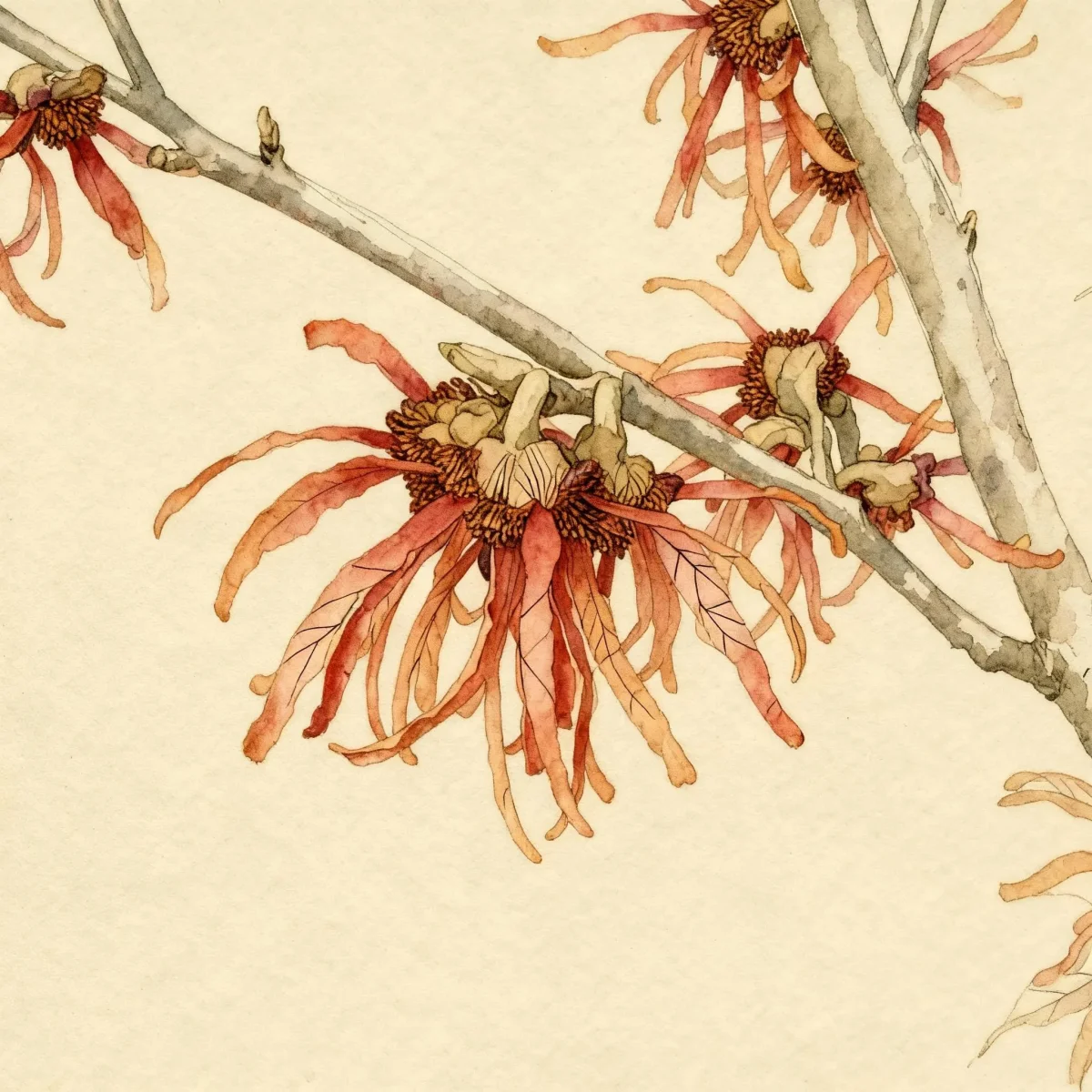

Bloom Boldly, No Matter the Season - Sweatshirt
Cozy organic cotton sweatshirt featuring our exclusive Purple Coneflower design. Perfect for gardeners who bloom year-round.
Inspired by the beautiful Witch hazel
Limited first batch (50) — join the waitlist for early access
Waitlist closes Feb 15, 2026.
Complete Plant Information
Field Guide Continues
Ready for care notes, companion picks, and planting tips?
The map is just the start. The full guide below covers growth habits, seasonal performance, and landscape uses.
Overview
The Hamamelis × intermedia ‘Agnes’ is a spectacular hybrid Witch hazel, providing vital color during the bleakest part of the year. Distinguished by its striking, late-winter bloom display, this cultivar produces unique, spidery flowers along bare stems when few other shrubs are active. This attribute alone makes Hamamelis × intermedia ‘Agnes’ an essential structural plant in any four-season garden design.
As a large, deciduous shrub, it matures to offer significant ornamental value not only through its flowers but also through its attractive fall foliage, which turns shades of orange-red before dropping. While the hybrid name intermedia signifies its intermediate crossing between Japanese and Chinese parents, the ‘Agnes’ variety specifically brings vivid red-maroon blooms to the forefront.
Gardeners seeking low-maintenance beauty will appreciate that this Witch hazel handles a range of conditions, though optimal flowering occurs with consistent moisture and adequate sunlight. Its substantial size—reaching up to 10 feet tall and 16 feet wide—makes it functional as a screen or specimen planting, bringing year-round interest to the landscape.
Fast Facts
- Plant Family: Hamamelidaceae
- Plant Type: Deciduous shrub
- Hardiness Zones: USDA Zones 5-8
- Size at Maturity:
- Height: 8-10 ft
- Spread: 12-16 ft
- Bloom Time: January to March
- Bloom Description: Red-maroon petals
- Sun Exposure: Full sun to part shade
- Water Needs: Medium
- Maintenance Level: Low
How to Grow
The best time to plant Hamamelis × intermedia ‘Agnes’ is typically in the fall or early spring, ensuring the root system has time to establish before summer stress. This Witch hazel thrives in average, medium-moisture, well-drained soils. For the most prolific display of its red-maroon flowers, site the shrub where it receives full sun, although it tolerates part shade gracefully. It particularly prefers moist, acidic, and organically rich soil conditions.
Consistent moisture management is crucial for Hamamelis × intermedia ‘Agnes’. Leaf scorch can easily occur during summer droughts, so supplemental watering during dry spells is highly recommended. While the plant shows tolerance for clay soils, ensure drainage remains high to prevent root issues. Avoid heavy fertilization; focus instead on incorporating organic matter at planting time.
Pruning should be a light touch, performed in the spring immediately after the flowering period concludes, which allows you to shape the canopy or remove errant branches without sacrificing next year’s early buds. A critical maintenance task specific to grafted plants, like many Witch hazels, is the immediate removal of any root suckers growing from below the graft union to maintain the integrity of the ‘Agnes’ cultivar performance.
Landscape Uses
The structural presence and exceptional winter flowering of the Hamamelis × intermedia ‘Agnes’ make it an outstanding specimen plant where its unique form can be appreciated throughout the dormant season. Its mature size, spreading wider than it is tall, lends itself perfectly to use as a large shrub border anchor or as an impactful screen, especially since it retains its lower branching structure well.
When integrating this Witch hazel into woodland gardens or mixed borders, pair it with evergreens that provide a solid green backdrop, making the red-maroon winter flowers pop vividly against the darkness. Because it is valued for winter interest, plan its location carefully; place it where it is visible from frequently used patios, windows, or walkways during January and February. While excellent pruned for shape, it also performs admirably as a tall hedge if properly maintained after bloom time.
Standout Features
Flower Qualities
- Showy
Noteworthy Characteristics
Hamamelis × intermedia hybrids are crosses between Japanese witch hazel (H. Japonica) and Chinese witch hazel (H. Mollis). They are particularly noted for their spidery, mid- to late winter flowers which appear before the spring foliage emerges. The cultivar ‘Agnes’ matures as an upright-spreading shrub displaying showy flowers in axillary clusters along the bare stems from mid- to late winter, featuring ribbon-like, red-maroon petals. Ovate-orbicular grayish-green leaves provide lingering color as they turn orange-red in the fall.
Tolerances
- Deer
- Erosion
- Clay Soil
Potential Problems
While generally robust, the Hamamelis × intermedia ‘Agnes’ may occasionally suffer cosmetic damage from caterpillars or Japanese beetles chewing on the leaves during the growing season. Gardeners should also scout for less common issues such as gall aphids, scale insects, leafrollers, and leafminers. Fungal issues like powdery mildew or occasional leaf spots are possible but typically do not threaten the overall health of this established Witch hazel and usually do not require chemical intervention.
Frequently Asked Questions
What hardiness zones is Witch hazel suitable for?
Hamamelis × intermedia ‘Agnes’ is reliably hardy across USDA Zones 5 through 8, making it a great mid-Atlantic and upper South performer.
How large does Hamamelis × intermedia ‘Agnes’ grow?
This variety matures into an upright-spreading shrub, typically reaching a height between 8 to 10 feet, with a substantial spread ranging from 12 to 16 feet wide.
When does Witch hazel bloom?
This specific variety blooms reliably in the depth of winter, producing its red-maroon flowers from January straight through March.
What sun exposure does Hamamelis × intermedia ‘Agnes’ need?
For best flowering performance, plant this Witch hazel where it receives full sun, although it will successfully grow in locations that receive partial shade.
Conclusion
The Hamamelis × intermedia ‘Agnes’ stands out as a superior winter-flowering shrub, delivering essential color and structure when the garden is otherwise dormant. Its attractive habit, coupled with low maintenance needs and tolerance for clay soil, confirms its value as a specimen or screen. Before planting this beautiful Witch hazel, always confirm that your site falls within Zones 5-8 and plan for consistent moisture availability, especially through summer, to ensure vibrant red-maroon blooms next winter.
Design Ideas
Because Hamamelis × intermedia ‘Agnes’ blooms on bare wood, strategic placement near winter pathways or viewing areas is key to maximizing its appeal. Group it adjacent to dark green, broadleaf evergreens, such as Rhododendrons or Boxwood, creating a high-contrast canvas for its winter flowers. Its intermediate size allows it to blend into the middle or back of a perennial border without overwhelming smaller structures, providing a sturdy, year-round anchor.
Consider using this Witch hazel as a natural screen between neighboring properties, utilizing its dense winter branching for privacy before the leaves emerge. As it develops, the airy, somewhat coarse branch structure adds excellent textural contrast to fine-textured evergreens like Japanese yews or finely cut deciduous specimens when they are bare.
Companion Planting
When planning companions for Hamamelis × intermedia ‘Agnes’, focus on plants that thrive in similar moist, well-drained, and often slightly acidic soils common to woodland garden settings. Early spring bloomers like Snowdrops (Galanthus) or Crocus are perfect foreground accents, as they bloom concurrently with or just after the Witch hazel flowers fade. For summer interest, pair the shrub with acid-loving plants such as Azaleas and Vaccinium species (blueberries), which appreciate the same soil structure.
Ensure summer perennials do not completely shade out the base of the Hamamelis × intermedia ‘Agnes’, as reduced air circulation can encourage fungal issues, and excessive summer dryness will stress the shrub. The bold structure of the Witch hazel provides excellent contrast to softer, mounding groundcovers planted beneath its canopy during the growing season.