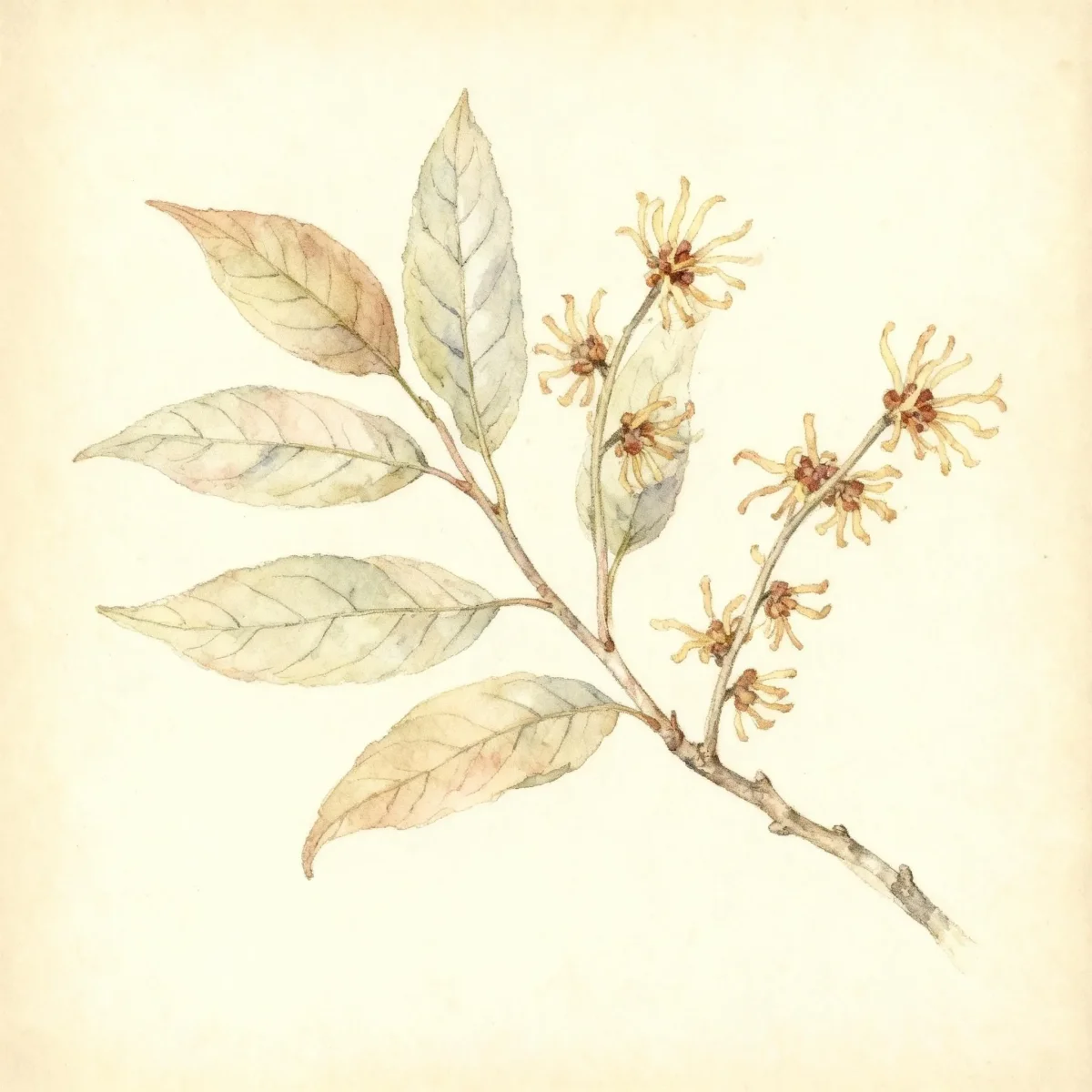
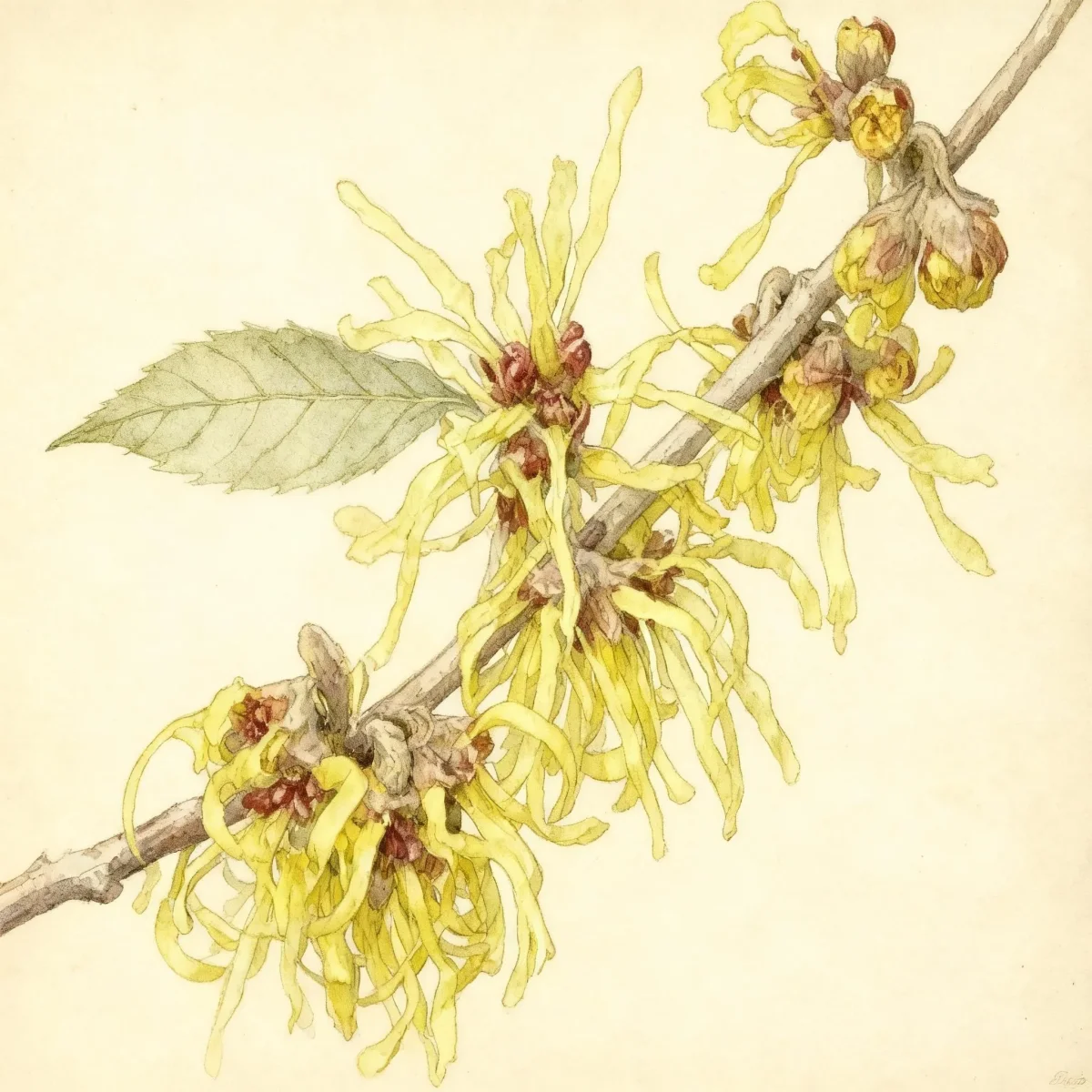
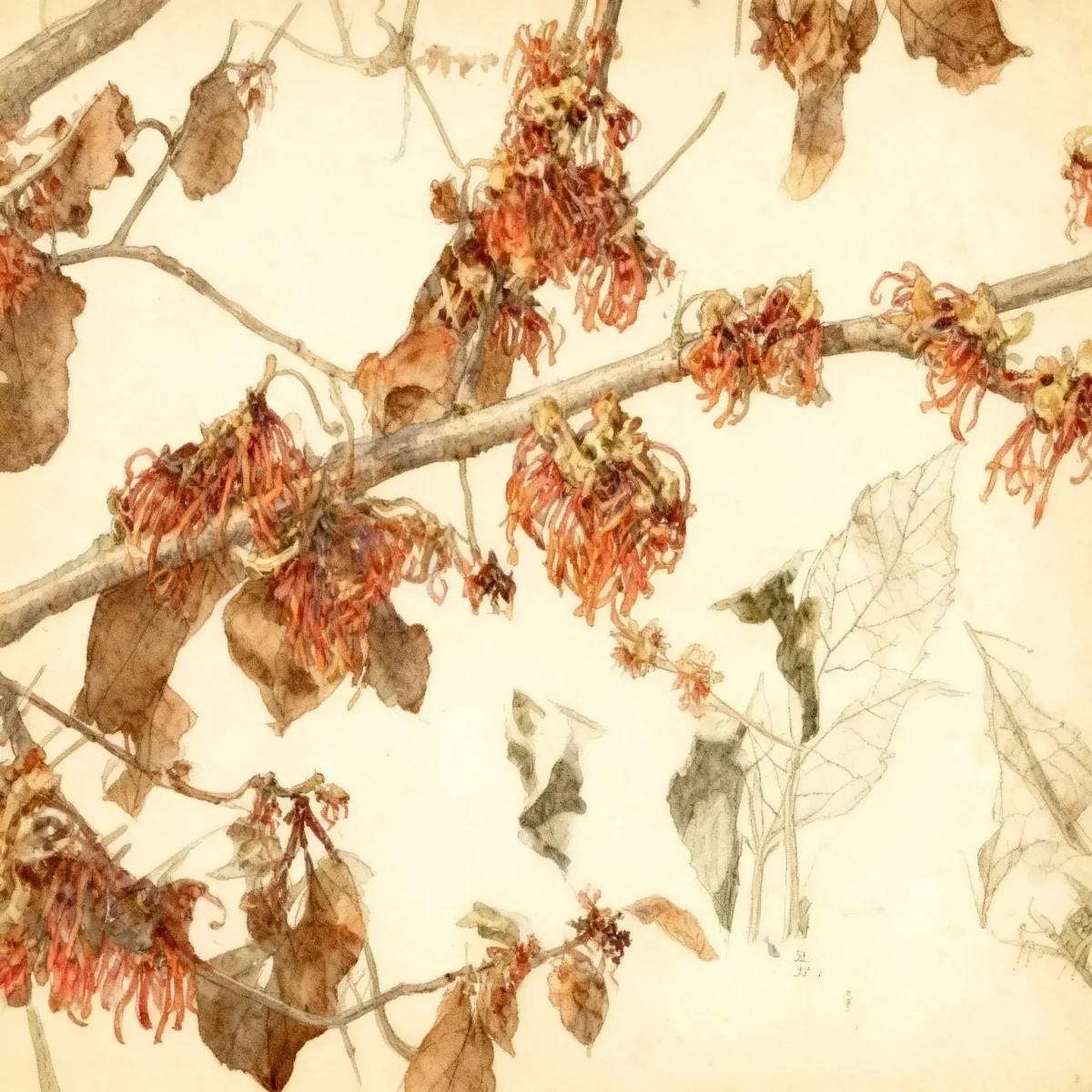
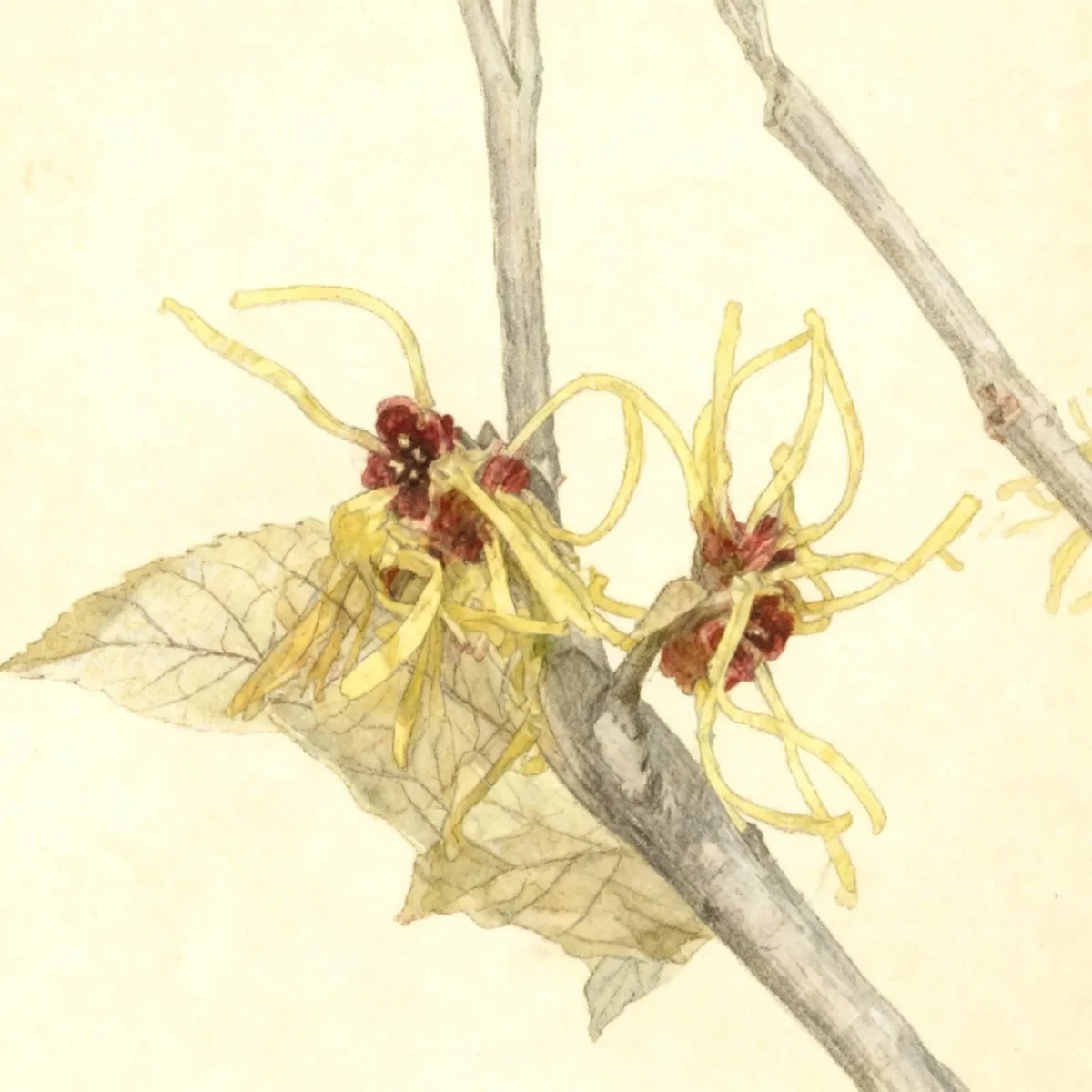
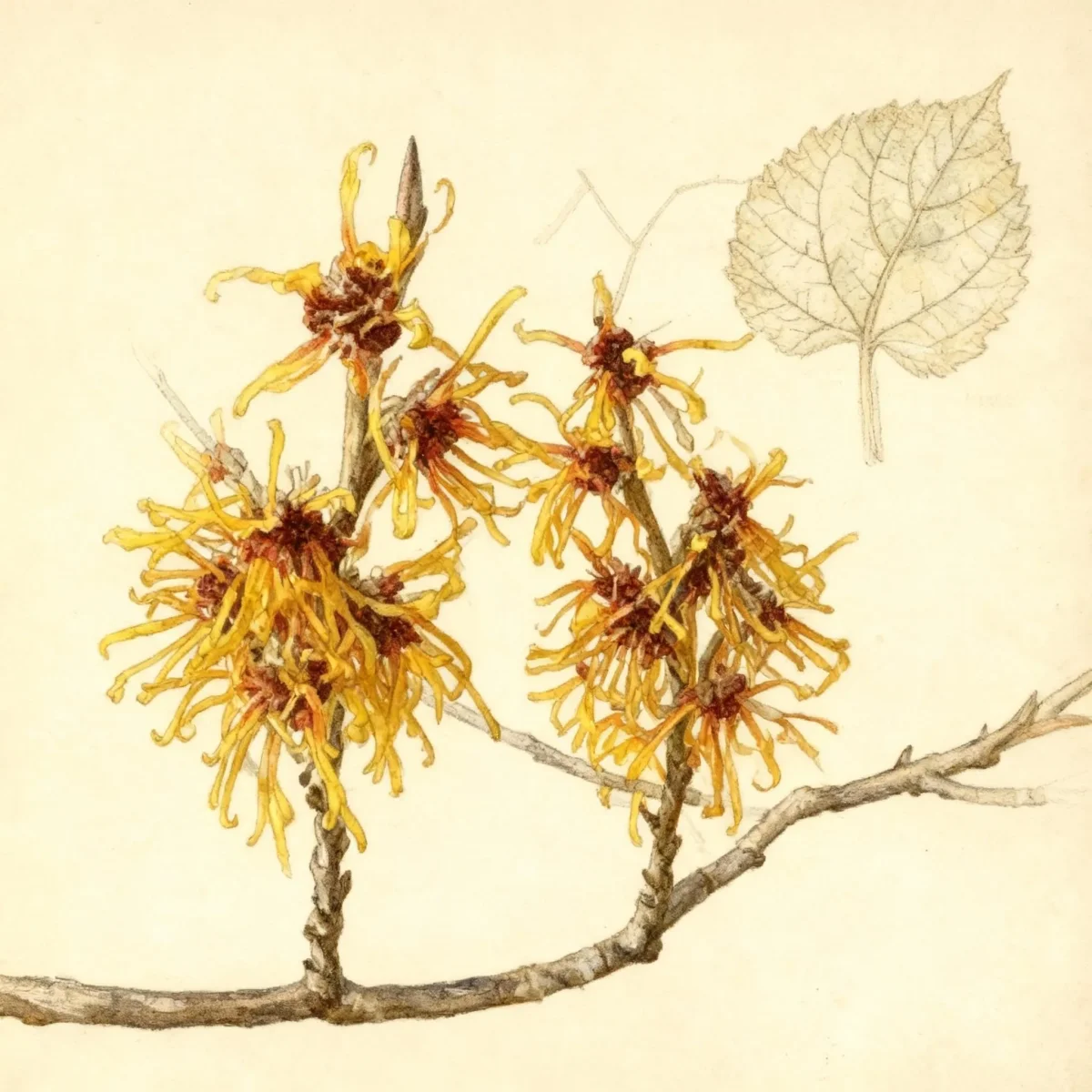
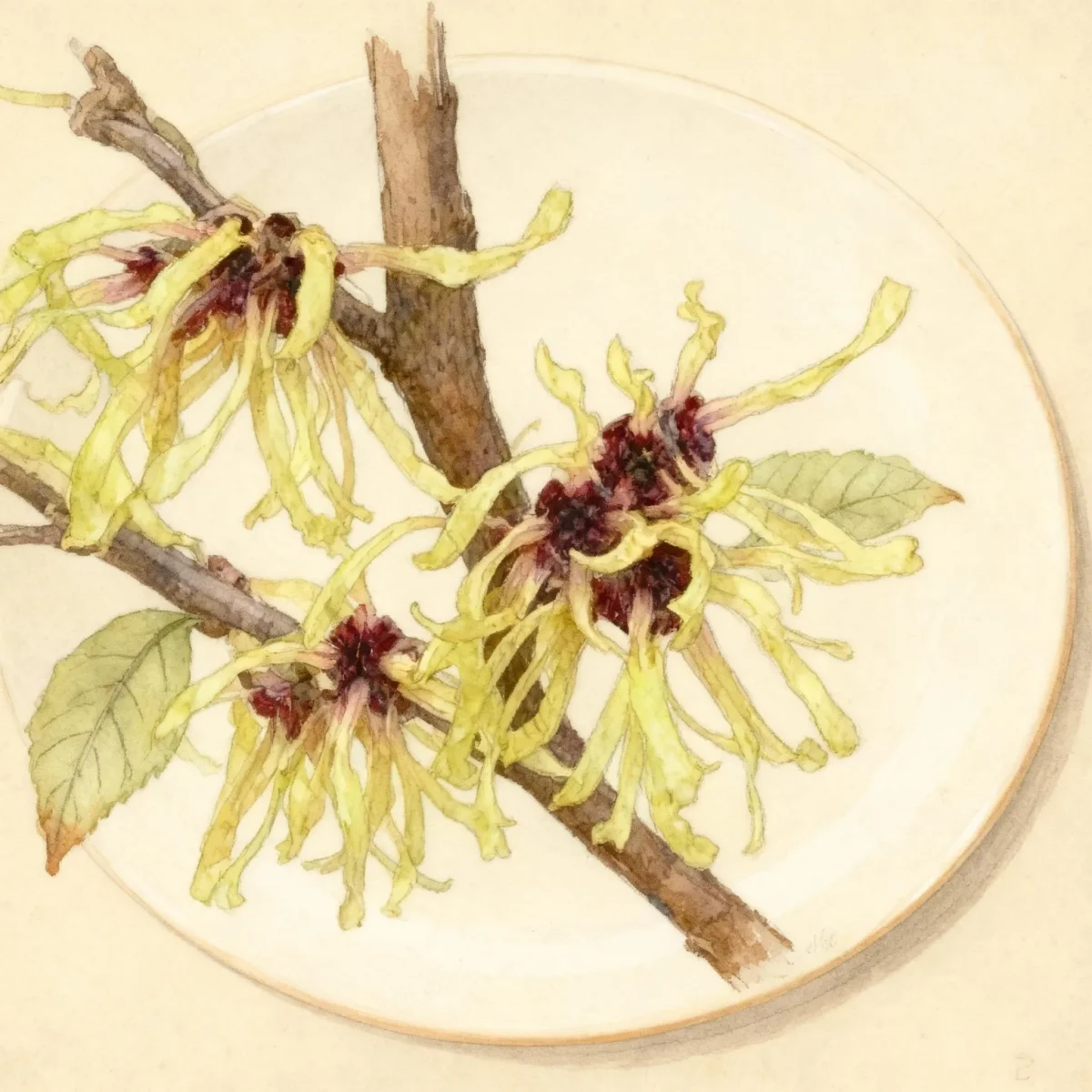
Witch hazel (Hamamelis × intermedia 'Savill Starlight')
Discover Hamamelis × intermedia 'Savill Starlight' Witch hazel, a compact deciduous shrub known for its bright yellow winter flowers. Ideal for Zones 5-8.

Bloom Boldly, No Matter the Season - Sweatshirt
Cozy organic cotton sweatshirt featuring our exclusive Purple Coneflower design. Perfect for gardeners who bloom year-round.
Inspired by the beautiful Witch hazel
Limited first batch (50) — join the waitlist for early access
Waitlist closes Feb 15, 2026.
Complete Plant Information
Field Guide Continues
Ready for care notes, companion picks, and planting tips?
The map is just the start. The full guide below covers growth habits, seasonal performance, and landscape uses.
Overview
Hamamelis × intermedia ‘Savill Starlight’ is a superb deciduous shrub valued primarily for its striking flowers that illuminate the dreary late winter landscape. As a hybrid Witch hazel, it offers reliable performance and surprising winter interest when most other plantings are dormant. This variety typically maintains a compact habit, making it more manageable than some of its towering relatives.
The beauty of Hamamelis × intermedia ‘Savill Starlight’ lies in its unique bloom structure—spidery clusters of narrow, bright yellow petals erupt along bare branches between January and March. This shrub brightens woodland settings or serves as a reliable specimen for the colder months. Gardeners appreciate this cultivar for its low maintenance needs once established.
Because it is known to be deer-resistant and tolerant of clay soils, Witch hazel offers functional benefits beyond its aesthetic appeal. Plant Hamamelis × intermedia ‘Savill Starlight’ where its winter color can be easily viewed from home windows or near entryways.
Fast Facts
- Plant Family: Hamamelidaceae
- Plant Type: Deciduous shrub
- Hardiness Zones: USDA Zones 5-8
- Size at Maturity:
- Height: 4-5 ft
- Spread: 5-7 ft
- Bloom Time: January to March
- Bloom Description: Yellow petals
- Sun Exposure: Full sun to part shade
- Water Needs: Medium
- Maintenance Level: Low
How to Grow
Plant Hamamelis × intermedia ‘Savill Starlight’ during early spring or fall when the ground is workable. While it tolerates average conditions, best flowering is achieved in full sun. The ideal location provides moist, acidic, organically rich soils, though this Witch hazel exhibits some tolerance for clay if drainage remains good.
Maintain consistent moisture, especially during the summer; drought conditions can lead to leaf scorch. Fertilization is rarely required for established plants. If you choose to prune Hamamelis × intermedia ‘Savill Starlight’, do so immediately after flowering concludes in the spring to control size and shape.
Vigilantly address root suckers, removing any that arise, particularly those originating below the graft union. This action prevents the shrub from developing an undesirable colonial spread in the landscape. Its low maintenance profile makes it an excellent choice for year-round structure.
Landscape Uses
This Witch hazel is an exceptional choice for adding multi-season interest, though its winter flowers are its main draw. Its compact nature—only reaching 4 to 5 feet tall—makes Hamamelis × intermedia ‘Savill Starlight’ suitable for shrub borders where taller specimens might overwhelm surrounding plantings. It excels as a unique specimen where its winter form can be appreciated.
Use this plant in woodland gardens to add light during late winter or incorporated into mixed borders where its dark green summer foliage and yellow fall color provide contrast. Because it functions well as a screen or a loose hedge, it can provide structure without the formality of tightly sheared hedges, offering practical screening with seasonal rewards.
Standout Features
Flower Qualities
- Showy
Noteworthy Characteristics
Hamamelis × intermedia hybrids are crosses between Japanese witch hazel (H. Japonica) and Chinese witch hazel (H. Mollis). Gardeners prize these loosely-branched deciduous shrubs for their spidery, mid- to late-winter flowers that appear before the foliage emerges. Cultivar ‘Savill Starlight’ typically matures to a compact size of 4-5 feet tall and 5-7 feet wide, featuring ribbon-like, curled yellow petals up to 3/4 inch long.
Tolerances
- Deer
- Erosion
- Clay Soil
Potential Problems
While generally robust, leaf-chewing insects like caterpillars and Japanese beetles may occasionally target the foliage during the growing season. Gardeners should also monitor for sap-sucking pests such as gall aphids or scale insects, as well as leafrollers and leafminers. Potential fungal issues include powdery mildew and occasional leaf spots or rots. Fortunately, these insect and disease problems are typically minor and rarely require chemical intervention on healthy Hamamelis × intermedia ‘Savill Starlight’.
Frequently Asked Questions
What hardiness zones is Witch hazel suitable for?
Hamamelis × intermedia ‘Savill Starlight’ thrives in USDA Hardiness Zones 5 through 8.
How large does Hamamelis × intermedia ‘Savill Starlight’ grow?
This compact Witch hazel typically matures to a height range of 4 to 5 feet, with a spread between 5 and 7 feet wide.
What sun exposure does Witch hazel need?
It performs best when situated in full sun, although it can tolerate partial shade; note that best flowering occurs in full sun.
When does Witch hazel bloom?
This deciduous shrub flowers during the late winter months, specifically from January to March, bearing yellow petals.
Conclusion
Hamamelis × intermedia ‘Savill Starlight’ offers remarkable value by providing essential winter color through its unique yellow blooms, supported by low maintenance requirements. This Witch hazel hybrid is adaptable, handling clay soils and deer pressure with ease. Before planting this outstanding shrub, confirm your garden falls within USDA Zones 5-8 to maximize its stunning mid-winter display.
Companion Planting
Selecting appropriate companions ensures that Hamamelis × intermedia ‘Savill Starlight’ looks good year-round and thrives culturally. Pair this Witch hazel with evergreen shrubs, such as various Rhododendrons or Japanese Holly (Ilex crenata), which provide necessary structure when the Hamamelis is bare in winter. In spring, bulbs like snowdrops or crocuses can emerge beneath the shrub, softening its base before the deciduous leaves unfurl.
When establishing the soil, prioritize moisture retention and acidity. Companion plants that enjoy moist, rich, slightly acidic humus—like Astilbe or Hellebores—will benefit from similar care practices, creating a cohesive woodland garden palette.
Seasonal Care Calendar
Winter preparation for this Witch hazel primarily involves admiring its structure, as it is exceptionally cold-hardy in its recommended zones. In early spring, immediately after flowering ceases, check the shrub for any needed shaping or size reduction; this is the only key pruning window. During the summer, monitor soil moisture diligently; consistent watering prevents leaf scorch typical during dry spells. Observe the plant in autumn as its broad leaves turn an attractive yellow before dropping, signaling dormancy.