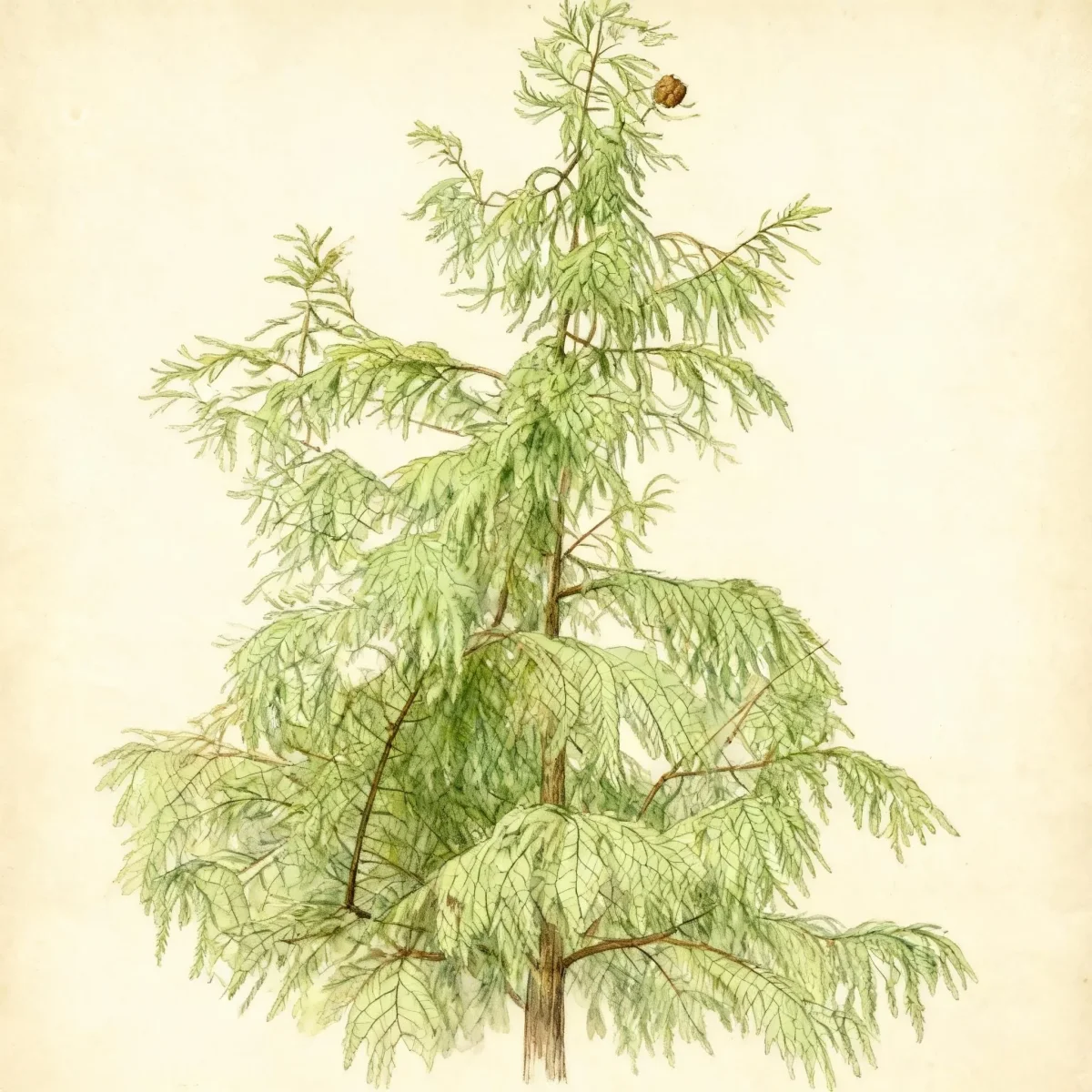
Cypress (Taxodium 'Zhongshansa' NANJING BEAUTY)
The rapid-growing Taxodium 'Zhongshansa' NANJING BEAUTY Cypress is a semi-evergreen conifer ideal for wet soils and large landscapes.
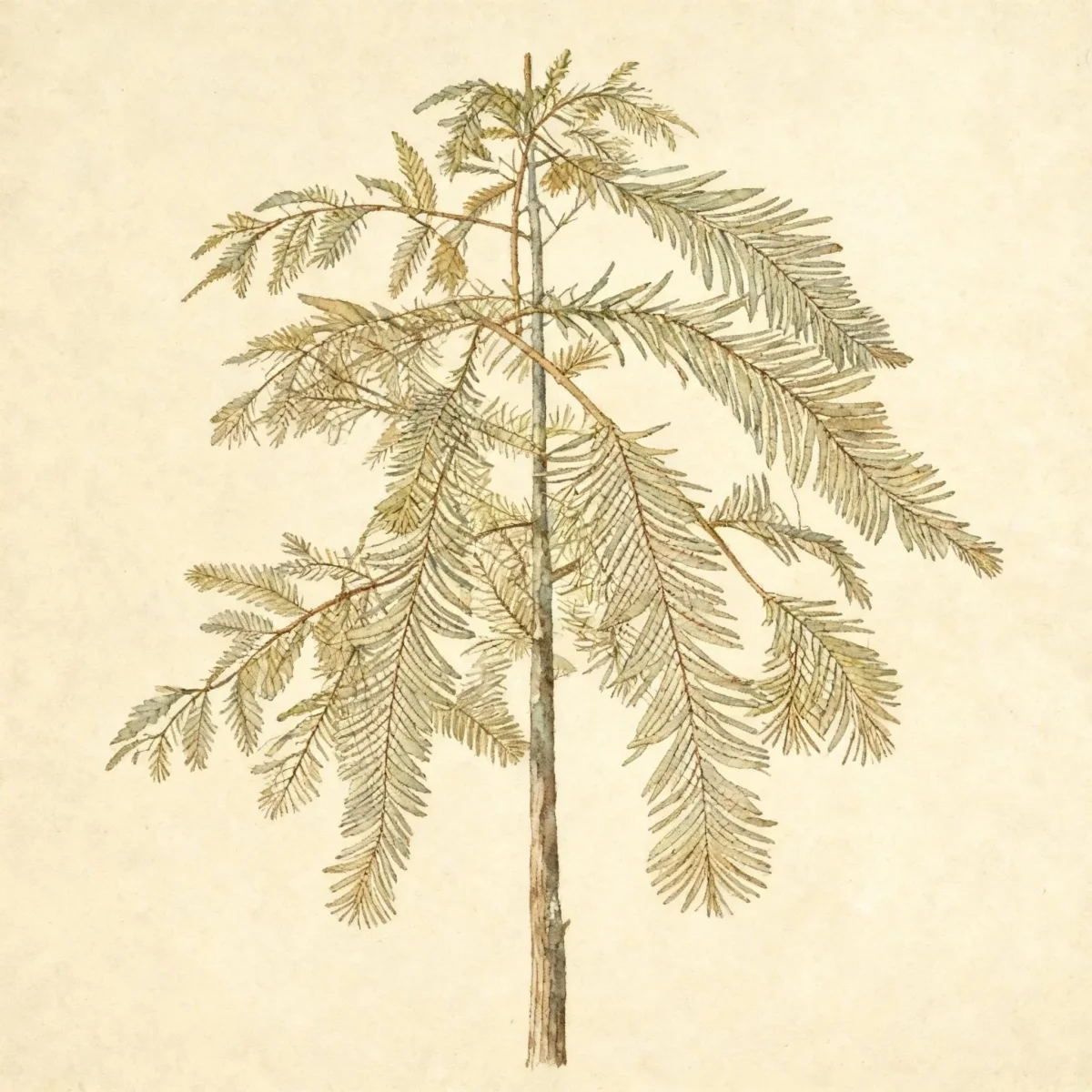

Bloom Boldly, No Matter the Season - Sweatshirt
Cozy organic cotton sweatshirt featuring our exclusive Purple Coneflower design. Perfect for gardeners who bloom year-round.
Inspired by the beautiful Cypress
Limited first batch (50) — join the waitlist for early access
Waitlist closes Feb 15, 2026.
Complete Plant Information
Field Guide Continues
Ready for care notes, companion picks, and planting tips?
The map is just the start. The full guide below covers growth habits, seasonal performance, and landscape uses.
Overview
The Taxodium ‘Zhongshansa’ NANJING BEAUTY is a highly valuable addition to larger landscapes, recognized for its vigorous growth habit and unique deciduous conifer status. This specific hybrid Cypress offers excellent performance where moisture is abundant, setting it apart from many traditional needle-bearing evergreens. Its semi-evergreen nature provides structure throughout the year, while its adaptability makes it suitable for various challenging sites.
Developed in China, this hybrid cross between Bald Cypress and Montezuma Cypress is particularly noted for its resilience and fine texture. For gardeners seeking a grand specimen tree that handles wet feet better than most, the Taxodium ‘Zhongshansa’ NANJING BEAUTY provides a beautiful architectural outline and superior durability. It is establishing itself as a premier choice for large-scale plantings along infrastructure corridors and in functional green spaces.
This robust Cypress cultivar matures into a stately presence, thriving best in full sun exposure. Gardeners should recognize Taxodium ‘Zhongshansa’ NANJING BEAUTY for its resistance to alkalinity and its attractive foliage retention in the autumn, minimizing seasonal maintenance concerns. Proper siting is key to realizing the full potential of this impressive, fast-growing tree.
Fast Facts
- Plant Family: Cupressaceae
- Plant Type: Tree
- Hardiness Zones: USDA Zones 7-10
- Size at Maturity:
- Height: 50-70 ft
- Spread: 20-30 ft
- Bloom Time: Non-flowering
- Bloom Description: Non-flowering
- Sun Exposure: Full sun
- Water Needs: Medium to wet
- Maintenance Level: Medium
How to Grow
Planting the Taxodium ‘Zhongshansa’ NANJING BEAUTY should ideally occur in spring or early fall to allow the roots to establish before temperature extremes. Locate this Cypress where it receives consistent, full sun exposure throughout the day. While it shows tolerance for a variety of soil types, the best performance is achieved in average, medium to wet, moisture-retentive soils, preferably acidic sandy loams.
Watering requirements are high; ensure consistent moisture, particularly when establishing this rapid-growing tree. The adaptability of this hybrid means it excels in boggy areas or rain gardens where consistent saturation is natural. Fertilization is rarely necessary once established, as it is generally vigorous; focus instead on adequate hydration during dry spells.
Maintenance is considered medium, largely due to its substantial mature size necessitating space. Pruning should be minimal, focusing only on removing crossing or damaged limbs. A critical consideration is regional reliability: gardeners in cooler fringes of the hardiness range, such as the St. Louis area, should plant Taxodium ‘Zhongshansa’ NANJING BEAUTY in protected microclimates to ensure superior winter survival.
Landscape Uses
The impressive stature and moisture tolerance of the Taxodium ‘Zhongshansa’ NANJING BEAUTY make it an exceptional structural element in landscape design. It serves superbly as a dramatic street tree, capable of handling the compacted soils and pollution associated with urban environments. Furthermore, its requirement for moisture makes it a functional and aesthetic choice for bio-retention areas or rain gardens integrated into the site plan.
As an interesting landscape specimen, this Cypress provides strong vertical accent, contrasting well with lower, broader deciduous shrubs or mass plantings of hardy perennials that thrive in similar conditions. Consider pairing its fine, needle-like foliage with the bold textures of rhododendrons or azaleas in slightly acidic, damp border areas. Its eventual height demands consideration for overhead utilities and sightlines.
This species is an excellent anchor plant for large properties or commercial sites needing rapid screening or defining boundaries near water features. The inherent strength and rapid development of the Taxodium ‘Zhongshansa’ NANJING BEAUTY mean it establishes year-round visual interest quickly.
Standout Features
Noteworthy Characteristics
Taxodium is a genus of three species of deciduous or semi-evergreen coniferous trees found from Southeast U.S. To Guatemala. They make good choices for wet, boggy soils.Genus name comes from the Latin word Taxus meaning yew and the Greek word eidos meaning resemblance from a similarity of leaf shape.NANJING BEAUTY is a conical, deciduous to semi-evergreen conifer with needle-like leaves. It is a hybrid cross of Taxodium distichum (bald cypress) and Taxodium mucronatum (Montezuma cypress). This cross was made in China in the late 1970s to early 1980s by Dr. Chen Yong Hui of the Nanjing Botanical Garden. NANJING BEAUTY is noted for its rapid growth rate, ease of rooting, high alkalinity resistance, good fall foliage retention and absence of knees. It is now being mass planted in southeastern China along streets, roads, railroad tracks and canals. Hybrid seedlings were first brought to the U.S. In 2001. The plant was originally named Taxodium ‘Zhongshansa’, but with the permission of the Nanjing Botanical Garden is being sold under the name NANJING BEAUTY when brought to the U.S. Market. Seedlings are expected to grow to 16’ tall over the first 10 years, but will eventually mature to 70’ tall or more over time.
Tolerances
- Deer
- Clay Soil
- Air Pollution
Potential Problems
Healthy, well-maintained plants in the proper growing conditions are expected to have few problems. As a robust hybrid, Taxodium ‘Zhongshansa’ NANJING BEAUTY resists most common pest and disease pressures when sited appropriately. Avoid planting in dry, highly alkaline soils if possible, as stress can weaken the tree, making it more susceptible to opportunistic issues. The primary concern remains winter hardiness; ensure adequate protection or choose a drier site if conditions frequently dip below Zone 7 expectations.
Frequently Asked Questions
What hardiness zones is Cypress suitable for?
The Taxodium ‘Zhongshansa’ NANJING BEAUTY Cypress is suitable for USDA Hardiness Zones 7 through 10.
How large does Cypress grow?
This tree is expected to reach mature heights between 50 and 70 feet tall, with a spread of 20 to 30 feet wide.
What sun exposure does Taxodium ‘Zhongshansa’ NANJING BEAUTY need?
Taxodium ‘Zhongshansa’ NANJING BEAUTY requires full sun exposure to develop optimally.
When does Cypress bloom?
This plant is categorized as non-flowering.
Conclusion
The Taxodium ‘Zhongshansa’ NANJING BEAUTY stands out as a powerful, fast-growing conifer engineered for moisture retention areas and durable urban settings. This unique Cypress offers significant architectural impact along with proven resistance to common urban stressors. Before planting, confirm that your site falls within USDA Zones 7-10 and provides access to the medium to wet soil conditions this impressive tree requires.
Companion Planting for Wet Sites
Selecting companions for Taxodium ‘Zhongshansa’ NANJING BEAUTY involves choosing other plants comfortable with seasonally saturated or consistently moist soil. Consider water-loving shrubs like Buttonbush (Cephalanthus occidentalis) or certain species of native hollies that tolerate similar conditions. For ground cover beneath the spreading canopy, ferns that prefer dappled shade and damp conditions, such as Ostrich Fern (Matteuccia struthiopteris), work well as the Cypress matures.
Ensure that companion plants do not aggressively compete for nutrients, as the Cypress is a rapid grower that will dominate the space quickly. The combination of moisture-loving plants creates a cohesive rain garden ecosystem that capitalizes on the unique environment preferred by the Taxodium ‘Zhongshansa’ NANJING BEAUTY.
Design Ideas for Specimen Planting
Utilizing the Taxodium ‘Zhongshansa’ NANJING BEAUTY as a focal point requires significant space planning due to its 70-foot mature height. Place it on axes that draw the eye through the landscape, perhaps positioned near a pond edge or a large, formal lawn area where its pyramidal shape can be fully appreciated. Avoid placing it too close to small structures where future growth could cause conflict.
In contemporary landscape design, single specimens of this striking Cypress are effective anchors, used to balance large expanses of hardscaping or open water features. Its semi-evergreen nature means that even in winter, the tree provides silhouette and structure, a crucial factor when designing winter gardens where other foliage has dropped.