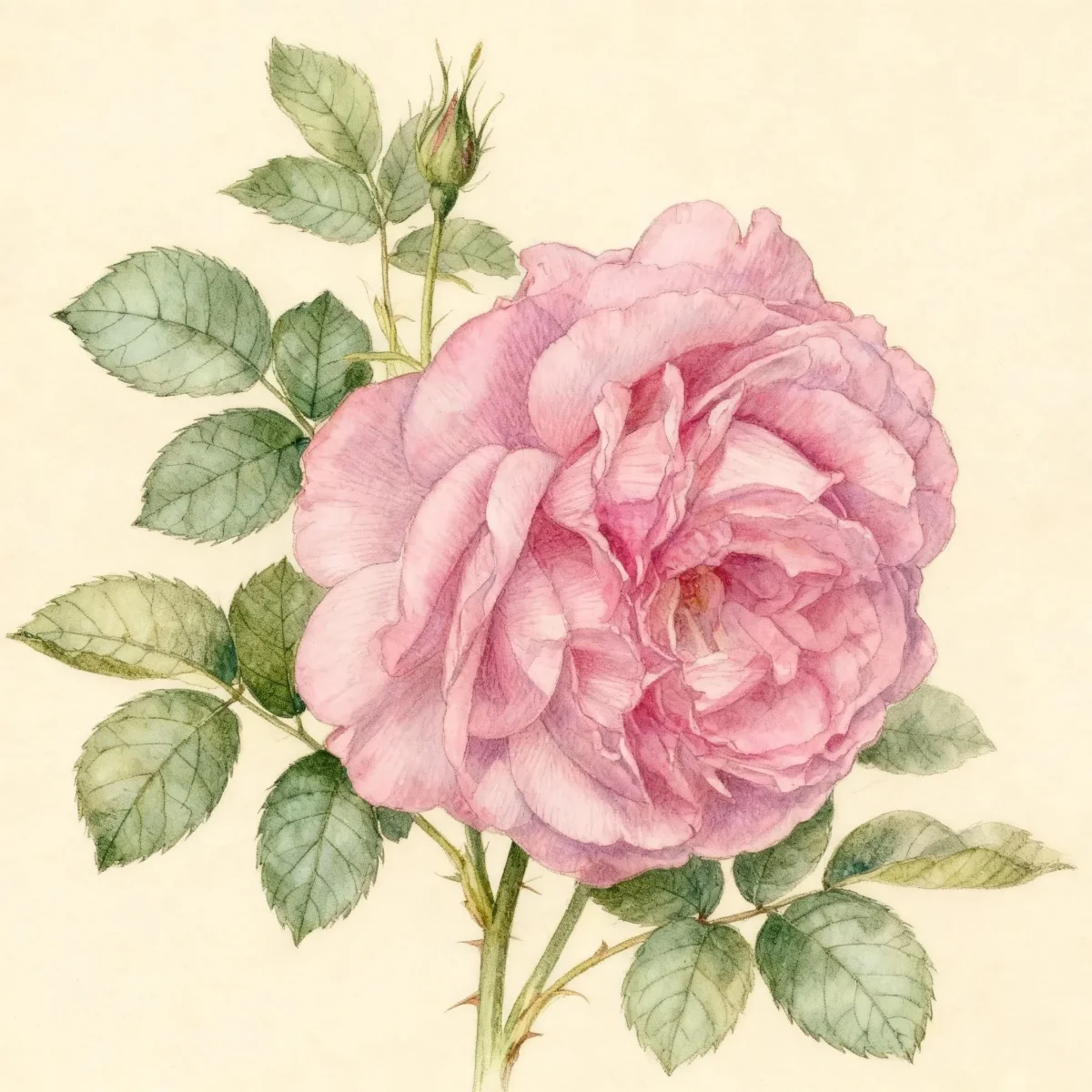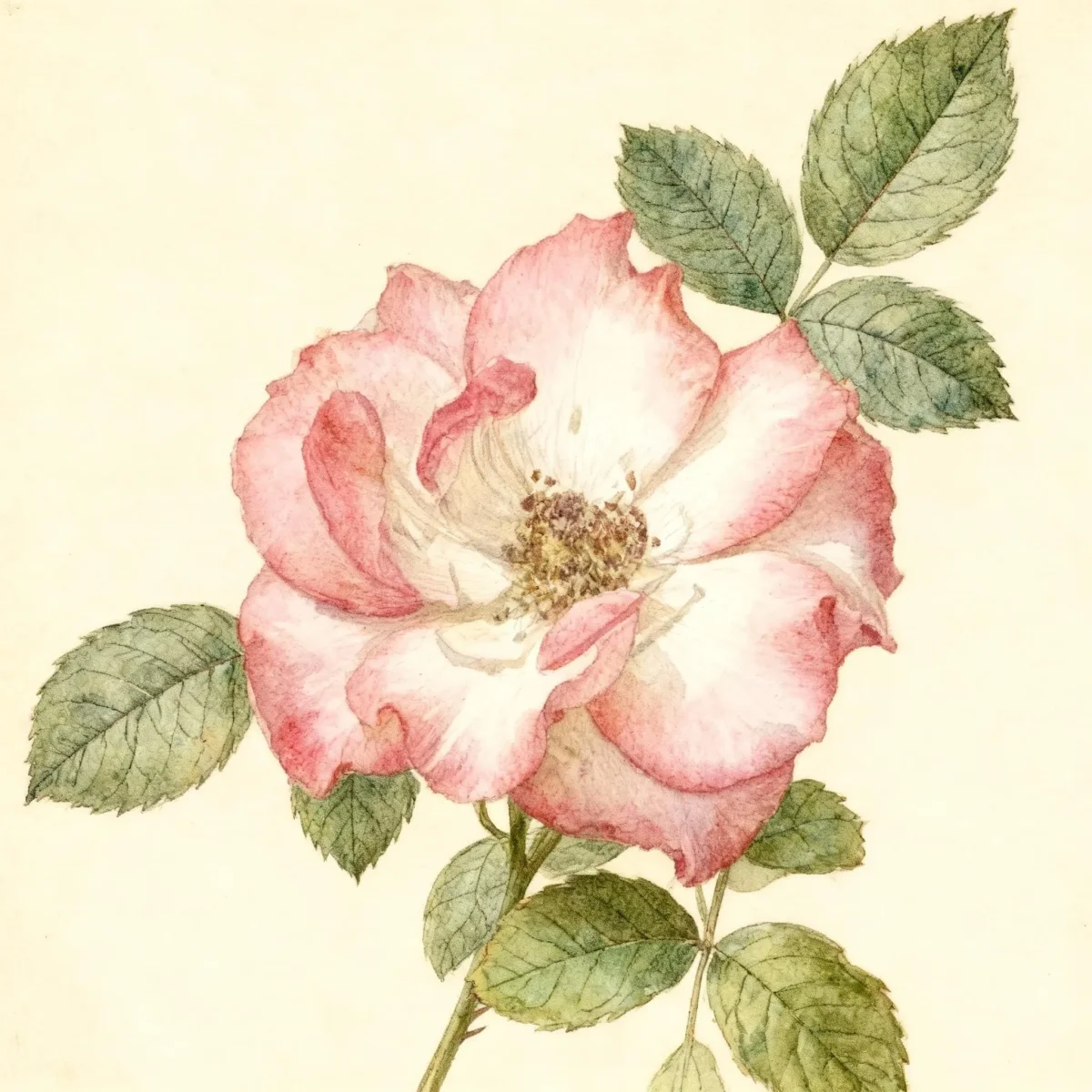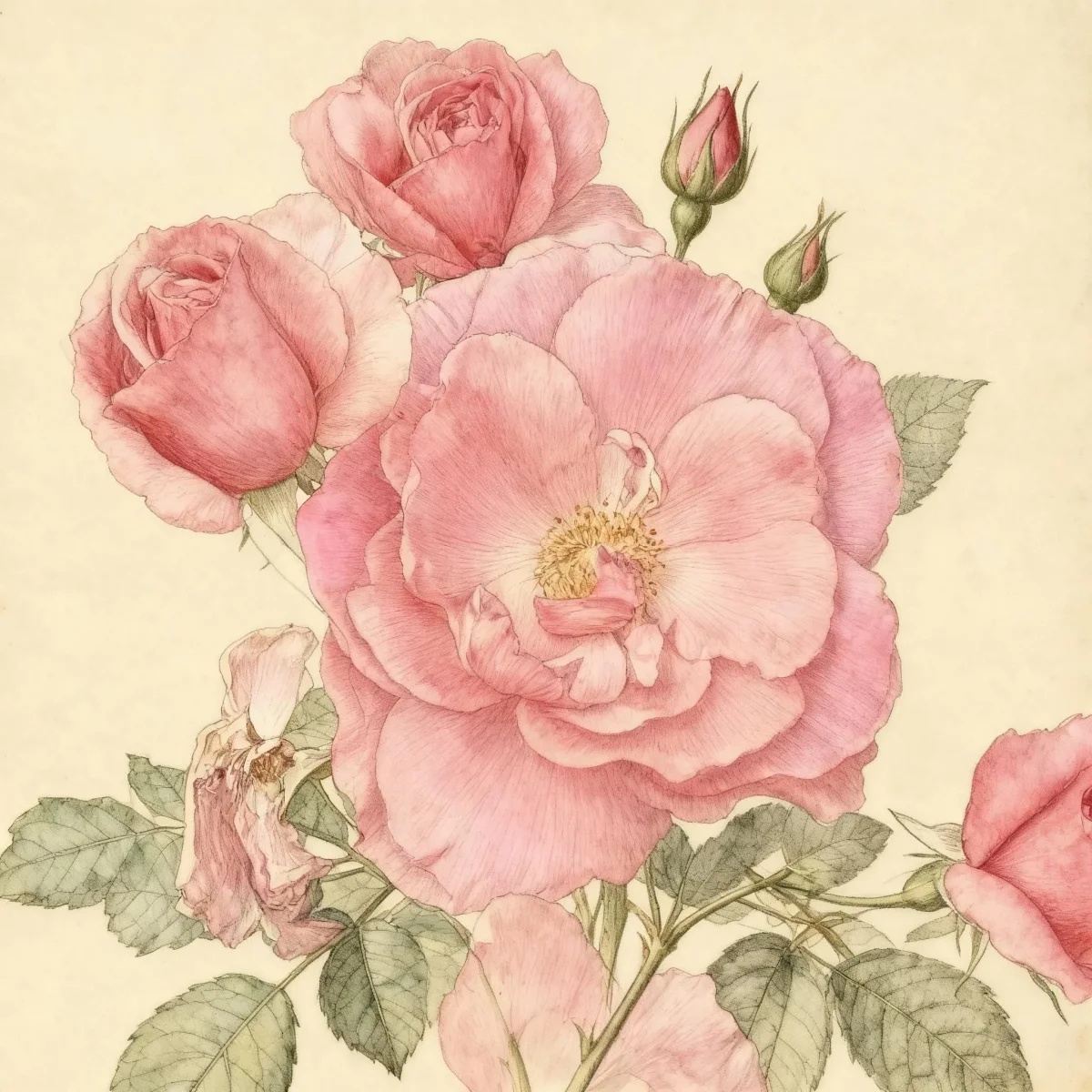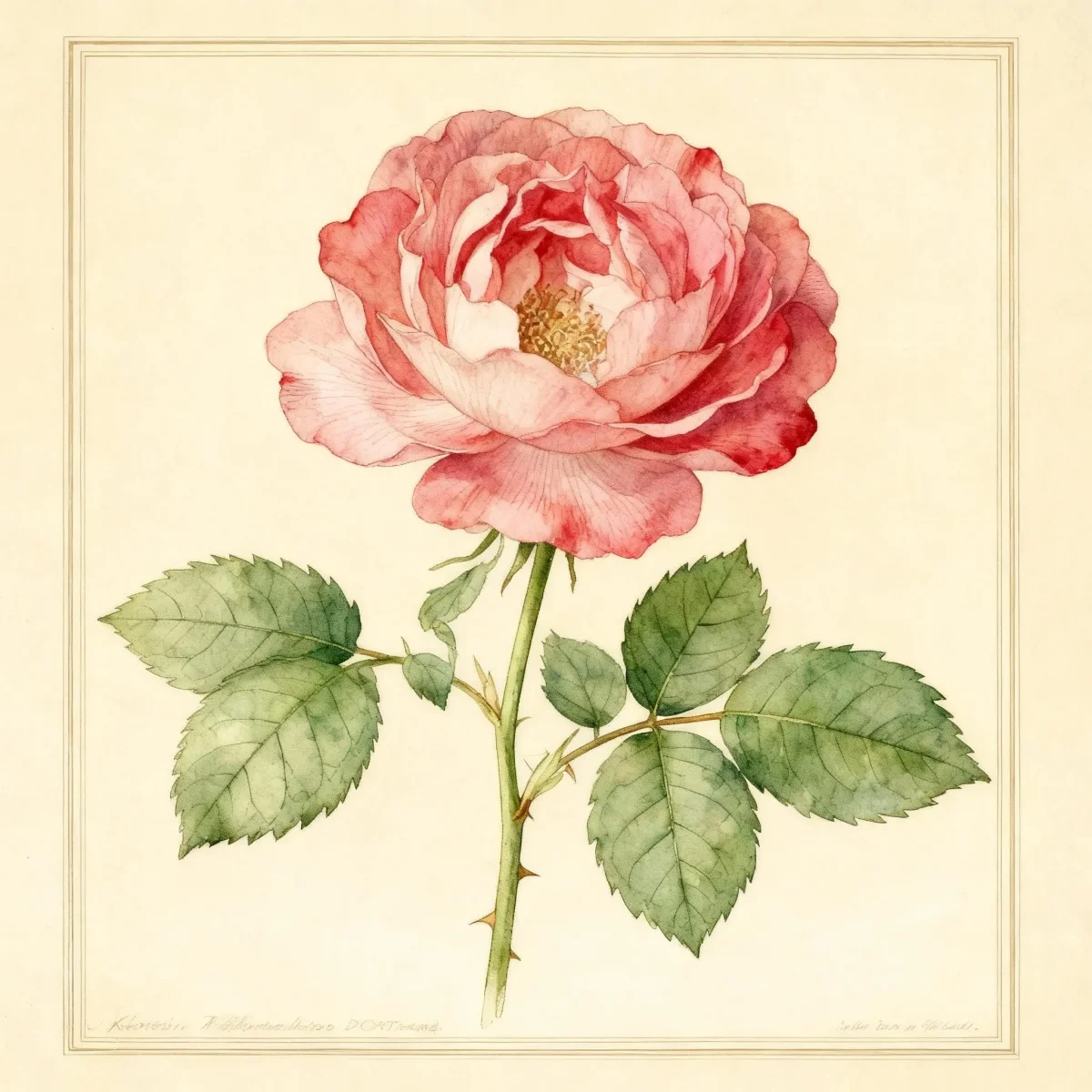

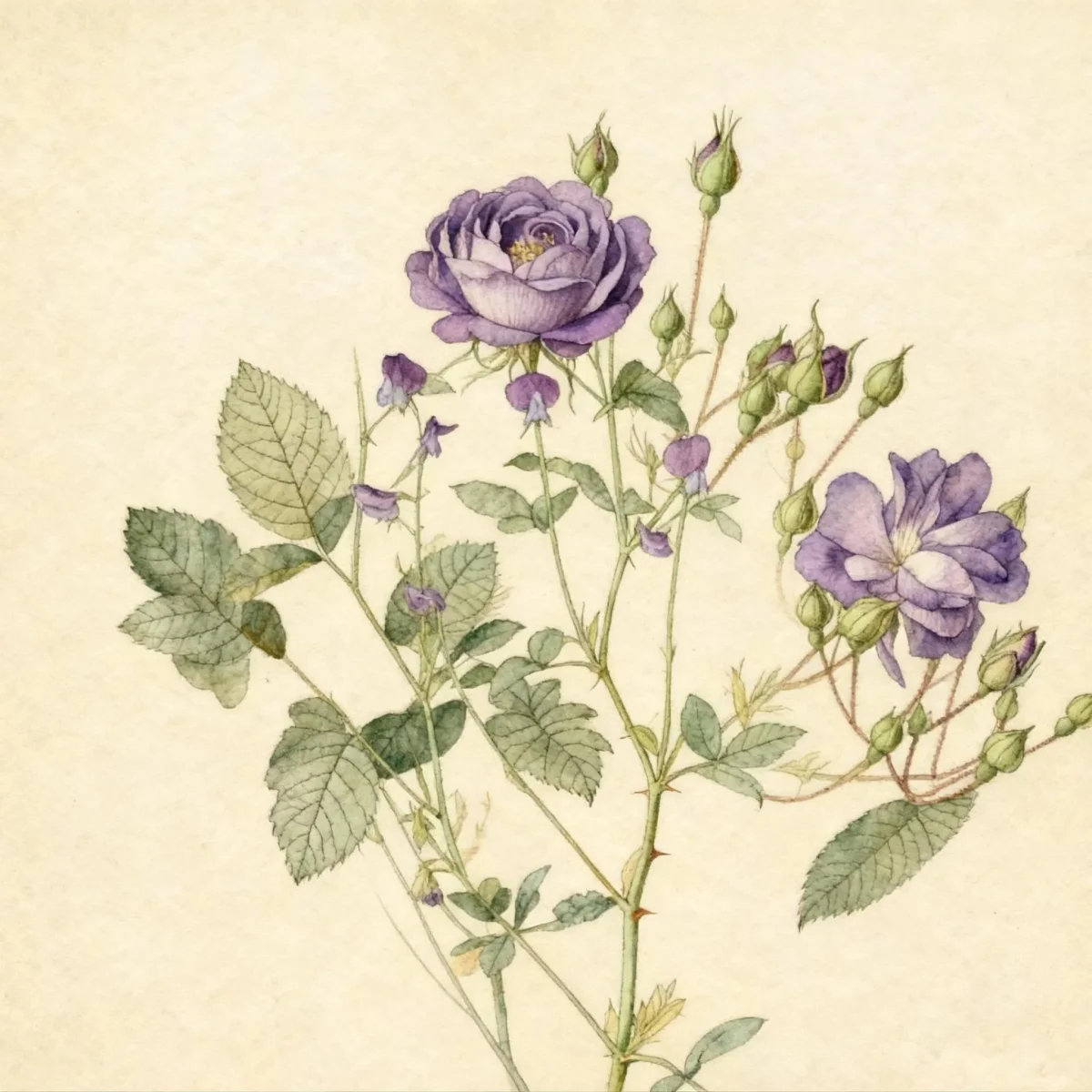
Hybrid multiflora rose (Rosa 'Veilchenblau')
Rosa 'Veilchenblau' is a dramatic Hybrid multiflora rose known for its purplish bloom clusters and near-thornless canes.
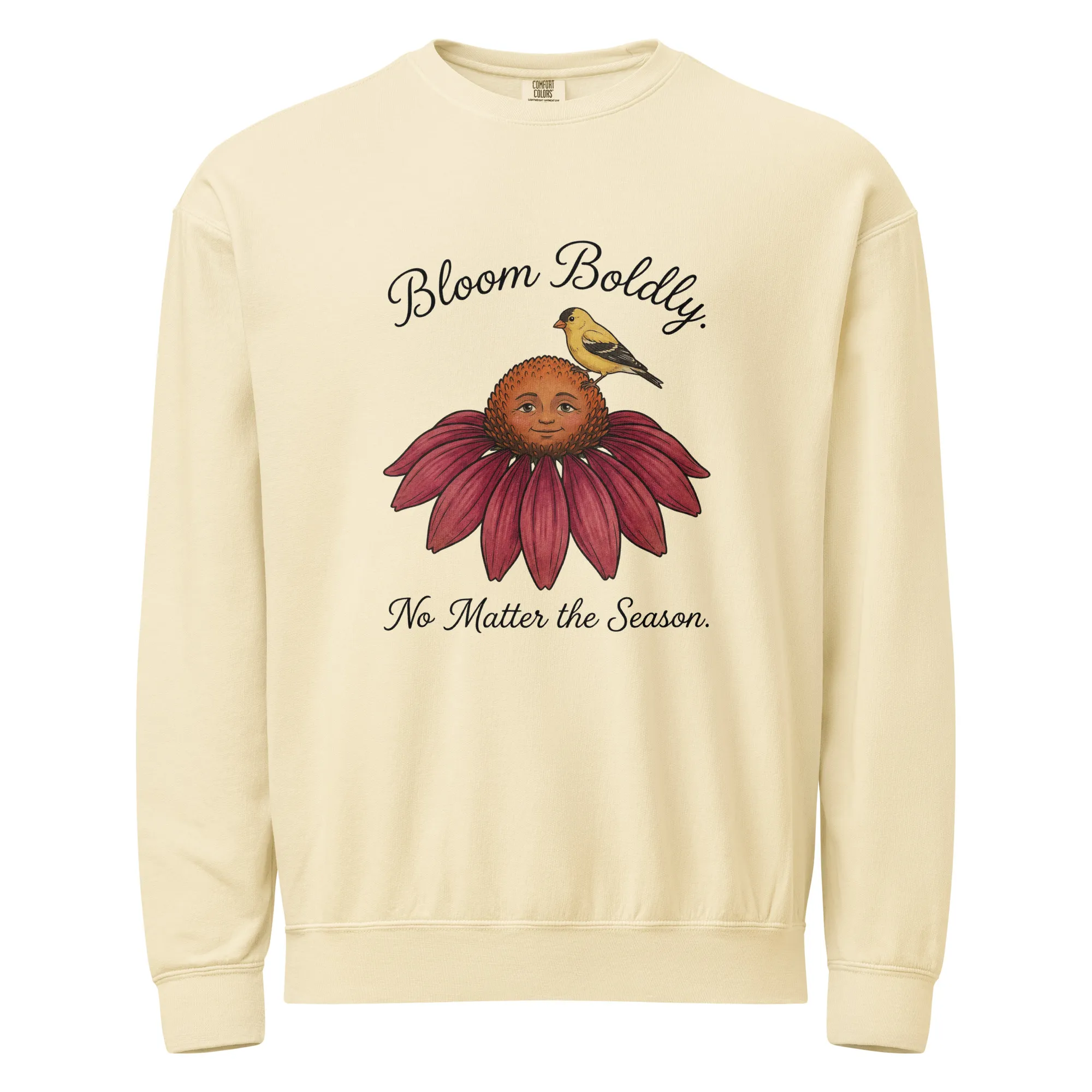
Bloom Boldly, No Matter the Season - Sweatshirt
Cozy organic cotton sweatshirt featuring our exclusive Purple Coneflower design. Perfect for gardeners who bloom year-round.
Inspired by the beautiful Hybrid multiflora rose
Limited first batch (50) — join the waitlist for early access
Waitlist closes Feb 15, 2026.
Complete Plant Information
Field Guide Continues
Ready for care notes, companion picks, and planting tips?
The map is just the start. The full guide below covers growth habits, seasonal performance, and landscape uses.
Overview
Rosa ‘Veilchenblau’, a striking Hybrid multiflora rose, captures significant attention for its nearly blue flowers, a rarity in the rose world. The bloom color is officially described as deep purple-crimson-violet, often fading to a soft gray-lilac, making it a valuable specimen for unique color impact in the landscape. This climber/rambler produces large clusters of mildly fragrant, semi-double flowers during a single flush in late spring to early summer.
As a vigorous, large-growing rambler, Rosa ‘Veilchenblau’ requires significant architectural support as it matures. It is celebrated not only for its unusual coloration but also for having nearly thornless canes, which simplifies management and maintenance compared to many of its prickly relatives. Proper placement utilizing its sprawling nature is key to maximizing the aesthetic benefits of this unique Hybrid multiflora rose.
Gardeners should note that while Rosa ‘Veilchenblau’ excels in full sun, it retains some tolerance for partial shade, though flowering may be slightly reduced. Its mature size demands careful planning, ideally reserving it for large walls, robust arbors, or substantial trellises where its seasonal splendor can be fully appreciated.
Fast Facts
- Plant Family: Rosaceae
- Plant Type: Deciduous shrub
- Hardiness Zones: USDA Zones 5-9
- Size at Maturity:
- Height: 10-15 ft
- Spread: 4-10 ft
- Bloom Time: May to June
- Bloom Description: Purple-crimson-violet
- Sun Exposure: Full sun
- Water Needs: Medium
- Maintenance Level: Medium
How to Grow
Plant Rosa ‘Veilchenblau’ in deep, well-drained garden loams that are slightly acidic. Full sun exposure is crucial for achieving the best flowering performance and ensuring robust disease resistance, although this Hybrid multiflora rose can handle some afternoon shade. When planting, ensure the location has good air circulation to naturally discourage common foliar diseases, a key component of healthy development.
Water needs are medium; deep, regular watering, preferably in the morning, is recommended, strict avoidance of overhead watering is advised to keep foliage dry. Apply a summer mulch layer to help conserve soil moisture, keep the root zone cool, and suppress weed competition around the base of the plant.
Pruning should be intentionally minimal for the first three years post-planting to allow the main structural canes to establish and strengthen properly. After this establishment period, conduct necessary pruning in late winter to early spring, focusing only on removing diseased, injured, or poorly flowering canes. Canes must be gently hand-fastened to their support structure as they grow to guide and secure this large rambling rose.
In climates experiencing harsh winters, crowns of Rosa ‘Veilchenblau’ benefit significantly from winter protection localized around the base. Always clean up and destroy fallen leaves promptly during the growing season and during the final winter cleanup to mitigate overwintering disease spores and pests.
Landscape Uses
The substantial size and rambling habit of Rosa ‘Veilchenblau’ make it perfectly suited for large-scale architectural gardening features. Use this Hybrid multiflora rose to completely clothe high retaining walls, cover expansive pergolas, or soften the appearance of tall, sturdy fences and pillars. Because it produces long stems requiring support, treat it as a true rambling climber rather than a free-standing shrub.
Due to its single, spectacular bloom period, position Rosa ‘Veilchenblau’ near seating areas or pathways where its May-June display and mild fragrance can be fully enjoyed when it is at its peak. To balance the structure later in the season, consider companion planting groups of later-blooming, lower-growing perennials that tolerate sun, such as hardy Geraniums or Nepeta, which will provide color after the rose finishes flowering.
This impressive climber works best when allowed to sprawl naturally across a robust support structure, offering dramatic vertical interest seldom achieved with other flora. Planning for its final size ensures that the plant remains an asset rather than becoming an overwhelming maintenance burden.
Standout Features
Flower Qualities
- Showy
- Fragrant
Noteworthy Characteristics
Rosa is a genus of about 150 species of deciduous shrubs and climbers noted for their beautiful, often fragrant flowers on often prickly stems. Ramblers produce long stems requiring support and typically bloom heavily once in spring. Specifically, ‘Veilchenblau’ is noted for its unique purplish coloration (veilchenblau means violet), producing small, semi-double flowers in large clusters on nearly thornless canes, though this bloom is not repeated later in the season.
Tolerances
None listed
Potential Problems
Roses, including Rosa ‘Veilchenblau’, face susceptibility to several common diseases, most notably black spot, powdery mildew, and rust. Excellent cultural practices form the primary defense strategy, especially ensuring good air movement and avoiding overhead watering. Regular preventative fungicide treatments are often required, especially in humid regions, to manage these fungal issues effectively throughout the growing season.
Insect pests commonly encountered include aphids, spider mites, scale, and various borers. A routine inspection of the Hybrid multiflora rose foliage, particularly the undersides of leaves, allows for early intervention against pest outbreaks. Local horticultural extensions can provide the most tailored advice for selecting and applying appropriate treatment options for your specific area.
Frequently Asked Questions
What hardiness zones is Hybrid multiflora rose suitable for?
This beautiful rose, the Hybrid multiflora rose, is suitable for USDA Hardiness Zones 5 through 9.
How large does Rosa ‘Veilchenblau’ grow?
When fully mature, Rosa ‘Veilchenblau’ typically reaches a height between 10 and 15 feet tall, with a spread ranging from 4 to 10 feet wide.
What sun exposure does Rosa ‘Veilchenblau’ need?
For optimal flowering and health, Rosa ‘Veilchenblau’ requires full sun exposure, though it possesses some tolerance for partial shade conditions.
When does Rosa ‘Veilchenblau’ bloom?
This spectacular rose typically produces its main flush of bloom between May and June, featuring striking purple-crimson-violet flowers.
Conclusion
Rosa ‘Veilchenblau’ offers gardeners an exceptional opportunity to incorporate rare violet tones into their vertical structures, complemented by its nearly thornless canes. As a vigorous Hybrid multiflora rose, careful initial training and long-term structural support are essential for its success. Before planting, verify that USDA zones 5-9 are appropriate for your location and plan a sturdy support system ready for this magnificent rambler.
Companion Planting
Selecting suitable neighbors for Rosa ‘Veilchenblau’ focuses on plants that appreciate similar care schedules (medium water, full sun) but bloom at different times to extend visual interest. Hardy Geraniums work exceptionally well, offering low-growing carpets of foliage and color beneath the soaring rose canes. Consider Nepeta (Catmint) for its silver foliage and extended summer flowering, which contrasts nicely with the strong deep color of the rose blooms while thriving in similar soil conditions.
Avoid planting right at the base of the structure supporting Rosa ‘Veilchenblau’; allow space for air movement and crown health. Instead, use the lower layer to fill the gaps between established, thorny climbers, integrating them into a layered mixed border that highlights the structure of the rose without competing for overhead sunlight.
Seasonal Care Calendar
Late Winter/Early Spring preparation focuses primarily on structural maintenance before active growth begins. Remove any mulch applied for winter protection after the worst frosts have passed. This is the ideal time to perform any necessary pruning, removing dead or damaged wood, keeping in mind that heavy formative pruning should be avoided for the first few years.
Summer care focuses heavily on water management and disease prevention. Water deeply in the mornings to encourage strong root growth and ensure foliage dries quickly; maintain mulch coverage to reduce watering frequency. Inspect canes weekly for initial signs of common pests like aphids or mites, addressing them immediately with targeted treatments if necessary.
Fall cleanup, though less intense than the dormant season cleanup, is vital for the long-term health of Rosa ‘Veilchenblau’. Rake and destroy any fallen leaves promptly to minimize fungal spores that could survive the winter and re-infect the plant next spring. Avoid applying any fresh fertilizer late in the season, allowing the rose to prepare naturally for dormancy.