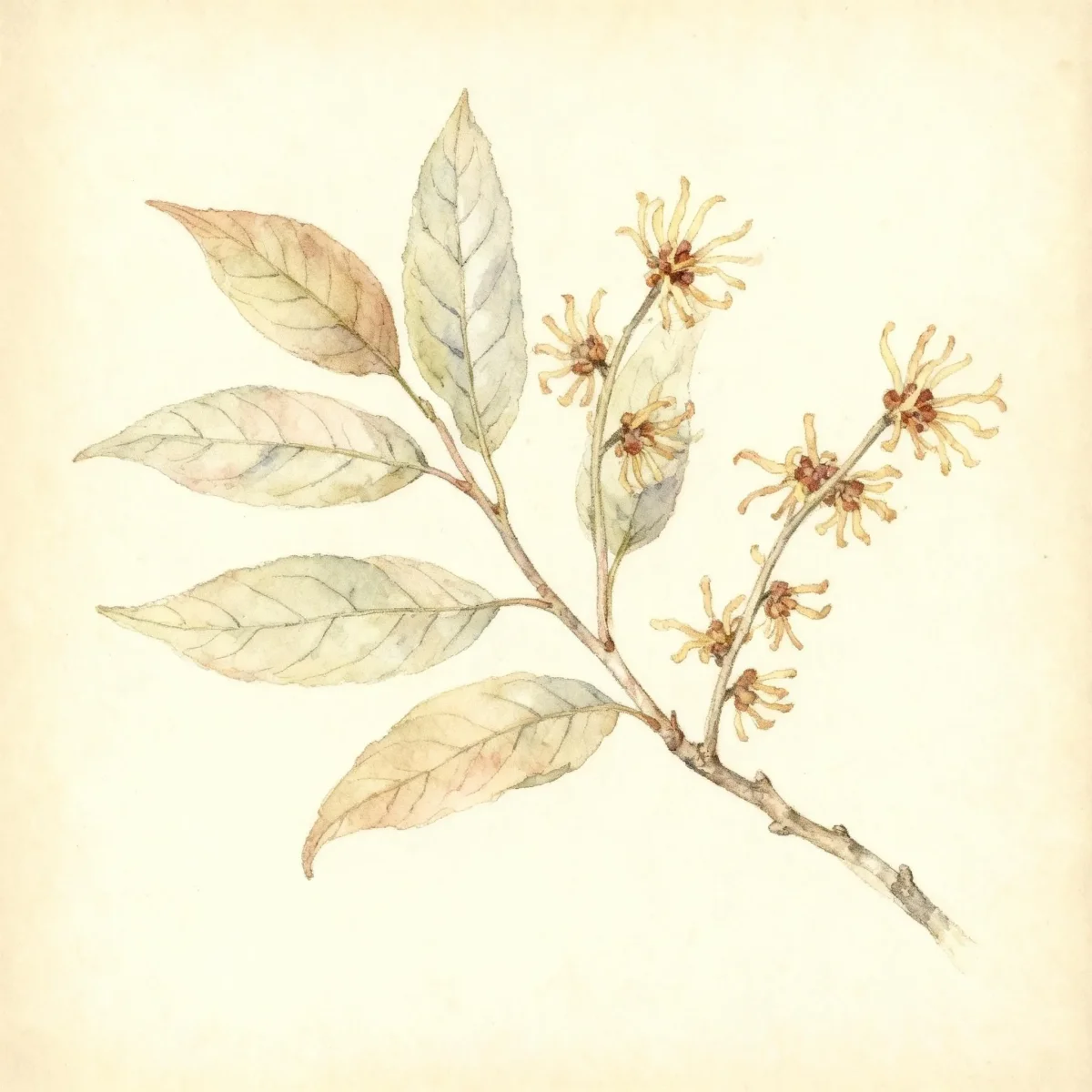
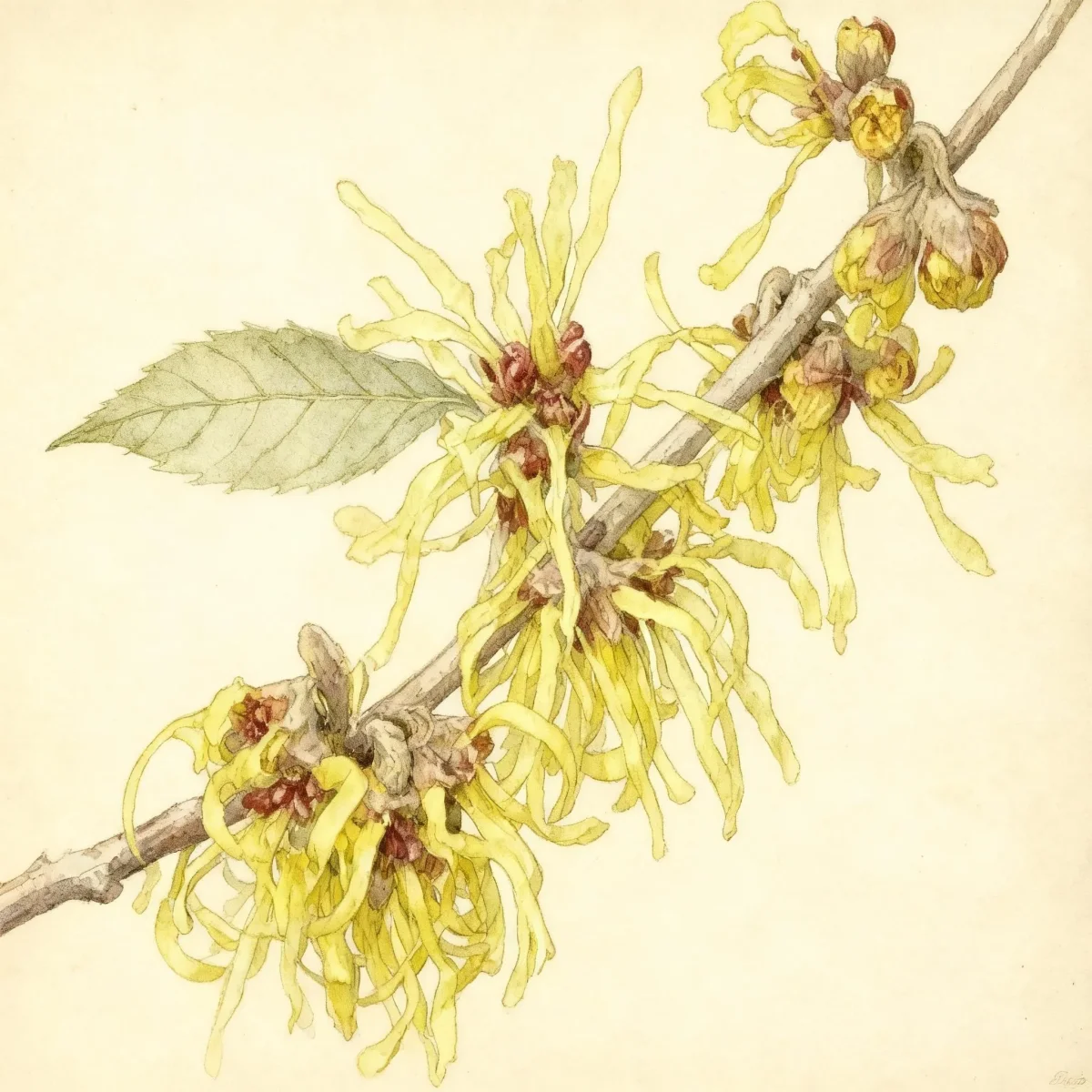
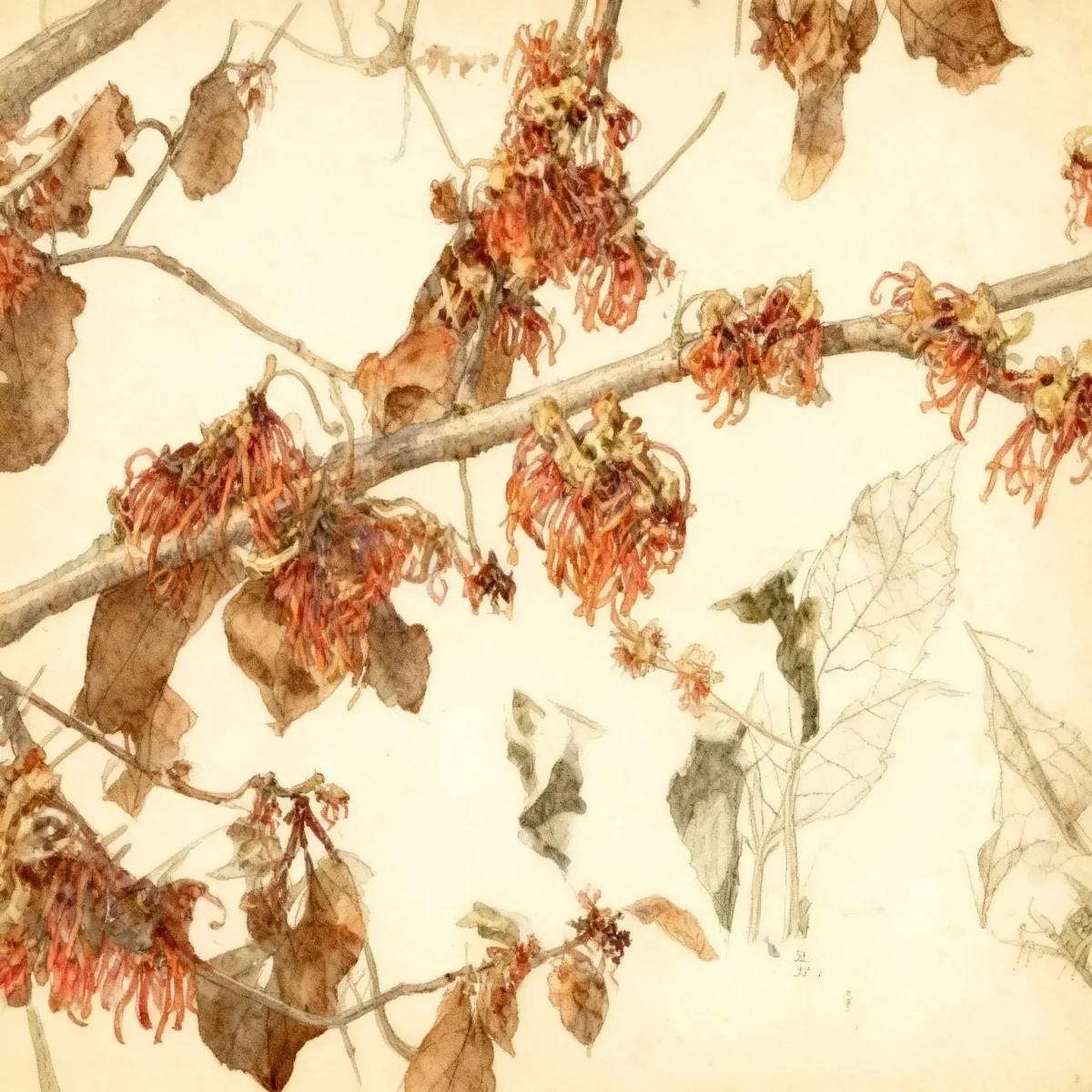
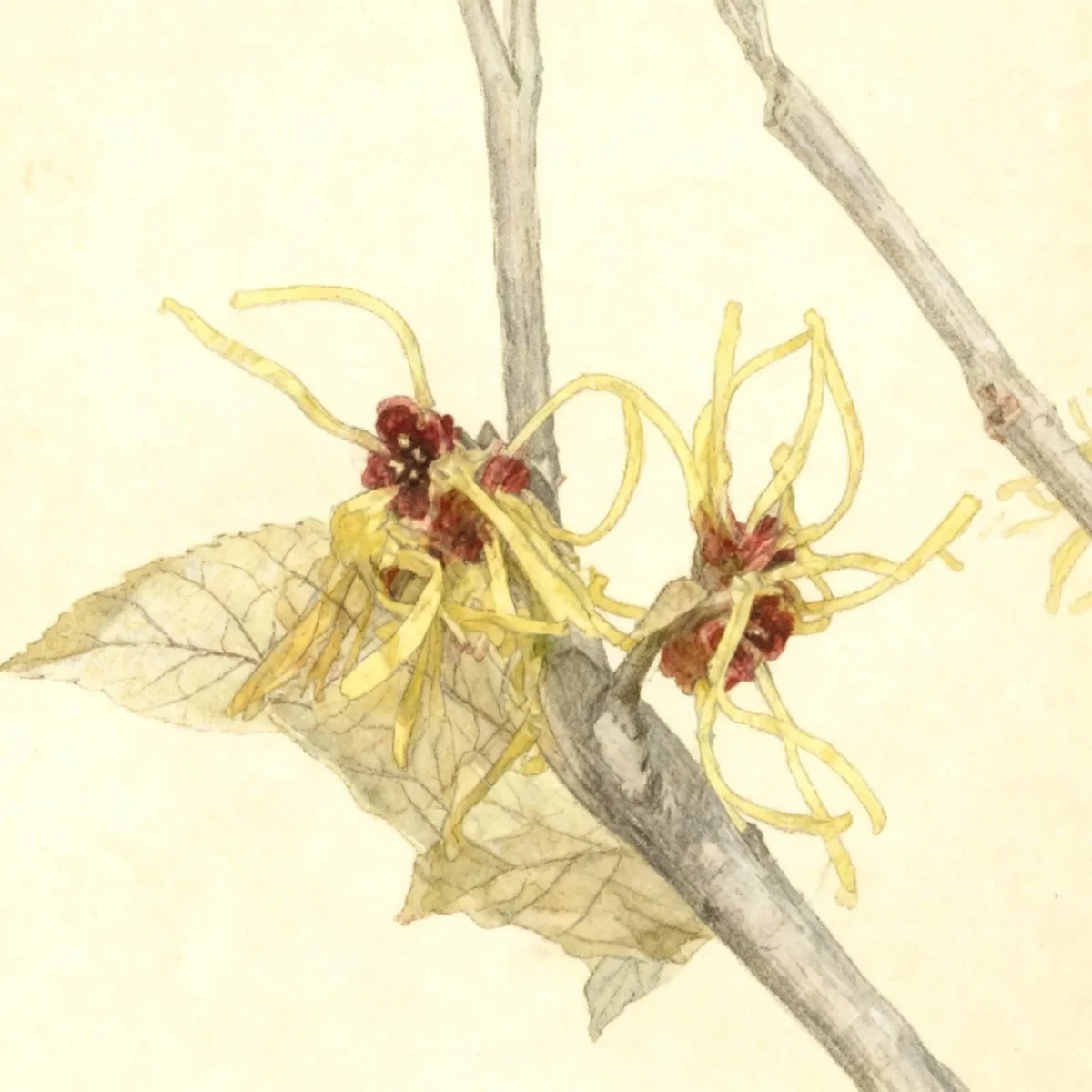
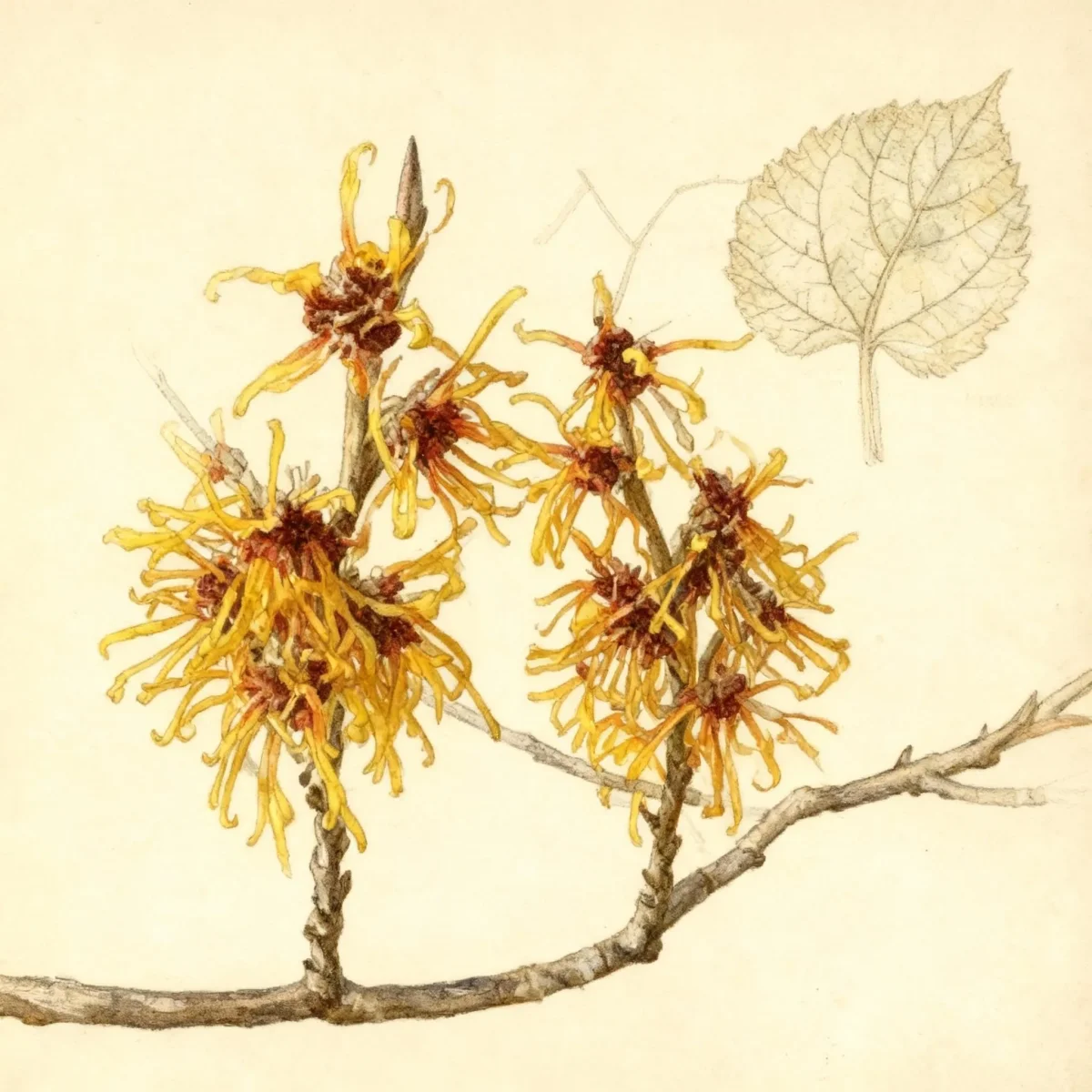
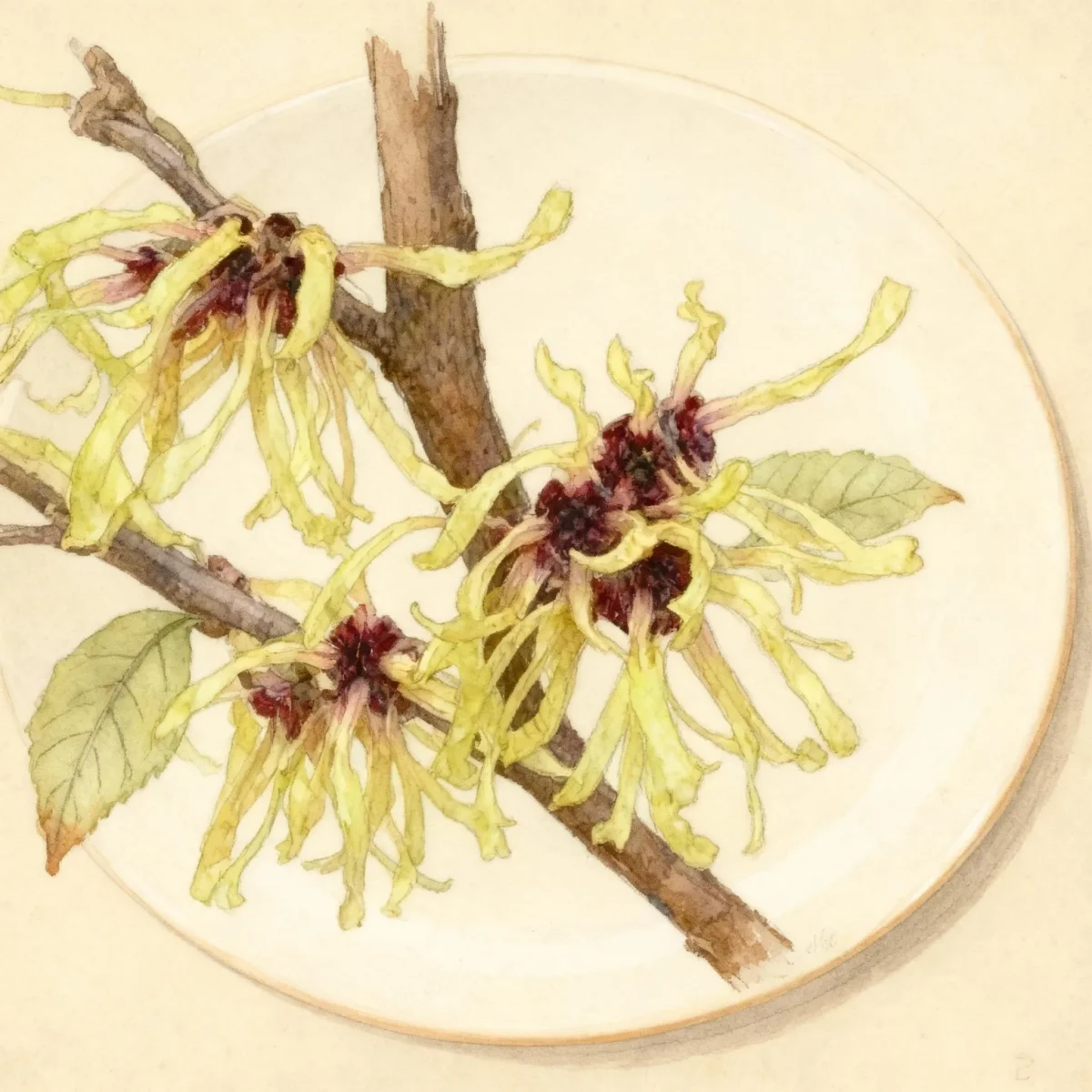
Witch hazel (Hamamelis × intermedia 'Nina')
Hamamelis × intermedia 'Nina' Witch hazel delivers unique yellow, fragrant winter blooms on a low-maintenance, rounded shrub ideal for zones 5-8.
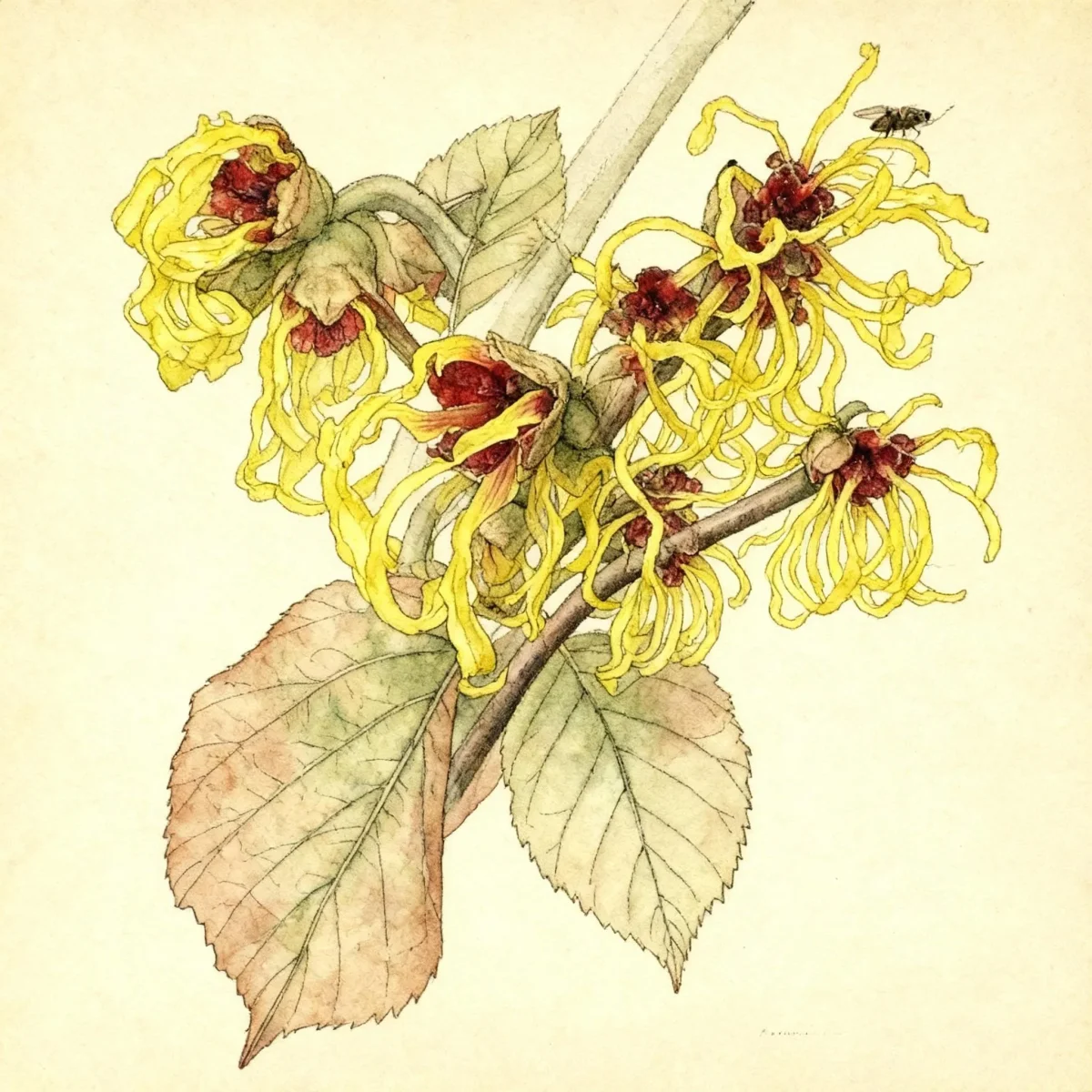

Bloom Boldly, No Matter the Season - Sweatshirt
Cozy organic cotton sweatshirt featuring our exclusive Purple Coneflower design. Perfect for gardeners who bloom year-round.
Inspired by the beautiful Witch hazel
Limited first batch (50) — join the waitlist for early access
Waitlist closes Feb 15, 2026.
Complete Plant Information
Field Guide Continues
Ready for care notes, companion picks, and planting tips?
The map is just the start. The full guide below covers growth habits, seasonal performance, and landscape uses.
Overview
The Hamamelis × intermedia ‘Nina’ Witch hazel is highly valued for providing brilliant color and fragrance during the dormant season when little else is flowering. This hybrid variety, resulting from crosses between Japanese and Chinese witch hazel species, is a spectacular choice for brightening up the dreariest months between January and March. Its mid- to late-winter display of spidery, yellow flowers creates significant visual interest before the foliage returns.
This cultivar typically matures into a well-proportioned, rounded deciduous shrub, reaching about 10 to 12 feet tall and wide. Beyond its striking winter blooms, Hamamelis × intermedia ‘Nina’ offers fall color and requires relatively low maintenance once established. Its ability to tolerate various conditions, including clay soils, makes the Witch hazel a versatile and reliable backbone plant for the winter landscape.
Gardeners appreciate the Hamamelis × intermedia ‘Nina’ for its unique seasonal rhythm. The flowers appear along the bare stems, ensuring maximum impact against a stark winter backdrop. This mid-sized shrub excels as both a specimen plant or integrated into shrub borders where its structure and winter performance can be fully appreciated.
Fast Facts
- Plant Family: Hamamelidaceae
- Plant Type: Deciduous shrub
- Hardiness Zones: USDA Zones 5-8
- Size at Maturity:
- Height: 10-12 ft
- Spread: 10-12 ft
- Bloom Time: January to March
- Bloom Description: Yellow petals
- Sun Exposure: Full sun to part shade
- Water Needs: Medium
- Maintenance Level: Low
How to Grow
Plant Hamamelis × intermedia ‘Nina’ during the dormant season, ideally in fall or early spring, to allow roots to establish before summer heat. Select a location that receives full sun for the most prolific blooming, though it tolerates part shade. The best results come from average, well-drained soils that are kept moist, acidic, and organically rich.
Watering is crucial; ensure consistent moisture, particularly through dry summer periods, as drought can lead to leaf scorch on this Witch hazel. While it tolerates clay soils better than many shrubs, excellent drainage remains necessary to prevent root issues. Maintenance is generally low, focusing primarily on aesthetic pruning done in the spring immediately after flowering concludes, which helps control overall shape and size.
Be vigilant about suckering, especially any growth that emerges from below the graft union, as these must be removed promptly to maintain the desired hybrid characteristics of this specimen. This hardy shrub doesn’t typically require heavy fertilizing if planted in rich, organic soil, aligning with its generally low maintenance requirements.
Landscape Uses
The superior winter flowering of Hamamelis × intermedia ‘Nina’ makes it a standout specimen planned specifically for winter interest. Plant it where its unique flower structure can be viewed even when deciduous neighbors are bare. This Witch hazel excels when placed in shrub borders, adding texture and eventual mass while serving functional roles.
As it grows to a medium-to-large size offering good screening capabilities, consider using Hamamelis × intermedia ‘Nina’ toward the back of borders or along property lines to create a tall hedge. In woodland garden settings, its structure blends well with later-emerging spring bloomers, allowing it to take center stage quietly throughout winter.
Standout Features
Flower Qualities
- Showy
- Fragrant
Noteworthy Characteristics
Hamamelis × intermedia hybrids are crosses between Japanese witch hazel (H. Japonica) and Chinese witch hazel (H. Mollis). They are somewhat coarse, loosely-branched, medium to large, deciduous shrubs that typically grow 12-20’ tall. They are particularly noted for their spidery, often fragrant, mid- to late-winter flowers which appear before the spring foliage emerges. The hybrid name intermedia is in reference to the hybrid characteristics being intermediate between the characteristics of the two parent species. ‘Nina’ has yellow flowers and typically matures as a rounded shrub to 10-12’ tall and as wide, featuring ovate-rounded, medium green leaves that turn quality yellow in fall.
Tolerances
- Deer
- Erosion
- Clay Soil
Potential Problems
Insect and disease issues on the Hamamelis × intermedia ‘Nina’ Witch hazel are typically mild and rarely require aggressive chemical intervention. Gardeners should monitor for chewing damage from caterpillars and Japanese beetles on the foliage during warmer months. Furthermore, watch for potential localized issues such as gall aphids, scale insects, leafrollers, and leafminers.
Potential fungal problems include powdery mildew and occasional leaf spots or rots, often exacerbated by high humidity or poor air circulation. Maintaining good soil drainage and consistent moisture levels, as recommended for this shrub, helps reduce stress and increase overall plant vigor, making it less susceptible to opportunistic pests and diseases.
Frequently Asked Questions
What hardiness zones is Witch hazel suitable for?
Hamamelis × intermedia ‘Nina’ is suitable for USDA Hardiness Zones 5 through 8.
How large does Hamamelis × intermedia ‘Nina’ grow?
This deciduous shrub typically matures to a height between 10 and 12 feet, with a commensurate spread of 10 to 12 feet.
When does Witch hazel bloom?
This plant produces its distinctive bloom between January and March, featuring striking yellow petals.
What sun exposure does Hamamelis × intermedia ‘Nina’ need?
It performs best in locations receiving full sun, though it will tolerate partial shade, flowering best in the sunnier spots.
Conclusion
Offering a critical splash of color and delightful fragrance during the deep winter months, the Hamamelis × intermedia ‘Nina’ Witch hazel is an invaluable addition to any four-season garden plan. With its low maintenance profile and structural presence, this cultivar proves highly adaptable across different soil types, provided drainage is adequate. Before planting, confirm that your landscape falls within USDA Zones 5-8 and plan to place it where its winter performance can truly shine.
Design Ideas
When incorporating Hamamelis × intermedia ‘Nina’ into larger plantings, consider companions that echo or contrast its winter attributes. Early spring bulbs like snowdrops (Galanthus) or hellebores placed near the base will emerge shortly after the Witch hazel finishes blooming, creating a seamless transition into spring color. Evergreens, such as pyramidal yews or upright hollies, offer dark green or blue backdrops that dramatically emphasize the bright yellow, spidery flowers of the Hamamelis in winter.
To maximize visual impact, site this shrub where it can benefit from low winter sunlight. Its open, airy structure in winter allows light filtration, making it effective near structures or walkways where its form can be appreciated up close. Avoid planting dense broadleaf evergreens too closely, as airflow is important for minimizing any potential foliar disease issues during humid periods.
Companion Planting
Because Hamamelis × intermedia ‘Nina’ prefers moist, acidic, and rich soils, pair it with other acid-loving woodland plants. Rhododendrons and Azaleas make excellent partners, benefiting from the same soil amendments and thriving in the dappled shade the Witch hazel may provide later in the season. Ferns whose foliage emerges mid-spring can effectively mask any summer imperfections on the lower stems while enjoying the consistent moisture this plant prefers.
Ensure that you do not crowd the Hamamelis × intermedia ‘Nina’. While it tolerates clay, heavy competition for moisture from aggressive neighbors can stress the shrub, potentially leading to the leaf scorch mentioned in its cultural requirements during dry spells. Allow ample space for this 10-foot specimen to achieve its naturally rounded, graceful shape.