Japanese maple(Acer palmatum var. dissectum 'Inaba-shidare')
Grow laceleaf Japanese maple 'Inaba-shidare': weeping umbrella habit, deeply dissected purple-red foliage holding color through summer, USDA zones 5–9 care.

Complete Plant Information
- Hardiness zones
- USDA 5–9
- Plant type
- Deciduous shrub
- Plant family
- Sapindaceae
- Sun exposure
- Full sun to part shade
- Water needs
- Medium
- Maintenance
- Low
- Height
- 6–8 ft (183–244 cm)
- Spread
- 8–12 ft (244–366 cm)
- Bloom time
- April
- Flower color
- Small reddish corymbs followed by winged samaras
- Flower qualities
- Insignificant
- Fruit qualities
- Not recorded
- Tolerances
- Rabbit, Black Walnut
- Garden uses
- Focal specimen, courtyard anchor, koi pond edge, Japanese garden
- Native range
- Japan (cultivar selection)
Field Guide Continues
Ready for care notes, companion picks, and planting tips?
The map is just the start. The full guide below covers growth habits, seasonal performance, and landscape uses.
Overview
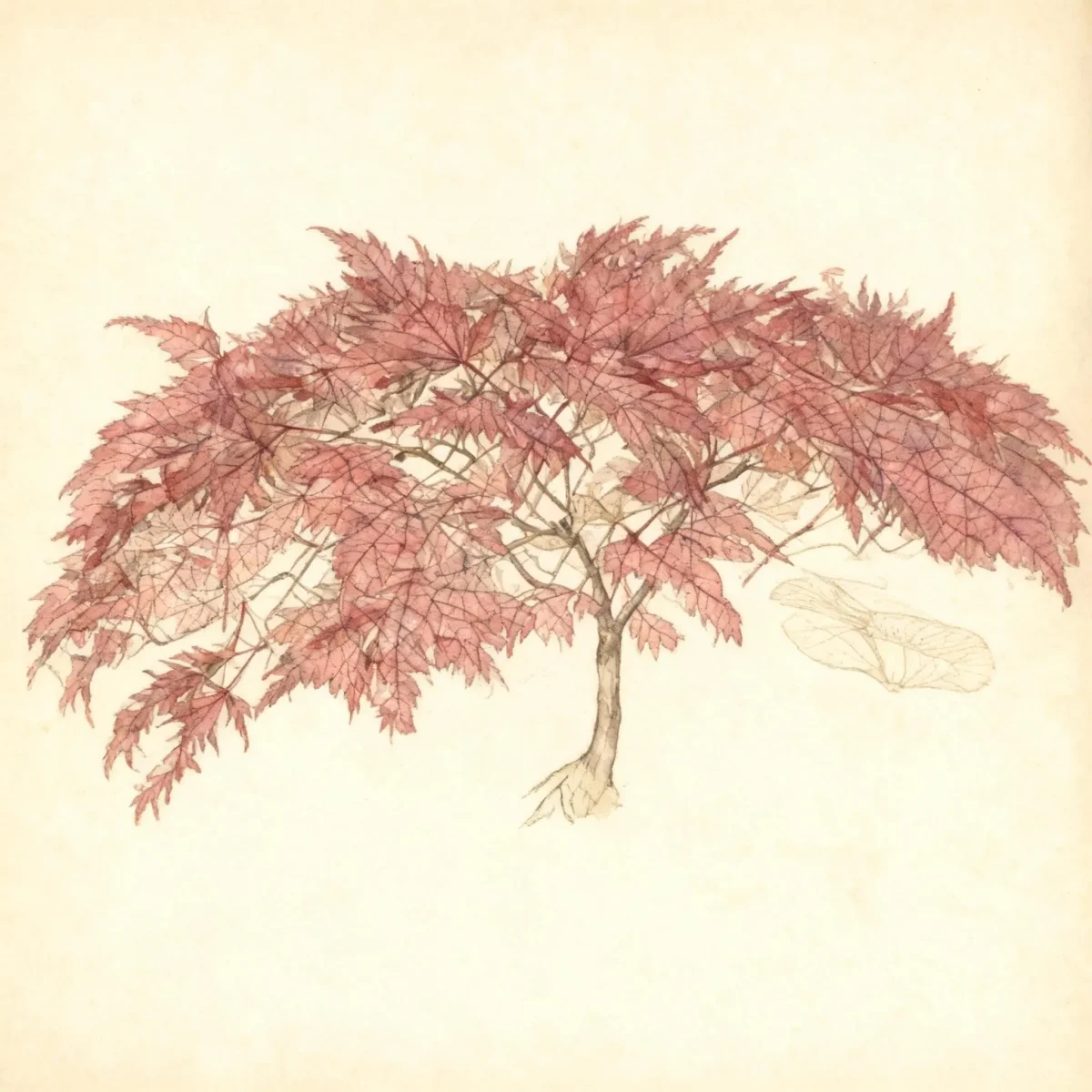
Weeping laceleaf Japanese maple ‘Inaba-shidare’ (Acer palmatum var. dissectum ‘Inaba-shidare’) is an acclaimed weeping dissectum maple prized for its strong upright-arching framework, deeply incised feathery leaves, and superior heat resistance that prevents summer foliage fading. Hardy in USDA Zones 5 through 9, it matures into a broad, weeping, mushroom-shaped canopy 6 to 8 feet tall and 8 to 12 feet wide. Foliage emerges rich, deep blackish-purple in spring, holds its deep purple-burgundy tones even through humid southern summers, and concludes with a brilliant crimson-scarlet autumn finale.
Unlike older cultivars like ‘Crimson Queen’ that can become floppy and low-slung, ‘Inaba-shidare’ sends up sturdy ascending scaffold branches before weeping gracefully outward, forming a taller, more sculptural umbrella.
How to Grow
- Sunlight & Siting: USDA Zones 5 through 9. Plant in a location sheltered from drying winter winds and harsh late-afternoon summer sun. In hot southern climates (Zones 8 and 9), morning sun with filtered afternoon shade prevents leaf-margin crisping.
- Soil & Drainage: Requires moist, organically rich, slightly acidic (pH 5.5–6.5), sharply draining soil. Dissectum roots are shallow and fine; they rot quickly in heavy, poorly drained clay or waterlogged settings.
- Mulching: Apply a 2- to 3-inch layer of organic pine bark or leaf mold over the root zone out to the drip line, keeping mulch several inches away from the trunk flare. This cools soil and preserves steady moisture.
- Pruning Discipline: Prune only during full winter dormancy (November through January). Pruning in late winter or spring causes heavy sap bleeding. Always prune from underneath the canopy to reveal the sculptural cascading framework, removing weak interior crossing twigs.
Landscape Uses
- Focal Courtyard Specimen: Its cascading mushroom canopy and sculptural branching make it an ideal centerpiece for entryways, stone patios, and small lawns.
- Water Feature & Koi Pond Edge: The weeping curtain of feathery purple-red foliage casts dramatic reflections over dark garden pools and stone boulders.
- Japanese Stroll Gardens: Classic anchor plant paired with gravel raking, granite lanterns, and bamboo fences.
Potential Problems
- Leaf Scorch: Exposure to intense, dry afternoon sun in hot climates causes outer leaf lobes to curl and turn crispy brown.
- Sap Bleeding: Pruning cuts made during late winter or early spring bleed sap heavily, weakening branches.
- Verticillium Wilt: Avoid planting in soils with a history of fungal wilt disease; ensure good drainage.
Frequently Asked Questions
Does ‘Inaba-shidare’ turn green in the summer?
No. ‘Inaba-shidare’ is famous for its superior heat resistance, retaining its rich dark purple-burgundy pigment through the hottest summer months when other red laceleaf maples bronze out to green.
How big does ‘Inaba-shidare’ get?
It matures slowly to a height of 6 to 8 feet and spreads 8 to 12 feet wide, forming a wide weeping umbrella.
Can I grow ‘Inaba-shidare’ in a container?
Yes. Its slow growth rate and cascading habit make it an outstanding subject for large frost-proof ceramic containers on sheltered patios.
Companion Plants
Pair ‘Inaba-shidare’ with shade-tolerant companion plants that contrast with its fine purple-red lace leaves:
- Contrasting Foliage Textures: Combine with broad-leaved hostas (like ‘August Moon’ or ‘Sum and Substance’) or chartreuse Japanese forest grass (Hakonechloa macra ‘Aureola’).
- Flowering Woodland Perennials: Plant alongside bleeding hearts, white astilbes, and hellebores.
- Dwarf Evergreen Anchors: Sited near dwarf blue spruces or mounded Hinoki cypresses.
Sources & Lineage
- Missouri Botanical Garden PlantFinder: Record taxon 269581 (Acer palmatum var. dissectum ‘Inaba-shidare’) — cultivar description, dimensions, and cultivation history.
- Kew Plants of the World Online (POWO): Acer palmatum Thunb. (POWO: 927504-1) — species taxonomy, family (Sapindaceae), and native range.
- Royal Horticultural Society (RHS): Acer palmatum var. dissectum ‘Inaba-shidare’ AGM — Award of Garden Merit profile and cultivation criteria.
Recommended Companion Plants
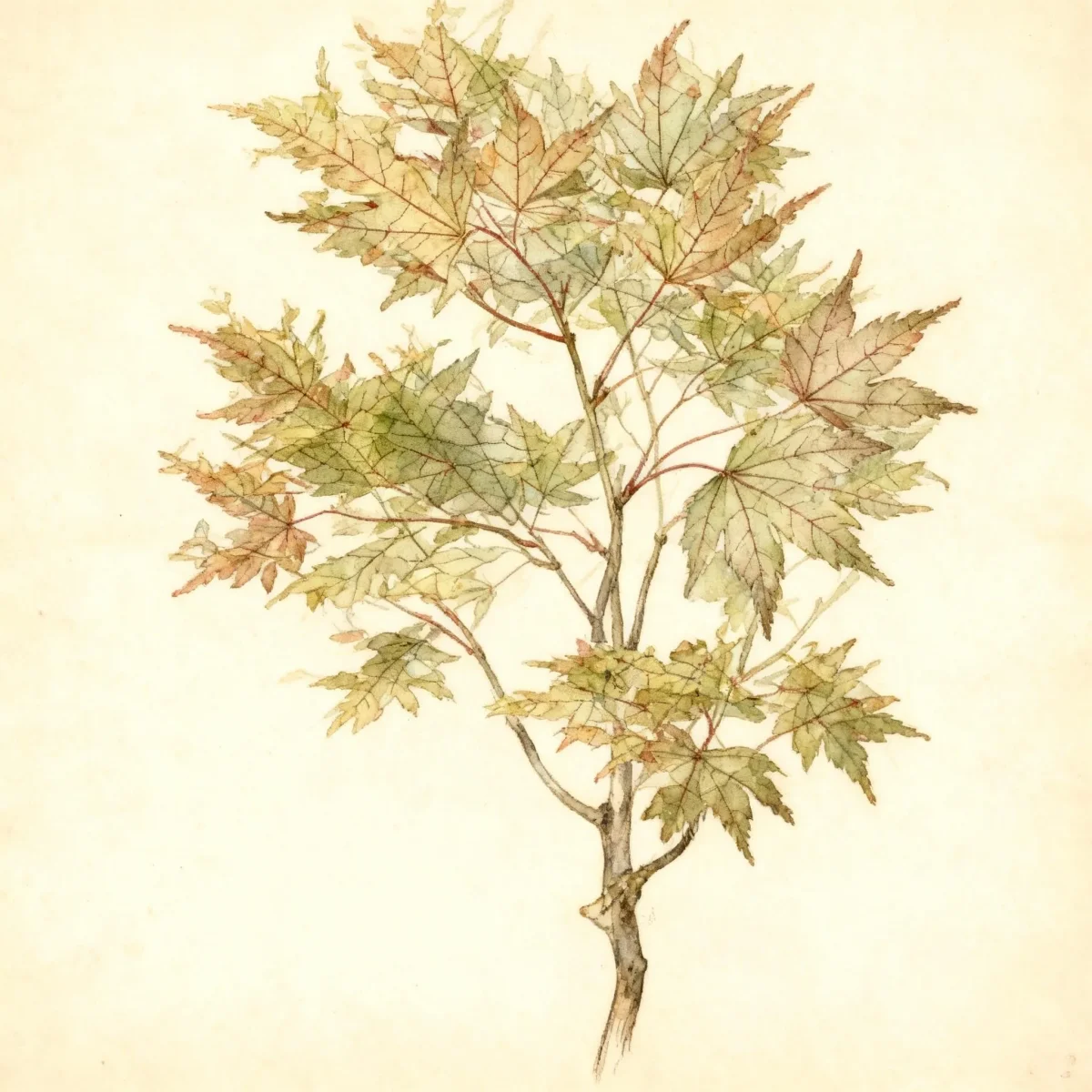
Japanese maple
Acer palmatum 'Hogyoku'
- USDA zones
- 5–9
- Light
- Full sun to part shade
- Water
- Medium
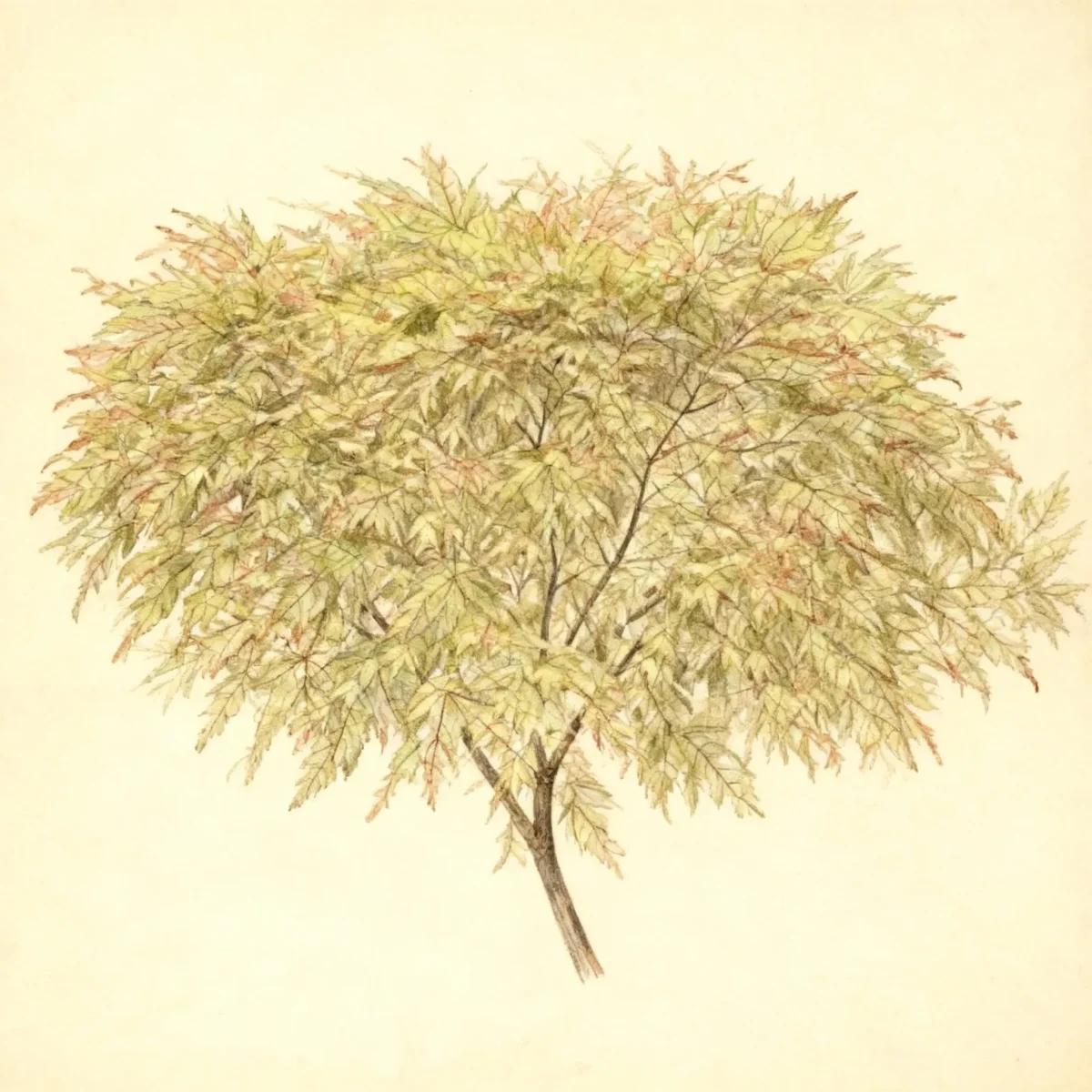
Japanese maple
Acer palmatum 'Katsura'
- USDA zones
- 5–9
- Light
- Full sun to part shade
- Water
- Medium
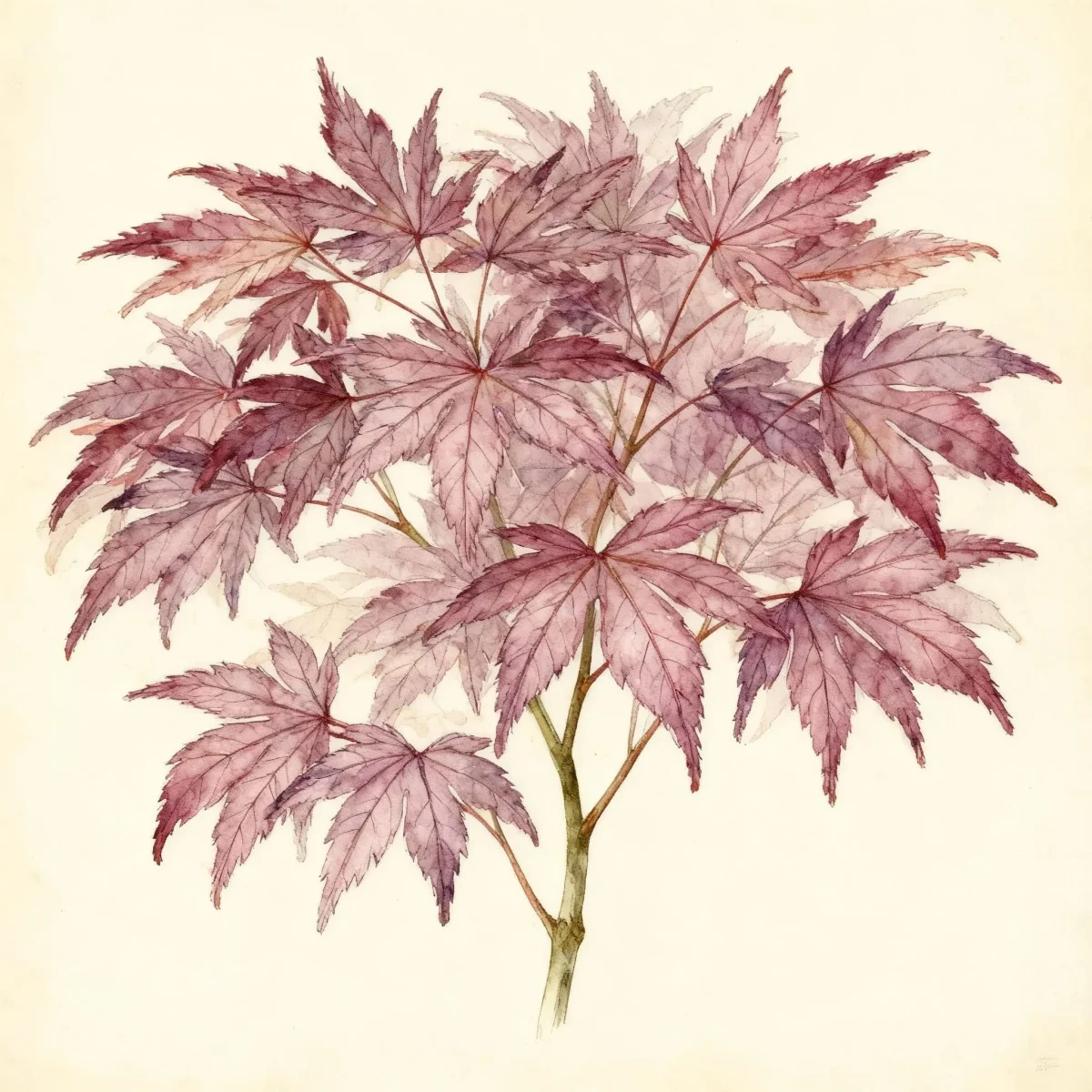
Japanese maple
Acer palmatum 'Murasaki-hime'
- USDA zones
- 5–9
- Light
- Full sun to part shade
- Water
- Medium
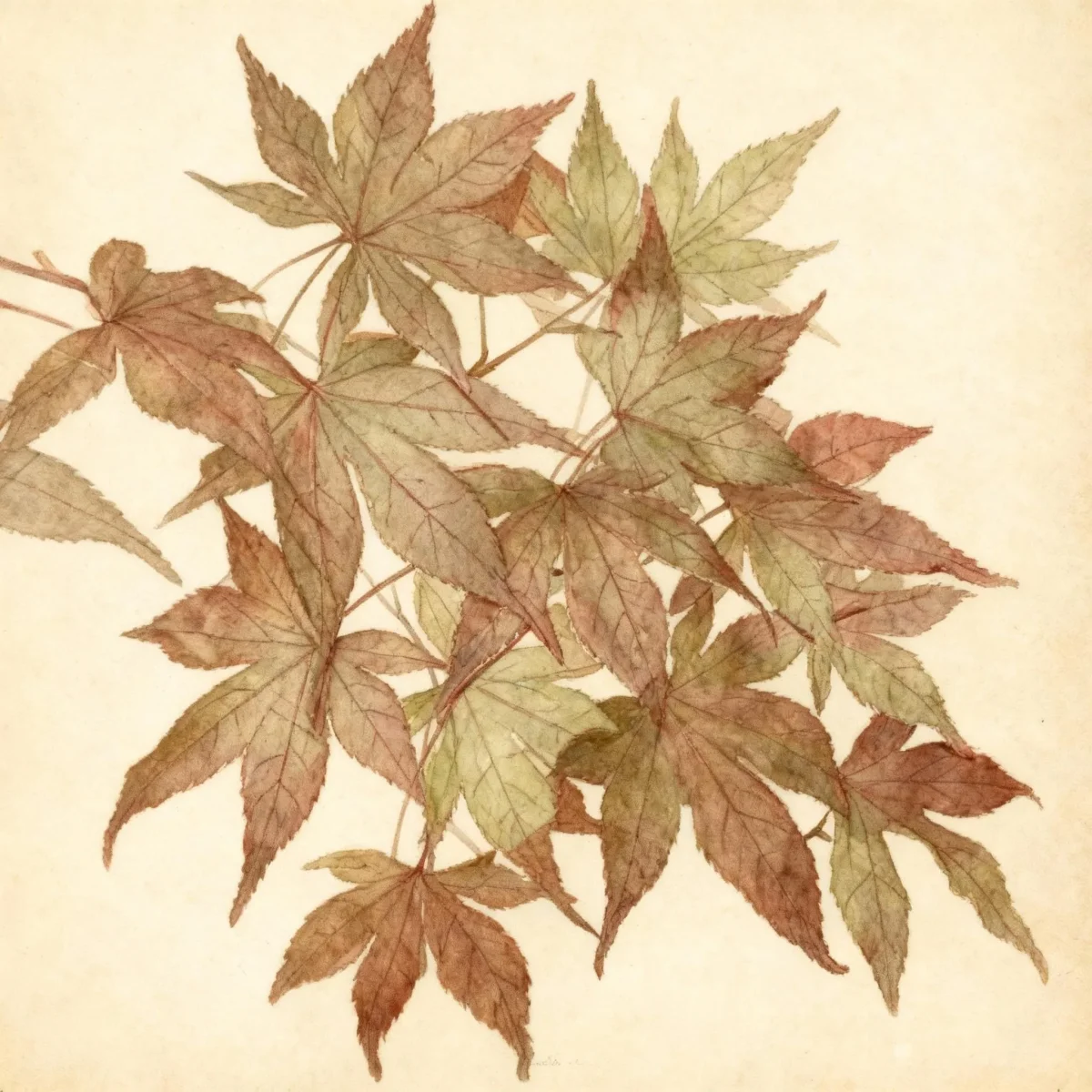
Japanese maple
Acer palmatum 'Nuresagi'
- USDA zones
- 5–8
- Light
- Full sun to part shade
- Water
- Medium
Japanese maple
Acer palmatum 'Red Select'
- USDA zones
- 5–9
- Light
- Full sun to part shade
- Water
- Medium
Japanese maple
Acer palmatum 'Satsuki-beni'
- USDA zones
- 5–9
- Light
- Full sun to part shade
- Water
- Medium
Keep Learning
Test what you know with a garden quiz
You have the plant facts and care notes. Continue with a related challenge, or browse the complete quiz library.

Can You Identify These Common Garden Plants? Test Your Plant Knowledge
Think you know your roses from your peonies? Test your plant identification skills with our comprehensive garden plant quiz featuring 10 challenging questions.
Start quiz
USDA Garden Zone Map Quiz
Use this USDA garden zone map quiz to check whether you can read hardiness zones and choose plants with more confidence.
Start quizBrowse the full quizzes section
Explore plant identification, zone strategy, and seasonal gardening challenges.
View all quizzes