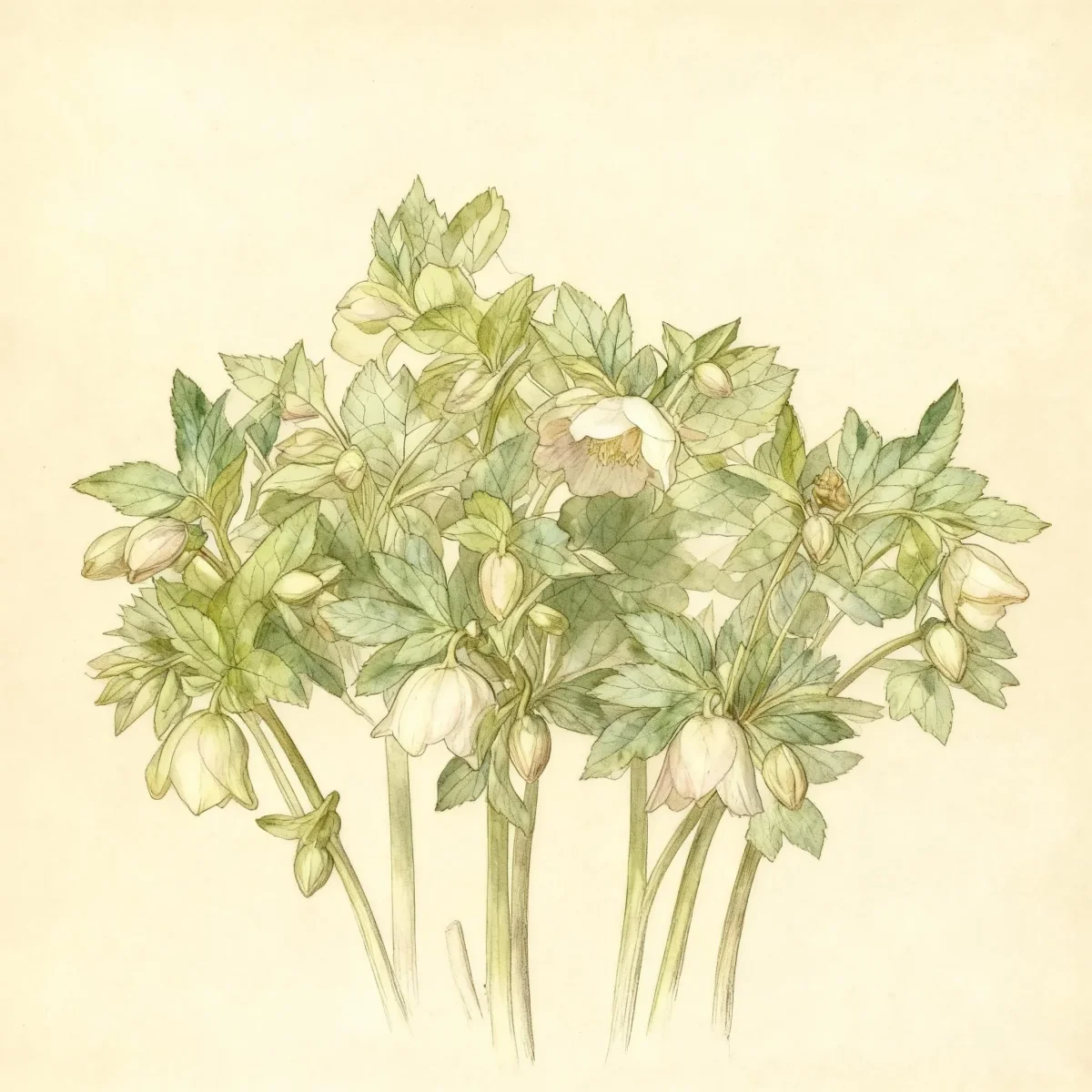
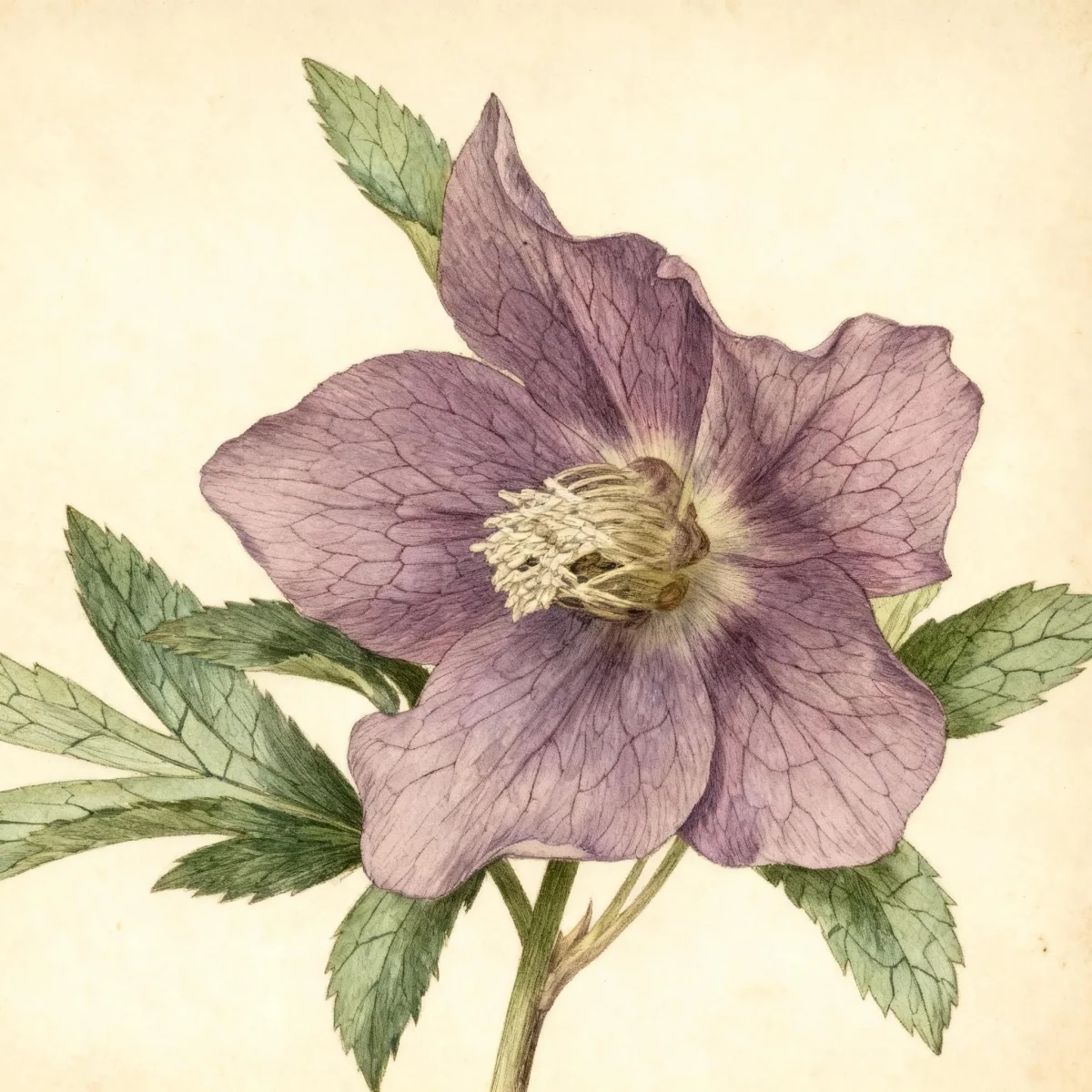
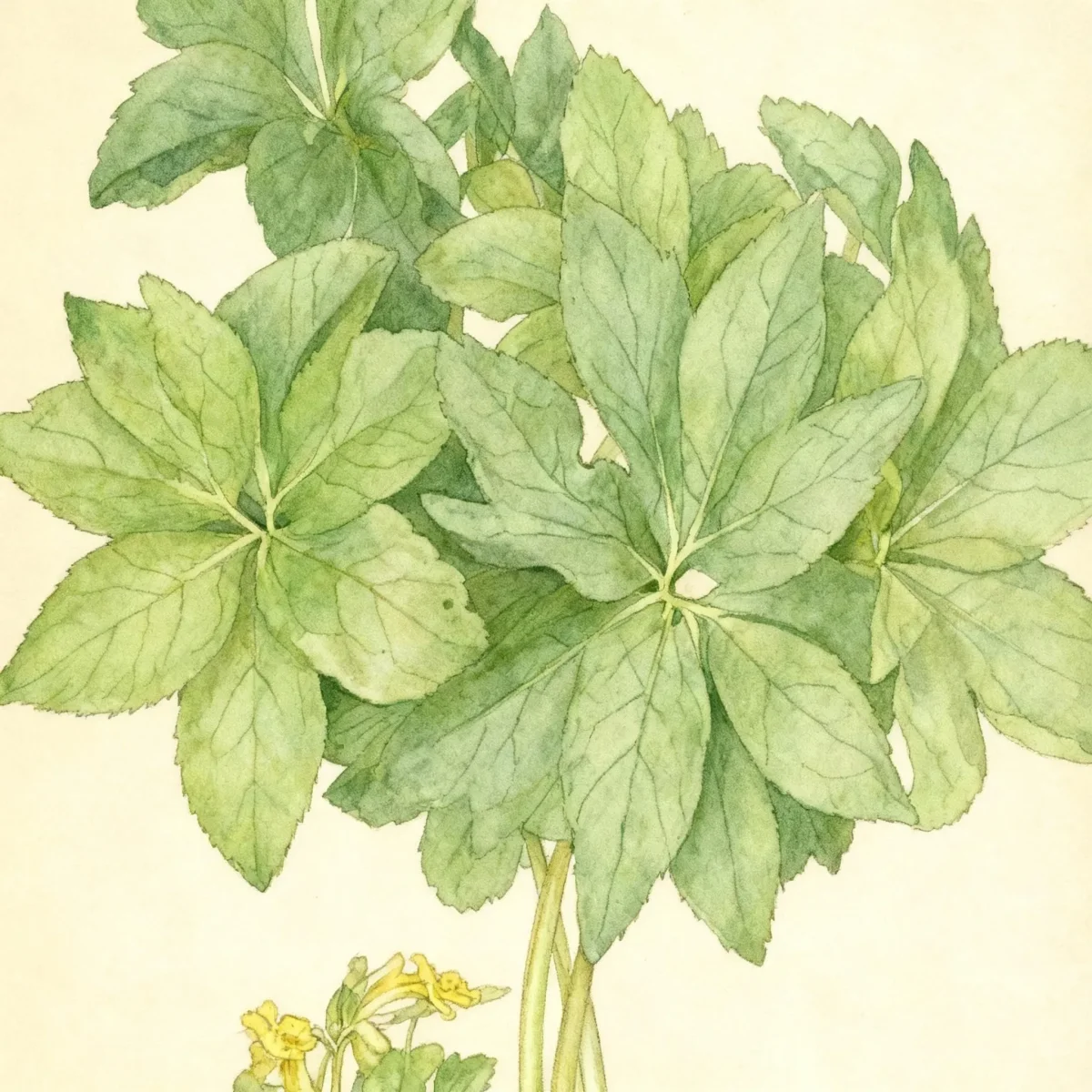
Hellebore (Helleborus 'Regal Ruffles')
Helleborus 'Regal Ruffles' is a low-maintenance Hellebore, prized for its ruffled, double blooms shining from March to May in zones 4-9.
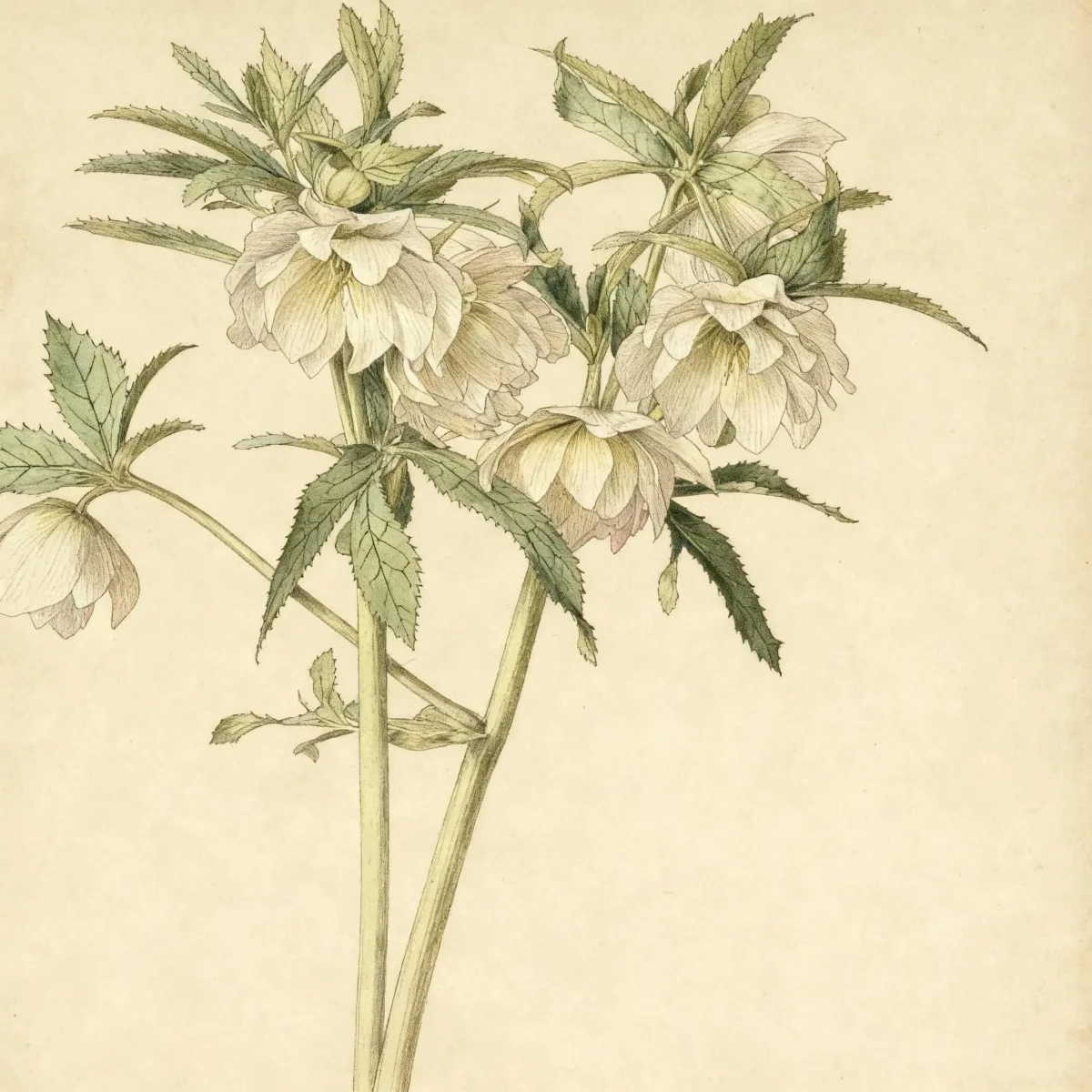

Bloom Boldly, No Matter the Season - Sweatshirt
Cozy organic cotton sweatshirt featuring our exclusive Purple Coneflower design. Perfect for gardeners who bloom year-round.
Inspired by the beautiful Hellebore
Limited first batch (50) — join the waitlist for early access
Waitlist closes Feb 15, 2026.
Complete Plant Information
Field Guide Continues
Ready for care notes, companion picks, and planting tips?
The map is just the start. The full guide below covers growth habits, seasonal performance, and landscape uses.
Overview
Helleborus ‘Regal Ruffles’ is a cherished addition to the winter and early spring garden, offering vibrant color when few other plants are stirring. As a celebrated hybrid Lenten rose, this Hellebore cultivar is prized for its robust, evergreen foliage and masses of ruffled, double-shaped flowers. Gardeners value this selection for its low maintenance needs and its exceptional performance in challenging shady environments.
This bushy, clump-forming perennial brightens the late winter landscape with blooms appearing typically from March into May. The flowers display a rich tapestry of colors including plum, pink, red, yellow, and green, often featuring intricate splashes or picotee patterns. Expect Helleborus ‘Regal Ruffles’ to establish into tidy mounds, providing consistent visual interest throughout the year thanks to its leathery, dark green leaves.
The primary appeal of this Hellebore lies in its ability to thrive where many sun-loving species fail. It offers reliable structure and spectacular early color, making it a focal point when situated near walkways or patios. Furthermore, established clumps of Helleborus ‘Regal Ruffles’ offer an excellent, year-round ground cover solution in deep shade.
Fast Facts
- Plant Family: Ranunculaceae
- Plant Type: Herbaceous perennial
- Hardiness Zones: USDA Zones 4-9
- Size at Maturity:
- Height: 0.5-1 ft
- Spread: 1-2 ft
- Bloom Time: March to May
- Bloom Description: Plum, pink, red, yellow and green
- Sun Exposure: Part shade to full shade
- Water Needs: Medium
- Maintenance Level: Low
How to Grow
Helleborus ‘Regal Ruffles’ establishes best when planted during cooler weather, such as early fall or early spring, allowing roots to develop before summer heat arrives. Choose a location providing organically rich, fertile, humusy soil that is alkaline and well-drained. While Hellebores tolerate a range of light, they thrive best in part shade or full shade, preferring protection from intense afternoon sun.
Consistent moisture is key; ensure these Hellebores receive medium water, especially during dry spells, but avoid waterlogged conditions which can lead to crown rot. Maintenance is generally very low once established, fitting perfectly into low-maintenance gardening plans. Cut back the previous year’s flowering stems immediately after blooming concludes to encourage a flush of fresh new foliage growth.
Be alert to potential foliage scorch during extremely harsh winters; sites protected from biting winter winds or those insulated by snow cover are ideal for preserving the beautiful evergreen leaves. If plants become overly congested after several years, established clumps of this Hellebore can be divided in very late summer or early fall. Remember that plants grown from seed may take two full years to produce their first flowers.
Landscape Uses
Hellebores, particularly striking cultivars like Helleborus ‘Regal Ruffles’, excel in mass plantings beneath mature trees or large shrubs where their need for shade is met perfectly. Planting them in large groups creates a powerful, sweeping display of early color—ideal for naturalized areas where they may slowly spread via self-seeding over time. Locate these early bloomers near frequently used areas, such as beside a patio or walkway, ensuring their late winter beauty is not missed amidst dormant garden scenery.
These highly adaptable plants serve wonderfully as year-round groundcover due to their persistent, glossy leaves. They pair excellently with other shade-loving perennials that emerge slightly later, such as Hostas for summer texture or spring ephemerals like Snowdrops that bloom simultaneously. The robust structure provided by Helleborus ‘Regal Ruffles’ anchors the shady border, creating structure even when seasonal color fades.
Standout Features
Flower Qualities
- Showy
Noteworthy Characteristics
Hybrid hellebores, sometimes commonly called hybrid Lenten roses or hybrid winter roses, are bushy, clump-forming perennials which typically grow to 12-15” tall. They are noted for producing single, cup-shaped flowers (typically 2-3” diameter) with five showy, usually overlapping petals (technically sepals), but sometimes come in a double flowered form; Helleborus ‘Regal Ruffles’ specifically features these ruffled, double flowers 2-3” in diameter. The genus name references the plant’s toxicity, derived from Greek words meaning “food” and “injures/destroys.” These acaulescent hybrids offer glossy, leathery, evergreen, dark green leaves, making this Hellebore valuable across all seasons.
Tolerances
- Deer
- Heavy Shade
Potential Problems
This Hellebore is generally resistant to serious insect or disease issues, which contributes significantly to its low maintenance rating. Occasionally, gardeners may notice issues like crown rot, particularly if drainage is poor, or isolated instances of leaf spot. As a crucial warning, remember that the leaves, stems, and roots of this plant are poisonous if ingested by humans or pets. On a positive note, deer and rabbits typically avoid grazing on Helleborus ‘Regal Ruffles’. Prevention of rot involves improving soil drainage before planting; manage leaf spot by removing heavily infected foliage if necessary.
Frequently Asked Questions
What hardiness zones is Hellebore suitable for?
Helleborus ‘Regal Ruffles’ is reliably hardy across USDA Zones 4 through 9.
How large does Hellebore grow?
This perennial typically reaches a height between 0.5 and 1 foot tall, spreading between 1 and 2 feet wide.
What sun exposure does Hellebore need?
This specific Hellebore thrives best in part shade to full shade conditions, preferring filtered light over harsh, direct afternoon sun.
When does Hellebore bloom?
Helleborus ‘Regal Ruffles’ blooms predictably from March to May, showcasing colors described as plum, pink, red, yellow and green.
Conclusion
Helleborus ‘Regal Ruffles’ provides essential winter interest combined with robust, evergreen structure, making it an invaluable asset for shady garden spots. Its reliability and low maintenance profile ensure that gardeners of all experience levels can enjoy the early bloom of this beautiful Hellebore. Confirm your garden soils meet the drainage and fertility requirements, and plan your planting location now to enjoy the first signs of spring color.
Companion Planting
When designing a shady woodland garden around your Helleborus ‘Regal Ruffles’, consider pairing it with plants that offer contrasting textures or sequential blooms. Since Hellebores prefer humusy, alkaline soil and medium moisture, look for companions that share this preference, avoiding highly acidic soil lovers. Ferns, such as Japanese Painted Ferns, offer delicate, lacy texture against the bold, leathery leaves of the Hellebore later in the season.
For sequential bloom, consider planting late-blooming Primulas or early Astilbes nearby. By the time the Hellebore foliage matures and the spring ephemerals fade, surrounding woodland perennials can take over the visual duty. Effective companionship relies on sharing cultural needs, ensuring that the entire understory planting group thrives under the canopy of trees or large shrubs.
Seasonal Care Calendar
Spring is the active growth period for Helleborus. As the spectacular flowers fade, prune the old flowering stems back near the base. This encourages fresh, healthy evergreen foliage to emerge and ensures the plant puts energy into next year’s bud production. Dead or damaged foliage should also be trimmed at this time to keep the clump tidy.
Summer care centers primarily on monitoring moisture levels. While Hellebores are not drought tolerant, they suffer severely in soggy soil. Water deeply but infrequently, allowing the top inch or two of rich soil to dry slightly between irrigation sessions. Mulching heavily with organic matter conserves this critical moisture while improving soil fertility over time.
As temperatures drop in fall and early winter, Hellebores require little intervention. Their evergreen nature means they remain structural throughout winter dormancy. If you experience a harsh, dry winter without snow cover, providing a deep soak before the ground freezes can prevent winter desiccation of the foliage.