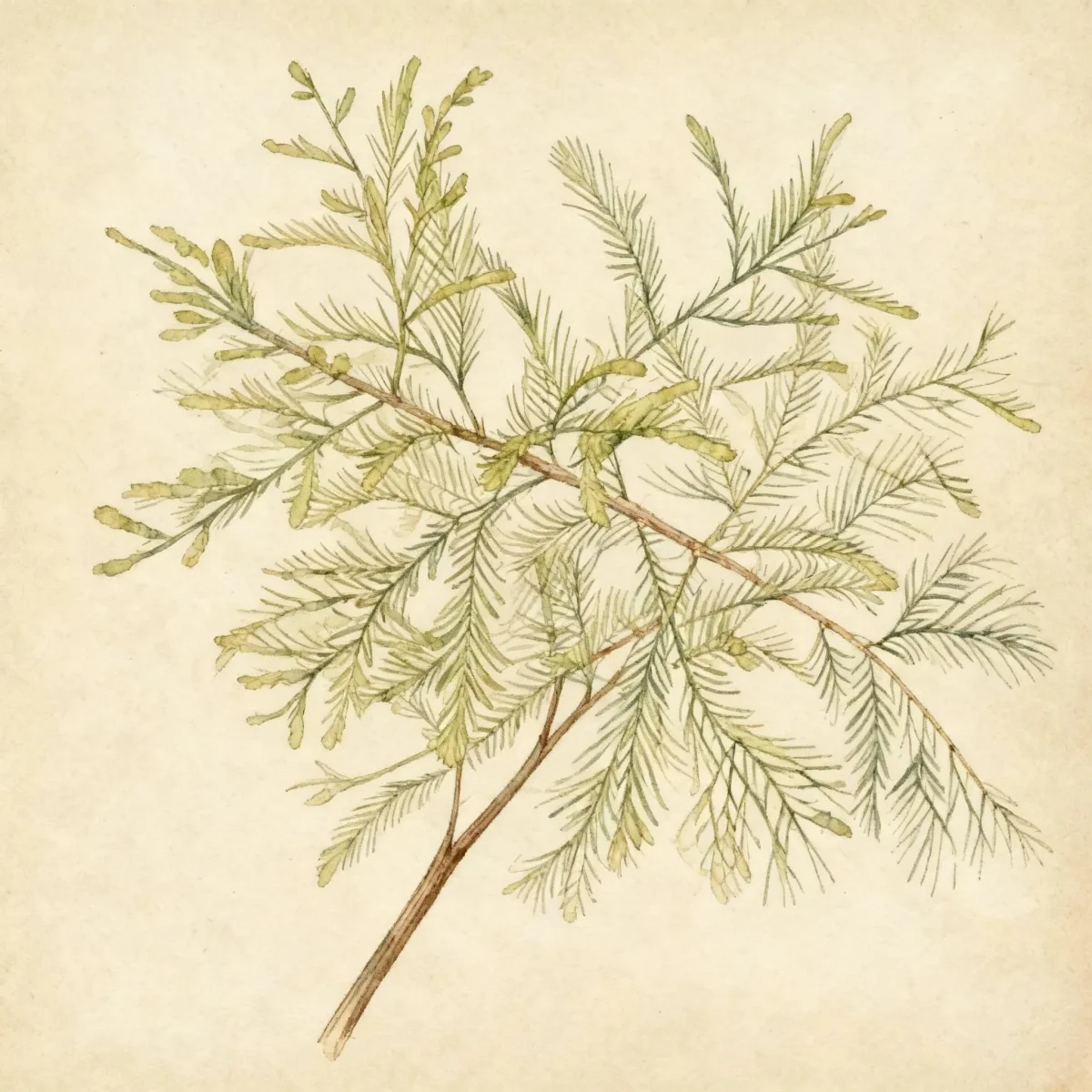
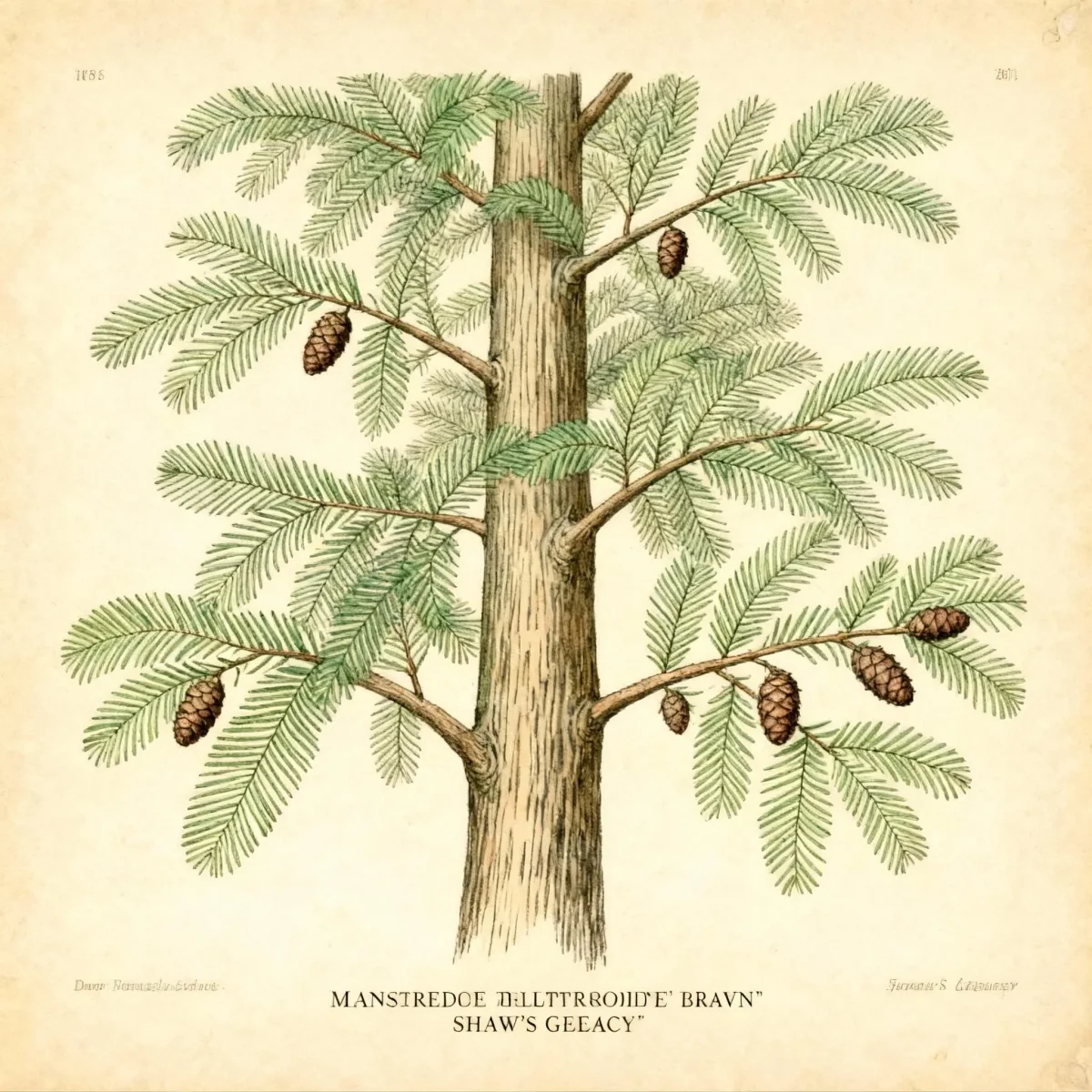
Dawn redwood (Metasequoia glyptostroboides 'Raven' SHAW'S LEGACY)
Explore Metasequoia glyptostroboides 'Raven' SHAW'S LEGACY, a low-maintenance, fast-growing Dawn redwood perfect for large spaces and wet sites.

Bloom Boldly, No Matter the Season - Sweatshirt
Cozy organic cotton sweatshirt featuring our exclusive Purple Coneflower design. Perfect for gardeners who bloom year-round.
Inspired by the beautiful Dawn redwood
Limited first batch (50) — join the waitlist for early access
Waitlist closes Feb 15, 2026.
Complete Plant Information
Field Guide Continues
Ready for care notes, companion picks, and planting tips?
The map is just the start. The full guide below covers growth habits, seasonal performance, and landscape uses.
Overview
The Metasequoia glyptostroboides ‘Raven’ SHAW’S LEGACY is a spectacular cultivar of the Dawn redwood, highly valued for its uniform pyramidal habit and impressive stature. As a fast-growing deciduous conifer, it offers the unique appeal of soft, feathery foliage that transforms from bluish-green to striking orange and red hues in the fall. This tree is an excellent choice for gardeners seeking the grandeur of ancient species with the enhanced vigor and structural consistency of a selected cultivar.
This magnificent tree quickly establishes itself, often growing up to three feet per year, eventually reaching heights of 70 to 100 feet. Despite its immense size potential, the ‘Raven’ selection maintains structural integrity and exhibits better resistance to common foliar diseases than its relatives. It thrives in conditions where many trees struggle, particularly appreciating consistent moisture.
The history of the Dawn redwood is legendary, as it was presumed extinct until rediscovered in China in the mid-20th century. Planting Metasequoia glyptostroboides ‘Raven’ SHAW’S LEGACY connects your landscape to deep botanical history while providing remarkable shade and year-round structural interest. Its low maintenance requirements make it a sustainable choice for significant landscape features.
Fast Facts
- Plant Family: Cupressaceae
- Plant Type: Tree
- Hardiness Zones: USDA Zones 4-8
- Size at Maturity:
- Height: 70-100 ft
- Spread: 25-50 ft
- Bloom Time: Non-flowering
- Bloom Description: Non-flowering
- Sun Exposure: Full sun
- Water Needs: Medium to wet
- Maintenance Level: Low
How to Grow
Planting the Dawn redwood should ideally occur during the dormant seasons—early spring or late fall—to minimize transplant shock. Site selection is crucial due to the mature size of Metasequoia glyptostroboides ‘Raven’ SHAW’S LEGACY, requiring ample space. This tree performs best when established in moist, humusy, well-drained soils, though it notably tolerates periodic wet soil conditions. Full sunlight is essential to ensure the best possible foliage color development throughout the growing season.
Once established, care requirements are surprisingly minimal for such a large specimen. While the plant tolerates standard moisture levels, deeply appreciate consistent moisture, especially when young or during extended dry spells. Avoid letting the soil become completely waterlogged for long periods, even though it tolerates wet soil; balanced deep watering is key to vigorous growth. Fertilization is generally unnecessary unless the soil quality is notably poor or growth rates significantly lag.
Pruning needs for Metasequoia glyptostroboides ‘Raven’ SHAW’S LEGACY focus mainly on removing any damaged or crossing limbs as the tree matures. Due to its uniform pyramidal growth habit, significant shaping is usually not required. In winter, the tree is deciduous, losing all its needles, which may require clean-up beneath its canopy, but otherwise, it requires little specialized winter protection in its appropriate zones.
Landscape Uses
The vast scale and attractive silhouette of the Dawn redwood make it an unparalleled specimen tree for large properties. It functions exceptionally well as a stately street tree, providing significant vertical accent and cooling shade over wide areas. Because Metasequoia glyptostroboides ‘Raven’ SHAW’S LEGACY develops deep roots and tolerates adverse conditions, including air pollution, it holds up well in urban or suburban settings where space permits an eventual height of 100 feet.
Furthermore, its tolerance for wet soil makes this cultivar a fantastic, dramatic anchor plant for rain gardens or near retention ponds where water tends to collect. Consider balancing its fine, feathery foliage with broadleaf evergreens or plants that provide strong contrasting texture at ground level. When used as a specimen, ensure the eye can follow its trunk upward, appreciating the developing fluting and deeply fissured bark found on mature specimens.
Standout Features
Noteworthy Characteristics
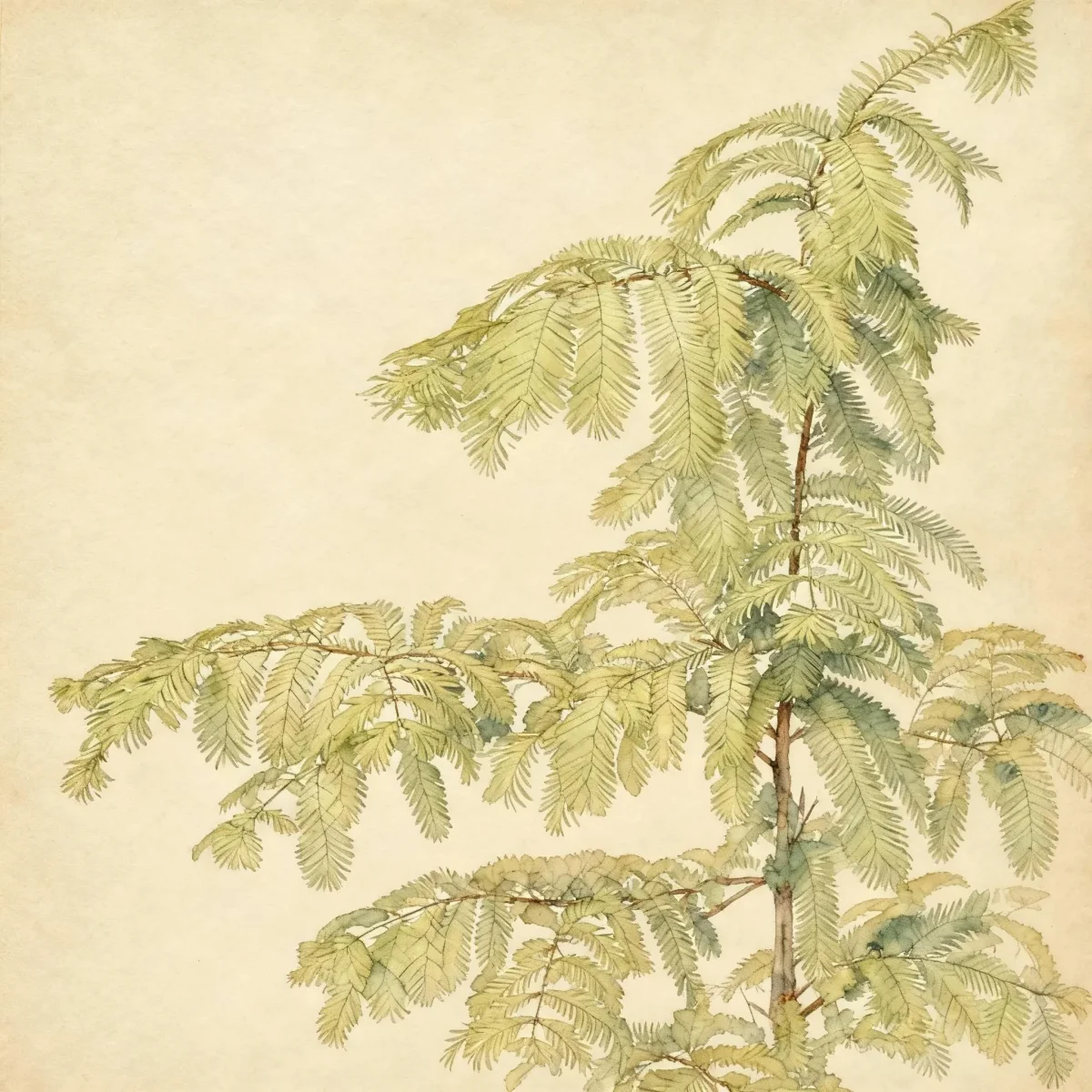
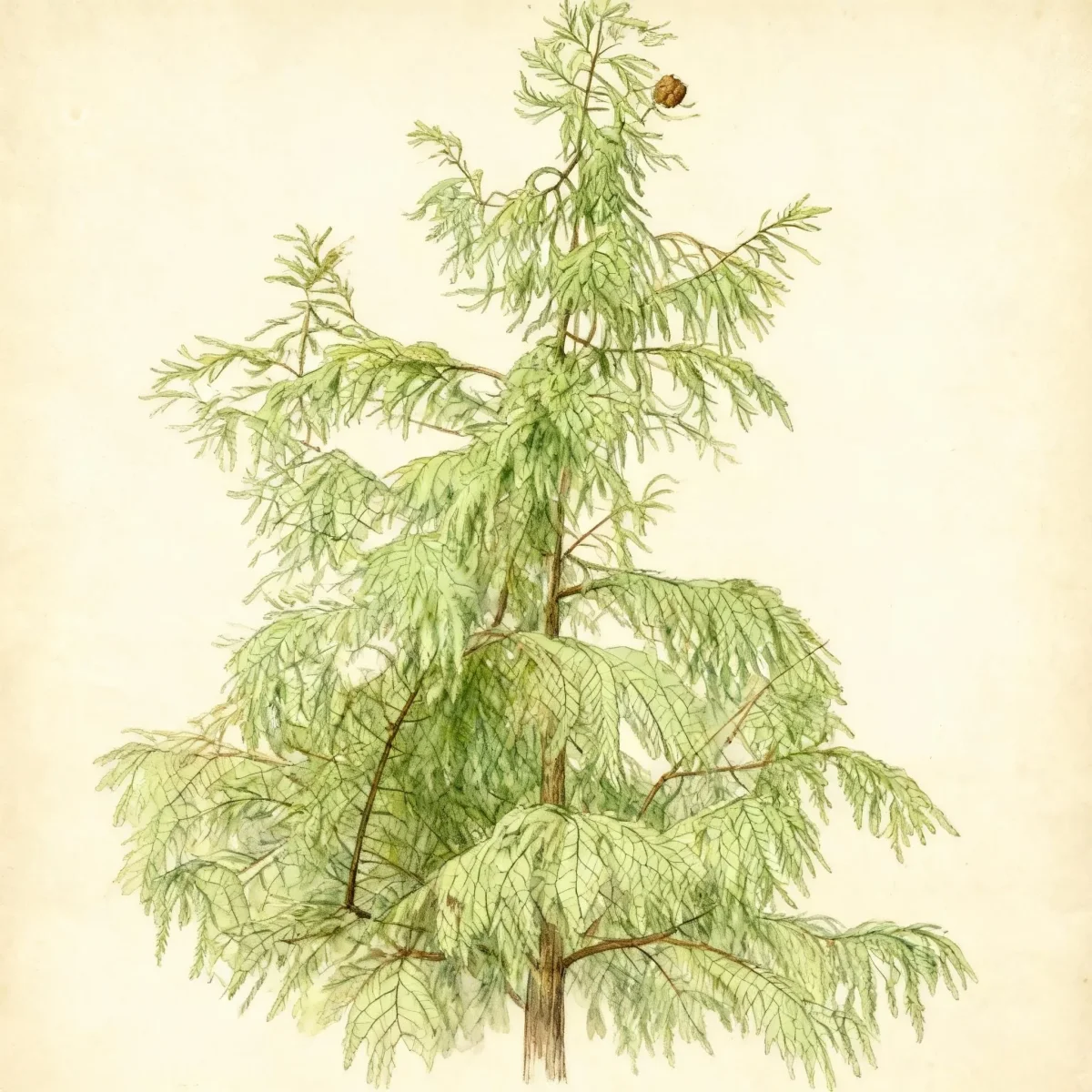
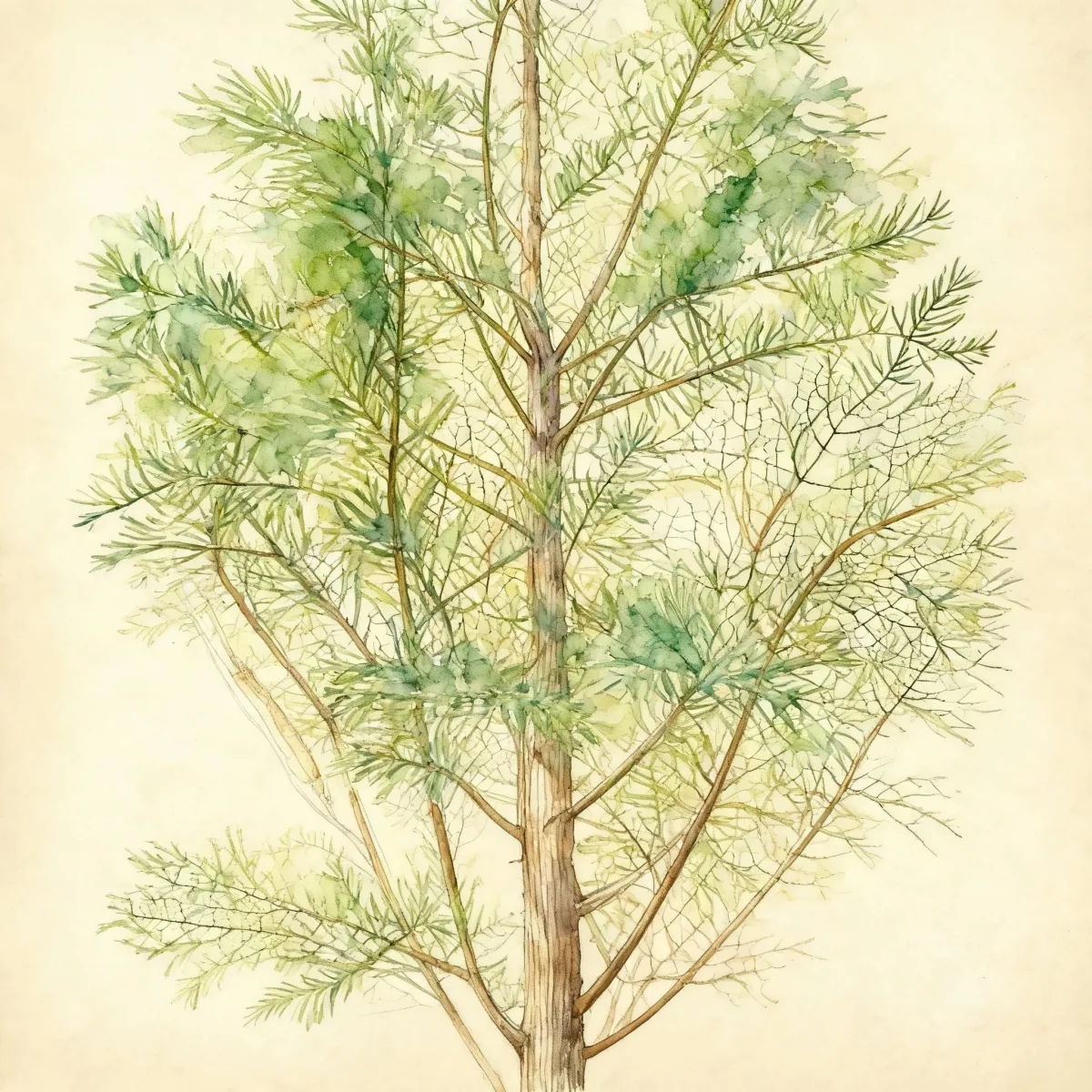
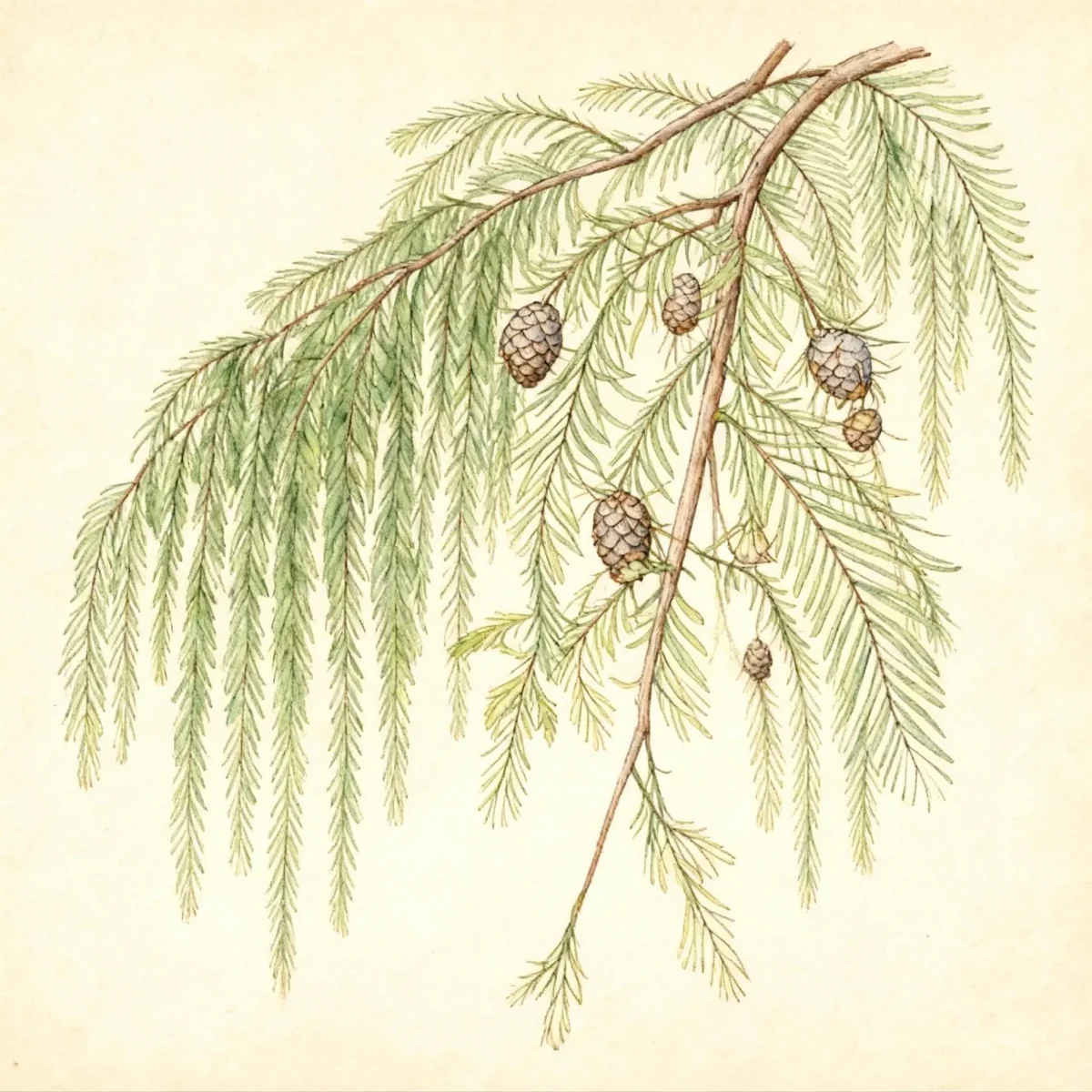
Metasequoia glyptostroboides, commonly called dawn redwood, is a deciduous, coniferous tree that grows in a conical shape to 100’ tall. It is related to and closely resembles bald cypress (Taxodium) and redwood (Sequoia). From fossil records, dawn redwood is known to have existed as many as 50,000,000 years ago. However, it was not until 1941 that it was first discovered growing in the wild near the town of Modaoqi, China by Chinese forester, T. Kan. Seeds collected from the original site were made available to the Missouri Botanical Garden in 1947. Seedlings grown therefrom were planted in front of the Lehmann Building at MBG in 1952 where they have now developed into large mature trees (70’+ tall). As the tree matures, the trunk broadens at the base and develops attractive and sometimes elaborate fluting. Bark on mature trees is often deeply fissured. It features linear, feathery, fern-like foliage that is soft to the touch. Foliage emerges light green in spring, matures to deep green in summer and turns red-bronze in fall. Trees are monoecious, producing oval, light brown female cones (3/4” long) and pendant globose male cones (1/2” long). The twigs, needles and cone scales are in opposite pairs.Genus name comes from the Greek words metra meaning with, after, sharing, or changed in nature and Sequoia to which it is related and to which fossil specimens were first referred.Specific epithet means resembling the genus Glyptostrobus. ‘Raven is one of the 1952 trees planted in front of the Lehmann Building at MBG in 1952. It is distinguished from typical specimens of Metasequoia glyptostroboides in the following ways: (1) uniform pyramidal growth habit, (2) low branching habit with branches uniformly spaced, (3) deeply furrowed bark, (4) better resistance to foliar diseases, and (5) more vigorous growth rate. ‘Raven’ features soft, linear, feathery, fern-like, bluish-green to yellowish-green leaves that turn orange to red in fall. Trees will typically grow up to 3’ each year, eventually maturing to 70-100’ tall. Cultivar name honors Dr. Peter Raven, Director of the Missouri Botanical Garden from 1971 to September 2010. SHAW’S LEGACY is a trade name that honors Henry Shaw (1800-1889) who founded the Missouri Botanical Garden in 1859. U.S. Plant Patent PP21,318
Tolerances
- Deer
- Clay Soil
- Wet Soil
- Air Pollution
Potential Problems
Gardeners will be pleased to hear that the Metasequoia glyptostroboides ‘Raven’ SHAW’S LEGACY exhibits no serious insect or disease problems under normal conditions. This robust nature contributes significantly to its low maintenance profile, saving time and chemical costs compared to some ornamental conifers.
If issues do arise, they are typically minor and related to environmental stress, such as root rot if drainage is exceptionally poor or consistent drought stress, though this tree is generally resilient. Proper siting in full sun with consistent moisture will preempt most potential issues.
Frequently Asked Questions
What hardiness zones is Dawn redwood suitable for?
The Metasequoia glyptostroboides ‘Raven’ SHAW’S LEGACY is reliably hardy in USDA Zones 4 through 8, offering adaptability across a wide range of climates.
How large does Dawn redwood grow?
This specific cultivar typically matures to heights between 70 and 100 feet, with a spread ranging from 25 to 50 feet, necessitating significant space planning.
What sun exposure does Dawn redwood need?
For optimal health and the best fall color display, the Metasequoia glyptostroboides ‘Raven’ SHAW’S LEGACY requires full sun exposure.
When does Dawn redwood bloom?
The Dawn redwood is non-flowering; it produces small male and female cones instead of traditional flowers during its maturation cycle.
Conclusion
The Dawn redwood, especially the superior ‘Raven’ SHAW’S LEGACY cultivar, offers gardeners an unmatched combination of historical grandeur and modern vigor. Its rapid growth, striking seasonal color change, and tolerance for wetter soils distinguish it as a premier large landscape specimen or street tree. Before planting, confirm you have the necessary space to accommodate its eventual 100-foot height, and plant during the cool, moist seasons for the best establishment success.
Companion Planting
Given that the Metasequoia glyptostroboides ‘Raven’ SHAW’S LEGACY thrives in full sun and requires medium to wet soil, companion plants should share similar high-moisture needs. Consider underplanting with moisture-loving perennials like Caltha palustris (Marsh Marigold) for bright spring color. For textural contrast beneath its high canopy, bog-tolerant shrubs such as Swamp Dogwood (Cornus foemginum) or various Osmunda ferns can thrive without competing aggressively for root space once the massive tree is established.
Seasonal Care Calendar
Spring is the best time to assess any winter damage and perform necessary structural pruning on the Dawn redwood before the new growth fully emerges. Ensure consistent watering begins early in the season, especially if initiating planting in early spring. Summer is the primary growth period; maintain deep, regular watering, particularly during heat waves to support the fast growth rate. In the fall, enjoy the spectacular transformation of the foliage to red-bronze before the needles drop, which will be the main cleanup requirement. Minimal intervention is necessary in winter; simply monitor for broken or heavy snow-laden branches.