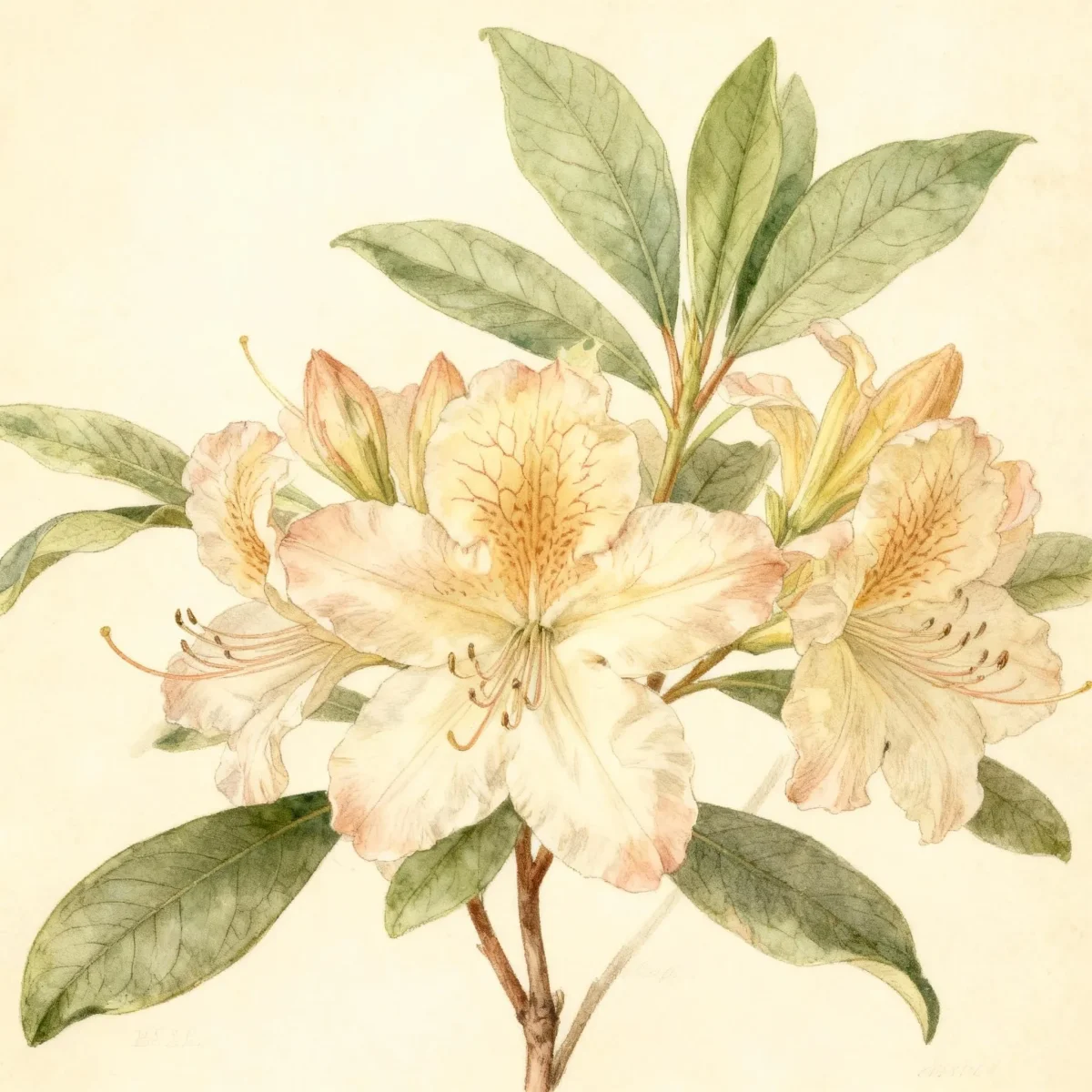
Deciduous azalea (Rhododendron flammeum 'Hazel Hamilton')
Highlight the heat-tolerant Rhododendron flammeum 'Hazel Hamilton', a Deciduous azalea offering showy yellow blooms in early spring for USDA Zones 6-7.

Bloom Boldly, No Matter the Season - Sweatshirt
Cozy organic cotton sweatshirt featuring our exclusive Purple Coneflower design. Perfect for gardeners who bloom year-round.
Inspired by the beautiful Deciduous azalea
Limited first batch (50) — join the waitlist for early access
Waitlist closes Feb 15, 2026.
Complete Plant Information
Field Guide Continues
Ready for care notes, companion picks, and planting tips?
The map is just the start. The full guide below covers growth habits, seasonal performance, and landscape uses.
Overview
Rhododendron flammeum ‘Hazel Hamilton’ is a standout Deciduous azalea prized for its beautiful, vibrant spring flowering display, particularly useful in warmer climates where many azaleas struggle. This variety, known for its bright yellow flowers, offers a reliable mid-spring color show just as the foliage begins to emerge. It is celebrated as a heat-tolerant shrub, making the species particularly valuable across the humid South.
Maturing into a rounded, medium-sized shrub, the established Rhododendron flammeum ‘Hazel Hamilton’ typically reaches heights and spreads between six to eight feet. While native to specific Piedmont regions, it adapts well to cultivation when its specific soil and moisture needs are met. Gardeners prize this plant for its deciduous habit, which allows for winter structure and different light penetration than evergreen types.
Providing visual interest through its large flower trusses, this particular cultivar, Rhododendron flammeum ‘Hazel Hamilton’, ensures reliable yellow blooms. Site it correctly in dappled light where it can thrive, and you will be rewarded annually with a fantastic display that enhances woodland gardens or mixed borders.
Fast Facts
- Plant Family: Ericaceae
- Plant Type: Deciduous shrub
- Hardiness Zones: USDA Zones 6-7
- Size at Maturity:
- Height: 6-8 ft
- Spread: 6-8 ft
- Bloom Time: April to May
- Bloom Description: Yellow
- Sun Exposure: Part shade
- Water Needs: Medium
- Maintenance Level: Medium
How to Grow
The key to success with Rhododendron flammeum ‘Hazel Hamilton’ lies entirely in soil preparation and drainage. This shrub demands acidic, humusy, organically rich soils that remain medium moist but are exceptionally well-drained. Good drainage is paramount; avoid locations where water pools, as this leads quickly to root rot—consider raised beds if your native soil, like heavy clay, drains poorly.
Planting should occur in locations receiving part shade or filtered, sun-dappled conditions; full, intense afternoon sun will scorch the foliage. While Rhododendron flammeum ‘Hazel Hamilton’ exhibits good heat and humidity tolerance typical of the deep South, its shallow, fibrous root systems must never be allowed to dry out completely, even once established.
Watering should be consistent, targeting medium moisture levels. To maintain soil conditions and keep roots cool, apply a thick layer of organic mulch, such as pine needles or wood chips, around the base, taking care not to pile it against the crown. Acidify soils periodically as needed to maintain the preferred pH range for this Deciduous azalea. Pruning is minimal; clip off spent flower clusters immediately after blooming finishes for the best display next season.
Landscape Uses
Rhododendron flammeum ‘Hazel Hamilton’ versatility allows for integration into many landscape designs. Its natural, rounded form makes it effective when used as a specimen plant where its spring color can be fully appreciated. Equally effective are mass plantings or groupings, which create dramatic sweeps of yellow color under high canopy trees in woodland garden settings.
This Deciduous azalea integrates beautifully into mixed borders, providing textural contrast with evergreen shrubs in the surrounding foundation plantings. Furthermore, due to its structure and size, Rhododendron flammeum ‘Hazel Hamilton’ excels when utilized as a natural hedge where a moderate height and seasonal interest are desired. Ensure companion plants share similar acidic soil and part-shade requirements for collective success.
Standout Features
Flower Qualities
- Showy
Noteworthy Characteristics
Rhododendron flammeum, commonly called Oconee azalea, is an upright, rounded, medium-sized, deciduous azalea that typically matures to 6-8’ tall and as wide. It is a variable species which is native to the Piedmont region of Georgia and South Carolina primarily being found in woodland areas, dry slopes, and stream bluffs. ‘Hazel Hamilton’ features bright yellow flowers atop the species which is known for showing colors ranging from yellow-orange to true red.
Tolerances
- Rabbit
Potential Problems
Rhododendrons and azaleas are susceptible to many insect and disease problems, including but not limited to canker, crown rot, root rot, leaf spot, rust, powdery mildew, aphids, borers, lacebugs, leafhoppers, mealybugs, mites, nematodes, scale, thrips and whitefly. The most critical factor in preventing serious issues, especially root and crown rot, is ensuring excellent soil drainage, as these plants absolutely do not tolerate “wet feet.” A healthy Rhododendron flammeum ‘Hazel Hamilton’ in the proper environment with proper care should limit these problems significantly. Monitor new growth for signs of pests like lacebugs or scale; early intervention with appropriate treatments maximizes success.
Frequently Asked Questions
What hardiness zones is Deciduous azalea suitable for?
Rhododendron flammeum ‘Hazel Hamilton’ is suitable for USDA Zones 6 through 7.
How large does Rhododendron flammeum ‘Hazel Hamilton’ grow?
This shrub typically reaches a mature height between 6 to 8 feet, with a comparable spread of 6 to 8 feet.
What sun exposure does Deciduous azalea need?
This plant should be sited to receive part shade, preferring filtered or sun-dappled conditions rather than direct, intense sunlight.
When does Rhododendron flammeum ‘Hazel Hamilton’ bloom?
This Deciduous azalea blooms reliably from April into May, showcasing distinctive bright yellow flowers.
Conclusion
The Rhododendron flammeum ‘Hazel Hamilton’ offers gardeners a heat-tolerant deciduous option that provides reliable, showy yellow flowers in the spring. For those gardening within USDA Zones 6-7, preparing rich, acidic, and perfectly drained soil is the gateway to successfully growing this beautiful shrub. Check your local soil pH now and plan your planting site in part shade to ensure your Deciduous azalea thrives for years to come.
Companion Planting
When selecting companions for Rhododendron flammeum ‘Hazel Hamilton’, prioritize other acid-loving plants that also thrive in partial shade. Consider planting lower-growing, acid-loving perennials beneath the developing shrub canopy. Good partners include Hellebores (Lenten Rose), which offer winter interest, or woodland ephemerals like Trillium during spring emergence. For year-round structure, consider companion planting with taller hemlocks or Japanese maples which provide the filtered light preference of the Deciduous azalea.
Design Ideas for Southern Gardens
Because this specific azalea handles heat well, it excels in structuring foundation plantings along eastern or northern exposures of homes in humid climates. Allow Rhododendron flammeum ‘Hazel Hamilton’ to form loose, informal hedges or use them to define the edges of woodland pathways. Their bright yellow bloom serves as an excellent contrast when planted near deep purple or deep red flowering Rhododendrons, amplifying the visual impact of early spring color across the shaded garden space.