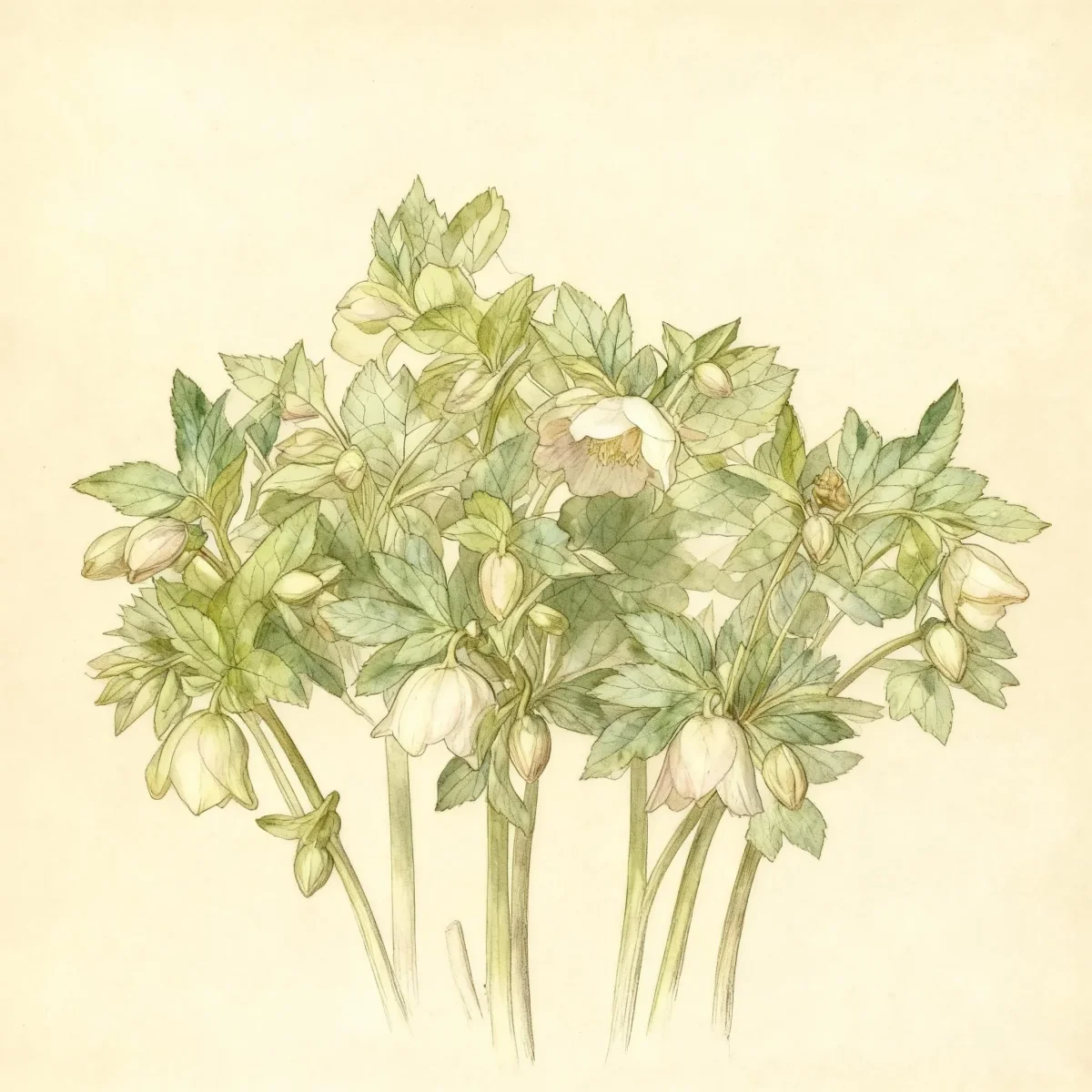
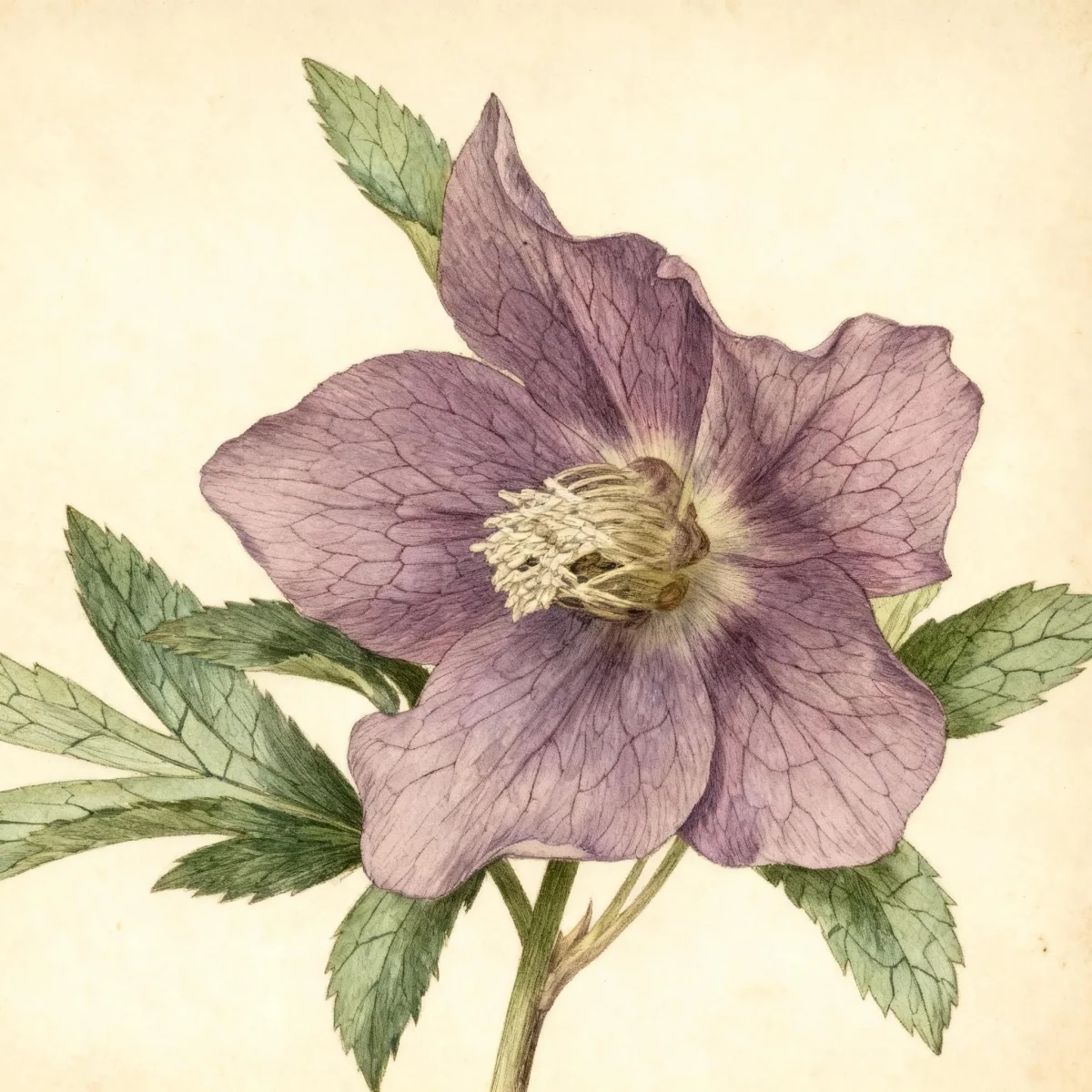
Hellebore (Helleborus (Painted Strain) WINTER JEWELS)
The Helleborus (Painted Strain) WINTER JEWELS Hellebore offers early bloom in shades of white and maroon, thriving even in heavy shade.

Bloom Boldly, No Matter the Season - Sweatshirt
Cozy organic cotton sweatshirt featuring our exclusive Purple Coneflower design. Perfect for gardeners who bloom year-round.
Inspired by the beautiful Hellebore
Limited first batch (50) — join the waitlist for early access
Waitlist closes Feb 15, 2026.
Complete Plant Information
Field Guide Continues
Ready for care notes, companion picks, and planting tips?
The map is just the start. The full guide below covers growth habits, seasonal performance, and landscape uses.
Overview
The Helleborus (Painted Strain) WINTER JEWELS is a highly valued herbaceous perennial, often referred to simply as Hellebore, celebrated for its exceptionally early blooming period that truly heralds the end of winter. This specific strain, developed by Marietta O’Byrne, provides gardeners with striking, single, cup-shaped flowers, whose beauty is enhanced by the glossy, evergreen foliage providing year-round structure. Growing reliably in shaded areas where many other flowering plants struggle, the Hellebore offers a low-maintenance solution for adding color to the late winter garden.
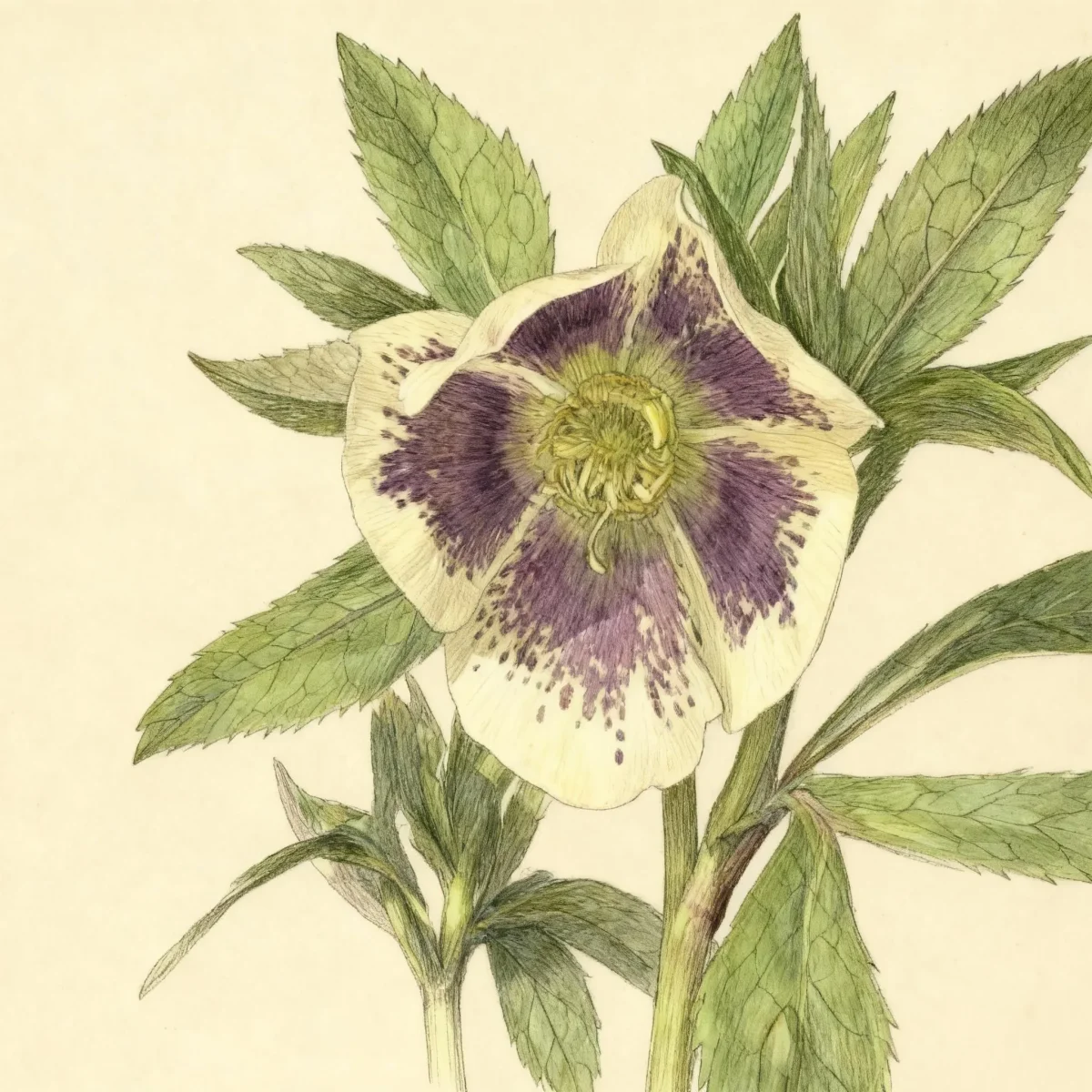
These hybrids thrive when planted in rich, well-drained soils, offering a fantastic combination of winter color and dependable evergreen texture. The Helleborus (Painted Strain) WINTER JEWELS specifically features a distinctive white to creamy background accented by a large, painted splash of maroon in the center, framing bright yellow stamens. This reliable performance and tolerance for difficult spots make this Hellebore a cornerstone plant for shaded landscapes.
Fast Facts
- Plant Family: Ranunculaceae
- Plant Type: Herbaceous perennial
- Hardiness Zones: USDA Zones 4-9
- Size at Maturity:
- Height: 1-1.5 ft
- Spread: 1-1.5 ft
- Bloom Time: February to April
- Bloom Description: White with maroon center splash
- Sun Exposure: Part shade to full shade
- Water Needs: Medium
- Maintenance Level: Low
How to Grow
Plant Helleborus (Painted Strain) WINTER JEWELS in the late summer or early fall for best establishment before winter dormancy sets in. Choose a location offering part shade to full shade; these plants thrive best under light shade, but can tolerate heavy shade once established. They require organically rich, fertile, humusy, and most importantly, well-drained soil that is slightly alkaline to be truly happy.
Water requirements are medium; ensure the soil remains consistently moist but never waterlogged. Established plants are relatively drought-tolerant but perform best with consistent moisture during dry spells. Maintenance is low, but after the flowers fade in spring, cut back the old flowering stems to encourage vigorous new foliage growth.
If your plant becomes overcrowded after several years, division is possible in late summer to early fall. Be aware that while perennial, hybrid hellebores grown from seed will take two full years before producing their signature blooms. Siting is crucial; protect your Hellebore from harsh winter winds, as extreme cold can scorch the evergreen leaves if they lack natural snow cover insulation.
Landscape Uses
The primary appeal of the Hellebore is its capability to provide vibrant color during months when few other plants are flowering, making it a true harbinger of spring, even in February or March. It performs exceptionally well when planted in large drifts beneath established trees or large shrubs, creating a stunning woodland garden effect. Because the foliage remains attractive year-round, these plants are ideal for massing as low evergreen ground cover.
Consider placing Helleborus (Painted Strain) WINTER JEWELS near patios or walkways. This strategic placement ensures their early bloom display can be fully appreciated before spring perennials emerge. They make excellent companions for other shade-loving woodland plants like hostas, ferns, and spring bulbs, offering structural contrast when necessary.
Standout Features
Flower Qualities
- Showy
Noteworthy Characteristics
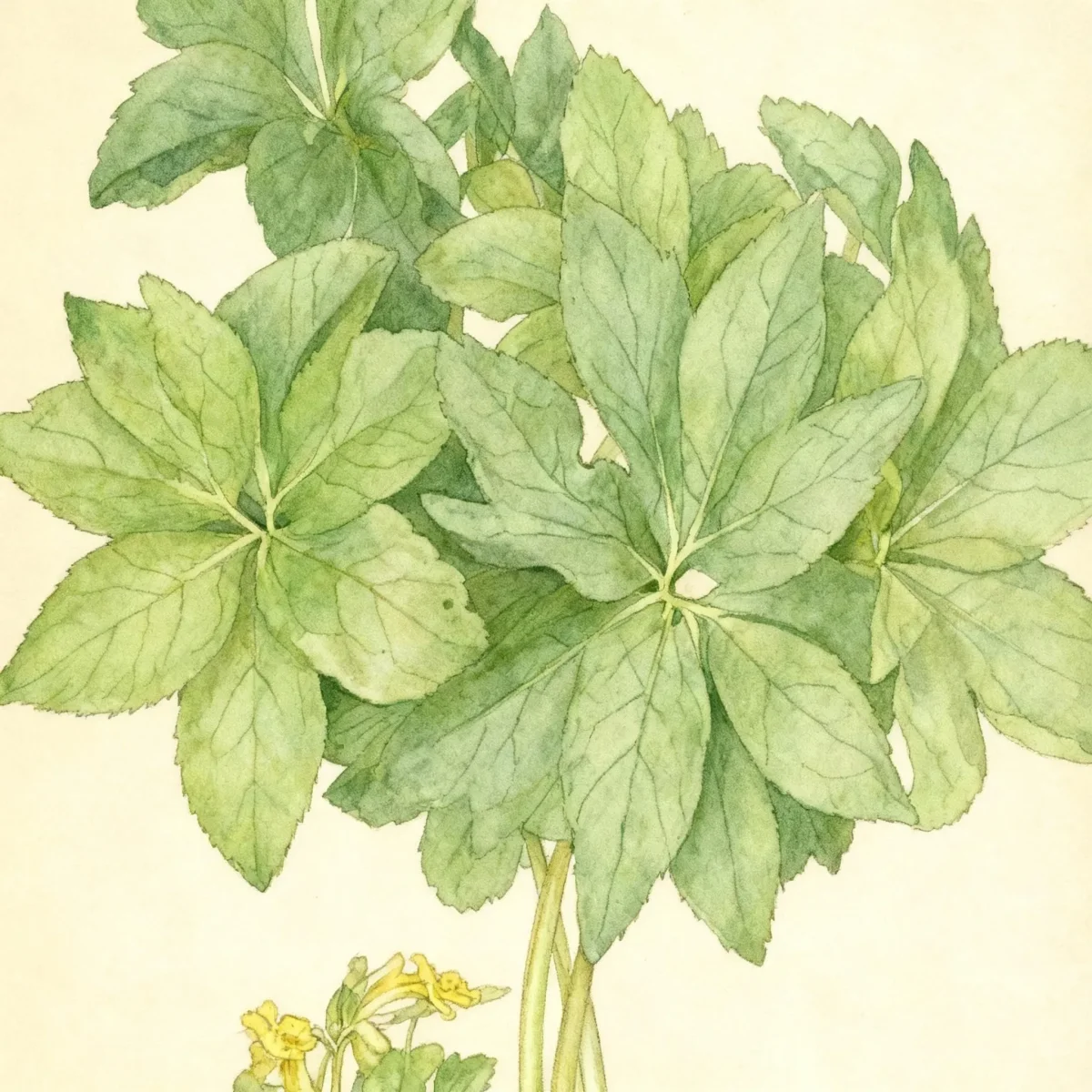
Hybrid hellebores, sometimes commonly called hybrid Lenten roses or hybrid winter roses, are bushy, clump-forming perennials which typically grow to 12-15” tall. They are noted for producing single, cup-shaped flowers (typically 2-3” diameter) with five showy, usually overlapping petals (technically sepals), but sometimes come in a double flowered form. Flowers bloom in a large variety of colors, including various shades and tints of white, pink, red, purple, and yellow, and sometimes have inside spotting. Bloom typically commences in late winter extending into early spring. Flowers appear at the tips of branched stems clad with evergreen dark green leaves which are divided into glossy, leathery, deeply-lobed, often toothed, lanceolate to elliptic segments. Genus name comes from the Greek words bora meaning “food” and helein meaning “injures/destroys” in reference to the plant’s toxic leaves, stems and roots which are poisonous to humans if ingested. Hellebores is the old Greek name for H. Orientalis. WINTER JEWELS is a strain of hybrid hellebores hybridized and developed by Marietta O’Byrne of Eugene, Oregon. Flowers in this strain come in a large variety of colors in both single and double cultivars. Painted Strain, sometimes listed by the cultivar name of ‘Painted Strain’, is a single form that features showy petals with a white to creamy background and a large center splash (painted or brushed in appearance) of maroon, purple, or red. Petals surround a center crown of contrasting yellow stamens.
Tolerances
- Deer
- Heavy Shade
Potential Problems
This Hellebore generally exhibits low susceptibility to pests and diseases. The most common issues encountered are occasional leaf spot or, more seriously, crown rot if drainage is inadequate. Proper soil preparation emphasizing excellent drainage is the best preventative measure against rot.
As a crucial safety note, all parts of the Hellebore—the leaves, stems, and roots—are poisonous if ingested by humans or pets. Fortunately, deer and rabbits usually avoid browsing this plant due to its toxicity, making it a reliable choice in areas where browsing pressure is high.
Frequently Asked Questions
What hardiness zones is Hellebore suitable for?
This Hellebore variety, Helleborus (Painted Strain) WINTER JEWELS, is reliably hardy in USDA Zones 4 through 9.
How large does Hellebore grow?
When mature, this Hellebore typically reaches a height between 1 and 1.5 feet and spreads to a similar width of 1 to 1.5 feet.
When does Hellebore bloom?
The Helleborus (Painted Strain) WINTER JEWELS usually begins blooming from February extending through April, showcasing flowers noted for their white color with a striking maroon center splash.
What sun exposure does Hellebore need?
This plant prefers shady conditions, performing best in part shade to full shade locations throughout the garden.
Conclusion
The robust, easy-to-care-for nature of the Helleborus (Painted Strain) WINTER JEWELS makes it invaluable for brightening the late winter garden with its unique, splashed blooms. As a reliable evergreen Hellebore, it offers superior texture and color when few other plants are active. Ensure your planting site offers rich, well-drained soil and protection from harshest winter winds to enjoy this long-lived perennial for years to come.
Companion Planting
Successful companion planting for the Hellebore focuses on species that share its love for deep shade and rich, humusy soil. Hostas are classic partners, emerging slightly later to take over the visual show as the Helleborus finishes blooming, effectively hiding any spent flowering stems. Similarly, various spring ephemerals, like bloodroot or smaller native ferns, can be integrated beneath the canopy of the Hellebore.
When selecting companions, prioritize those that do not aggressively compete for surface moisture or nutrients. Lungwort (Pulmonaria) also shares similar blue/purple-toned foliage and prefers the same shady, alkaline conditions, creating a consistently cool, verdant understory planting scheme well into the summer months.
Propagation Tips
While hybrid hellebores like Helleborus (Painted Strain) WINTER JEWELS are often purchased as nursery stock, spreading clumps can be propagated through division. This process should be executed in the late summer or early fall when the plant is actively growing but before harsh winter sets in. Carefully dig up the established clump and gently tease the root ball apart, ensuring each division retains a healthy crown and sufficient root mass.
Starting new plants from seed is possible, though less predictable, as hybrids may not breed “true to type.” If starting from seed, remember the extended timeline; seed-grown Hellebores will require two seasons before they are mature enough to produce flowers. Maintain cool, moist conditions for germination.