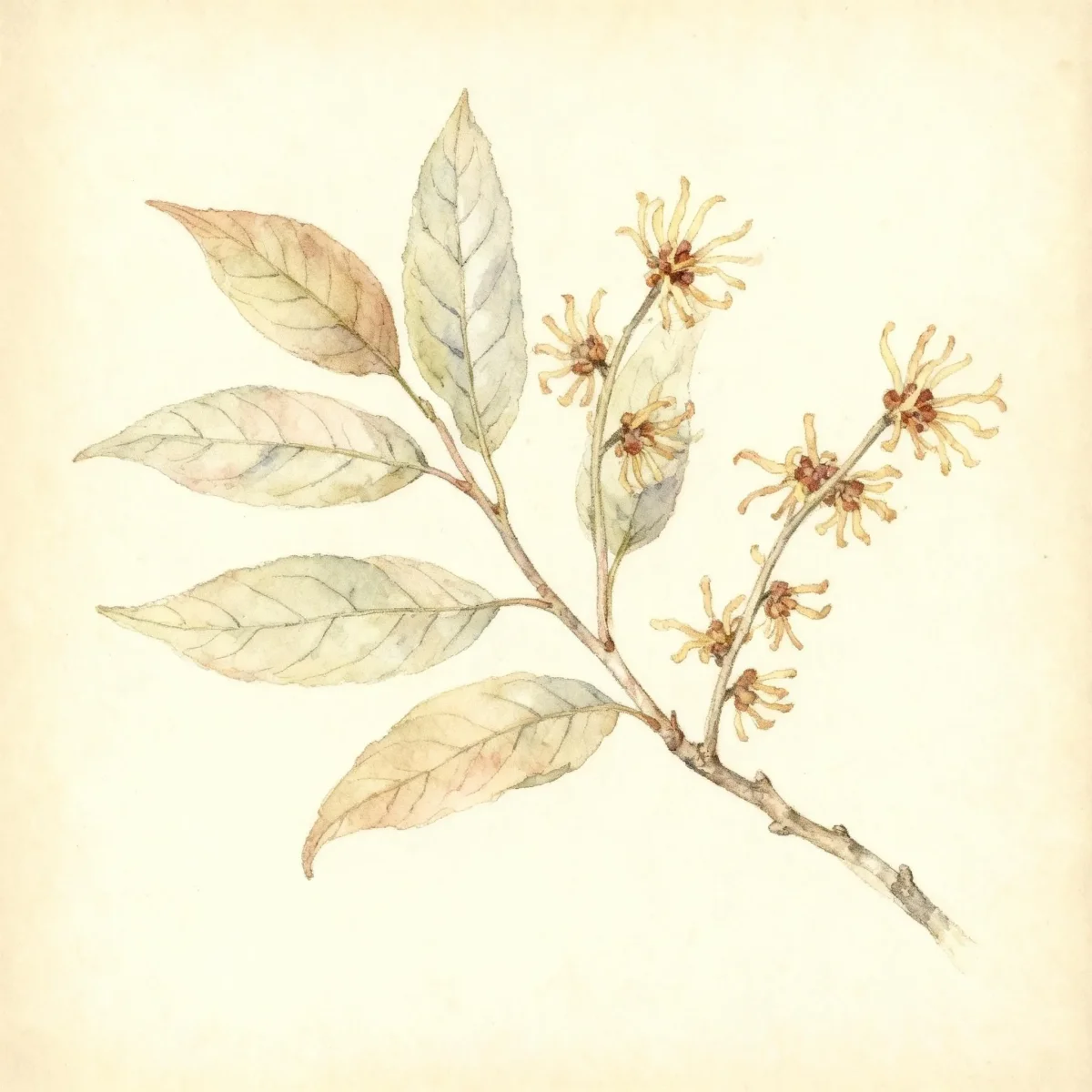
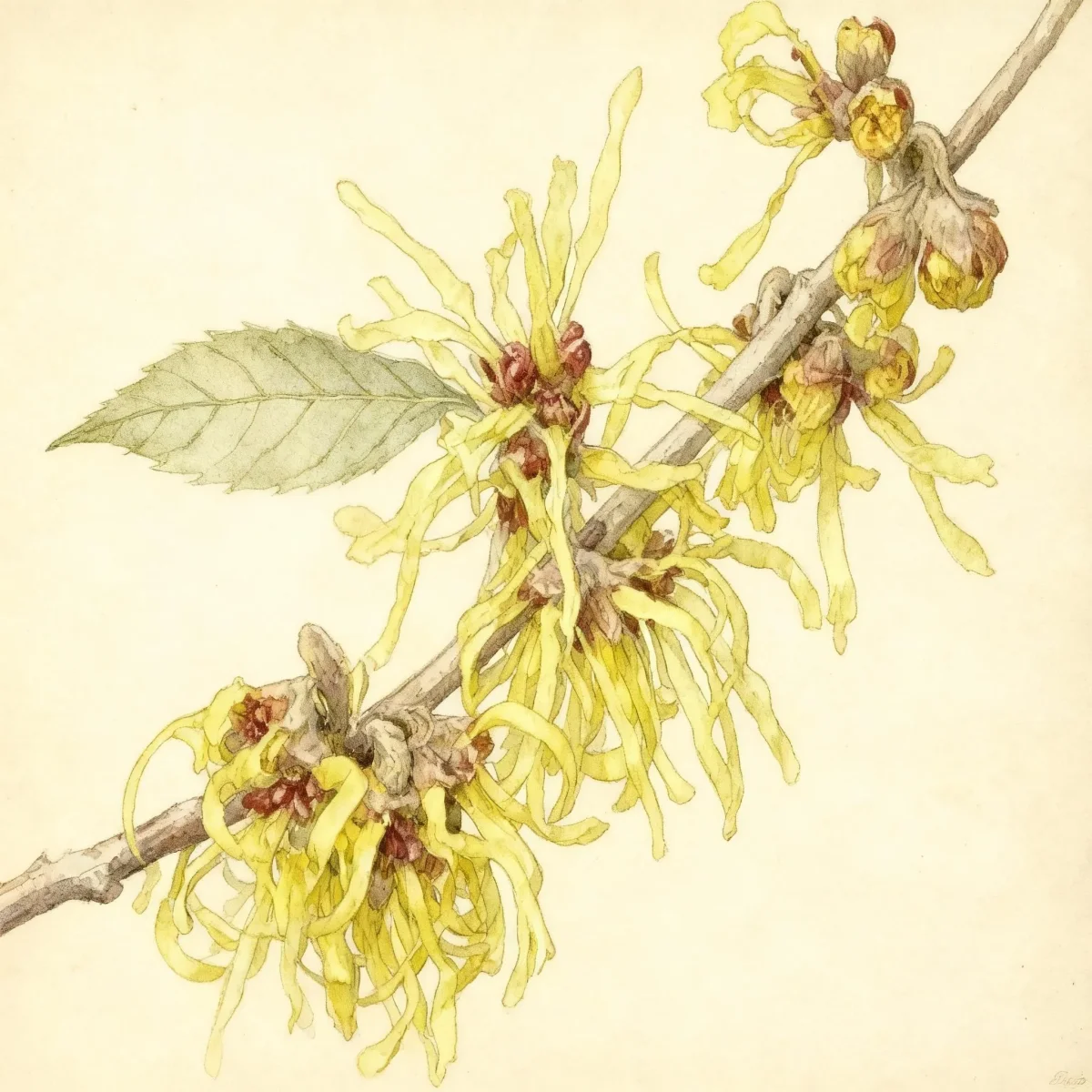
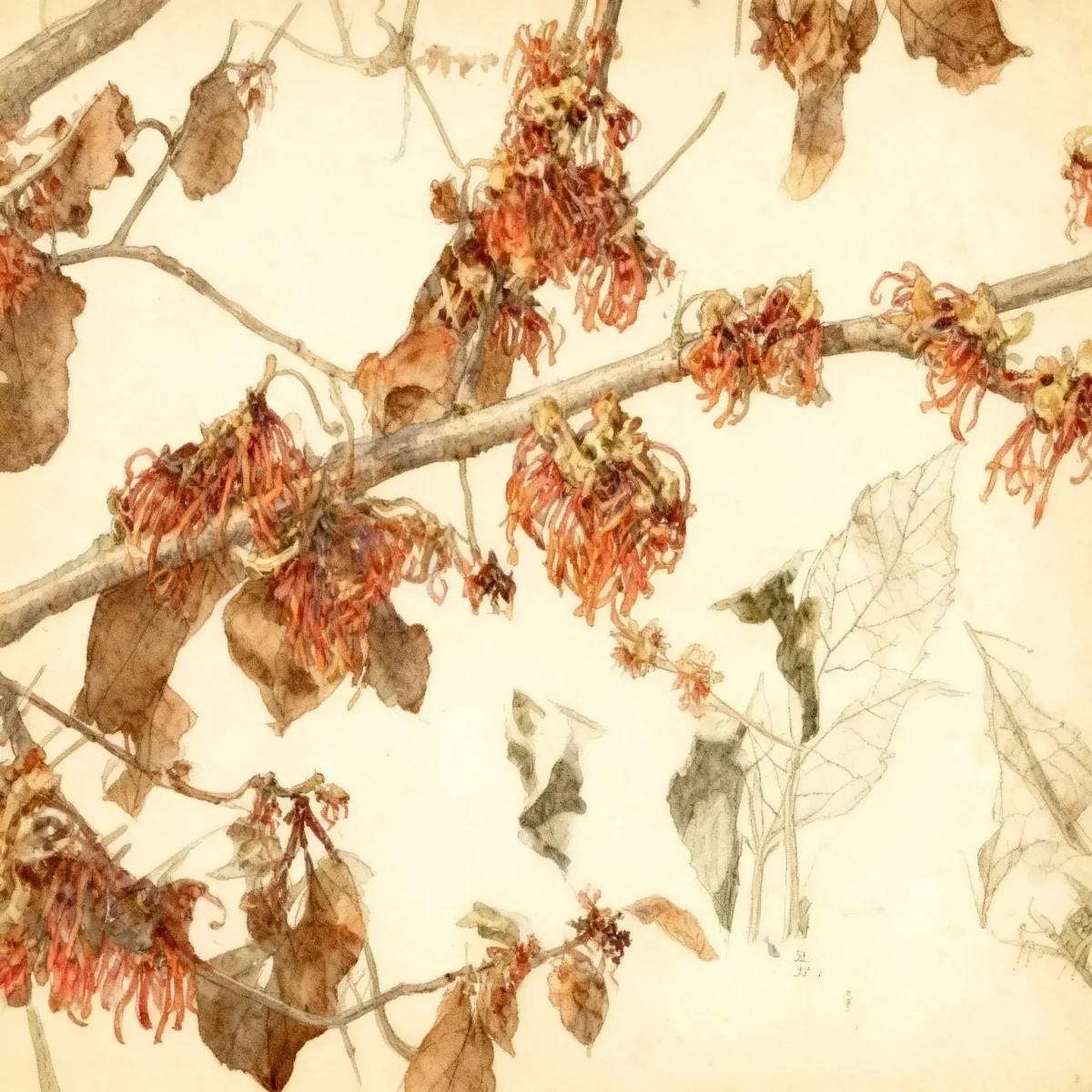
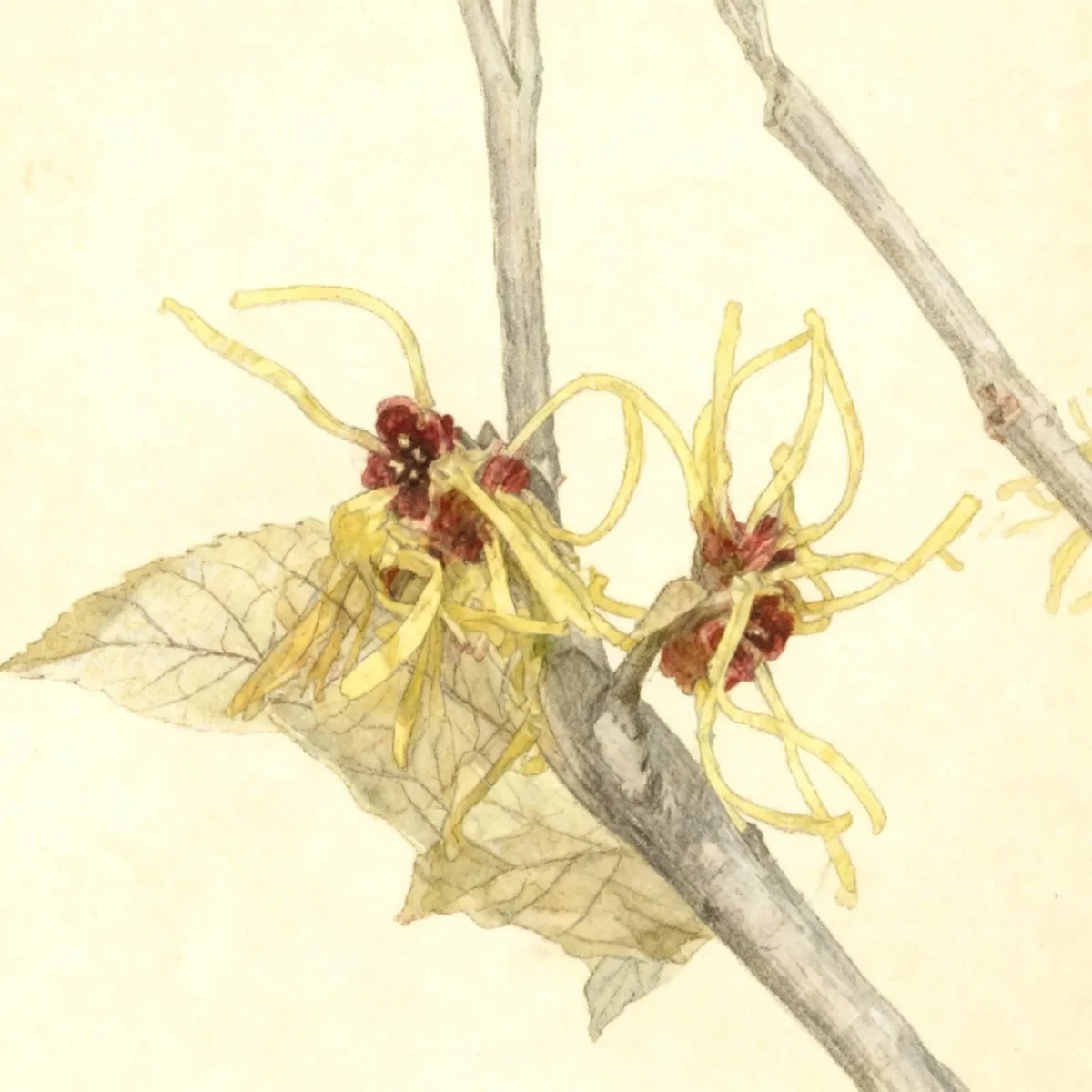
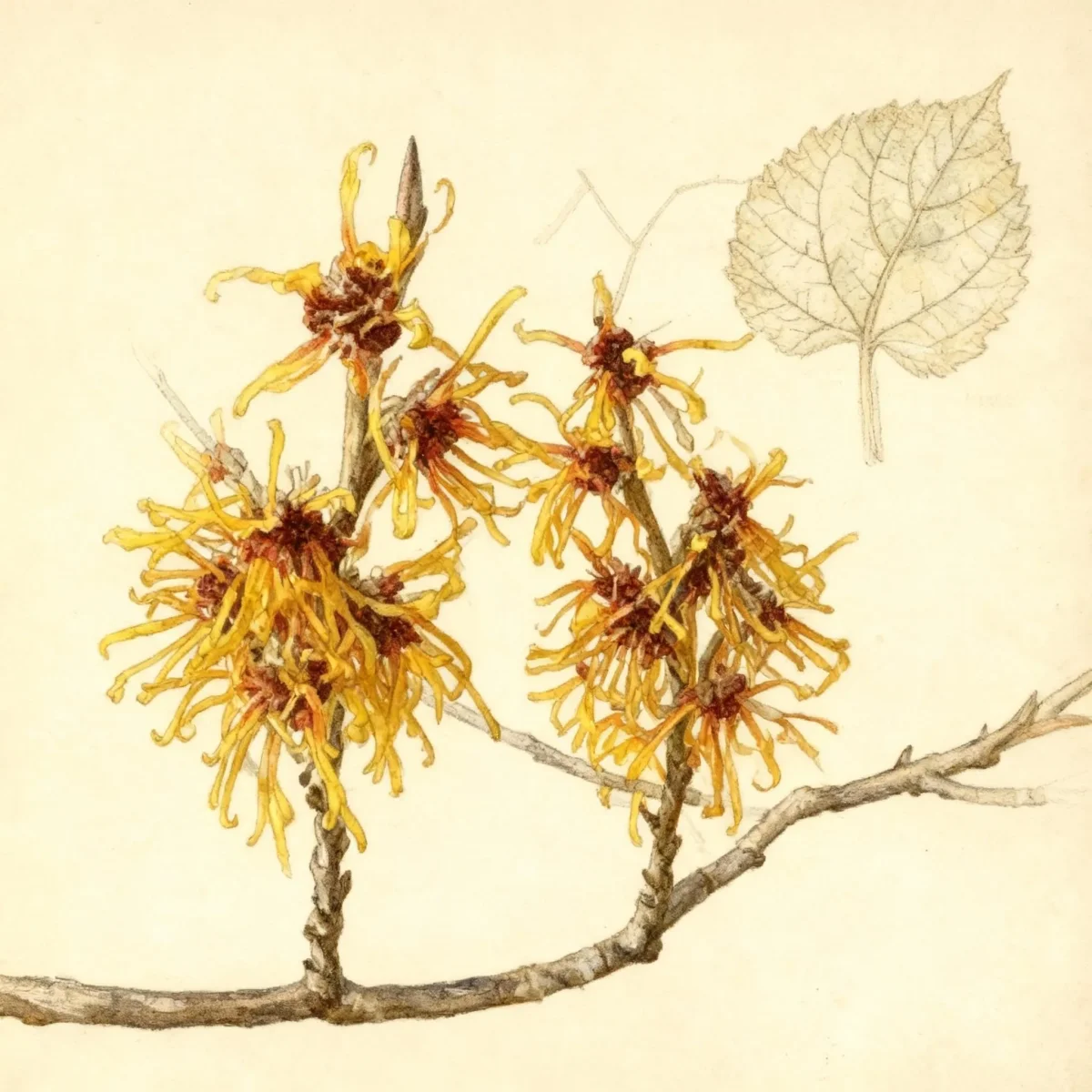
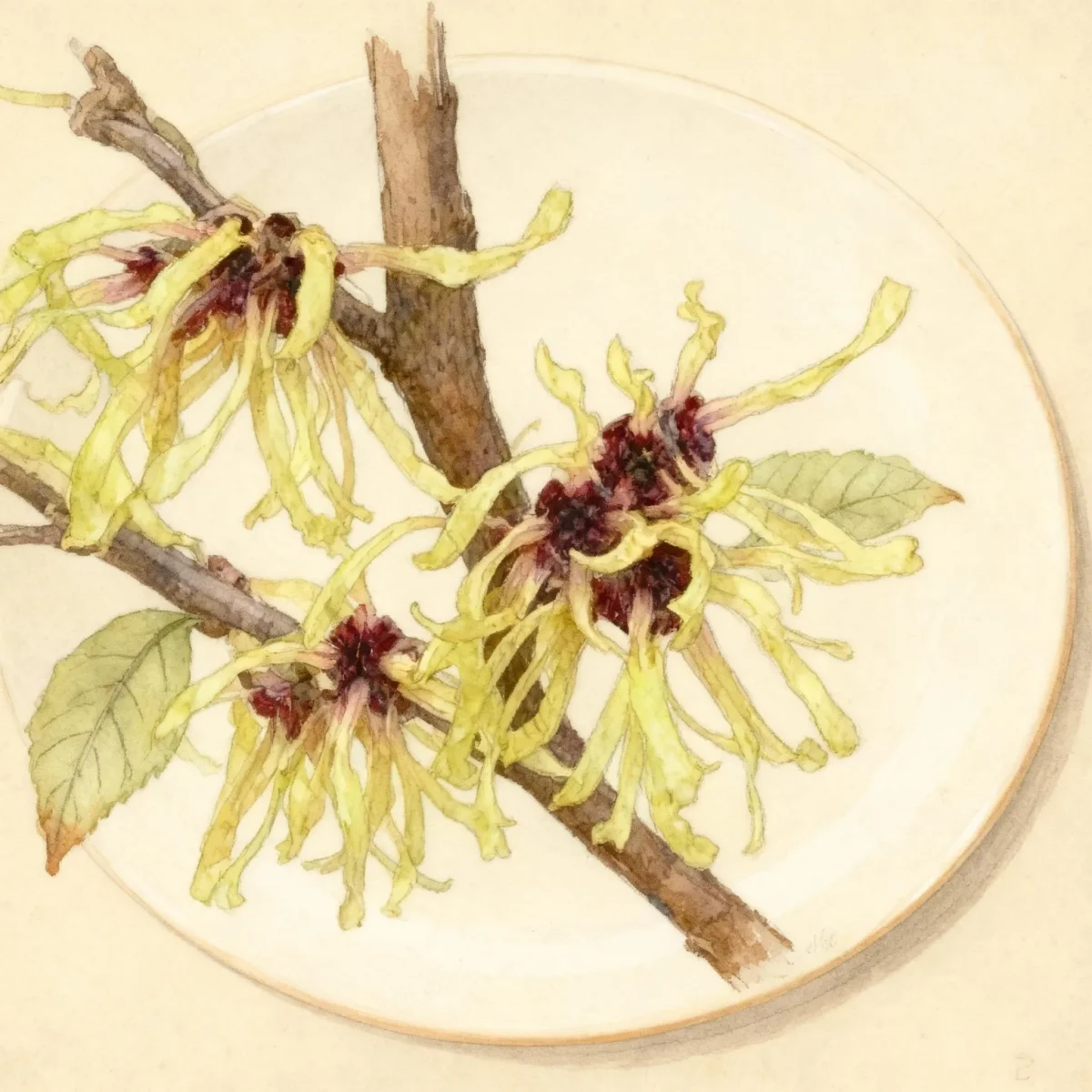
Witch hazel (Hamamelis 'Amethyst')
Hamamelis 'Amethyst' is low-maintenance Witch hazel valued for fragrant, reddish purple winter blooms and brilliant fall foliage.

Bloom Boldly, No Matter the Season - Sweatshirt
Cozy organic cotton sweatshirt featuring our exclusive Purple Coneflower design. Perfect for gardeners who bloom year-round.
Inspired by the beautiful Witch hazel
Limited first batch (50) — join the waitlist for early access
Waitlist closes Feb 15, 2026.
Complete Plant Information
Field Guide Continues
Ready for care notes, companion picks, and planting tips?
The map is just the start. The full guide below covers growth habits, seasonal performance, and landscape uses.
Overview
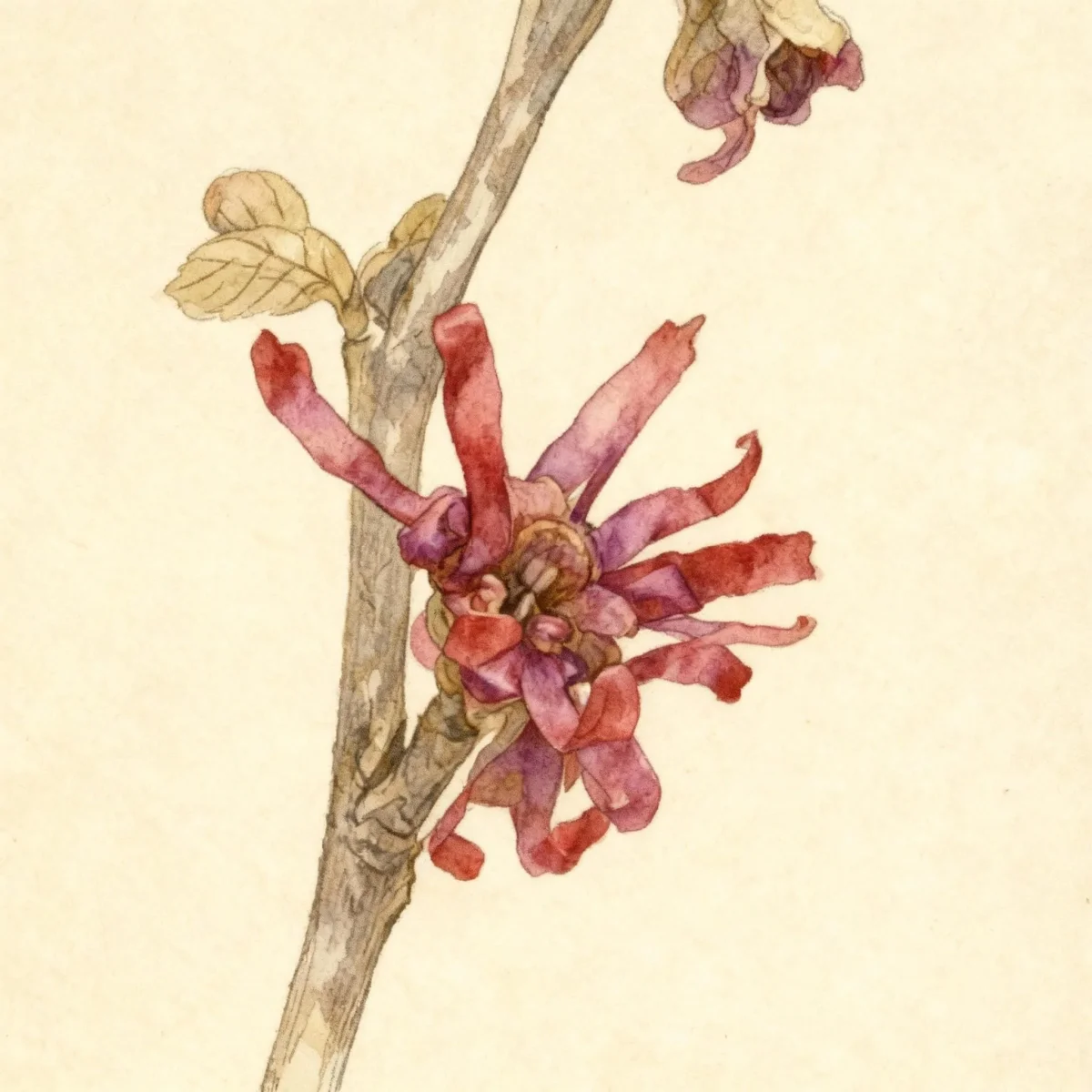
Hamamelis ‘Amethyst’, a spectacular cultivar of Witch hazel, provides essential color during the late winter landscape lull. This deciduous shrub is highly valued for its unique, lightly fragrant, reddish purple blossoms that appear from February into March, often before the appearance of leaves. When the chilling winter months give way to spring, the foliage of this variety transitions into a brilliant display of red and orange hues.
Introduced in 2003, this cultivar likely results from a hybrid background involving H. vernalis. It naturally forms a rounded, sturdy structure, growing robustly to about 8 to 10 feet tall and wide, making it a substantial yet manageable specimen plant. Its low maintenance needs and striking seasonal interest solidify Hamamelis ‘Amethyst’ as a winning choice for year-round garden impact.
Fast Facts
- Plant Family: Hamamelidaceae
- Plant Type: Deciduous shrub
- Hardiness Zones: USDA Zones 5-8
- Size at Maturity:
- Height: 8-10 ft
- Spread: 8-10 ft
- Bloom Time: February to March
- Bloom Description: Reddish purple
- Sun Exposure: Full sun to part shade
- Water Needs: Medium
- Maintenance Level: Low
How to Grow
Plant Hamamelis ‘Amethyst’ where it can receive full sun, as this promotes the absolute best flowering display, although it tolerates part shade. This Witch hazel thrives in average, medium-moisture, well-drained soils, ideally those that are acidic and organically rich. Ensure consistent moisture, particularly during dry periods, to prevent leaf scorch during the summer months.
Maintenance for this shrub is generally low once established. Pruning should be performed promptly in the spring immediately following the conclusion of flowering to control shape and size. A critical care step specific to grafted Witch hazel varieties is the removal of any root suckers that emerge below the graft union to maintain the desired cultivar characteristics.
While Hamamelis ‘Amethyst’ is adaptable, it shows some tolerance for clay soils, provided the drainage remains excellent. Avoid overly wet conditions, which can lead to root issues. Its hardiness across Zones 5 to 8 ensures reliable winter performance across a wide climatic range.
Landscape Uses
Hamamelis ‘Amethyst’ excels as a captivating winter-flowering accent in the landscape. Its mid-winter bloom ensures that even dormant gardens retain visual interest, making it an excellent choice for specimen planting near frequently used patios or windows.
Beyond its winter display, its dense habit and tolerance make it suitable for creating a tall hedge or screen. When used in structural plantings, remember that its upright structure and late season color pair beautifully with evergreen shrubs or early spring bulbs that emerge after the Witch hazel finishes blooming. It is also highly recommended for woodland gardens where acidic, moist soils are present.
Standout Features
Flower Qualities
- Showy
- Fragrant
Noteworthy Characteristics
Hamamelis is a genus prized for its very early bloom, spanning late winter through early spring, offering color when few other woody plants are flowering. The ‘Amethyst’ cultivar specifically features lightly fragrant, reddish purple blossoms. It matures into a rounded bush, 8 to 10 ft tall and wide, featuring gray-green foliage that provides a striking contrast as it shifts to brilliant red and orange in autumn.
Tolerances
- Deer
- Erosion
- Clay Soil
- Air Pollution
Potential Problems
Insect issues on Witch hazel are infrequent and typically minor, though gardeners should occasionally inspect leaves for signs of chewing damage from caterpillars or Japanese beetles. More common concerns include sucking insects like gall aphids and scale, as well as leafrollers and leafminers.
Potential diseases might involve powdery mildew or occasional leaf spots and rots, particularly if air circulation is poor or humidity is consistently high. Fortunately, environmental or insect stress rarely warrants intensive chemical intervention for healthy Hamamelis ‘Amethyst’ specimens. Maintaining proper soil drainage is the best preventative measure against many fungal issues.
Frequently Asked Questions
What hardiness zones is Witch hazel suitable for?
This variety of Witch hazel, Hamamelis ‘Amethyst’, is reliably hardy in USDA Zones 5 through 8.
How large does Hamamelis ‘Amethyst’ grow?
At maturity, this deciduous shrub typically reaches a height between 8 and 10 feet, with a similar spread of 8 to 10 feet, forming a rounded shape.
When does Witch hazel bloom?
Hamamelis ‘Amethyst’ puts on its display during the late winter and early spring, specifically from February to March, offering reddish purple flowers.
What sun exposure does Hamamelis ‘Amethyst’ need?
For the best performance, especially regarding flower production, this plant prefers full sun, though it can successfully grow in partial shade conditions.
Conclusion
Hamamelis ‘Amethyst’ offers exceptional multi-season interest starting with its fragrant winter flowers and concluding with vibrant fall foliage, making it a low-maintenance investment for any garden. By ensuring well-drained, acidic soil and planning pruning after flowering, you can fully enjoy this stunning Witch hazel variety. Check your local USDA hardiness rating before planting to ensure optimal success for your Hamamelis ‘Amethyst’.
Companion Planting
When sourcing companions for Hamamelis ‘Amethyst’, focus on plants that share its preference for bright winter interest or prefer moist, slightly acidic conditions. Snowdrops (Galanthus) and Winter Aconite (Eranthis hyemalis) offer early color right beneath the shrub as its blooms begin. For mid-season structure, consider pairing it with rhododendrons or azaleas, which appreciate similar soil pH levels and prefer dappled light that filters through the growing canopy of the Witch hazel.
Seasonal Care Calendar
During late winter/early spring (February-March), focus exclusively on appreciating the blooms of the Hamamelis ‘Amethyst’ as no pruning should occur until flowering ceases. In late spring (after bloom), swiftly prune to maintain shape and remove any crossing branches. Summer care should center on monitoring soil moisture; consistent, deep watering is crucial to prevent summer drought stress which leads to leaf scorch, especially for young specimens. Autumn involves enjoying the fiery orange and red fall color before dormancy sets in.