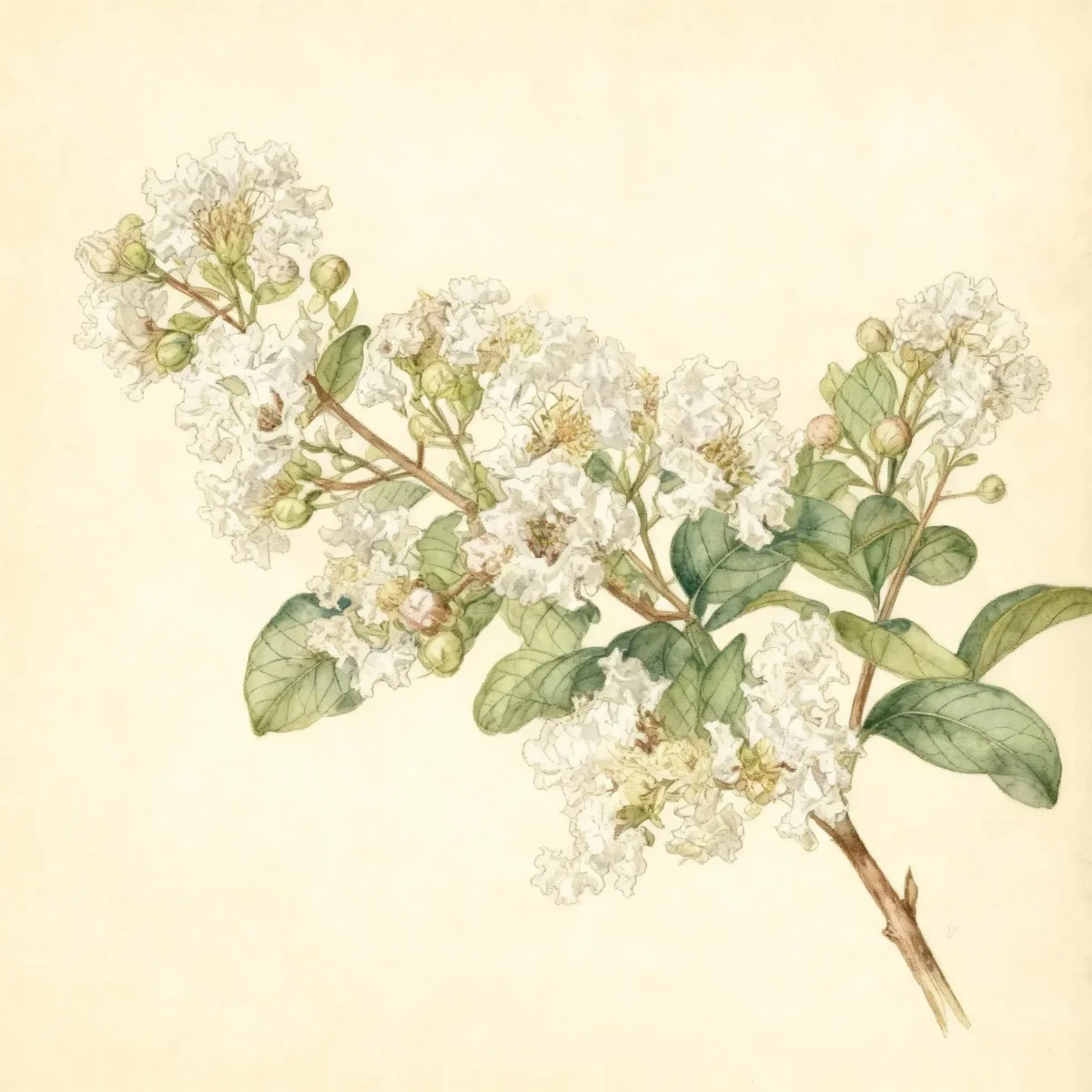
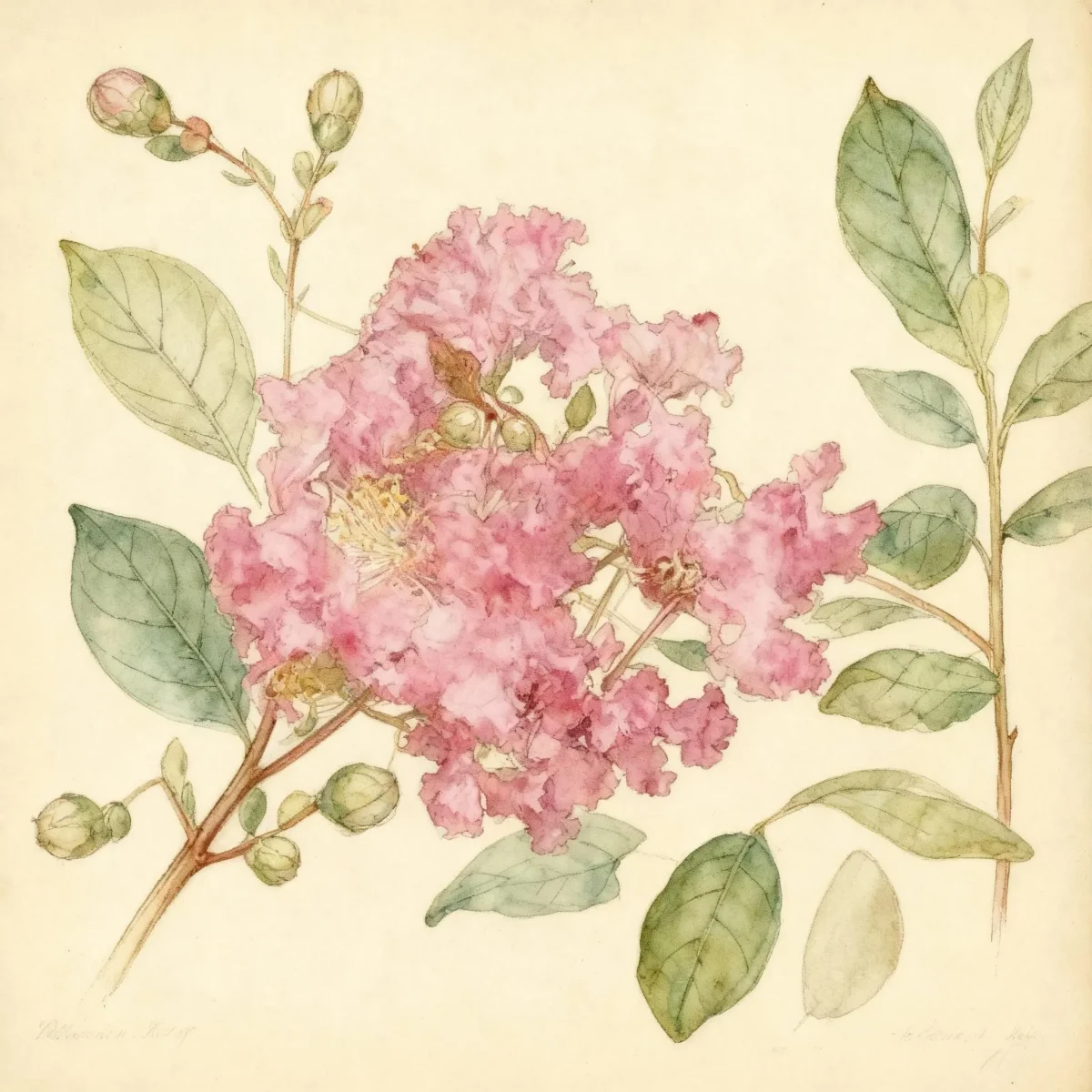
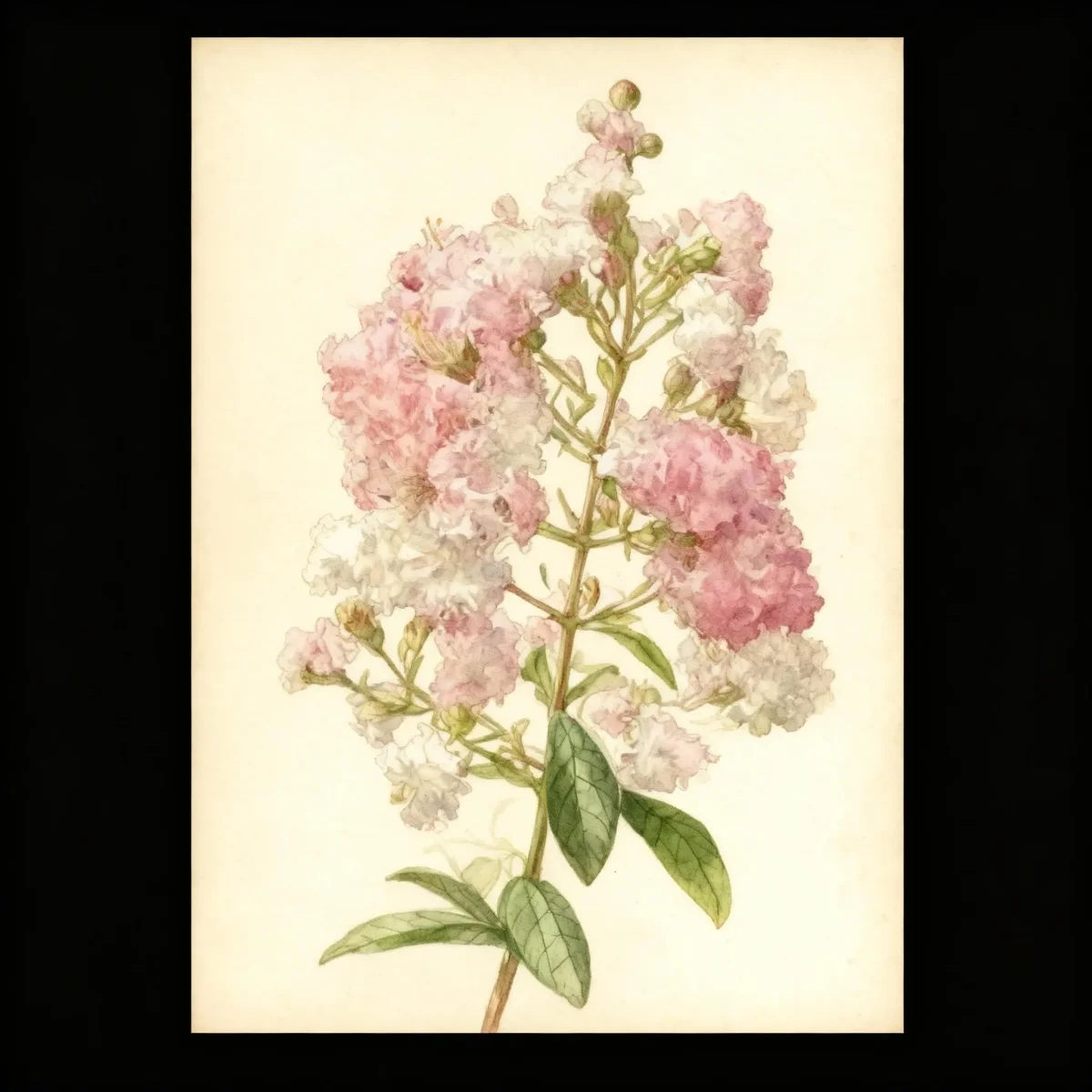
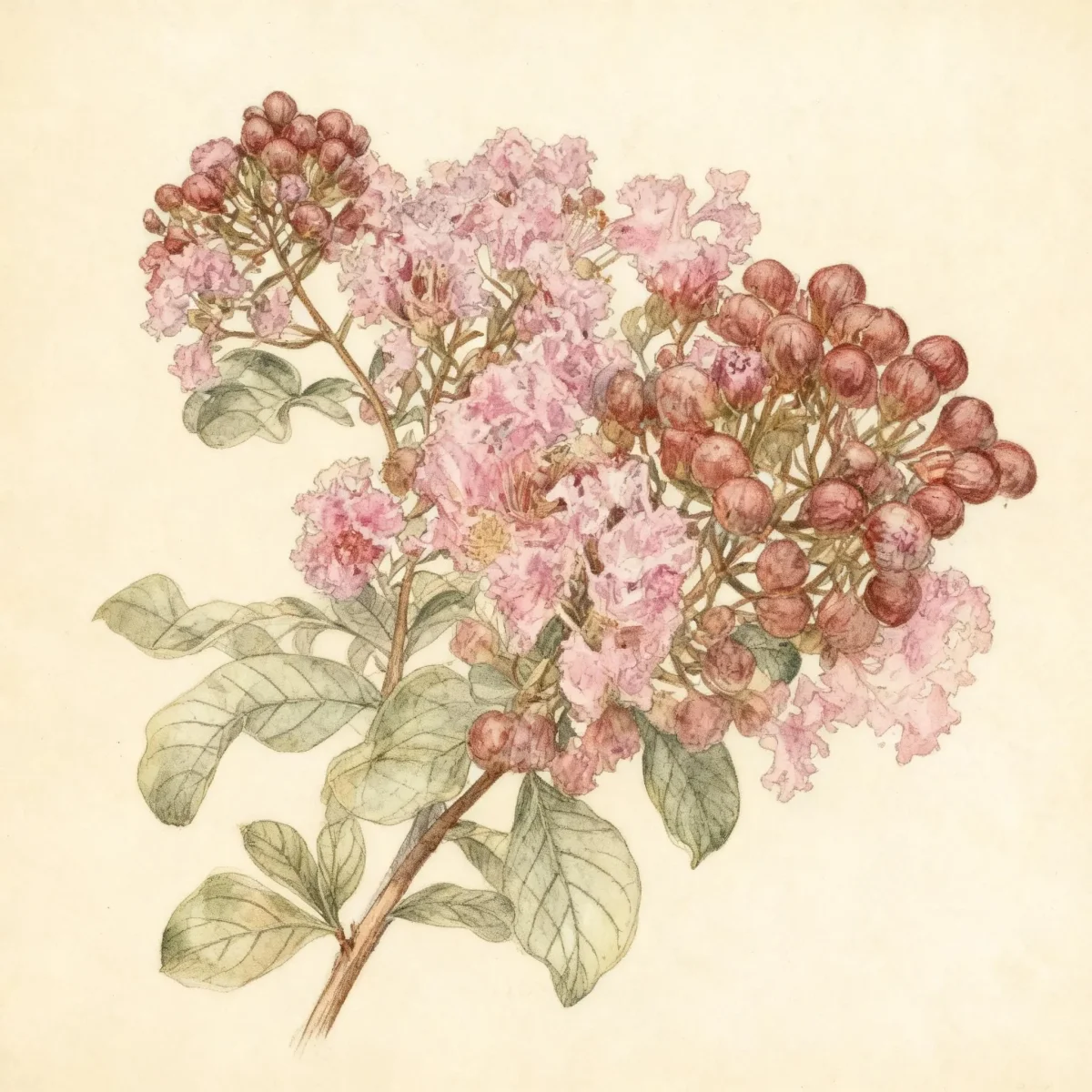
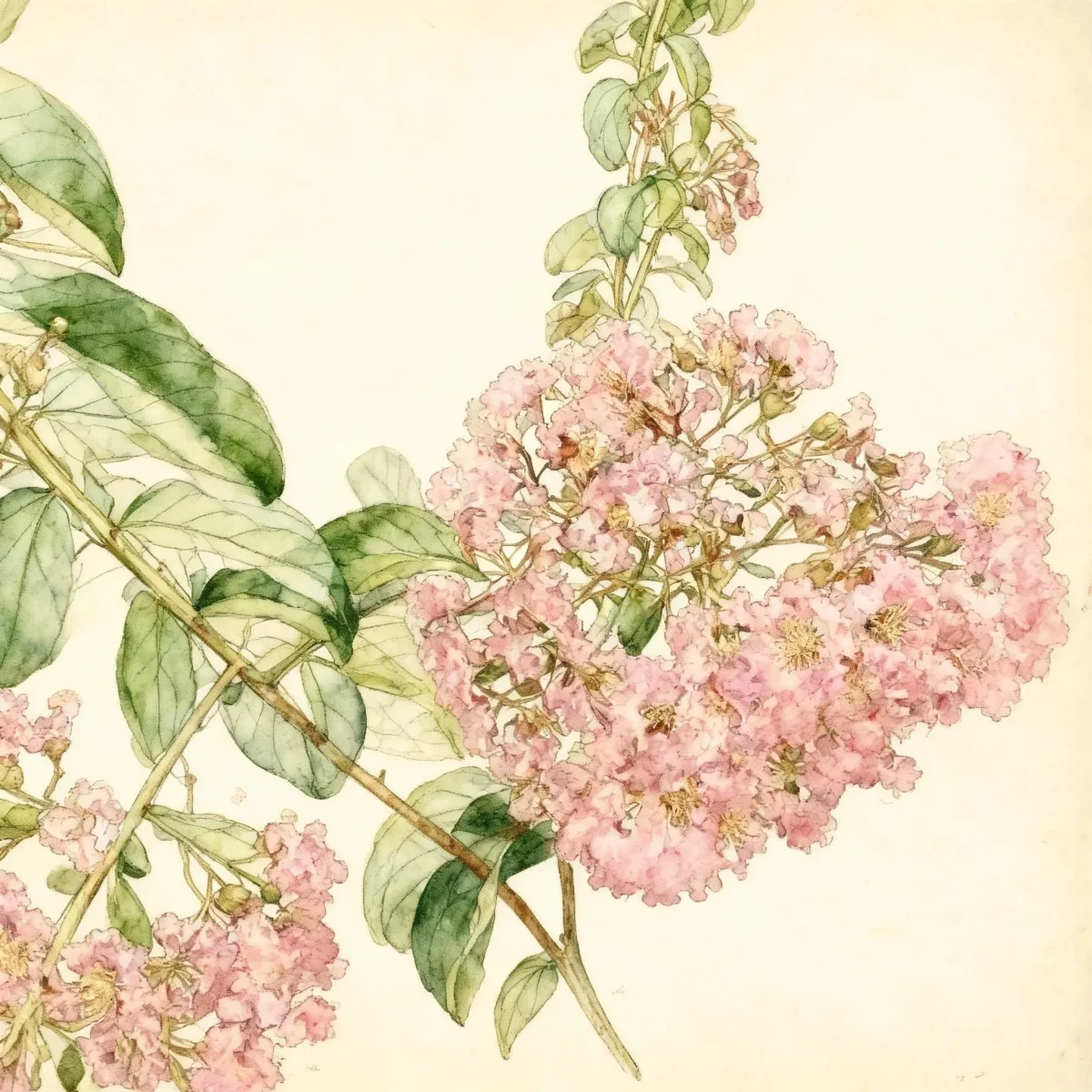
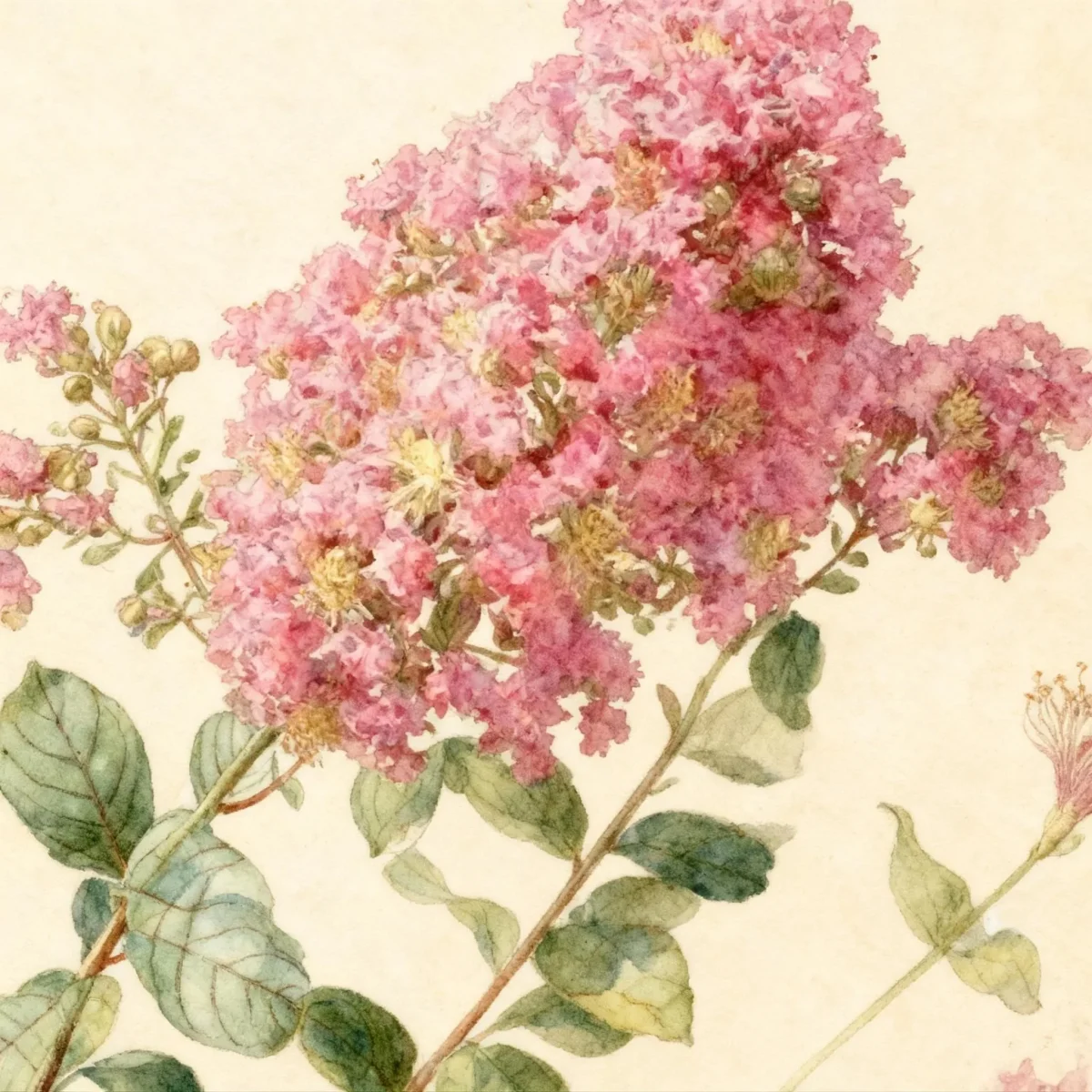
Crape myrtle (Lagerstroemia indica 'Whit VIII' RHAPSODY IN PINK)
Discover Lagerstroemia indica 'Whit VIII' RHAPSODY IN PINK, a stunning Crape myrtle prized for its prolific soft pink summer blooms and medium size.
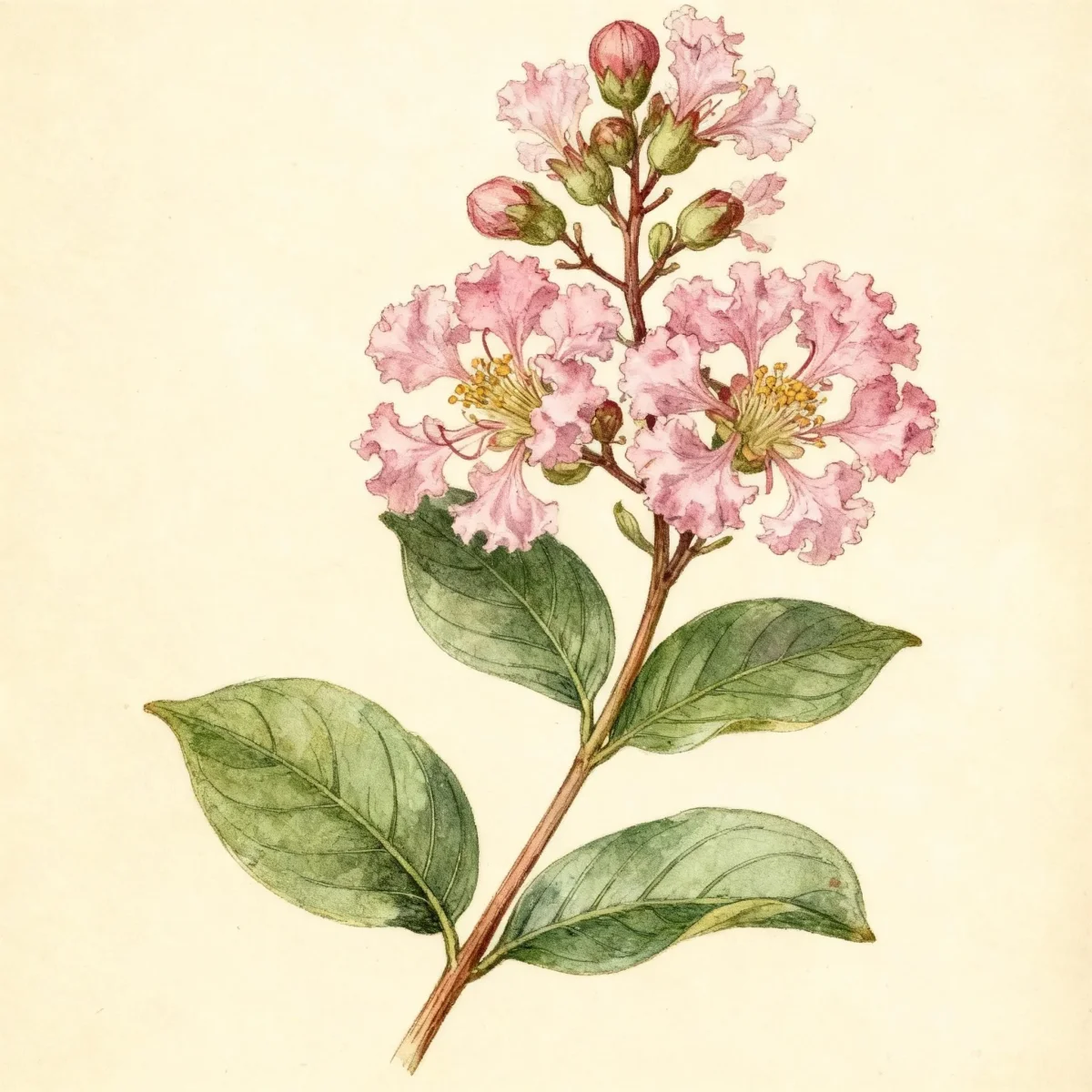

Bloom Boldly, No Matter the Season - Sweatshirt
Cozy organic cotton sweatshirt featuring our exclusive Purple Coneflower design. Perfect for gardeners who bloom year-round.
Inspired by the beautiful Crape myrtle
Limited first batch (50) — join the waitlist for early access
Waitlist closes Feb 15, 2026.
Complete Plant Information
Field Guide Continues
Ready for care notes, companion picks, and planting tips?
The map is just the start. The full guide below covers growth habits, seasonal performance, and landscape uses.
Overview
The Lagerstroemia indica ‘Whit VIII’ RHAPSODY IN PINK, commonly known as Crape myrtle, is a highly desirable choice for gardeners seeking reliable summer color. This specific cultivar stands out due to its upright, multi-stemmed habit and its very long bloom period featuring showy, soft pink flowers, often lasting until frost. It offers significant ornamental value beyond its blooms through exfoliating bark and colorful foliage transitions.
As an adaptable deciduous shrub or small tree, Lagerstroemia indica ‘Whit VIII’ RHAPSODY IN PINK is valued for its long flowering season, which results from its sterile nature and its ability to form new flower buds on old panicles. This reliable reblooming makes it an excellent feature plant where continuous color is desired throughout the warmer months.
While popular across the American South, gardeners in marginal areas will appreciate that this variety is generally hardy to Zone 6 roots, though top growth may require attention during harsh winters. The mature size—typically 6 to 10 feet high—makes the striking Lagerstroemia indica ‘Whit VIII’ RHAPSODY IN PINK manageable in many landscape settings.
Fast Facts
- Plant Family: Lythraceae
- Plant Type: Deciduous shrub
- Hardiness Zones: USDA Zones 6-9
- Size at Maturity:
- Height: 6-10 ft
- Spread: 8-12 ft
- Bloom Time: June to September
- Bloom Description: Soft pink
- Sun Exposure: Full sun
- Water Needs: Medium
- Maintenance Level: Medium
How to Grow
For the best performance, plant Lagerstroemia indica ‘Whit VIII’ RHAPSODY IN PINK in locations receiving full sun. This Crape myrtle thrives best in average, medium moisture, well-drained soils, performing well even in loamy or clay-heavy soils, provided drainage is adequate. Fertilizer is optional; if used, a slow-release type is recommended, as overly fertile soils can promote excess foliage growth at the expense of flowering.
Watering should be deep, especially during dry spells, focusing the moisture around the root zone rather than wetting the overhead foliage. Gardeners should plant these shrubs in protected microclimates when possible and apply a winter mulch for added root insulation, particularly important in Zones 6 and colder.
In areas where temperatures dip below -5°F, expect top growth injury on the Lagerstroemia indica ‘Whit VIII’ RHAPSODY IN PINK. If cane dieback occurs in marginal zones (5-6), prune the affected stems back severely to about 8 inches in early spring. The plant will readily sprout new, flower-producing wood from the roots during the growing season.
Landscape Uses
This Crape myrtle size makes it wonderfully versatile. It serves perfectly as a specimen shrub, drawing the eye with its soft pink summer display and textured bark. Lagerstroemia indica ‘Whit VIII’ RHAPSODY IN PINK is also highly useful when planted in groups or used to create an informal hedge, providing seasonal screening between properties.
In warmer climates (Zones 7-9), where winter dieback is minimal, the plant can achieve greater height, making it effective as a small specimen tree or grouped to form a dense screen. For year-round interest, consider pairing it with evergreen structure plants or those offering brilliant contrasting fall color, as this cultivar’s foliage color can be variable.
Standout Features
Flower Qualities
- Showy
Noteworthy Characteristics
Lagerstroemia indica, commonly known as crape myrtle, is an upright, wide-spreading, multi-stemmed, deciduous shrub or small tree in the loosestrife family. Key ornamental features include a long bloom period, exfoliating bark, and superb fall color. The cultivar ‘Whit VIII’, sold as RHAPSODY IN PINK, is particularly noted for having excellent repeat bloom throughout summer because it is sterile, forming new flower buds on old panicles. This shrub typically matures between 6 to 10 feet tall but can reach 15 feet in warmer regions free from winter injury factors.
Tolerances
- Drought
- Clay Soil
- Air Pollution
Potential Problems
The primary health concerns for Crape myrtles include fungal leaf spot and powdery mildew, though ‘Whit VIII’ reportedly exhibits very good resistance to mildew. In soils with a high pH (alkaline), the foliage of your Crape myrtle may develop yellowing, a condition known as chlorosis. Additionally, watch for sporadic infestations of scale insects or aphids, which can usually be managed with horticultural oils or insecticidal soaps. Winter injury remains the most significant hurdle in the cooler limits of its hardiness range (Zones 5-6), often resulting in top growth death, necessitating yearly cutting back to the ground in early spring.
Frequently Asked Questions
What hardiness zones is Crape myrtle suitable for?
This specific variety, Lagerstroemia indica ‘Whit VIII’ RHAPSODY IN PINK, is suitable for USDA Hardiness Zones 6 through 9.
How large does Lagerstroemia indica ‘Whit VIII’ RHAPSODY IN PINK grow?
This shrub typically reaches a height between 6 and 10 feet and spreads 8 to 12 feet wide at maturity.
What sun exposure does Crape myrtle need?
This plant requires full sun exposure to achieve its best flowering performance and maintain compact growth habit.
When does Lagerstroemia indica ‘Whit VIII’ RHAPSODY IN PINK bloom?
It blooms profusely from June straight through September, displaying beautiful soft pink flowers.
Conclusion
The Lagerstroemia indica ‘Whit VIII’ RHAPSODY IN PINK is an outstanding shrub, delivering season-long bursts of soft pink color and adaptable tolerance to challenging urban conditions like clay soil and pollution. For reliable summer performance, ensure your location provides ample sun exposure. Before planting, confirm that your garden falls within USDA Zones 6-9 to maximize the longevity and flowering potential of this excellent Crape myrtle.
Companion Planting Ideas
Companion planting near your Crape myrtle should focus on species that thrive in similar full-sun, well-drained conditions but offer textural or color contrast. Consider placing lower-growing, fine-textured grasses like Muhly Grass (Muhlenbergia capillaris) nearby to highlight the heavier structure of the Lagerstroemia indica ‘Whit VIII’ RHAPSODY IN PINK. Alternatively, pairing it with late-season bloomers like Coneflower or Black-Eyed Susan provides a succession of flowers after the early summer peak.
Seasonal Care Calendar
Spring preparation focuses heavily on pruning, particularly in colder zones where dieback is expected. In early spring, cut any dead wood back to living tissue or down to 8 inches if the canes died back entirely in Zones 5-6. Summer care revolves around deep watering during dry spells. Avoid overhead watering to help prevent the development of fungal issues. In autumn, focus only on cleanup; avoid heavy fertilization near the end of the season to encourage adequate cold hardening before winter dormancy.