

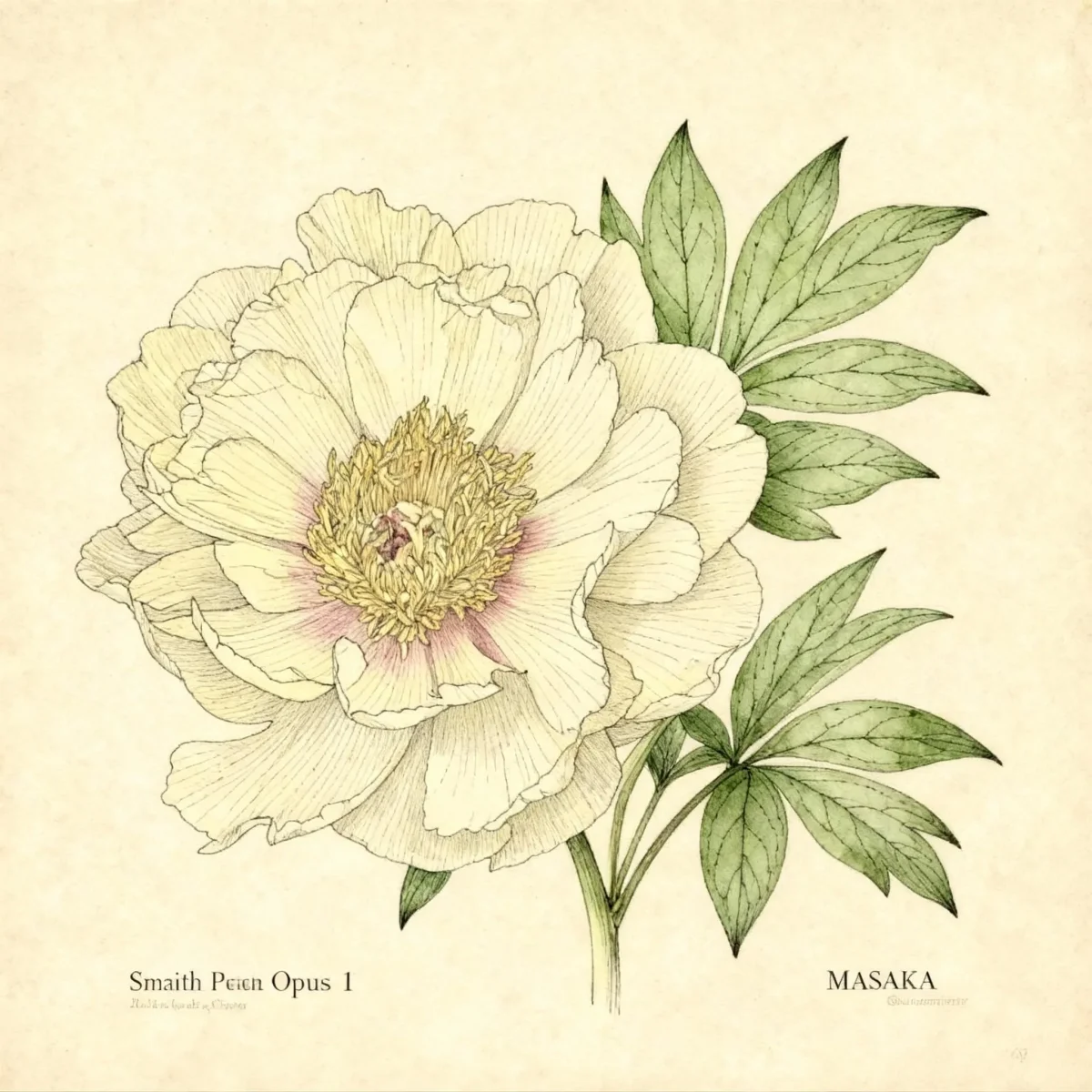
Peony (Paeonia 'Smith Opus 1' MISAKA)
Discover Paeonia 'Smith Opus 1' MISAKA Peony, an Itoh hybrid offering showy, fragrant orange-to-peach flowers in USDA Zones 4-8.

Bloom Boldly, No Matter the Season - Sweatshirt
Cozy organic cotton sweatshirt featuring our exclusive Purple Coneflower design. Perfect for gardeners who bloom year-round.
Inspired by the beautiful Peony
Limited first batch (50) — join the waitlist for early access
Waitlist closes Feb 15, 2026.
Complete Plant Information
Field Guide Continues
Ready for care notes, companion picks, and planting tips?
The map is just the start. The full guide below covers growth habits, seasonal performance, and landscape uses.
Overview
The Paeonia ‘Smith Opus 1’ MISAKA, a striking variety within the Peony genus, is prized by gardeners for combining the best traits of tree and herbaceous peonies. As an Itoh hybrid, it produces exceptionally large, stunning blooms that transition from vibrant orange to soft peach-yellow over a surprisingly long season. This Peony establishes itself as a durable centerpiece in the garden, featuring strong stems that support its heavy flowers, reducing the need for intensive staking common in older varieties.
This herbaceous perennial offers deep green, attractive foliage that remains visually appealing throughout the growing season, even after the spectacular bloom period of May to June concludes. Paeonia ‘Smith Opus 1’ MISAKA generally forms a compact, rounded shrub-like mound, offering dependable color and structure in perennial borders or as a specimen planting. Its resilience and long lifespan ensure that proper initial care results in decades of robust floral display.
Fast Facts
- Plant Family: Paeoniaceae
- Plant Type: Herbaceous perennial
- Hardiness Zones: USDA Zones 4-8
- Size at Maturity:
- Height: 2-2.5 ft
- Spread: 2-2.5 ft
- Bloom Time: May to June
- Bloom Description: Orange fading to peach-yellow
- Sun Exposure: Full sun to part shade
- Water Needs: Medium
- Maintenance Level: Medium
How to Grow
Planting Paeonia ‘Smith Opus 1’ MISAKA is best done in the fall, ensuring roots establish before winter dormancy. Select a location that provides full sun, though light afternoon shade is tolerated, remembering that MISAKA prefers maximal sun exposure for the best bloom set. Ensure the soil is rich, fertile, and possesses excellent drainage; amending the planting hole with compost helps provide necessary nutrients immediately.
Water needs are medium; maintain consistent, even moisture, especially during the first growing season. Established Paeonia plants are relatively drought-tolerant but benefit from deep soakings during dry spells. Fertilizing should be done sparingly, focusing on top-dressing with compost in spring rather than heavy chemical feeds which can sometimes inhibit flowering.
Routine maintenance involves removing spent flowers immediately after they fade to redirect energy back into the plant structure. After the first hard frost in the fall, cut all foliage to the ground and remove the debris from the garden area to minimize disease carryover. This Peony is long-lived and should rarely, if ever, need dividing.
Landscape Uses
Peonies like Paeonia ‘Smith Opus 1’ MISAKA serve as indispensable anchors in the traditional perennial border, providing early summer drama. Their upright, sturdy habit makes them ideal as specimen plants that draw the eye, or when planted in groups to create a low, structured herbaceous hedge along pathways or driveways. The attractive foliage of this Peony holds up well post-bloom, acting as green framework against later-season perennials.
For a classic cottage garden look, pair the vigorous Paeonia ‘Smith Opus 1’ MISAKA with later-blooming perennials like Coneflowers (Echinacea) or ornamental grasses, allowing the later bloomers to fill the gap once the mid-spring Peony finishes. Because the flowers are so showy and large, they also act as excellent vertical accents when necessary. Furthermore, their high quality makes them an excellent cut flower choice, bringing their unique orange tones indoors.
Standout Features
Flower Qualities
- Showy
- Fragrant
- Good Cut
Noteworthy Characteristics
Paeonia is a genus of about 30 species of herbaceous perennials and subshrubs from Europe to Asia and in Western North America. Itoh peonies, sometimes called intersectional peonies, are a hybrid cross between tree peony (P. Lemoinei) and garden peony (P. Lactiflora). Paeonia ‘Smith Opus 1’ MISAKA is an Itoh peony that features very large flowers emerging orange but fading to peach-yellow with dark red central flares atop strong, upright stems.
Tolerances
- Rabbit
- Deer
Potential Problems
Peonies are generally resistant to most pests, but vigilance against fungal issues like Botrytis blight is important, especially in humid conditions. Ensure excellent air circulation around your Paeonia ‘Smith Opus 1’ MISAKA by adhering to proper spacing guidelines. Ants commonly cluster on the sticky buds but are entirely harmless and should be left alone until the buds open.
If your Peony fails to produce flowers, check planting depth first; bulbs planted too deep or too shallow will fail to bloom. Insufficient sunlight is another common culprit, so confirm your location receives adequate sun exposure. Recently moved plants or those still establishing may also skip flowering for a year or two. While Itoh peonies feature stronger stems, very large blooms may still benefit from light staking or support to prevent arching toward the ground during heavy rain.
Frequently Asked Questions
What hardiness zones is Peony suitable for?
This herbaceous perennial is reliably hardy across USDA Zones 4 through 8.
How large does Paeonia ‘Smith Opus 1’ MISAKA grow?
It typically reaches a mature size between 2 to 2.5 feet in height and spreads similarly between 2 to 2.5 feet wide.
What sun exposure does Peony need?
For optimal flowering, Paeonia ‘Smith Opus 1’ MISAKA requires full sun, although it can tolerate light, part-shade conditions.
When does Peony bloom?
This Peony variety lights up the garden from May well into June with unique flowers described as orange fading to peach-yellow.
Conclusion
The Paeonia ‘Smith Opus 1’ MISAKA delivers exceptional value through its robust herbaceous nature and the sophisticated color display of its large, fragrant blossoms. This unique Itoh Peony is an outstanding, low-maintenance addition to any serious garden collection, offering strong structure and phenomenal flower performance. Before planting, confirm your site offers the necessary sun exposure and well-drained soil required to help this stunning Peony thrive for decades to come.
Companion Planting
Choosing good neighbors is key to maximizing the appeal of Paeonia ‘Smith Opus 1’ MISAKA once its blooms fade. Since this Peony is an early-to-mid-season superstar, pair it with later-blooming perennials that share similar needs for rich soil and medium moisture, such as Salvia nemorosa or certain varieties of Nepeta. Planting surrounding perennials with fine textures, like ornamental grasses (e.g., Hakonechloa), helps contrast the Peony’s broad, dark green foliage, ensuring visual interest through late summer.
Avoid planting moisture-loving companion vegetables or annuals immediately adjacent to the crown, as peonies despise consistently wet feet, especially outside their main growing phase. Grouping them with slow-to-emerge bulbs ensures the early foliage rise of the Peony will help mask the dying back of spring bulbs like tulips.
Seasonal Care Calendar
Spring preparation is crucial for this Peony; once new growth emerges, carefully remove any old, matted foliage left from the previous fall clean-up. Apply a balanced, slow-release fertilizer lightly around the drip line before active growth begins, avoiding direct contact with the emerging eyes. Monitor humidity and airflow, applying preventative fungicides if Botrytis blight has been an issue in your garden history.
Summer is dedicated to enjoying the blooms of Paeonia ‘Smith Opus 1’ MISAKA; deadhead faded flowers promptly to encourage better performance and neatness. Monitor water needs, favoring deep, infrequent watering over shallow sprinkling, especially during dry stretches, to encourage deep root development. If staking is required for exceptionally heavy blooms, install supports early in the season before the stems become too developed.
Fall after frost is the cue for the essential clean-up. Cut the entire mass of foliage down to the ground and carry the debris away from the garden. This practice is vital for preventing overwintering fungal spores and keeping your Paeonia healthy for the following season, ensuring next year’s orange-to-peach display is spectacular.


