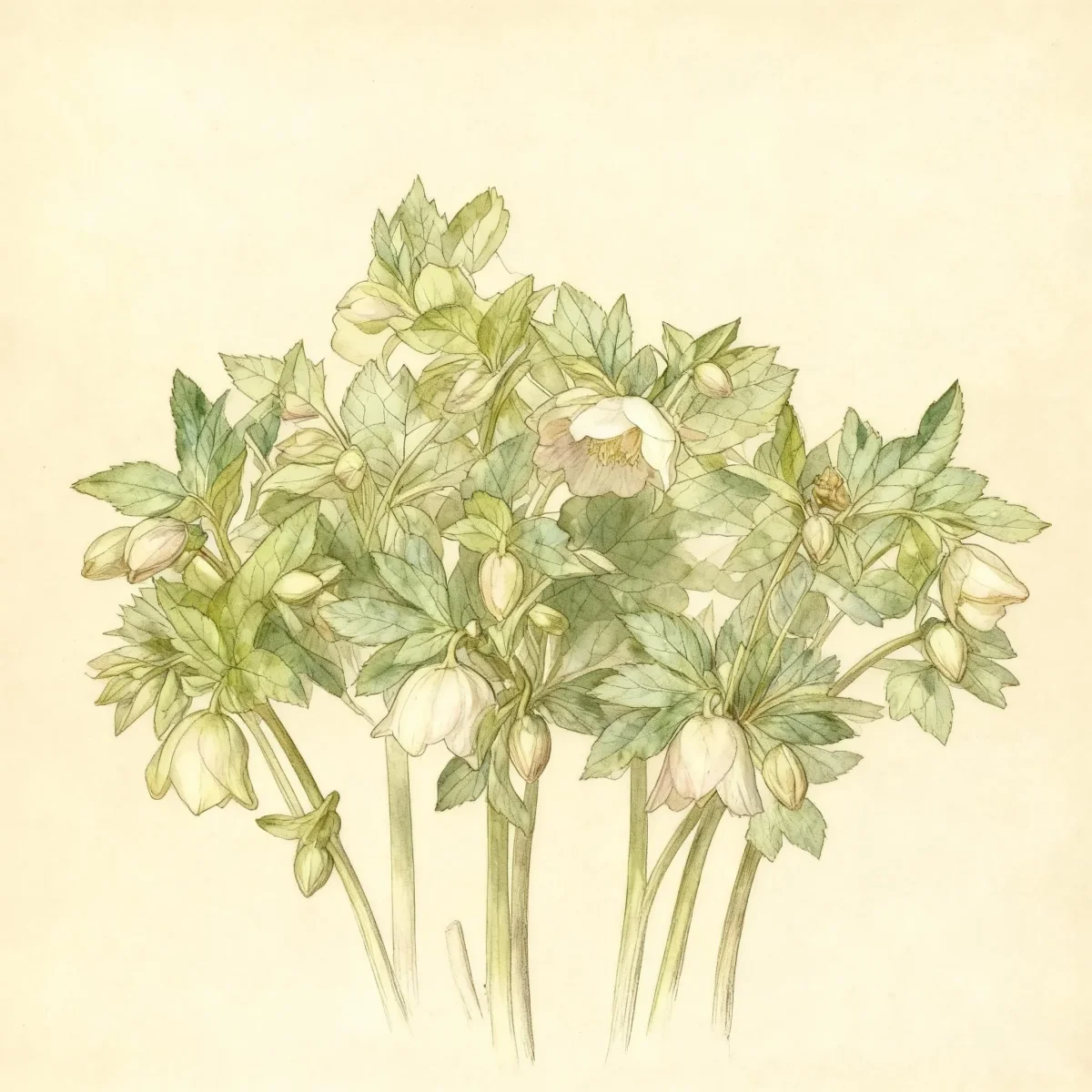
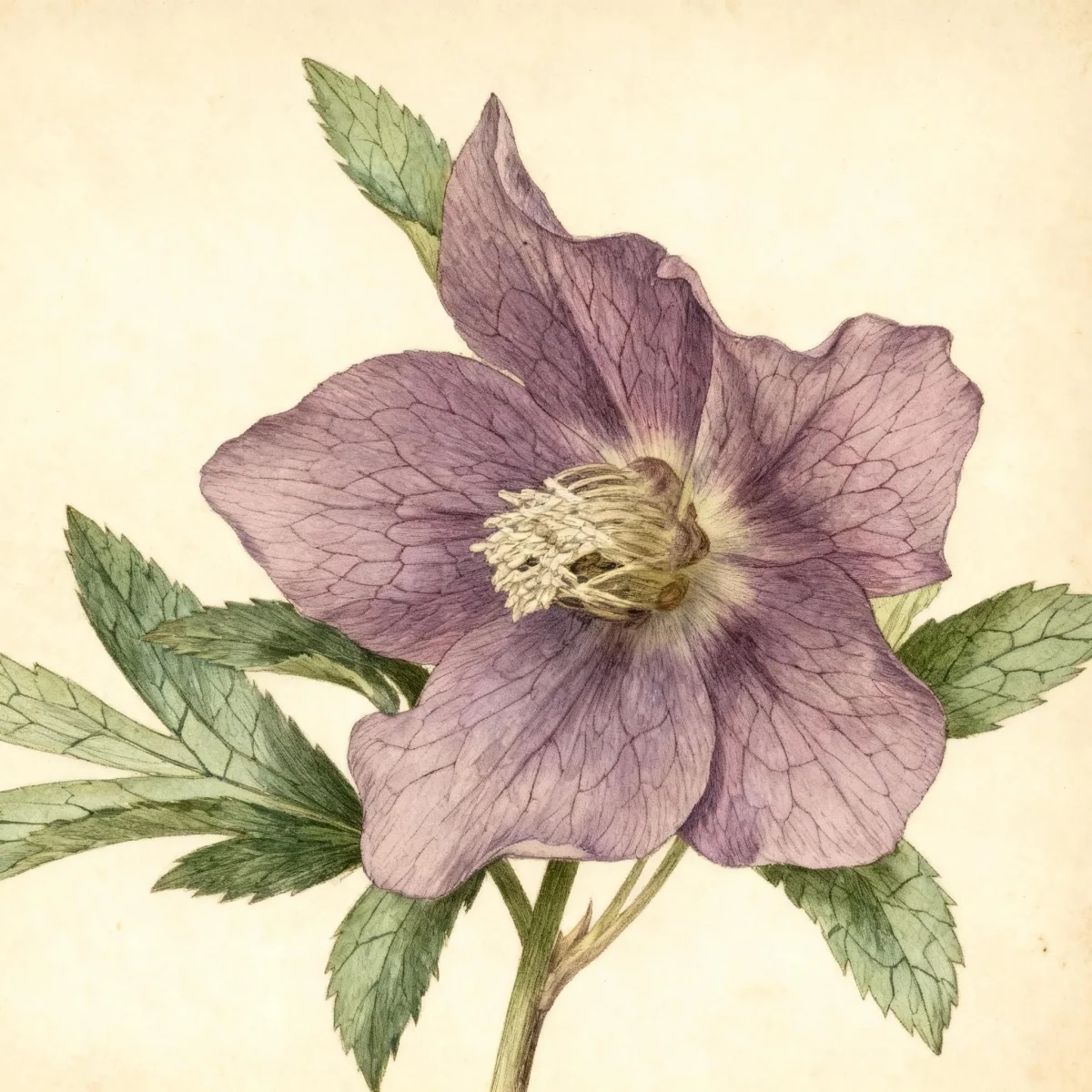
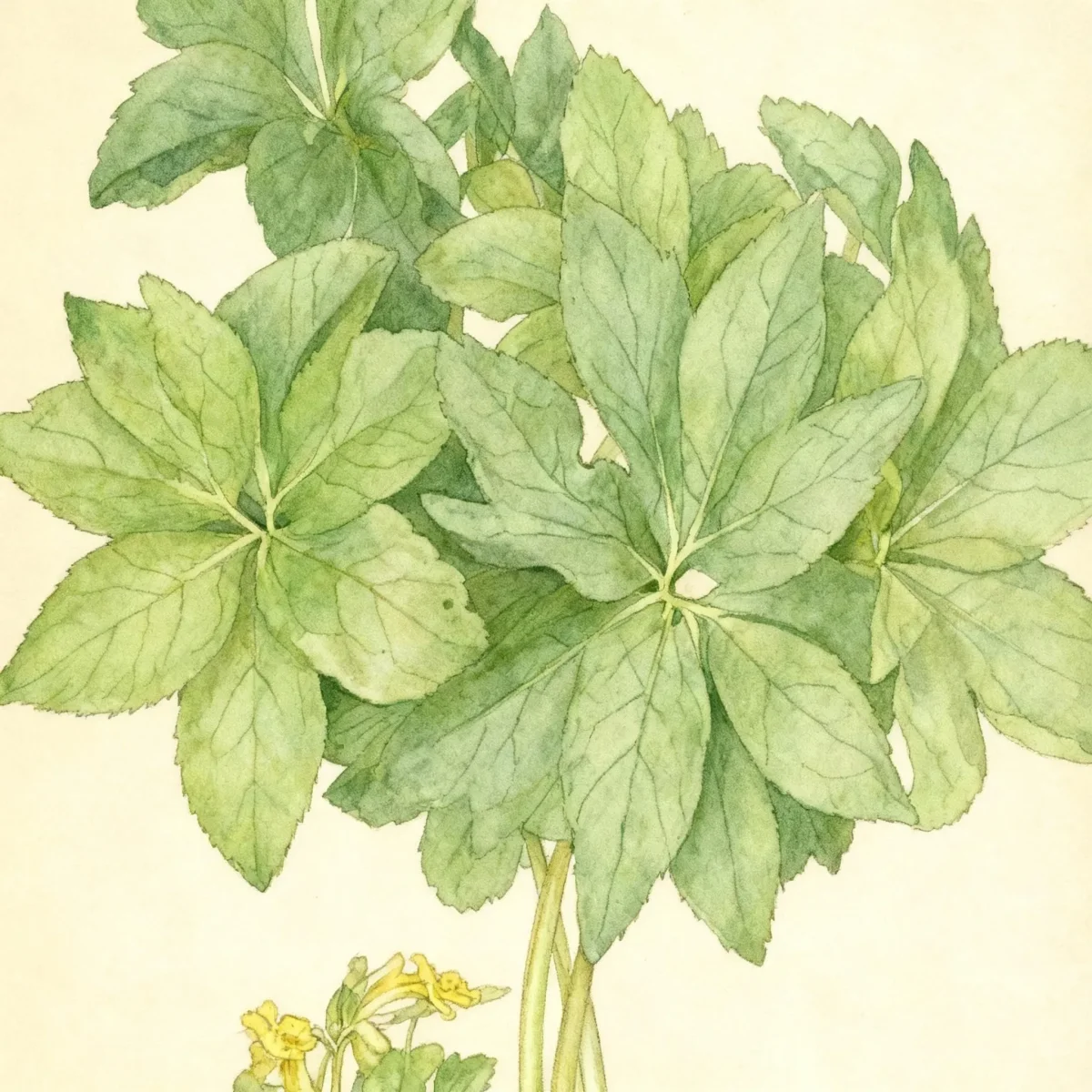
Hellebore (Helleborus 'Mardi Gras Double Mix')
Enjoy the winter-blooming Helleborus 'Mardi Gras Double Mix' Hellebore, featuring vibrant double flowers in zones 5-9.
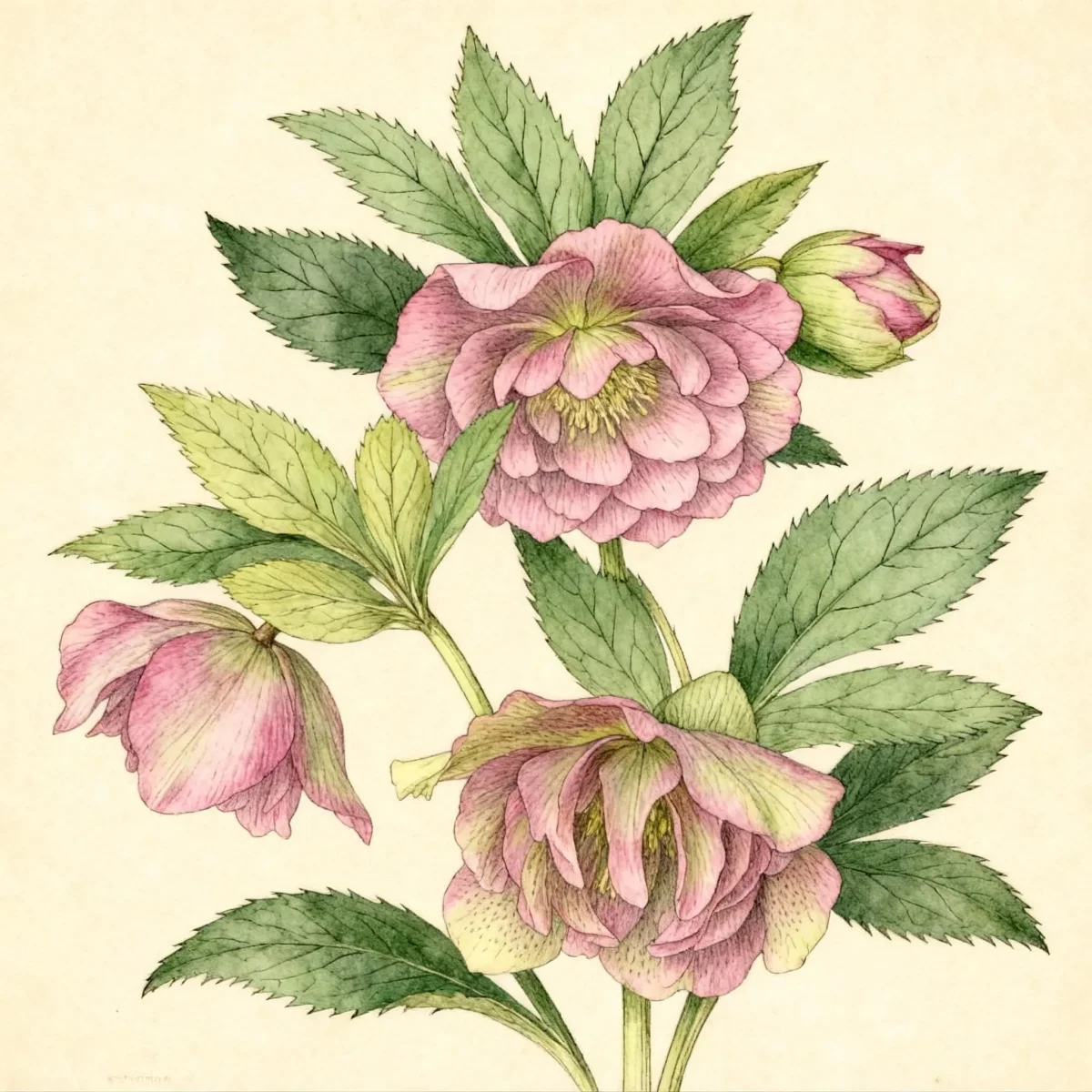

Bloom Boldly, No Matter the Season - Sweatshirt
Cozy organic cotton sweatshirt featuring our exclusive Purple Coneflower design. Perfect for gardeners who bloom year-round.
Inspired by the beautiful Hellebore
Limited first batch (50) — join the waitlist for early access
Waitlist closes Feb 15, 2026.
Complete Plant Information
Field Guide Continues
Ready for care notes, companion picks, and planting tips?
The map is just the start. The full guide below covers growth habits, seasonal performance, and landscape uses.
Overview
The Helleborus ‘Mardi Gras Double Mix’ is a highly prized herbaceous perennial that brings essential color to the late winter and early spring garden landscape. Often referred to simply as Hellebore, this hybrid Lenten rose cultivar is famous for its densely petaled, double flowers appearing when little else is in bloom. Gardeners value the Helleborus ‘Mardi Gras Double Mix’ for its reliably evergreen, glossy foliage and its ability to thrive in deep shade conditions where many other ornamental plants struggle.
This clump-forming perennial offers significant aesthetic impact, showcasing blooms in shades of white, pink, rose, plum, and maroon right through the cold months. As a robust Hellebore, it establishes easily and contributes year-round texture with its sturdy, deep green leaves. The low maintenance requirements further cement its status as a must-have feature for shaded areas.
The Mardi Gras Double Series, specifically the Helleborus ‘Mardi Gras Double Mix’, provides rich jewel tones that truly brighten the transition from winter to spring. Plant these near paths or windows to fully enjoy the earliest bursts of color they deliver to the landscape.
Fast Facts
- Plant Family: Ranunculaceae
- Plant Type: Herbaceous perennial
- Hardiness Zones: USDA Zones 5-9
- Size at Maturity:
- Height: 1-1.5 ft
- Spread: 1-1.5 ft
- Bloom Time: February to April
- Bloom Description: White, pink, rose, plum and maroon
- Sun Exposure: Part shade to full shade
- Water Needs: Medium
- Maintenance Level: Low
How to Grow
The ideal time to establish new Helleborus ‘Mardi Gras Double Mix’ plants is in the fall, allowing the roots to settle before the next bloom cycle. These hellebores naturally thrive in organically rich, fertile, humusy, alkaline, well-drained soils. Achieving the best results requires positioning them where they receive part shade to full shade; they particularly prefer light through moderate shade, protected from the harshest afternoon sun. Water consistently to maintain medium moisture levels, especially while young, ensuring the soil never becomes waterlogged.
Maintenance for established plants is minimal, reflecting their low-maintenance nature. After the vibrant display of bloom concludes, cut back the flowering stems to encourage the emergence of fresh foliage. Although the leaves are evergreen, they can sometimes appear scorched or tattered after extremely harsh winters, especially without snow cover or protection from bitter winter winds.
For plants that become crowded over time, division can be performed in the late summer to early fall. Be aware that while hybrid hellebores can be grown from seed, patience is required, as seedlings typically take two years before they produce their first flowers.
Landscape Uses
Hellebores, especially the versatile Helleborus ‘Mardi Gras Double Mix’, excel as woodland garden plants or massed beneath large deciduous trees and shrubs where summer shade prevails. Their suggestion for naturalizing means you can plant them in large drifts, allowing the clumps to slowly expand and fill in shadowy areas over time, creating an attractive, low-spreading ground cover that lasts all year.
Because their bloom period precedes many spring ephemerals, strategically place these hellebores near high-traffic areas such as patios, walkways, or kitchen windows. This proximity ensures that their early flowers—the true harbingers of spring—can be enjoyed to the fullest. They pair effectively with other shade-loving permanent plants like hostas, ferns, and bleeding hearts, or incorporated into spring bulb displays that emerge shortly after the Helleborus finishes flowering.
Standout Features
Flower Qualities
- Showy
Noteworthy Characteristics
Hybrid hellebores, sometimes commonly called hybrid Lenten roses or hybrid winter roses, are bushy, clump-forming perennials which typically grow to 12-15” tall. They are noted for producing single, cup-shaped flowers (typically 2-3” diameter) with five showy, usually overlapping petals (technically sepals), but sometimes come in a double flowered form. Flowers bloom in a large variety of colors, including various shades and tints of white, pink, red, purple, and yellow, and sometimes have inside spotting. Bloom typically commences in late winter extending into early spring. Flowers appear at the tips of branched stems clad with evergreen dark green leaves which are divided into glossy, leathery, deeply-lobed, often toothed, lanceolate to elliptic segments. The Mardi Gras Double Series is a hybrid seed strain valued for its large double flowers in a variety of colors, blooming reliably from late winter into early spring.
Tolerances
- Deer
- Heavy Shade
Potential Problems
This Hellebore is generally robust, rarely suffering from serious insect or disease problems. Occasional issues may include leaf spot, particularly in overly wet or humid conditions, or crown rot if drainage is poor. Gardeners must remember that all parts of the plant—the leaves, stems, and roots—contain toxins and should not be ingested by humans or pets. A benefit of this toxicity is that deer and rabbits tend to avoid browsing on the foliage. Proper siting in well-drained soil remains the best defense against fungal issues.
Frequently Asked Questions
What hardiness zones is Hellebore suitable for?
Helleborus ‘Mardi Gras Double Mix’ is suitable for USDA Zones 5 through 9.
How large does Hellebore grow?
It typically reaches a mature height and spread between 1 and 1.5 feet.
When does Hellebore bloom?
This Hellebore variety blooms between February and April, showcasing flowers in white, pink, rose, plum and maroon.
What sun exposure does Helleborus ‘Mardi Gras Double Mix’ need?
It prefers part shade to full shade conditions for optimal growth and flower production.
Conclusion
The Helleborus ‘Mardi Gras Double Mix’ stands out as an essential evergreen perennial, delivering vibrant, double-form flowers throughout late winter when the garden needs color most. Its longevity and low-maintenance needs make this Hellebore an invaluable asset for cultivating year-round interest in shady spots. Check your local hardiness zone compatibility and plan to plant in the fall to ensure you enjoy the earliest blooms next season.
Companion Planting
When planning a shaded garden for Helleborus ‘Mardi Gras Double Mix’, select companions that share the need for part to full shade and rich, humusy soil. Classic pairings include early-emerging spring bulbs like snowdrops (Galanthus) or species tulips, which finish blooming just as the Hellebore begins to fade. Low-growing woodland ephemerals that die back by summer, such as Bloodroot (Sanguinaria) or Virginia Bluebells (Mertensia virginica), work well beneath the spreading evergreen canopy of the Hellebore foliage. For textural contrast, consider fine-leaf ferns or shade-tolerant groundcovers like sweet woodruff, ensuring the overall composition remains appealing throughout the growing season.
Propagation Tips
While Helleborus ‘Mardi Gras Double Mix’ is often purchased as nursery stock, propagation can be achieved through division or from seed. Division should be undertaken in the late summer or early fall when the plant is actively growing roots but before winter sets in. Carefully dig up congested clumps and gently separate them into smaller sections, ensuring each division retains a healthy portion of roots and foliage. If growing from seed, remember that hybrid seed strains rarely produce offspring identical to the parent, and success requires patience, as seedlings take approximately two years to flower. For true-to-type plants, division is the recommended practice for these valuable Hellebores.