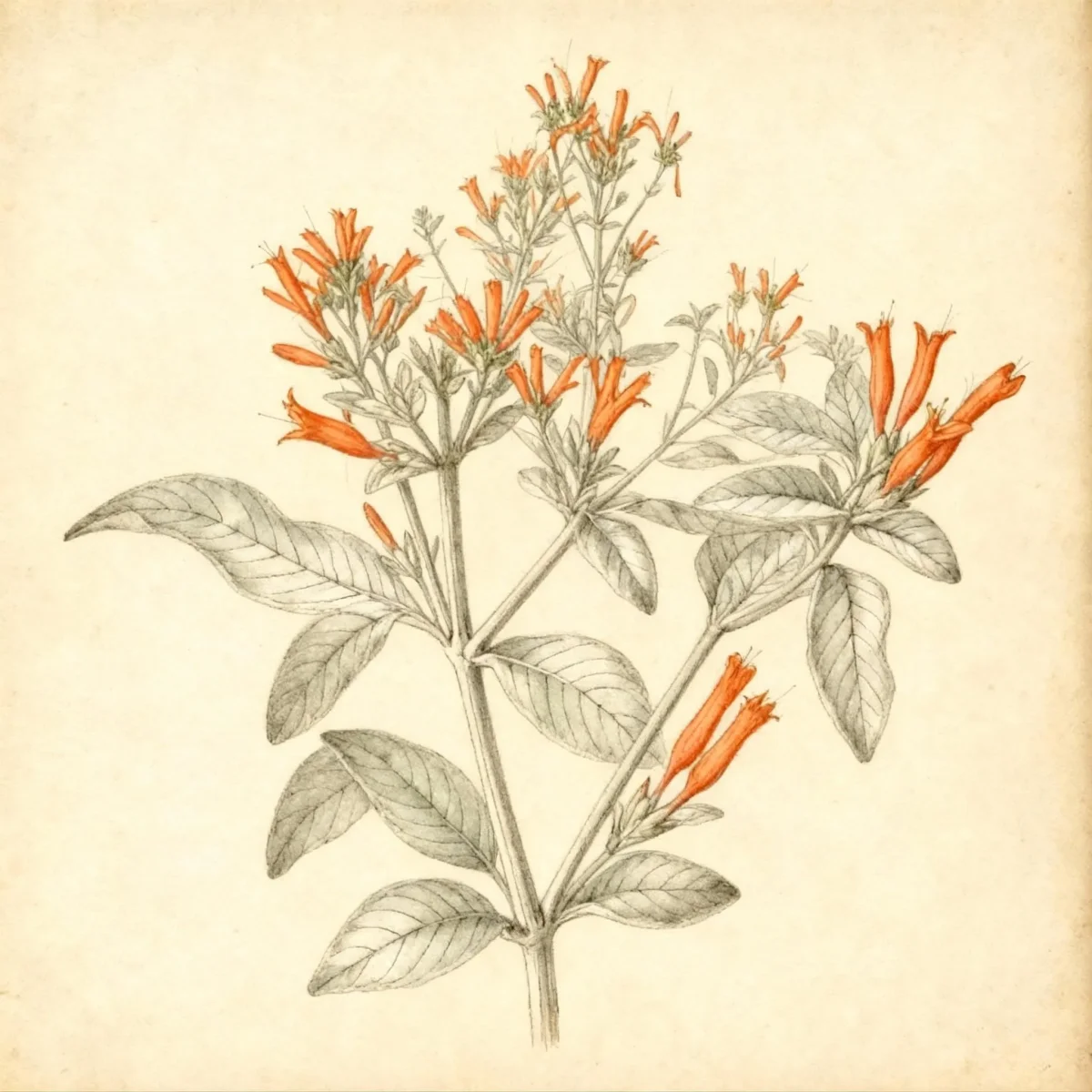
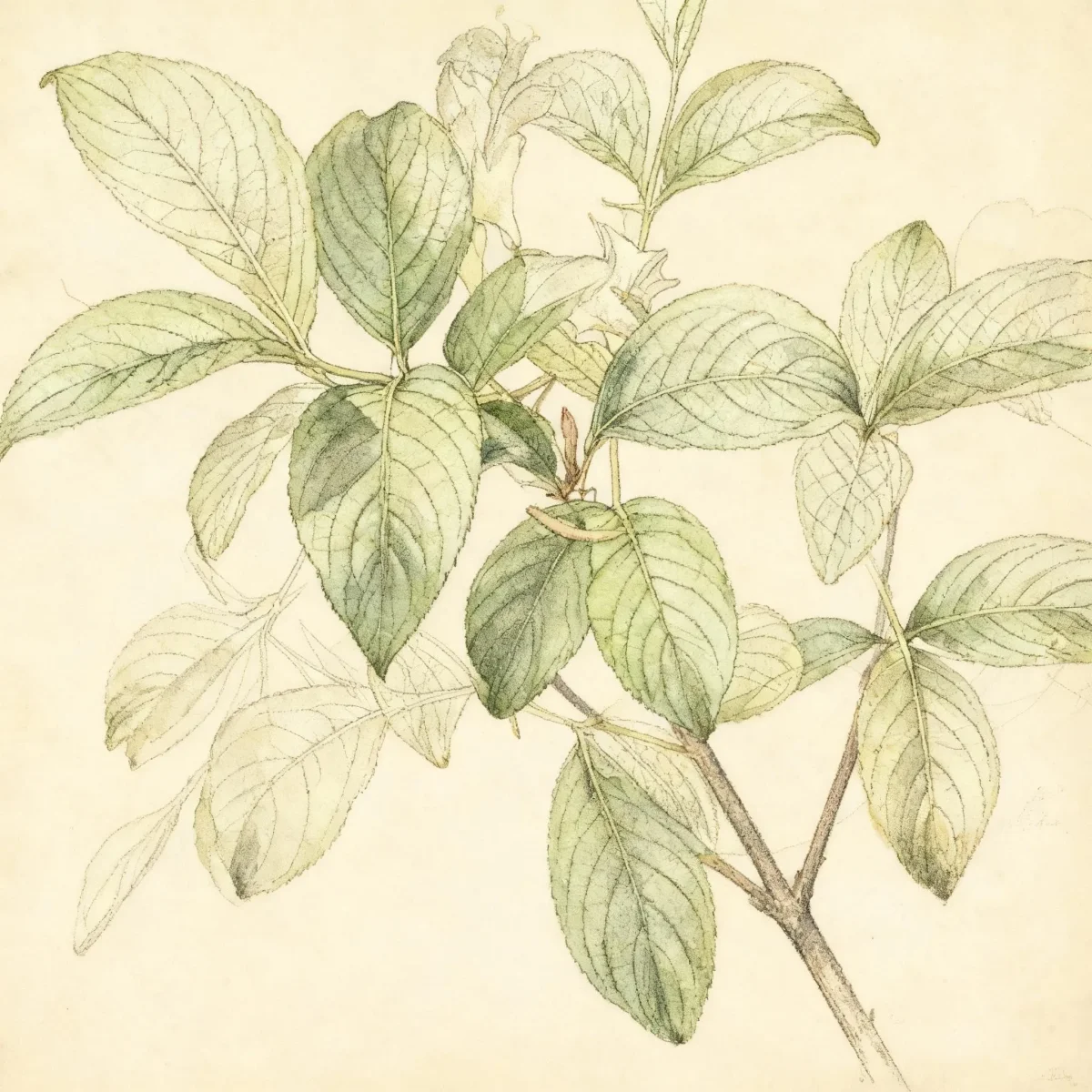
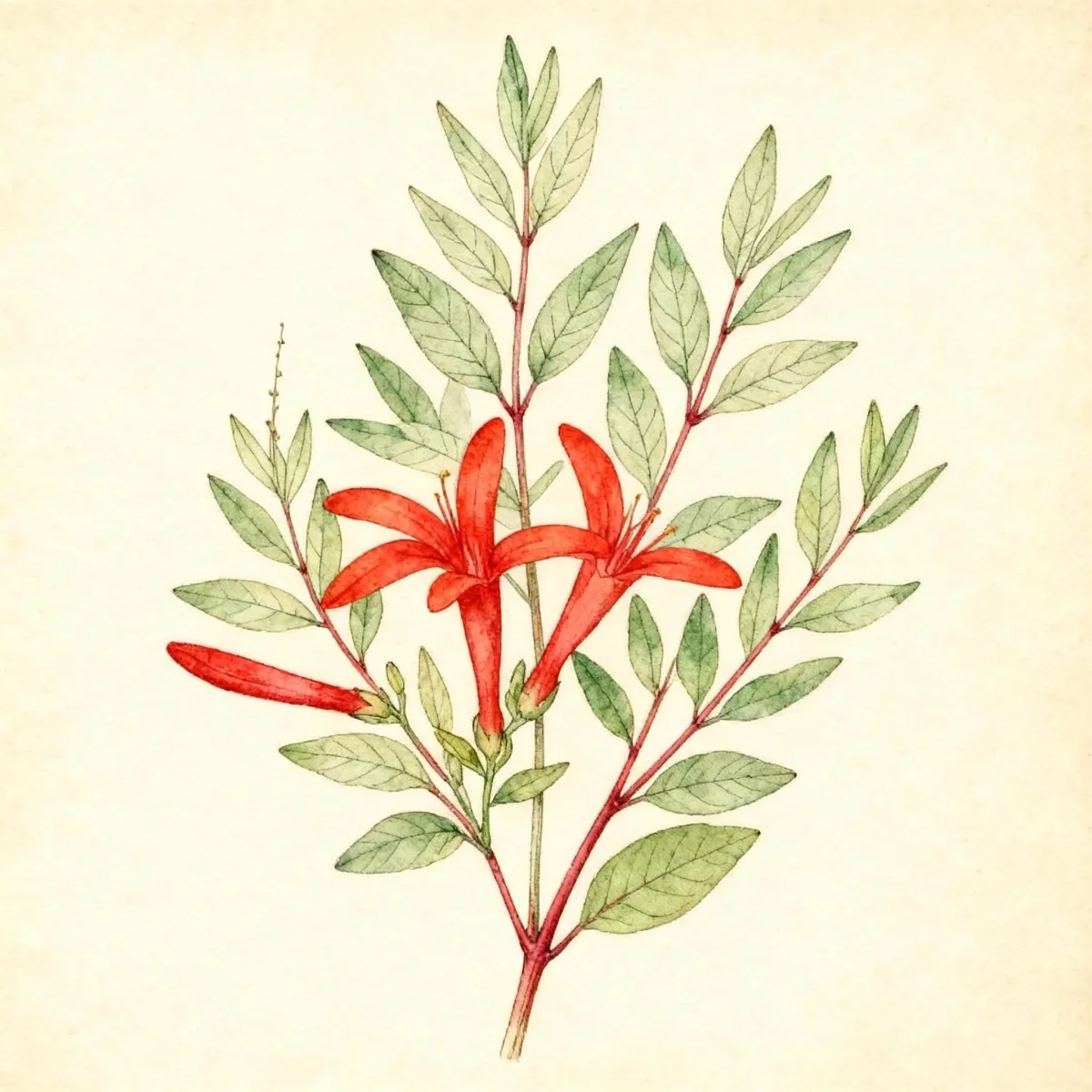
Texas firecracker (Anisacanthus quadrifidus var. Wrightii)
Discover Anisacanthus quadrifidus var. wrightii (Texas firecracker), a low-maintenance, drought-tolerant deciduous shrub blooming June-Sept.

Bloom Boldly, No Matter the Season - Sweatshirt
Cozy organic cotton sweatshirt featuring our exclusive Purple Coneflower design. Perfect for gardeners who bloom year-round.
Inspired by the beautiful Texas firecracker
Limited first batch (50) — join the waitlist for early access
Waitlist closes Feb 15, 2026.
Complete Plant Information
Field Guide Continues
Ready for care notes, companion picks, and planting tips?
The map is just the start. The full guide below covers growth habits, seasonal performance, and landscape uses.
Overview
The Texas firecracker, scientifically known as Anisacanthus quadrifidus var. wrightii, is a standout native shrub prized for its vibrant late-season color and extreme toughness. Its informal, upright habit provides texture and structure even when not in bloom, offering year-round interest in arid and semi-arid gardens. Gardener appeal lies in its remarkably low maintenance requirements combined with its high value to local wildlife.
This deciduous shrub is celebrated for its abundance of bright reddish-orange, tubular flowers that appear from early summer through early fall, making it a critical late-season nectar source. Anisacanthus quadrifidus var. Wrightii thrives in the heat and drought typical of its native Texas and Mexican habitats. It is exceptionally adaptable, tolerating poor soils where many other ornamentals struggle.
For gardeners seeking color, drought resistance, and wildlife support, the Texas firecracker is an excellent choice. It remains relatively untouched by common pests and diseases, focusing your garden energy on placement rather than intensive care. This reliability makes Anisacanthus quadrifidus var. wrightii indispensable in xeriscaping and naturalized plantings across Zones 7 through 10.
Fast Facts
- Plant Family: Acanthaceae
- Plant Type: Deciduous shrub
- Native Range: Texas, Mexico
- Hardiness Zones: USDA Zones 7-10
- Size at Maturity:
- Height: 3-5 ft
- Spread: 3-4 ft
- Bloom Time: June to September
- Bloom Description: Reddish orange
- Sun Exposure: Full sun
- Water Needs: Dry
- Maintenance Level: Low
How to Grow
Anisacanthus quadrifidus var. wrightii establishes best when planted in the spring or fall, allowing it time to settle before experiencing extreme summer heat. Locate this shrub where it receives full sun exposure, which maximizes flowering potential. While highly adaptable, the ideal condition involves medium to dry, well-draining soils, though it performs reliably even in heavy clay or rocky substrates.
Once established, the Texas firecracker lives up to its dry water needs and requires minimal supplemental watering, especially outside of desert landscapes. Occasional summer irrigation may be necessary in very arid conditions to keep the foliage looking its best. Fertilization is rarely needed; this plant prefers lean soils and excessive nutrients can reduce flower production while encouraging weak growth.
Pruning is generally unnecessary for health, making Anisacanthus quadrifidus var. wrightii inherently low maintenance. If shaping is desired, prune lightly in the fall. Every few years, gardeners can cut the plant back more severely, either in late winter or early spring, to refresh its structure. In colder regions (Zone 7), the top growth may die back during hard freezes, but the roots should survive, emerging reliably again in the spring.
Landscape Uses
The versatility of the Texas firecracker allows it to serve many roles within a landscape design. It functions beautifully as an informal hedge, providing a burst of late-season color along property lines or pathways where a formal hedge might be too stiff. Due to its drought tolerance and unique structure, it excels as a specimen plant, drawing attention to key areas of the garden.
This durable shrub integrates seamlessly into mixed borders, providing contrast against evergreen textures. Furthermore, Anisacanthus quadrifidus var. wrightii is an excellent candidate for difficult locations, thriving in rock gardens where drainage is naturally excellent or in xeriscaping designs focused on water conservation. It also performs well in containers, provided the potting mix is fast-draining.
Standout Features
Flower Qualities
- Showy
Noteworthy Characteristics
Anisacanthus quadrifidus var. Wrightii, commonly called Texas firecracker, is an upright, deciduous shrub reaching up to 5’ tall and 4’ wide with an informal, spreading appearance. Native to extreme south-central Texas and adjacent northern Mexico, it thrives on rocky, calcareous slopes. The bright red-orange tubular flowers appear in abundance after summer rains, creating spectacular visual appeal that is highly attractive to hummingbirds and butterflies.
Tolerances
- Deer
- Drought
- Clay Soil
- Shallow-Rocky Soil
Potential Problems
This species is remarkable for its robust constitution, boasting no known major pest or disease issues under normal landscape conditions. Its inherent resistance simplifies care, removing the need for routine preventative chemical treatments. If plants are severely overwatered or placed in heavy, poorly drained soil, root issues may eventually develop, serving as the primary cautionary point for management.
Frequently Asked Questions
What hardiness zones is Texas firecracker suitable for?
The Texas firecracker is reliably hardy in USDA Zones 7 through 10.
How large does Anisacanthus quadrifidus var. wrightii grow?
This shrub typically reaches a mature height between 3 and 5 feet, with a spread ranging from 3 to 4 feet wide.
What sun exposure does Texas firecracker need?
For optimal flowering and health, Anisacanthus quadrifidus var. wrightii requires full sun exposure.
When does Texas firecracker bloom?
This plant blooms profusely from June all the way through September, displaying its characteristic reddish-orange flowers.
Conclusion
The Texas firecracker, Anisacanthus quadrifidus var. wrightii, provides exceptional value through its vibrant, late-season color, extreme drought tolerance, and resistance to pests. This low-maintenance shrub is a cornerstone for sustainable gardening in hot, dry regions. Verify that your USDA zone falls between 7 and 10 and plan your planting during the mild transition seasons to ensure a spectacular first bloom.
Companion Planting
Selecting appropriate companions for the Texas firecracker helps achieve a cohesive, water-wise landscape design. Look for other native Texas and Southwest plants that share its preference for full sun and dry, well-draining soil conditions. Grouping it with drought-tolerant sages (Salvia species), Autumn sage, or various ornamental grasses helps maintain uniform water needs across the planting bed.
Consider pairing the shrub’s mid-height structure with lower-growing groundcovers that can tolerate similar harsh conditions. Purple Skullcap or low-mounding lantana varieties work well beneath the shrub canopy, creating layers of texture and color that extend interest through the season while respecting the dry water profile required by Anisacanthus quadrifidus var. wrightii.
Wildlife Benefits
The tubular, reddish-orange flowers of the Texas firecracker are specifically adapted to attract specific pollinators crucial for local biodiversity. These blooms are a magnet for hummingbirds, who feed on the high-energy nectar during the long bloom period from June to September. This makes the shrub an essential component in any habitat garden intended to support native avian populations.
Beyond hummingbirds, these unique flowers also serve butterflies and other nectar-seeking insects, providing prolonged feeding opportunities when many other spring bloomers have finished. Planting the Texas firecracker ensures your garden contributes significantly to sustaining local wildlife populations throughout the hottest, driest parts of the growing season.