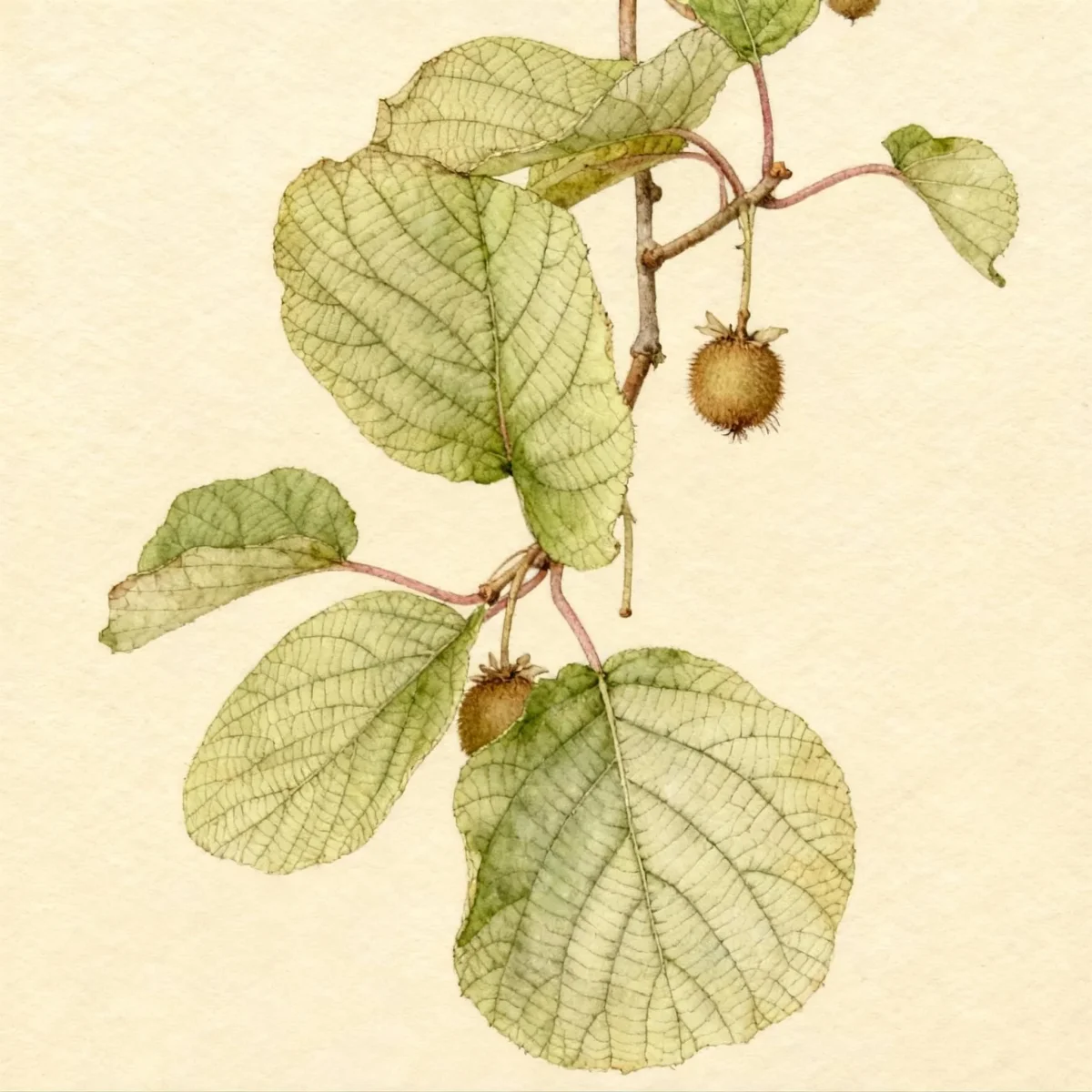
Kiwifruit (Actinidia deliciosa)
Vigorous Kiwifruit (Actinidia deliciosa) is a fast-growing woody vine prized for its fuzzy brown edible fruit and lustrous foliage.

Bloom Boldly, No Matter the Season - Sweatshirt
Cozy organic cotton sweatshirt featuring our exclusive Purple Coneflower design. Perfect for gardeners who bloom year-round.
Inspired by the beautiful Kiwifruit
Limited first batch (50) — join the waitlist for early access
Waitlist closes Feb 15, 2026.
Complete Plant Information
Field Guide Continues
Ready for care notes, companion picks, and planting tips?
The map is just the start. The full guide below covers growth habits, seasonal performance, and landscape uses.
Overview
Actinidia deliciosa, widely recognized as Kiwifruit or Chinese gooseberry, is a vigorous, fast-growing woody vine highly valued both ornamentally and agriculturally. This plant produces lustrous, dark green foliage that provides excellent coverage, making it functional for screening and decoration. Its primary claim to fame is the production of fuzzy brown, edible fruits sought globally for their unique sweet-tart flavor.
Unlike many fruit-bearing vines, securing a substantial harvest of Actinidia deliciosa requires careful attention to its dioecious nature, meaning both male and female plants must be present for successful pollination and fruiting. Gardeners should prepare for its rapid growth, as this robust vine can quickly cover significant structures like trellises or arbors, often reaching 20 to 30 feet tall.
While the flowers are described as slightly fragrant, they are often hidden by the dense leaves, making the Kiwifruit vine more popular for its structure and delicious commodity fruit production than for dramatic floral displays. Proper sun exposure and support structures are non-negotiable for success with this impressive climbing plant.
Fast Facts
- Plant Family: Actinidiaceae
- Plant Type: Fruit
- Native Range: China
- Hardiness Zones: USDA Zones 8-9
- Size at Maturity:
- Height: 15-30 ft
- Spread: 6-10 ft
- Bloom Time: Non-flowering
- Bloom Description: Cream
- Sun Exposure: Full sun
- Water Needs: Medium
- Maintenance Level: Medium
How to Grow
Actinidia deliciosa thrives when planted in average, medium moisture, well-drained soil. For optimal vigor and fruit set, select a location that receives full sun, although this woody vine can tolerate light shade. Planting should occur during the dormant season if possible, ensuring the vine has time to establish before the heat of summer.
Care requires consistency, particularly regarding moisture; maintain medium water needs, ensuring the soil does not dry out completely, especially as the vine matures and sets fruit. Due to its extensive growth habit, Kiwifruit requires frequent pruning to control size, maintain an open canopy for better air circulation, and encourage fruiting on older wood.
A significant cultural consideration is temperature tolerance. This species is only winter hardy down to Zone 8, meaning gardeners in colder climates, such as the St. Louis area, should anticipate failure due to insufficient winter hardiness. Always plan to provide substantial, sturdy support, such as a heavy-duty trellis or arbor, early in its life to manage its aggressive spread.
Landscape Uses
The rapid growth habit of Actinidia deliciosa makes it an exceptional choice for quickly establishing green coverage over architectural elements. It excels when trained over strong trellises, arbors, patio overheads, fences, or walls, providing both shade and visual screening. While grown primarily for edible Kiwifruit, the sheer volume of dense, attractive foliage offers significant aesthetic value throughout the growing season.
Consider using this vigorous vine to soften harsh lines in the landscape or to create dramatic, shaded walkways. Because of its dense canopy, it is less suited for small borders or containers unless severe pruning is strictly enforced. Its ornamental appeal, combined with the functional benefit of seasonal harvest, makes it a dual-purpose planting powerhouse.
Standout Features
Flower Qualities
- Fragrant
- Insignificant
Fruit Qualities
- Edible
Noteworthy Characteristics
Actinidia deliciosa, commonly called kiwifruit, is noted for being a vigorous, fast-growing, woody vine that can rapidly cover structures up to 200 sq. Ft. Cultivars produce fuzzy brown, edible fruits with a complex tartly sweet taste reminiscent of pineapple and melon. Remember that this species is dioecious; successful fruiting strictly requires the presence of both male and female plants for adequate pollination.
Tolerances
(No tolerances specified)
Potential Problems
Generally, Actinidia deliciosa avoids serious disease or insect problems, which is a significant benefit for home growers. Maintaining good air circulation through proper pruning is the best preventative measure against fungal issues promoted by overly dense growth. Monitor for common vine pests if the plant appears stressed, but typically, established Kiwifruit vines are robust producers.
Frequently Asked Questions
What hardiness zones is Kiwifruit suitable for?
Actinidia deliciosa is suitable for USDA Hardiness Zones 8 through 9, as it cannot reliably survive colder winter temperatures.
How large does Kiwifruit grow?
This fast-growing vine typically reaches heights between 15 and 30 feet, with a spread ranging from 6 to 10 feet, requiring substantial support.
What sun exposure does Actinidia deliciosa need?
Actinidia deliciosa requires full sun for the best performance, though it can tolerate light shade.
When does Kiwifruit bloom?
This plant is classified as non-flowering in terms of ornamental display, though it does produce slightly green-white flowers on year-old wood in late spring.
Conclusion
The Kiwifruit vine, Actinidia deliciosa, offers tremendous value through its vigorous screening capabilities and uniquely flavored edible fruit. Gardeners must ensure they site this fast-growing woody vine where it receives full sun and has robust support structures. Before planting, confirm your location falls within USDA Zones 8 or 9 to give your Actinidia deliciosa the best chance for long-term success.
Companion Planting
When incorporating Actinidia deliciosa into your landscape, consider companions that also thrive in full sun and appreciate well-drained soil, while complementing its vertical growth habit. Planting lower-growing, shade-tolerant edibles like shade-tolerant lettuce varieties or herbs around the base can utilize the ground cover provided by the vine’s lower canopy without competing vigorously for sunlight. Avoid planting fine-textured shrubs directly beneath it, as heavy pruning of the vine can continually drop debris onto smaller understory plantings.
Design Ideas
The most impactful design use for this vine is clearly overhead structure creation. Use Kiwifruit to frame pergolas or arbors, turning functional outdoor spaces into shaded retreats featuring edible yields. For privacy screening, train the Actinidia deliciosa along a strong wire fence, leveraging its rapid growth to quickly establish a dense, attractive barrier. To highlight its aesthetic appeal, pair the rich green foliage against lighter-colored masonry for an appealing contrast.