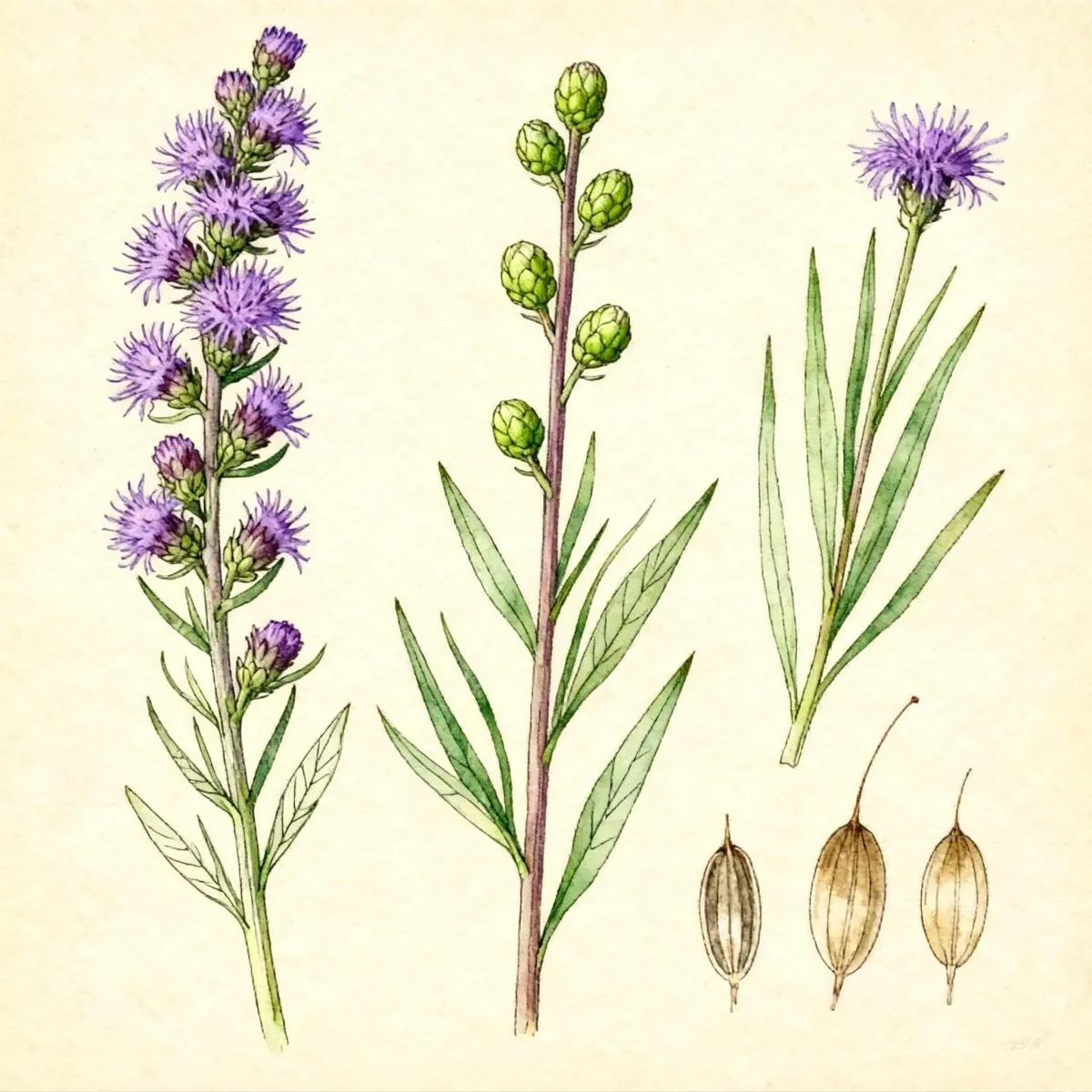
Blazing star (Liatris aspera)
Discover Liatris aspera, the Rough Blazing Star. This showy perennial brings purple spikes to late summer gardens and thrives in dry conditions.

Bloom Boldly, No Matter the Season - Sweatshirt
Cozy organic cotton sweatshirt featuring our exclusive Purple Coneflower design. Perfect for gardeners who bloom year-round.
Inspired by the beautiful Blazing star
Limited first batch (50) — join the waitlist for early access
Waitlist closes Feb 15, 2026.
Complete Plant Information
Field Guide Continues
Ready for care notes, companion picks, and planting tips?
The map is just the start. The full guide below covers growth habits, seasonal performance, and landscape uses.
Overview
The Rough Blazing Star, scientifically known as Liatris aspera, is a standout choice for gardeners seeking late-season color and robust native interest. This upright, clump-forming perennial provides sharp vertical accents, culminating in fluffy, deep rose-purple flower heads that attract essential pollinators. It is especially valued for its resilience once established.
Liatris aspera thrives in challenging locations where many other perennials falter, preferring dry to medium conditions and full sun exposure. Its structure lends itself well to structured garden designs, contrasting nicely with broadleaf plants or softer grasses. Gardeners appreciate this plant for its minimal fuss and significant late summer interest.
As a native plant of Eastern North America, the Blazing star supports local ecology, providing nectar for butterflies and hummingbirds late in the season. Growing this rugged beauty ensures year-round garden structure and reliable, low-maintenance performance across a wide range of USDA hardiness zones.
Fast Facts
- Plant Family: Asteraceae
- Plant Type: Herbaceous perennial
- Native Range: Eastern North America
- Hardiness Zones: USDA Zones 3-8
- Size at Maturity:
- Height: 2-3 ft
- Spread: 1-1.5 ft
- Bloom Time: August to October
- Bloom Description: Purple
- Sun Exposure: Full sun
- Water Needs: Dry to medium
- Maintenance Level: Medium
How to Grow
For optimal establishment, plant Liatris aspera in the spring once the danger of hard frost has passed. Select a location receiving full sun throughout the day. This species is highly adaptable but performs best in average, dry to medium, well-drained soils. Good drainage is crucial, particularly as this plant is intolerant of wet soils in winter.
Maintenance for the Blazing Star is generally straightforward. Water new plantings regularly until roots are established, but established plants are highly drought tolerant. Avoid overhead watering to keep the foliage dry. Fertilization is usually unnecessary, especially if growing in lean, native soil conditions.
Pruning mainly involves cutting back the spent flower stalks in late autumn or early spring before new growth emerges. If you desire self-seeding, leave the seed heads standing through winter, as the resulting seeds attract songbirds. Taller spires of Liatris aspera may occasionally need staking for support in windy sites, though they are generally quite rigid.
Landscape Uses
The vertical structure of Liatris aspera makes it an excellent architectural element in perennial borders, serving as a strong mid-to-back-of-the-border anchor. Its late-season bloom time bridges the gap between mid-summer saturation and autumn color displays. Consider grouping several stems together to maximize the impact of the purple spikes.
This plant works beautifully in native plant gardens or naturalized areas where its preference for dry, poorer soils can be fully utilized without intensive amendment. For cutting gardens, the Liatris aspera is a favorite; its sturdy stalks and simultaneously opening flowers make for spectacular fresh arrangements.
Pair the Blazing Star with plants that contrast in texture or flower form, such as broad-leaved coneflowers (Echinacea) or ornamental grasses, ensuring all companions share the same full sun and well-drained soil requirements. This grouping creates an authentic prairie-like meadow effect that is easy to maintain.
Standout Features
Flower Qualities
- Showy
- Good Cut
Noteworthy Characteristics
Liatris aspera, commonly called rough blazing star, is an upright, clump-forming, Missouri native perennial which typically grows 2-3’ tall (less frequently to 5’) and which commonly occurs in dryish soils on prairies, open woods, glades, meadows and along roads and railroad tracks. Features rounded, fluffy, deep rose-purple flower heads (each 3/4” across) which are crowded into long, terminal flower spikes atop erect, rigid, leafy flower stalks. Stalks arise from basal tufts of rough, very narrow, lance-shaped leaves (to 12” long). Flowers open somewhat at the same time, which makes this species a particularly good fresh cut flower for floral arrangements. Blooms later (late summer to fall) than most other Liatris species.
Tolerances
- Drought
- Dry Soil
- Shallow-Rocky Soil
Potential Problems
Generally, the Blazing Star exhibits no serious insect or disease problems, highlighting its suitability for low-intervention gardening. Its toughness means it rarely suffers from pest infestations or common fungal issues, provided its crucial drainage needs are met. The primary management concern relates to structure, where taller spires may occasionally require staking to prevent leaning or snapping in heavy winds or rain, especially if grown in overly rich soil.
Frequently Asked Questions
What hardiness zones is Blazing star suitable for?
This reliable perennial is suitable for USDA Hardiness Zones 3 through 8, offering excellent cold tolerance.
How large does Liatris aspera grow?
Typically, Liatris aspera reaches a mature height between 2 and 3 feet tall, with a modest spread of 1 to 1.5 feet wide.
When does Blazing star bloom?
This species provides late-season color, blooming reliably from August through October with attractive purple flower spikes.
What sun exposure does Liatris aspera need?
Liatris aspera requires consistent Full sun exposure to develop strong stems and abundant blooms.
Conclusion
The Liatris aspera is an essential addition for native plant enthusiasts and general gardeners alike, offering vertical interest, late-season bloom, and exceptional drought tolerance. By incorporating the Blazing star into your landscape, you ensure robust perennial color with minimal supplemental watering. Check your local zone compatibility now and plan your planting for the next available season to enjoy this rugged beauty.
Wildlife Benefits
The late flowering period of the Rough Blazing Star is critically important for late-season insect populations. The fluffy, nectar-rich flower heads of Liatris aspera are major attractants for butterflies migrating or stocking up before winter, as well as hummingbirds seeking a final burst of fuel.
Planting this perennial directly supports local biodiversity, making it a cornerstone of pollinator gardens. Furthermore, once the flowers fade, the resulting small seeds are a valuable food source for various songbirds throughout the fall and early winter months.
To maximize wildlife support, avoid deadheading Liatris aspera immediately after bloom; allow the seed heads to stand. This provides both aesthetic winter interest and essential winter sustenance for garden visitors.
Companion Planting
When planning beds around your Liatris aspera, focus on partners that share its love for hot, dry conditions and full sun. Excellent companions include species adapted to prairie environments, such as various Rudbeckia (Coneflowers), Achillea (Yarrow), and drought-tolerant ornamental grasses like Little Bluestem.
These companions offer contrasting textures and bloom times, ensuring continuous interest while keeping cultural needs aligned. Specifically, pairing the upright purple spikes of the Blazing star with the wider, often yellow blooms of Coreopsis or Echinacea creates a vibrant, maintenance-free tapestry.
Since Liatris aspera dislikes rich, moist soil, avoid planting it directly alongside moisture-loving plants like Hostas or Astilbes. Keeping cultural requirements consistent ensures that none of the plants suffer from either over-watering or nutrient imbalance.