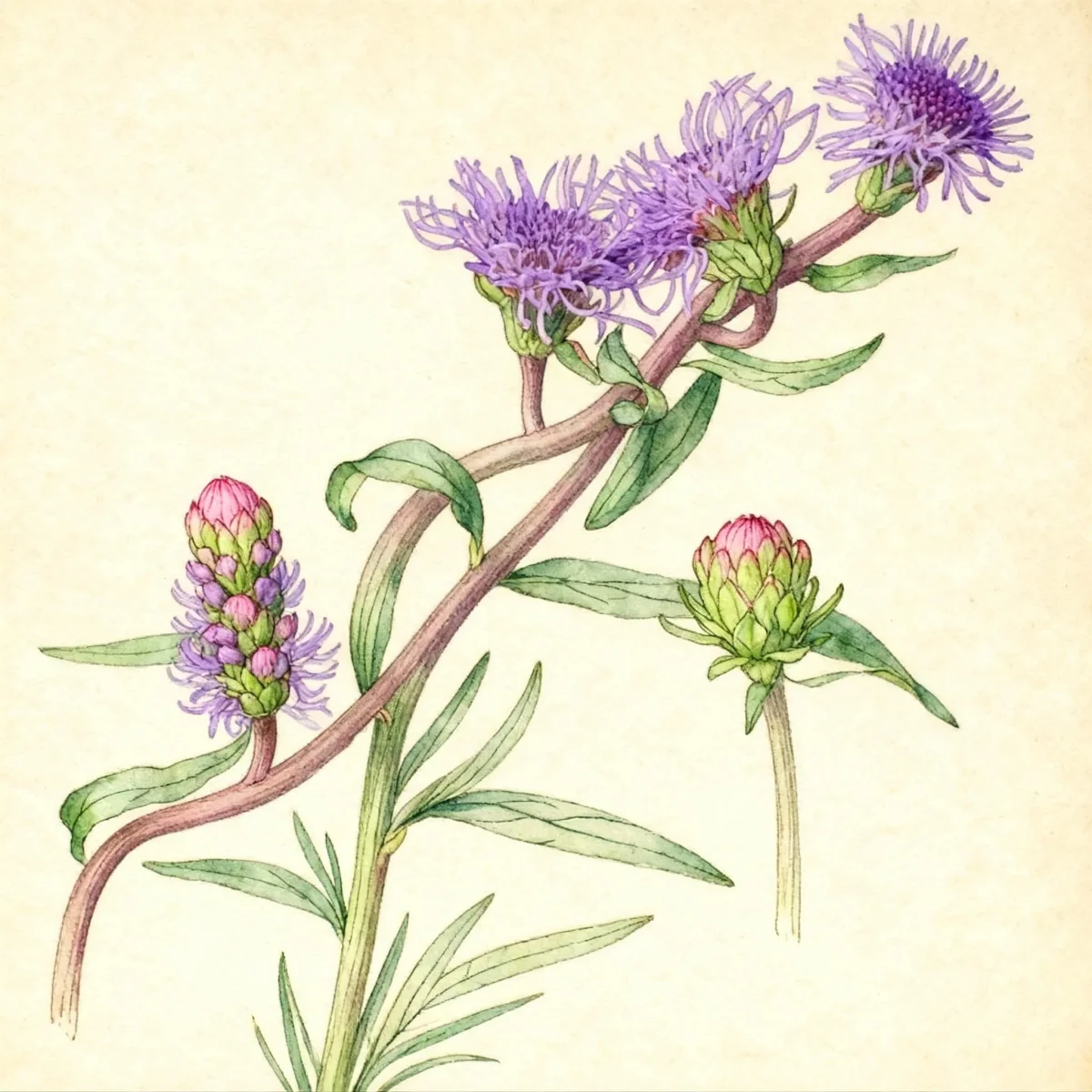
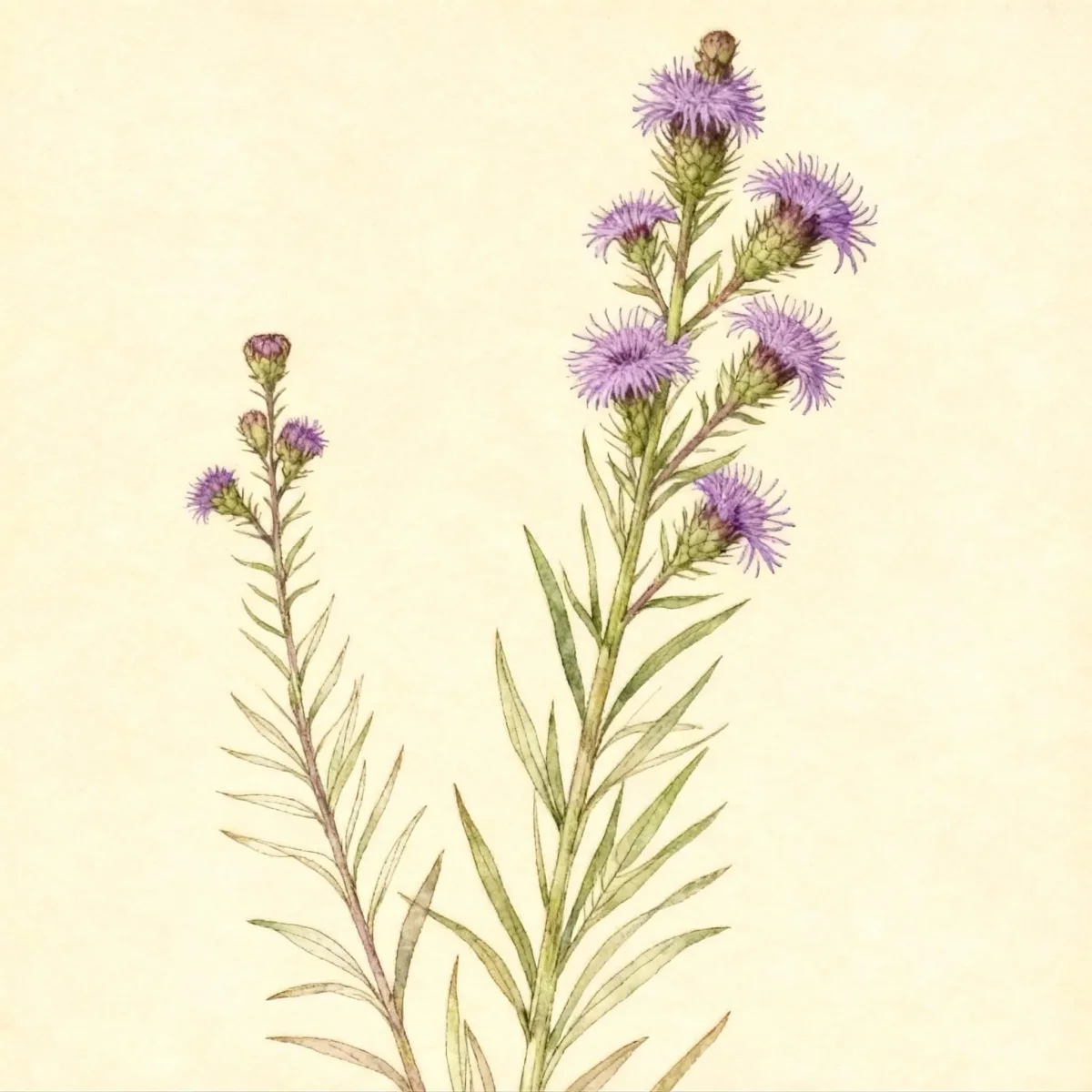
Blazing star (Liatris scariosa)
Liatris scariosa, the Blazing star, is a stunning low-maintenance perennial offering distinctive reddish-purple bloom late summer through fall.

Bloom Boldly, No Matter the Season - Sweatshirt
Cozy organic cotton sweatshirt featuring our exclusive Purple Coneflower design. Perfect for gardeners who bloom year-round.
Inspired by the beautiful Blazing star
Limited first batch (50) — join the waitlist for early access
Waitlist closes Feb 15, 2026.
Complete Plant Information
Field Guide Continues
Ready for care notes, companion picks, and planting tips?
The map is just the start. The full guide below covers growth habits, seasonal performance, and landscape uses.
Overview
Liatris scariosa, popularly known as Blazing star, is a highly valued herbaceous perennial prized for its striking vertical habit and reliable late-season color. This plant features unique, thistle-like, reddish-purple flower heads that open sequentially from the top down along the columnar stems, providing extended visual interest well into autumn. As a native component of Eastern and Central US ecosystems, Liatris scariosa thrives in conditions where many other garden specimens struggle.
This Blazing star is exceptionally easy to integrate into native landscape designs due to its low maintenance profile and tolerance for poorer soil conditions. Its upright structure makes it an excellent structural element, providing essential vertical accent when many summer blooms begin to fade. Furthermore, the nectar-rich plumes of Liatris scariosa are magnets for critical pollinators, including butterflies and hummingbirds, boosting garden biodiversity.
Gardeners looking for reliable performance in sunny, drier areas will find Liatris scariosa to be an indispensable choice. It naturally colonizes well across prairies and meadows, establishing itself over several years to create a stunning tapestry of late-summer flowers. Focus on providing full sun and excellent drainage to ensure this perennial remains robust year after year.
Fast Facts
- Plant Family: Asteraceae
- Plant Type: Herbaceous perennial
- Native Range: Central and eastern United States
- Hardiness Zones: USDA Zones 3-8
- Size at Maturity:
- Height: 2-4 ft
- Spread: 1-2 ft
- Bloom Time: August to October
- Bloom Description: Reddish purple
- Sun Exposure: Full sun
- Water Needs: Dry to medium
- Maintenance Level: Low
How to Grow
Establish Liatris scariosa by planting in spring or early fall, ensuring the location receives uncompromising full sun exposure throughout the day. The most crucial factor for success is ensuring excellent drainage; this plant absolutely cannot tolerate wet winter soils, which often leads to rot. Average soils are fine, but it performs exceptionally well, and sometimes better, in drier, sandy, or rocky substrates common to its native habitat.
Water sparingly once established. While dry conditions are tolerated, supplemental deep watering may be necessary during periods of severe summer drought until the root system is fully developed. Fertilization is generally unnecessary; providing rich, fertile loams can actually backfire by causing the stems to grow excessively tall, potentially requiring staking for support.
Maintenance for this perennial is minimal. There is no required deadheading, as the flowers bloom in a distinct top-down procession, and the spent stems add winter structure. Allow plants to self-seed in open areas to expand your community of Blazing star, though establishment from seed takes several seasons. Keep heavy mulch away from the crown, especially during winter, allowing the soil to breathe.
Landscape Uses
The upright form of Liatris scariosa makes it a perfect source of vertical accent in perennial borders, drawing the eye upward through the landscape. Because it handles dry conditions well, it is ideal for use in mixed borders, cottage gardens, and expansive prairie or meadow plantings where consistent moisture cannot always be guaranteed. This Blazing star integrates beautifully alongside shorter asters or coneflowers that share similar sun and soil preferences.
For naturalized areas, group clumps of Liatris scariosa together to create sweeping drifts of color during late summer and fall. This naturalistic approach enhances its visual impact and supports local ecology. Avoid planting in consistently wet depressions, as this specific species requires sharper drainage than some of its bog-loving relatives.
Standout Features
Flower Qualities
- Showy
- Good Cut
Noteworthy Characteristics
Liatris scariosa, commonly called blazing star, is an upright, clump-forming perennial that typically grows to 2-4’ tall in the wild. It is native from Maine to Wisconsin south to Mississippi and Georgia. Fluffy, thistle-like, reddish-purple flower heads (to 1” across) bloom in late summer to early fall on terminal columnar inflorescences (to 18” long) atop erect, leafy flower stems. The feathery flower heads of liatris give rise to another common name of gayfeather.
Tolerances
- Drought
- Erosion
- Dry Soil
- Shallow-Rocky Soil
Potential Problems
This plant is noted for having no serious insect or disease problems when sited correctly. The key management concern is cultural: avoiding overly wet winter soil conditions is paramount to preventing root rot. If growth appears weak or stems flop, it is usually a sign that the plant is receiving too much fertility in the soil, or perhaps insufficient sunlight.
Frequently Asked Questions
What hardiness zones is Blazing star suitable for?
Liatris scariosa is quite resilient, suitable for planting across USDA Zones 3 through 8.
How large does Liatris scariosa grow?
This Blazing star typically achieves a height between 2 and 4 feet, with a spread of 1 to 2 feet, maintaining a distinctly upright clumping habit.
When does Blazing star bloom?
You can expect the distinctive reddish-purple flower spikes of Liatris scariosa to appear from August through October.
What sun exposure does Liatris scariosa need?
This plant demands full sun for optimal flowering and robust health, easily tolerating intense summer heat and humidity.
Conclusion
The Liatris scariosa offers gardeners a reliable, stunning vertical accent that peaks when many other perennials begin to decline, making it a crucial component for late-season interest. Its low maintenance needs and distinct tolerance for dry, poor soil ensure that this Blazing star remains a steadfast performer. Before planting, confirm that your chosen site provides full sun and sharp drainage to maximize the beauty of this wonderful native perennial.
Wildlife Benefits
The fluffy disks of Liatris scariosa are vital late-season nectar sources that sustain numerous beneficial insects, butterflies, and especially hummingbirds. Planting this upright native ensures that your garden remains active during the late summer and early fall migration periods for many winged visitors. Songbirds also readily consume the small seeds produced after the flowers fade if the stems are left standing through winter.
Companion Planting
Due to its strong preference for dry to mesic conditions and its full-sun requirement, Liatris scariosa pairs well with other sun-loving, drought-tolerant natives. Consider planting alongside plants like Rudbeckia (Black-eyed Susan), various Sedums, or native ornamental grasses like Little Bluestem. These companions share similar root aeration needs, ensuring uniform growth across your sunny border or meadow setting.