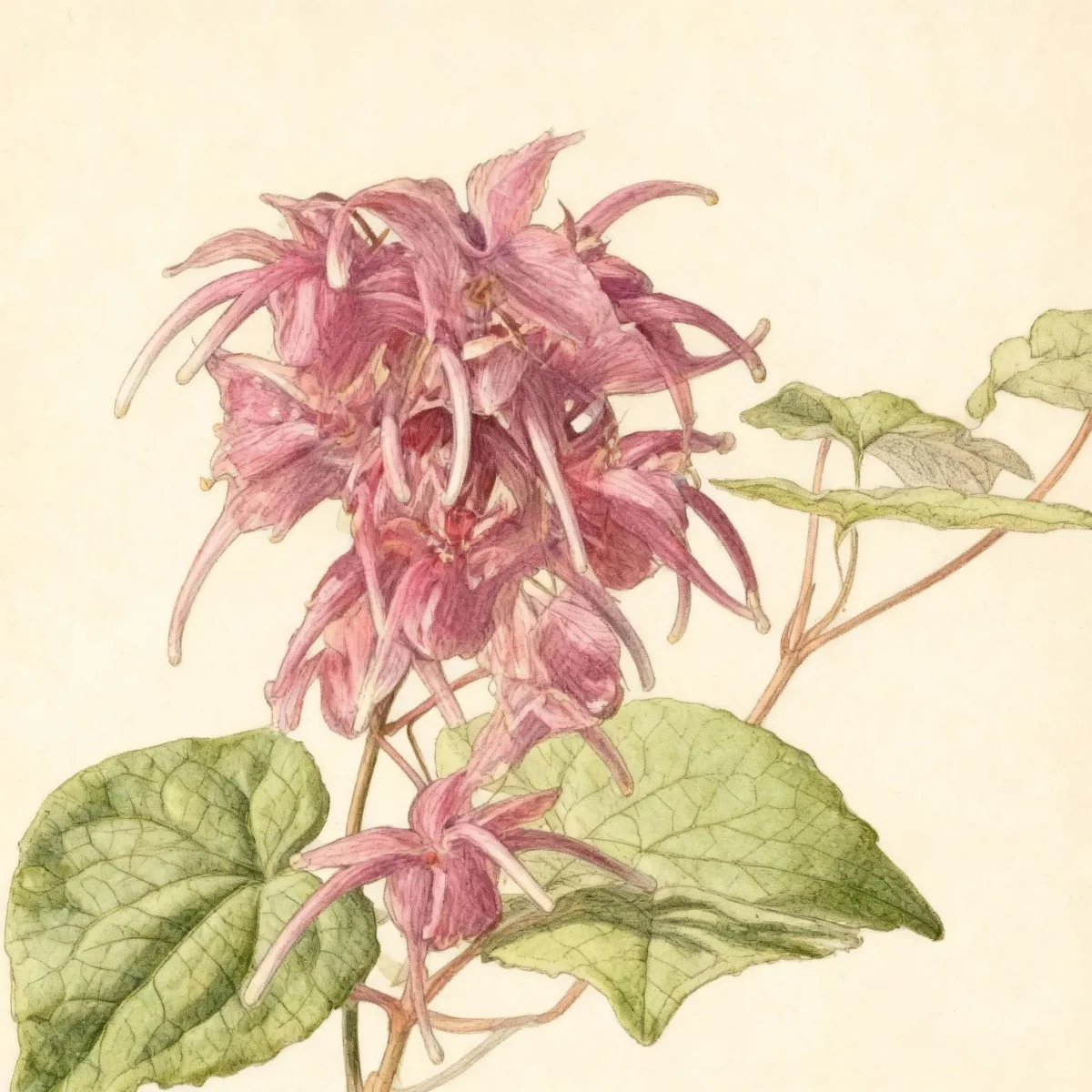
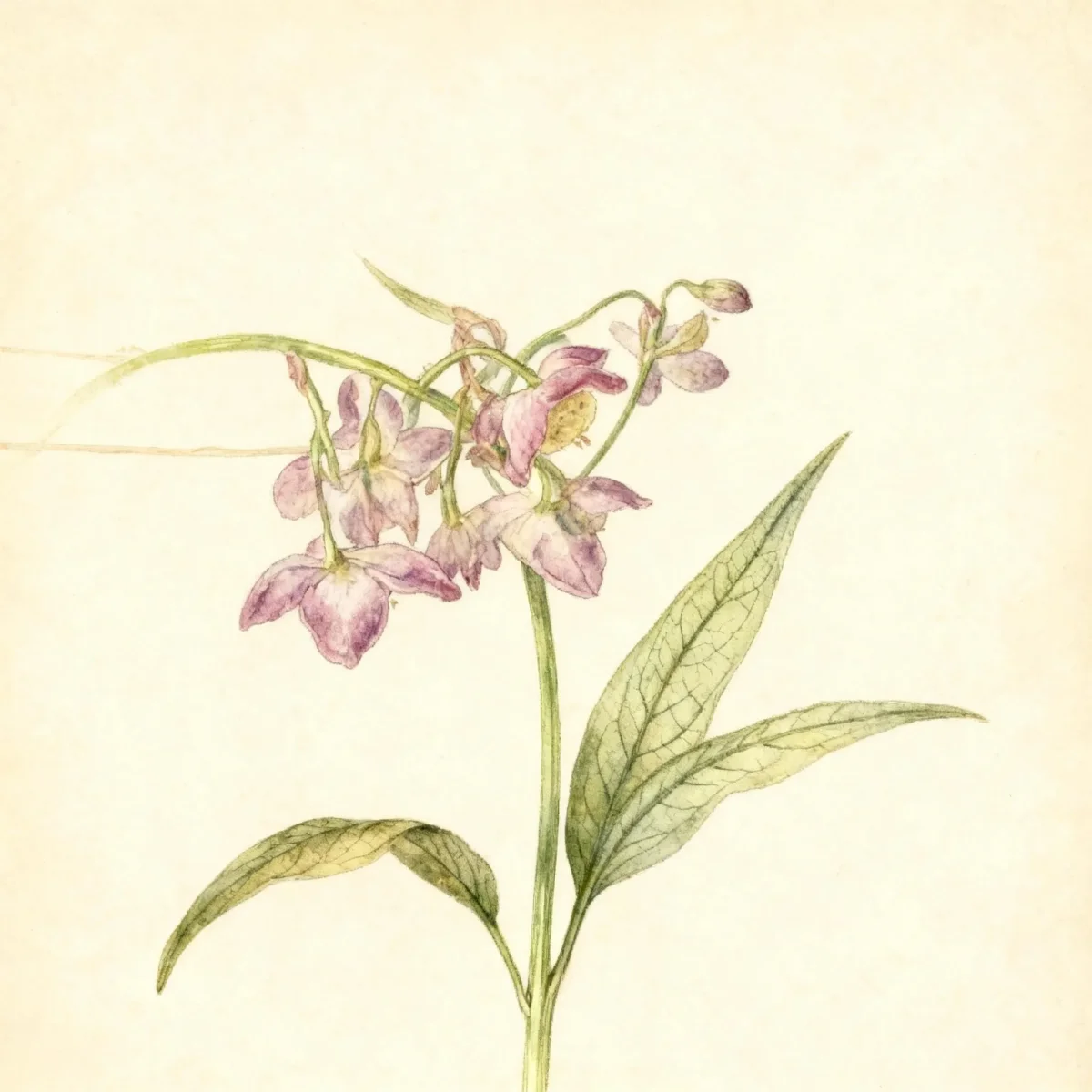
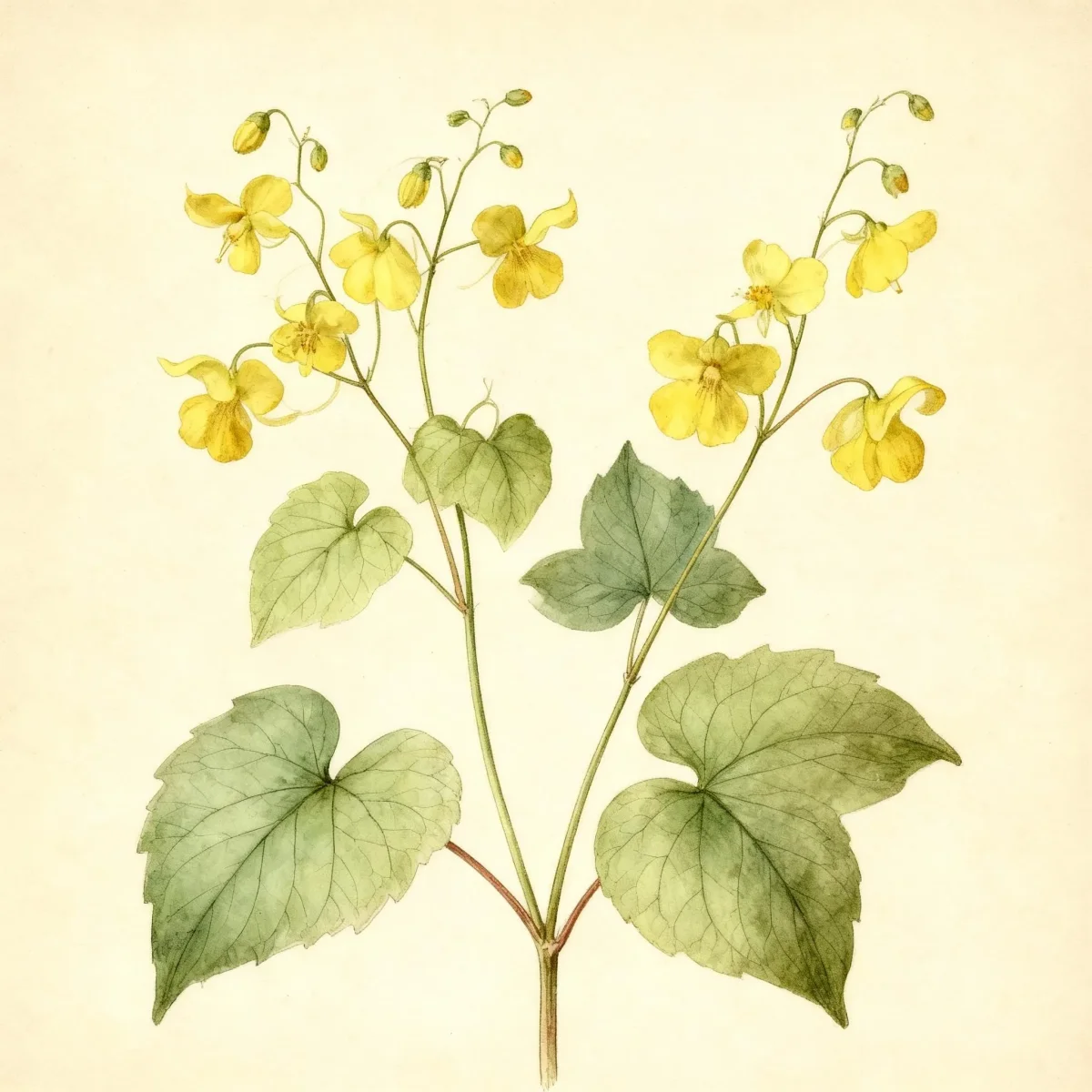
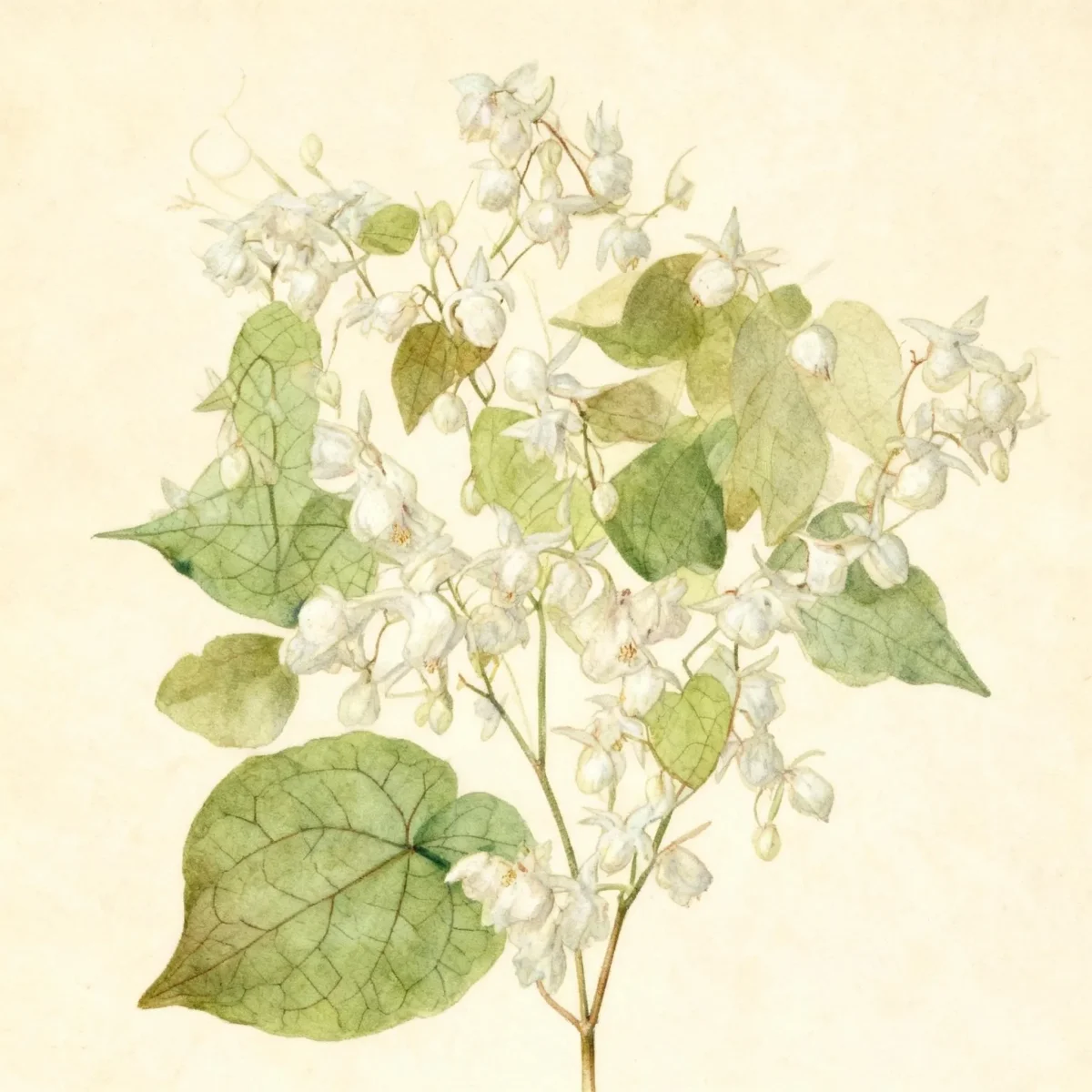
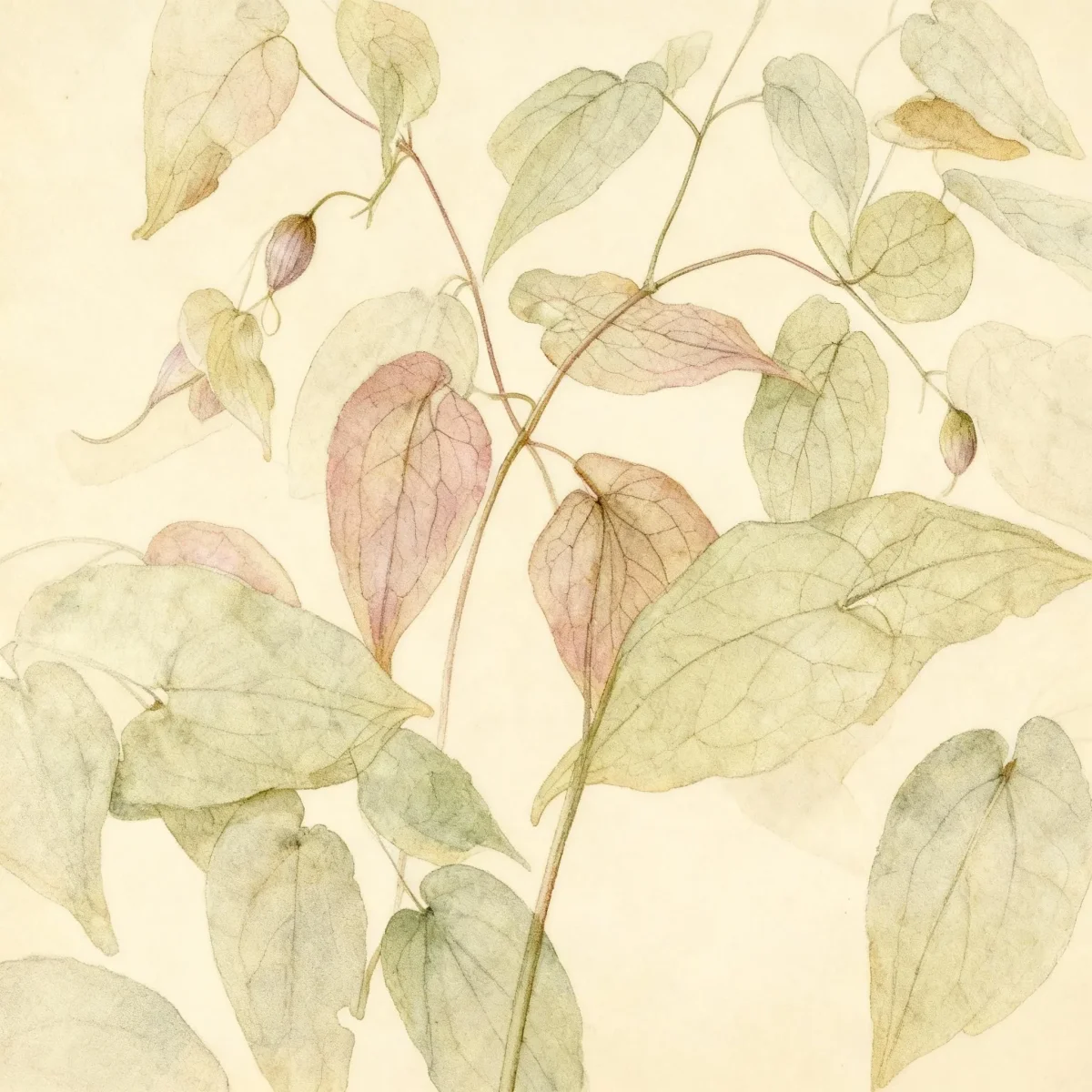
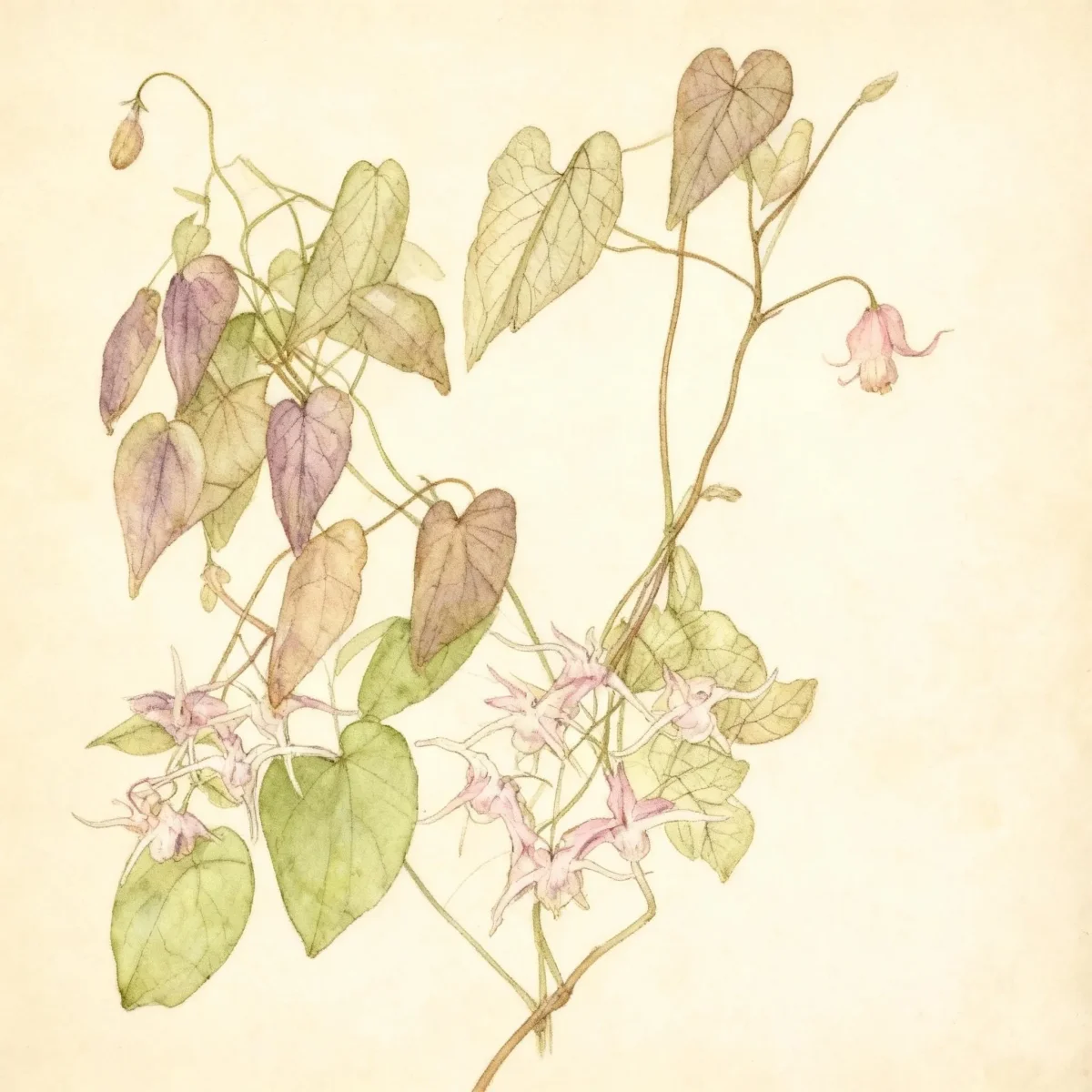
Bishop's hat (Epimedium perralderianum)
Epimedium perralderianum (Bishop's hat) is a tough, rhizomatous perennial offering yellow spring blooms and durable foliage for dry, shady locales.

Bloom Boldly, No Matter the Season - Sweatshirt
Cozy organic cotton sweatshirt featuring our exclusive Purple Coneflower design. Perfect for gardeners who bloom year-round.
Inspired by the beautiful Bishop's hat
Limited first batch (50) — join the waitlist for early access
Waitlist closes Feb 15, 2026.
Complete Plant Information
Field Guide Continues
Ready for care notes, companion picks, and planting tips?
The map is just the start. The full guide below covers growth habits, seasonal performance, and landscape uses.
Overview
Epimedium perralderianum, commonly known as Bishop’s hat, is a highly valuable perennial for challenging, heavily shaded garden spots where few other plants thrive. Originating from the mountain woodlands of Algeria, this plant forms a reliable, spreading mat perfect for controlling erosion and softening hardscape edges. Its primary visual appeal comes from its delicate yet numerous yellow spring flowers that appear just as the season begins.
This rhizomatous perennial is prized for its low-maintenance nature and adaptability; once established, the tough foliage of Epimedium perralderianum provides texture throughout the year. Gardeners appreciate the bronze marbling on the young leaves, which matures to green, offering consistent interest even when not in bloom. Bishop’s hat truly excels as a ground cover solution for dry shade problems.
Fast Facts
- Plant Family: Berberidaceae
- Plant Type: Herbaceous perennial
- Native Range: Northern Africa
- Hardiness Zones: USDA Zones 5-9
- Size at Maturity:
- Height: 0.5-1 ft
- Spread: 0.75-1.5 ft
- Bloom Time: April
- Bloom Description: Yellow
- Sun Exposure: Part shade to full shade
- Water Needs: Dry to medium
- Maintenance Level: Low
How to Grow
Plant Epimedium perralderianum in the early spring or fall for best establishment, ensuring the location provides part shade to full shade conditions. This Bishop’s hat prefers well-drained soils enriched with organic matter, though it tolerates average, drier conditions once mature. For effective ground cover, space starter plants approximately 12 inches apart to allow room for rhizome spread.
Watering needs are flexible; while it prefers medium moisture, the plant tolerates drought well, making it excellent for dry woodland sites or under mature trees. Fertilization is generally unnecessary if the soil is amended with compost periodically. Since the plants are evergreen to semi-evergreen, a light tidy-up is beneficial in colder regions. For instance, in areas like the St. Louis region, cutting back the old foliage in early spring reveals the fresh blooms and new bronze-tinged growth.
Landscape Uses
Epimedium perralderianum is an outstanding choice for foundational plantings and broad strokes of texture across broad, shady expanses. Use this species as a naturalized planting in woodland gardens where its spreading habit can effectively cover large areas without requiring much intervention. It functions admirably as a neat edger for winding paths and walkways, providing a low, non-invasive border.
Because Bishop’s hat establishes so readily in tough conditions, it is highly recommended for mass planting beneath mature deciduous trees where competition for moisture is fierce. While it thrives in masses, smaller groupings are also effective in partially shaded rock gardens or along border fronts where its spring flowers can draw attention before other perennials gain height.
Standout Features
Flower Qualities
- Showy
Noteworthy Characteristics
Epimedium perralderianum is native to mountain woodland areas in Algeria, forming a rhizomatous, clump-forming perennial typically reaching 6-10” tall. It creates an attractive ground cover noted for its bright yellow spring flowers borne on stems slightly above the foliage. The leaves are distinctive, featuring compound structure with serrate leaflets that emerge bronze but mature to green, providing year-round structure.
Tolerances
- Rabbit
- Deer
- Drought
- Heavy Shade
- Erosion
- Dry Soil
- Shallow-Rocky Soil
Potential Problems
This species enjoys a reputation for being exceptionally clean, facing no serious insect or disease problems under normal cultivation. Its resilience means few cultural stresses affect its health, which contributes significantly to its low maintenance rating. Avoid planting Bishop’s hat in heavy, poorly draining clay that remains soggy, as this is the primary environmental stressor that can eventually lead to root issues.
Frequently Asked Questions
What hardiness zones is Epimedium perralderianum suitable for?
This robust perennial, often called Bishop’s hat, is hardy across USDA Zones 5 through 9, offering wide suitability across many climates.
How large does Epimedium perralderianum grow?
When mature, this plant typically reaches 0.5 to 1 foot in height and spreads horizontally between 0.75 to 1.5 feet wide, forming a dense carpet.
What sun exposure does Bishop’s hat need?
Epimedium perralderianum thrives best in partial shade locations but tolerates deep, heavy shade remarkably well.
Conclusion
The low demands and stunning durability offered by Epimedium perralderianum make it an indispensable tool for landscape designers tackling dry shade. Whether you utilize it for erosion control or simply for its reliable spring color, Bishop’s hat delivers exceptional performance with minimal effort. Confirm your USDA zone compatibility and establish your plantings this coming fall for the best results next April.
Companion Planting
When selecting companions for Epimedium perralderianum, focus on other shade-loving, low-maintenance perennials that offer contrasting leaf texture or color. Hostas with blue or chartreuse foliage provide excellent contrast to the medium green leaves of Bishop’s hat. Consider pairing it with woodland favorites like miniature ferns that enjoy similar dry shade conditions, or perhaps Lily of the Valley (Convallaria majalis) for contrasting spring bloom times in a naturalized setting. The excellent drought tolerance of this Epimedium means it won’t outcompete companions seeking moderate moisture once established.
Propagation Tips
The best method for increasing your stock of Epimedium perralderianum is through simple division of its rhizomatous clumps. Since this plant spreads slowly via these underground stems, division is necessary if you wish to relocate or intentionally multiply the patch. Wait until early spring, just before new growth begins, or in the early fall when temperatures are cooling down, to carefully dig up the entire clump. Gently tease apart sections of the root system, ensuring each division has several healthy growth nodes attached. Replant the divisions immediately at the same depth they were previously growing to minimize transplant shock.