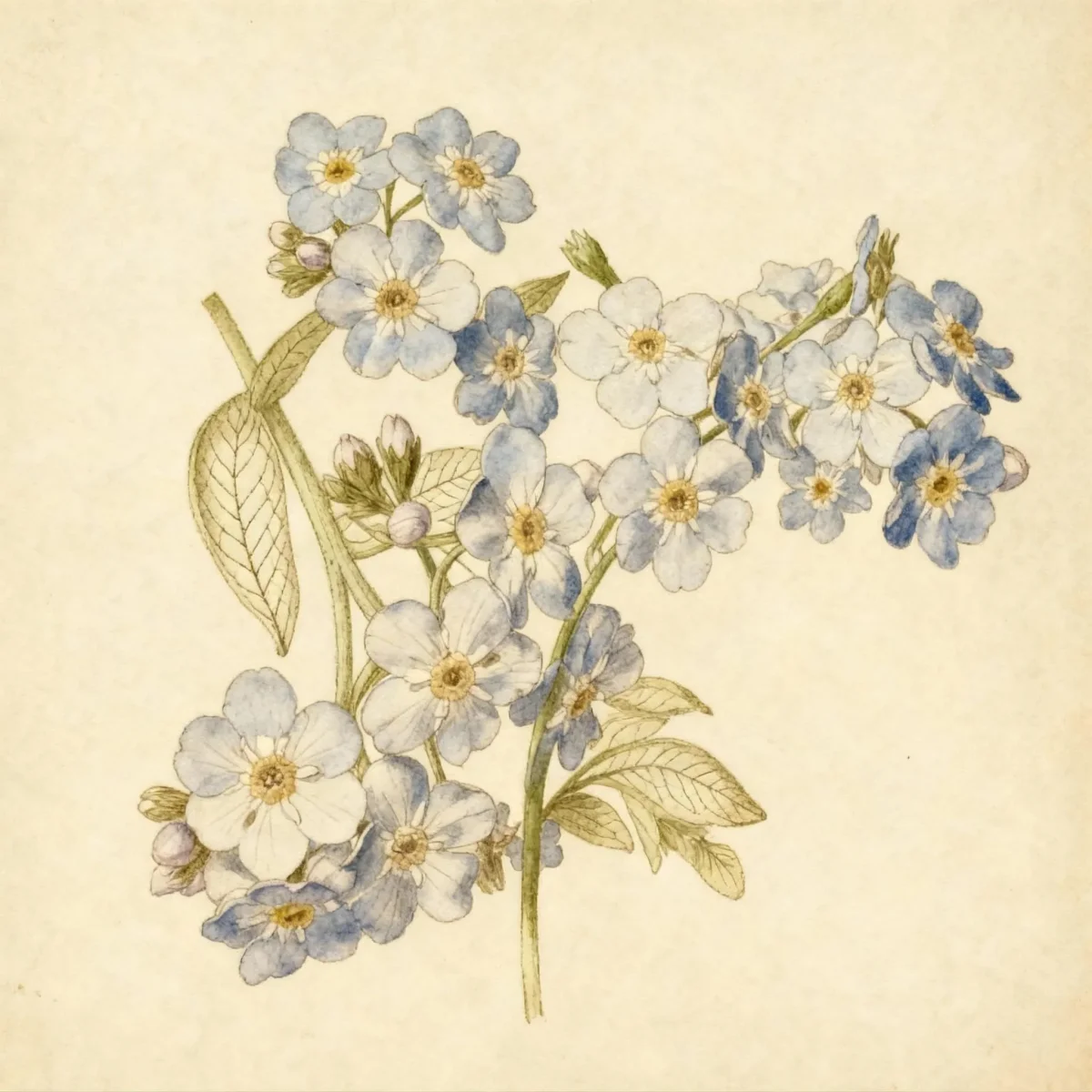
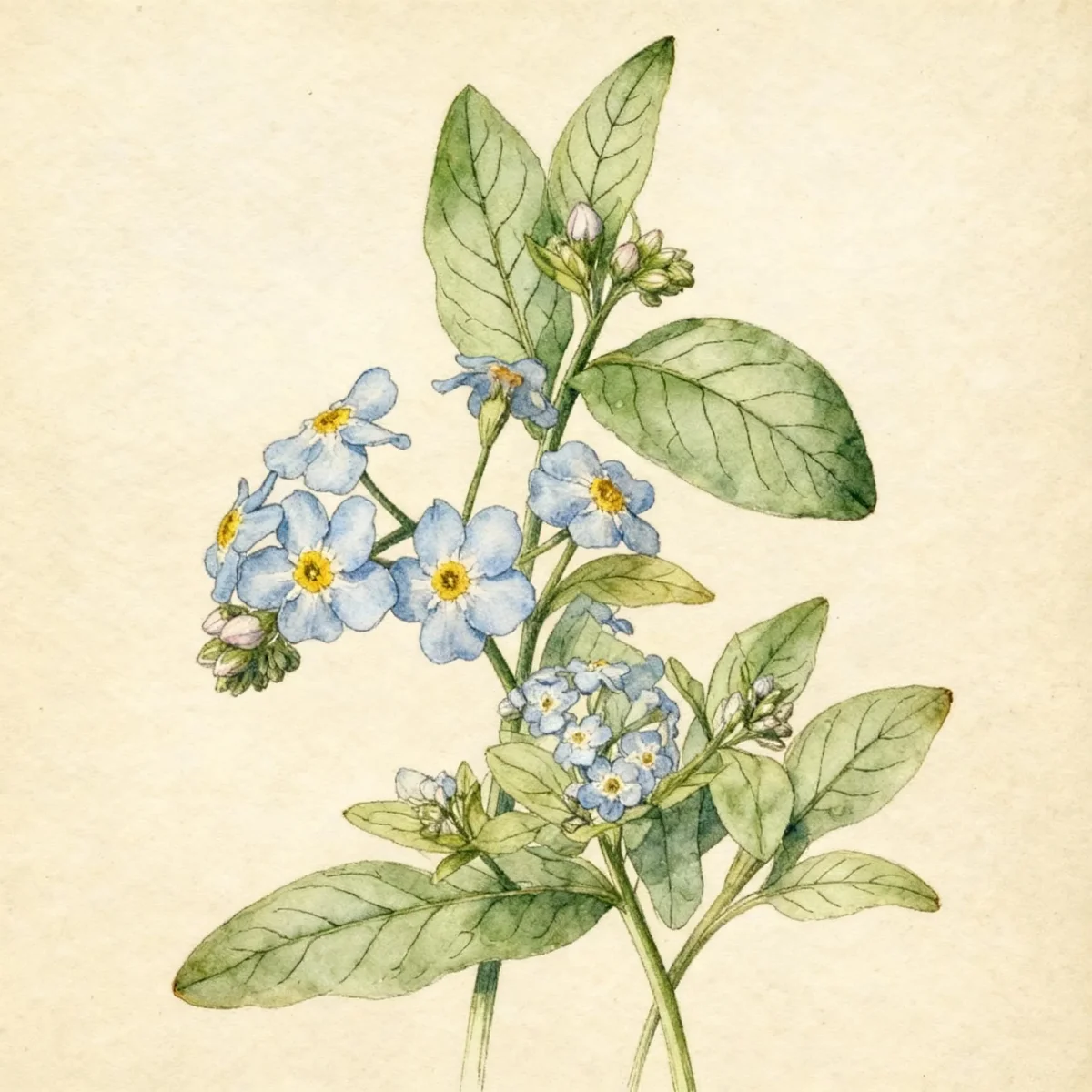
True forget-me-not (Myosotis scorpioides)
Myosotis scorpioides, the True forget-me-not, offers stunning sky-blue flowers for wet gardens. A low-maintenance perennial.

Bloom Boldly, No Matter the Season - Sweatshirt
Cozy organic cotton sweatshirt featuring our exclusive Purple Coneflower design. Perfect for gardeners who bloom year-round.
Inspired by the beautiful True forget-me-not
Limited first batch (50) — join the waitlist for early access
Waitlist closes Feb 15, 2026.
Complete Plant Information
Field Guide Continues
Ready for care notes, companion picks, and planting tips?
The map is just the start. The full guide below covers growth habits, seasonal performance, and landscape uses.
Overview
The Myosotis scorpioides, known popularly as the True forget-me-not, is an indispensable plant for water features and persistently damp garden areas. This rhizomatous perennial provides vibrant, delicate sky-blue flowers contrast beautifully against its bright green foliage throughout the summer months. Its ability to thrive in standing water sets it apart from its drier-loving woodland cousins.
Gardeners value Myosotis scorpioides for its long bloom period, stretching from June into August, and its remarkably low maintenance requirements once established. It naturally spreads via creeping rhizomes, offering dense coverage along pond edges or in rain gardens. Providing reliable color where many other perennials struggle, the True forget-me-not is an excellent choice for marginal aquatic plantings.
This plant brings classic cottage charm to aquatic landscapes, where its uncurling flower scorpioid cymes resemble small scorpion tails. Whether used for naturalizing banks or placed intentionally in containers within a pond, Myosotis scorpioides is a robust and beautiful herbaceous perennial that adds significant textural and color interest to wet environments.
Fast Facts
- Plant Family: Boraginaceae
- Plant Type: Herbaceous perennial
- Native Range: Europe, Asia
- Hardiness Zones: USDA Zones 5-9
- Size at Maturity:
- Height: 0.5-1 ft
- Spread: 0.75-1 ft
- Bloom Time: June to August
- Bloom Description: Sky blue with yellow center
- Sun Exposure: Full sun to part shade
- Water Needs: Medium to wet
- Maintenance Level: Low
How to Grow
Myosotis scorpioides thrives when planted in organically rich soil that remains consistently moist or wet. It tolerates full sun but performs best with some afternoon shade in the hottest climates. This plant establishes readily directly into the muddy banks of streams and ponds, happily growing in up to three inches of standing water, making it ideal for marginal planting.
Watering is straightforward: ensure the soil never dries out, especially during establishment. Fertilization is usually not required if planted in rich, organic soil typical of wetland margins. To encourage a bushier habit and prevent legginess, pinch back young plants early in the season.
To manage its spreading nature, consider planting the True forget-me-not in submerged containers when using it within designed water gardens. If you wish to propagate, divide the rhizomes in early spring or take stem cuttings during the summer. Plants will readily self-seed, often requiring minimal intervention to maintain coverage.
Landscape Uses
The recommended uses for Myosotis scorpioides center entirely around moisture control and marginal planting. It excels when utilized in rain gardens, functioning as a crucial component for capturing excess runoff. Plant it along stream banks or pond edges where its roots can access constant moisture, allowing it to naturalize naturally into an attractive, continuous flowering ground cover.
For formal or containerized water gardens, restrict the spread of this rhizomatous plant using pots sunk into the pond substrate. In more naturalized settings, allow the True forget-me-not to mingle near woodland edges where the soil remains damp. Its low stature and bright blooms provide excellent contrast for taller marginal iris varieties or other moisture-loving perennials.
Standout Features
Flower Qualities
- Showy
Noteworthy Characteristics
Myosotis scorpioides, commonly called water forget-me-not or true forget-me-not, is a rhizomatous marginal aquatic perennial that typically grows 6-10” tall. Light sky blue 5-lobed flowers with yellow centers bloom in branched cyme structures that uncoil as they open, providing a long bloom period from spring through summer. The specific epithet refers to the coiled appearance of these flower clusters, resembling a scorpion’s tail when in bud.
Tolerances
- Deer
- Wet Soil
Potential Problems
The Myosotis scorpioides is generally robust and avoids serious insect infestations or major disease issues. However, gardeners should remain vigilant for common fungal afflictions such as mildew and rust, particularly in areas with poor air circulation or excessive humidity. Ensuring adequate spacing between plants and maintaining consistent, healthy moisture levels can help mitigate these fungal risks.
Frequently Asked Questions
What hardiness zones is True forget-me-not suitable for?
The Myosotis scorpioides is hardy in USDA Zones 5 through 9, making it suitable for a wide range of temperate climates.
How large does Myosotis scorpioides grow?
This perennial typically reaches a height between 0.5 to 1 foot tall and spreads approximately 0.75 to 1 foot wide, spreading via rhizomes.
What sun exposure does True forget-me-not need?
This plant prefers full sun, but it will also perform well in areas that receive part shade, especially where afternoon heat is intense.
When does True forget-me-not bloom?
The prolific flowering season for Myosotis scorpioides generally runs from June through August, featuring sky blue flowers with distinct yellow centers.
Conclusion
The True forget-me-not delivers dependable, cheerful summer color perfectly suited for challenging wet locations in your garden. Incorporating Myosotis scorpioides into rain gardens or pond margins ensures you enjoy its low-maintenance beauty year after year. Check your local USDA zone compatibility and plan to incorporate this aquatic perennial while soil conditions are moist this spring.
Propagation Tips
Propagation is straightforward for the gardener looking to increase their stock of Myosotis scorpioides. The easiest method is division of the creeping rhizomes, best executed in early spring before active growth begins heavily. This method produces instant, mature plants ready for transplanting to new moist spots.
Self-seeding is also a common occurrence; allowing some seed heads to mature will result in natural recruitment the following year. For gardeners wanting to spread the plant to a different water body, stem cuttings taken in summer root readily when placed in moist soil or water, providing new plants without disturbing the established mother clump.
Companion Planting
Because Myosotis scorpioides requires consistently wet or standing water conditions, companion plants must share this specialized environment. Good companions include other marginal aquatics like Caltha palustris (Marsh Marigold) for early spring interest, or Iris species such as Iris pseudacorus (Yellow Flag Iris) for taller vertical accents near the water’s edge later in the season.
Avoid planting this groundcover near moisture-intolerant perennials, as its vigorous attachment to wet soil can stress drier flora planted too closely. Grouping the True forget-me-not with other water-loving foliage like Equisetum (Horsetail, if contained) helps maintain a cohesive and culturally appropriate planting scheme around ponds or bog gardens.