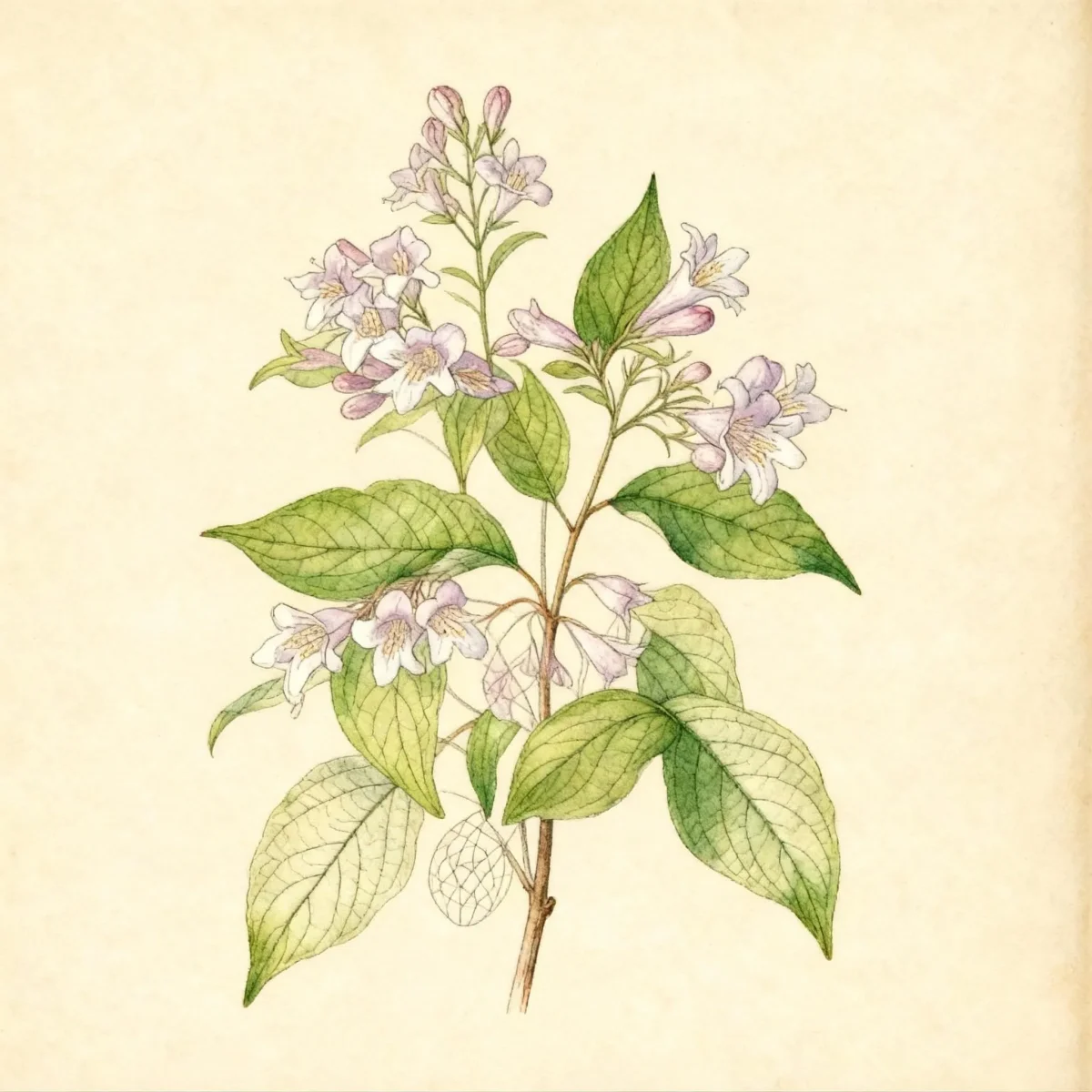
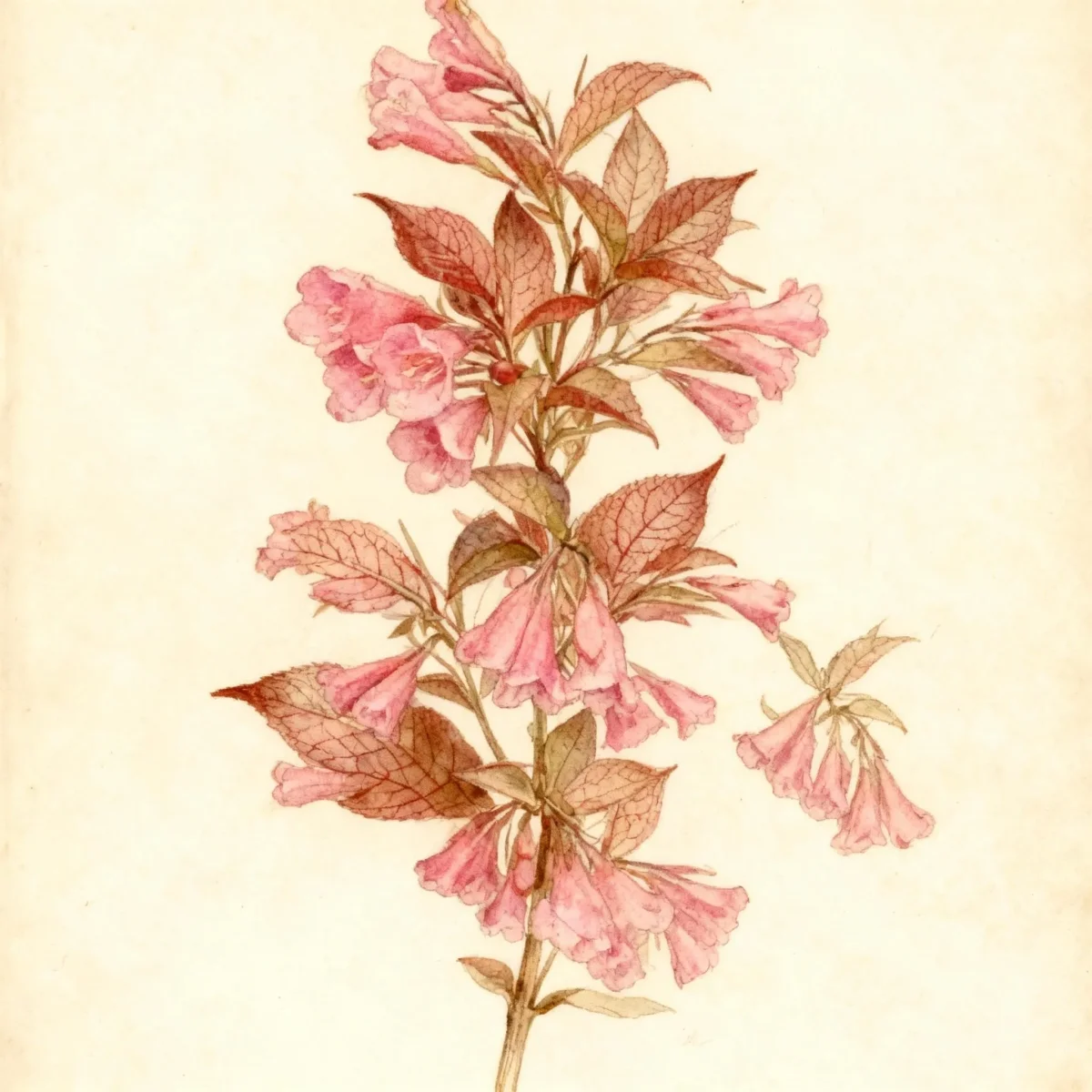
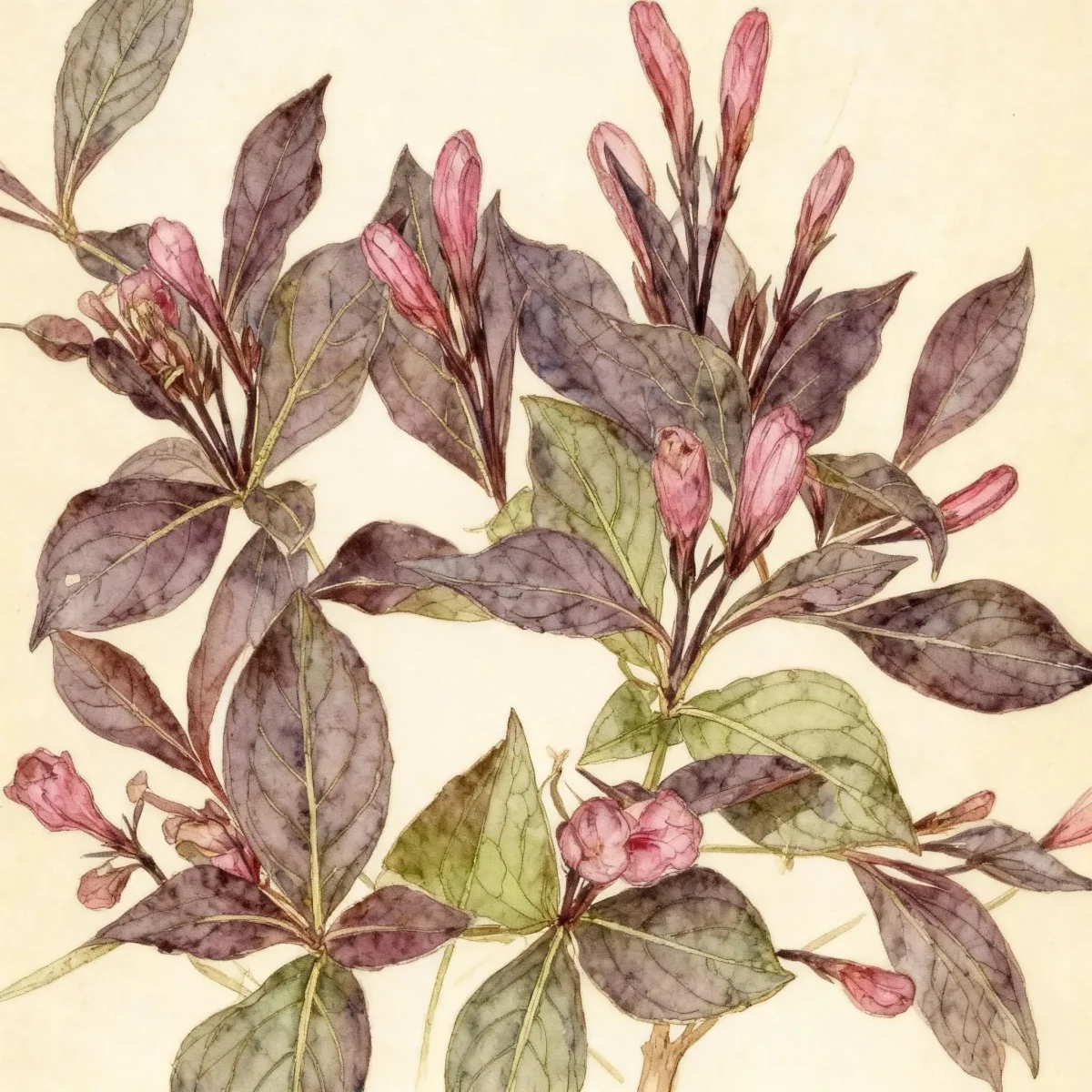
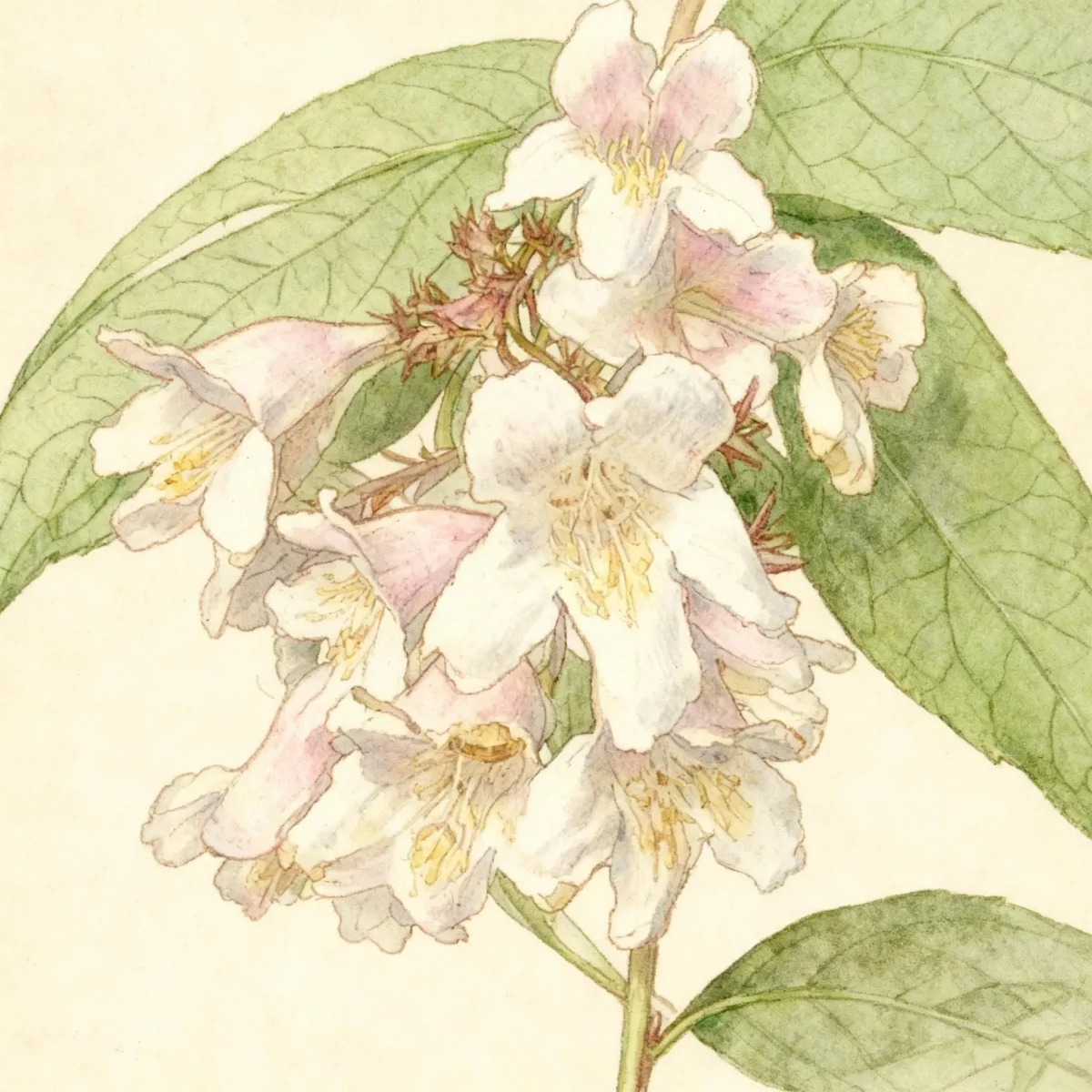
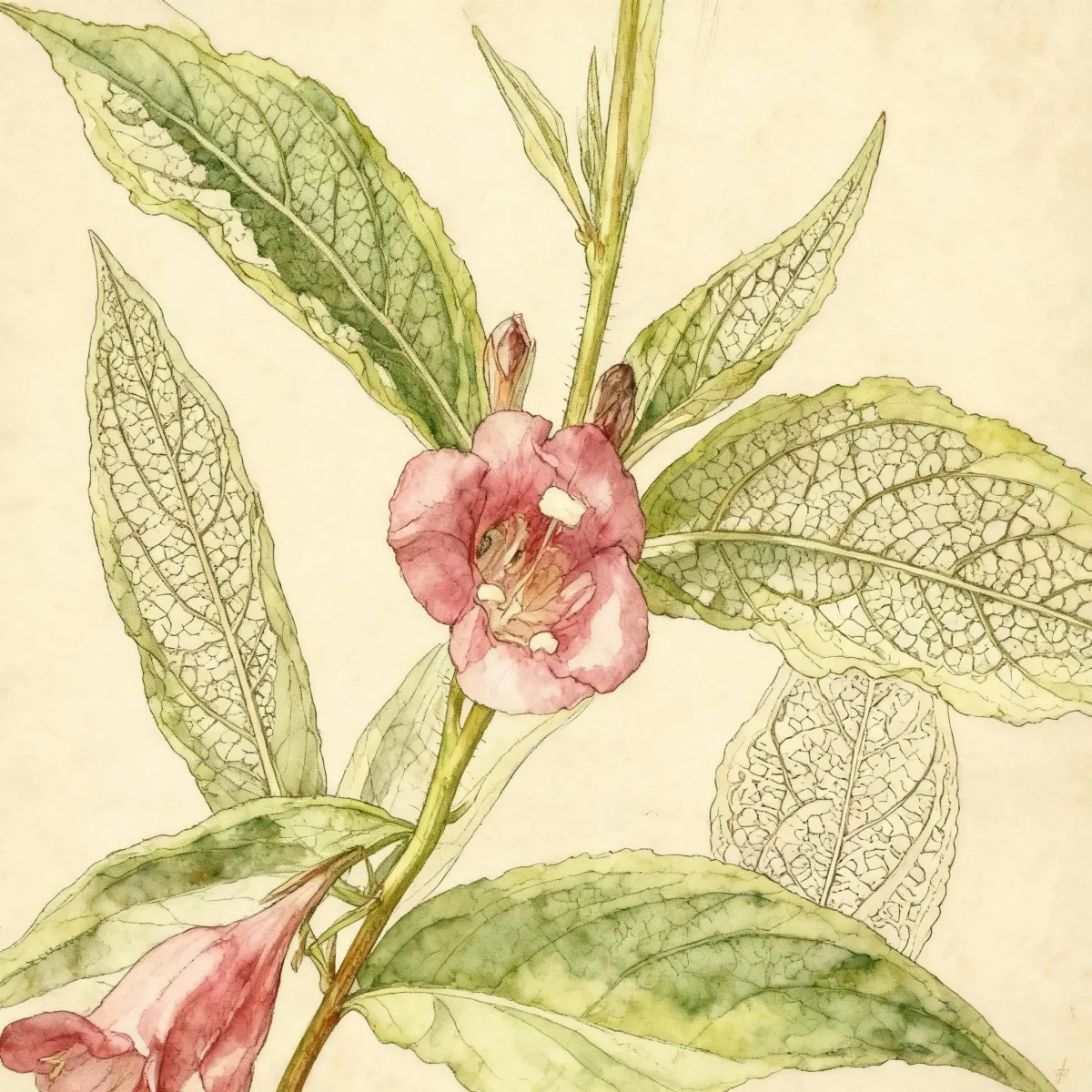
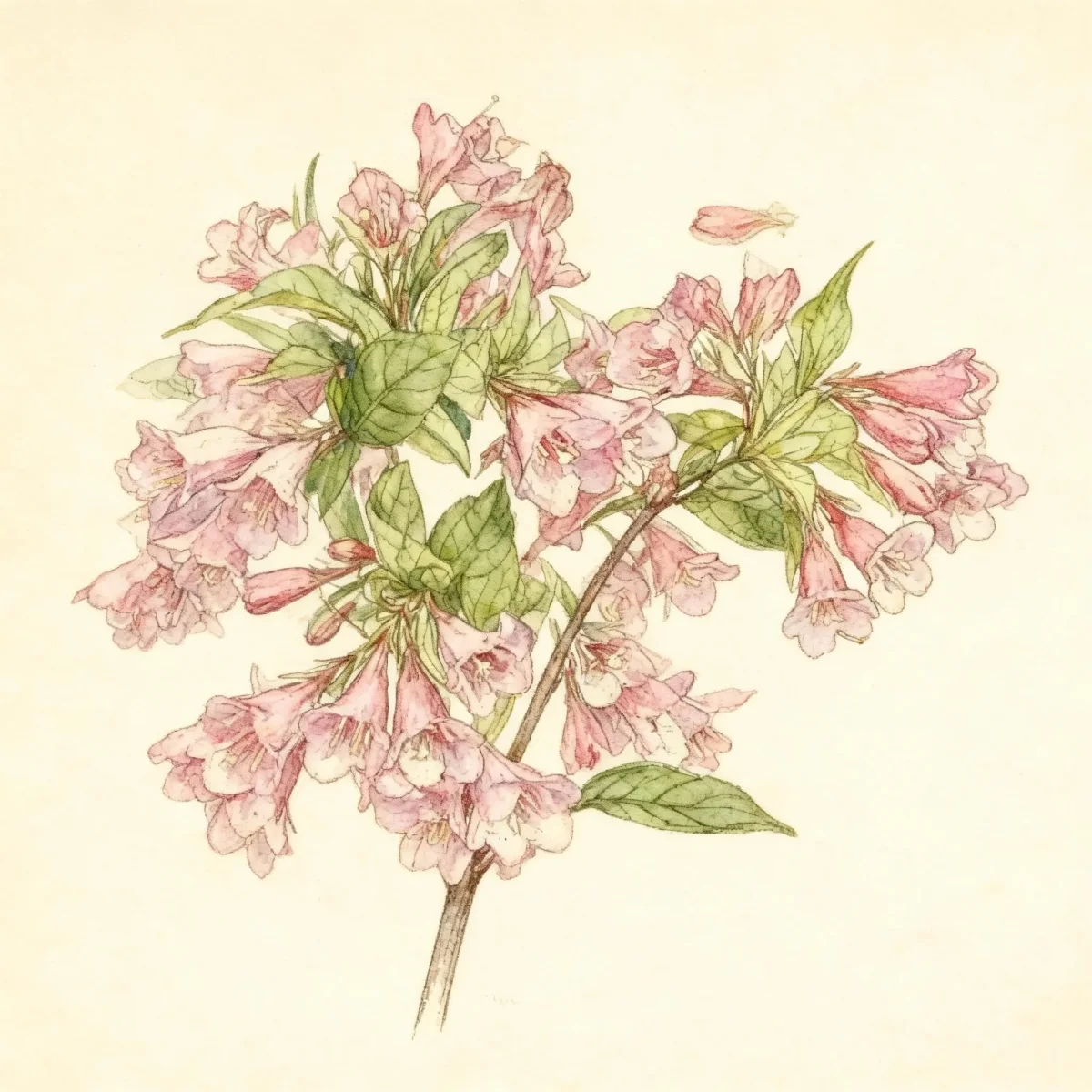
Beauty bush (Kolkwitzia amabilis)
Discover the Kolkwitzia amabilis, or Beauty bush, a low-maintenance deciduous shrub offering profuse pink flowers and exfoliating bark.

Bloom Boldly, No Matter the Season - Sweatshirt
Cozy organic cotton sweatshirt featuring our exclusive Purple Coneflower design. Perfect for gardeners who bloom year-round.
Inspired by the beautiful Beauty bush
Limited first batch (50) — join the waitlist for early access
Waitlist closes Feb 15, 2026.
Complete Plant Information
Field Guide Continues
Ready for care notes, companion picks, and planting tips?
The map is just the start. The full guide below covers growth habits, seasonal performance, and landscape uses.
Overview
The Beauty bush (Kolkwitzia amabilis) is celebrated in the landscape primarily for its outstanding display of spring flowers. This relatively low-maintenance deciduous shrub produces bell-shaped pink blooms accented with a sunny yellow throat, decorating the arching branches profusely in mid to late spring. It is a spectacular sight when in full flower, making the Kolkwitzia amabilis a highly desirable addition for spring color.
Belonging to the honeysuckle family, this shrub offers more than just ephemeral beauty. Mature specimens of Kolkwitzia amabilis provide textural interest through exfoliating bark, which offers subtle winter appeal after the leaves drop. Its vase-shaped habit and dense branching make it highly functional.
Gardeners value the Beauty bush for its durability; it is easily grown and requires minimal intervention once established. While it is best known for screening and hedging due to its size (typically 6 to 10 feet tall and wide), it is often chosen for properties needing reliable, colorful spring structure without demanding constant care.
Fast Facts
- Plant Family: Caprifoliaceae
- Plant Type: Deciduous shrub
- Native Range: Eastern China
- Hardiness Zones: USDA Zones 4-8
- Size at Maturity:
- Height: 6-10 ft
- Spread: 6-10 ft
- Bloom Time: April to May
- Bloom Description: Pink with yellow throat
- Sun Exposure: Full sun
- Water Needs: Medium
- Maintenance Level: Low
How to Grow
Plant Beauty bush (Kolkwitzia amabilis) in spring or fall when conditions are cool, allowing it time to establish a strong root system before dry summer heat. It thrives in average, well-drained soils, though happily tolerates medium moisture levels. For optimal performance, ensure it receives full sun, though slight sun-filtered part shade locations can reportedly enhance the foliage color.
Maintenance for this shrub is generally considered low. Water consistently during the first year of establishment to encourage deep root growth. Avoid over-fertilizing, as excess richness can lead to weak, floppy growth. Prune only to remove dead or damaged wood as needed to maintain structure.
Pruning requires strategic timing because the Kolkwitzia amabilis blooms exclusively on old wood. Hard pruning in late winter will sacrifice the season’s bloom. If the shrub becomes too dense or overgrown, you have two main options after flowering: thin out select older stems entirely, or cut all stems back severely to the ground in late winter (accepting the loss of spring flowers) or immediately after blooming concludes.
Landscape Uses
The substantial size and dense structure of the mature Beauty bush make it ideally suited for large-scale framing elements in the landscape. It excels when massed together to create substantial screens or informal hedges where periodic maintenance can be managed. Though it’s marginally ornamental as a solitary specimen in small lawns, it fits perfectly into deep shrub borders.
For effective screening, plant several shrubs closer than their maximum spread to encourage them to support one another, forming an impenetrable barrier by the third or fourth year. Consider pairing this shrub with later-blooming perennials or smaller evergreen structures, as its main floral show is concentrated in spring. Its large size means it pairs well geographically with structural elements like specimen trees or substantial foundations plantings.
Standout Features
Flower Qualities
- Showy
Noteworthy Characteristics
Kolkwitzia amabilis, commonly called beautybush, is a member of the honeysuckle family. It is primarily grown for its outstanding spring flowers, which appear in profuse mid-spring bloom clusters. It is a deciduous shrub characterized by an arching, vase-shaped habit, offering exfoliating bark on mature stems for winter interest.
Tolerances
- Deer
- Clay Soil
- Black Walnut
Potential Problems
Generally, the Beauty bush faces no significant insect or disease problems, adding to its low-maintenance appeal. This relative resistance means gardeners spend less time scouting for pests or managing leaf spots. Focus vigilance instead on proper pruning timing to ensure you do not accidentally remove next year’s flower buds by pruning too late or too severely in the wrong season.
Frequently Asked Questions
What hardiness zones is Beauty bush suitable for?
The Kolkwitzia amabilis is suitable for USDA Hardiness Zones 4 through 8.
How large does Beauty bush grow?
This deciduous shrub typically matures to a height between 6 and 10 feet, with a similar spread of 6 to 10 feet.
When does Beauty bush bloom?
The profuse flowering period for the Beauty bush usually occurs from April to May, displaying pink flowers with a yellow throat.
What sun exposure does Beauty bush need?
For the best overall health and flowering, Kolkwitzia amabilis requires full sun exposure.
Conclusion
The Beauty bush (Kolkwitzia amabilis) provides exceptional value through its spectacular, showy bloom display and its outstanding adaptability to various soil conditions, including clay. Its low-maintenance nature makes it a reliable option for structural planting, screening, or hedging on larger properties. Before planting, confirm your growing location falls within USDA Zones 4-8 and plan your pruning schedule around its desire to flower on old wood.
Companion Planting
When placing Kolkwitzia amabilis in a mixed border, consider companion plants that provide color contrast after its spring peak or that share similar cultural requirements. Since Beauty bush prefers well-drained soil and medium moisture, look towards other late-spring bloomers in the Rosaceae or Hydrangeaceae families that can fill the mid-season gap. Peonies (Paeonia) or early flowering lilacs (Syringa) can complement the shape and texture of the shrub before it drops its own foliage.
Design Ideas for Screening
Because the Kolkwitzia amabilis reaches 6 to 10 feet tall, it functions excellently as a natural screen rather than a clipped formal hedge. To maximize its natural, arching form, plant it slightly looser than you might a formal evergreen. When used as a tall screen, place lower, contrasting texture plants in front, perhaps low-growing Hostas or ferns that appreciate the filtered light created by the shrub’s canopy once leaves emerge. This layering technique prevents the base of the Beauty bush from looking sparse later in the season.