Papaya (Carica papaya)
Grow the tropical Papaya (Carica papaya), a fast-growing, non-woody evergreen revered for its edible, melon-like fruit. Ideal for Zones 10-12.

Bloom Boldly, No Matter the Season - Sweatshirt
Cozy organic cotton sweatshirt featuring our exclusive Purple Coneflower design. Perfect for gardeners who bloom year-round.
Inspired by the beautiful Papaya
Limited first batch (50) — join the waitlist for early access
Waitlist closes Feb 15, 2026.
Complete Plant Information
Field Guide Continues
Ready for care notes, companion picks, and planting tips?
The map is just the start. The full guide below covers growth habits, seasonal performance, and landscape uses.
Overview
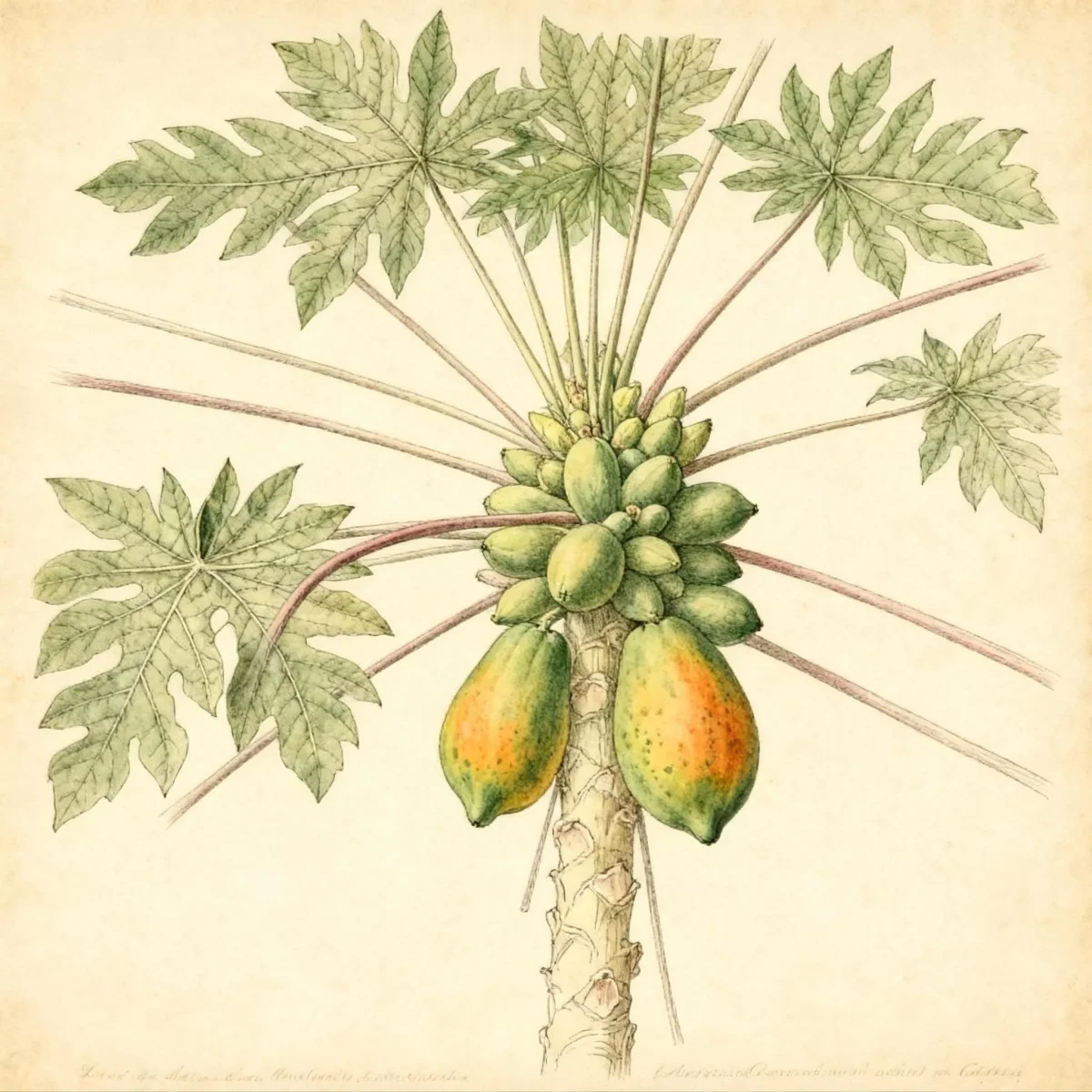
The Papaya, scientifically known as Carica papaya, is a highly valued tropical standout, primarily cultivated for its large, sweet, melon-like fruit. Though often appearing tree-like, botanically, it is often classified as a giant herb because it lacks true woody tissue, growing quickly on a single, unbranched trunk topped by a canopy of large, lobed leaves. This species is frost-tender, making its ideal cultivation limited to subtropical and tropical regions like USDA Zones 10 through 12.
Beyond its significant fruit production, Carica papaya offers immediate visual interest due to its architectural form and large foliage, making it an acceptable ornamental where temperatures remain warm. The plant produces fragrant, yellowish-white flowers seasonally, followed by clusters of fruit that ripen directly against the trunk below the leaves. Gardeners prize the Papaya for its quick growth habit and year-round harvest potential in optimal climates.
Whether grown for the popular fruit or for its dramatic vertical presence, Carica papaya demands rich soil and consistent moisture to thrive and produce heavy yields. For those outside the primary tropical zones, portable container culture allows cultivation, albeit with the caveat that these short-lived trees may need replacing every few years.
Fast Facts
- Plant Family: Caricaceae
- Plant Type: Broadleaf evergreen
- Native Range: South America
- Hardiness Zones: USDA Zones 10-12
- Size at Maturity:
- Height: 6-20 ft
- Spread: 3-15 ft
- Bloom Time: Seasonal bloomer
- Bloom Description: Yellowish-white
- Sun Exposure: Full sun
- Water Needs: Medium
- Maintenance Level: Medium
How to Grow
Planting Carica papaya should occur when reliably warm weather is established, as this tropical tree is intensely intolerant of frost. Select a location offering full sun exposure, as this maximizes fruit quality and yield; while the plant tolerates light shade ornamentally, fruiting suffers. This species thrives in rich, humusy, well-drained organic loams that remain consistently moist, but never waterlogged, to mitigate the risk of root rot.
Consistent care is crucial for the Papaya, which is considered a heavy feeder. Implement regular fertilization schedules to support its rapid growth and generous fruit set. The medium water needs dictate routine, deep watering, especially during establishment and fruit production phases. Ensure drainage is perfect, as standing water quickly leads to horticultural issues.
For gardeners in borderline climates, container culture is an excellent strategy. Growing Carica papaya in large tubs permits overwintering indoors in bright locations when cold weather threatens hardiness zone boundaries. Remember that container plants may require replacement every four to five years, as they are naturally short-lived even in ideal ground settings.
Landscape Uses
The primary destination for Carica papaya in any garden is fruit production, harvesting the iconic melon-like papayas that develop close to the trunk. However, even when fruit is not the focus, the tree serves as an exceptional specimen plant, lending immediate, dramatic tropical texture to the landscape design. Its imposing height, soft architectural shape, and large, divided leaves make it a fantastic focal point or screening element in subtropical settings.
Due to its fast growth, Carica papaya works well as an annual feature in cooler zones where it can be grown in large decorative containers flanked by lower tropical bedding plants like colorful annuals or tropical ginger varieties. In permanent tropical landscapes, consider pairing it with other broadleaf evergreens or bold-foliaged understory plants that appreciate similar moisture and sun conditions. Treat Carica papaya as a living statement piece that delivers both aesthetic appeal and seasonal harvests.
Standout Features
Flower Qualities
- Showy
- Fragrant
Fruit Qualities
- Showy
- Edible
Noteworthy Characteristics
Carica papaya, commonly called papaya, is a small, frost-tender, succulent, broadleaf evergreen tree that bears papaya fruits throughout the year. Each tree typically has a single, unbranched, non-woody trunk topped by an umbrella-like canopy of palmately lobed leaves, with large, fleshy fruits hanging beneath the canopy. Native to Central and South America, this plant is recognized globally for its edible fruit and the valuable enzyme papain extracted from its green sap.
Tolerances
No specific listed tolerances were provided for this entry.
Potential Problems
Carica papaya generally lacks serious insect or disease challenges when sited correctly. The most common threat relates directly to improper soil conditions: root rots are likely to occur if the soil environment becomes overly moist or poorly drained. To prevent this, focus diligently on amending the planting site to ensure excellent aeration and drainage around the root zone of your Papaya.
Frequently Asked Questions
What hardiness zones is Papaya suitable for?
Carica papaya is winter hardy only in USDA Zones 10 through 12, requiring protection or relocation if temperatures drop near or below freezing.
How large does Papaya grow?
Mature plants typically reach heights between 6 to 20 feet, with a spread ranging from 3 to 15 feet, although container specimens may stay closer to 10 feet tall.
What sun exposure does Papaya need?
The Papaya requires full sun exposure for the best fruit development, although it can manage with light shade if its primary use is ornamental rather than production.
When does Papaya bloom?
This plant is considered a seasonal bloomer, producing fragrant, yellowish-white, trumpet-shaped flowers throughout the warmer parts of the year.
Conclusion
The Papaya, Carica papaya, remains a spectacular choice for tropical gardeners looking for rapid growth, unique architectural form, and delicious, year-round fruit production. Its requirements are straightforward: intense sun, rich soil, and consistent moisture, with zero tolerance for frost. Before planting your Carica papaya, confirm that your location falls within USDA Zones 10–12 or plan for effective container overwintering to ensure success.
Container Growing
Growing Papaya in containers is the most practical solution for gardeners living just outside their continuous tropical range, allowing you to manage the soil environment precisely. Use containers that are large—at least 20 gallons for a mature specimen—to provide stability and sufficient root space, recognizing that the tree still requires regular fertilization due to the concentrated growing medium. During the active summer growing season, ensure containers are placed in full, hot sun and watered frequently as potting mixes dry out faster than garden soil.
When moving your Carica papaya indoors for overwintering, place it in the brightest available space, preferably near south-facing windows, and reduce watering significantly to match lower winter light levels. Since these plants are notoriously short-lived (often needing replacement every 4-5 years even outdoors), investing effort in annual container rotation and pruning can keep the habit manageable indoors, providing a taste of the tropics year-round.
Design Ideas
Carica papaya functions exceptionally well as a dramatic accent plant or as a backdrop in mixed perennial borders where its height (up to 20 feet) can serve as an anchor. Because the foliage is palmate and somewhat open, it pairs visually well with fine-textured plants like ornamental grasses or coarse, broad-leafed companions that share similar water needs. For a cohesive tropical look, group the Papaya with bananas, hibiscus, or large elephant ears to create a lush, jungle-esque feel that maximizes the subtropical ambiance it provides.
Conclusion
The Papaya, Carica papaya, remains a spectacular choice for tropical gardeners looking for rapid growth, unique architectural form, and delicious, year-round fruit production. Its requirements are straightforward: intense sun, rich soil, and consistent moisture, with zero tolerance for frost. Before planting your Carica papaya, confirm that your location falls within USDA Zones 10–12 or plan for effective container overwintering to ensure success.