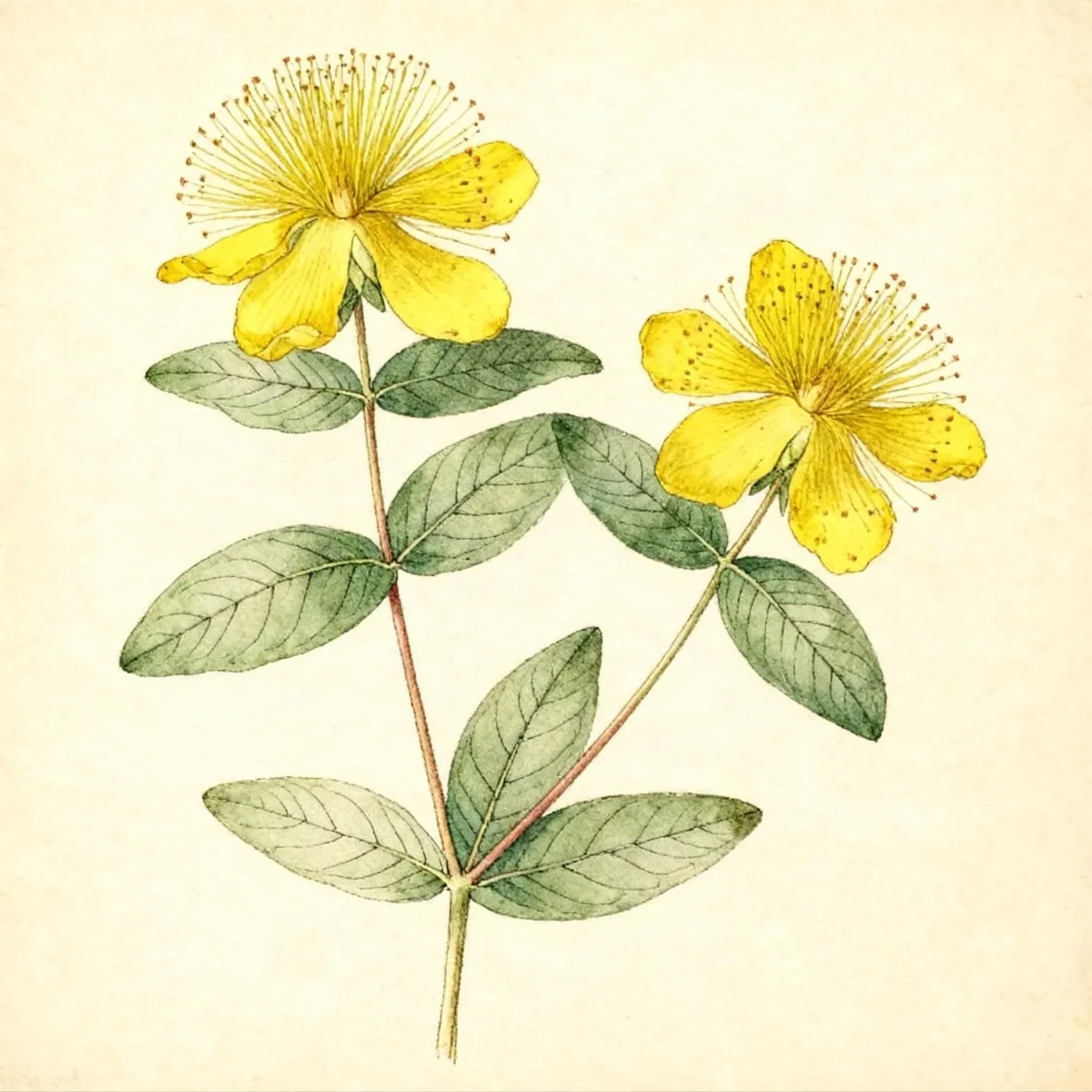
Large-flowered St. John's wort (Hypericum kouytchense)
Durable Hypericum kouytchense offers bright yellow summer blooms and blue-green foliage in USDA Zones 6-9. Low maintenance.

Bloom Boldly, No Matter the Season - Sweatshirt
Cozy organic cotton sweatshirt featuring our exclusive Purple Coneflower design. Perfect for gardeners who bloom year-round.
Inspired by the beautiful Large-flowered St. John's wort
Limited first batch (50) — join the waitlist for early access
Waitlist closes Feb 15, 2026.
Complete Plant Information
Field Guide Continues
Ready for care notes, companion picks, and planting tips?
The map is just the start. The full guide below covers growth habits, seasonal performance, and landscape uses.
Overview
The Large-flowered St. John’s wort, Hypericum kouytchense, is a highly valuable addition to temperate landscapes due to its reliable summer performance and attractive, dense mounding habit. This deciduous shrub provides significant ornamental interest, particularly between June and September when its profusion of golden-yellow flowers brightens mixed borders and foundation plantings. Gardeners appreciate Hypericum kouytchense for its combination of durable foliage and extended bloom period.
As a robust, low-maintenance specimen, this plant thrives readily across USDA Hardiness Zones 6 through 9. It typically develops into a dense mound, reaching 2 to 3 feet tall and spreading 3 to 5 feet wide, making it perfectly scaled for medium-sized landscape roles. The foliage is notably blue-green, providing excellent contrast against the brilliant flower color.
The easy-going nature of Large-flowered St. John’s wort ensures it fits seamlessly into diverse garden settings, from structured low hedges to more naturalized areas. Its tolerance for moderate drought after establishment further reduces the necessary cultural commitment, cementing Hypericum kouytchense’s status as a practical and beautiful choice for year-round garden structure.
Fast Facts
- Plant Family: Hypericaceae
- Plant Type: Deciduous shrub
- Native Range: Western China
- Hardiness Zones: USDA Zones 6-9
- Size at Maturity:
- Height: 2-3 ft
- Spread: 3-5 ft
- Bloom Time: June to September
- Bloom Description: Yellow
- Sun Exposure: Full sun to part shade
- Water Needs: Medium
- Maintenance Level: Low
How to Grow
Plant Hypericum kouytchense during the spring or fall to allow it time to establish root systems before seasonal extremes. This shrub prefers average, well-drained soils, though it showcases better vigor in moist, rich, sandy loams. Ensure the planting site receives at least partial sun exposure; while it tolerates full sun, some afternoon shade will help maintain deep foliage color in hotter climates.
Consistent watering is necessary during the first season of establishment to develop a strong root structure. Once established, Large-flowered St. John’s wort exhibits medium water needs and can tolerate some drought periods, aligning with its low maintenance profile. Fertilization is generally unnecessary unless the soil is severely nutrient-deficient; if desired, apply a balanced, slow-release fertilizer in early spring.
Maintenance for Hypericum kouytchense is straightforward. Pruning is best performed in late winter or early spring before new growth starts, focusing on shaping the dense mound or removing any winter-damaged wood. Because it blooms on new wood, heavy pruning does not usually sacrifice the summer flower display substantially. Deadheading spent western Chinese hypericum flowers is optional but can encourage a tidier look.
Landscape Uses
Hypericum kouytchense is remarkably versatile in the landscape, fulfilling roles that require low growth and consistent texture. Its uniform, mounding habit makes it an excellent choice for creating a well-defined, low hedge along walkways or property lines where formality is desired but significant vertical height is not. The suggested use as a hedge is easily accommodated by this species.
Beyond hedging, this shrub excels as a border element, providing year-round form and vibrant yellow flowers mid-season. It performs beautifully in rock gardens, softening hardscaping features, and is also suitable for the margins of woodland areas or naturalized settings where it can mingle with ferns and shade-tolerant perennials. The durable nature of Large-flowered St. John’s wort means it also works well on banks or slopes.
Consider pairing this bloom color with cool-toned foliage or deep purple flowers in the summer for striking contrast. Its adaptability to varying moisture levels also allows it to transition gracefully near the edges of pond peripheries, provided drainage remains adequate.
Standout Features
Flower Qualities
- Showy
Noteworthy Characteristics
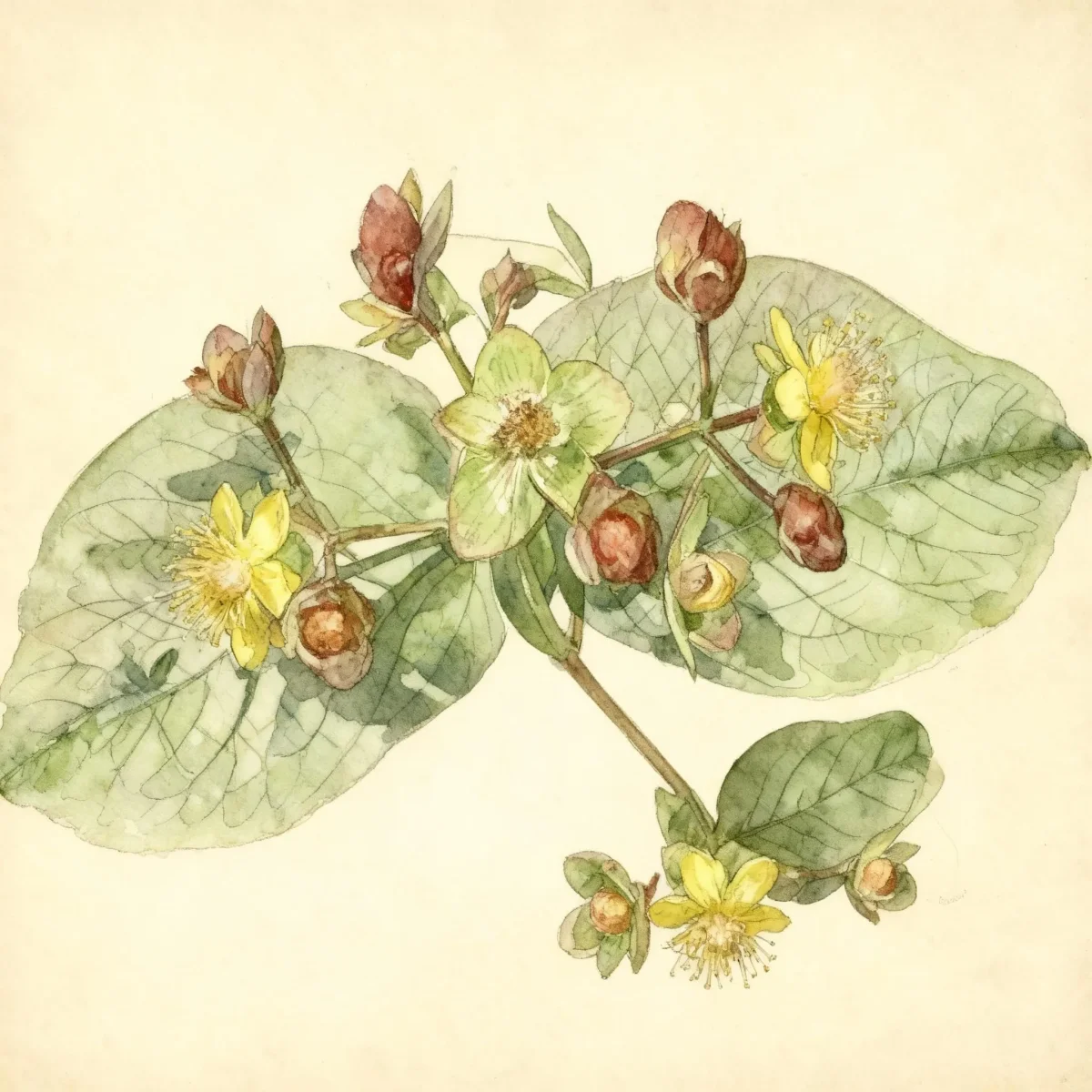
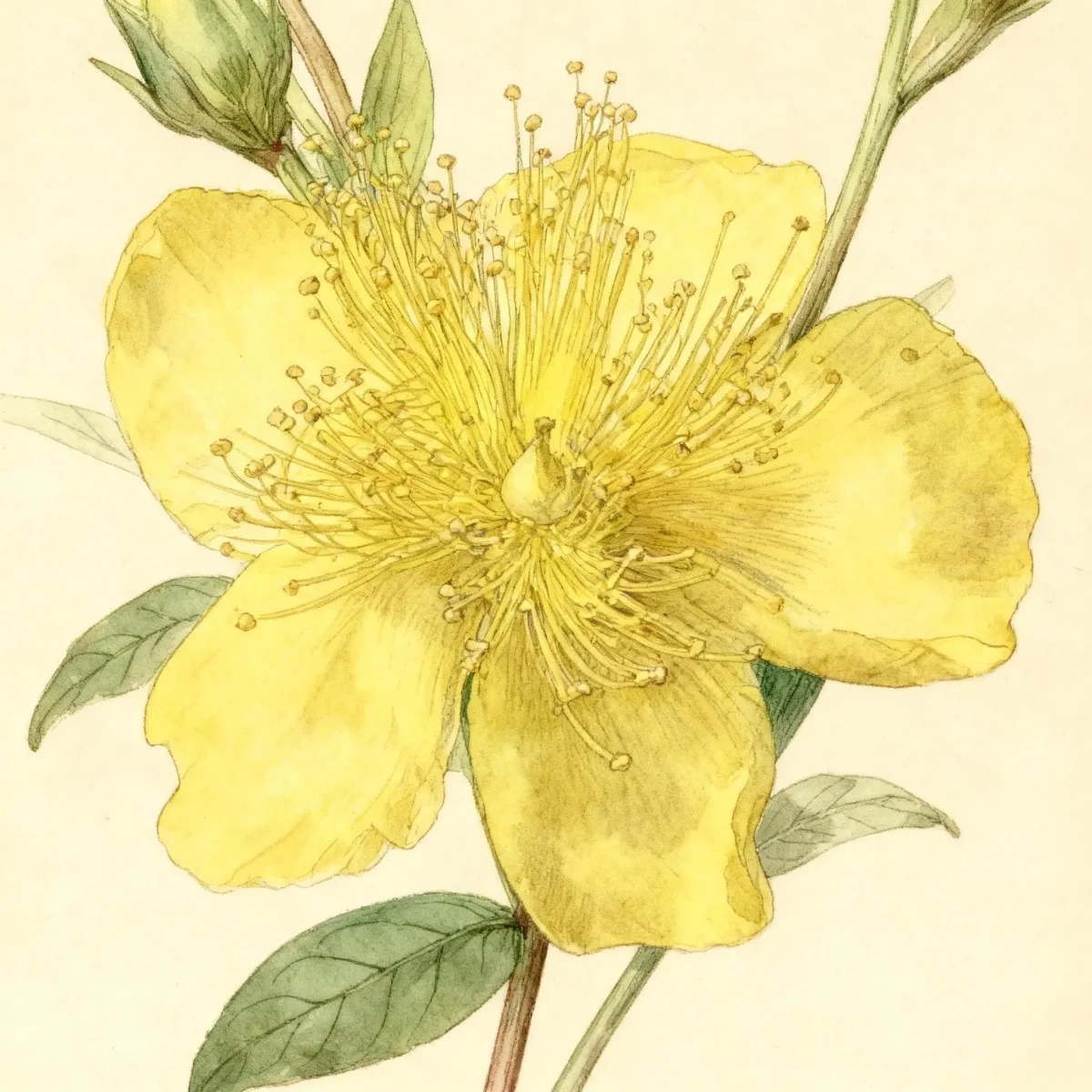
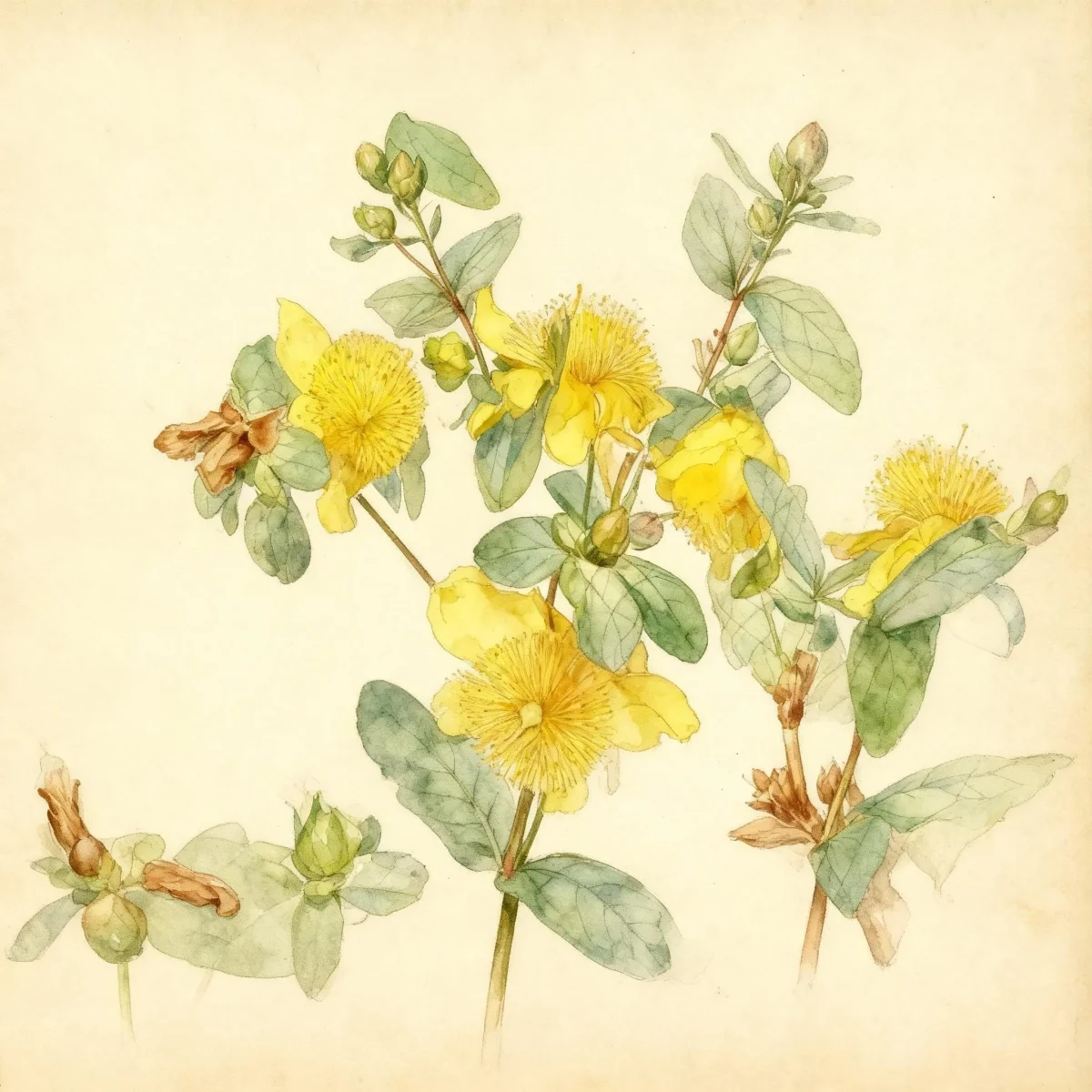
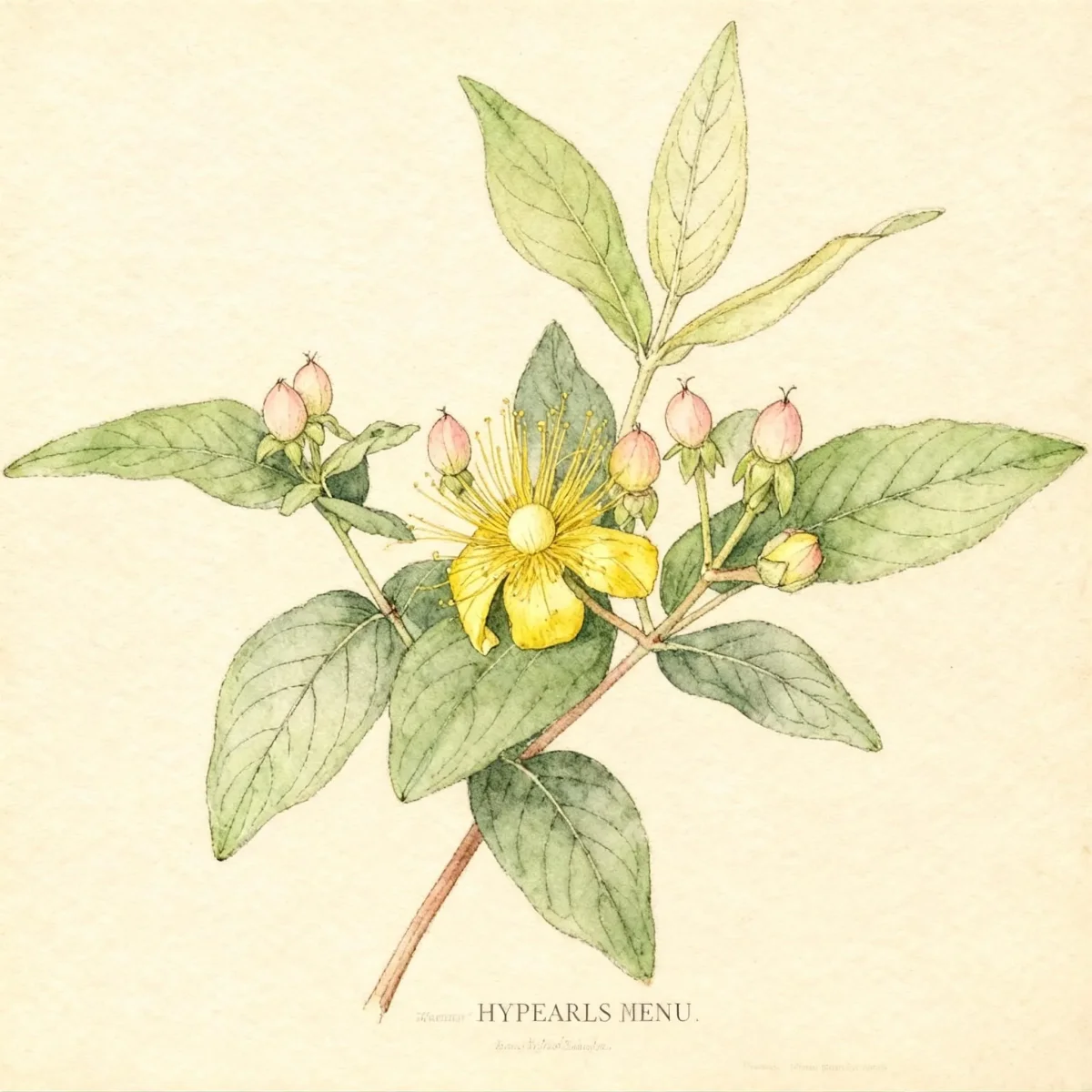
Hypericum kouytchense is a semi-evergreen shrub, often behaving as deciduous in colder regions like St. Louis, which typically grows in a dense mound reaching 2-3 feet tall and spreading 3 to 5 feet wide. It is highly noted for its vibrant yellow flowers, attractive blue-green foliage, and resulting red fruit. This rounded shrub features arching stems clad with elliptic to ovate, bluish-green leaves up to 2.5 inches long, producing five-petaled, golden yellow flowers (2.5-inch diameter) in multi-flowered cymes from June through September. The genus name is derived from the Greek words hyper meaning “above” and eikon meaning “picture,” referencing the historical practice of hanging flowers from this genus above images.
Tolerances
- Drought
Potential Problems
Gardeners will be pleased to note that Hypericum kouytchense experiences virtually no serious insect or disease problems under proper growing conditions. This excellent pest and disease resistance contributes heavily to its low maintenance rating. If cultural conditions are severely violated—such as prolonged waterlogging—root rot or fungal leaf spots could potentially develop, although this is uncommon for the sturdy Large-flowered St. John’s wort.
Frequently Asked Questions
What hardiness zones is Large-flowered St. John’s wort suitable for?
Hypericum kouytchense is best grown in USDA Hardiness Zones 6 through 9, offering reliability across varied temperate climates.
How large does Hypericum kouytchense grow?
This shrub typically matures to a height between 2 and 3 feet, achieving a spread of 3 to 5 feet wide, forming a dense, rounded mound.
When does Large-flowered St. John’s wort bloom?
The prolific blooming period for this species generally spans the summer months, specifically from June until September, producing cheerful yellow flowers.
What sun exposure does Hypericum kouytchense need?
This plant adapts well to both full sun and partial shade conditions, demonstrating strong performance across this range.
Conclusion
The Hypericum kouytchense, or Large-flowered St. John’s wort, offers gardeners a low-effort, high-reward deciduous shrub known for its summery yellow blossoms and robust constitution. Its dense growth structure and resistance to common pests make it an indispensable element for foundation planting or low hedging. Ensure you confirm your local hardiness zone compatibility before its initial planting time this spring or fall.
Companion Planting
Because Hypericum kouytchense prefers medium moisture and tolerates drought, it pairs well with plants that share similar, slightly adaptable cultural needs but offer different textures or colors. Consider placing it near ornamental grasses that appreciate full sun to part shade, such as certain varieties of Miscanthus or Panicum, which provide vertical contrast to the shrub’s mounding form.
For perennial partners, plants like Russian Sage (Perovskia atriplicifolia) or Dwarf Coneflowers (Echinacea purpurea) work well, as they thrive in similar sun exposure and appreciate good drainage. If you are utilizing the Hypericum kouytchense in a woodland margin setting, ferns and Hosta varieties that can handle increased light will complement its medium requirements nicely.
Design Ideas for Low Hedges
Using Large-flowered St. John’s wort as a structured low hedge is one of its primary landscape functions. Planted tightly, the shrubs merge to form a continuous, flowering barrier about 2-3 feet high, ideal for defining the edge of a perennial border or screening the lower portions of a foundation. The blue-green foliage offers a soft backdrop throughout the season.
In contemporary or minimalist designs, mass planting Hypericum kouytchense creates a uniform drift of texture and color, requiring minimal shearing due to its naturally mounding habit. Its toughness means this hedge can perform reliably along sunny driveways or pathways where maintenance access might be limited, providing seasonal color without becoming overgrown or leggy.