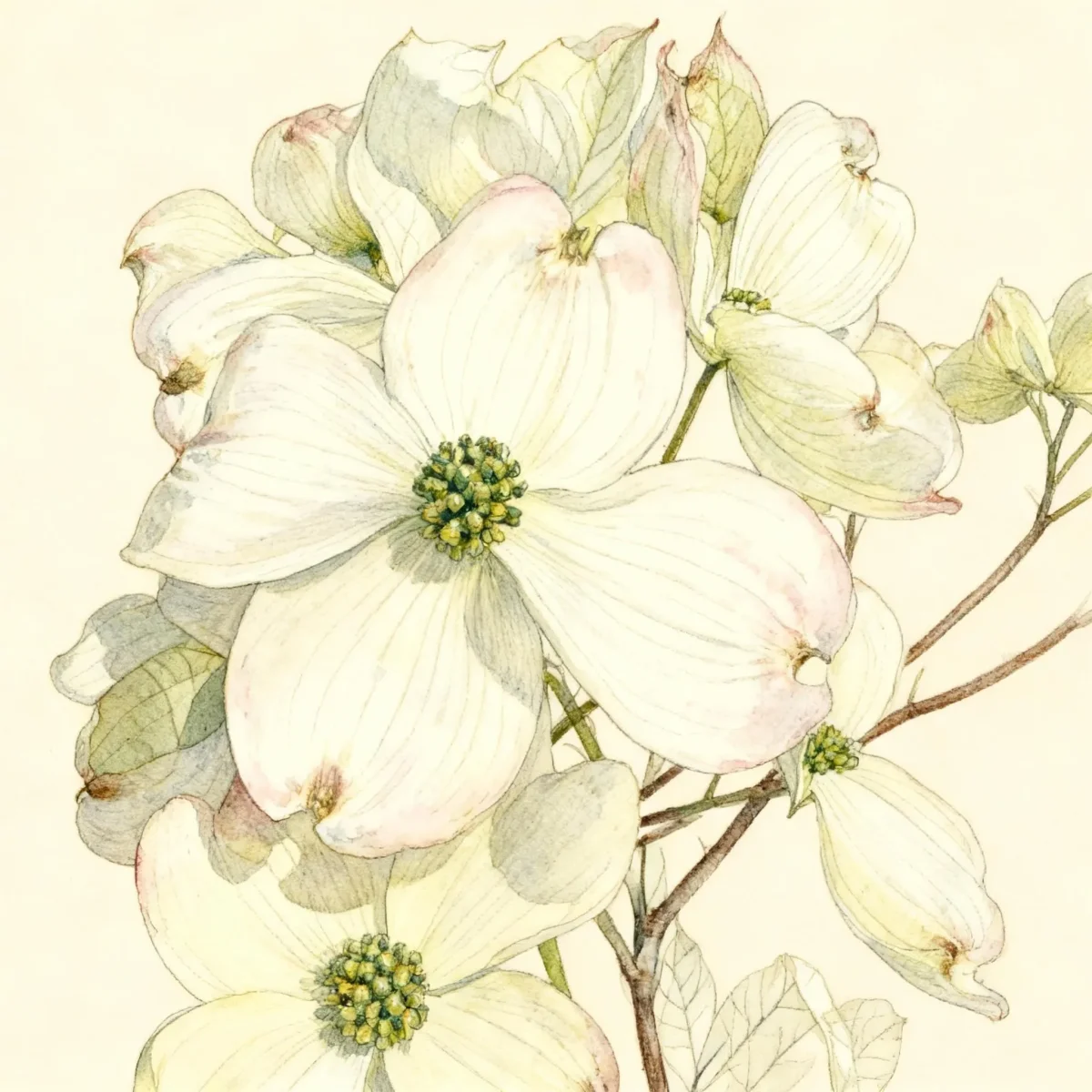
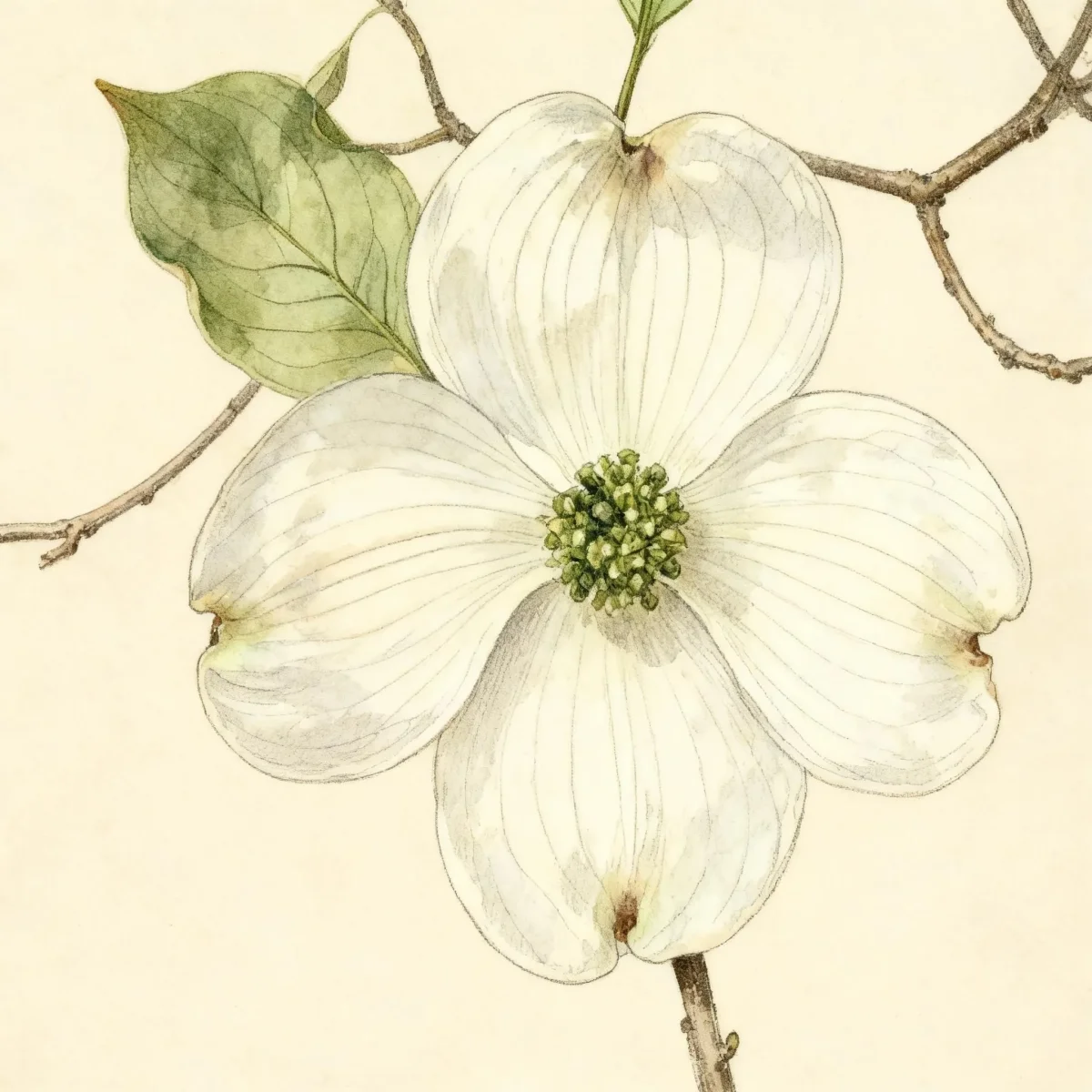
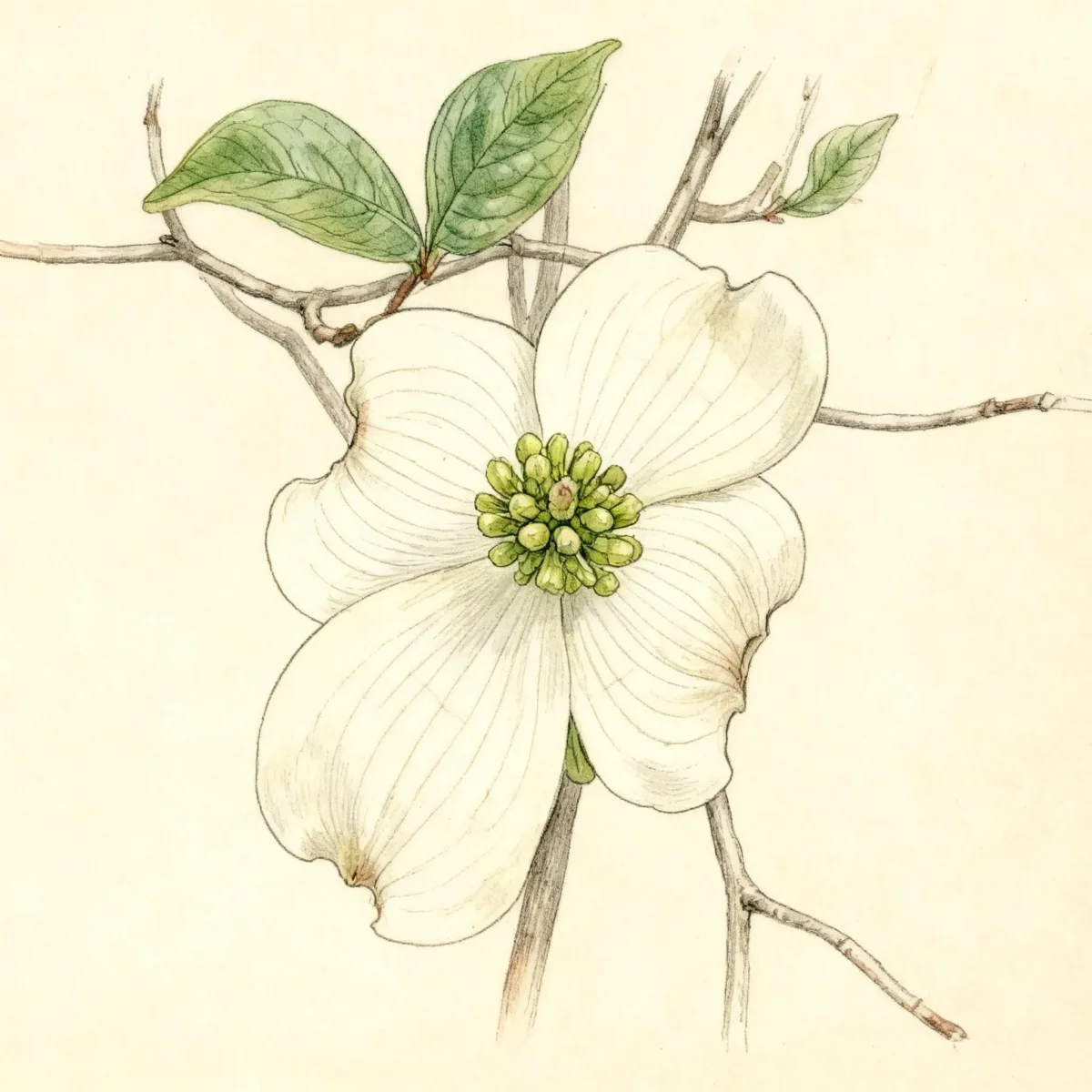
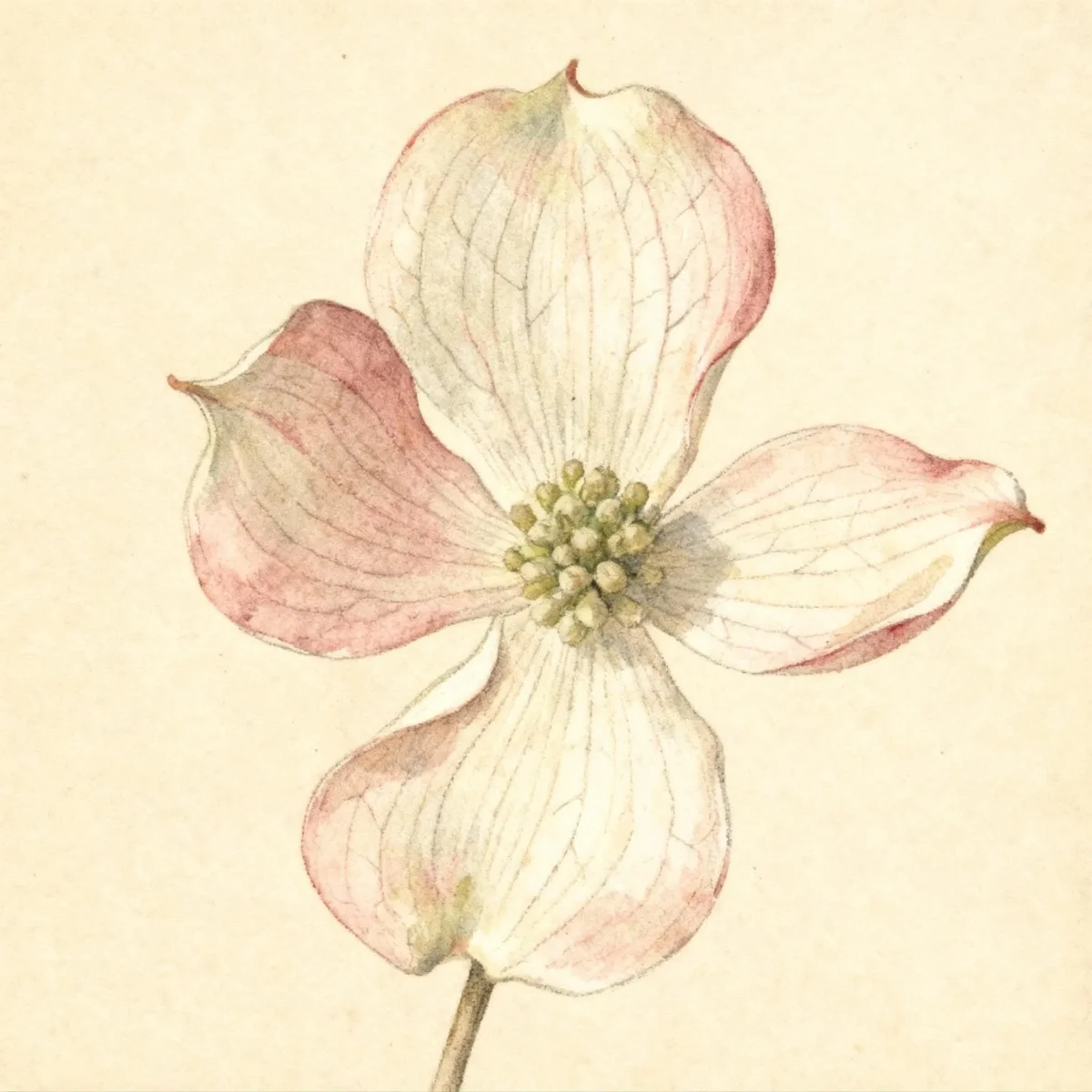
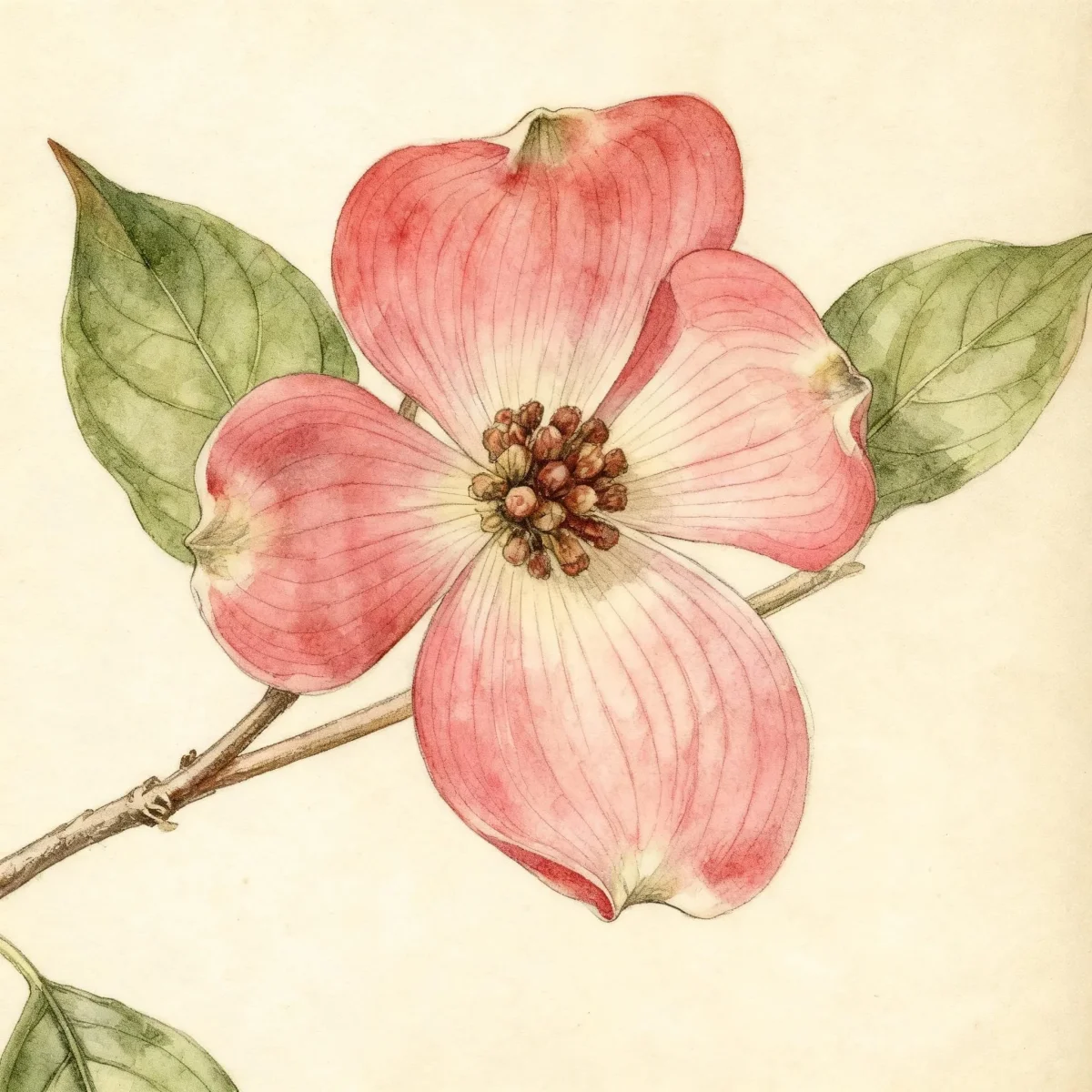
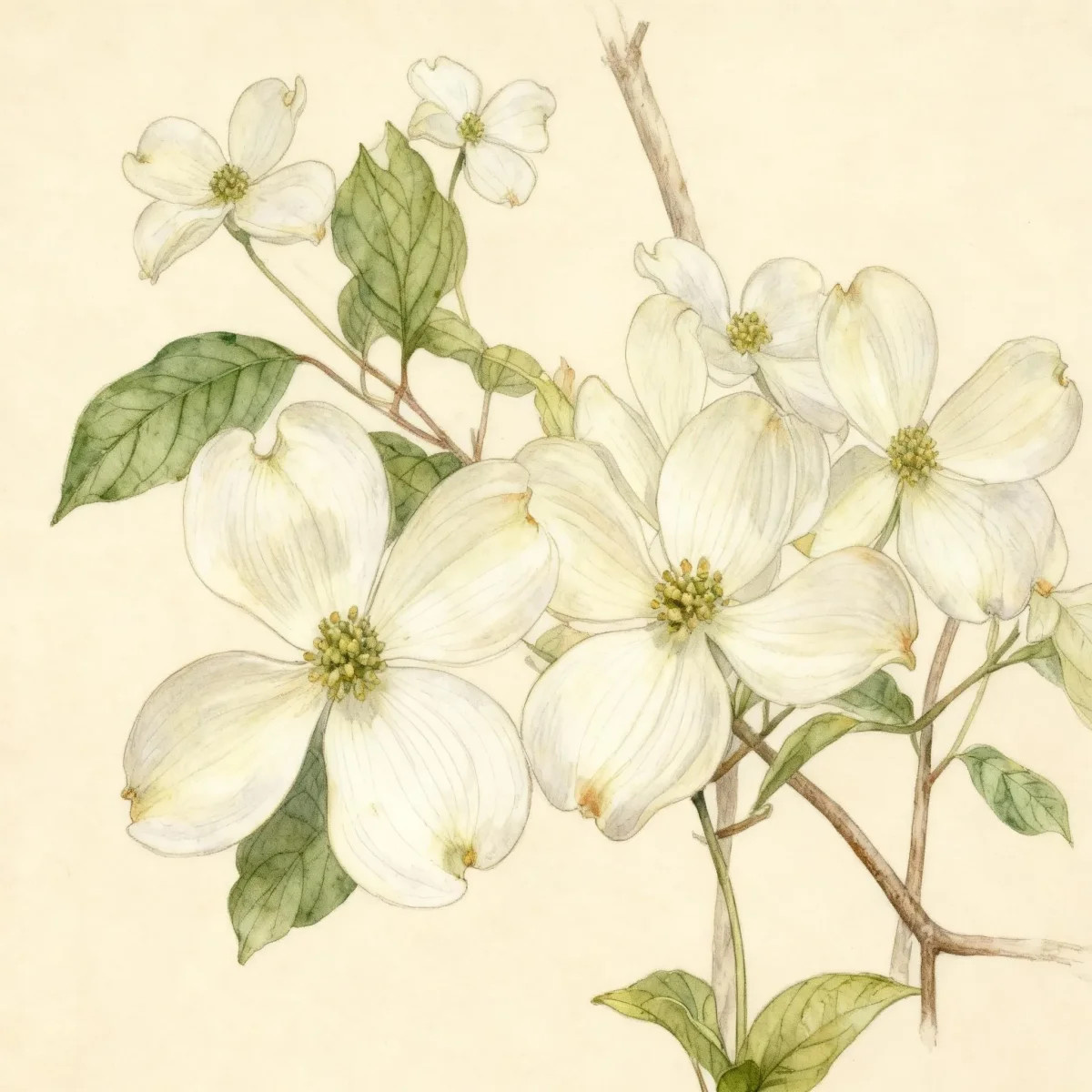
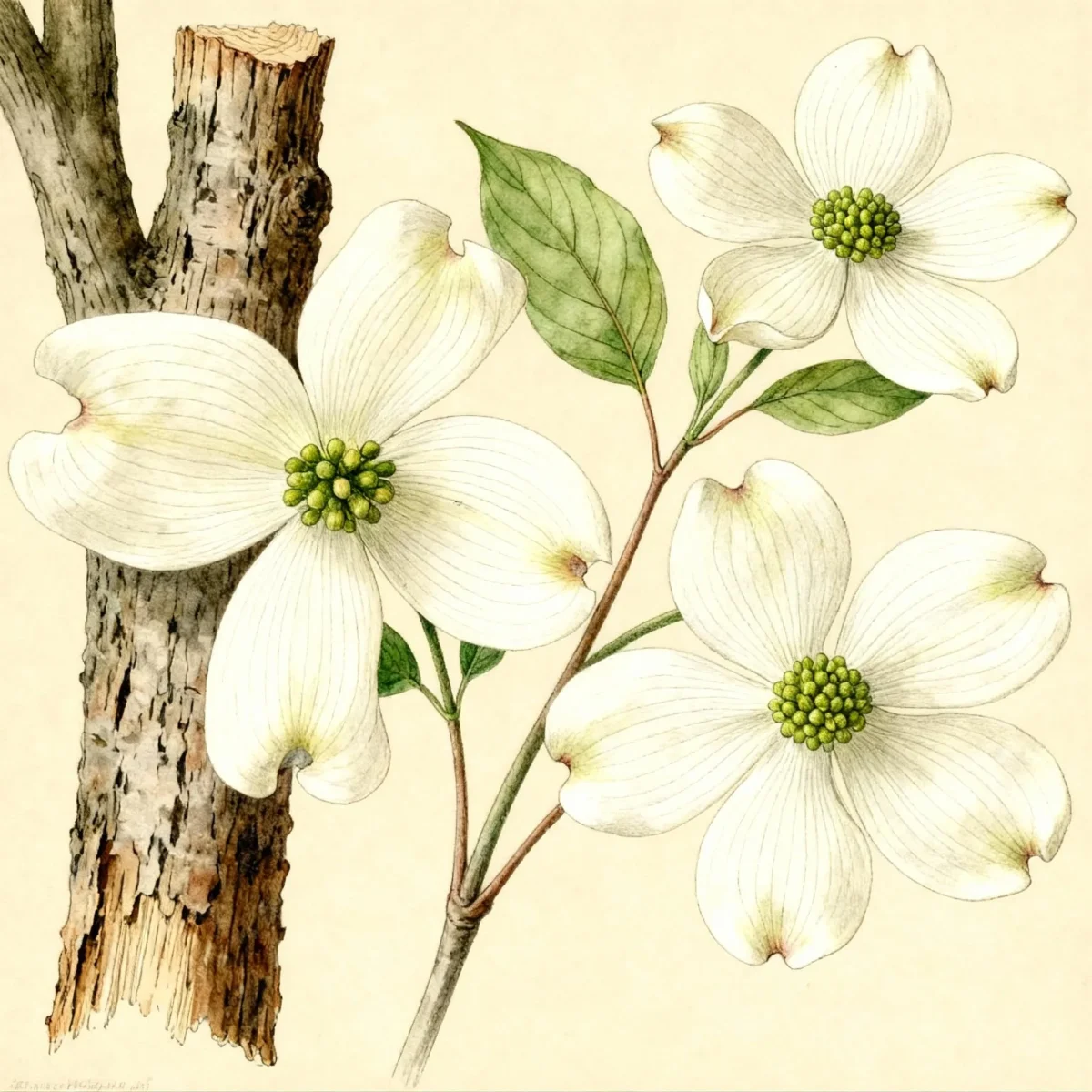
Flowering dogwood (Cornus florida)
Discover the beautiful Flowering dogwood (Cornus florida), an iconic Eastern North American tree known for its showy white spring bracts.

Bloom Boldly, No Matter the Season - Sweatshirt
Cozy organic cotton sweatshirt featuring our exclusive Purple Coneflower design. Perfect for gardeners who bloom year-round.
Inspired by the beautiful Flowering dogwood
Limited first batch (50) — join the waitlist for early access
Waitlist closes Feb 15, 2026.
Complete Plant Information
Field Guide Continues
Ready for care notes, companion picks, and planting tips?
The map is just the start. The full guide below covers growth habits, seasonal performance, and landscape uses.
Overview
The Flowering dogwood, Cornus florida, stands as one of the most cherished native flowering trees in Eastern North America. Its primary ornamental value lies in the spectacular display of white, petal-like bracts that emerge in spring, giving the often understated true flowers an expansive, showy appearance. This small deciduous tree has a distinctive, tiered branching habit that remains attractive even after the foliage drops.
This species is highly valued for adding crucial seasonal interest, transitioning from brilliant spring blooms to rich red fall foliage and persistent red fruits enjoyed by local birds. Cornus florida thrives across a wide native range, making it a versatile four-season specimen for many landscapes.
While beautiful, gardeners must approach planting Cornus florida with awareness of its specific needs and potential susceptibility to certain diseases, especially when stressed. Proper siting and cultural care are essential to ensure this iconic tree establishes successfully.
Fast Facts
- Plant Family: Cornaceae
- Plant Type: Tree
- Native Range: Eastern North America
- Hardiness Zones: USDA Zones 5-9
- Size at Maturity:
- Height: 15-30 ft
- Spread: 15-30 ft
- Bloom Time: April to May
- Bloom Description: White (bracts)
- Sun Exposure: Full sun to part shade
- Water Needs: Medium
- Maintenance Level: Medium
How to Grow
The best time to plant Cornus florida is typically in the fall or early spring when the tree is dormant. Select a site that offers protection from intense afternoon sun, favoring full sun to part shade exposure depending on your location within the hardiness range. This species prefers moist, organically rich, acidic, and well-drained soils, making soil amendment important in heavy clay areas.
Consistent moisture is key, especially during the establishment period, as this tree requires medium water levels. Avoid letting the roots dry out completely during the summer heat. Fertilization is generally unnecessary if the soil is organically rich; however, avoid heavy nitrogen applications which can encourage weak, susceptible growth.
A vital cultural practice for Cornus florida is applying a 2-4 inch layer of mulch around the base. This mulch helps maintain cool, moist root conditions, which the shallow root system demands. Be cautious about planting where known dogwood anthracnose infestations persist, and site your tree carefully to minimize stress.
Pruning should be minimized and performed only to remove dead, damaged, or crossing branches, usually performed in late winter while dormant. Always use clean tools to reduce the transmission of potential pathogens.
Landscape Uses
The Flowering dogwood is supremely adaptable for use as a specimen plant, drawing the eye with its spectacular spring show. Its relatively small stature makes it perfectly scaled for residential properties, situated near patios or centrally placed within a lawn where its low, spreading structure can be fully appreciated.
This tree also excels in naturalized settings, performing admirably in woodland gardens where it can benefit from dappled light filtering through taller canopy trees. Furthermore, due to its native status, Cornus florida is a superb addition to bird or native plant gardens, offering food resources for wildlife.
When designing borders, group dogwoods with early spring bulbs for layered color, or use shade-tolerant understory shrubs that appreciate similar acidic soil conditions. Ensure adequate space is provided for its mature spread of 15 to 30 feet to prevent overcrowding.
Standout Features
Flower Qualities
- Showy
Fruit Qualities
- Showy
Noteworthy Characteristics
Cornus florida, commonly known as flowering dogwood, is a small deciduous tree that typically grows 15-30’ tall with a low-branching, broadly-pyramidal but somewhat flat-topped habit. The true flowers are inconspicuous, surrounded by four large, showy white bracts, creating the illusion of a large flower, and its oval leaves turn attractive shades of red in the fall. The bright red fruits mature in late summer and are a favored food source for birds.
Tolerances
- Deer
- Clay Soil
- Black Walnut
Potential Problems
The most serious concern for Cornus florida is dogwood anthracnose, a fungal disease that can cause significant decline or death, particularly in stressed plants. While its severity varies geographically, gardeners should be proactive regarding site selection to avoid already infected areas.
To prevent stress that invites disease and pests like borers, ensure the tree receives adequate water and is planted in rich, mulched soil. Other common issues include powdery mildew, leaf spot, and root rot. Maintaining good air circulation and avoiding overhead watering can help mitigate many common fungal leaf spots.
Frequently Asked Questions
What hardiness zones is Flowering dogwood suitable for?
The Flowering dogwood (Cornus florida) is generally suitable for USDA Hardiness Zones 5 through 9.
How large does Flowering dogwood grow?
This tree typically matures to a height between 15 and 30 feet, with an equal spread ranging from 15 to 30 feet.
What sun exposure does Cornus florida need?
Cornus florida prefers a balance, thriving in locations ranging from full sun down to part shade.
When does Flowering dogwood bloom?
The spectacular blooms, characterized by their large white bracts, appear reliably from April to May.
Conclusion
The Cornus florida, or Flowering dogwood, is an indispensable native tree, celebrated for its unparalleled four-season beauty, especially its remarkable spring floral display and vibrant fall color. Successfully integrating this beauty into your garden requires careful attention to soil moisture and siting to avoid stress, thereby protecting the tree from potential diseases. Before planting, confirm your local hardiness zone compatibility and prepare an organically rich, acidic soil bed for your new specimen.
Wildlife Benefits
The presence of Cornus florida significantly enhances local ecosystems by providing critical resources for native fauna. The bright red fruits, which mature in late summer and may persist well into winter, are highly attractive to many bird species, providing essential late-season sustenance.
Beyond the fruits, the dense, layered branching structure of the mature tree offers excellent cover and nesting sites for smaller songbirds throughout the year. By selecting native varieties like the Flowering dogwood, gardeners actively support local biodiversity.
Companion Planting
When designing areas around your Cornus florida, focus on companion plants that share its cultural requirements for moist, acidic, and organically rich soil. Shade-tolerant perennials that appreciate protection from harsh afternoon sun are ideal partners.
Consider planting low-growing ferns, shade-loving hostas, or groundcovers like Vinca minor or woodland phlox underneath the drip line. These companions help keep the sensitive root zone of the dogwood cool and consistently moist, mirroring its preferred woodland habitat.