

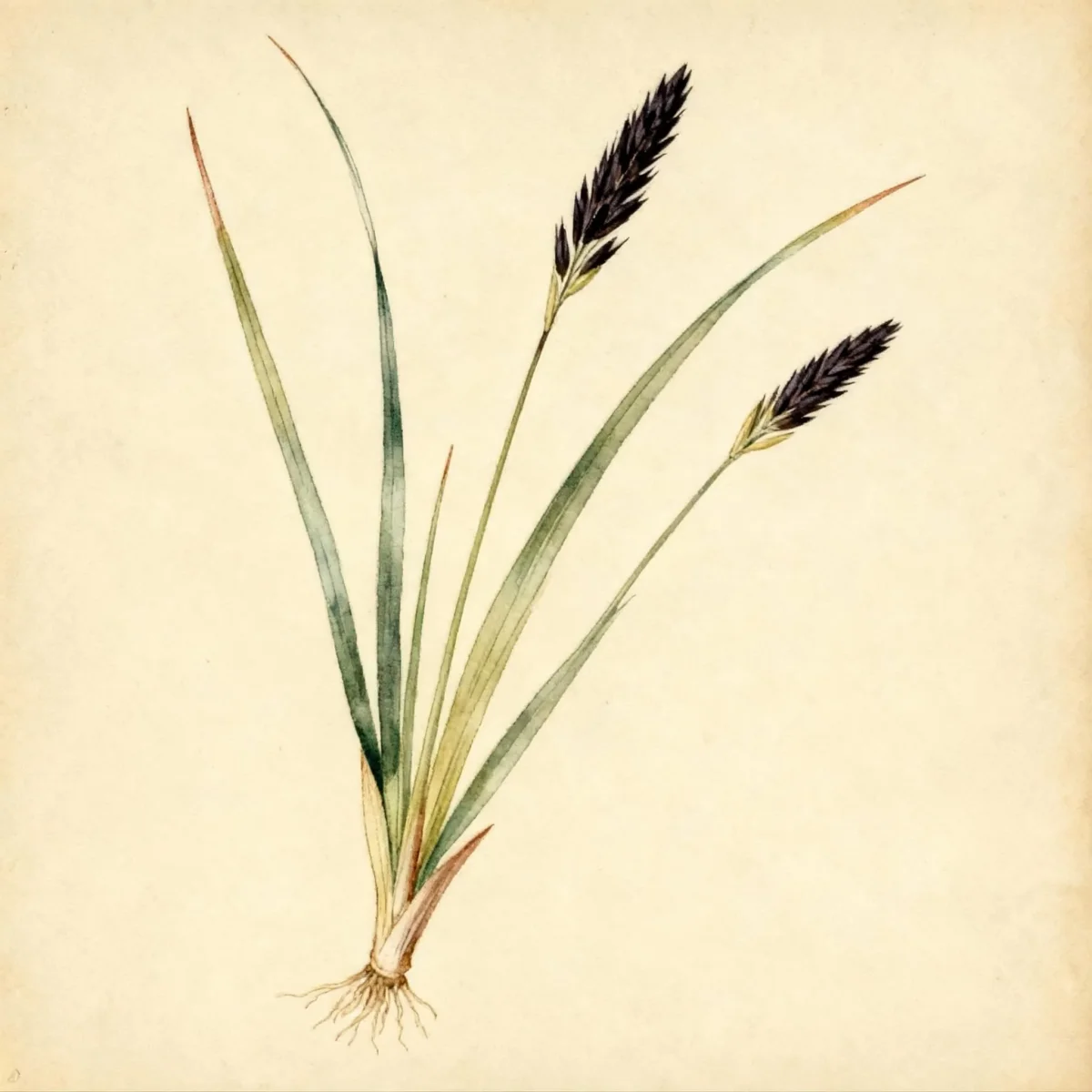
Black sedge (Carex nigra)
Carex nigra, or Black sedge, offers low-maintenance texture with blue-green foliage perfect for wet, shady rain gardens.

Bloom Boldly, No Matter the Season - Sweatshirt
Cozy organic cotton sweatshirt featuring our exclusive Purple Coneflower design. Perfect for gardeners who bloom year-round.
Inspired by the beautiful Black sedge
Limited first batch (50) — join the waitlist for early access
Waitlist closes Feb 15, 2026.
Complete Plant Information
Field Guide Continues
Ready for care notes, companion picks, and planting tips?
The map is just the start. The full guide below covers growth habits, seasonal performance, and landscape uses.
Overview
Carex nigra, commonly known as Black sedge, provides valuable textural interest in difficult, persistently wet garden areas. This sedge features distinctive dark blue-green to blue-gray foliage, often with a lighter, powdery white underside, offering year-round structure in milder climates. Its low-growing habit and ability to spread via runners make it excellent for massing and stabilization projects.
This is a low-maintenance plant that excels where other grasses or groundcovers fail, thriving in wet soil conditions. While its flowers and seed heads are noted for being black and attractive, they are not showy, meaning its primary appeal lies in its foliage and functional growth habit. Gardeners value the Carex nigra for its reliability as an evergreen element in shady, damp locations.
The genus name relates to the sharp edges found on most sedge leaves, which helps gardeners distinguish them from round-stemmed rushes. For reliable performance, ensure established Carex nigra receives consistent moisture, positioning it as a superb choice for rain gardens and waterside plantings.
Fast Facts
- Plant Family: Cyperaceae
- Plant Type: Rush or Sedge
- Native Range: Europe
- Hardiness Zones: USDA Zones 4-8
- Size at Maturity:
- Height: 0.5-0.75 ft
- Spread: 1-3 ft
- Bloom Time: April
- Sun Exposure: Part shade to full shade
- Water Needs: Wet
- Maintenance Level: Low
How to Grow
Planting Carex nigra is best achieved in spring or fall, provided the ground is workable. The ideal location features consistently wet soils, thriving in part shade to full shade conditions. While it tolerates full sun, it requires constant moisture replenishment in brighter light, making shady, damp spots its true preference. It establishes well in medium-moisture soils but exhibits its best vigor in truly wet conditions, making it perfect for marginal planting areas.
Care for this Black sedge is minimal once established. Watering is mostly unnecessary except during prolonged dry spells, as it requires perpetually moist or wet conditions to perform optimally. Fertilizing is rarely needed; overly rich soil can sometimes lead to less desirable growth habits. Pruning is generally limited to removing any large patches of dead foliage in early spring before new growth emerges, though it often remains evergreen.
A unique feature of this species is its tolerance for standing water; Carex nigra can successfully grow in shallow water up to three or four inches deep, making it a genuine water plant. While it persists well in warm winters, expect less persistent green color in colder zones unless the winter weather is unusually mild.
Landscape Uses
The versatility of Carex nigra shines when utilized in functional landscapes requiring solutions for wet, shaded sites. It excels as a durable ground cover, spreading gently to create dense mats that suppress undesirable weeds while stabilizing slopes susceptible to erosion. Its suggested uses include rain gardens, naturalized areas, and the edges of ponds or bog gardens where standing water is present.
When grown in mass plantings, the fine texture of the blue-green foliage of Black sedge provides a wonderful contrast to broader-leaved perennials. Consider planting it alongside moisture-loving woodland natives such as ferns or hostas in shadier borders, or place it near the edge of a water feature where it can transition seamlessly between land and water. Its low stature also makes it an underrated choice for softening the edges of rock gardens or pathway borders where consistent moisture is present.
Standout Features
Flower Qualities
- Insignificant
Noteworthy Characteristics
Carex nigra, commonly called black sedge, has dark blue-green to blue-gray foliage with a powdery white underside. It is evergreen in all but the coldest climates, spreading by runners to form tufts. Its black flowers and seed heads are attractive though not showy. Genus name from Latin means cutter in reference to the sharp leaves and stem edges (rushes are round but sedges have edges) found on most species’ plants.
Tolerances
- Deer
- Heavy Shade
- Erosion
- Wet Soil
Potential Problems
Carex nigra is renowned for having no serious pests or diseases, contributing significantly to its low-maintenance profile. The primary concern relates to environmental stress, particularly moisture management in warmer climates. Plants grown in hot, dry regions will require constant vigilance to ensure the soil remains saturated; allowing the soil to dry out, even briefly, can stress the sedge significantly. In contrast, in cooler regions, its main challenge is the potential loss of evergreen color during severe cold snaps.
Frequently Asked Questions
What hardiness zones is Black sedge suitable for?
Carex nigra is reliably hardy across USDA Zones 4 through 8, giving it a wide range of applicability across temperate gardens.
How large does Carex nigra grow?
This sedge typically reaches a mature height between 0.5 to 0.75 feet, with a moderate spread of 1 to 3 feet as it colonizes an area via runners.
What sun exposure does Carex nigra need?
Black sedge prefers part shade to full shade locations, though it can tolerate full sun provided the soil remains consistently wet or saturated.
When does Carex nigra bloom?
The blooming period for this species is typically in April, showcasing its inconspicuous black flowers and seed heads.
Conclusion
The Carex nigra, or Black sedge, offers gardeners a robust, attractive solution for managing persistent moisture in shaded environments. Its durable, blue-tinged foliage and exceptional tolerance for wet soil make it invaluable for ecological landscaping and low-input gardens. Before planting, confirm that your intended site resides within USDA Zones 4-8 and can maintain the necessary wet soil conditions for optimal performance.
Companion Planting
Due to its specific need for saturated, poorly draining soils, Carex nigra pairs wonderfully with other bog and wetland specialists. Look for irises, Japanese primroses (Primula japonica), or marsh marigolds (Caltha palustris) which share similar cultural needs regarding high moisture levels. In slightly drier, but still moist, shady borders, contrast the airy texture of the sedge with the bold, broad leaves of Ligularia or large-leaved Astilbe cultivars.
Design Ideas for Rain Gardens
Utilizing Black sedge strategically within a rain garden design leverages its root structure to absorb excess water runoff while providing year-round visual interest. Place clumps of Carex nigra lowest in the basin—where water pools temporarily—as it tolerates shallow submersion best. Use it to interweave between larger accent plants like upright rushes or marsh hibiscus, allowing the fine, arching foliage of the sedge to create soft transitions between mulch, gravel, and open water areas.


