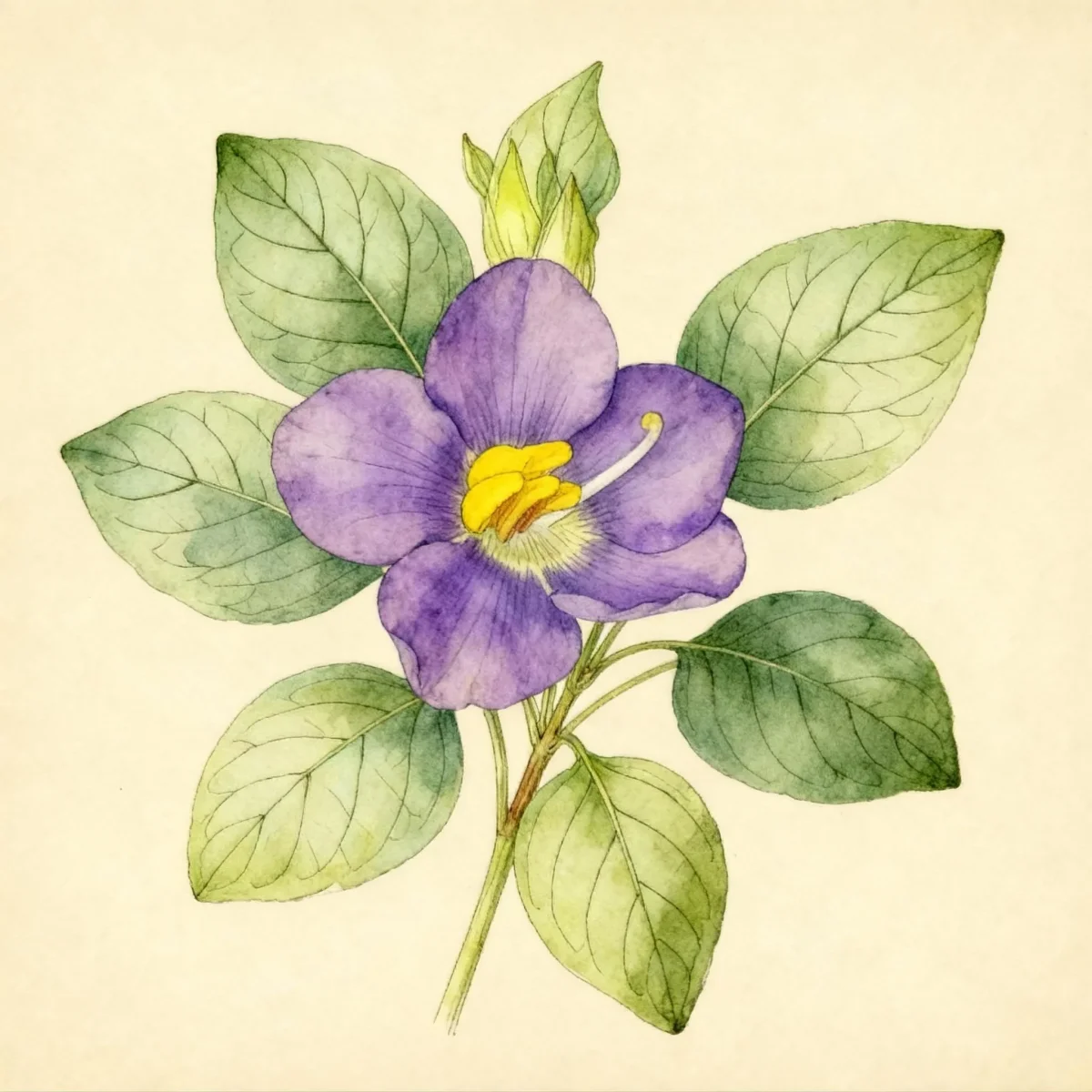
Persian violet (Exacum affine)
The Persian violet (Exacum affine) provides abundant blue-to-purple flowers and shiny foliage, ideal for containers in warm climates.

Bloom Boldly, No Matter the Season - Sweatshirt
Cozy organic cotton sweatshirt featuring our exclusive Purple Coneflower design. Perfect for gardeners who bloom year-round.
Inspired by the beautiful Persian violet
Limited first batch (50) — join the waitlist for early access
Waitlist closes Feb 15, 2026.
Complete Plant Information
Field Guide Continues
Ready for care notes, companion picks, and planting tips?
The map is just the start. The full guide below covers growth habits, seasonal performance, and landscape uses.
Overview
The Exacum affine, widely known as the Persian violet, is prized for its densely set, brilliant blue to deep purple flowers that create a cloud of color throughout the growing season. This compact annual is valued for its glossy, green foliage which offers a beautiful contrast to its delicate blooms. Gardeners appreciate the Persian violet for its low-maintenance nature and its ability to provide consistent color in shaded spots.
Native to Yemen, Exacum affine thrives as a tender annual or short-lived perennial in warm, humid climates (Zones 10-12). When grown under ideal conditions, these highly fragrant flowers densely clothe the rounded plant, making it a standout choice for seasonal displays. Its small stature makes it exceptionally useful in close-up settings where its fine texture can be best appreciated.
This plant establishes easily and, provided it receives consistent moisture and protection from harsh afternoon sun, rewards the gardener with a long blooming period. While sometimes treated as a short-term decorative houseplant, utilizing Exacum affine outdoors in containers or as bedding in tropical zones unlocks its full decorative potential.
Fast Facts
- Plant Family: Gentianaceae
- Plant Type: Annual
- Native Range: Yemen
- Hardiness Zones: USDA Zones 10-12
- Size at Maturity:
- Height: 0.5-1.5 ft
- Spread: 0.5-1 ft
- Bloom Time: Seasonal bloomer
- Bloom Description: Blue to deep purple
- Sun Exposure: Part shade
- Water Needs: Medium
- Maintenance Level: Low
How to Grow
To successfully cultivate Exacum affine, select a location that receives bright, indirect light or part shade; direct, hot afternoon sun should be strictly avoided. This plant prefers rich, well-drained, but consistently moist soil. If growing as a pot plant outdoors, ensure the potting mix drains effectively while retaining adequate moisture for the roots.
Maintenance is relatively low, aligning perfectly with its description. Provide consistent, medium watering, ensuring the soil never dries out completely, especially during warm spells. While the plant will tolerate a good light intensity, providing warm night temperatures between 60° to 70°F encourages the best flowering response.
Although these plants flower for an extended period, they can be challenging to keep going long-term after a heavy bloom cycle. Gardeners looking to preserve their Persian violet stock should take cuttings successfully before this decline occurs. In suitable subtropical or tropical zones (10-12), this plant can be treated as a permanent landscape feature, acting as robust bedding or a low ground cover.
Landscape Uses
In regions compatible with its hardiness (Zones 10-12), Exacum affine fills vital landscape roles, particularly as an excellent bedding plant or low, spreading ground cover. Its compact habit and rich color make it perfect for edging pathways or softening the front of beds where larger plants reside. Because of its container preference detailed in its cultural notes, the Persian violet shines in mixed patio arrangements.
When using Exacum affine in containers, pair it with plants that share similar part-shade and moisture requirements, such as impatiens, coleus, or ferns. The striking blue flowers of this plant offer a cool contrast against foliage plants with yellow or bronze leaves. For patio or deck container gardens, the rounded form of the Persian violet serves beautifully as a filler, offering dense texture underneath taller specimens.
As an annual in slightly cooler zones, it functions excellently as a temporary splash of cool blue color in shaded annual displays. Remember that the lovely blue flowers of Exacum affine are a focal point, so position them where they can be viewed up close, such as near entryways or seating areas.
Standout Features
Flower Qualities
- Showy
Noteworthy Characteristics
Exacum affine, commonly called Persian violet, is a 6 to 12 inch tall annual that is popular for its beautiful blue flowers and shiny green foliage. The tiny leaves of this rounded plant are ovate in shape and densely cover the stems. Lovely blue flowers with bright yellow pollen masses in their centers appear in the spring and summer. These fragrant flowers will densely clothe this plant if it is grown under the proper cultural conditions.
Tolerances
Potential Problems
The good news for gardeners is that Exacum affine typically suffers from no serious pest or disease issues, resulting in its low maintenance rating. For indoor growing situations where problems might arise, refer to general guidelines for common indoor plant ailments. When growing outdoors, ensure proper air circulation and avoid overly saturated soil to prevent common fungal issues that affect most bedding plants.
Frequently Asked Questions
What hardiness zones is Persian violet suitable for?
The Persian violet (Exacum affine) is suitable for permanent outdoor cultivation only in USDA Hardiness Zones 10 through 12.
How large does Exacum affine grow?
This species typically reaches a height between 0.5 and 1.5 feet tall, with a similar spread, creating a compact, mounding habit.
What sun exposure does Persian violet need?
Exacum affine requires part shade; it tolerates good light but must be protected from direct, intense sun exposure to prevent leaf scorch and stress.
When does Exacum affine bloom?
It functions as a seasonal bloomer, typically producing its lovely blue to deep purple flowers during the spring and summer months.
Conclusion
The Persian violet (Exacum affine) is a geometrically pleasing annual that provides outstanding, colorful texture and fragrance to shaded gardens and containers. Its ease of care, classified as low maintenance, makes it highly accessible to most gardeners. Before planting, confirm that your hardiness zone falls within the 10-12 range or plan to grow it as a glorious container specimen.
Companion Planting
When integrating Exacum affine—the Persian violet—into ground beds or mixed containers, select plants that thrive in part shade conditions and appreciate consistently moist, well-drained soil. Good companions include various types of Begonias, which offer different flower shapes and foliage textures that play nicely against the fine leaves of Exacum affine. Shade-loving ferns also make superb neighbors, providing vertical contrast to the low, mounding habit of the violet.
Another excellent pairing involves plants with warm-toned foliage, such as certain varieties of Coleus or Heuchera (Coral Bells) with chartreuse leaves. The cool, deep blue flowers of the Persian violet pop dramatically against warmer tones, enhancing the overall visual complexity of the shady border or patio display. Focus on plants that do not compete aggressively for soil moisture, as consistent watering is key for this species.
Propagation Tips
While Exacum affine is often treated as a disposable annual, successful propagation is possible, particularly if you wish to keep the favorite individuals thriving year over year, especially outside of tropical zones. The best method noted for extending the life of this bedding plant is taking cuttings successfully. These cuttings should be rooted in a sterile, moist medium under high humidity until they establish a strong root system.
For those attempting spring planting from seed, start them indoors early, ensuring they receive the consistent warmth (Exacum affine prefers 60° to 70°F nights) required for germination and early development. Starting seeds indoors gives you a head start on the seasonal blooming cycle intended for this annual. Once rooted or hardened off, treat the young plants similarly to how you would transplant any tender bedding annual.