Wild geranium(Geranium maculatum f. Albiflorum)
Grow white-flowered wild geranium in a woodland border with practical advice on shade, moisture, naturalizing, division, and companion plants.

Complete Plant Information
- Hardiness zones
- USDA 3–8
- Plant type
- Herbaceous perennial
- Plant family
- Geraniaceae
- Sun exposure
- Full sun to part shade
- Water needs
- Medium
- Maintenance
- Medium
- Height
- 1–1.5 ft (30–46 cm)
- Spread
- 1–1.5 ft (30–46 cm)
- Bloom time
- April to May
- Flower color
- White
- Flower qualities
- Showy
- Fruit qualities
- Not recorded
- Tolerances
- Rabbit, Deer, Drought
- Garden uses
- Not recorded
- Native range
- Northeastern United States
Field Guide Continues
Ready for care notes, companion picks, and planting tips?
The map is just the start. The full guide below covers growth habits, seasonal performance, and landscape uses.
A white-flowered wild geranium for spring shade
Geranium maculatum f. albiflorum is the white-flowered form of an eastern North American woodland perennial that usually blooms pink to lilac. It forms a rounded clump of deeply divided leaves about 1 to 1.5 feet tall and wide. White, upward-facing flowers appear in April and May, followed by narrow, beaked seed capsules that explain the “cranesbill” name used for hardy geraniums.
This plant suits an informal woodland edge, a partly shaded native border, or a drift beneath deciduous trees where spring moisture is available. It is not the annual bedding geranium sold for sunny containers, and it will not make a flat, evergreen carpet. Its value is quieter: a spring bloom, handsome cut foliage, and a clump that can settle naturally among other woodland plants.
Compare its white flowers and shorter stature with the pink-to-lilac straight species wild geranium. For another white spring flower with a distinctly different three-leaf form, white wake-robin is a useful woodland companion rather than a substitute.
Re-create the woodland conditions it prefers
Part shade is the easiest exposure, especially where trees admit spring sun before their leaves expand and provide dappled shade later. Full sun can work only when soil moisture remains reliable. In deep shade, flowering may be sparse. Choose soil enriched with leaf mold or compost that drains after rain but does not become hard and dry during spring growth.
Plant in spring or early fall, setting the crown level with the surrounding soil. Water the entire root zone and add a light layer of shredded leaves or fine mulch, keeping the crown uncovered. During the first season, water when the upper soil begins to dry. Once established, wild geranium tolerates some drought, but foliage may yellow or go dormant early during a hot, dry summer.
Its listed range is USDA Zones 3 through 8. The interactive hardiness zone map can confirm winter-zone fit; canopy density and summer soil moisture will determine which part of the garden fits best.
Let the clump look natural
Deadheading is optional. Removing spent flowers makes the plant look tidier, while leaving them allows seed capsules to develop and may encourage naturalizing. Do not expect a strong second bloom after cutting. If heat or drought leaves the foliage ragged, trim the worst leaves and allow the plant to rest rather than pushing it with fertilizer.
Divide an established clump in early spring or early fall when it becomes crowded or when more plants are needed. Replant divisions promptly at their former depth and water them in. Seed-grown offspring may vary, so division is the dependable way to preserve the white-flowered form.
Serious pest and disease trouble is uncommon in a suitable site. Standing water and persistently wet leaves can invite rot or spotting, while dry soil under thirsty tree roots can shorten the display. Deer and rabbit resistance are helpful qualities, not guarantees; protect fresh divisions if local browsing is severe.
Building a layered woodland bed
Plant several clumps in a loose drift and leave small gaps for leaf litter and later-emerging companions. Fern fronds provide a fine-textured contrast after the geranium flowers. Spring bulbs or ephemerals can bloom through and around the young foliage, while a restrained groundcover can fill the lowest layer. Avoid aggressive vines or dense groundcovers that would hide the crown and compete for spring moisture.
Common questions
Is this the same as the common pink wild geranium?
It is a naturally white-flowered form of the same species. Its garden needs are similar, but the bloom color is white rather than pink or lilac.
Will it bloom in full shade?
It may survive, but flowering is usually better with dappled light or a few hours of gentle sun.
Does it stay green all winter?
No. It is an herbaceous perennial and dies back for winter, then returns from the crown in spring.
Recommended Companion Plants
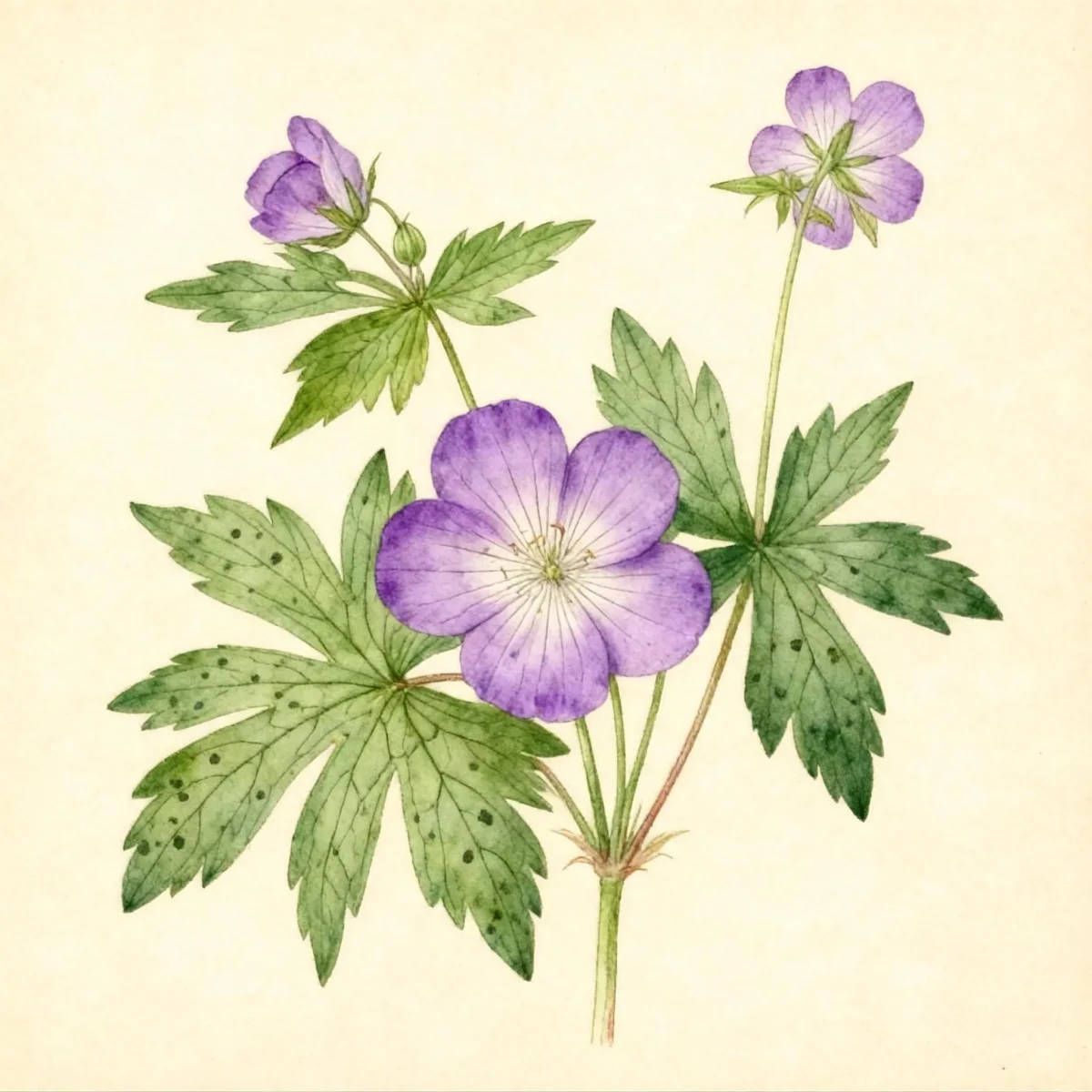
Wild geranium
Geranium maculatum
- USDA zones
- 3–8
- Light
- Full sun to part shade
- Water
- Medium

Cranesbill
Geranium × oxonianum 'Claridge Druce'
- USDA zones
- 4–8
- Light
- Full sun to part shade
- Water
- Medium

Cranesbill
Geranium × oxonianum 'Katherine Adele'
- USDA zones
- 4–7
- Light
- Full sun to part shade
- Water
- Medium
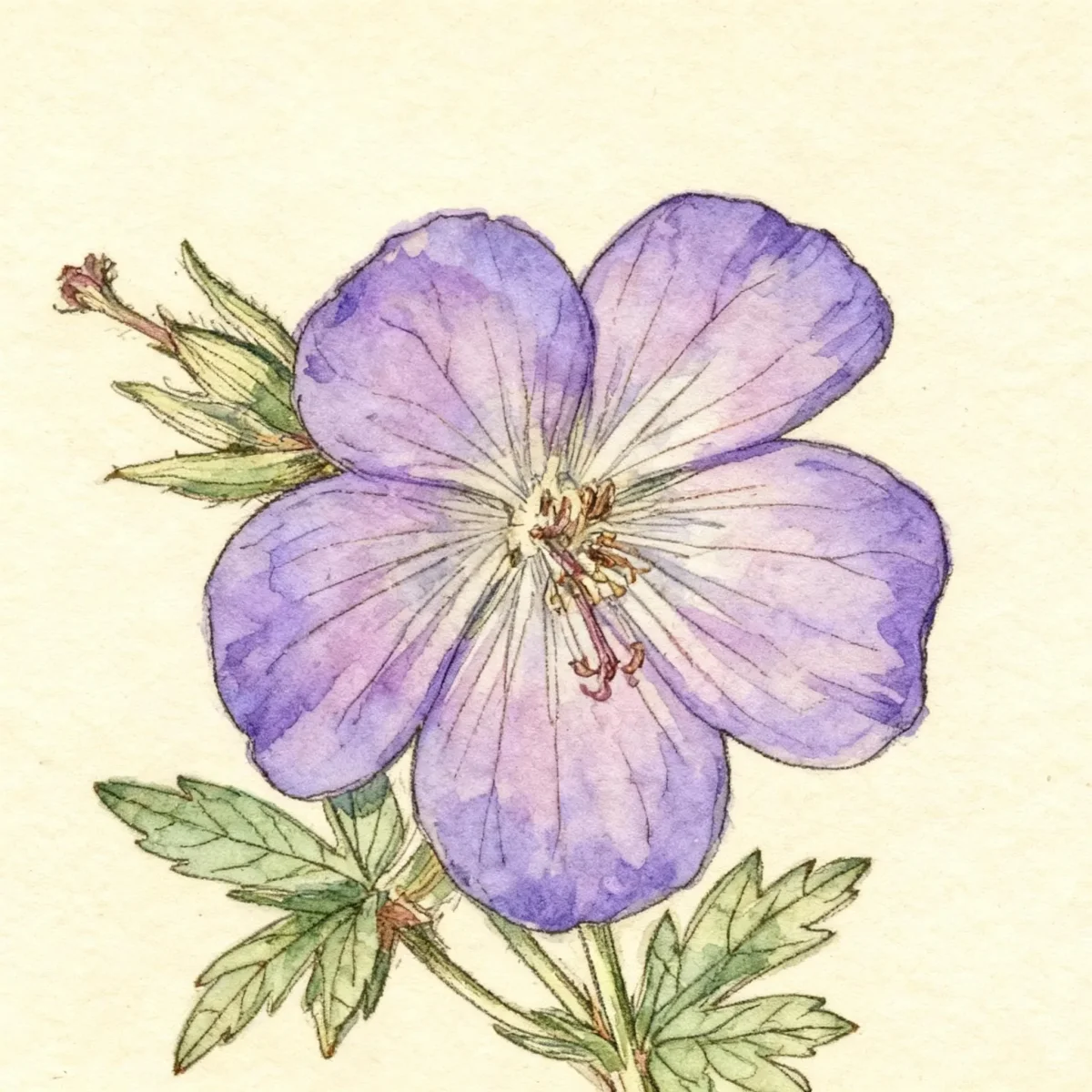
Cranesbill
Geranium 'Johnson's Blue'
- USDA zones
- 4–8
- Light
- Full sun to part shade
- Water
- Medium
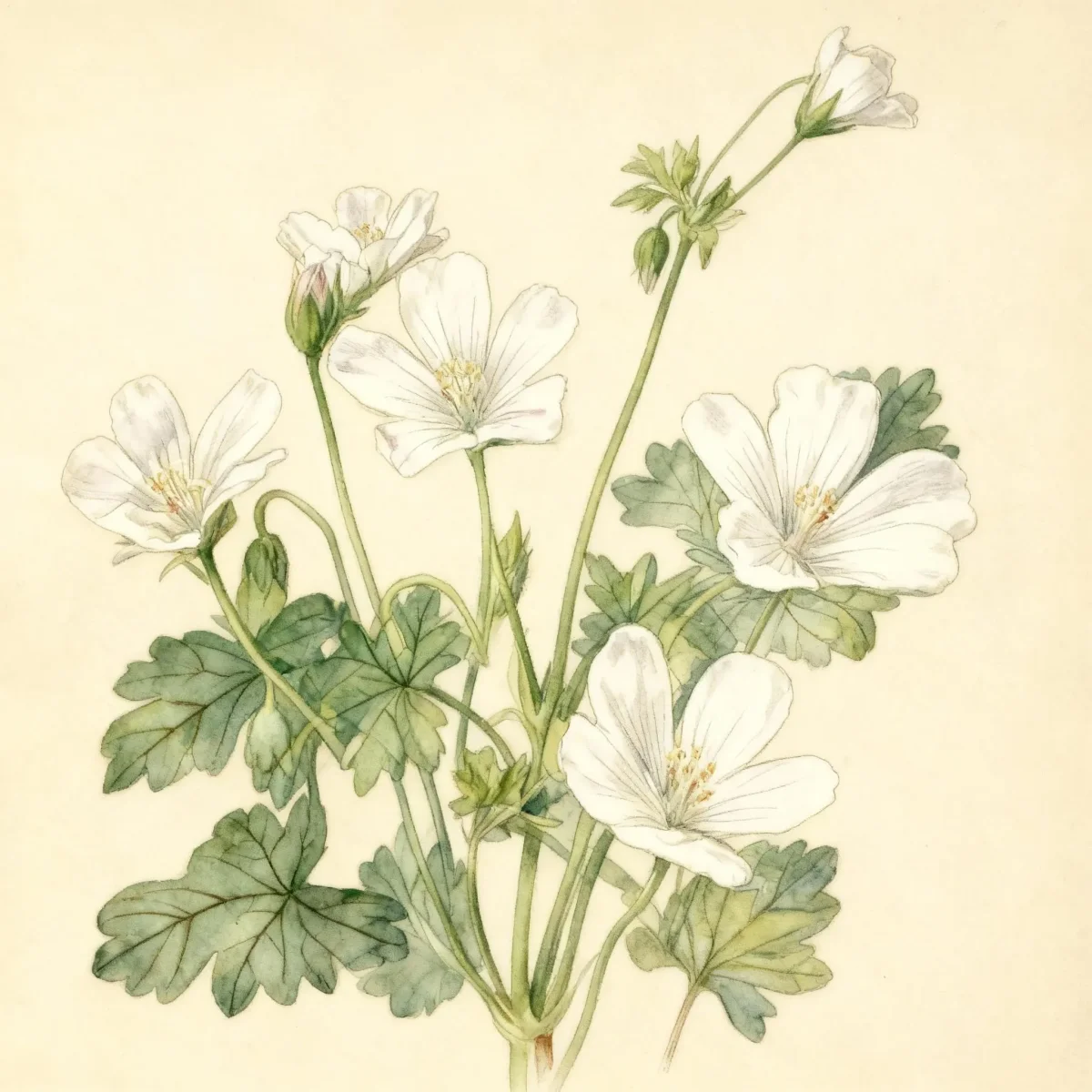
Hardy geranium
Geranium sanguineum 'Album'
- USDA zones
- 4–8
- Light
- Full sun to part shade
- Water
- Medium
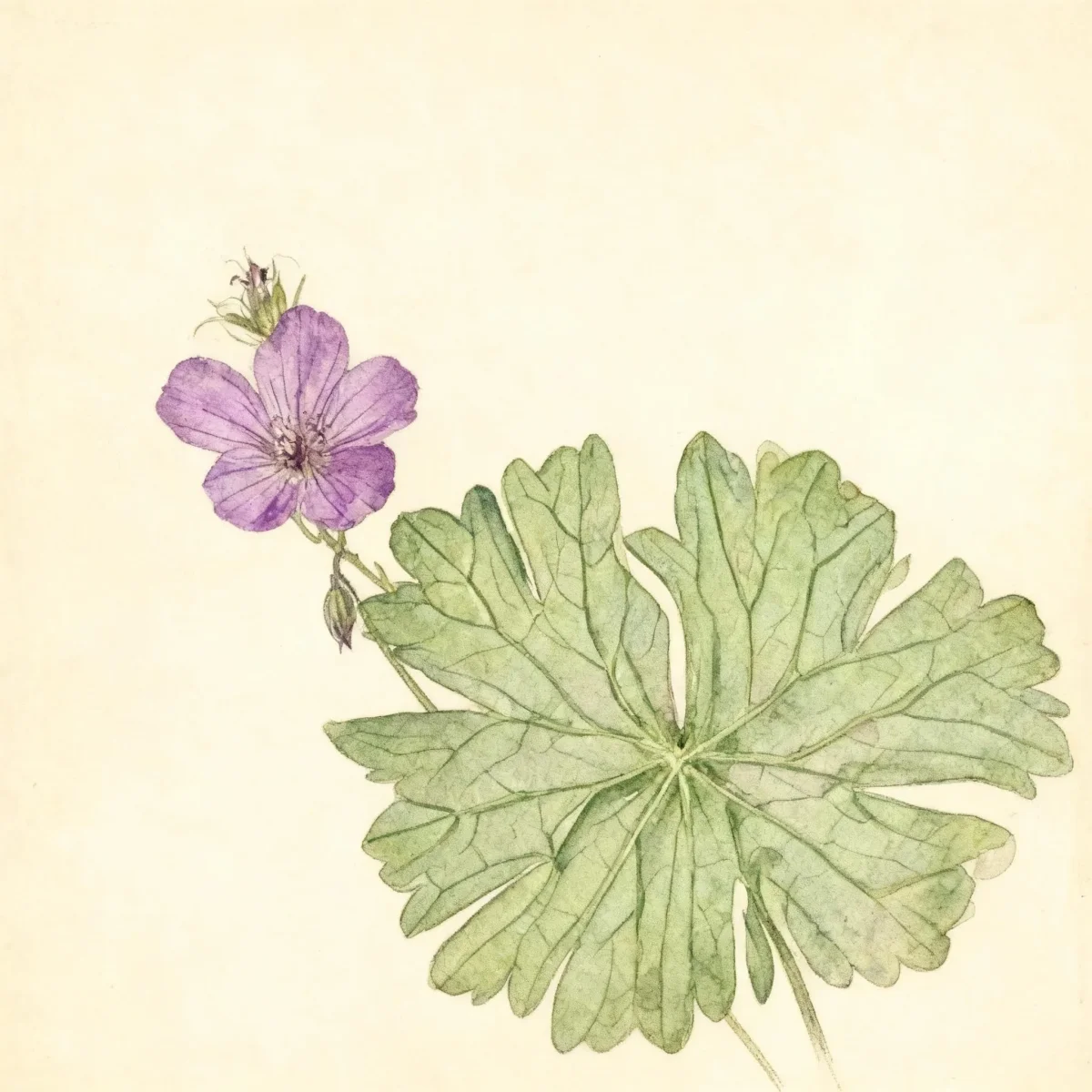
Cranesbill
Geranium 'Dilys'
- USDA zones
- 4–8
- Light
- Full sun to part shade
- Water
- Medium
Keep Learning
Test what you know with a garden quiz
You have the plant facts and care notes. Continue with a related challenge, or browse the complete quiz library.
Wild Garlic Quiz: Foraging & Facts
Think you know your wild garlic? Take this quiz to test your foraging knowledge and learn safe identification tips.
Start quiz
Can You Identify These Common Garden Plants? Test Your Plant Knowledge
Think you know your roses from your peonies? Test your plant identification skills with our comprehensive garden plant quiz featuring 10 challenging questions.
Start quizBrowse the full quizzes section
Explore plant identification, zone strategy, and seasonal gardening challenges.
View all quizzes