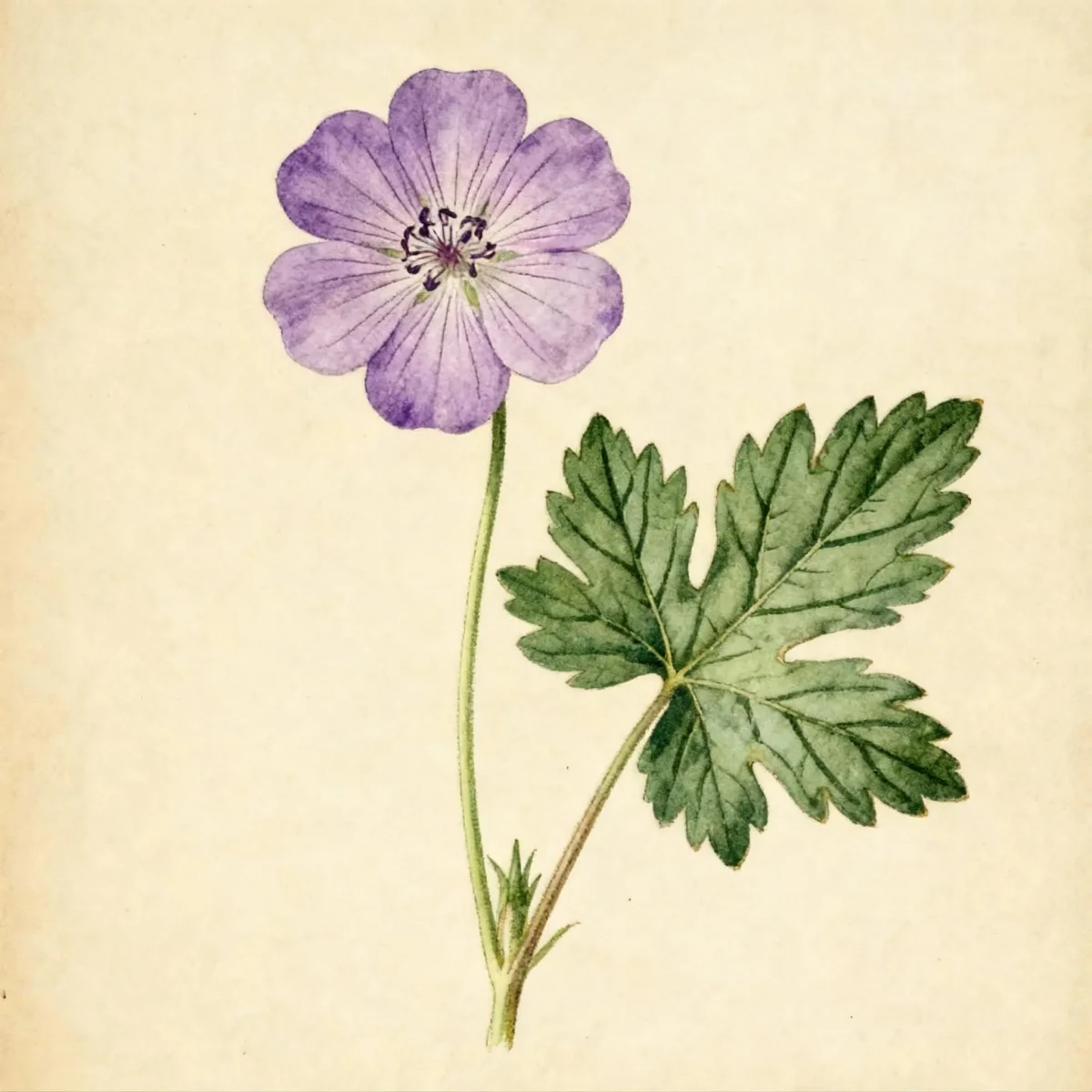
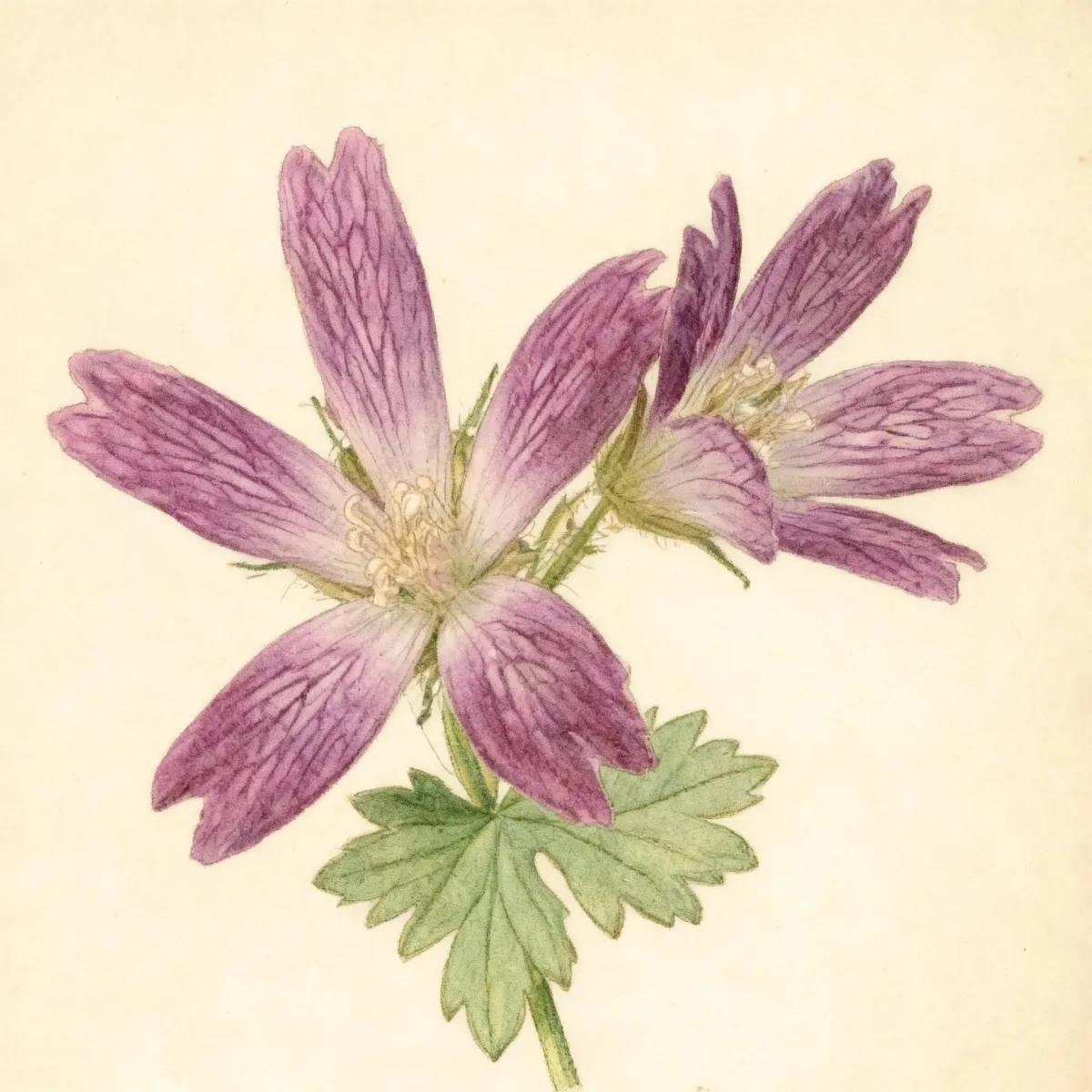
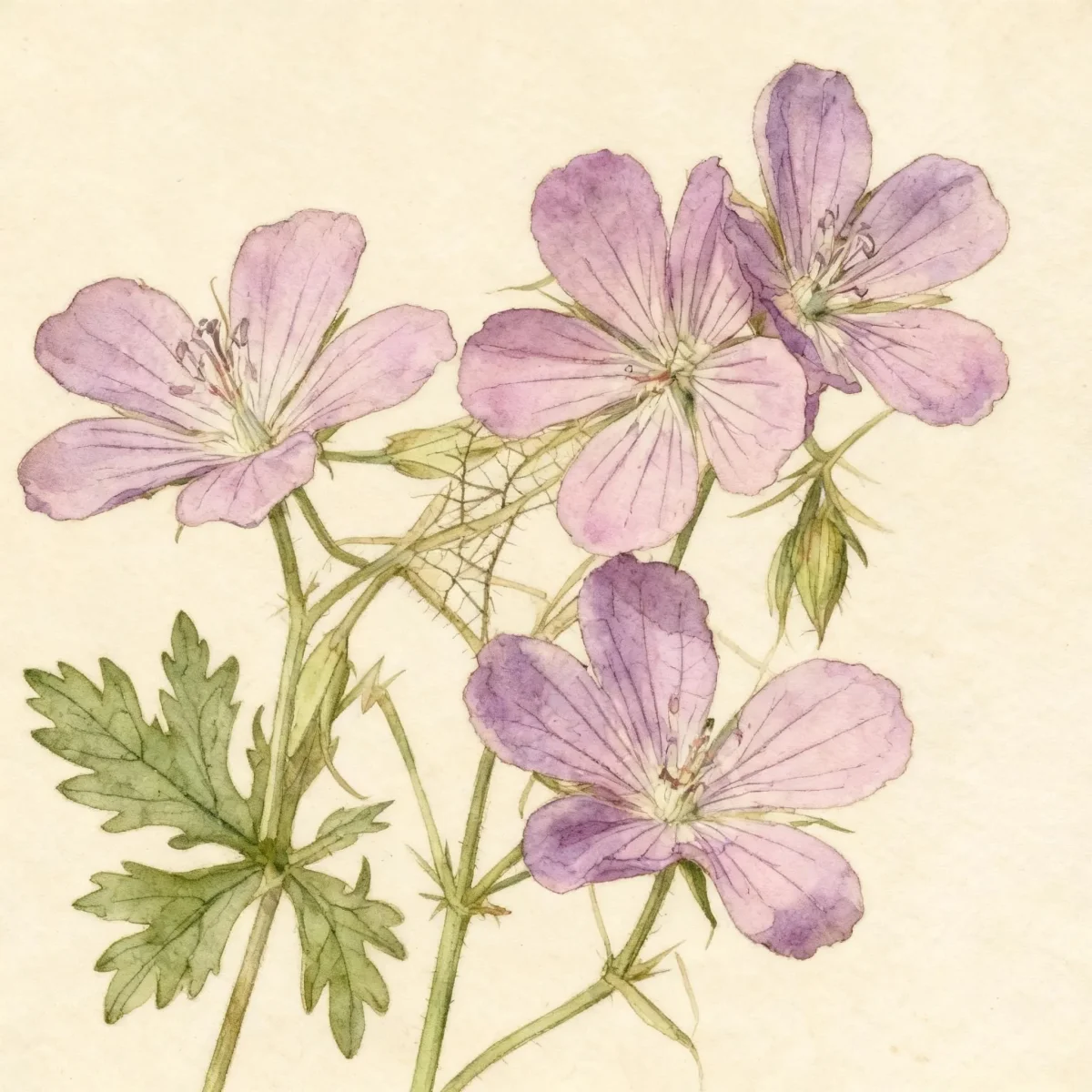
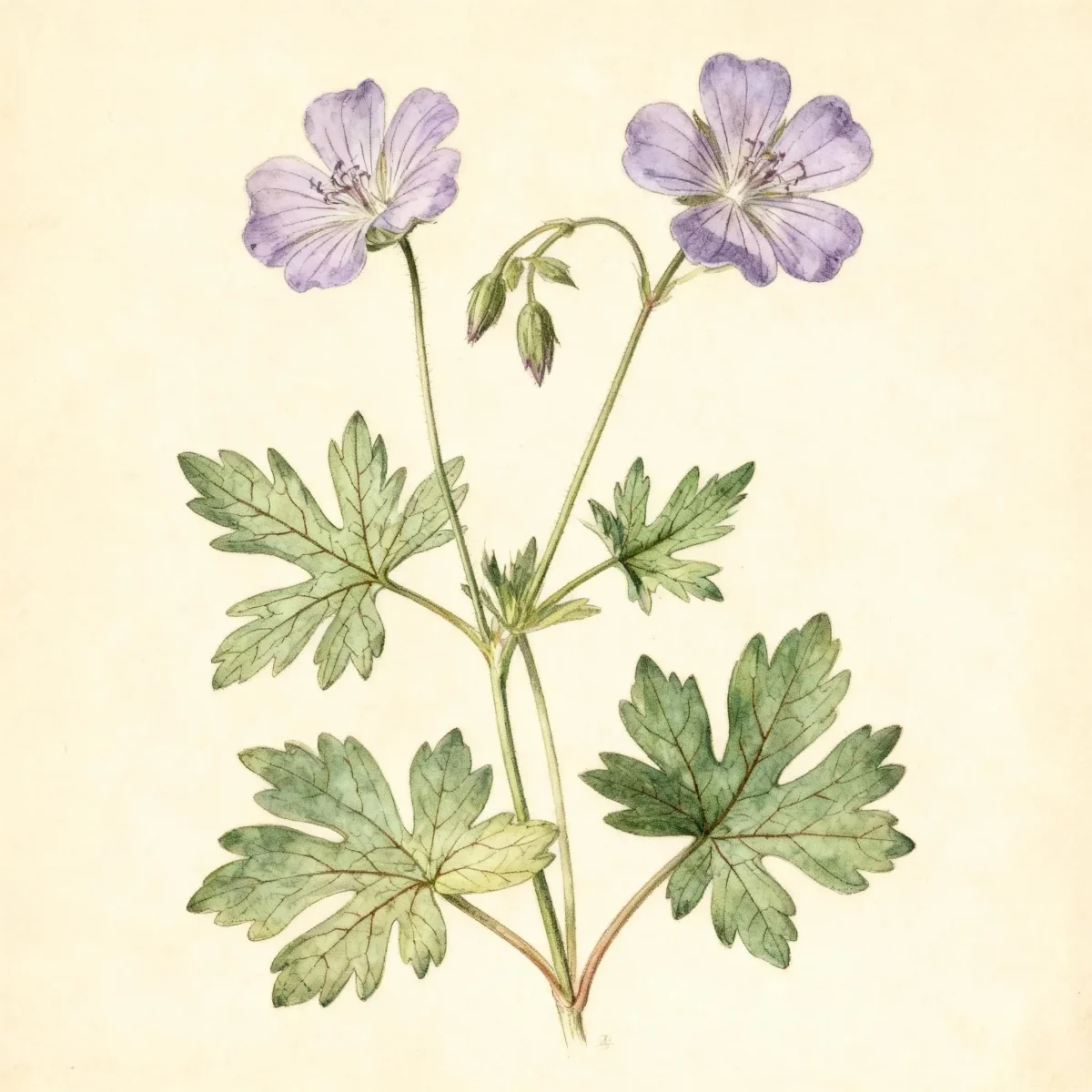
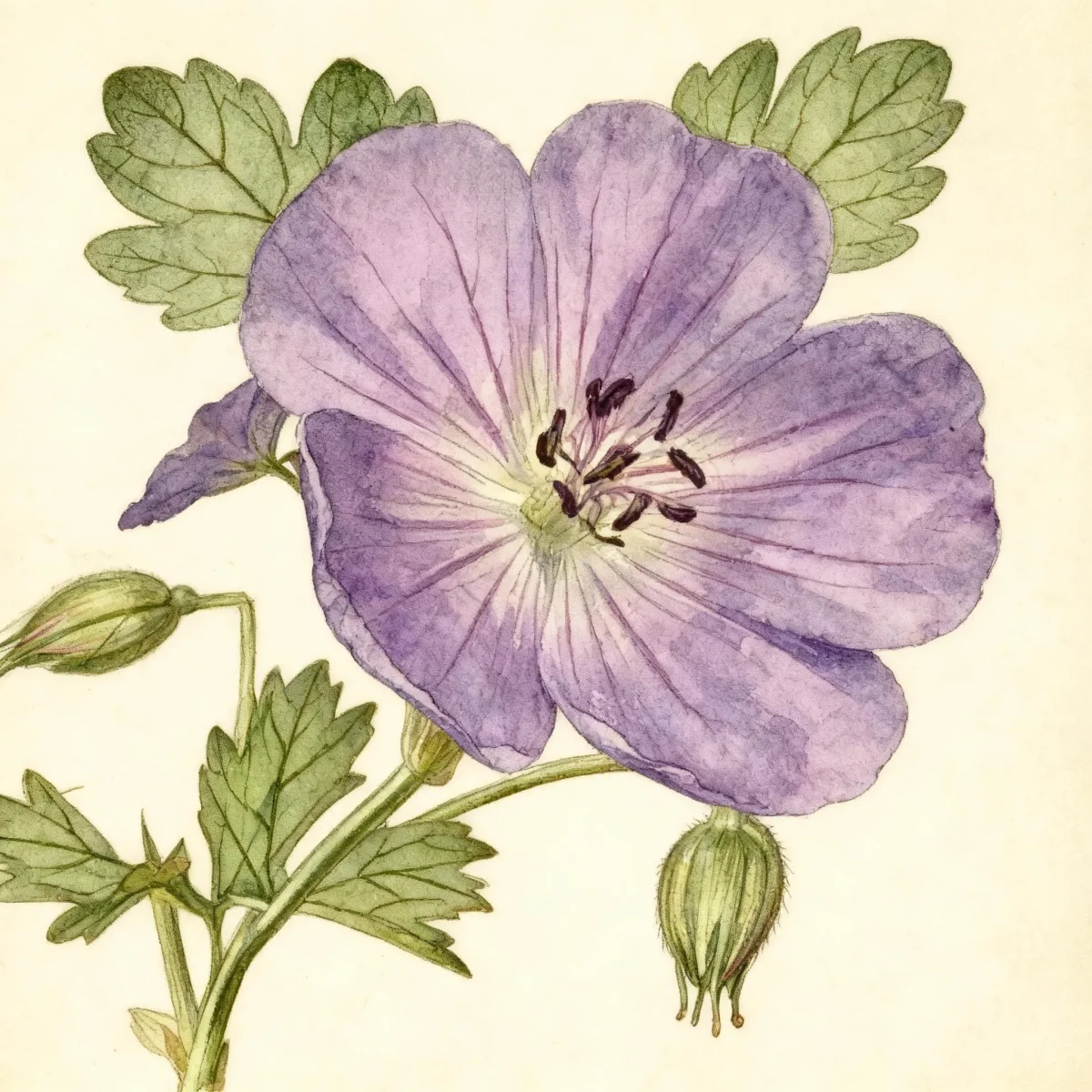
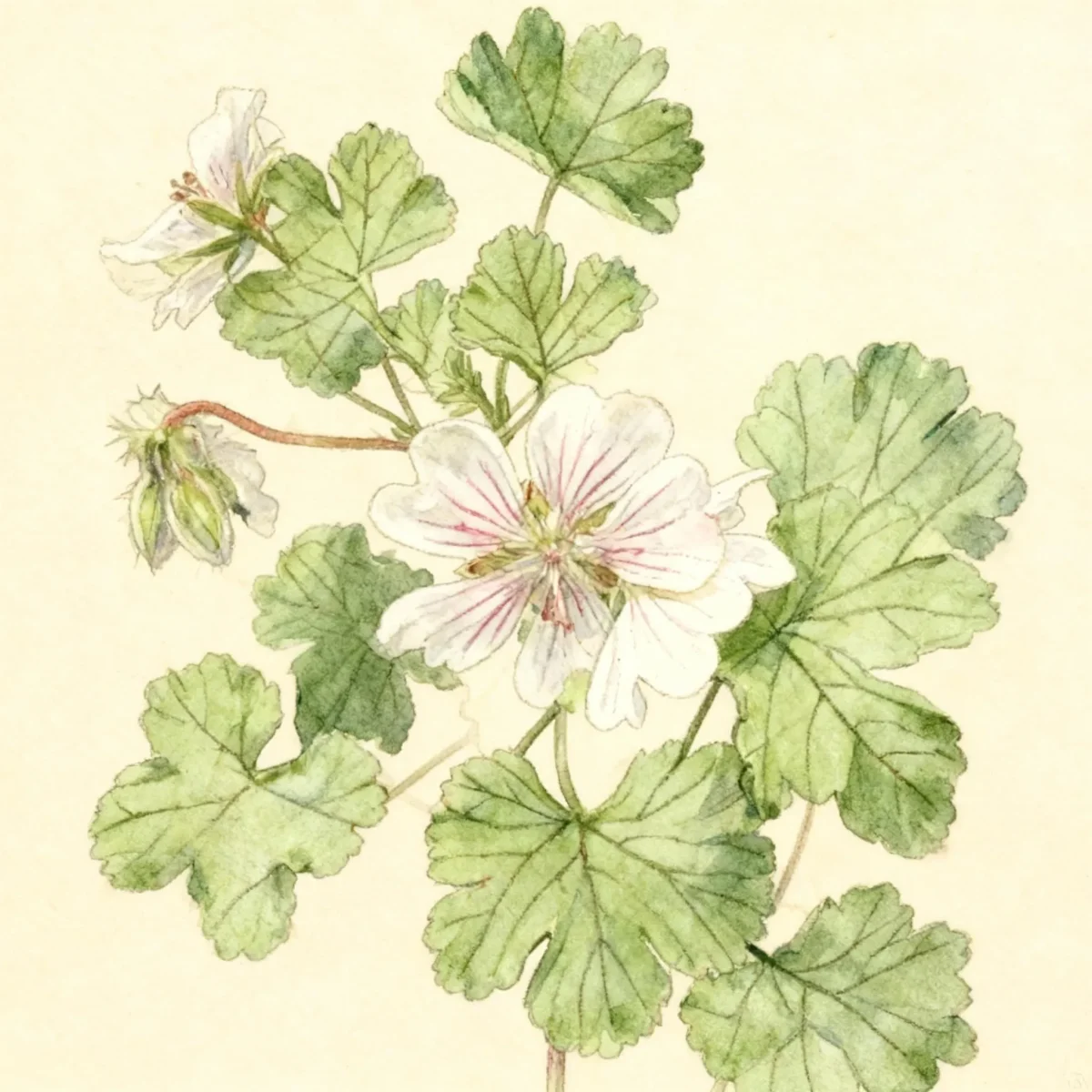
Cranesbill (Geranium renardii)
Geranium renardii, a beautiful Cranesbill, offers textured gray-green leaves and white flowers with violet veins in Zones 6-8.

Bloom Boldly, No Matter the Season - Sweatshirt
Cozy organic cotton sweatshirt featuring our exclusive Purple Coneflower design. Perfect for gardeners who bloom year-round.
Inspired by the beautiful Cranesbill
Limited first batch (50) — join the waitlist for early access
Waitlist closes Feb 15, 2026.
Complete Plant Information
Field Guide Continues
Ready for care notes, companion picks, and planting tips?
The map is just the start. The full guide below covers growth habits, seasonal performance, and landscape uses.
Overview
Geranium renardii, known commonly as Cranesbill or Renard geranium, is a striking herbaceous perennial valued for its unique foliage texture and delicate blooms. This species forms dense clumps featuring deeply textured, felted, gray-green basal leaves that provide exceptional visual interest throughout the growing season. While native to the rocky cliffs of the Caucasus mountains, this tough plant adapts well to many garden settings where dry conditions are present.
The appeal of this particular Cranesbill lies in the contrast between its deeply veined, pale flowers and its silvery, puckered leaves. Blooming reliably in late spring to early summer, the upright habit of Geranium renardii provides structure without demanding excessive moisture or complicated deadheading routines. Experienced gardeners appreciate the relative ease of care once established, even though it may present cultivation challenges in certain humid climates.
This hardy perennial offers excellent low-maintenance coverage for borders or rock gardens, thriving even when summer heat tests less drought-tolerant species. By selecting Geranium renardii for its tough constitution and unique aesthetic, gardeners introduce a textural element rarely matched by other members of the Geraniaceae family.
Fast Facts
- Plant Family: Geraniaceae
- Plant Type: Herbaceous perennial
- Native Range: Caucasus
- Hardiness Zones: USDA Zones 6-8
- Size at Maturity:
- Height: 0.5-1 ft
- Spread: 0.5-1 ft
- Bloom Time: May to June
- Bloom Description: White with violet veins
- Sun Exposure: Full sun to part shade
- Water Needs: Dry to medium
- Maintenance Level: Medium
How to Grow
Planting Geranium renardii is ideally done in the spring or fall in average, well-drained soil. Success hinges on providing excellent drainage; avoid areas where water pools, as this can quickly lead to crown rot in this species. While it prefers full sun, afternoon shade is appreciated in hotter regions, particularly in the St. Louis climate area, although it tolerates full sun well in cooler summers.
Watering requirements are low to moderate; this Cranesbill tolerates drought once its root system is fully established. Fertilization is generally unnecessary, as rich soils can encourage excessive, floppy growth. Garden maintenance is minimal; plants do not require heavy shearing after flowering. Only removal of spent flower stems is usually needed to keep the clump tidy.
Should summer heat cause the foliage to decline or yellow, individual leaves can be carefully removed to refresh the look. If conditions are optimal, Geranium renardii may self-seed lightly. Propagation is also easily accomplished through division in the spring or fall. Note that while beautiful, this specific geranium can be challenging to grow optimally in overly humid eastern climates.
Landscape Uses
The fine texture and compact mound of Geranium renardii make it an exceptional choice for defining the edges of planting beds. It excels as a border front element, softening the hard lines of pathways or structural plantings. Its low height ensures it never obscures shorter neighbors.
This Cranesbill is perfectly suited for rustic or cottage garden designs where it mingles beautifully with ornamental grasses or late-blooming perennials. Furthermore, its preference for dry conditions and tolerance for rocky spots make it a star performer in rock gardens. Consider using this Renard geranium beneath open woodland margins where dappled light filters through.
Standout Features
Flower Qualities
- Showy
Noteworthy Characteristics
Geranium renardii, commonly called Renard geranium, is a dense, clump-forming perennial that features scalloped, felted, wrinkled, long-petioled, gray-green basal leaves that grow in a mound to 8” tall and to 18” wide. Five-petaled, pale mauve to white flowers, each etched with deeply set violet veins, emerge in late spring to early summer atop dainty stems rising above the attractive foliage for extended interest. This geranium takes its name from the Greek word ‘geranos’ (crane) due to the resemblance of its fruit structure to a crane’s head and beak.
Tolerances
No specific tolerances were listed for this plant in the provided data.
Potential Problems
This variety generally avoids serious insect or disease issues under correct growing conditions. The primary cultural concern gardeners face is leaf spot, which can become troublesome, especially in humid environments where air circulation is poor. To mitigate this, ensure proper spacing when planting to allow air movement around the dense basal foliage, and water at the base rather than overhead.
Frequently Asked Questions
What hardiness zones is Cranesbill suitable for?
Geranium renardii is generally hardy and suitable for cultivation in USDA Zones 6 through 8.
How large does Geranium renardii grow?
This perennial typically achieves a height between 0.5 to 1 foot and spreads approximately 0.5 to 1 foot wide, forming a neat, dense mound.
When does Cranesbill bloom?
This Cranesbill variety presents its most significant floral display during May and June, featuring distinctive white flowers marked heavily with violet veins.
What sun exposure does Geranium renardii need?
It thrives best when positioned in full sun to partial shade, benefiting from protection against the harshest afternoon light in very hot climates.
Conclusion
The unique, velvety, gray-green texture of the foliage distinguishes Geranium renardii even when it is not actively blooming, making this Cranesbill a valuable texture provider year-round. Its drought tolerance once established combined with its showy, veined flowers confirms its place as a reliable semi-rock garden specimen. Before planting, ensure your conditions align with its preference for dry to medium soil and consult your local zone maps to maximize success with this handsome Renard geranium.
Companion Planting
When planning beds for Geranium renardii, consider companion plants that share similar dry to medium moisture requirements and appreciate full sun or light shade. Pairing this Cranesbill with other drought-tolerant perennials creates low-water, visually harmonious drifts. Good companions include Sedum varieties, which offer contrasting succulent textures, and true Geraniums like Geranium sanguineum cultivars, ensuring a long season of complementary low-growing groundcovers.
Propagation Tips
Propagation of this specific Geranium renardii is most straightforwardly achieved through division, typically undertaken in early spring before new vegetative growth begins in earnest, or in the early fall. Carefully lift the clump and gently separate the root zones, ensuring each new section has viable roots and crown tissue to establish quickly in its new location. While the species can self-seed, division provides a controlled method of multiplying desirable plants true to type.