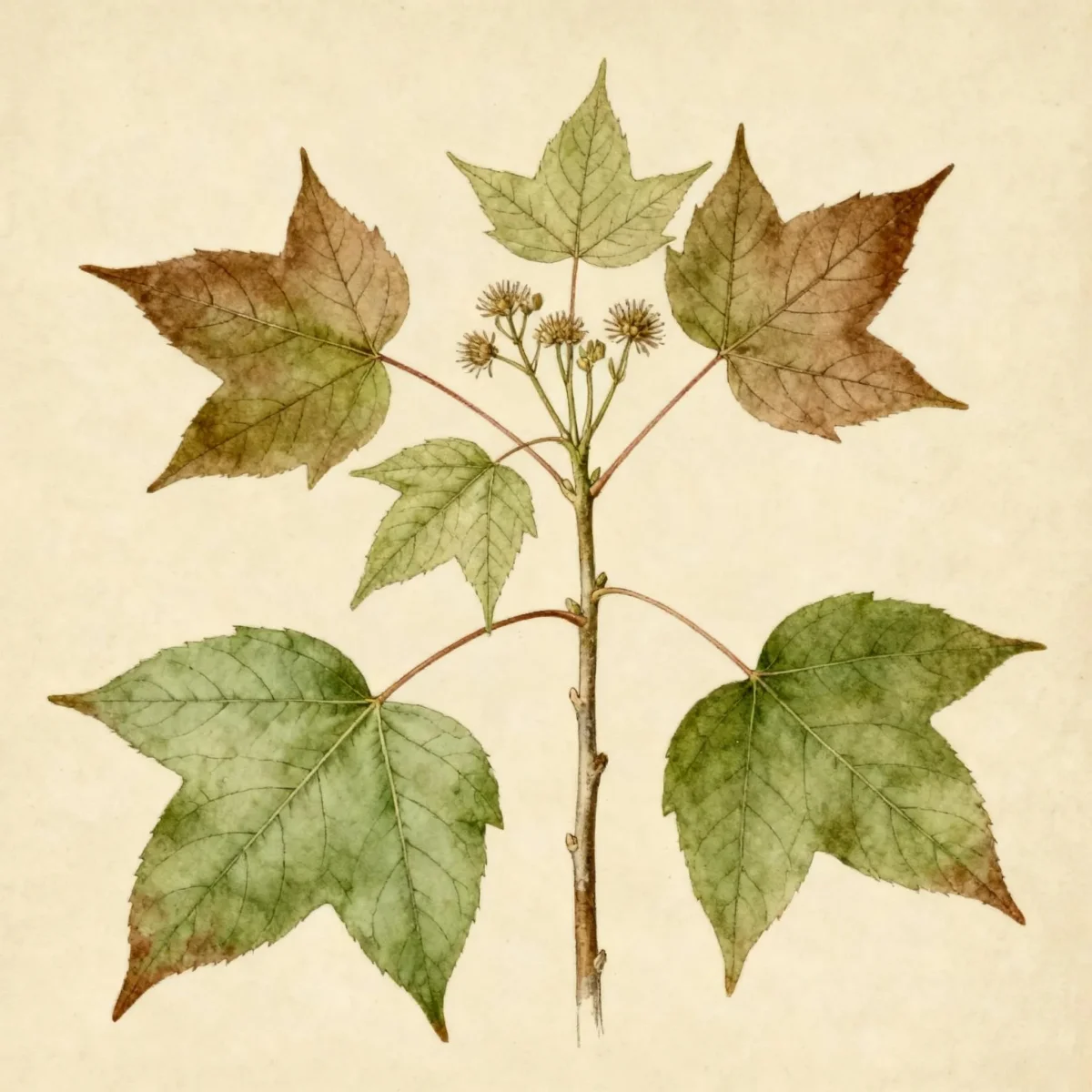
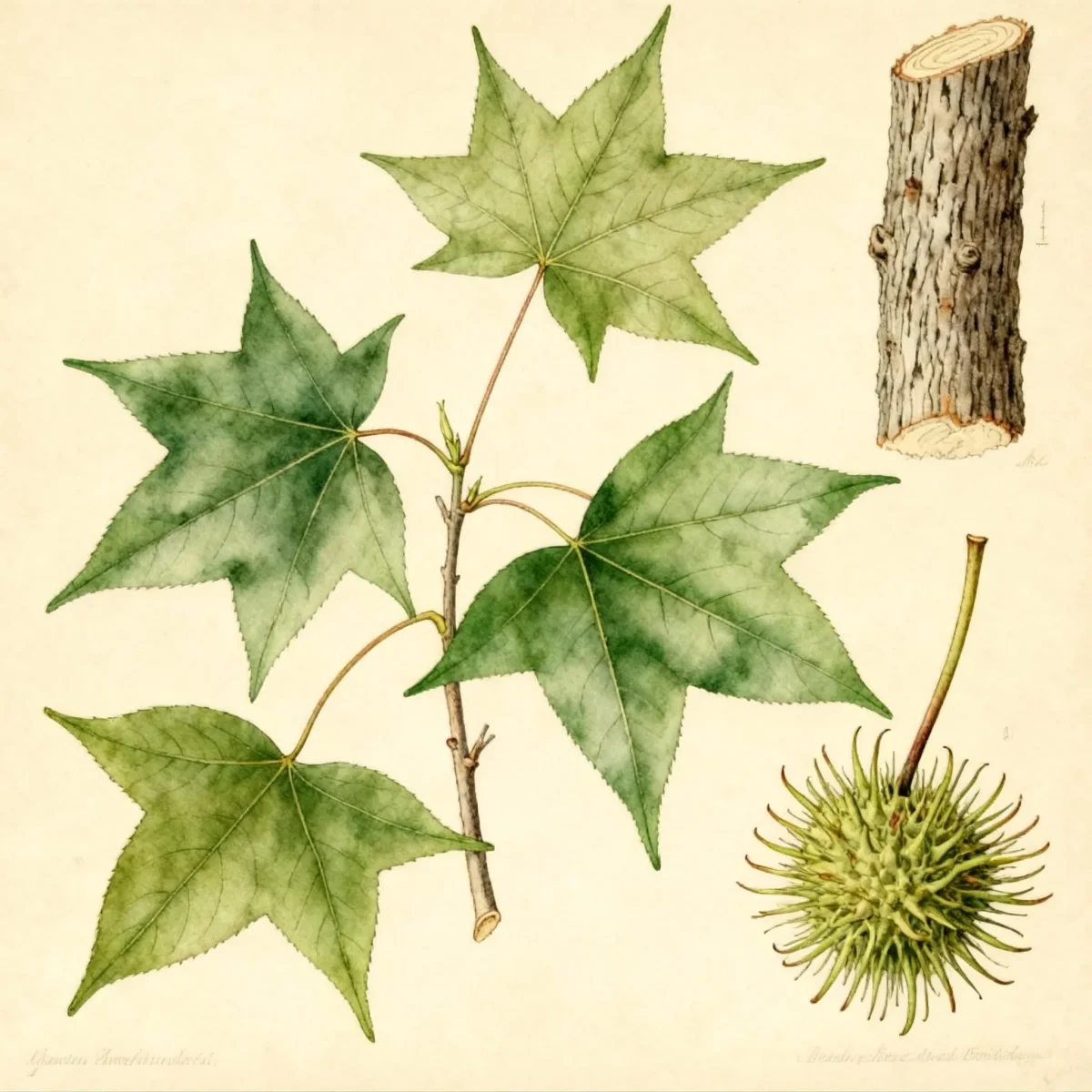
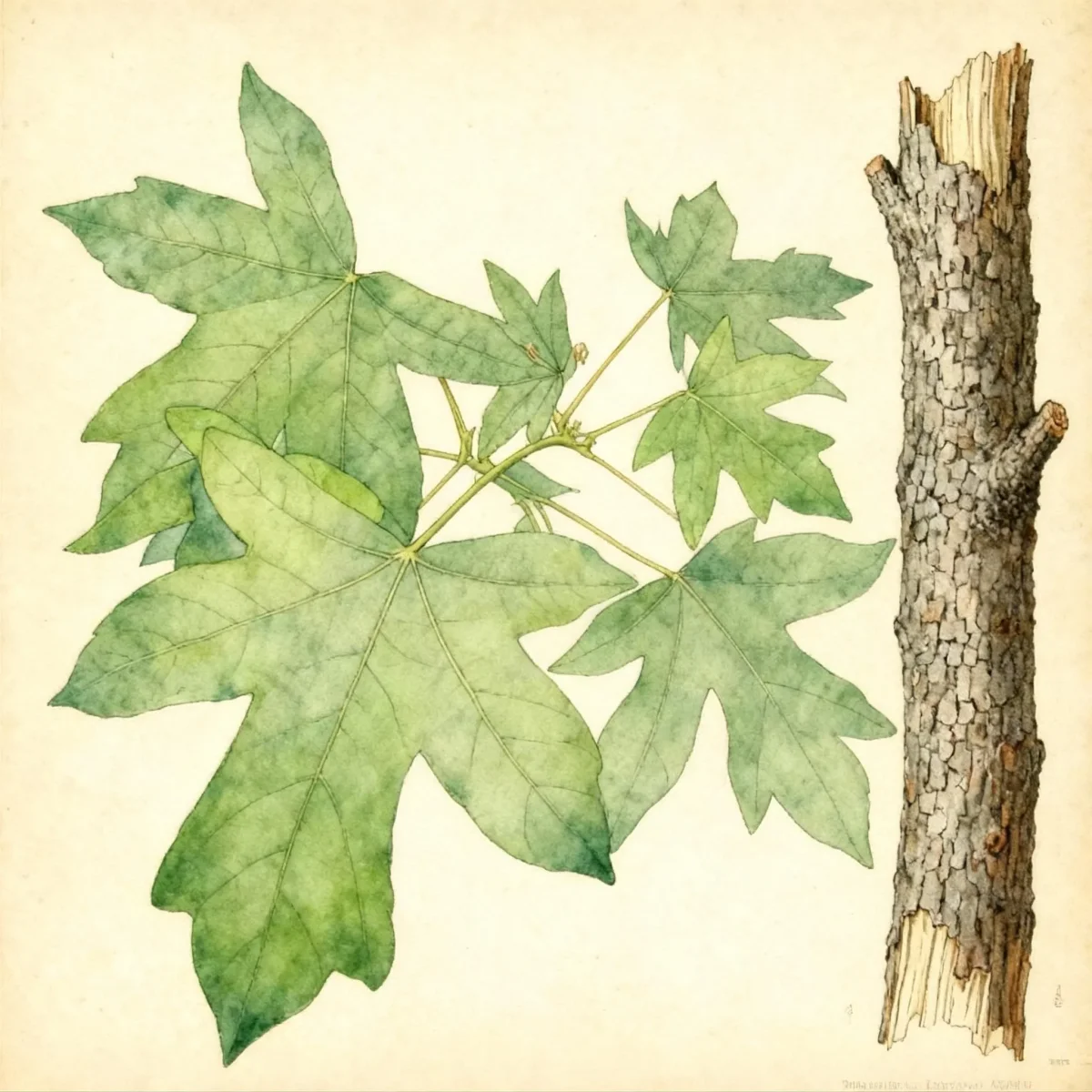
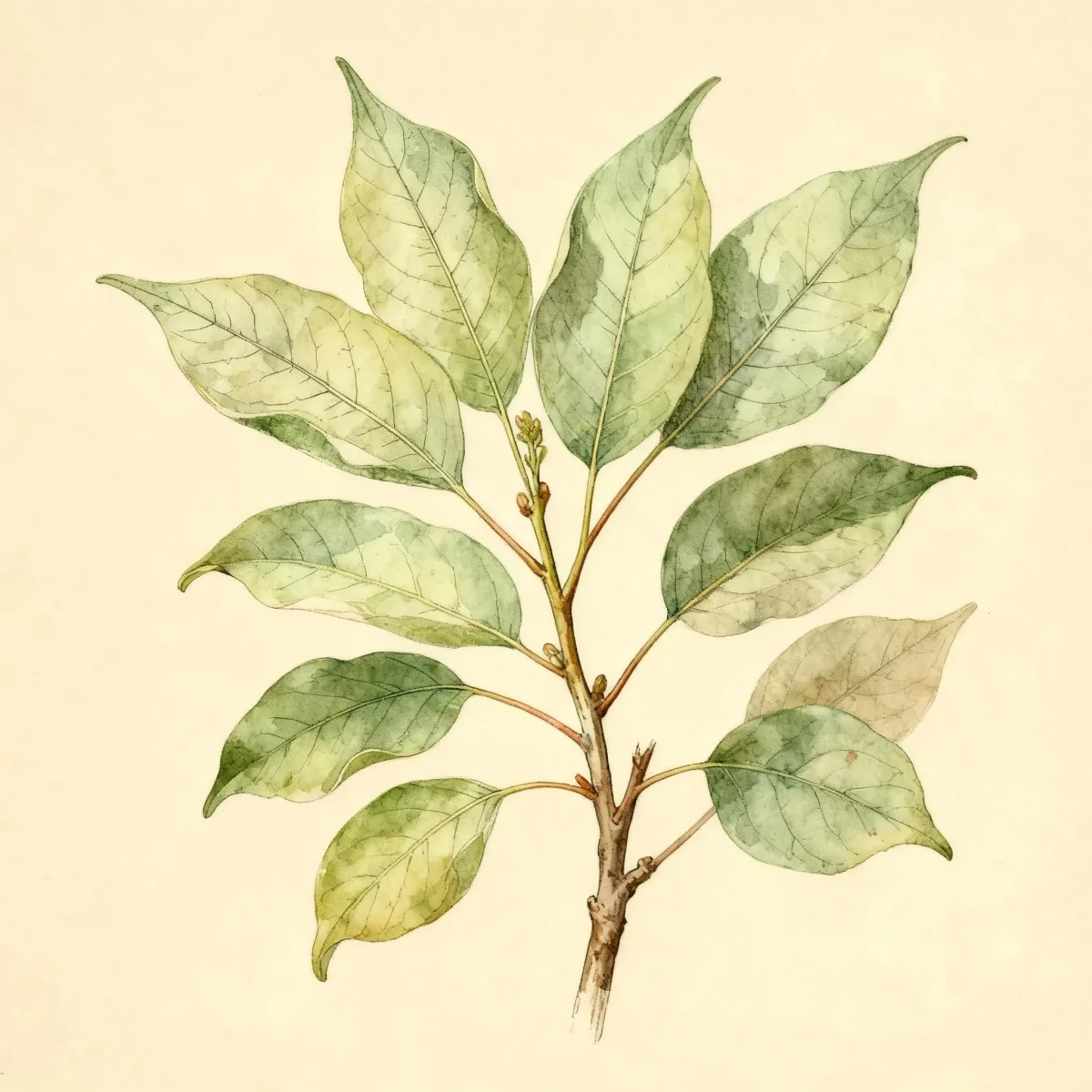
Sweet gum (Liquidambar styraciflua)
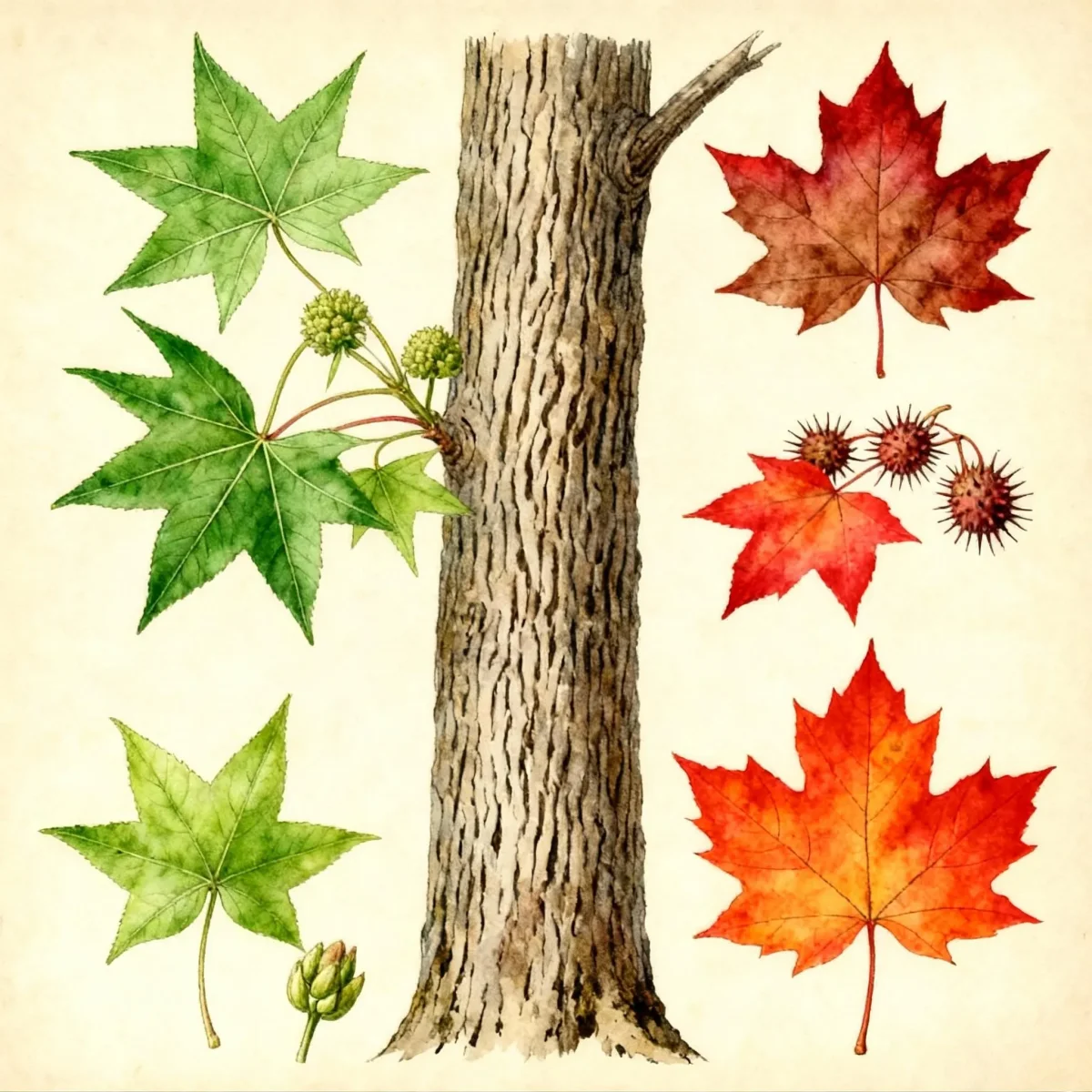
The Sweet gum (Liquidambar styraciflua) is a magnificent, low-maintenance deciduous tree prized for its star-shaped leaves and brilliant fall color.

Bloom Boldly, No Matter the Season - Sweatshirt
Cozy organic cotton sweatshirt featuring our exclusive Purple Coneflower design. Perfect for gardeners who bloom year-round.
Inspired by the beautiful Sweet gum
Limited first batch (50) — join the waitlist for early access
Waitlist closes Feb 15, 2026.
Complete Plant Information
Field Guide Continues
Ready for care notes, companion picks, and planting tips?
The map is just the start. The full guide below covers growth habits, seasonal performance, and landscape uses.
Overview
The Liquidambar styraciflua, widely known as the Sweet gum, stands as a grand, stately specimen, offering exceptional value in large landscapes. This deciduous tree is treasured annually for its spectacular, star-shaped foliage that transitions into a brilliant tapestry of yellow, orange, purple, and red tones come autumn. Beyond its seasonal aesthetics, the Sweet gum is valued for its robust nature, thriving as a dependable, low-maintenance shade provider.
Native to rich bottomlands in the eastern United States, Liquidambar styraciflua establishes a strong, straight trunk, developing an oval or rounded crown ideal for spanning large open areas like parks or expansive lawns. Gardeners appreciate its adaptability to various soil types, though optimal growth is achieved in deep, moist environments. While providing substantial shade, prospective planters of Liquidambar styraciflua must account for its impressive mature size and the persistent, spherical fruit it produces.
This tree provides important ecological structure, growing large enough to offer significant cooling relief during hot summers. Despite the cleanup required by its “gum balls,” the intrinsic beauty and resilience of the Sweet gum make it a cornerstone shade tree in suitable, large settings.
Fast Facts
- Plant Family: Altingiaceae
- Plant Type: Tree
- Native Range: Eastern United States, Mexico
- Hardiness Zones: USDA Zones 5-9
- Size at Maturity:
- Height: 60-80 ft
- Spread: 40-60 ft
- Bloom Time: April to May
- Bloom Description: Yellow-green
- Sun Exposure: Full sun
- Water Needs: Medium
- Maintenance Level: Low
How to Grow
Planting Liquidambar styraciflua is ideally done in the spring or fall when conditions are cooler, allowing the tree to establish its roots before facing summer heat or harsh winter freezes. Select a location providing full sun exposure, as this species is intolerant of shade, which can lead to poor development. While adaptable, the Sweet gum performs best in deep, moist, fertile, well-drained soils. It is critical to avoid planting near structures where root growth or falling debris might cause conflict, and be aware that trees are not reliably winter hardy in the coldest pockets of USDA Zone 5.
Watering should be consistent, aiming for medium moisture levels, especially during the establishment phase over the first few years. Once mature, the tree is relatively drought-tolerant if the soil moisture is maintained. Minimal fertilizing is usually necessary unless growth is stunted or soil fertility is exceptionally poor. Pruning for structure should focus on maintaining that central leader early in its life, removing crossing or damaged branches primarily during the dormant season.
Seasonal care revolves around managing the fruit production. Be mindful that the stiff, spherical fruit clusters fall generally from December through April, creating litter hazards in pedestrian areas. Spring cleanup should include clearing these fallen clusters if the tree is planted near patios or walkways. Avoid alkaline soils, as these can induce chlorosis (yellowing) in the leaves of the Liquidambar styraciflua.
Landscape Uses
The magnificent size and extraordinary fall display designate the Sweet gum primarily as an excellent shade tree for expansive lawns or park settings. It demands significant space to accommodate its eventual 60-80 foot height and 40-60 foot spread, allowing its wide canopy to develop fully without constraint. Use the Liquidambar styraciflua where its presence makes a statement, providing large pools of cooling shade throughout the summer months.
Due to the persistent litter caused by the prickly fruit clusters, planting this tree directly over driveways, sidewalks, or high-traffic patio areas is strongly discouraged. Instead, sightlines should be planned so that the fruit falls onto turf or large mulched areas where cleanup is easier, or consider using a fruitless cultivar if space permits maintenance concerns. This tree creates a dramatic focal point against evergreen backdrops that contrast sharply with its vibrant autumn hues.
For large properties, groupings of Liquidambar styraciflua can define wide borders or buffer zones, creating a screen of year-round presence, even when the fruit is visible in winter. Ensure that any companion plants placed beneath its canopy can tolerate full sun and potentially drier conditions once the mature canopy develops.
Standout Features
Flower Qualities
- Insignificant
Fruit Qualities
- Showy
Noteworthy Characteristics
Liquidambar styraciflua, commonly called sweet gum, is a low-maintenance deciduous shade tree that is native from Connecticut to Florida and Missouri further south to Texas, Mexico and Central America. It typically grows to 60-80’ tall with a straight trunk and develops glossy, deep green, star-shaped leaves, often 5-7 lobed, which are fragrant when bruised. Its most famous attributes are the brilliant fall color displaying yellows, oranges, purples, and reds, followed by the production of hard, spherical, bristly fruiting clusters known as gum balls. The resin, or gum, exuded from wounds is historically significant, giving the tree its name derived from Latin words for liquid and amber.
Tolerances
- Rabbit
- Deer
- Clay Soil
- Black Walnut
Potential Problems
This species generally enjoys robust health, showing no serious insect or disease problems when grown in ideal conditions. However, watch for common pests such as webworms, caterpillars, borers, and scale insects which may occasionally infest trees in specific regions. Fungal issues like leaf spots are possible, as are concerns such as wood rot or bleeding necrosis if the tree is stressed or damaged. A primary cultural issue is chlorosis, which manifests as leaf yellowing, particularly when the Sweet gum is subjected to alkaline soils. Ensuring well-drained, slightly acidic soil conditions is the best preventative measure against many cultural ailments.
Frequently Asked Questions
What hardiness zones is Sweet gum suitable for?
The Liquidambar styraciflua is hardy across USDA Zones 5 through 9, though caution is advised regarding reliable winter survival in the colder edges of Zone 5.
How large does Sweet gum grow?
At maturity, you can expect the Sweet gum tree to reach heights between 60 and 80 feet, with a substantial spread ranging from 40 to 60 feet wide.
What sun exposure does Liquidambar styraciflua need?
Liquidambar styraciflua strictly requires full sun exposure for best health, canopy development, and vibrant fall color. It is intolerant of shade.
When does Sweet gum bloom?
The tree produces its inconspicuous, yellow-green flowers in clusters sometime between April and May.
Conclusion
The Sweet gum remains a choice for large-scale landscape design, offering unmatched autumn brilliance and reliable shade over decades. While managing the characteristic litter from the Liquidambar styraciflua fruit requires forward planning, its low maintenance requirements and adaptability to clay soils make it a practical investment. Always verify that your planting site offers the full sun and ample space needed to support this magnificent, towering native tree.
Companion Planting
When siting the Liquidambar styraciflua, consider companions that thrive in similar conditions: full sun and medium moisture. For understory planting, tough natives like Baptisia australis (False Indigo) can handle the dappled shade cast by the maturing Sweet gum. Other large, reliable shade-tolerant trees that pair well architecturally, providing year-round structure, include various Oaks (Quercus species) planted at a distance suitable for their mature size profiles.
Seasonal Care Calendar
Spring is the prime time for structural pruning before the leaves emerge, and for monitoring for early signs of insect activity like webworms. During the summer months, focus mainly on deep, infrequent watering if rainfall has been scarce, ensuring new plantings establish well without becoming waterlogged. Autumn is the highlight; allow seedlings to drop naturally, and rake up fallen leaves once they have fully turned color to prevent turf smothering. Winter dormancy requires little active care, though inspecting branch structure for ice damage or breakage is useful for early spring cleanup planning.