Cannonball tree (Couroupita guianensis)
Discover the exotic Couroupita guianensis, or Cannonball tree, known for its uniquely bizarre fruits and showy, fragrant blooms.

Bloom Boldly, No Matter the Season - Sweatshirt
Cozy organic cotton sweatshirt featuring our exclusive Purple Coneflower design. Perfect for gardeners who bloom year-round.
Inspired by the beautiful Cannonball tree
Limited first batch (50) — join the waitlist for early access
Waitlist closes Feb 15, 2026.
Complete Plant Information
Field Guide Continues
Ready for care notes, companion picks, and planting tips?
The map is just the start. The full guide below covers growth habits, seasonal performance, and landscape uses.
Overview
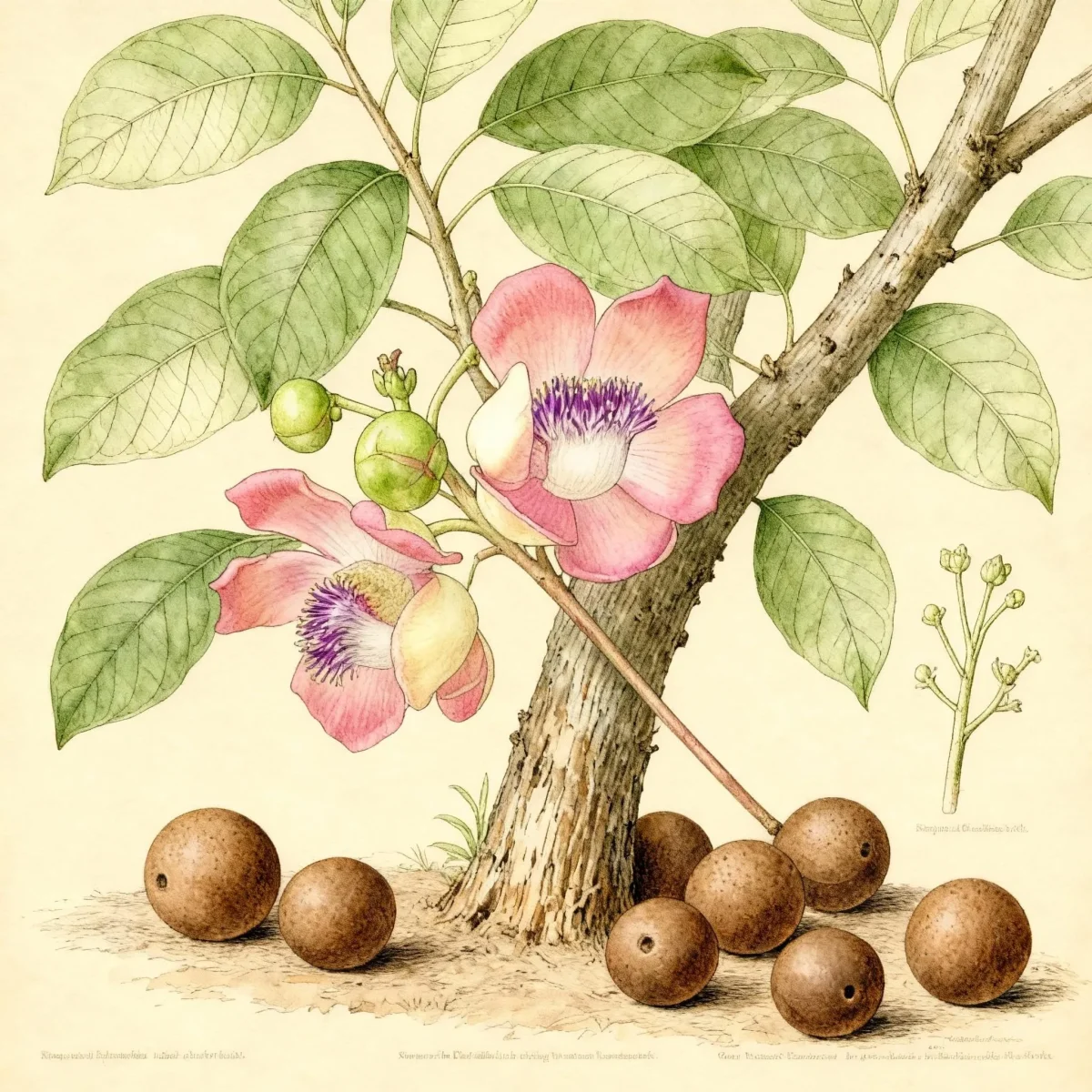
The Couroupita guianensis, universally recognized by its common moniker, the Cannonball tree, is a striking specimen for tropical landscapes. This tree is immediately identifiable due to its strange, woody, globose fruits resembling actual cannonballs, which drop dramatically onto the ground. Beyond its bizarre fruit, the Cannonball tree offers beauty with large, pleasantly fragrant flowers that bloom seasonally on long, dangling stems emerging directly from the trunk and main branches.
As a soft-wooded, deciduous tropical species native to areas like Venezuela, the Couroupita guianensis thrives in consistently warm environments. Gardeners must exercise caution due to the falling fruit, making site selection crucial for this high-maintenance specimen. When respected in terms of environment and placement, this tree provides an unparalleled curiosity in any exotic garden setting.
Fast Facts
- Plant Family: Lecythidaceae
- Plant Type: Tree
- Native Range: Venezuela
- Hardiness Zones: USDA Zones 11-12
- Size at Maturity:
- Height: 50-75 ft
- Spread: 40-60 ft
- Bloom Time: Seasonal bloomer
- Bloom Description: Rose-pink to red
- Sun Exposure: Full sun
- Water Needs: Medium
- Maintenance Level: High
How to Grow
Optimal cultivation for the Couroupita guianensis requires locating it in USDA Zones 11-12, as it is highly intolerant of frost. Plant this magnificent tree in springtime, ensuring the soil is organically rich and exceptionally well-drained to prevent root issues. Full sun exposure is preferred, though it can tolerate very light afternoon shade, especially in the hottest climates.
Maintenance for the Cannonball tree is rated high, largely due to its size and the issue of falling fruit. Watering should remain consistent; maintain medium moisture levels throughout the growing season without allowing standing water, which suffocates the roots. Fertilization should support vigorous growth, perhaps utilizing a balanced slow-release feed formulated for tropical trees in the spring.
Pruning is generally minimal, focusing only on removing dead or crossing branches, as the structure is naturally appealing. The deciduous nature means leaves may drop once or twice yearly, typically coinciding with dry periods. Plan landscaping around the fact that the mature fruits take over a year to develop and will eventually fall, necessitating clear space beneath the canopy.
Landscape Uses
The primary recommendation for planting the Cannonball tree is as a visual curiosity in specialized tropical gardens. Due to the significant hazard posed by mature fruits dropping 8-10 inches in diameter, this tree must be situated where foot traffic is strictly prohibited under its drip line. Avoid placing it near patios, walkways, or entry points; instead, give it ample space in an open area of a large estate.
Consider planting the Couroupita guianensis as a specimen tree where its unique trunk flowering habit—where racemes emerge directly from the bark—can be fully appreciated from a safe distance. Companion planting should favor other large, robust tropical trees that can handle similar full sun and medium water requirements, ensuring they are situated far enough away not to interfere with the falling debris of the fruit.
Standout Features
Flower Qualities
- Showy
- Fragrant
Fruit Qualities
- Showy
Noteworthy Characteristics
The Couroupita guianensis, commonly known as the cannonball tree, is a soft-wooded, deciduous tropical tree of the Brazil nut family that typically matures to 50-75’ tall in cultivation. Its common name derives from its bizarre, woody, reddish-brown fruits, which can reach 10 inches in diameter and sometimes create a noise like cannon fire when banging together on windy days. The large, rose-pink to red flowers are incredibly fragrant and bloom on thick, vine-like stems that grow directly out of the trunk and major branches.
Tolerances
This section is currently unavailable for this species.
Potential Problems
Fortunately, the Cannonball tree generally suffers from no serious insect or disease problems, allowing focus to remain on the primary environmental concern. The main issue involves the mature fruits: upon dropping, they often split open with an explosive sound, releasing an intensely fetid aroma due to the decaying pulp surrounding the seeds. Gardeners must exercise extreme caution; falling fruit can inflict serious injury or death to any person underneath the canopy when it ripens. Always post clear warning signage if the tree is located in any semi-public area.
Frequently Asked Questions
What hardiness zones is Cannonball tree suitable for?
The Couroupita guianensis is winter hardy only to USDA Zones 11 and 12, requiring consistently warm tropical conditions.
How large does Cannonball tree grow?
This tree typically reaches a mature height between 50 and 75 feet, with a spread of 40 to 60 feet.
What sun exposure does Cannonball tree need?
The plant thrives best when exposed to full sun, although it can tolerate partial shade.
When does Cannonball tree bloom?
The flowers appear seasonally, producing large, rose-pink to red blossoms.
Conclusion
The Cannonball tree offers an unparalleled level of exotic drama for the rare tropical garden equipped to handle its size and unique hazards. The combination of showy, fragrant flowers and the truly bizarre, sky-falling cannonball fruit makes Couroupita guianensis an unforgettable specimen. Before planting, confirm you are situated securely within Zones 11-12 and have ample, safe space beneath the canopy.
Companion Planting
When situating the Couroupita guianensis, select companion plants that share its tropical, sun-loving, and well-drained soil needs. Due to its eventual massive size, focus on understory plantings that appreciate dappled light or shade cast by the high canopy. Consider bromeliads, large aroids like Alocasia, or various shade-loving ferns that thrive in the humid microclimate often found beneath large tropical trees.
Avoid placing groundcovers or low-growing edible plants directly under the tree, as the falling fruit creates a hazardous and messy zone. Instead, use the perimeter of the drip line for robust, low-maintenance tropical shrubs that can withstand occasional debris or temporary shade shifts. Ensure any companions do not require richer, continually moist soil than the medium required by the relatively drought-tolerant Cannonball tree.
Design Ideas for the Exotic Garden
The architectural form and flowering habit of the Cannonball tree lend themselves well to focal point design in large tropical landscapes. Due to the flowers emerging directly from the trunk and older branches (cauliflory), planting it near a viewing platform or an open lawn area showcases this unique trait most effectively. Utilize its height to establish a strong vertical element that contrasts with lower, spreading tropical foliage.
A key design strategy is to use sightlines that draw the eye upward toward the canopy while keeping pathways safely outside the fruit drop zone. If the area allows, planting Couroupita guianensis near a water feature can enhance the humidity, though care must be taken that the water body itself isn’t dangerously close to where the fruits will inevitably land. This tree serves as the dramatic centerpiece of any deliberately bizarre or exotic garden theme.