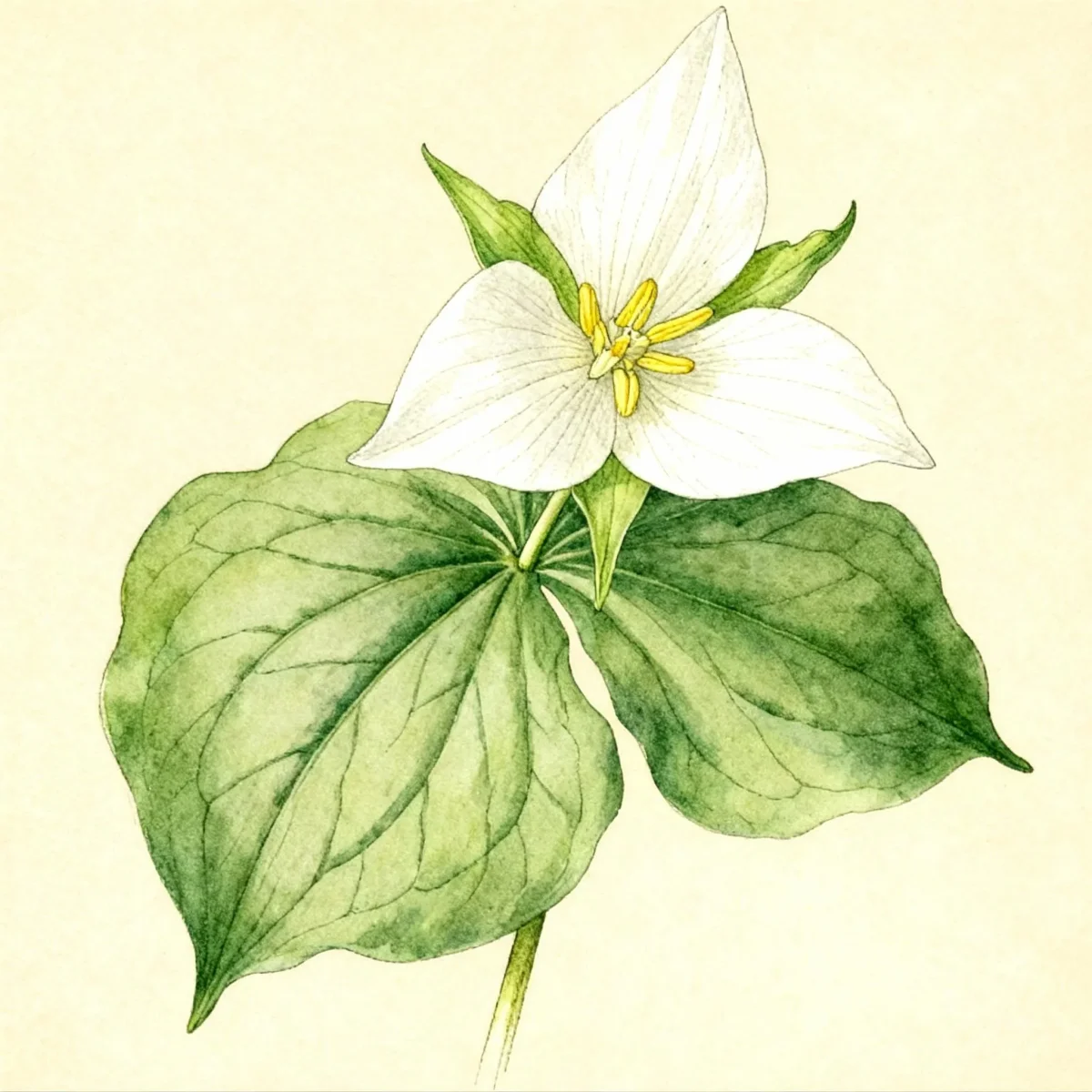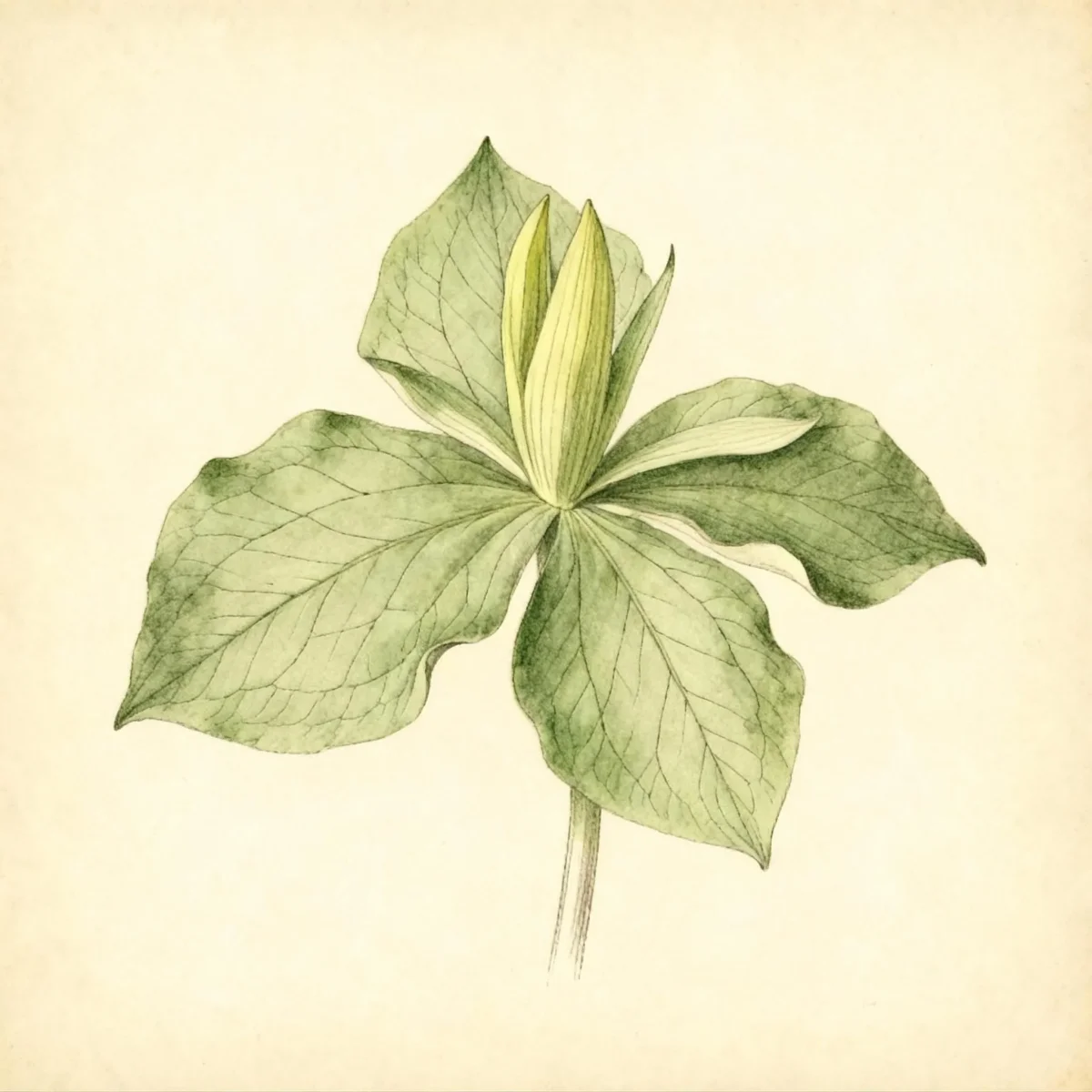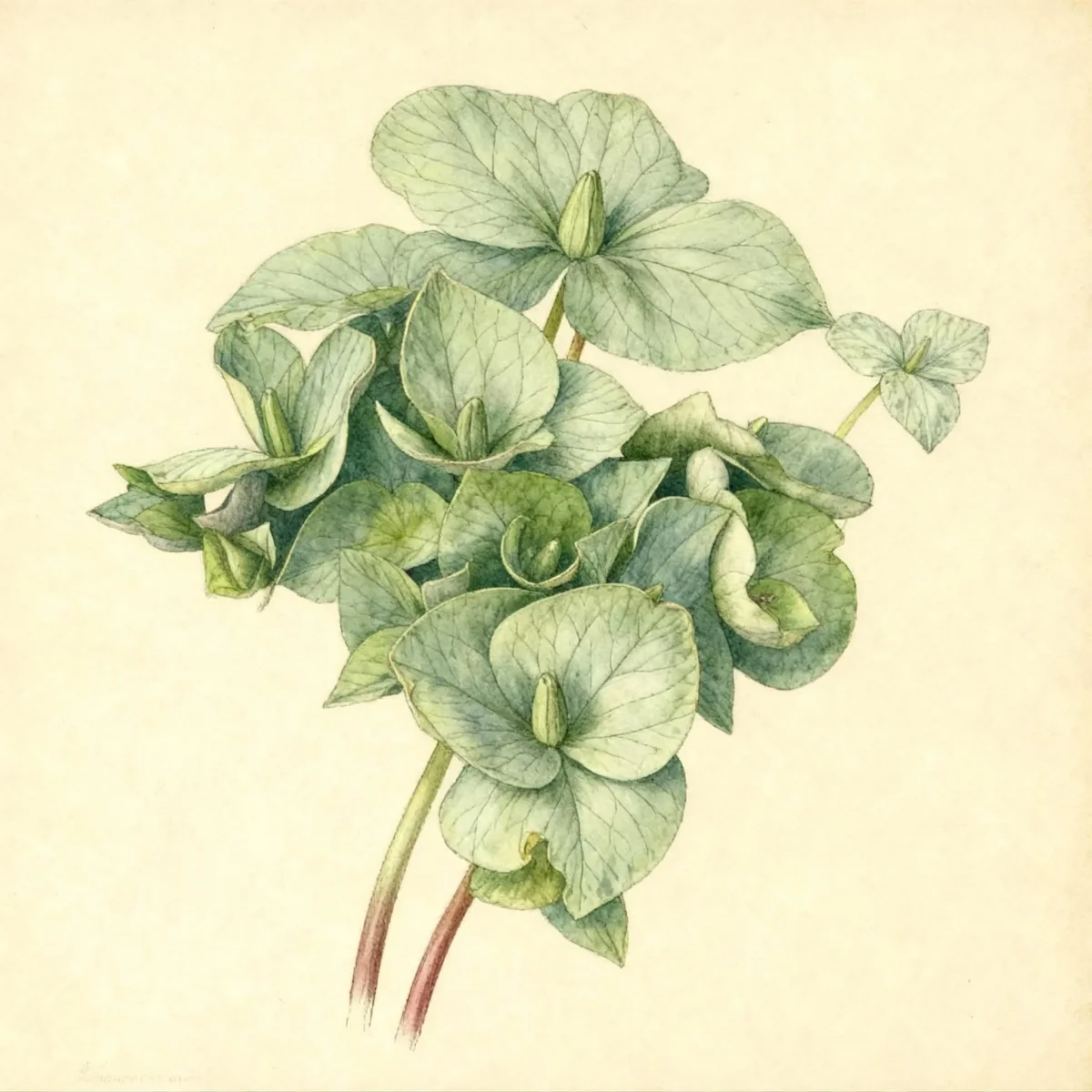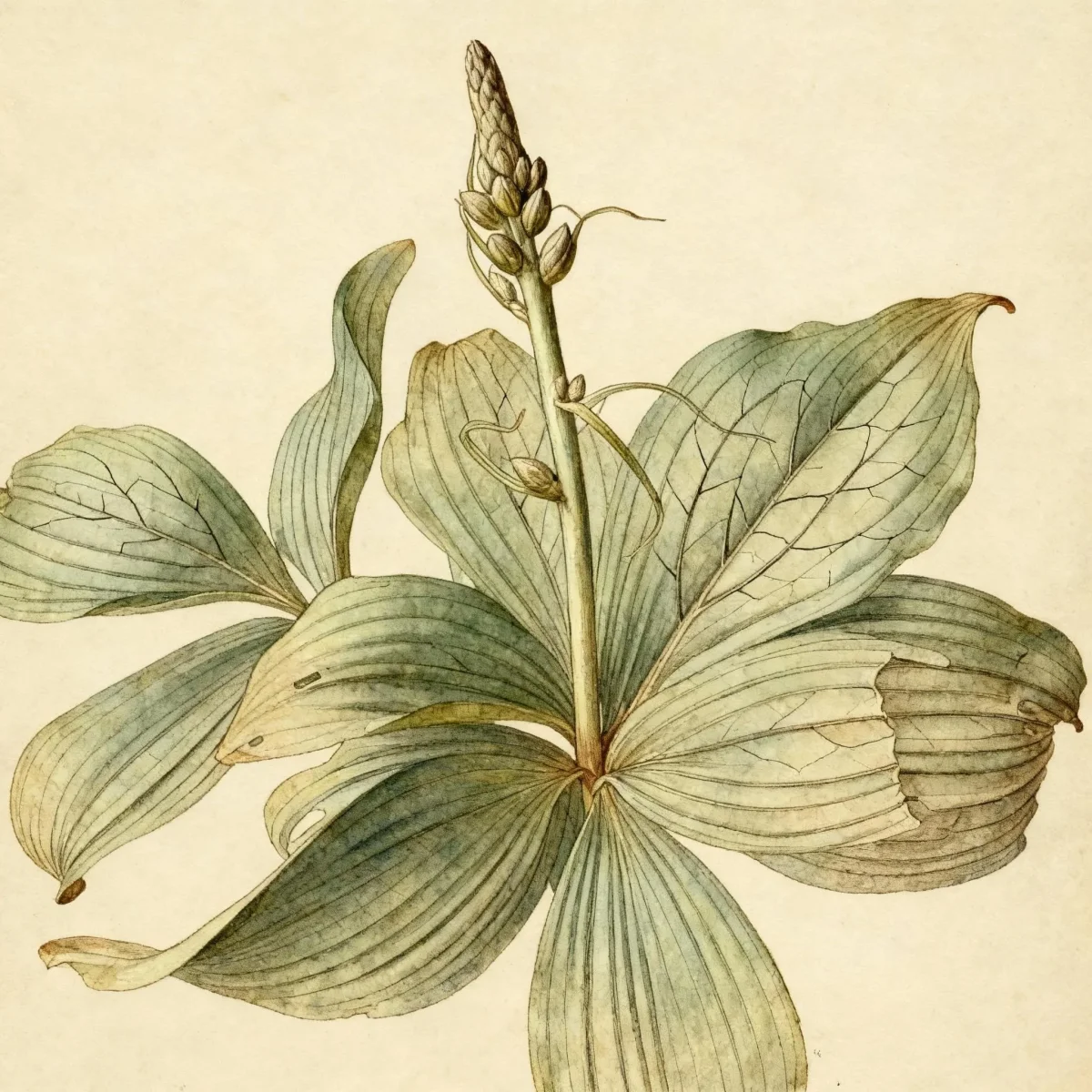

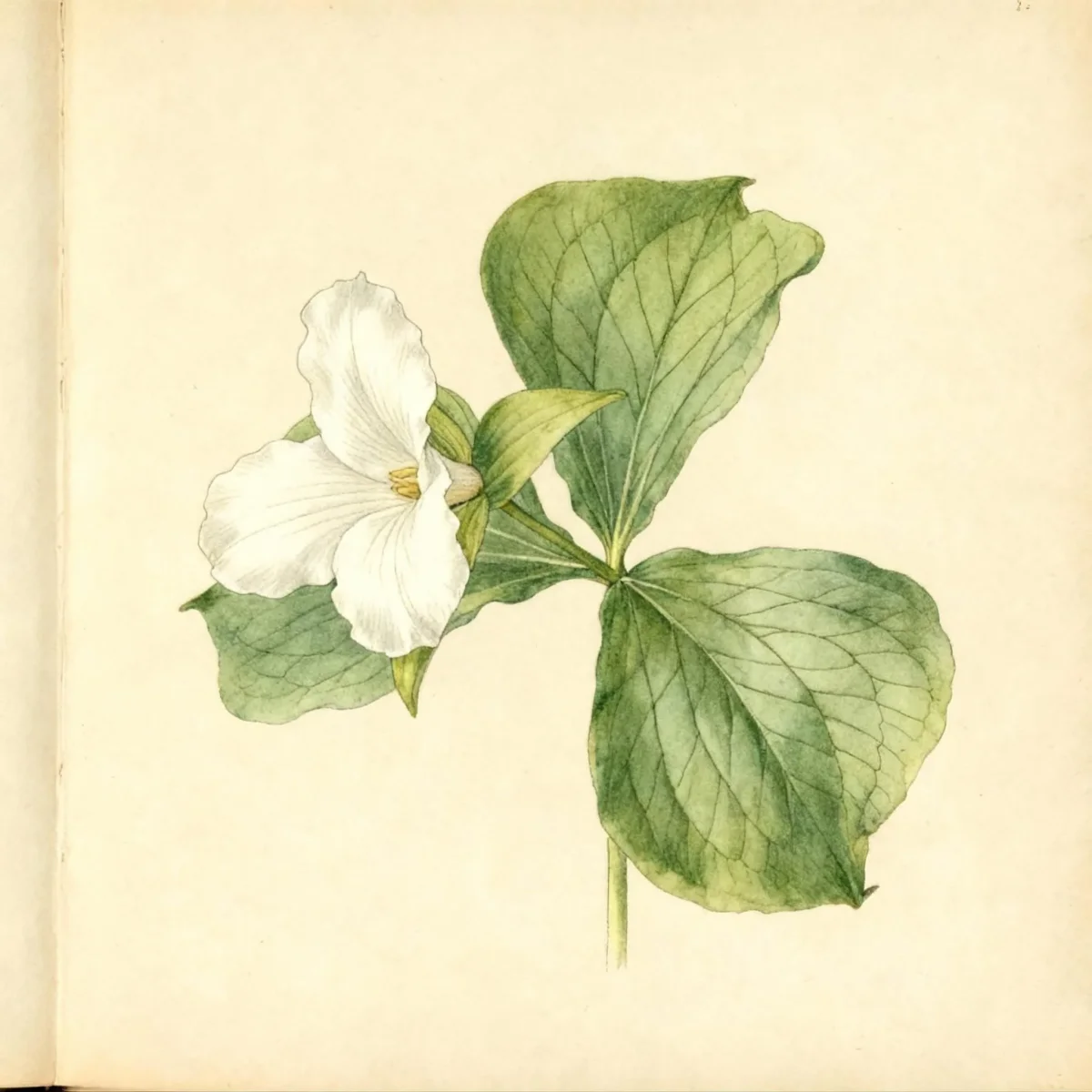
White wake robin (Trillium grandiflorum)
Discover Trillium grandiflorum, the glorious White wake robin. Grow this iconic Eastern North American perennial in rich, shady woodland settings.

Bloom Boldly, No Matter the Season - Sweatshirt
Cozy organic cotton sweatshirt featuring our exclusive Purple Coneflower design. Perfect for gardeners who bloom year-round.
Inspired by the beautiful White wake robin
Limited first batch (50) — join the waitlist for early access
Waitlist closes Feb 15, 2026.
Complete Plant Information
Field Guide Continues
Ready for care notes, companion picks, and planting tips?
The map is just the start. The full guide below covers growth habits, seasonal performance, and landscape uses.
Overview
The grand White wake robin (Trillium grandiflorum) stands as a benchmark for spring ephemeral beauty across eastern North American woodlands. Its iconic, three-petaled white blossom, which often fades to soft pink with age, makes it one of the most recognizable and beloved native perennials. Gardeners prize this plant for its graceful structure, arising from the ground with a whorl of three distinct leaves beneath a solitary bloom.
Trillium grandiflorum thrives under the dappled light of deciduous trees, mirroring its native habitat in rich, established woods. While it spreads slowly over time via rhizomes, establishing a colony of these flowers requires patience but rewards the patient gardener with dependable seasonal color once settled. Its foliage typically retreats by late summer, signaling its dormancy period.
This species is not just aesthetically pleasing; it is culturally significant as a herald of the spring season. Successfully cultivating the White wake robin contributes to a biodiverse native landscape, providing interest early in the season before the major canopy closes overhead. Proper site selection focusing on deep, moist soil is the key to long-term success with this woodland treasure.
Fast Facts
- Plant Family: Melanthiaceae
- Plant Type: Herbaceous perennial
- Native Range: Eastern North America
- Hardiness Zones: USDA Zones 4-8
- Size at Maturity:
- Height: 1-1.5 ft
- Spread: 0.75-1 ft
- Bloom Time: April to June
- Bloom Description: White
- Sun Exposure: Part shade to full shade
- Water Needs: Medium
- Maintenance Level: Medium
How to Grow
Establish Trillium grandiflorum in the fall or early spring, ensuring the location mimics its native environment: deep, rich, humusy soil that remains consistently moist but drains exceptionally well. Avoid heavy clay or excessively dry spots, as the plant struggles when its root zone dries out during the growing season. Select a location receiving part shade to full shade, ideally where it receives filtered sunlight beneath established trees.
Care for the White wake robin is relatively straightforward once established, primarily focusing on soil moisture retention. Water regularly during the active spring growth period, especially if natural rainfall is scarce. In the fall, apply a generous layer of leaf mulch around the base of the plant; this mimics the woodland duff critical for insulating the rhizomes and slowly recycling nutrients.
Propagation from seed is known to be slow and difficult, so perennial gardeners should focus on keeping existing clumps undisturbed. Because this is a rhizomatous plant that spreads only very gradually if left alone, avoid disturbing established colonies after planting. A significant caveat is that Trillium grandiflorum does not transplant well; site selection must be final before planting.
Landscape Uses
The primary suggested use for the White wake robin is to naturalize it within woodland gardens. This allows the plant to spread slowly, forming increasingly impressive drifts of white blooms under deciduous trees where few other plants can compete successfully in the early season. They look magnificent when planted beneath mature oaks or maples where they receive early spring sun before heavy shading occurs.
For moist, shady borders, Trillium grandiflorum provides vital early structure and color. Pair them with other spring ephemerals like Bloodroot (Sanguinaria canadensis) or Mayapple (Podophyllum peltatum), ensuring the companion plants have similar soil and moisture requirements. This intentional grouping creates a layered look that transitions beautifully as summer approaches and the trillium foliage fades away.
Containers are generally not recommended for Trillium grandiflorum unless the container is very large and buried permanently in a shady garden spot, mimicking a permanent ground condition, as they dislike disturbance. Focusing on naturalized groupings enhances the wildflower-like charm of this plant.
Standout Features
Flower Qualities
- Showy
Noteworthy Characteristics
Trillium grandiflorum, commonly known as great white trillium or wood lily, is a simple, graceful perennial that is one of the most familiar and beloved of the spring woodland wildflowers in eastern North America. From an underground rhizome, a stem rises topped by three prominently-veined, leaf-like bracts, with a single flower emerging from the center. Each flower boasts three flaring, ovate, wavy-edged, white petals, which often acquire subtle pink tones as they mature before yielding to berry-like capsules.
Companion Planting
Successful companion planting for Trillium grandiflorum relies on matching its specific need for rich, well-drained, consistently moist woodland soil and part shade. Excellent partners are other moisture-loving spring bloomers that share the habitat. Consider Massing Trout Lily (Erythronium species) nearby, as their foliage emerges early and often fades just as the trillium reaches its peak.
Hostas, especially smaller, shade-tolerant varieties, can serve as excellent mid-season foils once the trillium foliage has disappeared. Ferns, such as the Japanese Painted Fern or Ostrich Fern, provide textural contrast and help keep the soil cool and moist throughout the summer months. Ensure any companions planted are not aggressive spreaders that might smother the slow-growing Trillium grandiflorum colonies.
Seasonal Care Calendar
Spring is when Trillium grandiflorum demands attention; monitor soil moisture closely as the flower buds emerge and during blooming in April and May. Avoid walking over the foliage while it is present, as stems are brittle, and trampling can damage the developing rhizome system. Once the foliage begins to yellow in mid-to-late summer, allow it to die back naturally; do not cut it down prematurely, as this depletes the energy stored for next year’s spectacular bloom.
General maintenance throughout the year involves keeping the area weed-free, taking care to disturb the root zone as little as possible. In late fall, after the leaf litter has dropped from overhead trees, provide a light annual application of leaf mulch to replenish the organic matter essential for the plant’s long-term health within the woodland garden. Dormancy is complete by planting time is usually the only necessary intervention during winter contemplation.
Frequently Asked Questions
What hardiness zones is White wake robin suitable for?
Trillium grandiflorum is hardy and thrives across USDA Zones 4 through 8.
How large does White wake robin grow?
This herbaceous perennial typically reaches a mature height between 1 to 1.5 feet, with a corresponding spread of 0.75 to 1 foot.
What sun exposure does Trillium grandiflorum need?
The ideal location for growing Trillium grandiflorum is in part shade to full shade conditions.
When does White wake robin bloom?
You can expect the magnificent white flowers of the White wake robin to appear from April through June.
Conclusion
The White wake robin remains a jewel of the native plant palette due to its simple structure and spectacular early spring display. Establishing colonies of Trillium grandiflorum transforms a shady space, offering unmatched grace. We encourage gardeners to plan their planting this fall, ensuring deep, humusy soil conditions are met to support this magnificent woodland perennial for years to come.