Black false hellebore (Veratrum nigrum)
Discover Black false hellebore (Veratrum nigrum), a rare, tall perennial with striking purple-black summer blooms. Perfect for rich, moist gardens.

Bloom Boldly, No Matter the Season - Sweatshirt
Cozy organic cotton sweatshirt featuring our exclusive Purple Coneflower design. Perfect for gardeners who bloom year-round.
Inspired by the beautiful Black false hellebore
Limited first batch (50) — join the waitlist for early access
Waitlist closes Feb 15, 2026.
Complete Plant Information
Field Guide Continues
Ready for care notes, companion picks, and planting tips?
The map is just the start. The full guide below covers growth habits, seasonal performance, and landscape uses.
Overview
Veratrum nigrum, commonly known as black false hellebore, is a highly dramatic and somewhat rare herbaceous perennial valued for its imposing vertical structure and intensely dark flower spikes. Reaching up to six feet tall, this plant brings substantial architectural presence to the landscape. Its value lies not only in its height but in the unusual, star-shaped, purple-black flowers that emerge throughout the summer months.
This rhizomatous perennial thrives when provided with rich, moist soil conditions, though it shows flexibility to tolerate full sun if consistent moisture is maintained. While its slow growth rate means patience is required—seed-grown plants may take three years to flower—the resulting display of Veratrum nigrum is highly rewarding. Gardeners should note that all parts of this striking plant are poisonous if ingested.
These dramatic spires of dark color make black false hellebore an excellent choice for adding depth and contrast in woodland garden settings or formal borders. Successfully cultivating Veratrum nigrum requires meeting its baseline need for consistent moisture coupled with well-drained media, ensuring a low-maintenance presence once established.
Fast Facts
- Plant Family: Melanthiaceae
- Plant Type: Herbaceous perennial
- Native Range: Europe, Asia
- Hardiness Zones: USDA Zones 5-8
- Size at Maturity:
- Height: 4-6 ft
- Spread: 2-3 ft
- Bloom Time: June to September
- Bloom Description: Purple-black
- Sun Exposure: Full sun to part shade
- Water Needs: Medium
- Maintenance Level: Low
How to Grow
Site selection is crucial for establishing Veratrum nigrum. Plant rhizomes in spring in an area receiving rich, well-drained soil. While it prefers part shade, it tolerates full sun provided moisture levels are kept consistently high; never allow the soil to dry out, as this plant dislikes drought. Shelter new plantings from strong, drying winds to promote strong stem development.
Watering should be moderate but steady, especially during dry spells, mimicking its native, damp environments. Fertilization is generally unnecessary if the soil is natively rich. Maintenance remains low; primarily, cleanup involves removing old foliage in early spring before new growth emerges.
Propagation is possible through division of the thick rhizomes, although these plants grow slowly, particularly in their initial years. Be aware that plants grown from seed can take up to three years before they produce their first flower spike, so patience is essential for propagation success. As a critical safety reminder, handle all parts of Veratrum nigrum with care, as they are poisonous if ingested.
Landscape Uses
The impressive height and deep, near-black coloration of Veratrum nigrum make it an ideal structural element in the perennial border. Plant it toward the mid-to-back of the border where its vertical lines can contrast sharply with rounded or mounding companion plants. It excels in woodland gardens, where dappled light filters through the canopy, enhancing the flower saturation without scorching the foliage.
For cottage gardens, the unusual dark blooms of black false hellebore offer a dramatic counterpoint to softer pastels and traditional blooms. Consider pairing Veratrum nigrum with light-colored bloomers like white Foxgloves or pale blue Delphiniums to maximize the visual impact of its dark spires. Its substantial foliage also provides excellent year-round texture.
Standout Features
Flower Qualities
- Showy
Noteworthy Characteristics
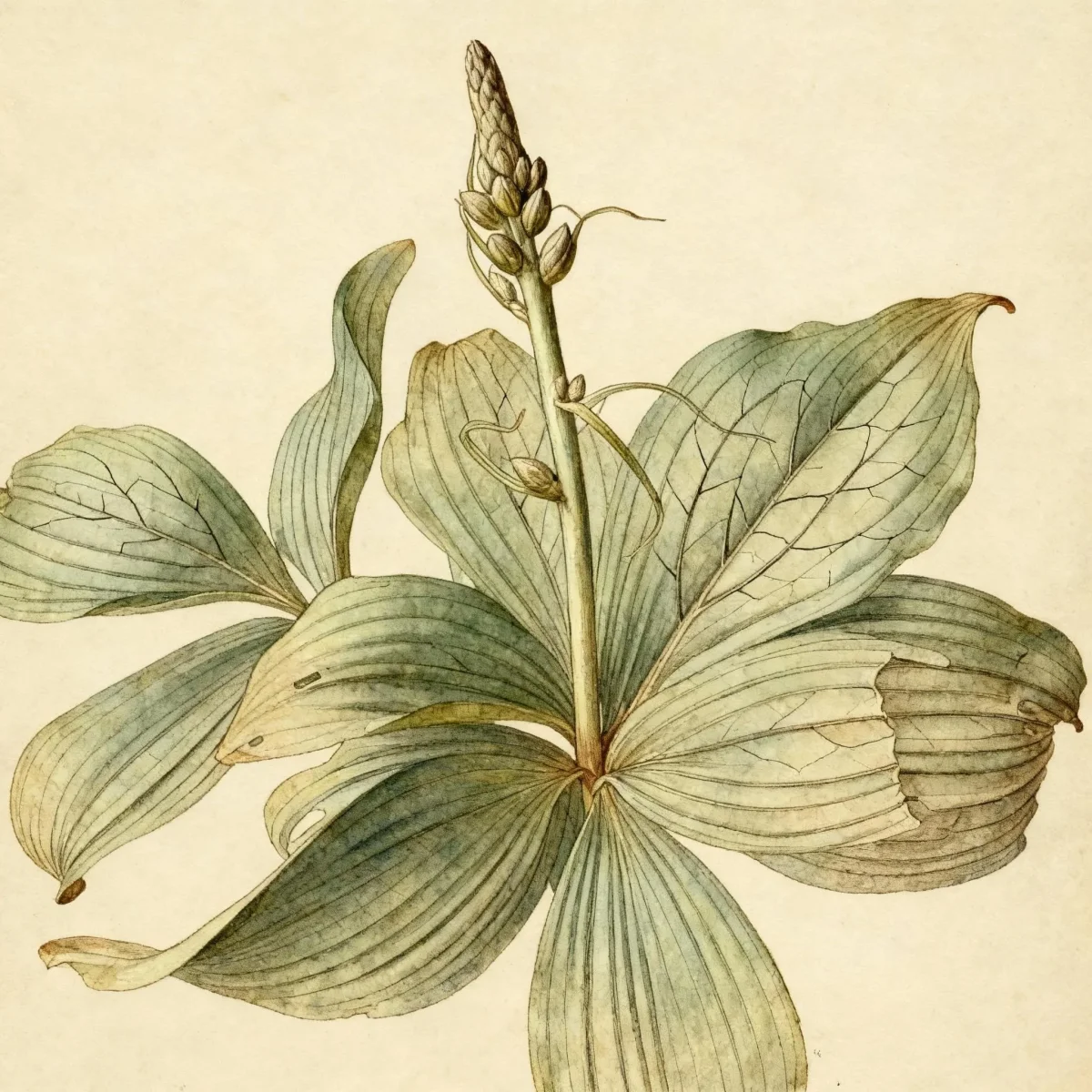
Veratrum nigrum, commonly known as black false hellebore, is a somewhat rare herbaceous rhizomatous perennial that typically grows to 4-6’ tall and to 2-3’ wide. It is native from central/southern Europe to central Asia and China. Large, parallel-veined, deeply pleated, elliptic leaves (to 12” long) are spirally arranged around stout erect stems which are topped in summer by narrow, pubescent, branched panicles (18-24” long) of small, 6-tepaled, star-shaped, dark purple to purple black flowers (each to 3/8” across).
Tolerances
Potential Problems
Veratrum nigrum generally exhibits excellent resistance to serious insect or disease issues, contributing to its low maintenance profile. The primary pests to monitor are common garden mollusks, specifically slugs and snails. These creatures may feed voraciously on the developing, tender new growth emerging in the spring.
Management should focus on consistent monitoring during wet periods. Employing organic barriers, such as copper tape around established clumps, or using slug baits specifically designed for garden use can effectively deter these pests and protect the foliage of your black false hellebore.
Frequently Asked Questions
What hardiness zones is Black false hellebore suitable for?
Black false hellebore (Veratrum nigrum) is reliably hardy in USDA Zones 5 through 8.
How large does Veratrum nigrum grow?
This herbaceous perennial typically reaches a mature height between 4 to 6 feet tall with a spread of 2 to 3 feet wide, creating a significant vertical accent.
What sun exposure does Veratrum nigrum need?
For best results, plant Veratrum nigrum where it receives full sun to part shade, ensuring that the soil remains consistently moist, especially if sited in a location receiving more direct sun exposure.
When does Black false hellebore bloom?
The bloom time for Veratrum nigrum is generally from June through September, when it displays its distinctive purple-black flowers.
Conclusion
The architectural presence and unique, dark blooms of Veratrum nigrum offer unparalleled depth in the mixed border or woodland garden. Ensuring consistent moisture allows this low-maintenance Black false hellebore to flourish, rewarding patient gardeners with its striking summer presence. Check your garden’s USDA zone compatibility and plan to plant rhizomes this spring for future dramatic displays.
Propagation Tips
Propagating Veratrum nigrum is best achieved through division of its thick rhizomes, typically conducted in the spring season just as new growth begins to emerge. Exercise care when digging, as these plants are slow to establish and require patience; dividing very large clumps yields better results than attempting to divide small, recent offsets. Disturbing the root zone as little as possible will help ensure the divided sections recover quickly.
While propagation via seed is possible, remember that plants grown this way require significant time—up to three years—before they are mature enough to flower. For faster results or increasing existing stock, rhizome division remains the most practical method for multiplying your supply of this striking perennial.
Companion Planting
Because Veratrum nigrum demands rich, moist soil and a preference for partially shaded conditions, companion plants should share similar cultural needs to create a harmonious planting scheme. Consider using plants that enjoy consistent moisture, such as large Hostas or Astilbes, whose varying leaf textures and brighter flower colors will contrast beautifully with the dark spires of the black false hellebore.
In areas with more sun, ensure you pair Veratrum nigrum with dense groundcovers that can help shade the soil, keeping the roots cool and damp. Ferns are excellent partners in woodland settings, providing fine, delicate texture against the bold, pleated leaves of the perennial.