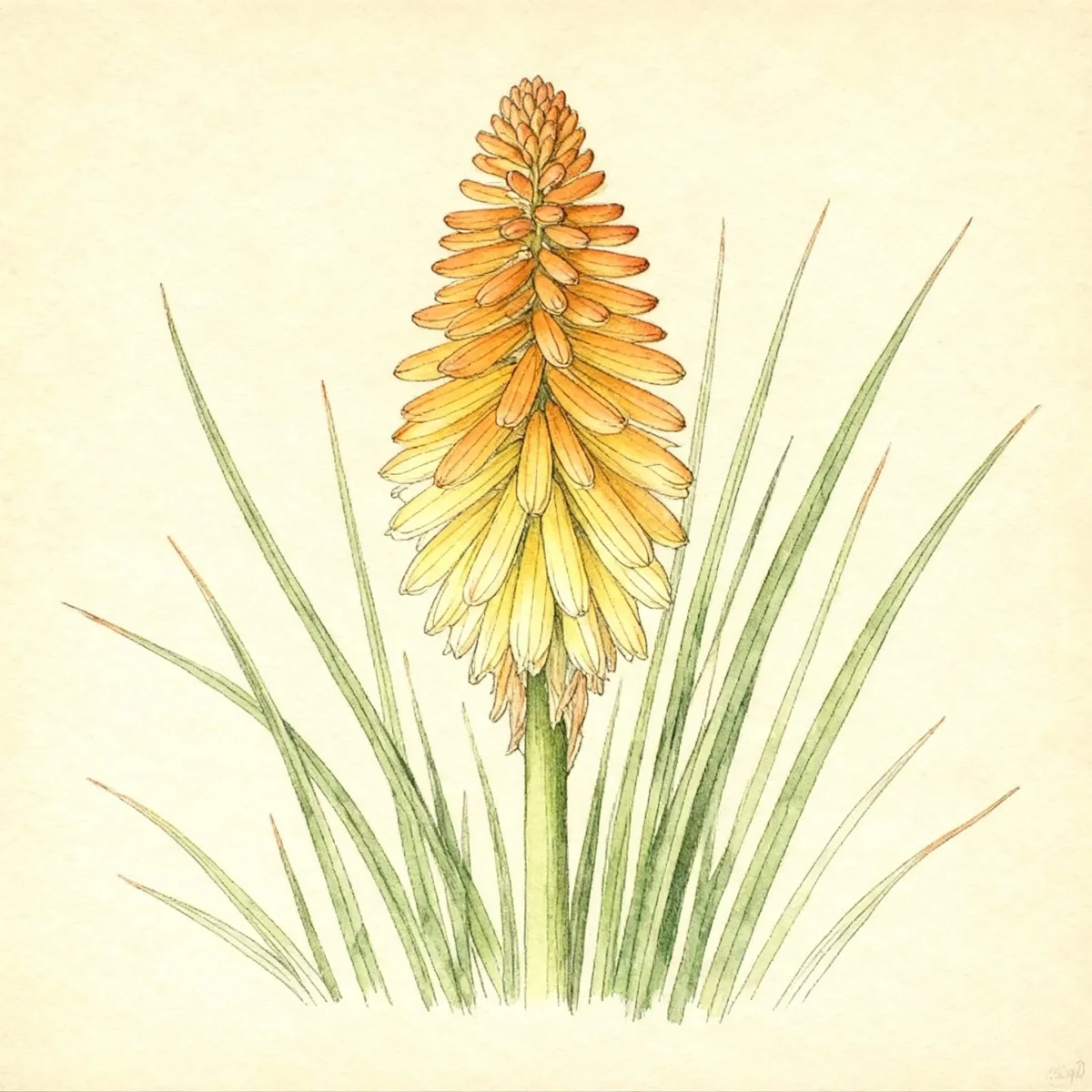
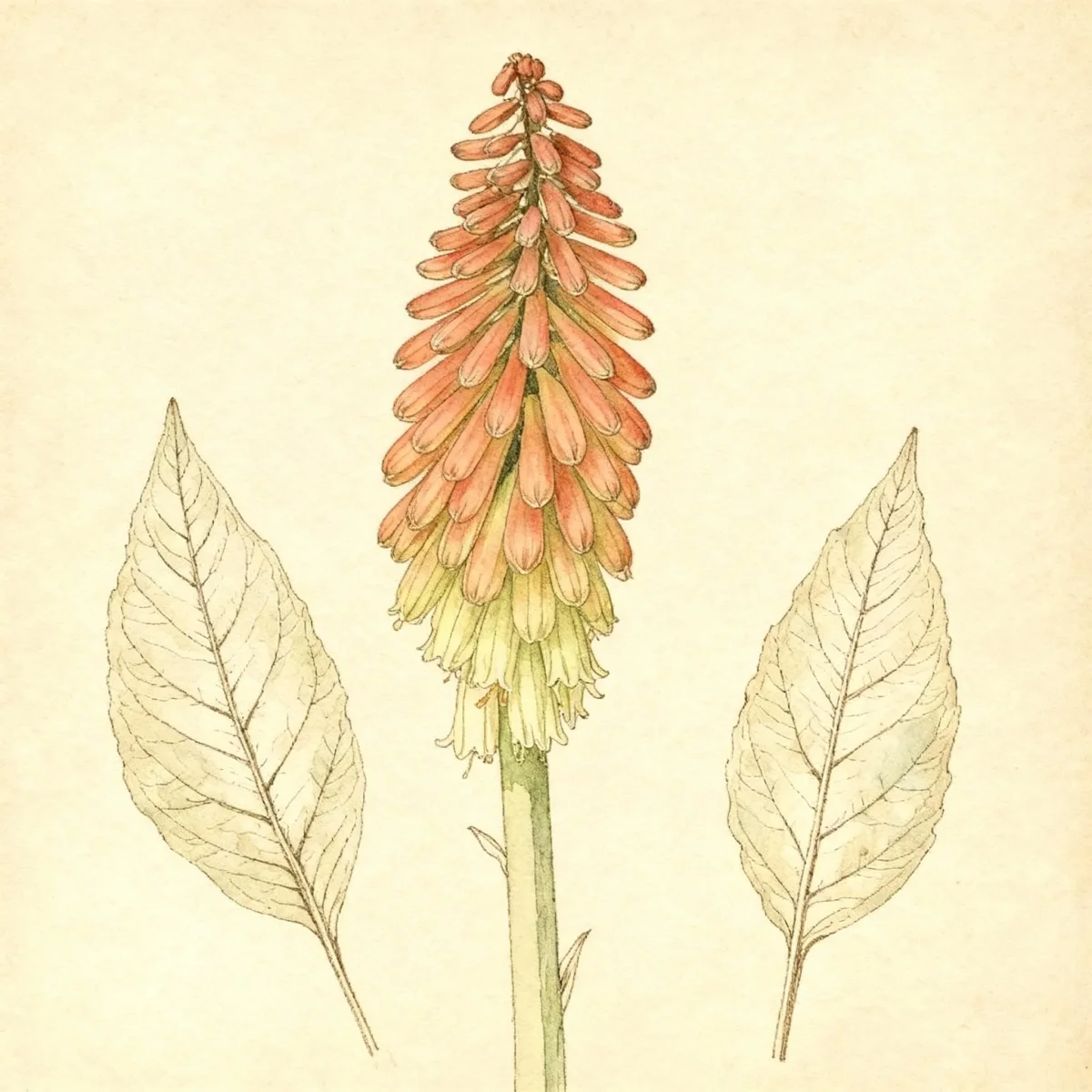
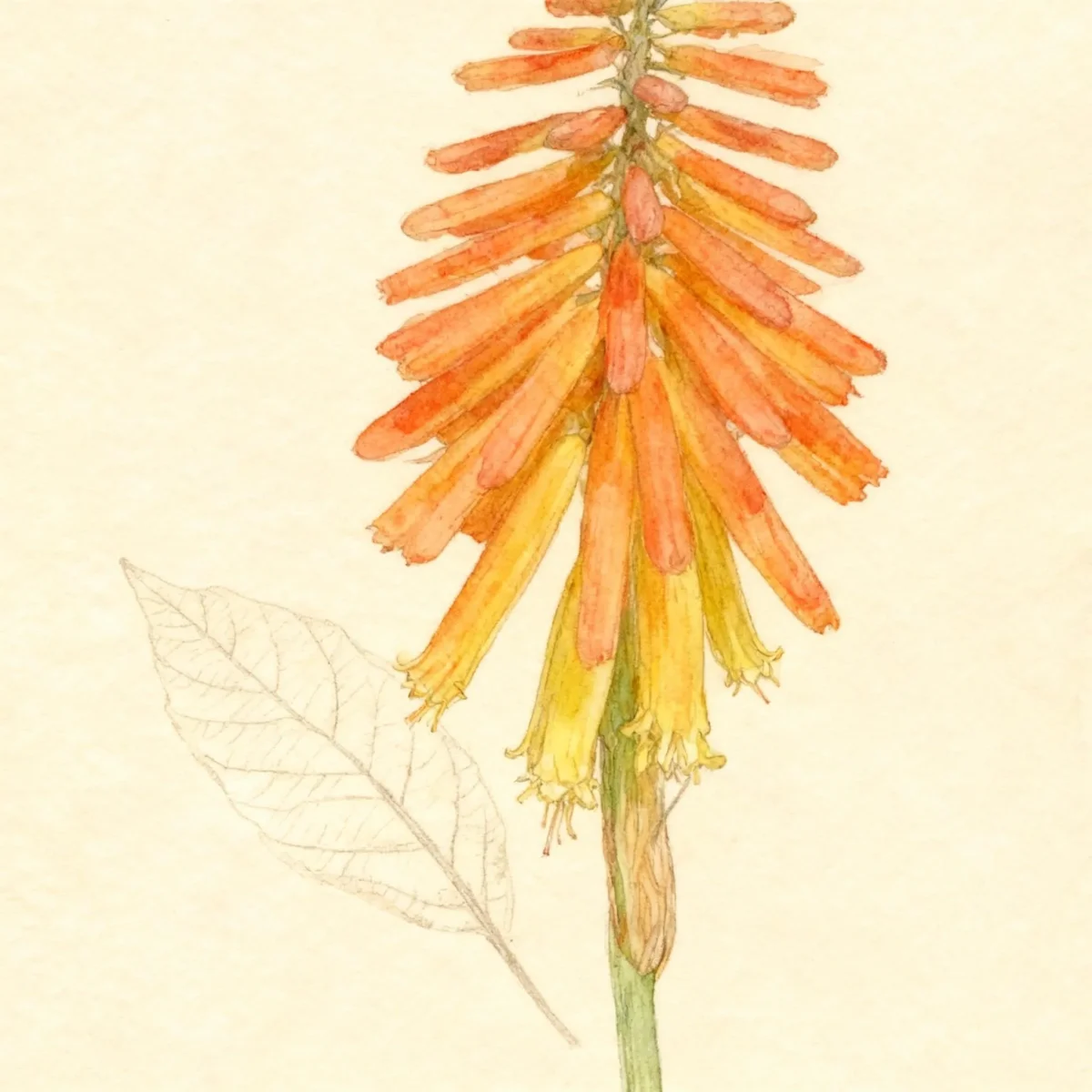
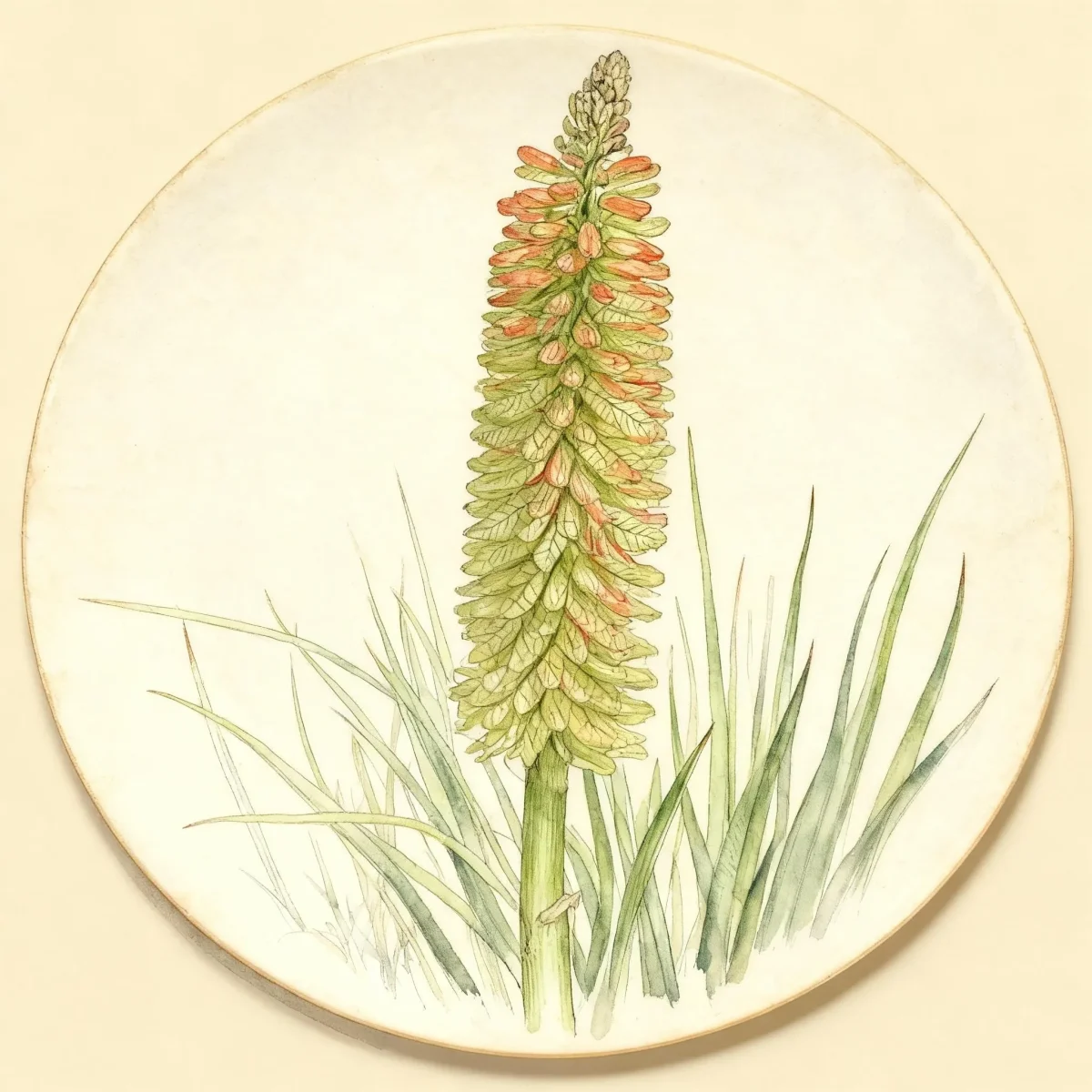
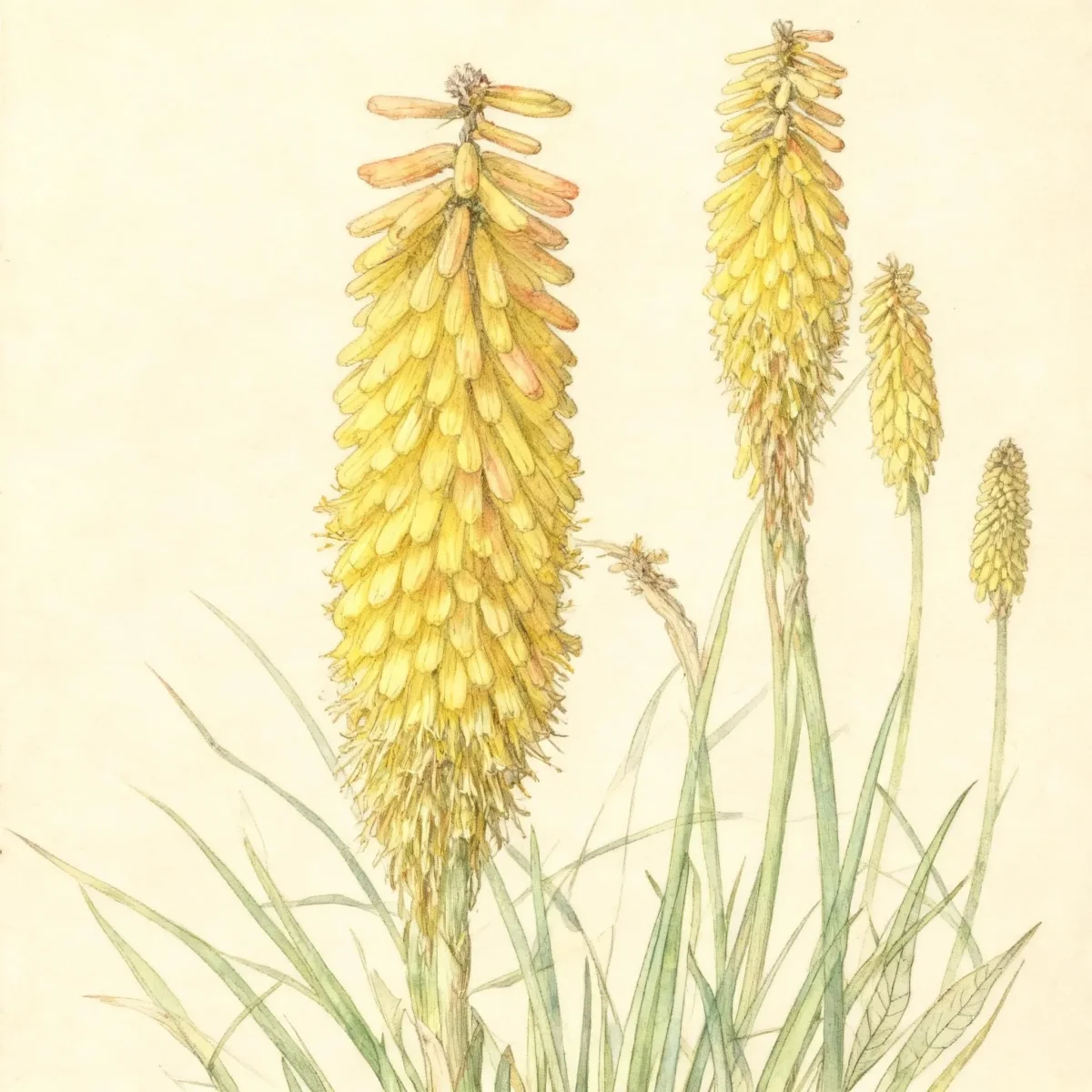
Red-hot poker (Kniphofia uvaria)
The vibrant Kniphofia uvaria (Red-hot poker) brings dramatic vertical spikes of red and yellow flowers to summer borders. Hardy in Zones 5-9, this perennial requires full sun and medium water.
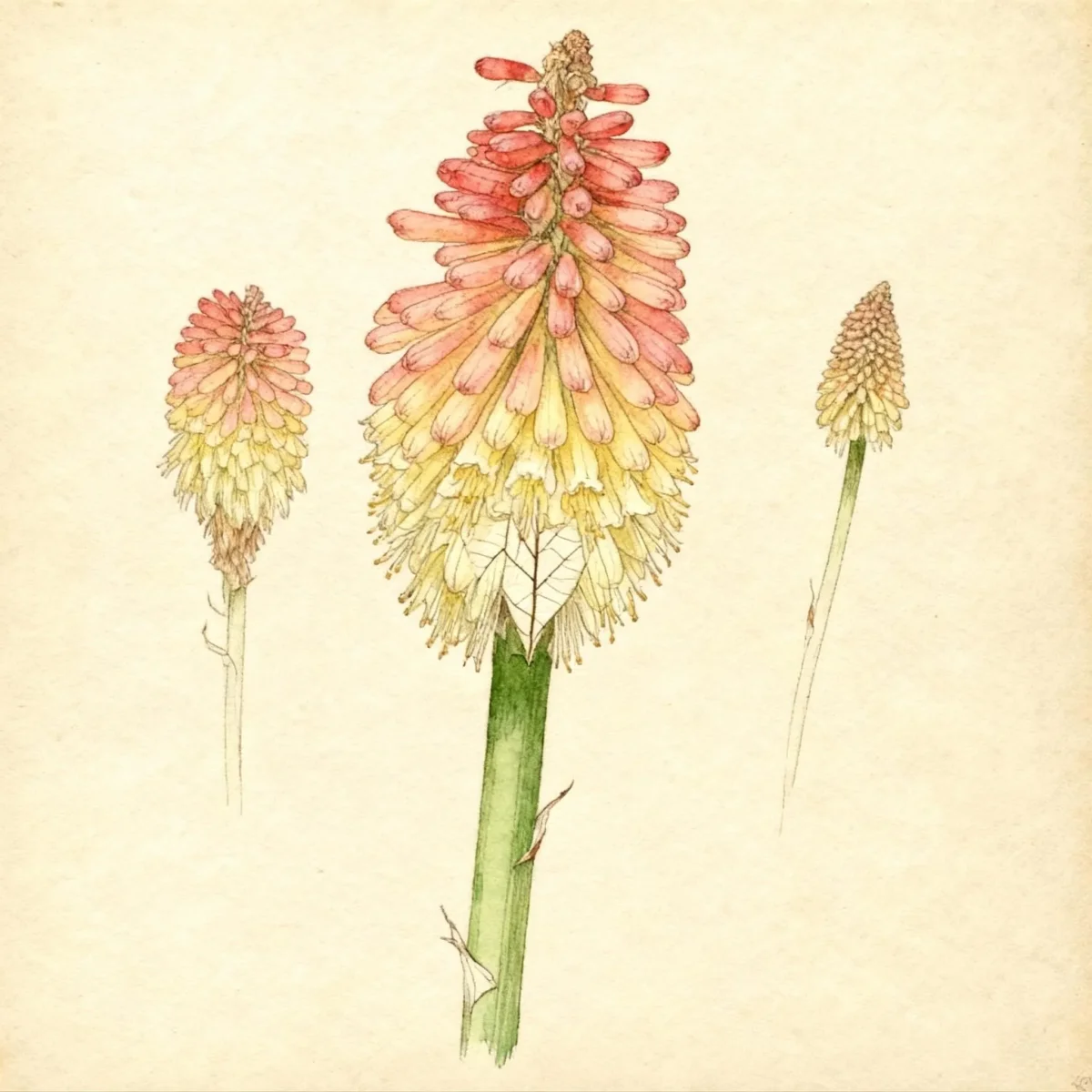

Bloom Boldly, No Matter the Season - Sweatshirt
Cozy organic cotton sweatshirt featuring our exclusive Purple Coneflower design. Perfect for gardeners who bloom year-round.
Inspired by the beautiful Red-hot poker
Limited first batch (50) — join the waitlist for early access
Waitlist closes Feb 15, 2026.
Complete Plant Information
Field Guide Continues
Ready for care notes, companion picks, and planting tips?
The map is just the start. The full guide below covers growth habits, seasonal performance, and landscape uses.
Overview
The dramatic presence of Kniphofia uvaria, widely recognized as the red-hot poker, makes it an indispensable feature in mixed borders. This upright, clump-forming perennial showcases dense terminal racemes of tubular flowers, creating a striking vertical accent throughout the season. Its common name perfectly describes the visual impact of the torch-like bloom spikes.
Native to South Africa, this rhizomatous perennial thrives when given ample sunlight and well-drained conditions. It offers coarse, sword-shaped, bluish-green foliage that provides structure even when the plant is not in flower. Gardeners value Kniphofia uvaria for its long-lasting, bicoloured floral display, attracting beneficial attention to the summer garden.
Growing the red-hot poker successfully is straightforward for intermediate gardeners. It requires a commitment to full sun exposure and avoiding overly heavy, wet soils. When sited correctly, this plant demands only medium maintenance while delivering high-impact color from late spring into early summer.
Fast Facts
- Plant Family: Asphodelaceae
- Plant Type: Herbaceous perennial
- Native Range: South Africa
- Hardiness Zones: USDA Zones 5-9
- Size at Maturity:
- Height: 3-4 ft
- Spread: 2-3 ft
- Bloom Time: May to June
- Bloom Description: Top flowers red; lower flowers yellow
- Sun Exposure: Full sun
- Water Needs: Medium
- Maintenance Level: Medium
How to Grow
Planting Kniphofia uvaria should occur in spring or fall in a location that ensures long hours of direct sun exposure. The most critical cultural element is soil structure; this plant must have average, medium moisture, well-drained soils and cannot tolerate wet, heavy clay. If your soil tends toward richness, the plant will benefit, but always prioritize drainage, locating it away from areas where water pools.
Routine care involves moderate watering, allowing the soil to dry slightly between soakings, especially once established. While fertilizing isn’t strictly necessary in rich soil, a balanced amendment in early spring can encourage robust growth. Promptly remove spent flower spikes (deadheading) to maintain neatness, although this may slightly affect rebloom potential.
For gardeners in the cooler end of its range (USDA Zones 5 and 6), winter preparation is crucial for the survival of the crowns. Apply a heavy layer of mulch or physically tie the sword-shaped leaves together to form a canopy that deflects water pooling directly onto the crown, preventing freezing damage. Once established, it is best to leave these clumps undisturbed for long-term success.
Landscape Uses
The blazing color palette of the red-hot poker makes it an excellent specimen plant, drawing the eye across the landscape. Use single clumps strategically near structural elements or focal points where their vertical form stands out against mounding perennials. Due to their manageable 3 to 4-foot height, Kniphofia uvaria integrates beautifully into the middle to back sections of the perennial border.
Planting in small groups achieves a greater visual rhythm than single specimens, allowing the torches of red and yellow to repeat throughout the border design. They pair exceptionally well with silvery foliage plants or structural grasses that offer a textural contrast to the coarse, linear leaves of the Kniphofia. This torch lily is also suitable for small garden spaces where vertical drama is needed without excessive spread.
This distinctive habit ensures that the red-hot poker remains active visually for months. Consider using it near pathways where the flower structure can be appreciated up close, especially considering its resemblance to a burning torch flower.
Standout Features
Flower Qualities
- Showy
Noteworthy Characteristics
Kniphofia uvaria, commonly known as red-hot poker or torch lily, is an upright, clump-forming, rhizomatous perennial that is native to South Africa. From an 18-24” tall basal tuft of coarse, linear, sword-shaped, semi-evergreen, bluish-green leaves (to 3’ long and 1” wide) arises a succession of thick, naked flower scapes (typically to 3-4’ tall) with dense terminal racemes (6-10” long) of drooping, tubular flowers. Buds and emerging flowers are red but mature to yellow, giving each spike a two-toned appearance.
Tolerances
- Rabbit
- Drought
Potential Problems
The Kniphofia uvaria is appreciated for being relatively free of major pest and disease issues, adding to its low maintenance appeal. However, the primary threat arises from overly wet soil conditions, particularly heavy clay soils or poor winter drainage. Watch for root rot in these saturated situations, which can quickly weaken or kill the plant.
In some specific geographic areas, you may encounter thrips, which are tiny sucking insects that can damage the developing flower buds, causing distortion or browning of the initial color before the spike fully opens. Management involves ensuring good air circulation by providing the necessary full sun exposure and observing the plants regularly for early detection.
Frequently Asked Questions
What hardiness zones is Red-hot poker suitable for?
The red-hot poker (Kniphofia uvaria) is best suited for USDA Hardiness Zones 5 through 9, though extra winter protection is recommended in Zone 5.
When does Red-hot poker bloom?
This plant typically blooms between May and June, displaying its characteristic flower spikes where the top flowers are colored red and the lower flowers mature to yellow.
How large does Red-hot poker grow?
Established clumps of Kniphofia uvaria generally reach heights between 3 and 4 feet tall, spreading outward to a width of 2 to 3 feet.
What sun exposure does Red-hot poker need?
For optimal flowering and health, the red-hot poker requires full sun exposure daily.
Conclusion
The reliable height, drought tolerance, and spectacular floral architecture make the Kniphofia uvaria a superb structural plant for sunny borders. Investing in this enduring genus, the red-hot poker, guarantees vibrant, contrasting vertical accents throughout the early summer season. Ensure your garden site provides excellent drainage before planting to guarantee many seasons of enjoyment.
Companion Planting
Selecting companions that share the full sun and medium water needs of the Kniphofia uvaria is key to a harmonious border. Look toward plants with contrasting foliage, such as silvery or blue-toned species, to accentuate the warm red and yellow tones of the poker flower. Good matches include Russian Sage (Perovskia atriplicifolia) for silvery texture, or ornamental grasses like Switchgrass (Panicum virgatum) which offer soft movement against the rigid stalks.
Avoid placing shallow-rooted, moisture-loving perennials directly beside the red-hot poker, as competition for water in that specific zone might stress the Kniphofia, particularly during summer dry spells. For a classic cottage look, integrate them with staunch, late-blooming sun lovers like Coneflowers (Echinacea) or Black-eyed Susans (Rudbeckia).
Design Ideas for Vertical Interest
The strong vertical form of the red-hot poker allows gardeners to manipulate sight lines within the garden effectively. Place these plants near the rear of a border, or use them as vertical “breaks” between lower, mounding masses of shorter perennials to add necessary height variance. Their dense flower spikes capture light beautifully throughout the day.
For small garden spaces or contemporary designs, consider grouping three or five Kniphofia uvaria plants together (mass planting) rather than scattering them singly. This grouping creates one substantial focal point that reinforces the strong shape, preventing the individual spikes from looking isolated against the backdrop foliage.
Use their heat-tolerant nature—tolerance to drought is a noted characteristic—in hot, exposed locations near retaining walls or driveways where other perennials might scorch or wilt prematurely.