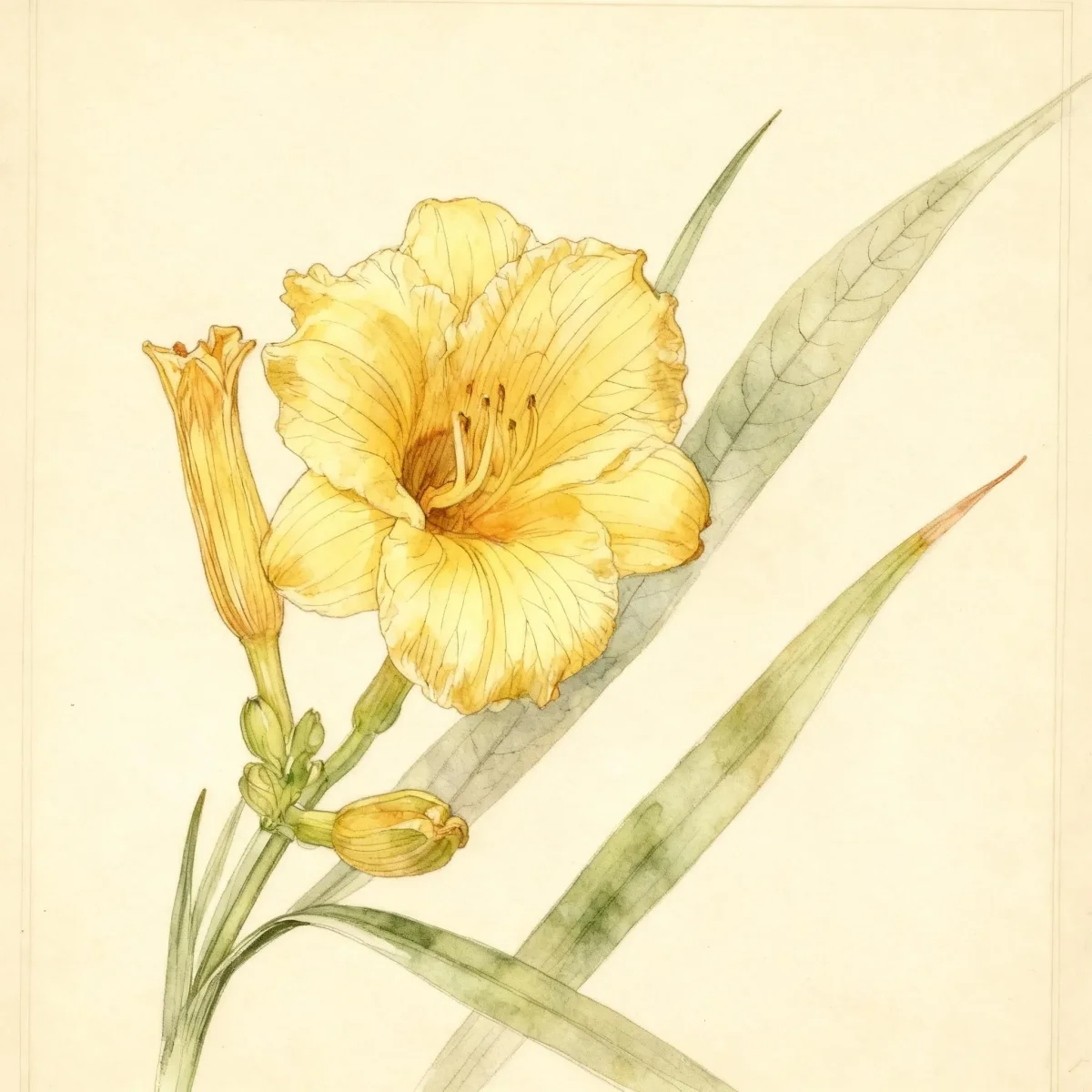
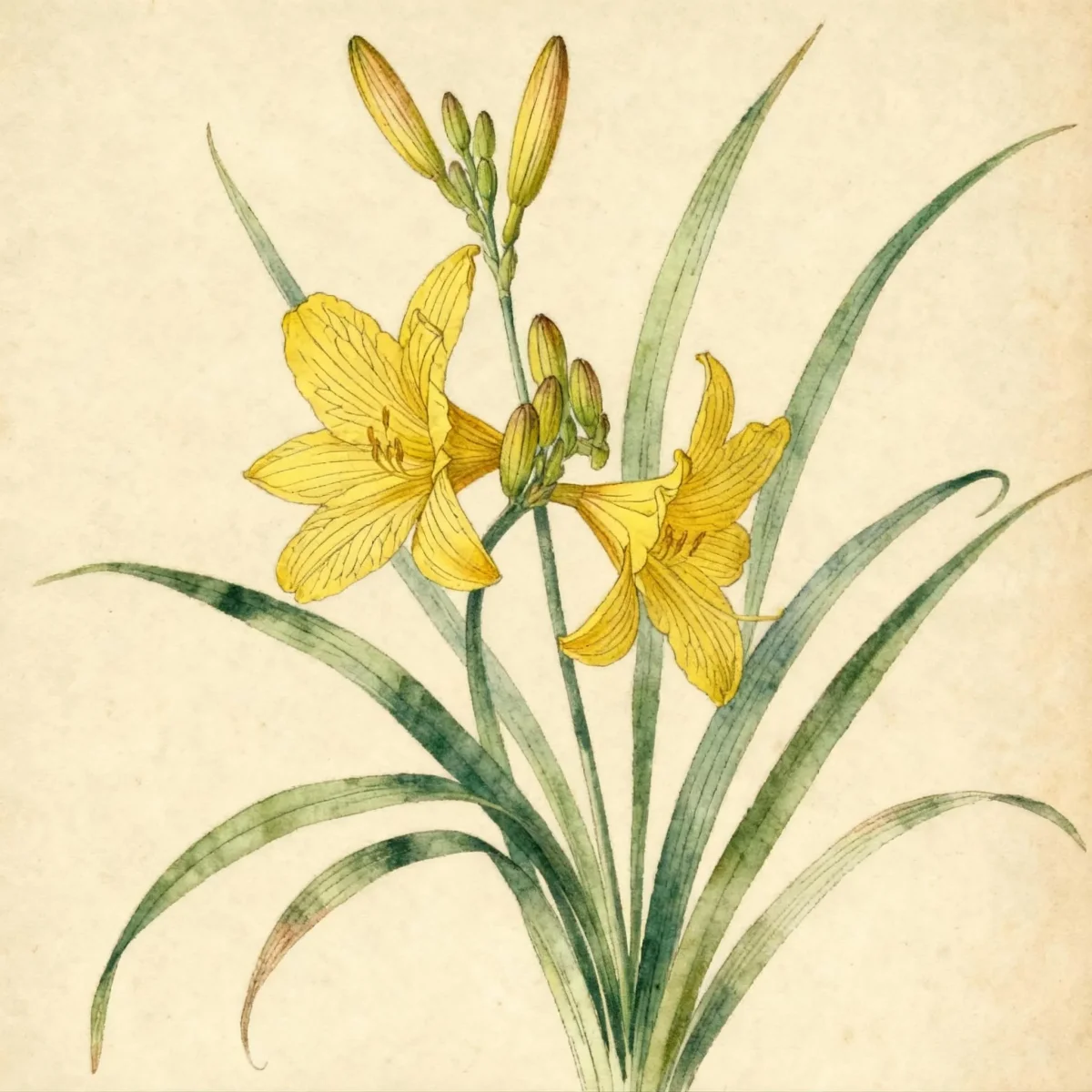
Yellow daylily (Hemerocallis lilioasphodelus)
The fragrant Yellow daylily (Hemerocallis lilioasphodelus) offers 1-2 day blooms of lemon yellow in early summer. Low maintenance and tough.

Bloom Boldly, No Matter the Season - Sweatshirt
Cozy organic cotton sweatshirt featuring our exclusive Purple Coneflower design. Perfect for gardeners who bloom year-round.
Inspired by the beautiful Yellow daylily
Limited first batch (50) — join the waitlist for early access
Waitlist closes Feb 15, 2026.
Complete Plant Information
Field Guide Continues
Ready for care notes, companion picks, and planting tips?
The map is just the start. The full guide below covers growth habits, seasonal performance, and landscape uses.
Overview
The Yellow daylily, scientifically known as Hemerocallis lilioasphodelus, is a highly valued, early-blooming perennial cherished for its sweet fragrance and cheerfulness. This species daylily provides a bright visual accent starting in May, making it an excellent addition to beds awaiting warmer season perennials. It belongs to a storied genus—Hemerocallis—where the name reflects the ephemeral nature of its blooms, lasting only a single day.
This herbaceous perennial is remarkably adaptable, thriving across a wide spectrum of conditions from full sun to partial shade. Hemerocallis lilioasphodelus establishes quickly, forming dense clumps of arching, strap-shaped foliage that offers excellent texture even after the flowers fade. Its low maintenance requirements and resistance to common garden troubles make the Yellow daylily a staple for perennial borders and naturalized plantings across USDA Zones 4 through 10.
Gardeners appreciate the tough constitution of Hemerocallis lilioasphodelus, as it tolerates summer heat, humidity, and various soil types provided drainage is adequate. Whether you are seeking reliable early color or a plant that can handle slightly less-than-ideal soil, the lemon lily, or Yellow daylily, provides robust performance with minimal fuss.
Fast Facts
- Plant Family: Asphodelaceae
- Plant Type: Herbaceous perennial
- Native Range: Central and eastern Asia, southwestern Europe
- Hardiness Zones: USDA Zones 4-10
- Size at Maturity:
- Height: 2-3 ft
- Spread: 1.5-2 ft
- Bloom Time: May
- Bloom Description: Yellow
- Sun Exposure: Full sun to part shade
- Water Needs: Medium
- Maintenance Level: Low
How to Grow
Hemerocallis lilioasphodelus should be planted in the spring or fall to allow root establishment before temperature extremes. It prefers average, medium soil that is well-drained; while this daylily is tough, avoiding standing water is crucial for long-term health. Position clumps where they receive at least six hours of direct sun for the best flowering, though part shade is tolerated well.
Once established, water needs are medium; supplemental watering is generally only required during extended dry periods. Maintenance for this species daylily is minimal. Deadheading spent flowers daily keeps the presentation neat, and spent flower scapes should be removed once blooming concludes.
To maintain vigor and prevent overcrowding, plan to divide large clumps every three to five years. This tough plant requires little supplemental feeding but will respond well to a balanced, slow-release fertilizer applied in early spring. Hemerocallis lilioasphodelus demonstrates excellent tolerance to common garden stresses including summer heat.
Landscape Uses
The Yellow daylily excels when incorporated where its early bloom and fountain-like foliage can be most appreciated. Because it naturalizes readily, mass plantings of this species are highly effective, creating sweeping drifts of glowing yellow music in late spring. They are exceptionally useful for softening transitions between lawn areas and structured perennial beds.
Consider using the contrast between the bright lemon yellow flowers of Hemerocallis lilioasphodelus against deep purple foliage plants or cool blue salvias. The dense clump structure, even when not blooming, allows the Yellow daylily to suppress weeds effectively, functioning as a living ground cover over large areas. Its ability to tolerate poor soil also makes it suitable for slopes or tough banks where erosion control is necessary.
Standout Features
Flower Qualities
- Showy
- Fragrant
Noteworthy Characteristics
Hemerocallis lilioasphodelus is commonly called lemon daylily or lemon lily and features 4” diameter, trumpet-shaped, lemon yellow flowers. Individual flowers open up for 1-2 days. This species daylily has flower scapes rising up to 3’ tall from a clump of arching, strap-shaped, medium green leaves. Valued for early bloom period (May-June) and very fragrant flowers. Also known as H. Flava.Genus name comes from the Greek words hemera meaning day and kallos meaning beauty as each flower lasts but one day.Specific epithet is a combination of lili meaning lily and the genus name Asphodelus.
Tolerances
- Rabbit
- Erosion
- Air Pollution
Potential Problems
Daylilies, including Hemerocallis lilioasphodelus, are renowned for being exceptionally adaptable and are rarely plagued by serious issues. They are easy to grow, multiply quickly, and are virtually pest-free under standard garden conditions. Proper placement in well-drained soil is the best way to prevent root rot, which is the most common problem for any perennial struggling in soggy ground.
If slugs or aphids are present, standard organic treatments are usually sufficient; however, due to the plant’s vigor, infestations rarely threaten its survival. Focus on good air circulation and avoid overhead watering late in the evening to minimize any mild fungal concerns.
Frequently Asked Questions
What hardiness zones is Yellow daylily suitable for?
The Yellow daylily (Hemerocallis lilioasphodelus) is reliably hardy across a wide range, thriving in USDA Zones 4 through 10.
How large does Yellow daylily grow?
This species typically reaches a height between 2 and 3 feet tall, with a spread ranging from 1.5 to 2 feet wide when mature.
When does Yellow daylily bloom?
The Lemon lily typically begins its display in May, producing beautiful yellow flowers valued for their strong fragrance compared to later blooming hybrids.
What sun exposure does Yellow daylily need?
Hemerocallis lilioasphodelus performs best when installed in locations receiving full sun, although it will readily adapt to conditions featuring part shade.
Conclusion
The Yellow daylily (Hemerocallis lilioasphodelus) stands out as a cornerstone perennial due to its low-maintenance needs, resilience, and the welcome burst of fragrant, lemon yellow blooms it provides early in the season. Its arching foliage also offers reliable texture throughout the summer months. Before planting, confirm your garden site aligns with USDA Zones 4-10 and ensure the soil offers good drainage to guarantee years of effortless beauty.
Companion Planting
When planning beds around the Yellow daylily, select companions that share similar site requirements—full sun to part shade and medium water needs. Early companions like spring ephemeral bulbs will have faded by the time the Hemerocallis lilioasphodelus reaches its peak bloom, allowing for clean transitions. Consider pairing the bright yellow flowers with deep blue or purple blooms, such as bearded irises (if blooming time overlaps) or hardy salvias, to maximize color contrast.
Propagation Tips
Propagation of Hemerocallis lilioasphodelus is straightforward and is best achieved through division. Since this plant is noted for its ability to multiply and form dense clumps, division is essential to maintain healthy, vigorous flowering every few years. Wait until mid-summer, after the main bloom period is entirely finished, or early fall to divide. Dig up the entire clump, gently tease apart the root masses, ensuring each new division has several fans of leaves and a healthy root system, and replant immediately at the same depth.