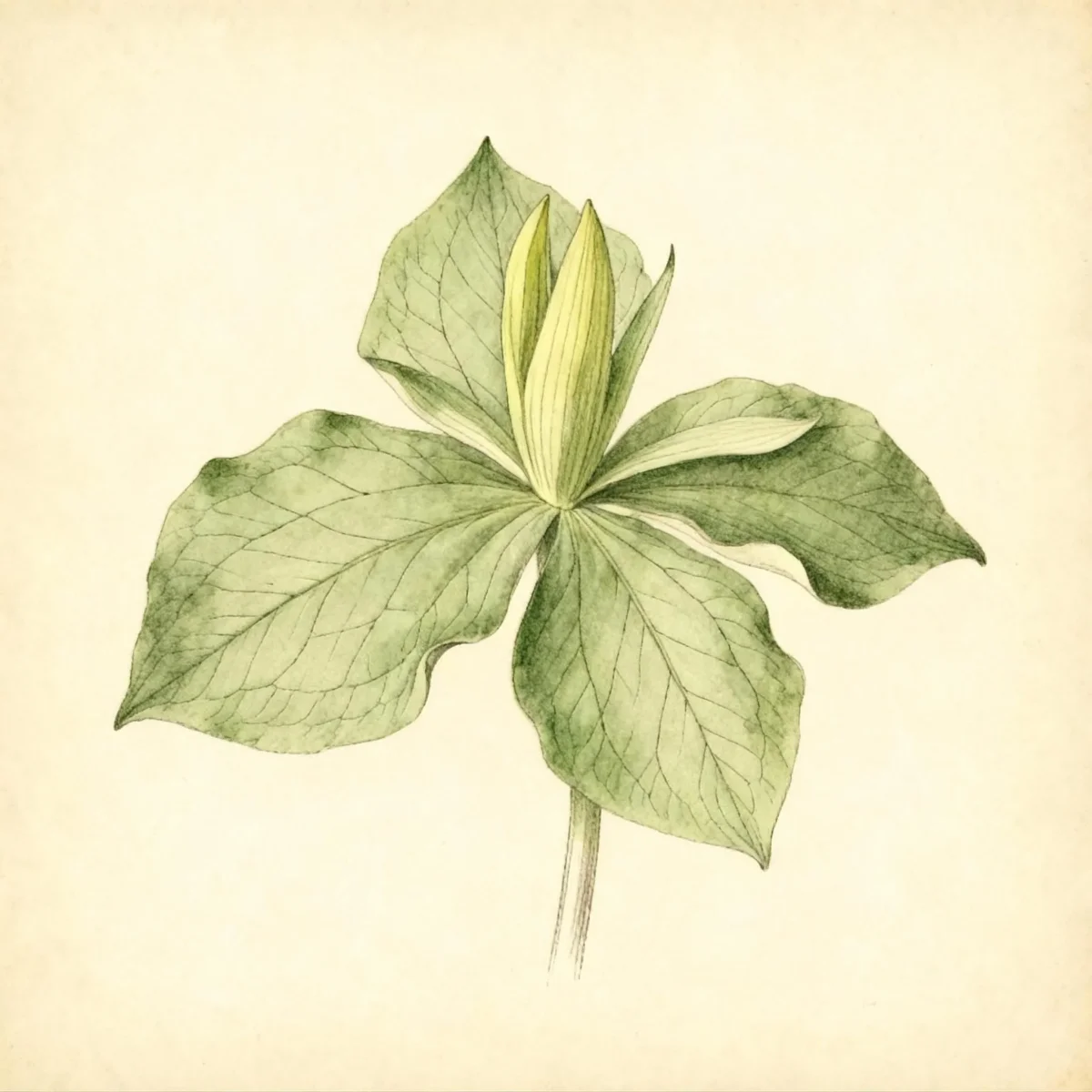
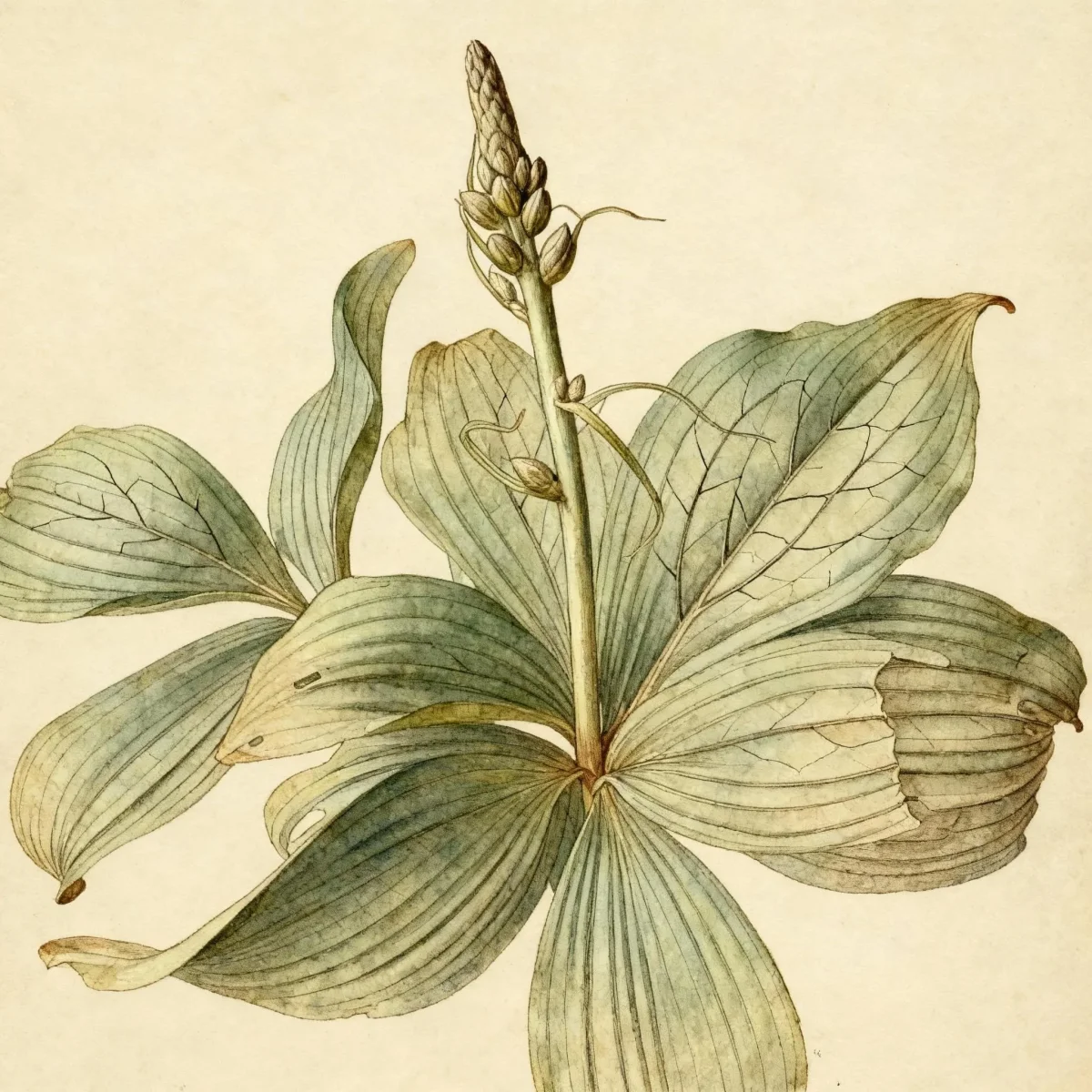
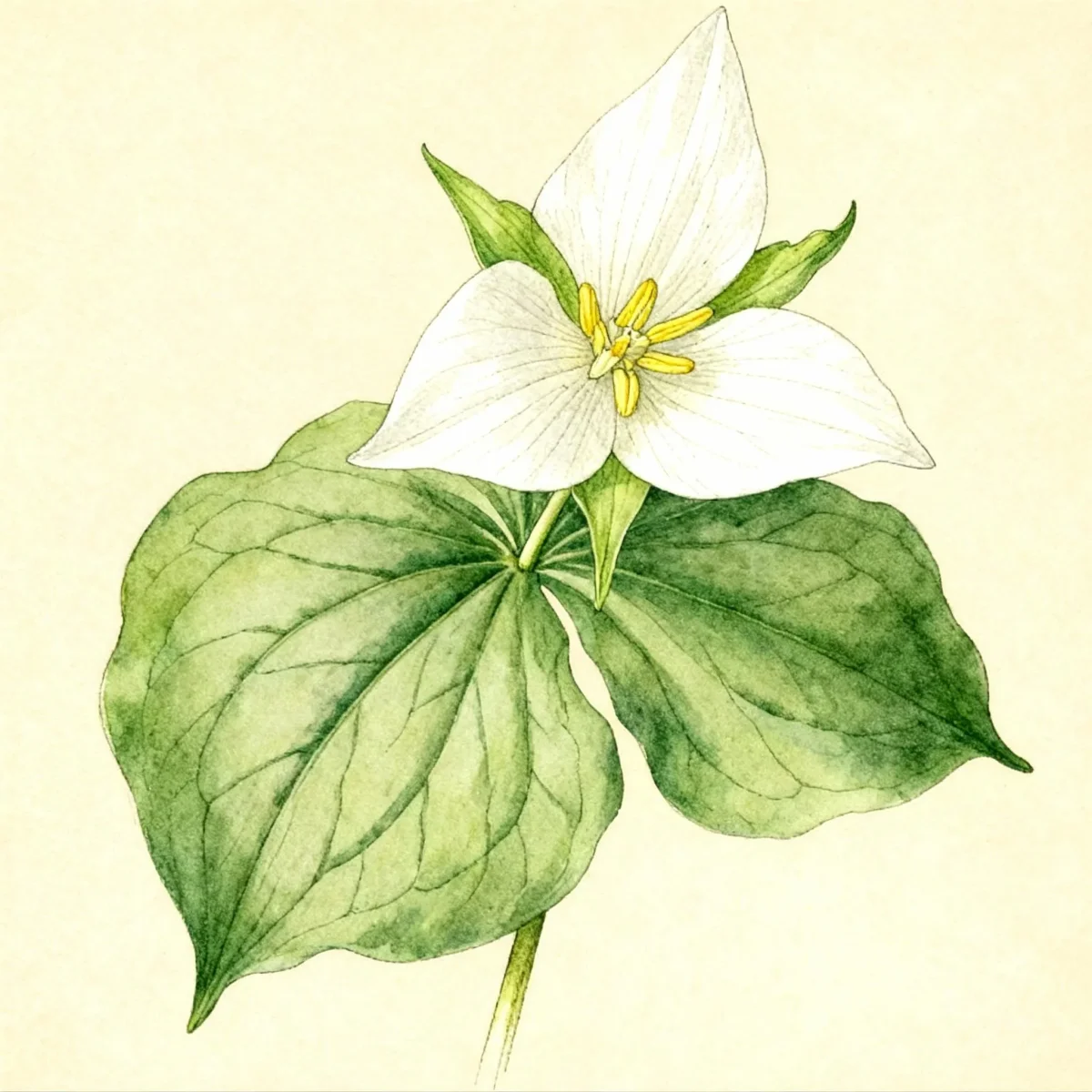
White wake robin (Trillium flexipes)
Grow the elegant Trillium flexipes, or White wake robin, for beautiful, nodding white spring flowers in dense shade.

Bloom Boldly, No Matter the Season - Sweatshirt
Cozy organic cotton sweatshirt featuring our exclusive Purple Coneflower design. Perfect for gardeners who bloom year-round.
Inspired by the beautiful White wake robin
Limited first batch (50) — join the waitlist for early access
Waitlist closes Feb 15, 2026.
Complete Plant Information
Field Guide Continues
Ready for care notes, companion picks, and planting tips?
The map is just the start. The full guide below covers growth habits, seasonal performance, and landscape uses.
Overview
Trillium flexipes, commonly known as White wake robin, is a distinguished member of the woodland wildflower community, prized for its graceful structure and delicate spring bloom. This herbaceous perennial features a unique flower presentation, often nodding slightly on a short stalk above a whorl of three large, attractive leaf-like bracts. It brings understated elegance to shaded garden spaces where few other plants assert themselves in early spring.
As a rhizomatous plant, Trillium flexipes forms slow-spreading clumps over time, establishing a steady presence in the understory environment it naturally prefers. It thrives in rich, humusy, moist but well-drained soil, mirroring its native habitat beneath deciduous trees. Gardeners should recognize its dormancy period; the foliage typically disappears by mid-summer, especially if conditions become dry.
The genus name, referencing things growing in threes, is immediately evident in the structure of leaves, petals, and sepals, contributing to the plant’s simple, profound aesthetic appeal. Planting White wake robin allows gardeners to reintroduce this familiar beauty of the spring woods into managed landscapes.
Fast Facts
- Plant Family: Melanthiaceae
- Plant Type: Herbaceous perennial
- Native Range: Northern United States
- Hardiness Zones: USDA Zones 4-7
- Size at Maturity:
- Height: 1-2 ft
- Spread: 1-1.5 ft
- Bloom Time: April to May
- Bloom Description: White
- Sun Exposure: Part shade to full shade
- Water Needs: Medium
- Maintenance Level: Medium
How to Grow
The best time to plant Trillium flexipes rhizomes is during the dormant season, usually late summer or fall, allowing them to settle before active spring growth. Select a location that offers deep part shade to full shade, mimicking a woodland floor environment. The soil must be rich in organic matter, well-drained, and maintained at a consistently medium moisture level; heavy, poorly draining soil is fatal to this species.
Ongoing care for White wake robin centers on maintaining consistent moisture, especially through the spring growing season. While established clumps are relatively hardy, they need regular watering if rainfall is insufficient, as allowing the soil to dry out prompts premature summer dormancy and leaf drop. Fertilization is rarely necessary if the soil is naturally rich and amended with leaf mold or compost annually.
Pruning involves little more than tidying up spent bloom stalks once flowering concludes, though many gardeners prefer to leave the structure until it naturally senesces. A critical cultural note is that Trillium flexipes resents disturbance; it does not transplant well, making site selection crucial. Furthermore, propagation via seed is notoriously slow, so treat existing clumps gently and avoid dividing healthy specimens unless absolutely necessary.
Landscape Uses
The classic aesthetic of Trillium flexipes makes it an indispensable choice for naturalistic shaded gardens. It excels when massed to give the effect of a genuine woodland carpet, providing a stunning focal point just as winter fades. Since its foliage often recedes by mid-summer, it pairs beautifully with later-emerging groundcovers that appreciate similar conditions.
Utilize this spring ephemeral to blend seamlessly with other woodland allies such as native ferns, bloodroot, and spring ephemerals like trout lily. Its stature—perhaps the tallest of certain local native trilliums—allows the three-petaled white flowers to stand slightly above lower-growing companions. Avoid placing White wake robin in traditional hot, sunny perennial borders where its specific moisture and light requirements cannot be met.
Standout Features
Flower Qualities
- Showy
Noteworthy Characteristics
Trillium flexipes, sometimes commonly called nodding wakerobin, grows up to 2’ high and is perhaps the tallest of the Missouri native trilliums. A branchless, naked stem is topped by a whorl of three, evenly-spaced, sessile, broadly rhombic to obovate, leaf-like bracts (up to 9” across). The flower (2.5” across) features three large white petals with three narrow green sepals and floats on a short stalk above the center of the whorl of bracts. The trillium is a simple, graceful perennial that is one of the most familiar and beloved of the spring woodland wildflowers.
Tolerances
Potential Problems
This resilient plant suffers from no serious insect or disease problems when sited correctly in its preferred shade and moisture regime. The primary risk involves human interference, as this beautiful flower does not transplant well and should never be dug up or moved from a natural setting. If experiencing issues, confirm that the soil is not boggy or overly dry during its active growth period in spring.
Frequently Asked Questions
What hardiness zones is White wake robin suitable for?
Trillium flexipes is reliably hardy across USDA Zones 4 through 7.
How large does Trillium flexipes grow?
This species typically reaches a height between 1 and 2 feet, with a modest spread of 1 to 1.5 feet.
What sun exposure does White wake robin need?
White wake robin demands protection from intense afternoon sun, thriving best in part shade conditions or even deep, full shade environments.
When does Trillium flexipes bloom?
You can expect the distinctive white blooms of Trillium flexipes to appear relatively early in the season, generally spanning from April into May.
Conclusion
The Trillium flexipes offers unparalleled native grace for the dedicated shade gardener, providing significant aesthetic impact with minimal chemical intervention. Its nodding white flowers and iconic tripartite structure make the White wake robin a cornerstone of successful woodland restoration projects and shaded gardens. Before planting, carefully assess your site’s moisture retention and light levels to ensure long-term success for this easily grown, yet sensitive, perennial.
Companion Planting
When designing a woodland garden for Trillium flexipes, focus on companions that share its love for humus-rich, consistently moist soil and filtered light. Excellent choices include various native ferns, which provide contrasting textures as the trillium foliage begins to fade, such as Maidenhair Fern or Christmas Fern. Spring ephemerals that emerge slightly before or concurrently, like Bloodroot (Sanguinaria canadensis) or Trout Lily (Erythronium americanum), create a rich tapestry of early bloomers beneath deciduous canopy trees.
Avoid aggressive spreaders that might smother the slow-growing rhizomes of the trillium. Plants with fine, airy foliage that occupy slightly different soil layers will enhance the overall composition without competing directly for root space or high light levels. Remember that whatever you plant alongside White wake robin must be able to tolerate the summer dormancy of the trillium.
Seasonal Care Calendar
Spring is the most active period for Trillium flexipes, demanding attention to watering to ensure blooms are fully realized and the plant has reserves for the coming summer. After bloom, allow the foliage to remain intact; this green factory is essential for gathering energy via photosynthesis to feed the underground rhizome for next year’s display. Resist the urge to shear back yellowing leaves prematurely.
As summer approaches and the foliage begins to die back, especially in drier sites, reduce active care but remain mindful of extreme drought, although established plants are surprisingly tough if the soil drains well. In autumn, a light top-dressing of well-rotted leaf mold or compost provides the necessary slow-release organic matter without disturbing the shallow roots. Winter protection is generally unnecessary for hardy rhizomes in Zones 4-7.