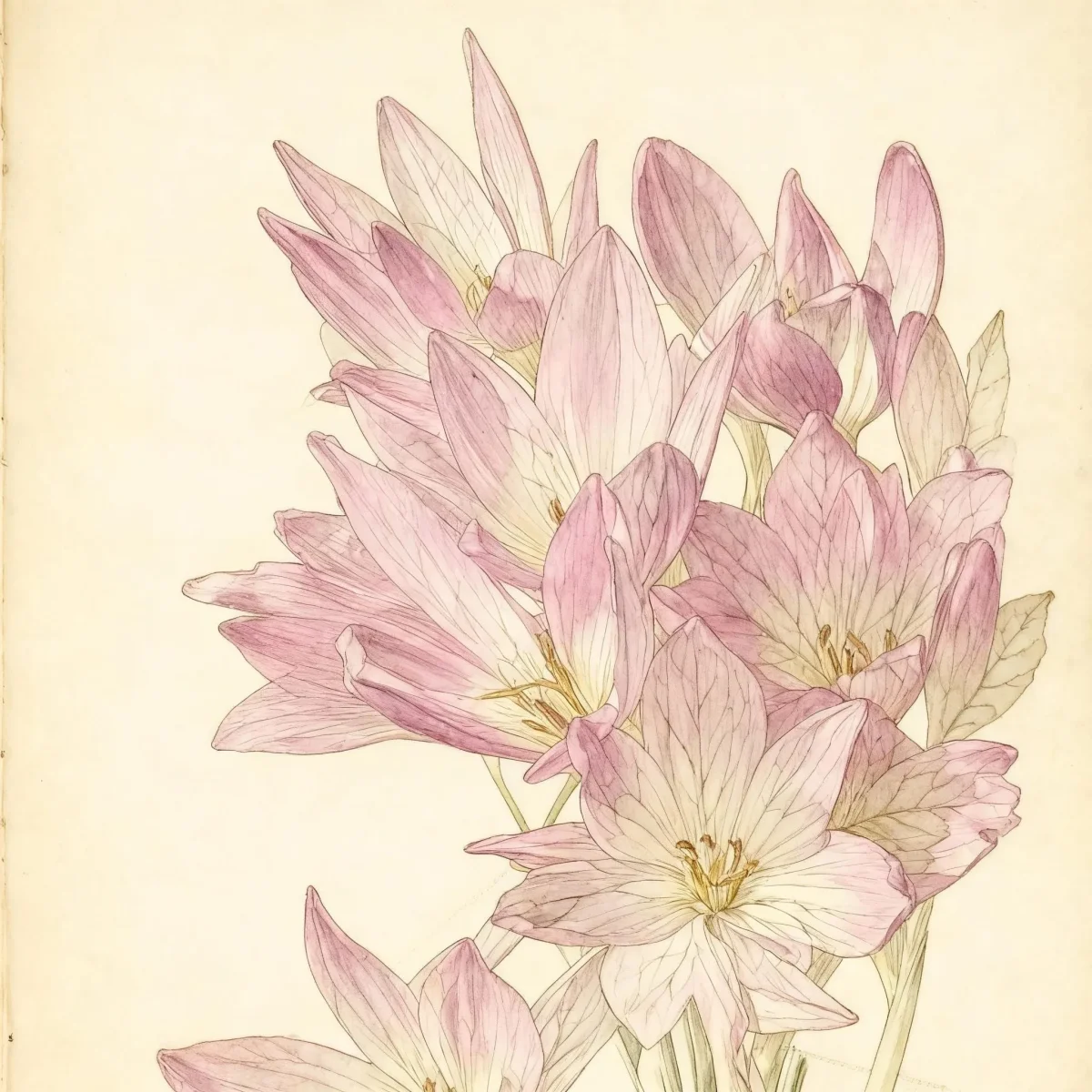
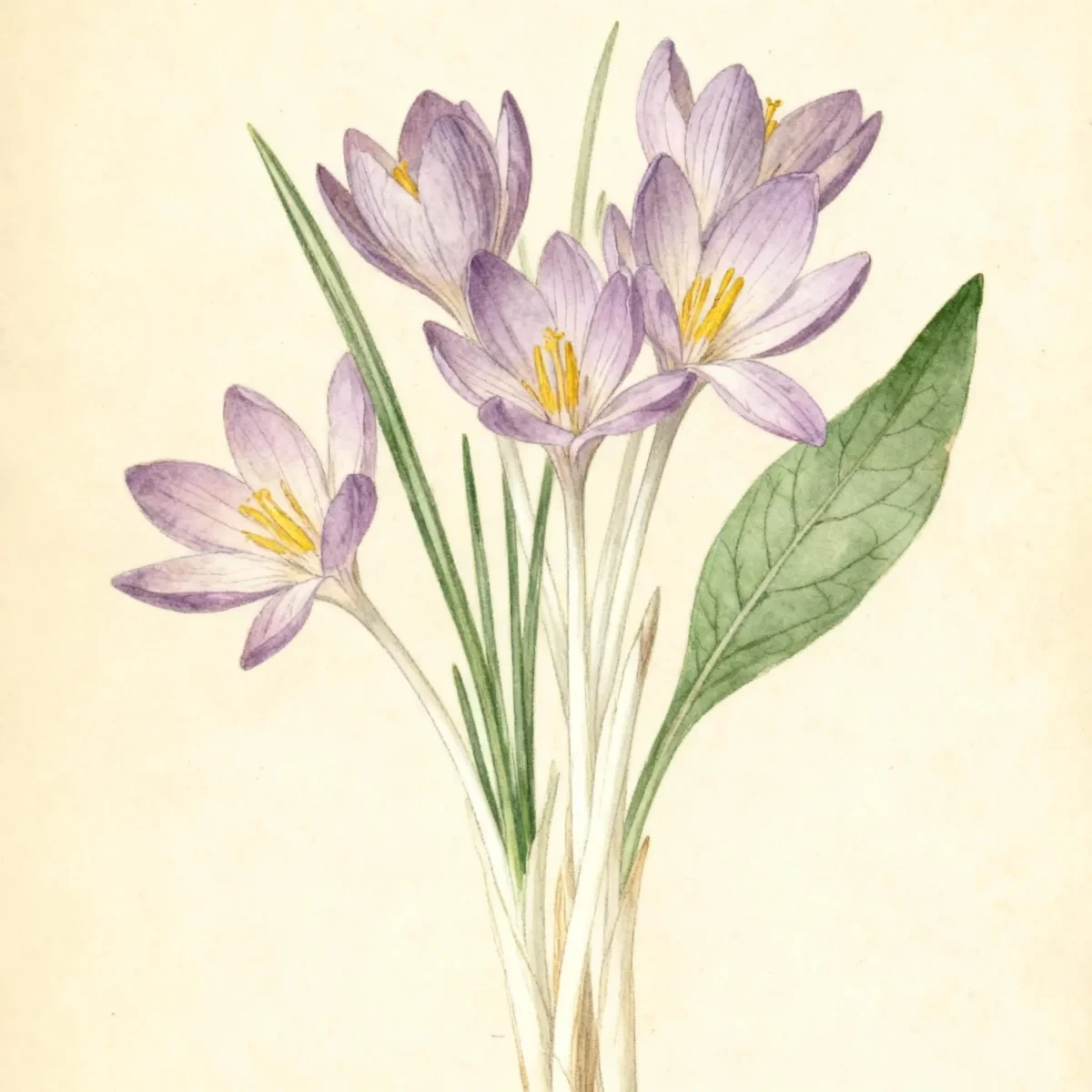
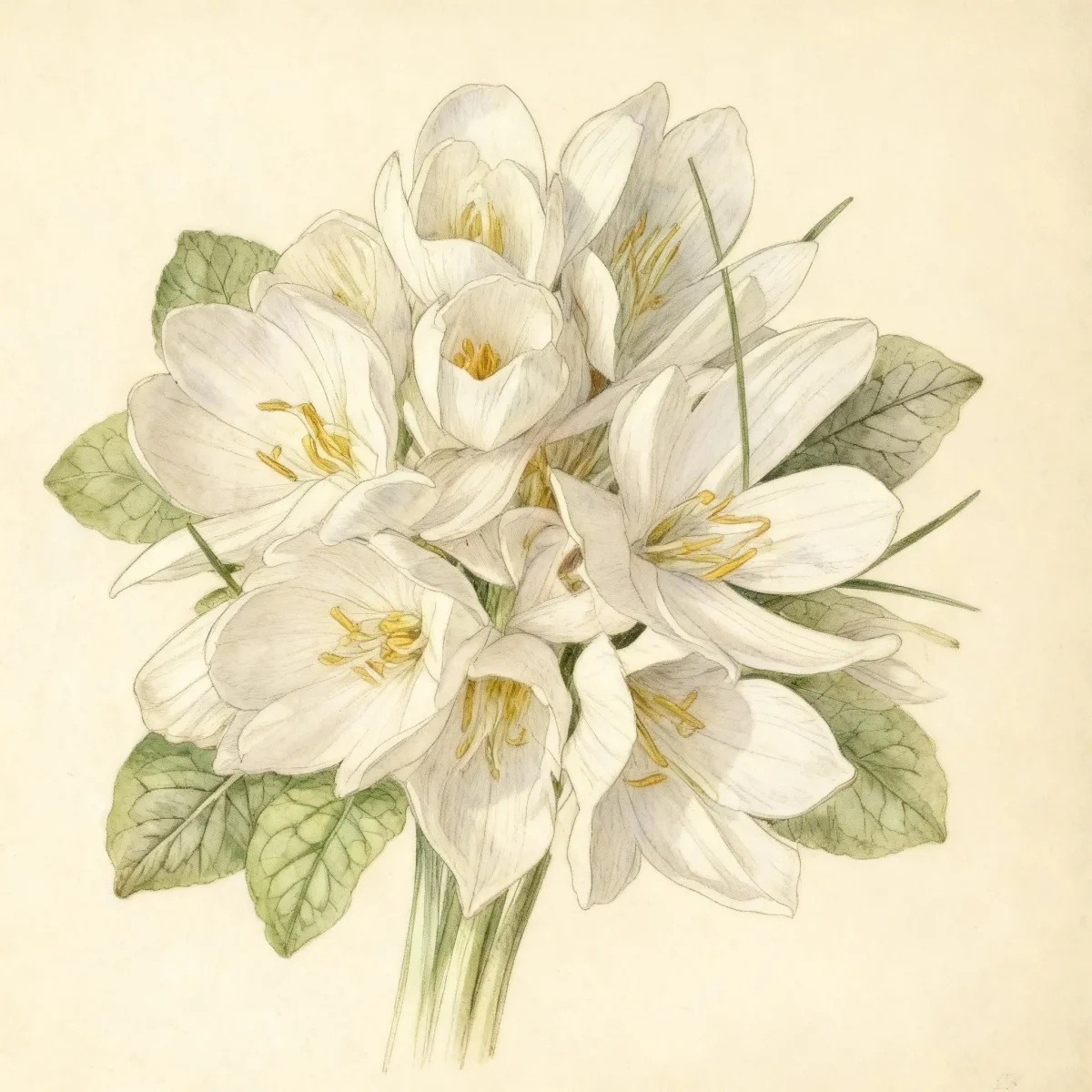
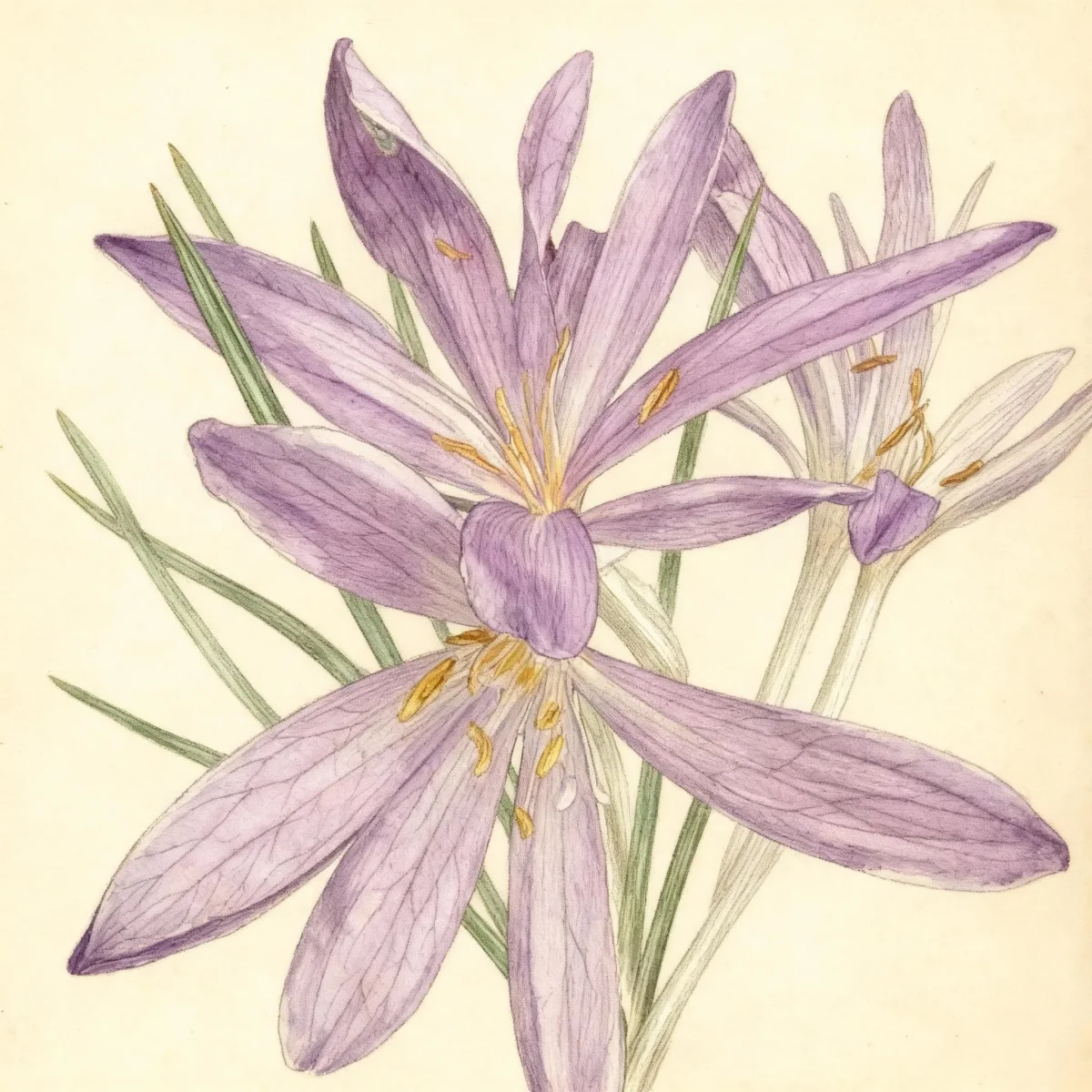
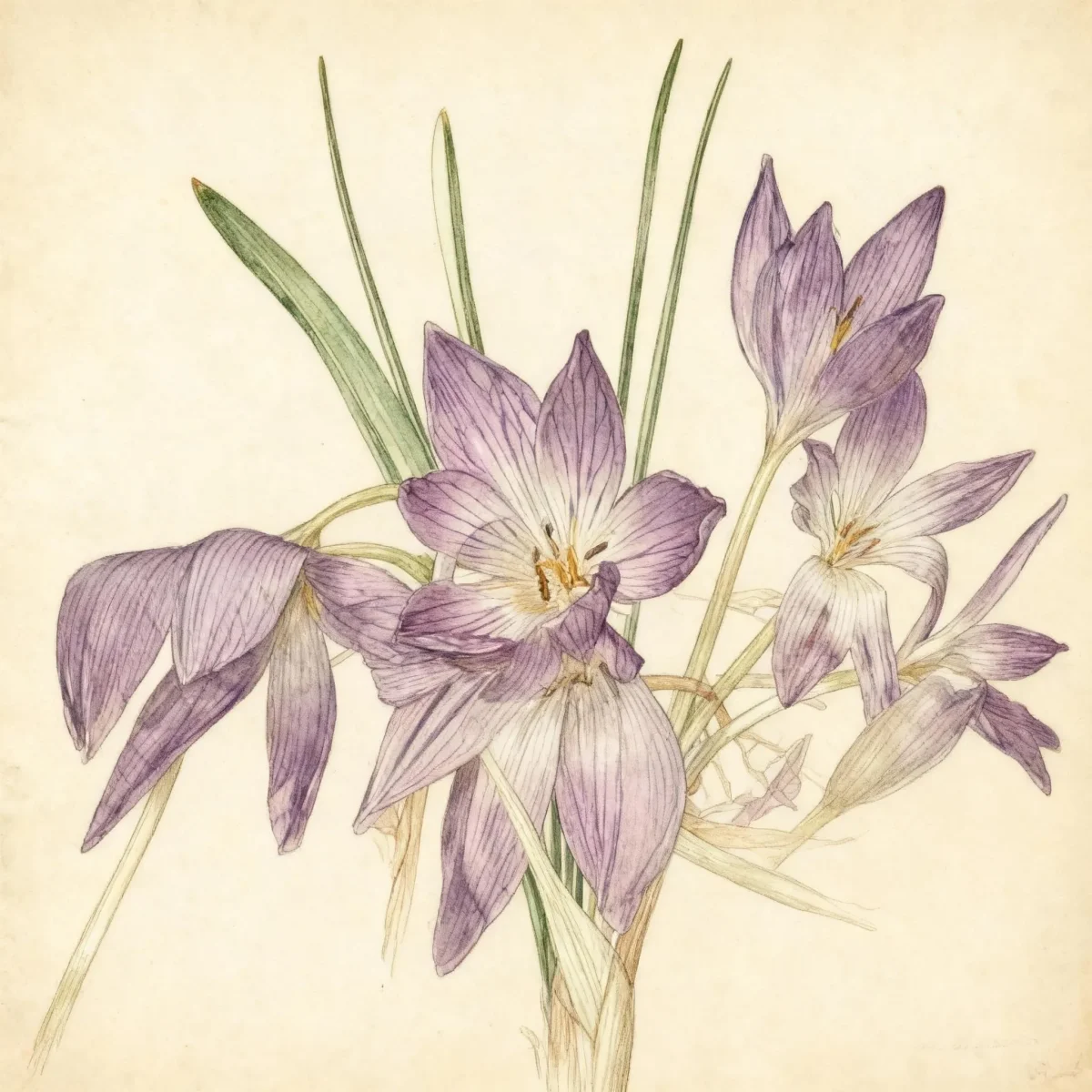
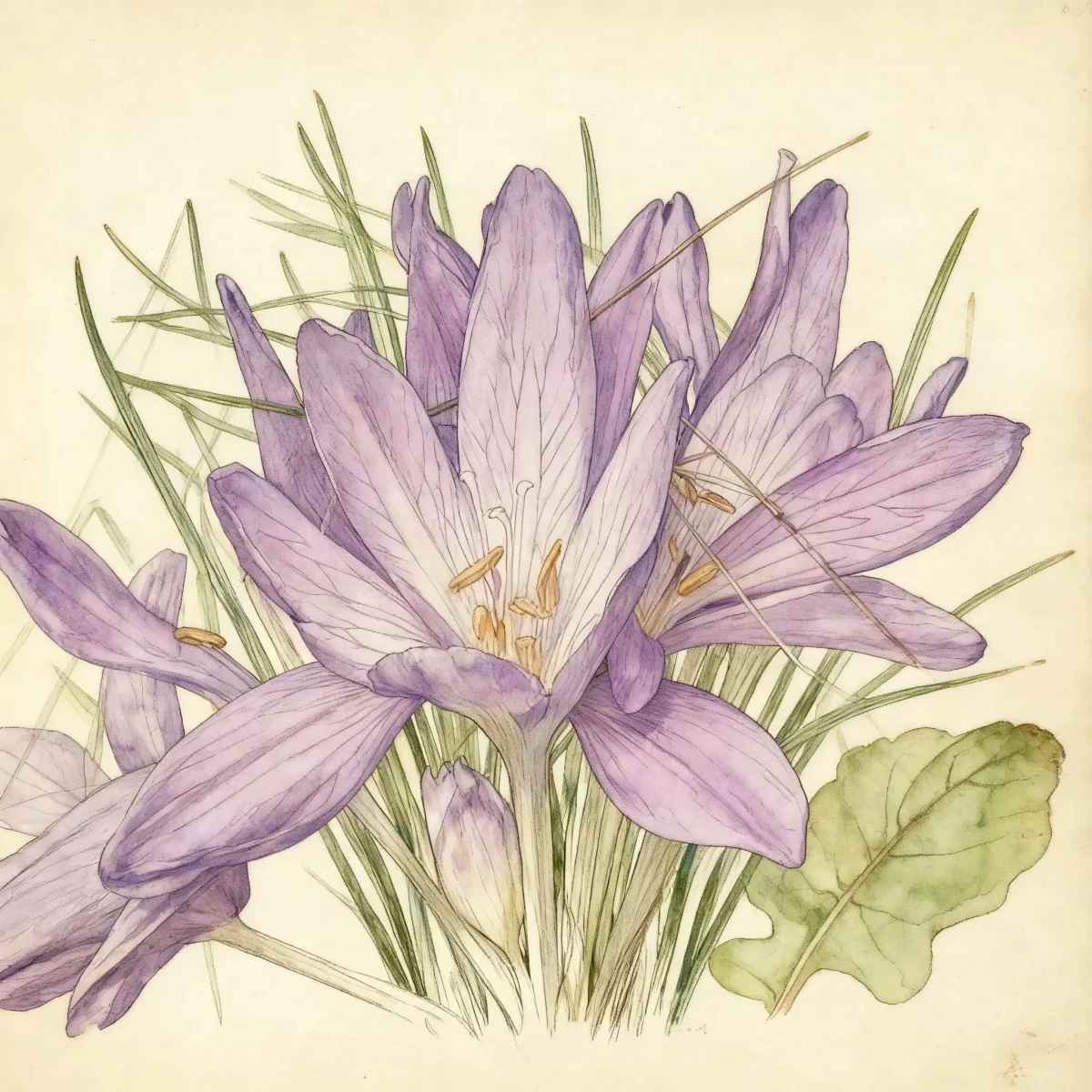
Autumn crocus (Colchicum autumnale)
Discover Colchicum autumnale, the Autumn crocus. Plant dormant corms in late summer for stunning saffron-pink fall blooms.
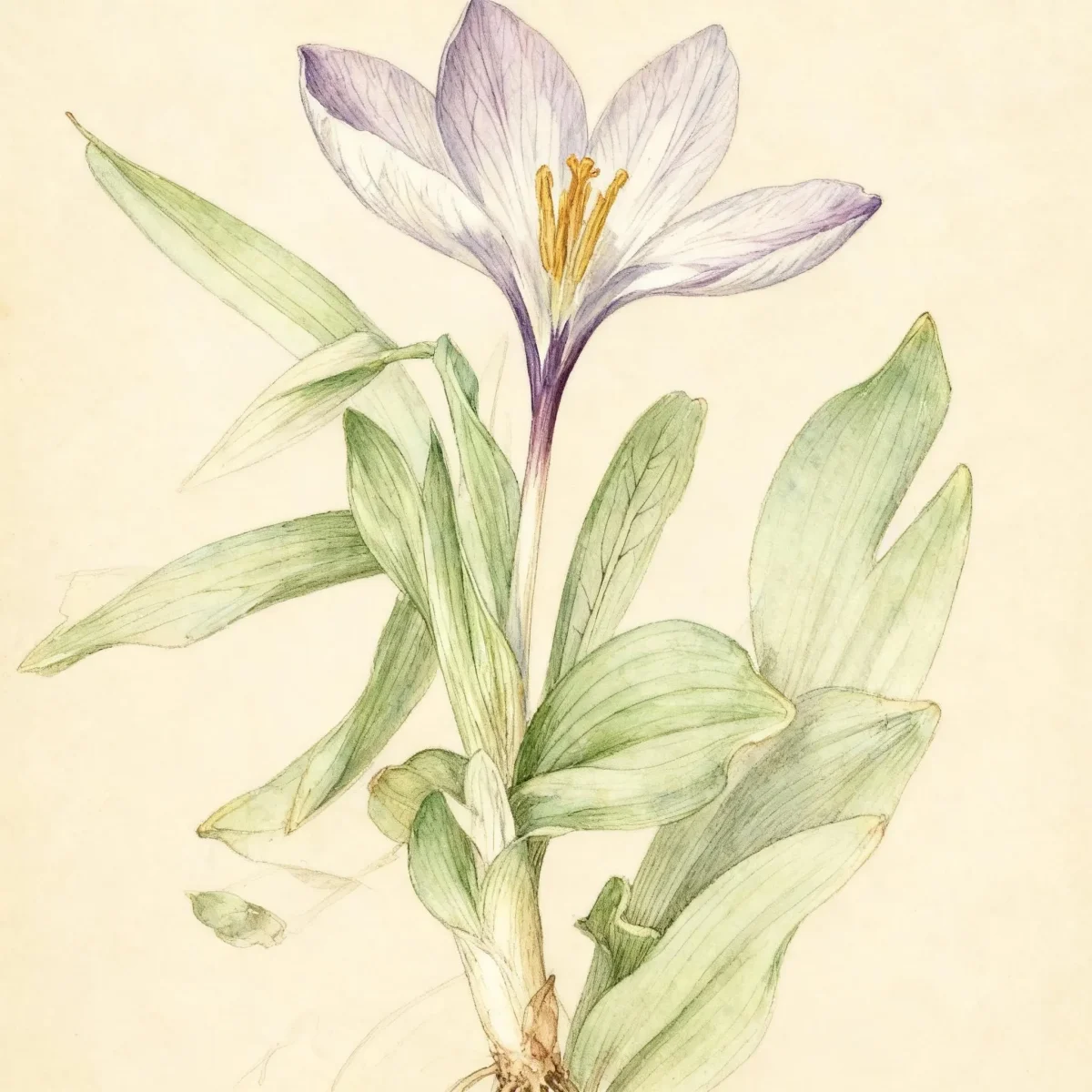

Bloom Boldly, No Matter the Season - Sweatshirt
Cozy organic cotton sweatshirt featuring our exclusive Purple Coneflower design. Perfect for gardeners who bloom year-round.
Inspired by the beautiful Autumn crocus
Limited first batch (50) — join the waitlist for early access
Waitlist closes Feb 15, 2026.
Complete Plant Information
Field Guide Continues
Ready for care notes, companion picks, and planting tips?
The map is just the start. The full guide below covers growth habits, seasonal performance, and landscape uses.
Overview
The Autumn crocus (Colchicum autumnale) offers a delightful surprise to the late-season garden when most other bulbs are long dormant. This cormous perennial erupts with captivating, leafless flower stems in early fall, giving rise to its common nickname, ‘Naked Ladies.’ Although called Autumn crocus, botanically it is distinct from true spring-flowering crocus, belonging instead to the Colchicaceae family.
When planning your landscape, remember that Colchicum autumnale first produces its foliage in the spring, which then dies back by early summer, revealing the ground before the autumn flowers emerge. This unique cycle means you must site them carefully, ensuring their striking fall display is not obscured by surrounding summer bloomers.
Growing best in well-drained, organically rich soils, Autumn crocus provides reliable, low-maintenance color during August and September. Their unique timing makes them invaluable for bridging the gap between summer perennial fading and the arrival of traditional fall interest.
Fast Facts
- Plant Family: Colchicaceae
- Plant Type: Bulb
- Native Range: Europe
- Hardiness Zones: USDA Zones 4-8
- Size at Maturity:
- Height: 0.5-0.75 ft
- Spread: 0.5-0.75 ft
- Bloom Time: August to September
- Bloom Description: Lavender pink
- Sun Exposure: Full sun to part shade
- Water Needs: Medium
- Maintenance Level: Medium
How to Grow
The ideal time to plant Colchicum autumnale is in late summer, specifically August, purchasing dormant corms for immediate placement. Plant these corms approximately 3 inches deep and spaced 6 inches apart. Success hinges on sharp soil drainage; rich, medium-moisture soil is preferred, but excess water must drain away rapidly to prevent corm rot.
Once established, Colchicum autumnale requires a medium watering input throughout the growing season. Crucially, reduce irrigation when the spring foliage begins to yellow and die back in July, allowing the plant to enter its summer dormancy phase naturally. Resume watering lightly in late summer to encourage the autumn flower emergence.
Dividing overcrowded clumps, typically every three years, revitalizes the plant’s performance. When selecting a site, prioritize areas where the short, attractive fall flowers can be admired without interference from the taller spring foliage, which can become unsightly as it declines toward dormancy.
Landscape Uses
Because the foliage of Colchicum autumnale vanishes by midsummer, this plant excels in positions where its late-season display can shine without competing with summer perennials. They are fantastic for naturalizing in meadows or woodland beds, offering unexpected points of color as summer interest wanes.
Consider planting the Autumn crocus near patios, along walks, or interspersed among low-growing ground covers. These companions can help visually support the flower stems, which are sometimes prone to flopping, and conceal the yellowing spring leaves. Their short stature makes them useful for tucking into pockets of the landscape that need easy, low-level fall structure.
Standout Features
Flower Qualities
- Showy
Noteworthy Characteristics
Colchicum autumnale, commonly called autumn crocus or meadow saffron, is a cormous perennial that typically blooms in early fall. Plants send up only foliage (5-8 lanceolate dark green leaves to 10” long) in spring, which gradually yellows and dies by early summer when the plants go dormant before the flowers appear. The naked flower stems rise from the ground in late summer to early fall, bearing star-shaped, lavender-pink flowers, earning it the misleading common name of “naked ladies.” It is important to note that while it resembles spring crocus, the flower structure differs, as C. autumnale has six stamens compared to three in true crocuses.
Tolerances
Potential Problems
Fortunately, Colchicum autumnale generally avoids serious insect or disease issues in the garden. Gardeners must remain vigilant for mollusks, specifically slugs and snails, which can damage the emerging foliage and flower buds. A fungal smut may occasionally infect the leaves; immediate removal and destruction of affected plants are necessary to prevent spread. Another common issue involves the flower stems, which are naturally short and weak, often resulting in flopping if left unsupported.
Frequently Asked Questions
What hardiness zones is Autumn crocus suitable for?
Colchicum autumnale is reliably hardy in USDA Zones 4 through 8.
How large does Colchicum autumnale grow?
This bulb typically reaches only 0.5 to 0.75 feet (6 to 9 inches) in height and spreads between 0.5 and 0.75 feet wide.
When does Autumn crocus bloom?
The distinctive, leafless flowers appear anytime from August to September, bearing a lovely lavender pink hue.
What sun exposure does Autumn crocus need?
For the best performance, site your Autumn crocus where it receives full sun to part shade conditions.
Conclusion
The unique strategy of Colchicum autumnale—flowering without foliage in the fall—secures its place as a must-have late-season curiosity. Planting the Autumn crocus corms in late summer ensures vibrant pops of lavender pink when most other colors have faded. Always confirm your site has sharp drainage and plan your planting locations carefully to accommodate the spring foliage, thus maximizing the beauty of this dependable Colchicum autumnale display.
Companion Planting
Choosing the right neighbors is essential for successfully integrating Colchicum autumnale into the garden tapestry. Since the foliage of the Autumn crocus declines by July, companion plants should emerge or provide sufficient interest during the summer months to fill the void. Consider planting spring-flowering bulbs like Daffodils (Narcissus) or Tulips nearby; their spring blooms coincide with the C. autumnale leaves, and by the time the leaves senesce, other summer perennials will be filling in. Excellent low-growing companions include creeping thyme or Sedum groundcovers, which can help stabilize the soil around the corms and mask the fading foliage.
Seasonal Care Calendar
Caring for Colchicum autumnale follows a distinct seasonal rhythm dictated by its unusual bloom time. In late summer (August), focus on purchasing and planting dormant corms immediately. In spring, allow the strap-like leaves to fully complete their lifecycle after flowering; do not cut them back early, as this robs the corm of energy needed for next year’s show. As July approaches, reduce supplemental watering as the foliage yellows, encouraging the necessary summer dormancy. Winter care is minimal outside of ensuring the planting area does not become waterlogged during wet periods.