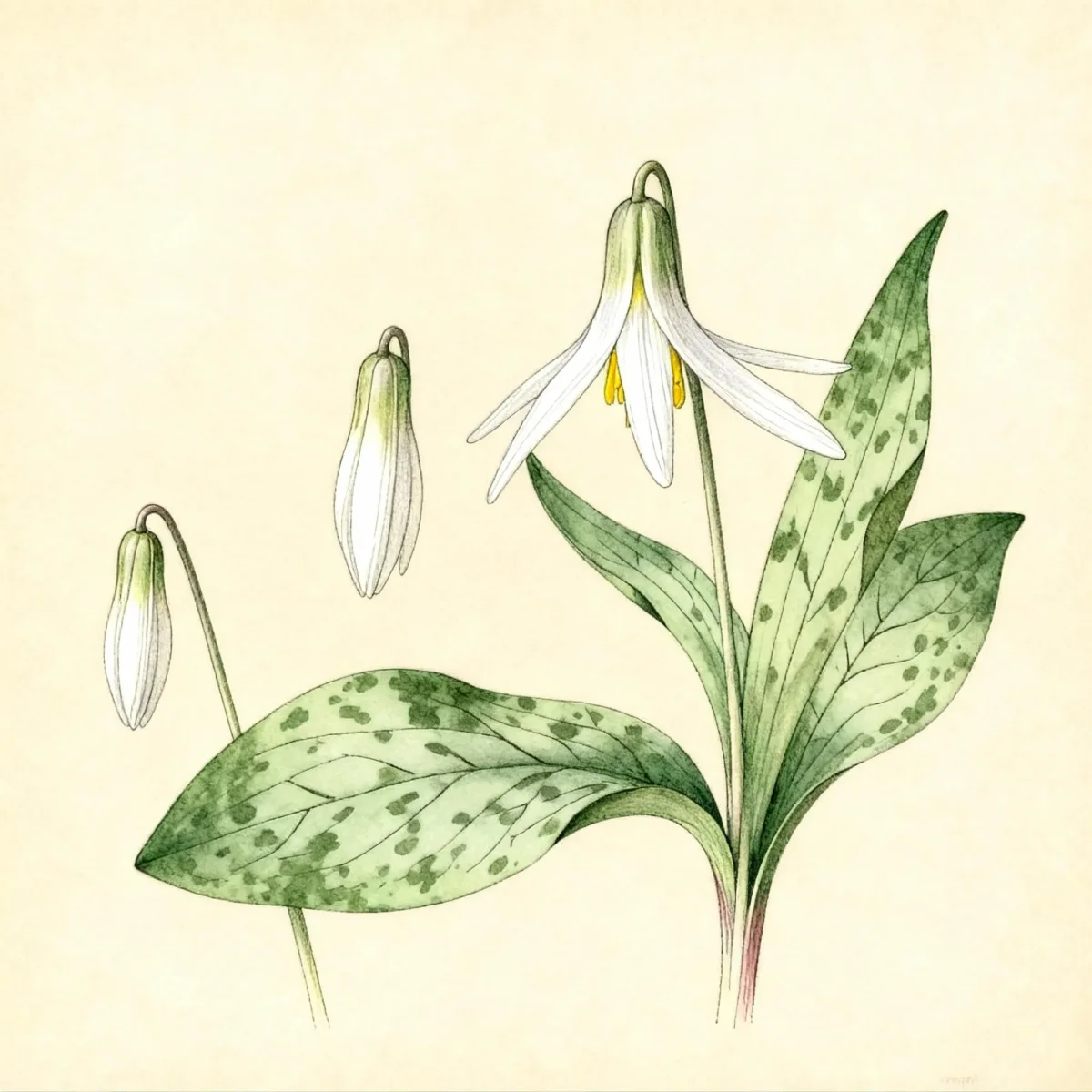
Yellow trout-lily (Erythronium americanum)
Discover Erythronium americanum, the Yellow trout-lily, a charming spring ephemeral native to Eastern North America. Known for its mottled leaves and nodding yellow blooms, it thrives in shaded woodland settings.

Bloom Boldly, No Matter the Season - Sweatshirt
Cozy organic cotton sweatshirt featuring our exclusive Purple Coneflower design. Perfect for gardeners who bloom year-round.
Inspired by the beautiful Yellow trout-lily
Limited first batch (50) — join the waitlist for early access
Waitlist closes Feb 15, 2026.
Complete Plant Information
Field Guide Continues
Ready for care notes, companion picks, and planting tips?
The map is just the start. The full guide below covers growth habits, seasonal performance, and landscape uses.
Overview
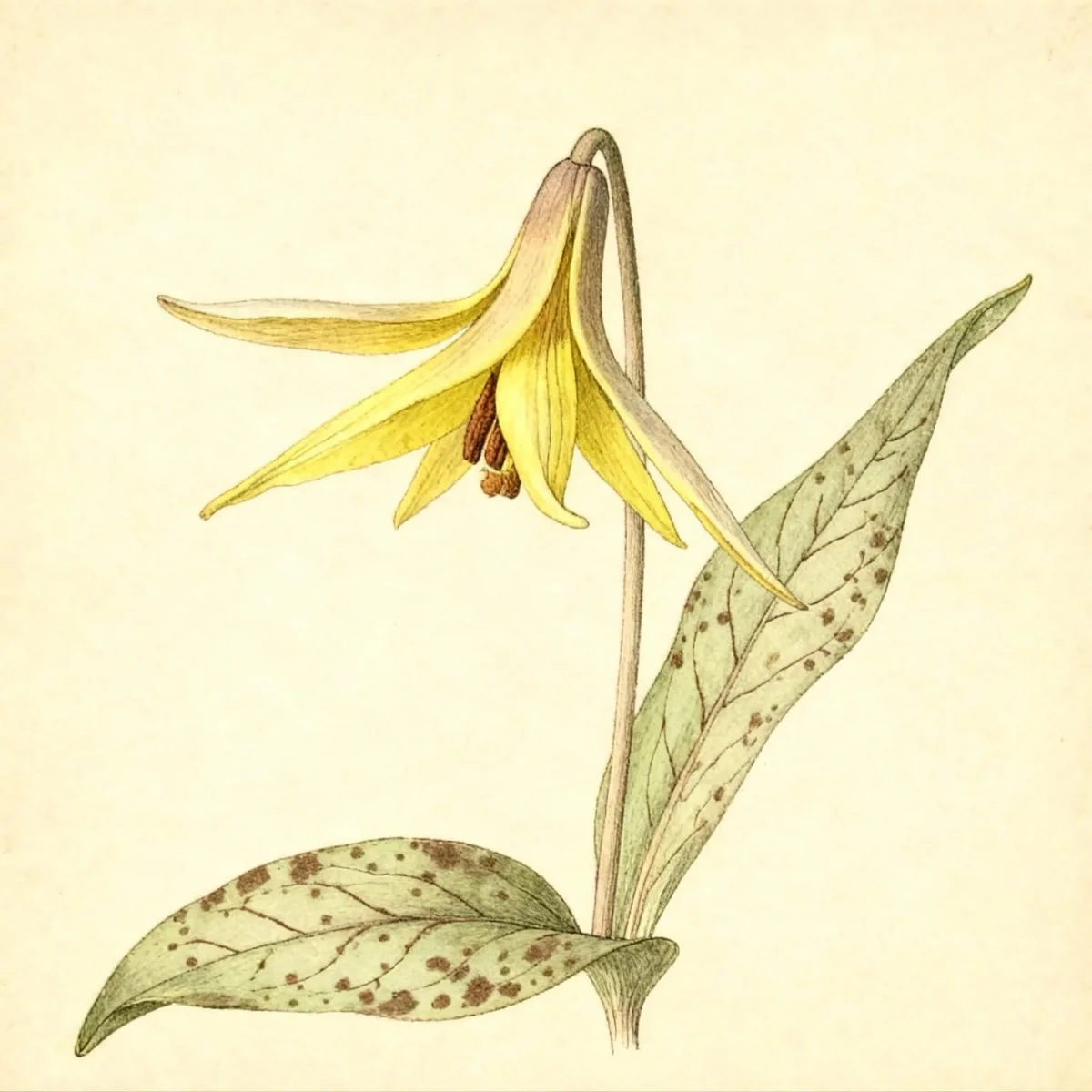
The Yellow trout-lily, scientifically known as Erythronium americanum, is a highly valued native spring ephemeral, offering delicate color just as the woodland wakes up. Its most striking feature, besides the nodding yellow flowers, is the pair of basal leaves that are often attractively mottled with brown and purple, resembling trout markings—hence the common name. Gardeners prize this plant for its ability to naturalize slowly, forming beautiful colonies in the dappled light beneath deciduous trees.
It is essential to remember that Erythronium americanum demands woodland-like conditions, preferring consistently moist, acidic, and humus-rich soil. As a true spring ephemeral, its foliage and visual interest will completely disappear by late spring as the plant enters summer dormancy. Successful cultivation relies on respecting this cycle and ensuring the surrounding canopy provides adequate shade throughout the growing season.
Planting corms provides the quickest path to bloom established colonies of Yellow trout-lily create a stunning foundational display in native plant gardens. While it spreads via stolons, creating drifts over time, it is known for being somewhat reluctant when transplanted, emphasizing the importance of site selection at planting time.
Fast Facts
- Plant Family: Liliaceae
- Plant Type: Herbaceous perennial
- Native Range: Eastern North America
- Hardiness Zones: USDA Zones 3-8
- Size at Maturity:
- Height: 0.25-0.5 ft
- Spread: 0.25-0.5 ft
- Bloom Time: April
- Bloom Description: Yellow
- Sun Exposure: Part shade to full shade
- Water Needs: Medium
- Maintenance Level: Medium
How to Grow
Optimal planting for Erythronium americanum occurs in the fall. Select a location that receives part shade to full shade, replicating its native woodland habitat. The culture requires moist, acidic, humusy soils; amending heavy clay with leaf mold or compost is highly beneficial before planting. Plant the corms 2 to 3 inches deep and space them 4 to 5 inches apart to allow room for slow spreading.
Once established, the Yellow trout-lily requires a medium level of consistent moisture, especially during its rapid spring growth phase. Avoid letting the soil become soggy or allowing it to completely dry out during this active time. Fertilization is rarely necessary if the soil is rich in organic matter; excessive feeding can encourage lush foliage at the expense of flowering.
Since this is a spring ephemeral, care revolves around respecting its dormancy cycle. As the foliage begins to yellow and die back by late spring, cease watering and allow the plant to rest completely underground. Do not cut back the foliage until it has fully withered naturally, as the bulbs use this time to store energy for the following year.
While propagation from seed is possible, remember that Erythronium americanum grown this way may take four to five years to produce its first flower. For quicker results, plant nursery-sourced corms or carefully harvest and plant offsets from mature colonies; however, note that these native plants do not transplant well once settled in ideal sites.
Landscape Uses
The primary suggested use for the Yellow trout-lily is to naturalize within suitable environments. Wetter, shaded areas of native plant gardens, woodland settings, or wild garden sections are ideal canvases for this plant. When placed along stream banks or in shady areas of rock gardens, the Erythronium americanum acts as a beautiful, low-growing groundcover replacement during early spring.
Allow the plants to spread naturally. They perform best when left undisturbed; this encourages the development of colonies that offer a rich tapestry of mottled leaves and bright yellow flowers beneath emerging canopy trees. They pair well with other spring bloomers that appreciate similar conditions, such as Trillium relatives or certain native ferns that will emerge later in the season to fill the space once the trout-lily retreats to dormancy.
Standout Features
Flower Qualities
- Showy
Noteworthy Characteristics
Erythronium americanum, commonly called yellow adder’s tongue, yellow trout lily, yellow fawn lily and yellow dog-tooth violet, is a Missouri native spring wildflower that occurs in moist woods, on wooded slopes and bluffs, and along streams in the southern part of the State (Steyermark). A single, nodding, bell- or lily-shaped yellow flower blooms atop a naked scape sheathed by two glossy, tongue-shaped, tulip-like, basal leaves (to 6” long) in early spring. The common name of trout lily is in reference to the mottled leaves and the appearance of the flowers during trout fishing season.
Tolerances
No specific tolerability data was provided beyond cultural needs.
Potential Problems
There are fortunately no serious insect or disease problems generally associated with growing Erythronium americanum. The most significant challenge gardeners face is cultural: managing its predictable dormancy. Gardeners must remember that the plants go dormant by late spring, meaning beds in that area might appear empty mid-summer before the plant re-emerges the following April, so take care not to disturb the dormant bulbs while weeding or amending soil.
Frequently Asked Questions
What hardiness zones is Yellow trout-lily suitable for?
The Yellow trout-lily is hardy across USDA Zones 3 through 8, making it quite adaptable across many regions of Eastern North America.
How large does Erythronium americanum grow?
This plant is diminutive, generally reaching heights between 0.25 to 0.5 feet tall, with a similar spread of 0.25 to 0.5 feet wide.
When does Yellow trout-lily bloom?
Erythronium americanum typically blooms in April, producing distinctive nodding yellow flowers above its mottled foliage.
What sun exposure does Yellow trout-lily need?
This species requires part shade to full shade conditions to thrive successfully in the garden.
Conclusion
The Yellow trout-lily (Erythronium americanum) offers ephemeral spring beauty through its unique mottled foliage and cheerful yellow blooms, making it a jewel for any woodland garden setting. By ensuring rich, moist soil and respecting its mid-spring dormancy, you can successfully establish long-lived colonies. Always verify that your site aligns with USDA Zones 3-8 before purchasing and planting corms this fall.
Companion Planting
When planning the understory for Erythronium americanum, focus on plants that share a love for moist, acidic, woodland soil and that emerge later in the season. Consider pairing them with native ferns like Lady Fern (Athyrium filix-femina) or late-emerging woodland biennials. Columbine (Aquilegia canadensis) can also provide complementary texture overhead once the trout-lily foliage begins to fade, ensuring continuous seasonal interest in the shaded garden spot.
Seasonal Care Calendar
Spring is the peak performance time; focus hydration on the Yellow trout-lily during flowering in April. Summer management involves leaving the area alone completely, as the foliage dies back and the corms rest underground. To propagate, plan to divide or relocate offsets in late summer or early fall, as transplanting success is low when the plant is actively growing or dormant in mid-winter.