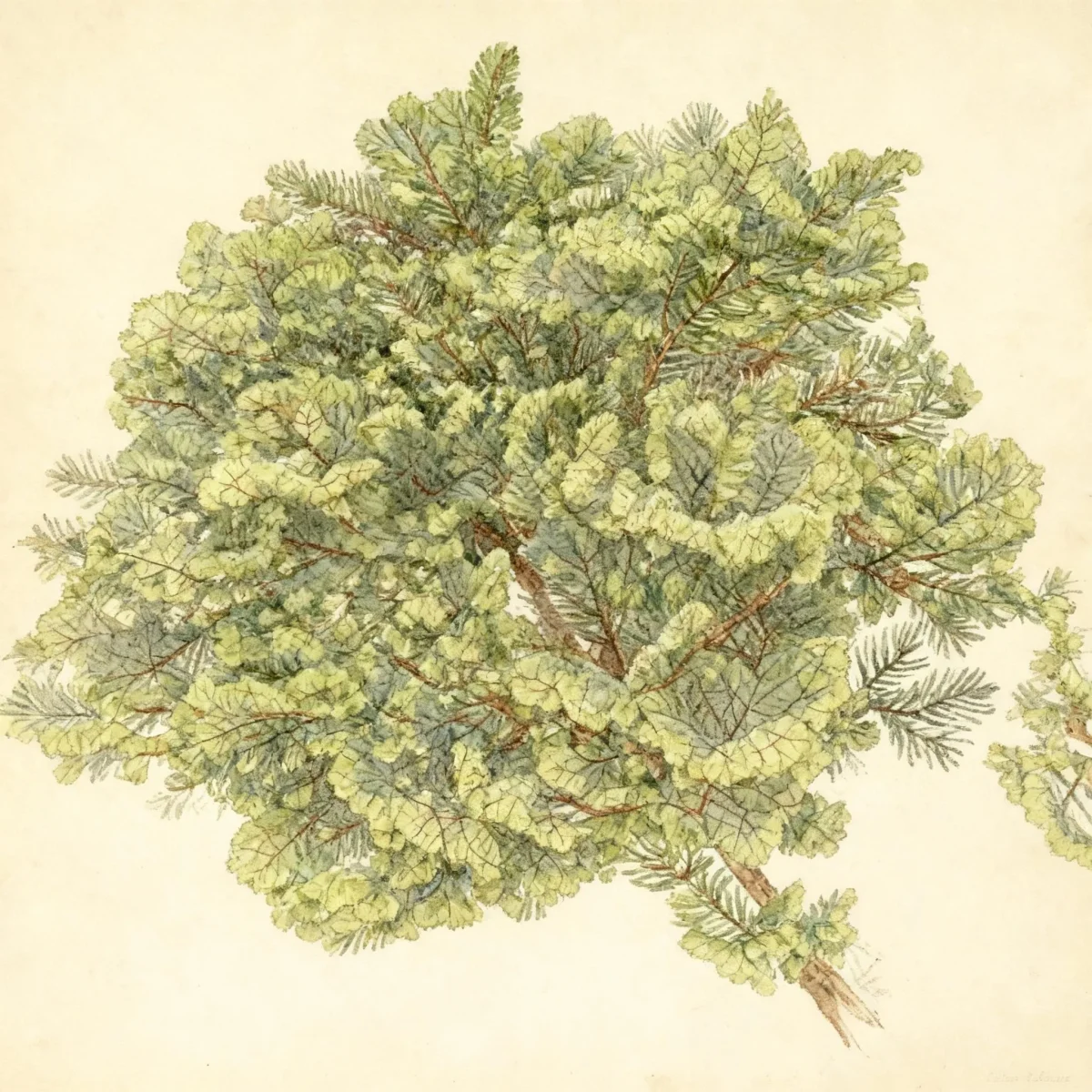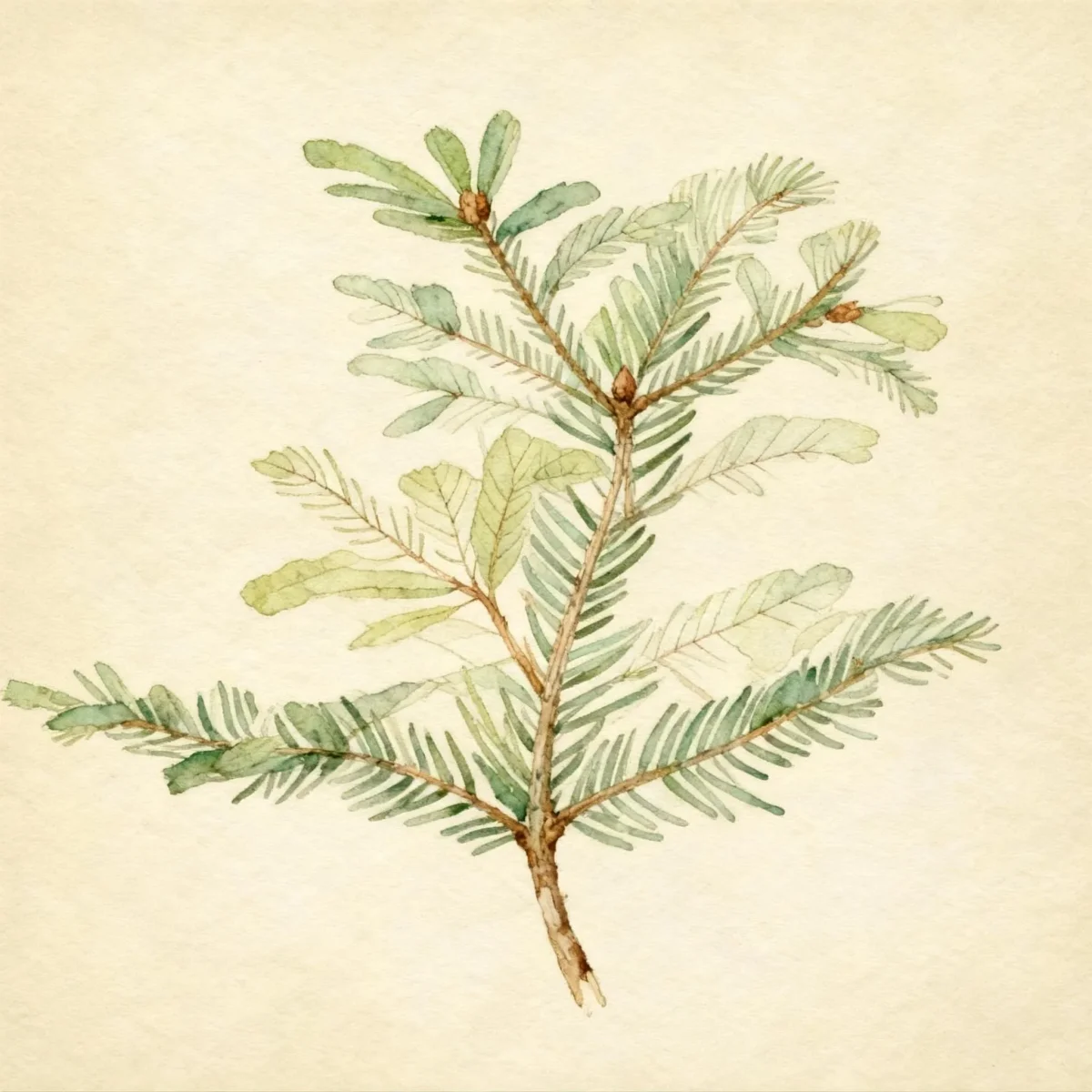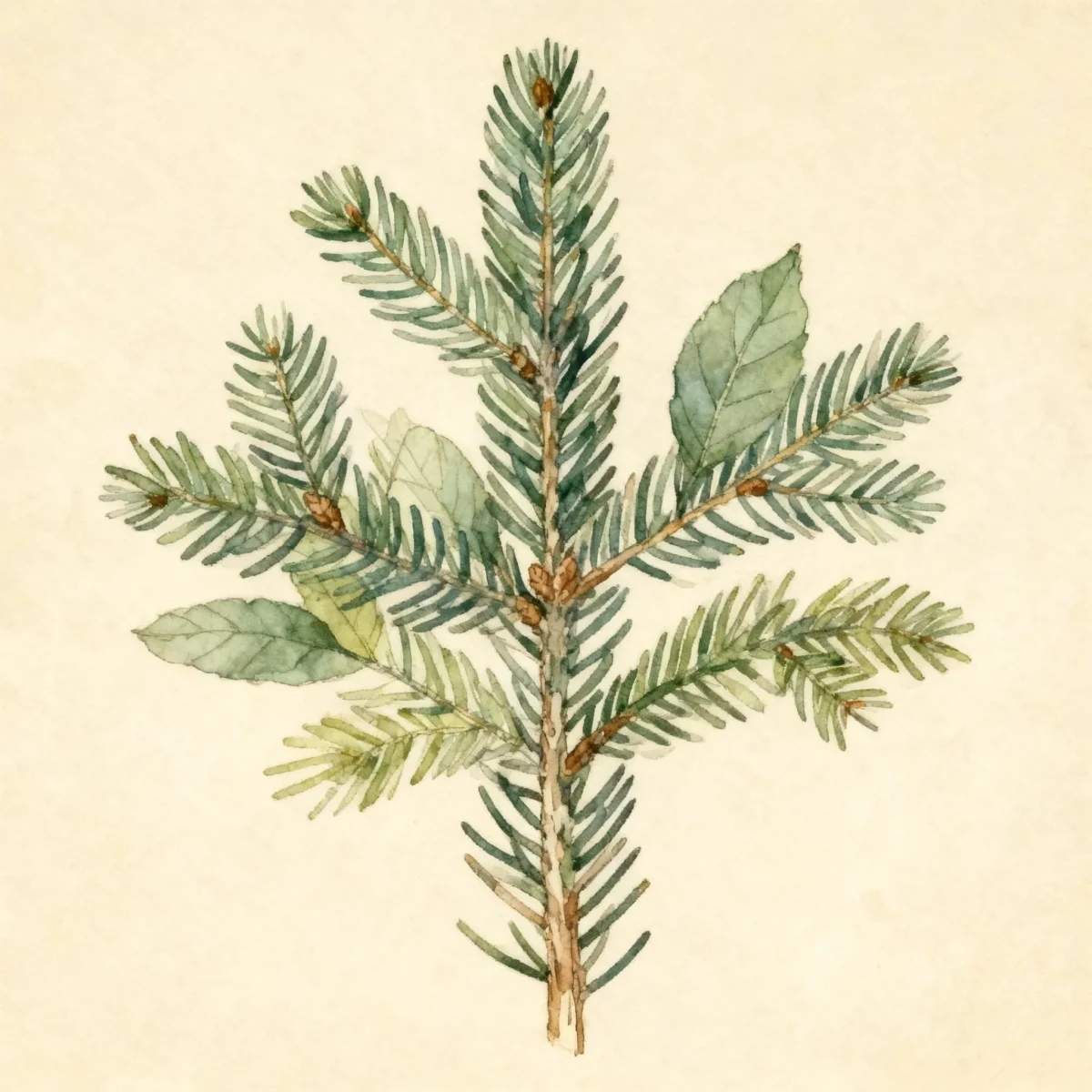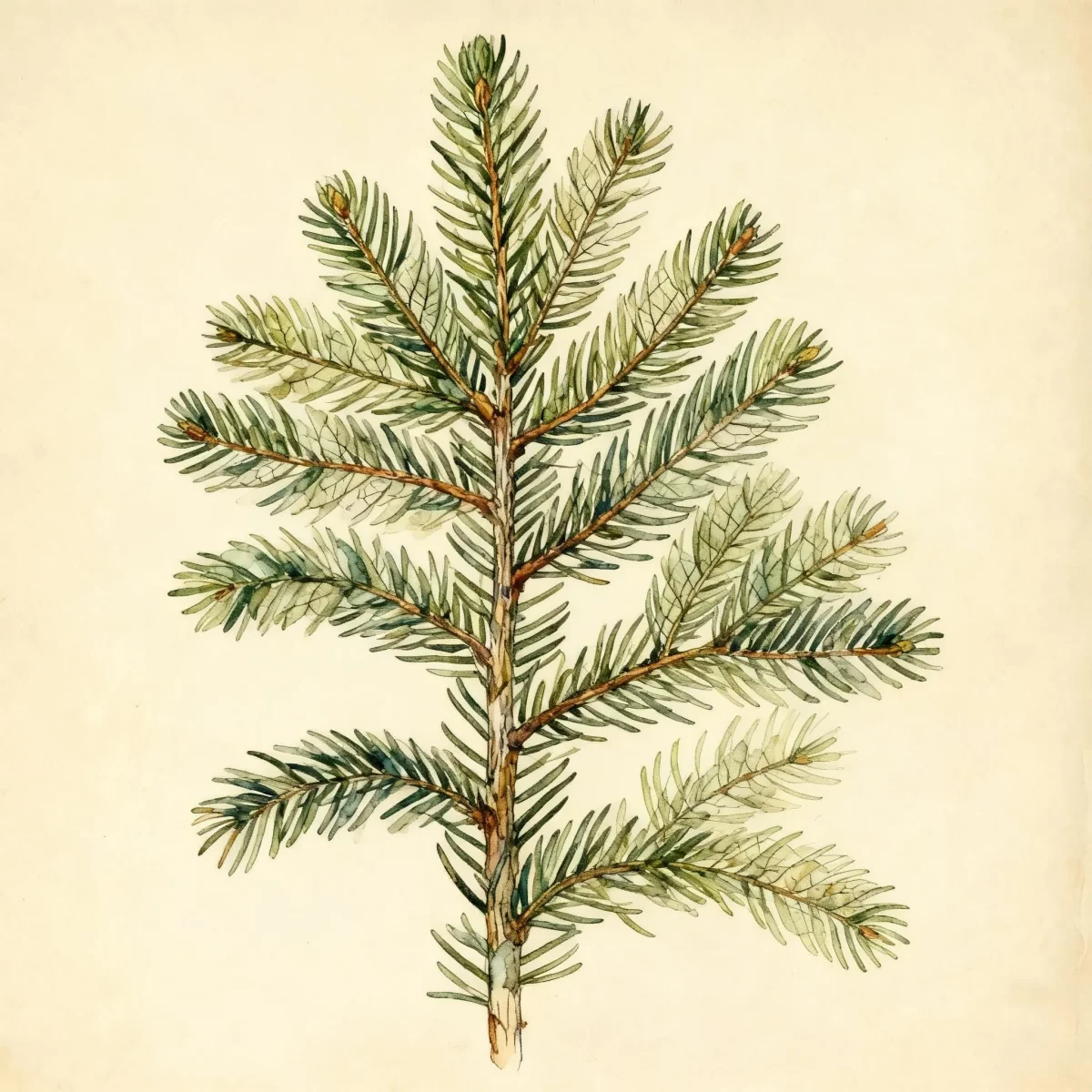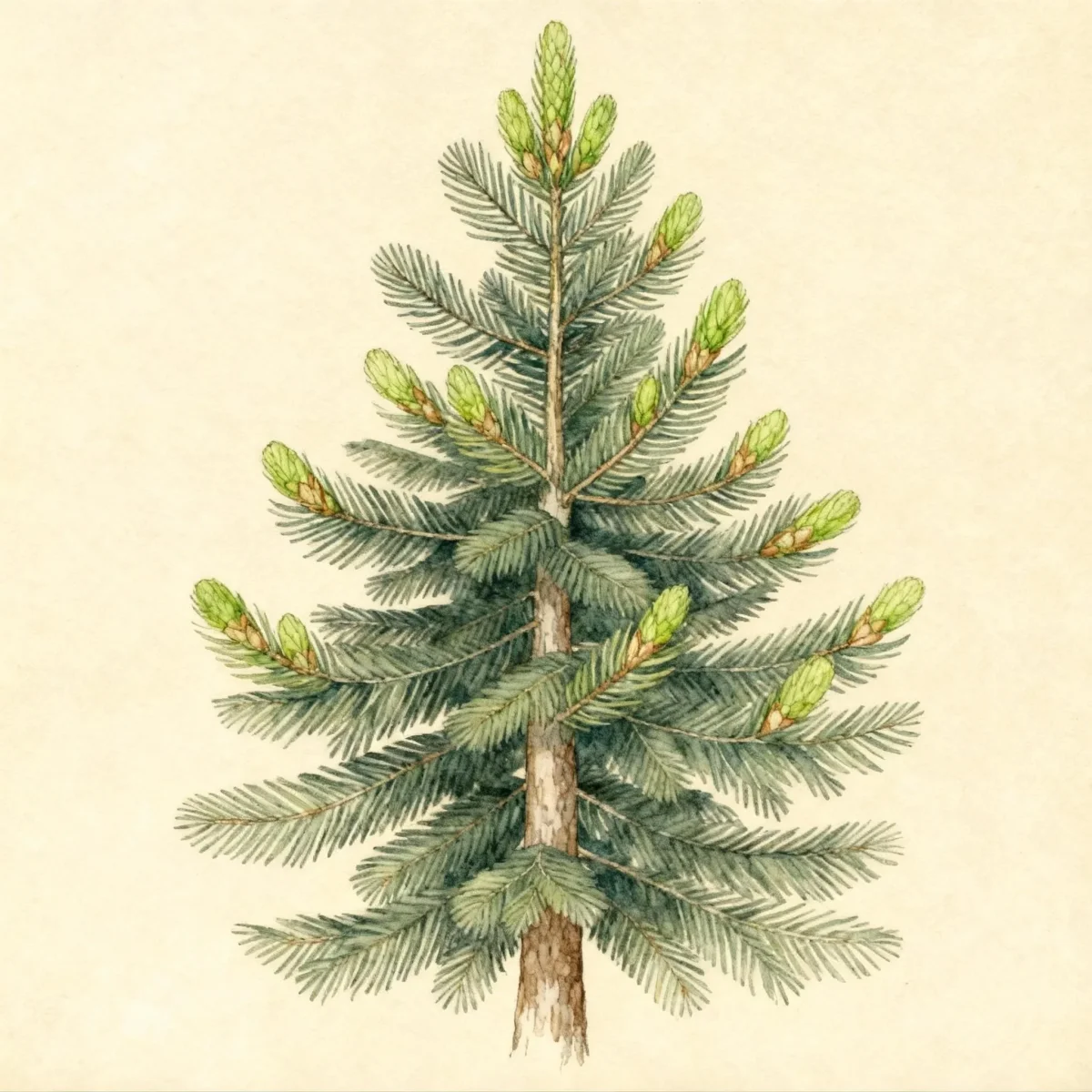

White fir (Abies concolor)
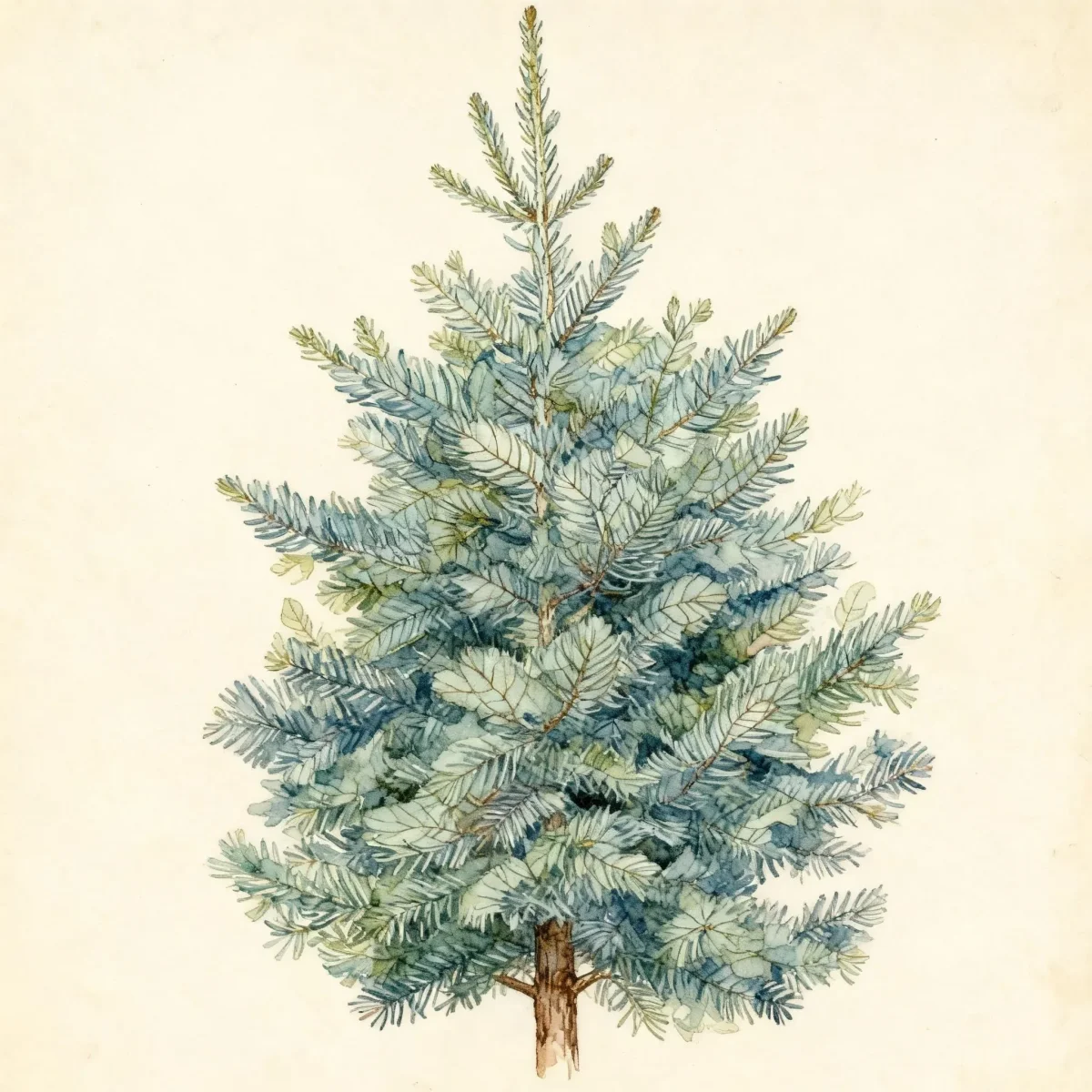
The stately White fir (Abies concolor) offers soft, pale blue-green needles and upright cones. Ideal for Zones 3-7 as a specimen.
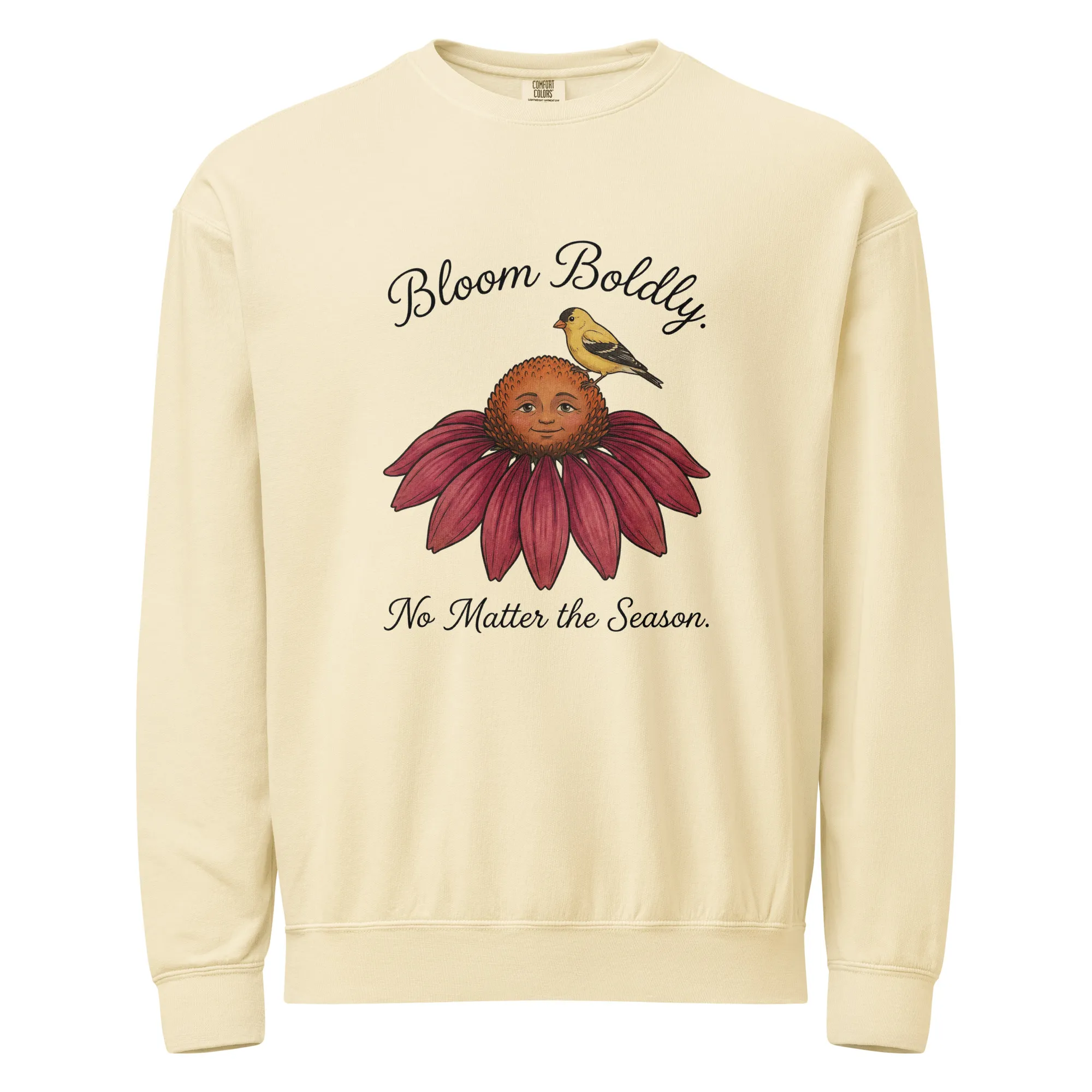
Bloom Boldly, No Matter the Season - Sweatshirt
Cozy organic cotton sweatshirt featuring our exclusive Purple Coneflower design. Perfect for gardeners who bloom year-round.
Inspired by the beautiful White fir
Limited first batch (50) — join the waitlist for early access
Waitlist closes Feb 15, 2026.
Complete Plant Information
Field Guide Continues
Ready for care notes, companion picks, and planting tips?
The map is just the start. The full guide below covers growth habits, seasonal performance, and landscape uses.
Overview
The White fir, scientifically known as Abies concolor, stands out in the landscape due to its beautifully soft, flattened needles often exhibiting a distinct pale blue-green hue. This species is highly valued for its symmetrical, spire-like young crown and its reputation as one of the more adaptable firs available to temperate zone gardeners. While native to the western mountains, Abies concolor offers significant ornamental appeal throughout much of the Midwest when cultural needs are met.
Established trees provide excellent vertical structure and year-round color, acting as magnificent specimen plants in expansive settings. Unlike some of its relatives, the White fir possesses a moderate tolerance for varied conditions, though it thrives best in cooler climates. When properly sited, this majestic conifer brings the rugged beauty of the Rocky Mountains and Sierras right into the home landscape.
Fast Facts
- Plant Family: Pinaceae
- Plant Type: Needled evergreen
- Native Range: Western United States, Mexico
- Hardiness Zones: USDA Zones 3-7
- Size at Maturity:
- Height: 40-70 ft
- Spread: 20-30 ft
- Bloom Time: Non-flowering
- Bloom Description: Non-flowering
- Sun Exposure: Full sun to part shade
- Water Needs: Medium
- Maintenance Level: Medium
How to Grow
Planting Abies concolor is best done during the dormant seasons—early spring or fall—to allow roots to establish before temperature extremes hit. Site this tree in a location receiving full sun, transitioning to light afternoon shade in hotter regions. The most crucial factor for success is soil drainage; Abies concolor requires rich, medium moisture, slightly acidic, sandy or gravelly, well-drained soils. It performs poorly in compacted or heavy clay soils that retain excessive moisture.
Water established trees moderately; while they tolerate some dryness once mature, consistently moist soil provides the best performance, especially in Midwest summers. This tree excels in areas with long, cool winters and relatively cool summers, as it struggles with intense heat and humidity typical south of Zone 7. Fertilizing is usually unnecessary unless the soil is extremely poor, but vigilance against pests during stressful periods is key.
Pruning should be minimal, focusing only on removing deadwood or crossing branches that may lead to entry points for fungal infections. Strong winds can sometimes damage taller specimens, leading to broken limbs, so place younger trees in somewhat sheltered positions if high winds are common in your area.
Landscape Uses
The primary purpose of the White fir is as a large specimen fir for the landscape, anchoring views and providing significant year-round mass. Due to its mature size, it requires substantial space to allow its conical shape to develop fully without crowding other plantings. This tree works wonderfully as a focal point in large lawns or integrated into woodland-style plantings where its pale blue-green foliage can contrast with darker greens.
Consider pairing Abies concolor with broadleaf evergreens or deciduous shrubs that offer textural contrast. When young, it can provide excellent screening, but be aware that lower branching tends to recede as the tree ages, opening up the space beneath. The striking form of the White fir makes it an irreplaceable choice for traditional or large-scale naturalistic landscapes located within its specified hardiness range.
Standout Features
Noteworthy Characteristics
The soft, uniform coloration of the needles is the origin of the specific epithet concolor. This conifer features a narrow, neat conical shape when young, gradually flattening its crown with age. Distinctively, its cones sit upright on the branches, maturing from yellowish-green to deep brown or purple, characteristics shared by true firs.
Tolerances
- Intolerant of urban pollution
Potential Problems
While Abies concolor rarely faces serious insect or disease threats, gardeners should remain aware of potential issues. Common insect pests include the balsam woolly adelgid, various bark beetles, spruce budworms, aphids, bagworms, and scale insects; spider mites may appear during hot weather. Disease management focuses on preventing moisture issues, which can lead to root rot, needle rust, or twig blight. Prevention involves ensuring excellent drainage, as trees are intolerant of heavy clay. Additionally, broken branches provide easy access for opportunistic fungi, meaning prompt cleanup of wind damage is essential for long-term tree health.
Frequently Asked Questions
What hardiness zones is White fir suitable for?
The White fir (Abies concolor) is reliably hardy in USDA Zones 3 through 7.
How large does White fir grow?
In residential landscapes, this species typically reaches heights between 40 to 70 feet, with a spread ranging from 20 to 30 feet.
What sun exposure does Abies concolor need?
Abies concolor performs best in full sun but adapts well to receiving partial shade, especially in locations prone to intense afternoon heat.
When does White fir bloom?
As a conifer, the White fir is non-flowering and does not produce traditional blooms.
Conclusion
The distinctive soft texture and pale blue-green needles make the White fir (Abies concolor) a stellar choice when seeking a substantial, stately evergreen for large properties. Remember that soil drainage is non-negotiable for success with this species, though it is often praised for its relative adaptability in cooler zones. Before planting, confirm your location falls within USDA Zones 3-7 to ensure your investment in this magnificent tree pays off for decades.
Companion Planting
To enhance the appearance and health of your Abies concolor, focus on companion plants that thrive in similar acidic, well-drained soil conditions. Consider underplanting with acid-loving, shade-tolerant rhododendrons or azaleas, which can benefit from the partial shade cast by the maturing fir. Lower groundcovers like kinnikinnick (Arctostaphylos uva-ursi) work well near the drip line, providing texture contrast without competing aggressively for nutrients. Avoid plants requiring alkaline soils or heavy, constantly moist clay, as these conditions will stress your White fir.
Design Ideas
Positioning the White fir as a primary vertical accent immediately draws the eye upward, emphasizing height. In large Japanese-inspired gardens, the bluish cast of Abies concolor contrasts beautifully against dark slate rock mulch and subtle water features. For residential settings needing winter interest, plant it where it is visible from main living areas, allowing its stately form to dominate the winter panorama. Because the lower branches may eventually thin out, plan landscape bedding around the base that can handle brighter light or dappled shade as the tree matures.