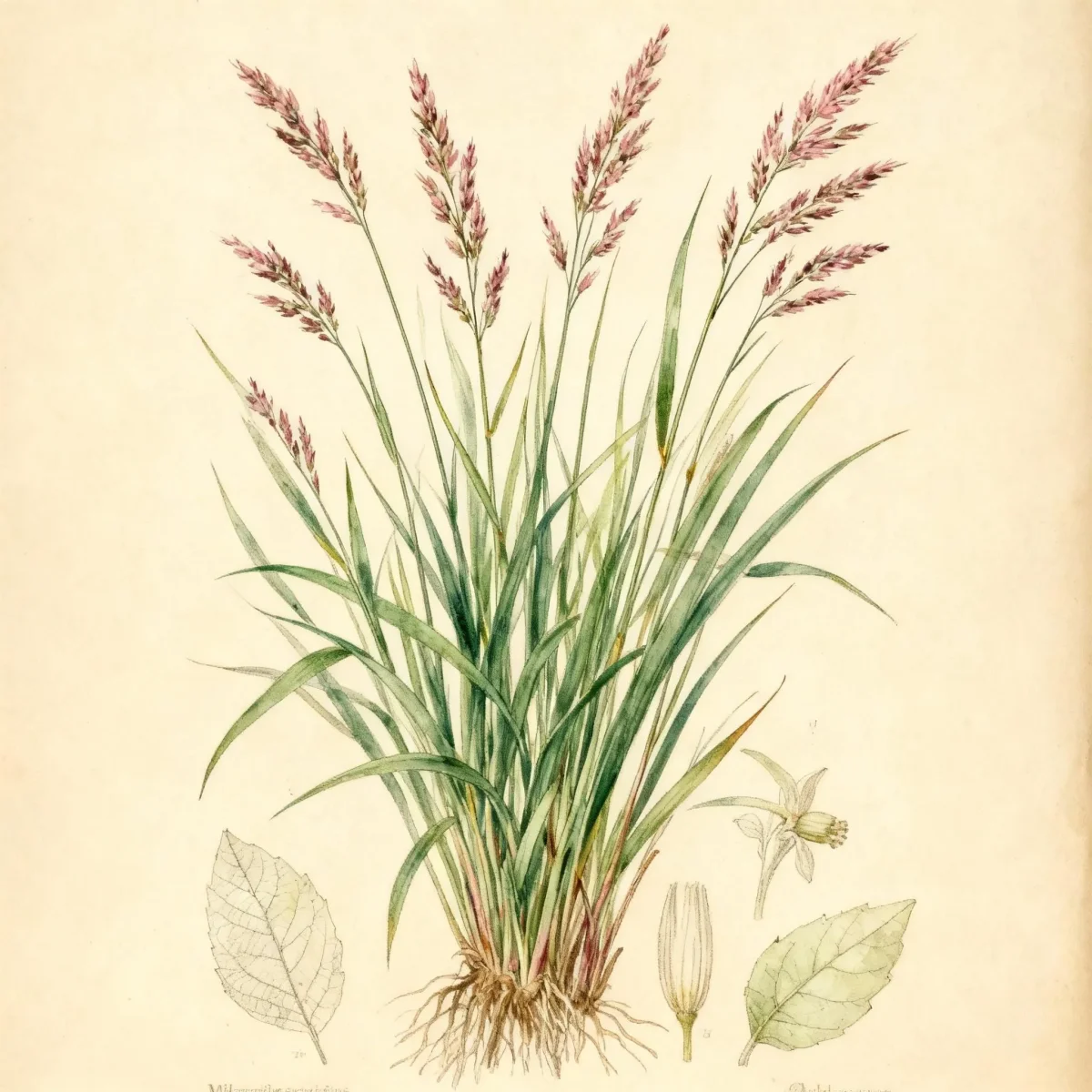
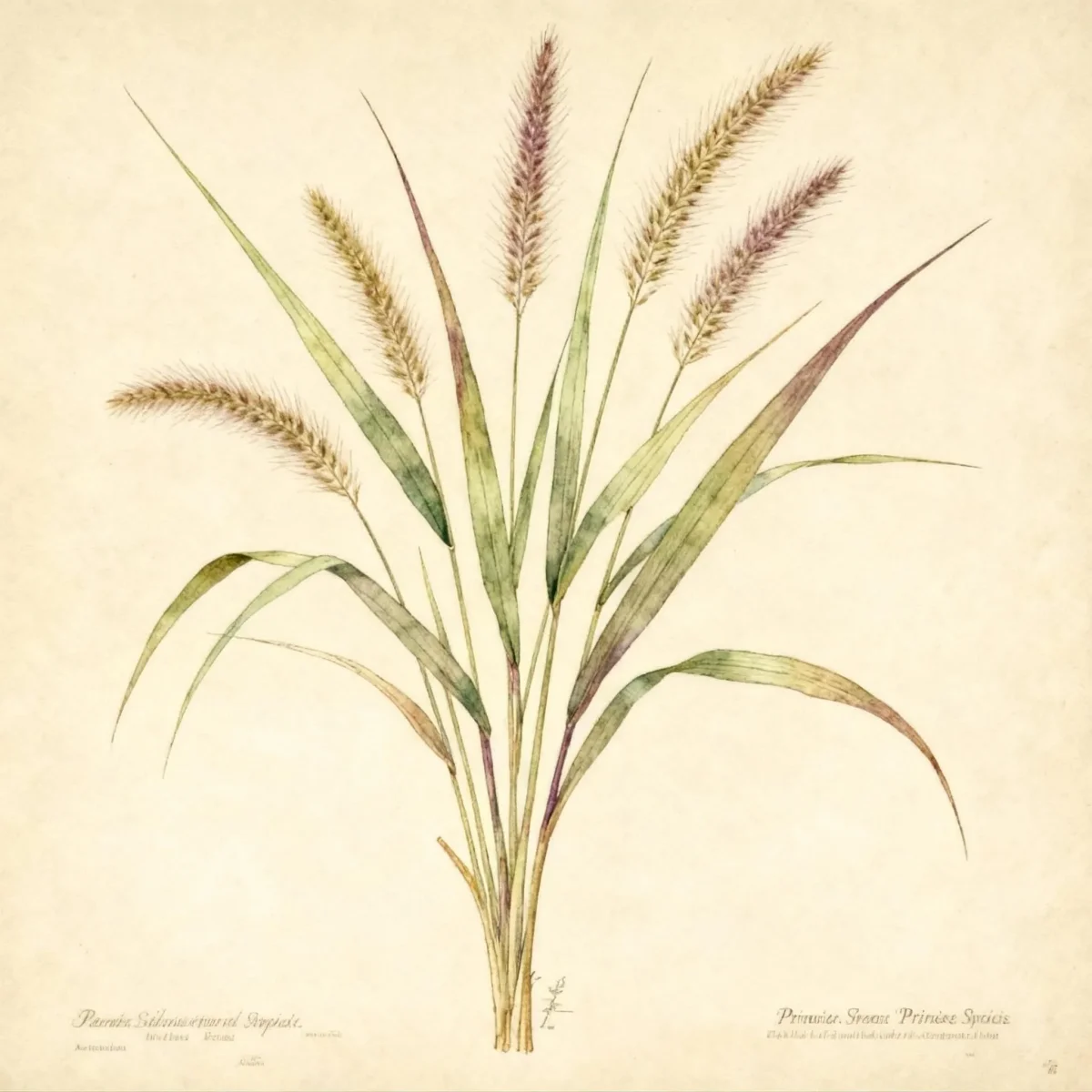
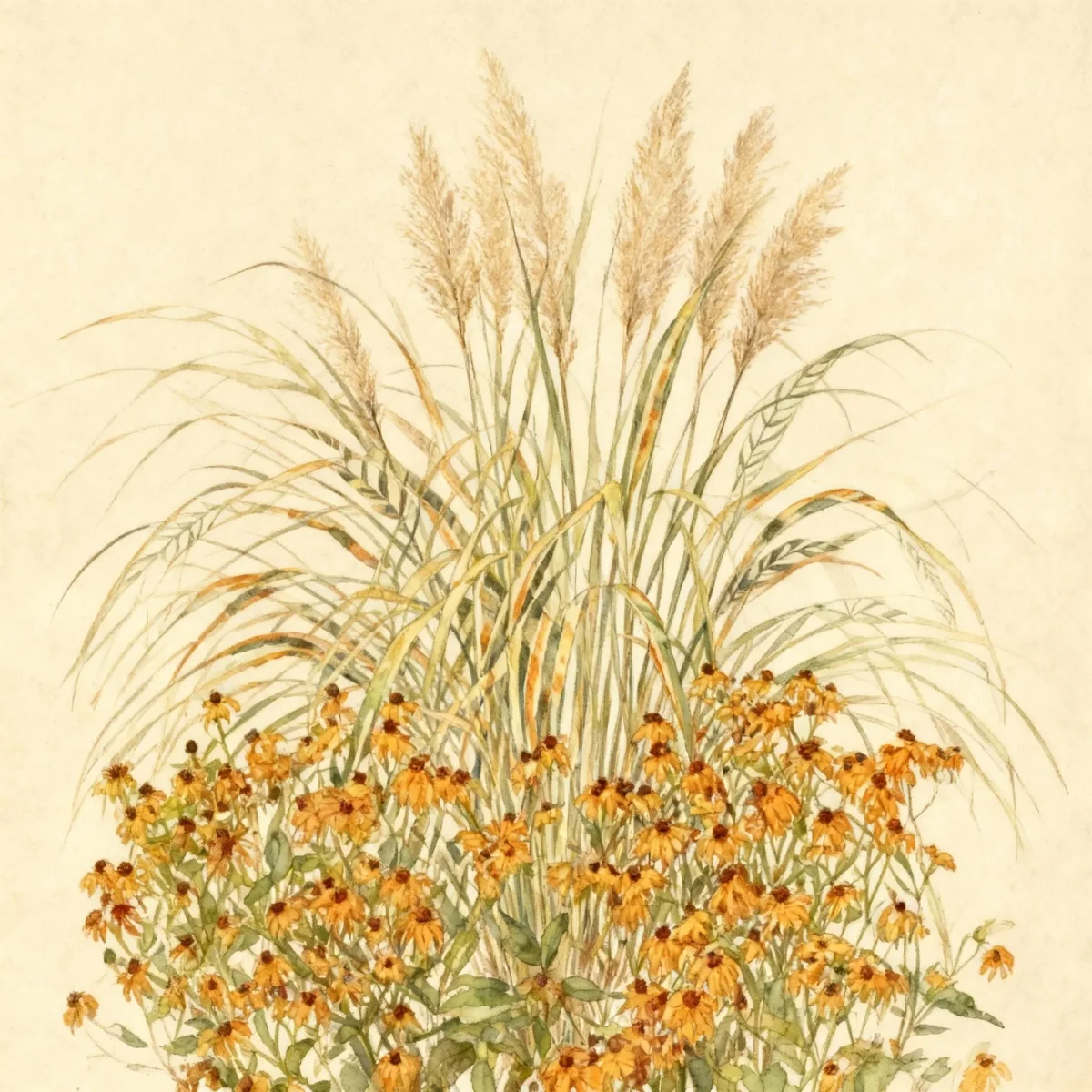
Lemon grass (Cymbopogon citratus)
Grow Lemon grass (Cymbopogon citratus) for its fragrant, culinary leaves and graceful upright ornamental form in warm climates.

Bloom Boldly, No Matter the Season - Sweatshirt
Cozy organic cotton sweatshirt featuring our exclusive Purple Coneflower design. Perfect for gardeners who bloom year-round.
Inspired by the beautiful Lemon grass
Limited first batch (50) — join the waitlist for early access
Waitlist closes Feb 15, 2026.
Complete Plant Information
Field Guide Continues
Ready for care notes, companion picks, and planting tips?
The map is just the start. The full guide below covers growth habits, seasonal performance, and landscape uses.
Overview
Cymbopogon citratus, universally known as Lemon grass, is a highly valued, frost-tender clumping perennial grass. It derives immense popularity from its lemony-scented foliage, making it a staple flavoring agent in Thai, Vietnamese, and other Southeast Asian cuisines. Beyond the kitchen, this plant establishes itself as an outstanding ornamental grass, lending graceful structure to any garden space.
This versatile grass forms dense, rounded clumps, typically reaching 2 to 4 feet tall in a single growing season. Its gracefully arching, strap-shaped leaves are light green and release their characteristic bright fragrance when bruised. Whether you are harvesting stems for culinary use or using Cymbopogon citratus as an architectural accent, it offers significant garden value.
While most prized for its flavor compounds, Lemon grass is architecturally pleasing year-round in tropical settings. Gardeners in cooler regions appreciate it as a fast-growing annual or as a manageable potted specimen that can be brought indoors for the winter, ensuring a continuous supply of this fragrant culinary herb.
Fast Facts
- Plant Family: Poaceae
- Plant Type: Ornamental grass
- Native Range: Southern India, Sri Lanka
- Hardiness Zones: USDA Zones 8-11
- Size at Maturity:
- Height: 2-4 ft
- Spread: 2-3 ft
- Bloom Time: Rarely flowers
- Sun Exposure: Full sun
- Water Needs: Medium
- Maintenance Level: Medium
How to Grow
To successfully cultivate Cymbopogon citratus, ensure it receives full sun; while it tolerates light shade, maximum vigor and essential oil production occur in constant bright light. It thrives in average, medium, well-drained soils, preferring organically rich loams when possible. Plant starts outside only after all danger of frost has passed in the spring.
Water needs for Lemon grass are medium. Aim for consistently moist, but not soggy, conditions, particularly during active growth in the summer months. As a fast-growing grass, it performs well with regular feeding during the growing season if planted in less rich soils.
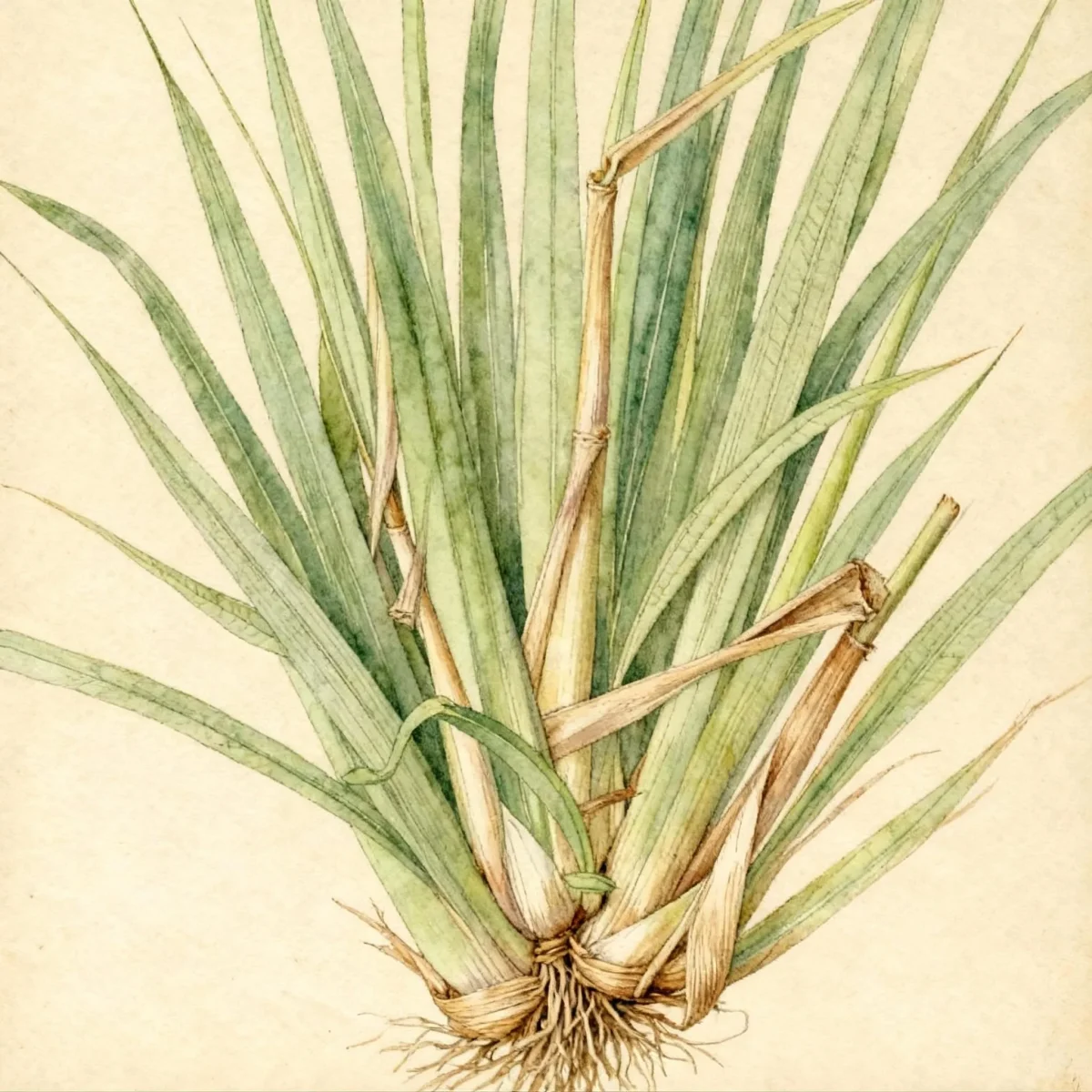
In USDA Zones 10-11, Cymbopogon citratus is evergreen and relatively low maintenance once established. If grown as an annual in colder zones (like 8b), prepare for overwintering. Before the first fall frost, harvest the lower 6-inch sections of the bulbous shoots for freezing culinary use. Alternatively, divide root sections, pot them up, and overwinter them indoors in a bright location.
For gardeners who lack established starts, fresh stalks purchased from culinary markets can be rooted in a glass of water until roots develop, providing an easy method to propagate Lemon grass.
Landscape Uses
The rapid growth rate of Lemon grass makes it an excellent choice for adding instant texture and height to borders or along walkways where its scent can be enjoyed with light contact. It excels as an outstanding specimen plant in tubs and large containers, allowing for easy relocation indoors before winter when grown outside its hardiness range. Integrating it into herb gardens is a primary use, providing a lush, tropical backdrop to shorter herbs.
Because Cymbopogon citratus requires significant sun and consistent moisture, pair it with other thirsty, high-light perennials and grasses that share similar maintenance protocols. Think about mass plantings for a striking, uniform textural effect reminiscent of Southeast Asian landscapes.
Harvesting the bulbous leaf bases for cooking adds a functional layer to its ornamental role. Even if you never use it in tea or soups, the visual quality of this clumping grass justifies its inclusion as a beautiful, textural element throughout the summer season.
Standout Features
Flower Qualities
- Insignificant
Noteworthy Characteristics
Cymbopogon citratus, commonly called lemongrass, is a frost-tender clumping perennial grass that is popularly used as a lemony flavoring in Thai, Vietnamese, Laotian and Cambodian cooking and is widely cultivated in Southeast Asia for that purpose. It is also an outstanding ornamental grass that lends great beauty to garden areas regardless of whether its culinary uses are to be tapped. In cold climates, it typically forms a dense rounded clump of foliage to 2-3’ (less frequently to 4’) tall and as wide in one growing season.
Tolerances
- Air Pollution
Potential Problems
Rust can occasionally be problematic on the foliage of Cymbopogon citratus, appearing as reddish-brown pustules on the leaves. Ensure good air circulation between clumps to help minimize fungal disease development, especially in humid environments. Proper spacing when planting is crucial preventative maintenance.
When Lemon grass is grown indoors during winter months, watch closely for spider mites, which can become a serious pest under dry, stagnant indoor air conditions. Regularly misting the foliage or wiping the leaves down with soapy water can help keep pest populations in check until the plant can return outdoors.
Frequently Asked Questions
What hardiness zones is Lemon grass suitable for?
Cymbopogon citratus is well-suited to tropical and subtropical environments, surviving as an evergreen perennial in USDA Zones 10 through 11, though roots may tolerate brief dips to Zone 8b.
How large does Cymbopogon citratus grow?
This grass typically reaches a mature height between 2 and 4 feet, with a spread of 2 to 3 feet, forming a manageable, dense clump.
What sun exposure does Lemon grass need?
Cymbopogon citratus requires full sun to thrive and produce the best foliage quality, though it can tolerate very light shade.
When does Lemon grass bloom?
This plant rarely flowers; when it does bloom, the look is insignificant compared to its foliage.
Conclusion
Lemon grass is a uniquely dual-purpose plant, serving effectively as both a bold ornamental grass and an essential culinary herb. The fragrance released by the leaves of Cymbopogon citratus adds a distinct sensory layer to the landscape. Before planting, confirm your local USDA hardiness zone or plan on utilizing methods for overwintering this tropical favorite successfully.
Companion Planting
When selecting companions for Lemon grass, focus on plants that enjoy similar conditions: high sun exposure and consistent moisture. Grouping it near other grasses or tropical foliage creates a cohesive, lush texture that enhances its visual appeal. Consider pairing it with border-loving annuals or perennials that do not aggressively spread, allowing the defined clump of the Cymbopogon citratus to remain the focal point.
For culinary integration, consider combining Lemon grass with heat-loving herbs that share a similar Asian flavor profile, such as Thai basil or cilantro, to create an accessible, fragrant kitchen garden section. This placement ensures that all plants benefit from the required warmth and irrigation schedules.
Container Growing
Growing Cymbopogon citratus in pots is highly recommended, particularly for gardeners outside of Zones 10-11, as it simplifies overwintering logistics. Choose large containers, as the roots will spread moderately, aiming for a pot that is at least 12-18 inches wide to give the grass room to achieve its full 3-foot spread. Ensure the potting mix is extremely fast-draining, perhaps adding extra perlite or coarse sand to standard potting soil to prevent waterlogging, which is detrimental to this grass.
When container-grown, Cymbopogon citratus becomes highly mobile; place it where its fragrance can be easily accessed, such as near a patio or doorstep. Watering containerized plants may be necessary more frequently than those in the ground, especially during peak summer heat, as the confined soil dries out rapidly.