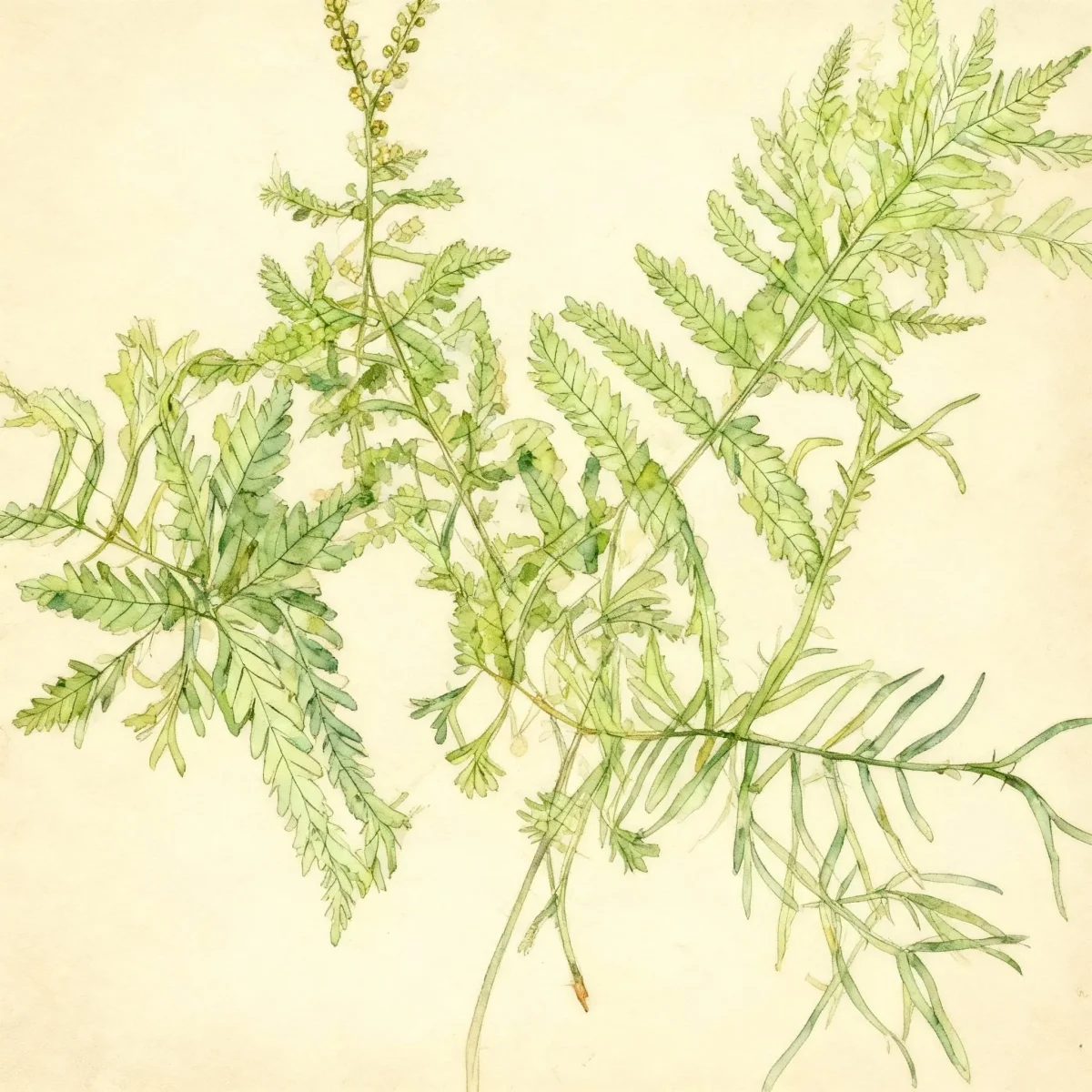
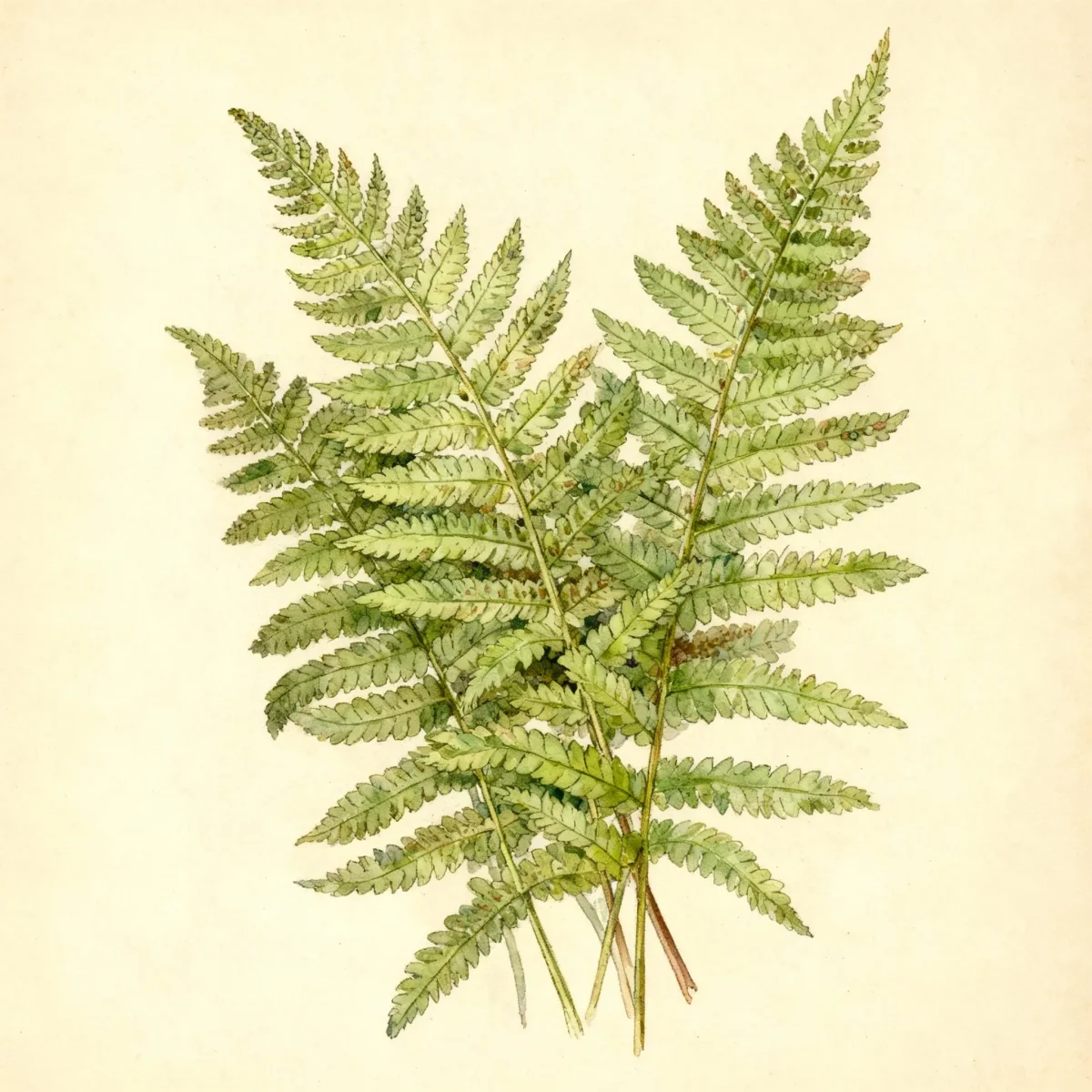
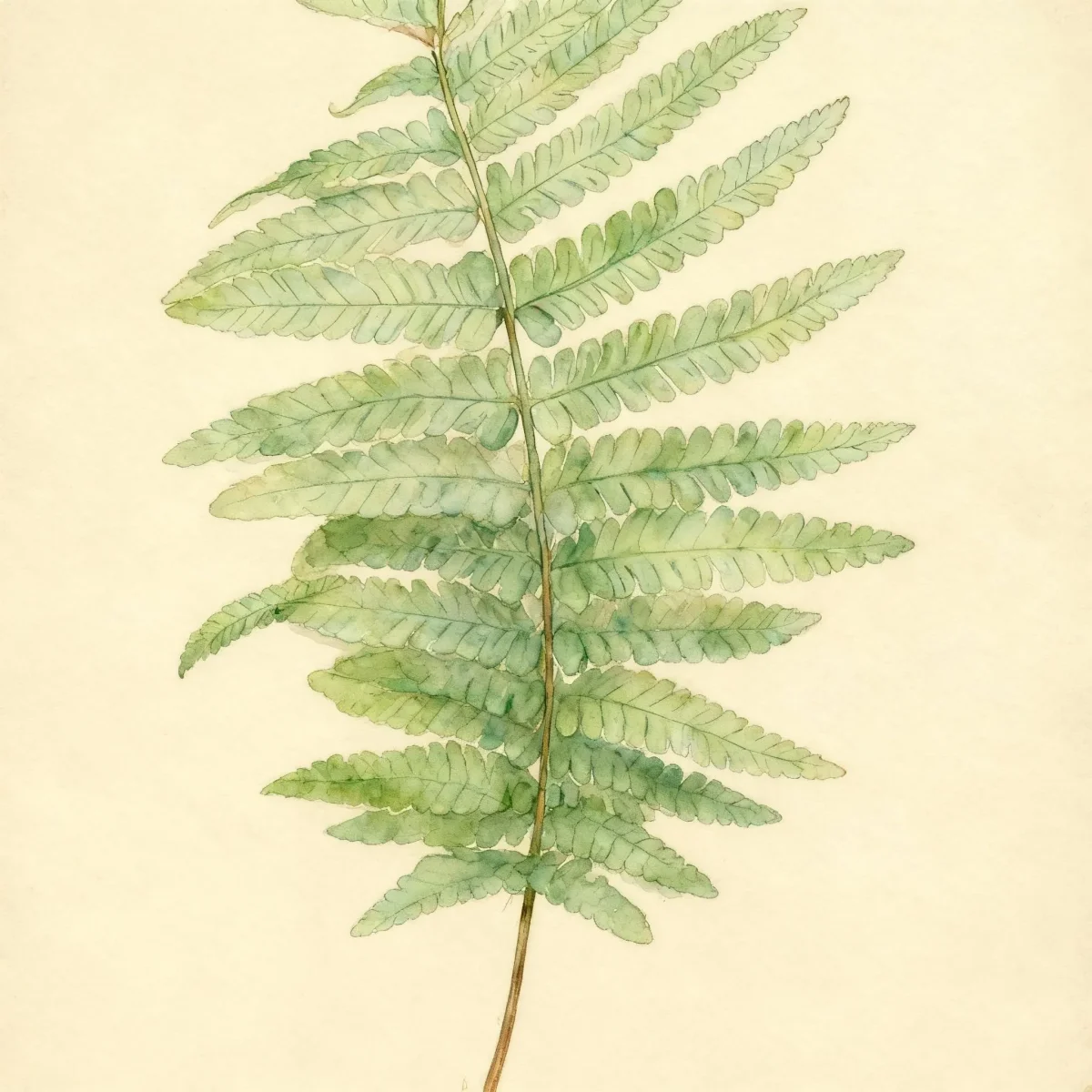
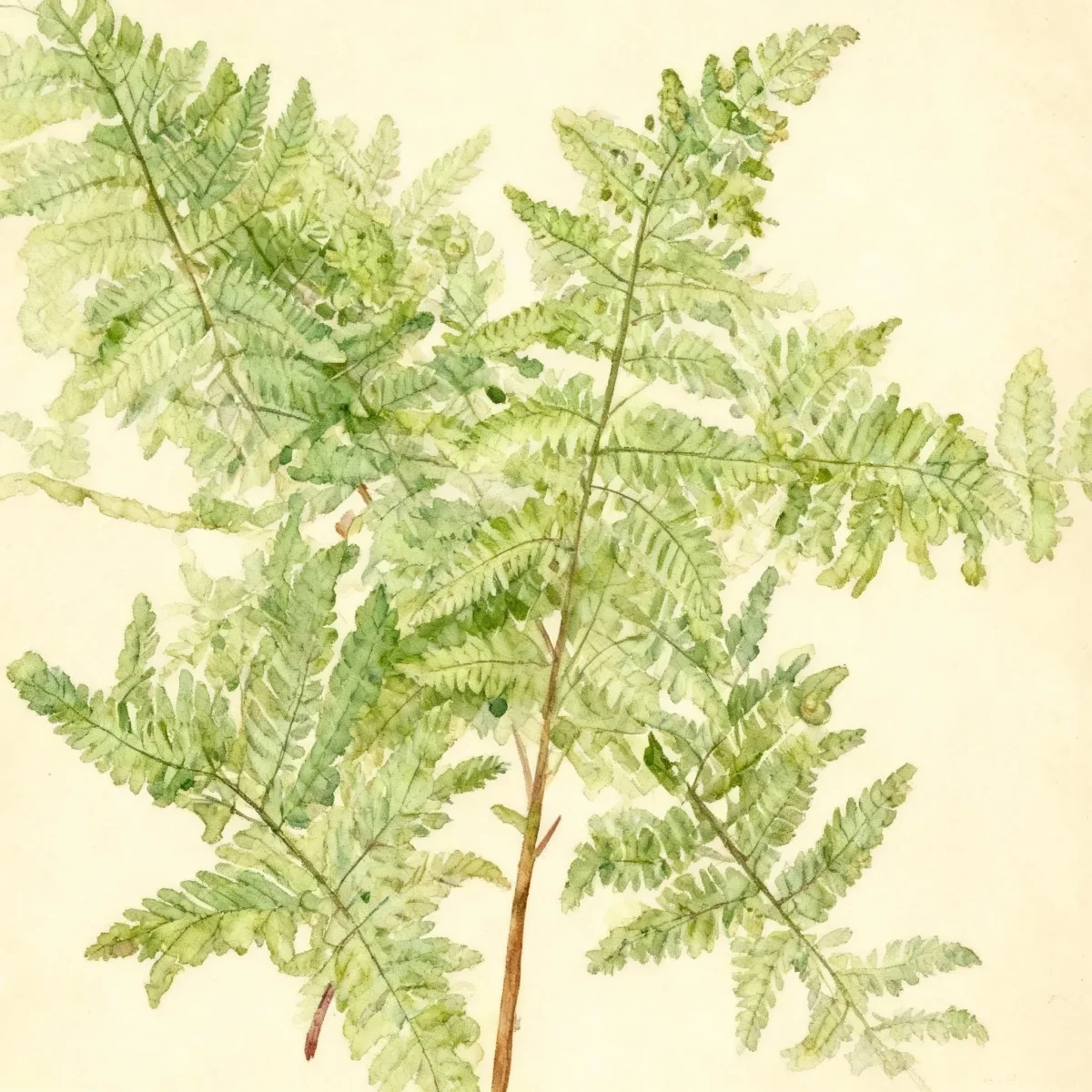
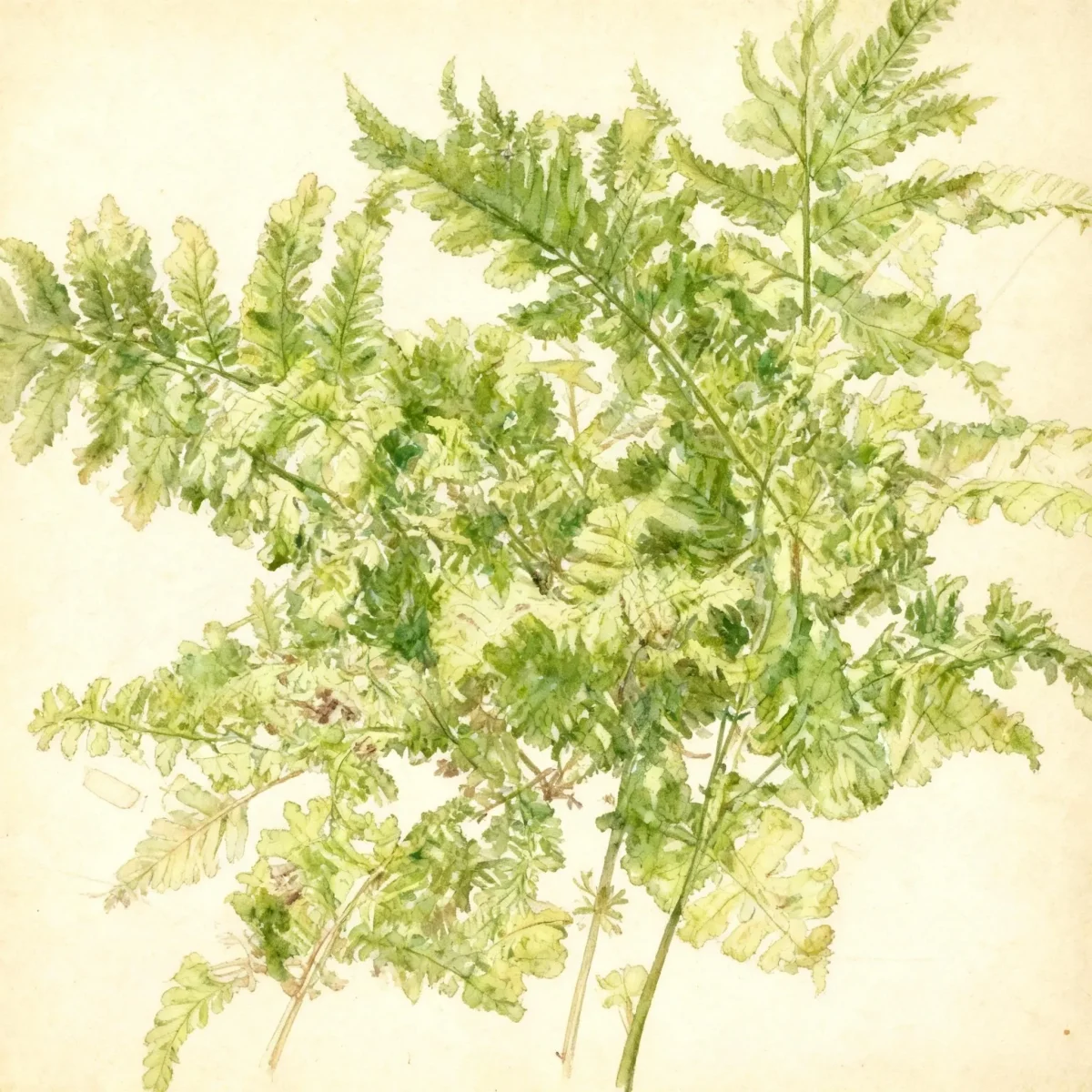
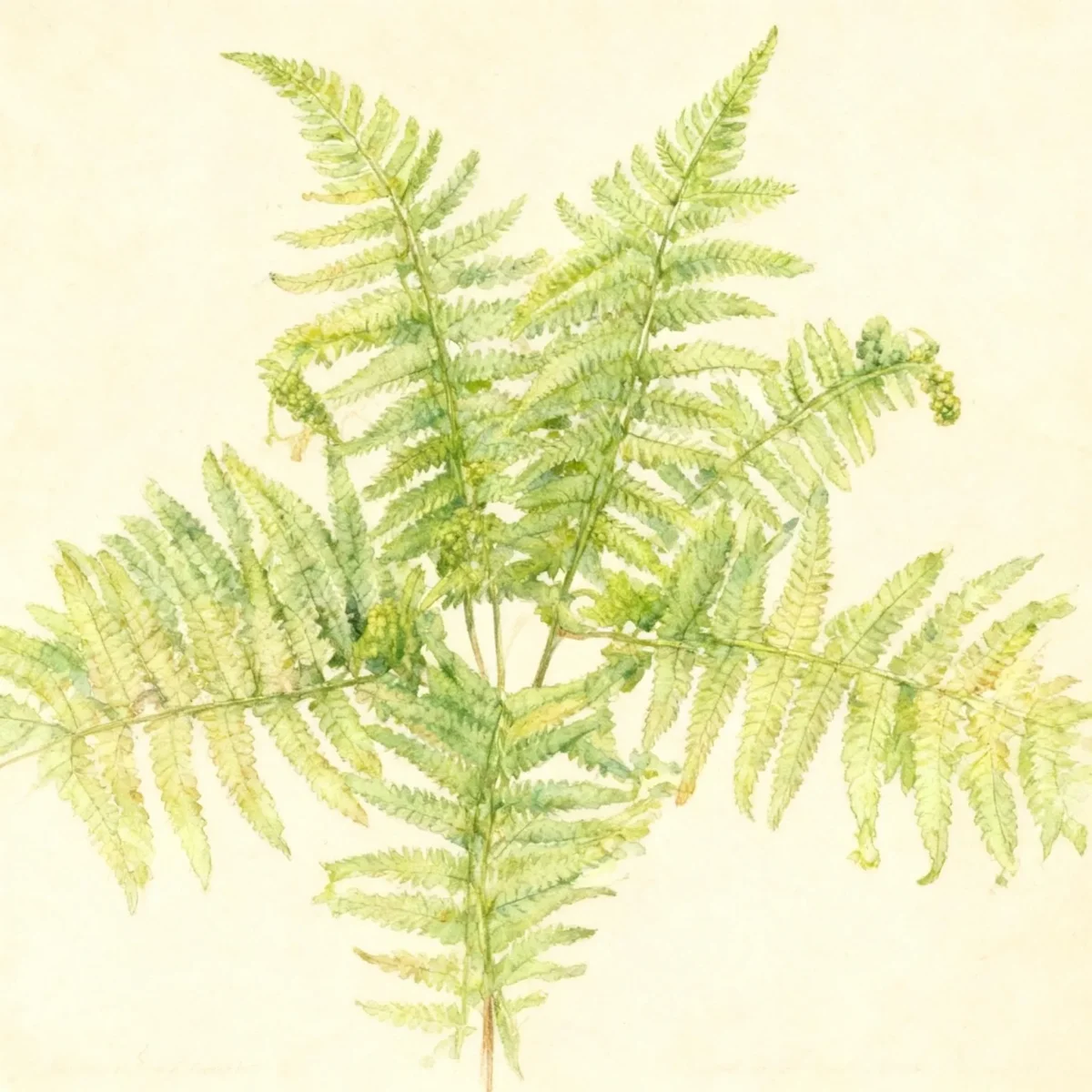
Log fern (Dryopteris celsa)
Discover the Dryopteris celsa, or Log fern, a stunning, low-maintenance woodland fern native to the Eastern US.

Bloom Boldly, No Matter the Season - Sweatshirt
Cozy organic cotton sweatshirt featuring our exclusive Purple Coneflower design. Perfect for gardeners who bloom year-round.
Inspired by the beautiful Log fern
Limited first batch (50) — join the waitlist for early access
Waitlist closes Feb 15, 2026.
Complete Plant Information
Field Guide Continues
Ready for care notes, companion picks, and planting tips?
The map is just the start. The full guide below covers growth habits, seasonal performance, and landscape uses.
Overview
The Log fern, or Dryopteris celsa, offers reliable, upright texture perfect for deep shade gardens. This woodland native is valued for its firm, deeply cut, and distinctly shiny dark green fronds that provide year-round structure. It is a naturally occurring hybrid, often found thriving directly on decaying logs, which gives the log fern its common name.
This plant establishes itself easily in average, moist soils that are rich in humus and slightly acidic. While it handles general garden conditions well, Dryopteris celsa truly excels when protected from harsh winds and given consistent moisture. Its low maintenance profile makes it an excellent choice for creating lush, naturalistic woodland settings.
Consider planting the Log fern to define shady borders or group it for mass impact where other foliage struggles. It retains its semi-evergreen foliage in mild climates, ensuring that shady recesses remain visually appealing throughout the seasons.
Fast Facts
- Plant Family: Dryopteridaceae
- Plant Type: Fern
- Native Range: Easten United States
- Hardiness Zones: USDA Zones 5-9
- Size at Maturity:
- Height: 3-4 ft
- Spread: 1.5-2.5 ft
- Bloom Time: Non-flowering
- Bloom Description: Non-flowering
- Sun Exposure: Part shade to full shade
- Water Needs: Medium
- Maintenance Level: Low
How to Grow
The optimal time to establish the Log fern is typically in early spring or fall when temperatures are moderate, allowing the root system to establish before the stress of summer heat or deep winter cold. When planting Dryopteris celsa, select a location providing part shade to full shade conditions. These ferns demand soil that is consistently moist, rich, and humusy. Amending existing soil with plenty of organic matter, such as compost, will help create the acidic environment that the log fern prefers.
Watering is crucial, especially during dry spells, as the plant requires medium water intake to maintain its lush appearance. Avoid letting the soil dry out completely between waterings. Fertilizing is rarely necessary for ferns; their needs are usually met by the rich, decaying organic material in their preferred woodland setting. Pruning involves simply cutting back any tattered or dead fronds in early spring before new growth emerges.
Protecting your Dryopteris celsa from strong winds will prevent foliage damage and help maintain its upright stature. While generally tough, providing that bright shade with protection mimics its native swamp and moist woodland habitat perfectly. A layer of winter mulch can help moderate soil temperature and moisture retention through the coldest months if you are near the lower edge of its hardiness range.
Landscape Uses
The architectural form of the Log fern makes it an excellent structural element in shaded landscapes. It is perfectly suited for mass planting within woodland gardens, where its upright, dark green fronds create a cohesive, textural carpet beneath deciduous trees. This fern also performs admirably when grouped along shady areas of borders, providing a sharp, clean line against stone work or pathways.
Avoid using Dryopteris celsa in areas subject to intense afternoon sun or dry, compacted soils, as this will diminish its vigor. Companion planting ferns with other shade-loving perennials like Hosta, Astilbe, or woodland Phlox creates layered interest. The deep green of the log fern provides a wonderful contrast against the lighter foliage or colorful blooms of these companions.
For native plant enthusiasts, the Dryopteris celsa is a must-have for recreating authentic Eastern U.S. woodland scenes. Its ability to thrive in heavy shade fulfills the need for reliable texture where light levels are minimal.
Standout Features
Noteworthy Characteristics
Dryopteris celsa, commonly called log fern, is a woodland fern which is native to moist woods and swamps in the southeastern U.S. West to Missouri and Arkansas, with additional populations along the east coast ranging as far north as New York. This is a naturally occurring hybrid of D. Goldiana and D. Ludoviciana which is often found growing on rotting logs, hence the common name. Typically grows in an upright habit to 3-4’ tall and features firm, erect, deeply cut, shiny dark green fronds with contrasting dark central stipes (stems).
Tolerances
- Rabbit
- Heavy Shade
Potential Problems
This fern generally boasts remarkable health, having no serious insect or disease problems documented in standard growing situations. Because of its robust nature, routine chemical intervention is usually unnecessary. Gardeners should focus primarily on providing the correct cultural conditions—consistent moisture and rich, acidic soil—to keep the Log fern thriving and naturally resistant to opportunistic pests.
Frequently Asked Questions
What hardiness zones is Log fern suitable for?
The Log fern is suitable for USDA Hardiness Zones 5 through 9.
How large does Dryopteris celsa grow?
Dryopteris celsa typically reaches a mature height between 3 and 4 feet tall, with a spread ranging from 1.5 to 2.5 feet wide.
What sun exposure does Dryopteris celsa need?
This fern prefers growing conditions ranging from part shade to full shade for optimal performance.
When does Log fern bloom?
The log fern is a non-flowering plant, as it is a fern and reproduces by spores, not flowers.
Conclusion
The Dryopteris celsa offers exceptional structure and reliable, near-evergreen texture for challenging shady spots in the garden. Its easy-going nature and preference for rich, moist soil make the Log fern a gardener’s friend, requiring very little attention once established. Before planting, confirm your site offers protection from wind and maintains consistent medium soil moisture to ensure success with this beautiful woodland classic.
Companion Planting
When designing a shaded border featuring the Log fern, consider pairing it with plants that share its tolerance for moist, acidic soil. Hostas with variegated or blue foliage offer a stunning visual contrast to the upright, dark green fronds of the Dryopteris celsa. Another excellent companion is Astilbe, whose airy plumes provide vertical interest in mid-summer, complementing the fern’s consistent form throughout the growing season.
Groundcovers that enjoy similar conditions, such as Tiarella (Foamflower) or Epimedium (Barrenwort), can be used beneath the log fern to suppress weeds and further enhance the woodland floor aesthetic. These combinations thrive under the canopy of larger trees, recreating a natural, layered ecosystem where the Dryopteris celsa serves as a strong vertical anchor.
Design Ideas for Heavy Shade
The upright habit of Dryopteris celsa makes it invaluable for adding vertical dimension where horizontal or mounding plants dominate the shaded foundation. Use groupings of three or five log ferns to create focal points near entryways or along winding paths where they catch dappled light. Their deep green color also serves as a perfect visual foil for brightly colored annuals placed in containers nearby, drawing the eye toward the cool, shady spot.
Consider using the Log fern in boggy or moist areas of the yard where other ferns might struggle. Its tolerance for heavy shade means it can populate areas right beneath dense evergreen trees or north-facing walls. Because the fronds are semi-evergreen, they help soften winter views and provide essential structure when deciduous companions are bare.